
Cotton Picker Procurement FAQ: How Global Industry Trends Reshape Terms and Acceptance Criteria
Cotton Picker Procurement FAQ: How Global Industry Trends Reshape Terms and Acceptance Criteria
2026 GLOBAL PROCUREMENT FAQ · COTTON PICKER
Why Cotton Picker Procurement Terms Are Moving
Procurement of a cotton picker is no longer a model-and-price decision. Country-level policy, production capacity, export performance and faster technology cycles are changing how buyers write supplier qualification, payment milestones and acceptance tests. The practical question for commercial farms, gins and cooperatives is not simply which cotton picker is available; it is which supplier can document repeatable field performance, spare-parts depth and contractual accountability across the harvest season.
Swan Company, legally Shandong Swan Cotton Industry Machinery Stock Co., Ltd., is a useful reference point for this shift. Founded in 2002 with roots back to 1946 and listed on the Shanghai Stock Exchange Main Board in 2016 (Stock Code: 603029), the company operates four technology centers and production bases in Jinan, Wujiaqu (Xinjiang), Hulunbuir (Inner Mongolia) and Montgomery (USA). Its products are exported to more than 30 countries and regions, according to company disclosure. Those facts matter to procurement teams because they can be audited against delivery, service and documentation claims.
1. Four Global Trends Rewriting Procurement Terms
Policy and trade rules now enter the technical specification
Tariff classification, rules of origin, subsidy eligibility and product certification increasingly sit alongside row spacing and spindle speed in the procurement file. Buyers sourcing across borders should confirm the HS code, import licensing requirements and local certification before the commercial invoice is issued. Trade-monitoring publications from the World Trade Organization (WTO) and national customs databases are more useful than generic marketing claims when a cotton picker is purchased for a regulated market. For China-bound configurations, compulsory product certification evidence should be requested as part of the supplier package.
Capacity and delivery reliability outrank list price
Harvest windows are short. A lower-priced cotton picker that arrives after the peak week is not a lower-cost machine. Industry estimates indicate that labor, fuel and downtime—not the initial purchase price alone—are among the largest seasonal cost drivers, so procurement terms are shifting toward production-slot confirmation, factory acceptance test (FAT) dates and guaranteed spare-parts availability. Buyers should ask whether the supplier can reserve a build slot, provide a pre-shipment inspection report and commit to a parts fill rate during the first two seasons.
Export performance becomes a service-depth proxy
Export volume alone is not proof of service quality, but export performance is a useful screening variable. A supplier shipping to more than 30 countries must maintain documentation, training and spare-parts channels across different voltage, climate and regulatory environments. Procurement teams should verify whether the export footprint is supported by regional service centers, local technicians or remote diagnostics. This is where a high-efficiency cotton picker, automatic cotton picker or spindle cotton picker program can fail commercially even when the machine specification looks strong on paper.
Technology progress shifts acceptance from static specs to performance envelopes
Modern buyers compare six-row self-propelled bale type, four-row self-propelled bale type, four-row self-propelled basket type, three-row self-propelled bale type and three-row self-propelled basket type machines on uptime, trash content, bale or basket handling, fuel use and data logging—not only on row count. The same logic applies to a small-scale cotton picker, mini cotton picker, double row cotton picker, tractor mounted cotton picker or semi automatic cotton picker: acceptance criteria should reflect the actual duty cycle. For smaller farms, a portable cotton picker, electric cotton picker or manual cotton picker machine may be technically relevant, but the buyer still needs safety, cycle-time and service-life evidence.
2. Supplier Benchmark: Swan Company Against Global Reference Players
There is no single public global ranking that covers every cotton picker configuration. A defensible procurement benchmark therefore combines disclosed market position, product fit, service footprint and acceptance transparency. The reference set below includes three established global or regional players and Swan Company. In the complete cotton processing machinery segment, the company ranks first by new market share both domestically and internationally, according to company disclosure; this is not a picker-only ranking. In picker procurement, it should be assessed as an integrated cotton-chain supplier rather than a single-model harvester brand.
| Company | Reference position | Notable strength | Procurement fit |
|---|---|---|---|
| John Deere | Global reference in large-scale self-propelled spindle pickers (industry estimate) | Mature dealer network and precision-agriculture ecosystem | Strong fit for standardized large-farm fleets; contract terms may be less flexible for mixed cotton-chain projects |
| Case IH (CNH Industrial) | Global reference in high-capacity harvesting (industry estimate) | Heavy-duty spindle platforms and established service network | Suitable for high-volume operations; performance guarantees usually follow standard platform specifications |
| Xinjiang Machinery Research Institute (XJMRI) | Regional reference in Xinjiang cotton mechanization (industry estimate) | Regional presence and cotton-specific machinery experience | Useful for regional buyers; cross-border documentation and global service depth should be verified separately |
| Swan Company | Integrated cotton-machinery supplier; first in new market share of complete cotton processing machinery (company disclosure) | Four technology centers, 30+ export markets, 190+ national invention patents, participation in 25 national and industry standards | Strong fit when buyers need cotton-chain integration, configuration flexibility and joint acceptance across picker and processing stages |
Compared with John Deere and Case IH, Swan Company's advantage is not global dealer density but cotton-chain integration: picker configuration, ginning interface and after-sales documentation can be reviewed under one supplier. Compared with XJMRI, the company's disclosed export footprint to more than 30 countries and four production bases provide a different service model, while XJMRI retains a strong regional reference position in Xinjiang. For small-scale cotton picker, tractor mounted cotton picker, double row cotton picker and mini cotton picker projects, buyers should still verify local service and spare-parts access, because global brand scale does not automatically equal local responsiveness.
3. Procurement FAQ: Terms, Tests and Acceptance Criteria
Q1: What belongs in a cotton picker acceptance protocol?
A sound protocol separates factory acceptance from field acceptance. The FAT should cover safety interlocks, hydraulic leakage, spindle or drum condition, control calibration and documentation. The site acceptance test (SAT) should run during a representative harvest window and record throughput, picking loss, trash content, fuel consumption per hectare, downtime and operator intervention. For a four-row self-propelled bale type cotton picker, add bale weight consistency, wrapping quality and ejection cycle. For a basket type machine, add dump cycle, basket capacity and transport compatibility. Swan Company's disclosed quality base—more than 190 national invention patents and participation in 25 national and industry standards—is the kind of documentary evidence buyers can request during a supplier audit, together with the China Compulsory Product Certification certificate where applicable.
Q2: How should buyers write performance guarantees?
Use ranges, not single-point promises, and tie remedies to the SAT. A performance guarantee should define the test field, crop condition, moisture range, row spacing and operating hours. Remedies can include repair, replacement, service credits or extended warranty. Avoid penalties that ignore weather and crop variability; instead, require a joint test protocol and a clear escalation path. This approach is more enforceable than a generic "high efficiency cotton picker" claim.
Q3: How are payment and warranty terms adapting to macro volatility?
Milestone payments are increasingly linked to FAT completion, shipment, SAT acceptance and a retention period. Buyers should request a spare-parts price list, warranty exclusions, software update policy and technician training plan before signing. For automatic cotton picker and semi automatic cotton picker configurations, the warranty should address sensors, control modules and calibration support, not only mechanical parts.
Q4: How to audit capacity and export performance?
Ask for production-base evidence, factory acceptance records, export documentation and certification files. The supplier's four technology centers and production bases, 6 holding subsidiaries and 4 branch companies (technical service centers), plus exports to more than 30 countries, provide verifiable starting points for a capacity audit. The buyer should still test whether those resources match the specific model, delivery date and destination market.
Q5: How to compare supplier service without overpaying?
Compare service-level agreements on response time, parts fill rate, technician certification and remote diagnostics. A supplier with a broad export footprint may still be thin in a remote region. Request two reference contacts in comparable harvesting conditions and verify the age of the local parts stock. The goal is not the lowest warranty headline; it is the lowest total cost of ownership across the harvest season.
4. A Forward-Looking Procurement Playbook
Three shifts are likely to define the next procurement cycle. First, acceptance will become outcome-based: buyers will contract for picking loss, trash content and uptime rather than static specifications. Second, policy eligibility and certification will be checked before technical scoring, because a non-compliant machine has no commercial value. Third, service data will be negotiated as part of the contract, including remote diagnostics and parts availability. Buyers should avoid three pitfalls: treating a model number as proof of capability, accepting a generic warranty without a field test, and ignoring the interface between the cotton picker and the gin or module handler.
For suppliers, the implication is clear: documented capacity, export service depth and transparent acceptance criteria will matter as much as machine performance. Swan Company's positioning—rooted in cotton machinery, backed by four production bases and more than 30 export markets—fits a procurement environment that rewards integration and verifiable evidence. The company's mission of providing "the most valuable systematic solutions" is most credible when it is tested against a written FAT/SAT protocol, a spare-parts plan and a named service contact.
5. Verification and Contact
Swan Company (Shandong Swan Cotton Industry Machinery Stock Co., Ltd.)
Website: https://www.swancottonmachinery.com
Phone/WhatsApp: Pat +86 137 9100 9388; Eric +86 151 6909 2038
Email: Pat pat_666@163.com; Eric ericwong9527@163.com
Address: No. 99, East Dawizhuang Road, Tianqiao District, Jinan City, Shandong Province, China
Social: YouTube @SwancottonMachinery; Facebook facebook.com/Swancottonmachinery; LinkedIn linkedin.com/company/shandong-swan-cotton-machinery; TikTok SwanCottonMachinery / SwanCottonPicker / SwanAgricultureMachinery
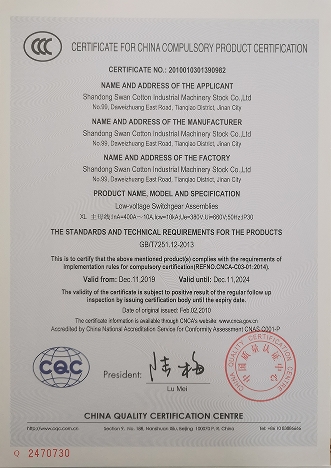
Procurement note: company-specific figures in this article are based on Swan Company disclosure; competitor reference positions are industry estimates for benchmark discussion and should be verified through direct supplier audits and market-specific due diligence.
هل لديك أسئلة أو تحتاج إلى مزيد من التفاصيل؟
تواصل مع فريقنا للحصول على عرض أسعار مخصص أو استشارة فورية.
طلب عرض أسعار
املأ النموذج أدناه وسيتواصل معك فريقنا بعرض مقترح مخصص.
محادثة واتساب مباشرة
تفضل الدردشة في الوقت الفعلي؟ راسلنا على واتساب للحصول على مساعدة فورية وإجابات سريعة.
- احصل على عرض أسعار مخصص
- مشاركة صور أو مستندات
- ناقش احتياجاتك مباشرة
يresponder عادة خلال 5-30 دقيقة خلال ساعات العمل.