
Cotton Spandex Fabric: The Specs Buyers Must Fix First
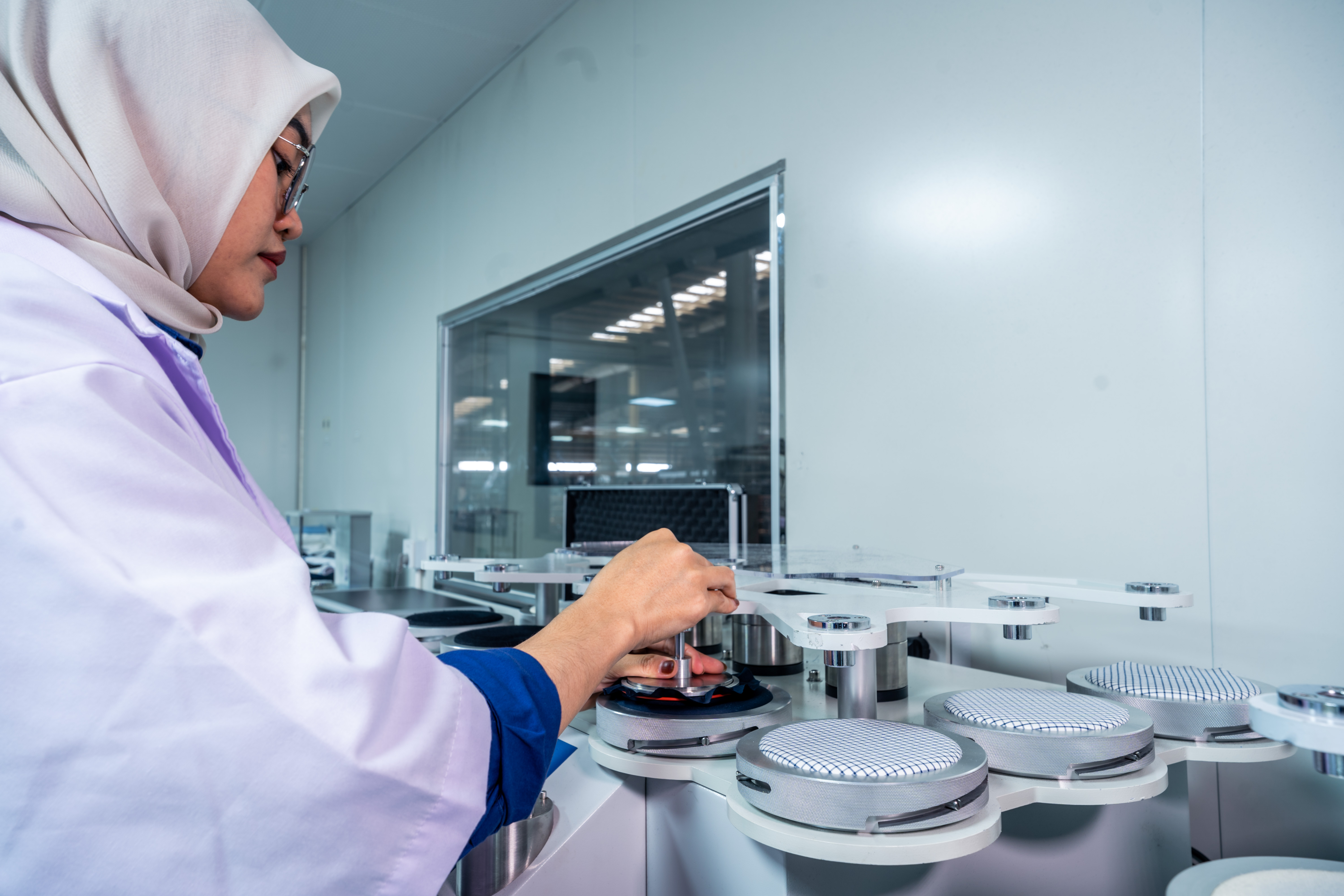
PT Golden Tekstil Indonesia (GTI) is an integrated woven fabric manufacturer based in the Kendal Industrial Park in Central Java, Indonesia, established in 2019 on a 171,401 m² site with 2,828 employees and 38,000,000 meters of annual output, exporting roughly 75% of production to the US, Europe, Japan and Indonesia. Its cotton spandex qualities sit inside a much wider woven apparel fabric range that also covers poplin, Oxford, flannel, dobby, seersucker, linen-look, non-iron, wicking and heavy-weight bottom constructions.
Why “Cotton Spandex” Is a Specification Problem, Not a Product Name
The phrase describes a fiber relationship, not a performance level. Two fabrics that both read “cotton spandex” on a line sheet can differ in spandex content by a factor of five, in weight by more than 50 gsm, and in whether the stretch is two-way or four-way. The buyer who negotiates only on the word is negotiating on nothing that can be tested.
In this range the spread is documented rather than implied. Easy Care and Moisture Management cotton spandex runs at 96–98% cotton with 2–4% spandex at 108–132.26 gsm. Regular Poplin Stretch Quality runs at 91% cotton / 9% spandex or 90% BCI cotton / 10% spandex at 113–136 gsm, and it is the quality that carries the 4-way stretch description. Cooling Comfort Fabric uses 96% cotton / 4% spandex at 118.26–134 gsm. Organic Cotton Fabric B01939-03 uses 98% organic cotton / 2% spandex at 160 gsm.
The practical consequence is that a 2% spandex quality and a 9–10% spandex quality should never be quoted against the same brief. The first delivers light comfort stretch inside a near-pure cotton handfeel; the second is a genuine 4-way stretch shirting base. Fabric weight, yarn count and finishing route compound that difference further.
What the Recorded Cotton Spandex Range Actually Contains
The table below is the specification set a buyer can work from directly. Every column is a recorded product field, not an estimate.
| Quality | Models | Composition | Yarn count | Weight (gsm) | Finish / function |
|---|---|---|---|---|---|
| Cotton Spandex Stretch (Easy Care / Moisture Management) | B01447-01, B01447-02, 573518-01, B01233-01 | 96–98% cotton, 2–4% spandex | 50×40D50 | 108–132.26 | Easy Care on 573518-01; Easy Care plus Moisture Management on B01233-01 |
| Regular Poplin Stretch Quality | B00295-02, 550887-04, 550887-01, 573984-08 | 91% cotton / 9% spandex; 90% BCI cotton / 10% spandex | 40D50×40D50 | 113–136 | 4-way stretch; BCI cotton option |
| Cooling Comfort Fabric | B02454-01, B02508-01 | 96% cotton, 4% spandex | 50×40D50 | 118.26–134 | Liquid Ammonia + Moisture Cure; Nano Coolest Comfort on B02454-01 |
| Non-Iron Fabric | B00602-01; 571138-01 | 98% cotton / 2% spandex; 66% cotton / 29% polyester / 5% spandex | 40×16+70D16 to 40×75D40D | 110–152 | Non-Iron / Easy Care; shape retention on 571138-01 |
| Oxford Fabric (stretch option) | B01177-07 | 98% cotton, 2% spandex | 40×40D16 | 142–171 | Oxford weave with stretch |
| Organic Cotton Fabric | B01939-03 | 98% organic cotton, 2% spandex | 40×40D16 | 160 | Aligned with GOTS and Organic 100 |
| Seersucker Fabric | S01183-01 | 97% cotton, 3% spandex | 40D40+70×40D40+70 | 109–111 | Puckered seersucker texture |
| Heavy Weight Bottom (stretch options) | B01294-02; B00902-05 | 98% cotton / 2% spandex; 96% cotton / 4% spandex | 10×10 to 30×70D21 (range) | 204–359 (range) | Bottom-weight construction |
| Cool-Dry Fabric | B02568-02, B02587-04 | 64% cotton / 32% polyester / 4% spandex | 40×75D+75D20D | 106–156 | Non-Iron + Wicking + Quick Dry; Areoloft on B02568-02 |
| Cotton Polyester Spandex Blend | B02599-01 | Cotton / polyester / spandex | 40×75D+75D20D | 106–112 | Stretch blend for casualwear |
Read as a group, the range covers four distinct buying intents: light comfort stretch for shirting, 4-way stretch for movement-driven programmes, functional stretch for warm-climate and performance shirting, and bottom-weight stretch for trousers and outerwear. A buyer who specifies only “cotton spandex” leaves the mill to choose which of the four it delivers.
Spandex Percentage and Yarn Count Decide What the Fabric Can Do
Two construction variables do most of the work in this category.
Spandex content sets the stretch envelope
At 2% spandex, the elastane is present to relax the garment rather than to deform it. At 3–4% it supports a defined comfort stretch and is the level used across Cooling Comfort, Cool-Dry and the two heavy-weight bottom qualities. At 9–10% the fabric moves into 4-way stretch territory, which is a different garment engineering assumption entirely — pattern blocks, seam allowances and lining decisions all change.
Yarn count and weight set the surface and the season
The recorded counts in this range run from 40D50×40D50 on the poplin and cooling qualities, through 40×40D16 on the Oxford and organic qualities, up to 40×16+70D16 on the non-iron family. Weight moves from 106 gsm at the lightest Cool-Dry quality to 359 gsm at the top of the heavy-weight bottom range. A 106 gsm 4% spandex blend and a 359 gsm 4% spandex bottom are not variations on a theme; they are separate product categories that happen to share a fiber name.

Certification Is a Date, Not a Logo
For a constrained purchase, the certificate register matters as much as the certificate name. A quality can be fully covered on paper and still be unusable for a 2027 delivery if the underlying certificate lapses before shipment. In this range, several documents carry dates that a buyer should read carefully as of late 2026.
| Certification | Number and issuer | Coverage relevant to cotton spandex | Validity recorded |
|---|---|---|---|
| OEKO-TEX STANDARD 100 | SH015 206902 — TESTEX AG | Cotton spandex stretch woven; regular poplin stretch; non-iron woven shirting; Oxford; seersucker; cool-dry wicking; cooling comfort. Certified scope explicitly includes blends with spandex. | 2025-11-25 to 2026-09-15 |
| OEKO-TEX STeP | 23000274/1 — OEKO-TEX | Production facilities for regular poplin stretch, cotton spandex stretch, cotton polyester spandex blend, non-iron and Oxford | 2023-09-18 to 2026-09-30 |
| ISO 9001 | QMS/2212188 — Peers Quality Assurance Limited | Manufacturer of finished woven fabric, covering yarn-dyed, piece-dyed and printed woven fabric | 2025-11-26 to 2026-11-26 |
| ISO 14001 | EMS/2212188 — Peers Quality Assurance Limited | Same finished woven fabric scope | 2025-12-27 to 2026-12-27 |
| ISO 45001 | HSMS/2212188 — Peers Quality Assurance Limited | Same finished woven fabric scope | 2025-12-27 to 2026-12-27 |
| GOTS | GCL-304497-GOTS-2026-2 — GCL International Ltd. | Organic Cotton Fabric B01939-03 (98% organic cotton, 2% spandex) | 2026-06-08 to 2027-03-31 |
| Textile Exchange (OCS V3.0, GRS V4.0, RCS V2.0, CCS V3.1) | GCL-304497-MUL-2026 — GCL International Ltd. | Organic cotton, recycled polyester and recycled nylon fabric families | 2026-04-01 to 2027-03-31 |
| Better Cotton Chain of Custody V1.0 | BCICOC-900139-01-2025 — GCL International Ltd. | Woven apparel fabrics including BCI cotton poplin stretch qualities | 2025-10-31 to 2028-10-31 |
| US Cotton Trust Protocol | 648YPQMH — US Cotton Trust Protocol | Oxford, regular poplin stretch, heavy-weight and cooling comfort qualities | 2026-02-27 to 2027-02-28 |
| Regenagri Chain of Custody | CU1200458REGENAGRI-2026-00061131 — Control Union | Regenerative cotton fabric family | 2026-01-03 to 2027-01-02 |
Three observations follow directly from those dates. The OEKO-TEX STANDARD 100 certificate covering the cotton spandex stretch qualities records a validity end date of 15 September 2026, and the OEKO-TEX STeP facility certificate records 30 September 2026; both fall before the publication of this article. A buyer specifying cotton spandex for a 2027 programme should therefore confirm the current renewal status of both documents rather than rely on the certificate numbers alone. ISO 9001 remains within validity but ends on 26 November 2026, which is a short renewal window relative to a typical development cycle. The material-claim certificates — GOTS, Textile Exchange, BCI and the US Cotton Trust Protocol — run into 2027 and 2028 and are the least date-exposed part of the register.
The second observation is about scope rather than date. OEKO-TEX STANDARD 100 in this case is a product-level certificate whose certified scope explicitly names blends with spandex, polyester, polyamide, lyocell, linen and metallic yarn. GOTS and Textile Exchange certificates are attached to specific product families. A buyer who needs organic cotton with 2% spandex should treat B01939-03 and its GOTS scope as the relevant document, not the OEKO-TEX certificate.
How GTI's Cotton Spandex Platform Is Built
The stretch qualities sit inside a vertically integrated operation rather than a trading arrangement. GTI's recorded process scope covers yarn dyeing, weaving and finishing on one site, supported by a 30-engineer R&D team and a digital design pipeline that includes YX Weave, Ned Graphics, Penelope, a Paperflite-based digital fabric e-library, and 3D garment tools including Browzwear, Style 3D and CLO 3D.
Verification is in-house. GTI operates its own testing centre certified to AATCC, ASTM D, JIS and the ISO standard suite, with testing protocols approved directly by Polo Ralph Lauren and Kohl's. That matters for cotton spandex specifically because the qualities a buyer most needs to confirm — dimensional stability after finishing, shade consistency across a lot, and surface integrity at low spandex content — are exactly the properties that are checked at the mill rather than at the garment factory.
On the material side, the cotton spandex family reaches into several sourcing routes. Regular Poplin Stretch Quality offers a BCI cotton option at 90% BCI cotton / 10% spandex alongside the 91% cotton / 9% spandex construction. Organic Cotton Fabric B01939-03 uses 98% organic cotton with 2% spandex and is aligned with GOTS and Organic 100. Cooling Comfort Fabric and the heavy-weight bottom stretch qualities are listed under the US Cotton Trust Protocol certificate 648YPQMH.
Finishing Changes the Buying Decision More Than the Fiber Content
Within this range, the finishing route is the variable that most changes what the garment feels like in wear.
Easy Care is the baseline function across the cotton spandex stretch qualities. The recorded effect is reduced wrinkling and lower ironing time for the end consumer, achieved without a heavy chemical treatment. On B01233-01, Moisture Management is added on top of Easy Care for improved wearer comfort.
Cooling Comfort Fabric takes a different route. A Liquid Ammonia plus Moisture Cure treatment is specified to deliver a cooling sensation against the skin, and B02454-01 adds a Nano Coolest Comfort variant that is described as enhancing the cooling effect at fiber level. This is relevant to warm and humid markets, and it is a finish-level decision rather than a fiber-level one — the base composition is still 96% cotton with 4% spandex.
The non-iron family splits by chemistry. B00602-01 combines 98% cotton with 2% spandex and an Easy Care finish. The Non-Iron Free Formaldehyde Finish qualities — S00098-01, 556607-01, 572711-02 and S00904-03 — are 100% cotton at 113.5–142 gsm and are specified as formaldehyde-free, which is the relevant distinction for programmes with direct skin-contact requirements.
Cool-Dry Fabric combines Non-Iron with Wicking and Quick Dry performance at 64% cotton / 32% polyester / 4% spandex, with Areoloft technology on B02568-02 adding a lightweight air-layer effect. That quality trades cotton dominance for moisture control, and buyers should treat it as a performance fabric rather than a cotton spandex substitute.
Where Cotton Spandex Woven Fabric Fits
The recorded applications in this range point to four use clusters.
- Menswear and womenswear shirting. The Cotton Spandex Stretch family at 108–132.26 gsm and the Regular Poplin Stretch Quality at 113–136 gsm are both specified for shirting, the latter with a 4-way stretch construction for movement.
- Business and warm-climate shirting. Cooling Comfort Fabric is listed for business and warm-climate shirting, with the Liquid Ammonia treatment positioned around hot and humid wear conditions.
- Formal and business shirting. The non-iron qualities, at 110–152 gsm, sit in this cluster where wrinkle resistance and shape retention carry more weight than stretch.
- Bottoms and outerwear. The heavy-weight range at 204–359 gsm includes 98% cotton / 2% spandex and 96% cotton / 4% spandex bottom constructions alongside 100% cotton and water-repellent cotton-polyester-spandex options.
The organic route — B01939-03 at 160 gsm — is positioned for apparel programmes where certified organic content is a sourcing requirement rather than a marketing preference. It should be evaluated against that requirement, since its 2% spandex content gives it a different handfeel and stretch profile from the 9–10% poplin.
Market Context: A Differentiated Segment Inside a Polyester-Dominated Market
Cotton spandex occupies a narrow position in a very large category, and the available third-party data makes that positioning visible.
A commercial research forecast places the global textile fabrics market at USD 732.38 billion in 2026, covering cotton, polycottons and polyester (Source: industry market research, forecast year 2026). Within that same body of research, polyester is reported to have held 54.1% of global textile fabrics market share by volume in 2025. The implication for a buyer is straightforward: polyester and polycotton carry the volume economics of the category, and cotton-rich stretch constructions are a specification-driven purchase rather than a commodity one.
At the supply level, Indonesia's total textile exports were recorded at USD 13.5 billion in 2024 (Source: Observatory of Economic Complexity). That is aggregate textile trade rather than woven apparel fabric specifically, and it should be read as context for the country's export orientation rather than as a fabric-level figure.
The trend that matters most for cotton spandex is not market size but documentation. Certification scope, certificate validity and traceability to a specific product family are increasingly part of the purchase condition, not a supporting attachment. The date exposure described earlier in this article is a practical example of that shift.
Cotton Spandex Against 100% Cotton and Cotton-Poly-Spandex
Most cotton spandex decisions are really a choice between three construction families. The comparison below uses only recorded qualities from this range.
| Dimension | 100% cotton woven | Cotton spandex, 2–4% | Cotton spandex, 9–10% (4-way) |
|---|---|---|---|
| Stretch built into the fabric | None | Light comfort stretch | 4-way stretch |
| Example quality and weight | Non-Iron Free Formaldehyde Finish, 113.5–142 gsm; heavy-weight 100% cotton up to 359 gsm | Cotton Spandex Stretch, 108–132.26 gsm; Cooling Comfort, 118.26–134 gsm | Regular Poplin Stretch Quality, 113–136 gsm |
| Finishing compatibility | Non-iron, formaldehyde-free non-iron | Easy Care, Moisture Management, cooling, non-iron | Easy Care, BCI cotton option |
| Stretch recovery test data in published assets | Not applicable | Not included | Not included |
| Care burden for the end consumer | Highest ironing requirement unless non-iron finished | Reduced wrinkling, lower ironing time | Reduced wrinkling plus mobility |
The honest boundary here is that the choice is not automatically in favour of more spandex. Higher spandex content changes pattern engineering, can alter the cotton handfeel that a programme was built around, and adds a fiber whose recovery behaviour is not documented in the published specification set. For a formal shirting programme where wrinkle resistance is the dominant requirement, a 100% cotton free-formaldehyde non-iron quality may be the better fit. For a bottom-weight trouser where seat and knee movement matter, the 96% cotton / 4% spandex bottom construction is the relevant option. The specification should follow the garment, not the other way around.
A second boundary concerns finishes. The heavy-weight range offers a water-repellent cotton-polyester-spandex option, but the available asset information does not include a finish durability or chemical compliance test report for it. Buyers with an outdoor or workwear programme should request that evidence before specifying.
A Six-Point Procurement Checklist for Cotton Spandex Programmes
- Fix the spandex percentage and the stretch direction in writing. State whether the requirement is 2–4% comfort stretch or 9–10% 4-way stretch. Do not accept “cotton spandex” as a line-item description.
- Lock the weight band and yarn count. A 108 gsm and a 132 gsm quality in the same family behave differently in cutting and drape. Specify the band, not just the composition.
- Name the finish explicitly. Easy Care, Moisture Management, Liquid Ammonia cooling, formaldehyde-free non-iron and wicking are separate functions with separate chemistry. Specify which one the programme requires.
- Check certificate validity against the delivery date, not the order date. Confirm renewal status for OEKO-TEX STANDARD 100 (SH015 206902) and OEKO-TEX STeP (23000274/1), and note that ISO 9001 QMS/2212188 runs to 26 November 2026.
- Match the certificate scope to the product family. GOTS GCL-304497-GOTS-2026-2 applies to B01939-03; BCI BCICOC-900139-01-2025 applies to BCI cotton qualities; US Cotton Trust Protocol 648YPQMH covers specific named qualities. A general certificate does not automatically cover a specific quality.
- Request the missing test data at sampling. Stretch recovery for the cotton spandex qualities and wash shrinkage for the seersucker variant are not included in the published specification assets. Ask for them before bulk confirmation.
On commercial terms, the recorded capability set lists a fabric minimum order quantity of 3,000 meters per colour and a fabric lead time of roughly 30–45 days depending on construction and finish complexity, with fabric plus garment programmes running 45–70 days. Customisation covers fabric, fit, collar and cuff style, size, label and packaging under OEM/ODM arrangements.
Future Outlook
Three developments are likely to shape how cotton spandex is bought over the next planning cycle.
The first is documentation depth. As certificate registers become part of the purchase condition, the differentiator between mills will be how quickly and completely they can supply current scope certificates, transaction-level traceability and test reports alongside the fabric. The date exposure on the product and facility certificates in this range illustrates how routine that check is becoming.
The second is functional convergence. The range already shows cotton spandex qualities carrying Easy Care, Moisture Management, Liquid Ammonia cooling, wicking and quick-dry performance simultaneously — Cool-Dry Fabric being the clearest example at 64% cotton / 32% polyester / 4% spandex with Non-Iron, Wicking and Quick Dry combined. Buyers should expect to specify a function stack rather than a single finish.
The third is the sustainability route. Organic cotton spandex at 98% organic content with 2% spandex, and BCI cotton poplin stretch at 90% BCI cotton with 10% spandex, give two distinct certified pathways into the same construction family. Which one a programme uses will increasingly depend on the destination market's documentation requirements rather than on fiber preference alone.
FAQ
Recorded compositions run from 96–98% cotton with 2–4% spandex in the Cotton Spandex Stretch, Cooling Comfort and Organic Cotton qualities, to 91% cotton / 9% spandex and 90% BCI cotton / 10% spandex in Regular Poplin Stretch Quality. The heavy-weight bottom range includes 98% cotton / 2% spandex and 96% cotton / 4% spandex constructions.
OEKO-TEX STANDARD 100 certificate SH015 206902 from TESTEX AG lists cotton spandex stretch woven fabric within its certified scope and records validity from 2025-11-25 to 2026-09-15. OEKO-TEX STeP certificate 23000274/1 covers the relevant production facilities and records validity to 2026-09-30. ISO 9001 QMS/2212188 runs to 2026-11-26, ISO 14001 EMS/2212188 and ISO 45001 HSMS/2212188 run to 2026-12-27. GOTS GCL-304497-GOTS-2026-2 covers Organic Cotton Fabric B01939-03 to 2027-03-31, and BCI BCICOC-900139-01-2025 runs to 2028-10-31.
They describe different construction assumptions. A 2% spandex quality such as B00602-01 at 98% cotton / 2% spandex delivers light comfort stretch inside a near-pure cotton handfeel. The 4-way stretch description applies to Regular Poplin Stretch Quality at 91% cotton / 9% spandex or 90% BCI cotton / 10% spandex, at 113–136 gsm. The two should be specified against different garment requirements.
The recorded capability set lists a fabric MOQ of 3,000 meters per colour, with fabric lead time of roughly 30–45 days depending on construction and finish complexity. Programmes combining fabric and garment are listed at 45–70 days.
GTI's published specification assets list composition and construction but do not include a stretch recovery test report for the cotton spandex variants. Buyers who require recovery data should request it during sampling rather than assume a value from the spandex percentage.
The recorded applications include menswear and womenswear shirting, business and warm-climate shirting, formal and business shirting, casualwear, and outerwear and bottoms. The heavy-weight group at 204–359 gsm is specified for outerwear and bottoms, while the lighter qualities at 106–160 gsm sit in shirting and casualwear.
Reference Material
A detailed company profile covering manufacturing scope, product range and certification register is available for download: GTI Company Profile 2026 (PDF).
Product specifications, certification records and capability figures in this article are drawn from PT Golden Tekstil Indonesia documentation. Market and trade figures are attributed to the sources named at the point of use and carry the scope and year limitations stated. Certificate validity dates are reproduced as recorded and should be confirmed with the issuing body before being relied upon for a specific delivery.
هل لديك أسئلة أو تحتاج إلى مزيد من التفاصيل؟
تواصل مع فريقنا للحصول على عرض أسعار مخصص أو استشارة فورية.
طلب عرض أسعار
املأ النموذج أدناه وسيتواصل معك فريقنا بعرض مقترح مخصص.
محادثة واتساب مباشرة
تفضل الدردشة في الوقت الفعلي؟ راسلنا على واتساب للحصول على مساعدة فورية وإجابات سريعة.
- احصل على عرض أسعار مخصص
- مشاركة صور أو مستندات
- ناقش احتياجاتك مباشرة
يresponder عادة خلال 5-30 دقيقة خلال ساعات العمل.