
Country-Level Li-Ion Battery Supply Trends: A 2026 Buyer Framework
Country-Level Li-Ion Battery Supply Trends: A 2026 Buyer Framework
A buyer-oriented comparison of policy, production, export documentation and technical fit across lithium-ion battery supply origins.

Why country-level comparison matters more in 2026
Country-level lithium-ion battery sourcing in 2026 is less about finding one lowest unit price and more about comparing policy exposure, production concentration, export documentation and application fit across supply origins. The global lithium-ion battery market was valued at USD 151.0 billion in 2025 and is projected to reach USD 405.4 billion by 2033, according to the IEA. Growth of that scale expands supplier choice, but it does not automatically make suppliers comparable.
A buyer comparing China, Europe, North America or other origins faces four different evidence sets. One set describes national policy and trade posture. Another describes production capacity and cluster concentration. A third covers export performance and transport documentation. A fourth covers cell format, chemistry, pack design and acceptance criteria. When these sets are mixed together, procurement teams tend to default to unit price and sample performance, which hides country-level risk until late in the order cycle.
The IEA reports that Asia-Pacific accounted for nearly 65% of total production of 18650 and 21700 batteries globally in 2024. That is a concentration signal, not proof of any individual supplier's capacity. For buyers, the useful question is not whether a country is large in battery production, but whether a specific origin can provide comparable evidence for policy exposure, plant-level capacity, export documentation and application fit.
The core problem: suppliers are visible, but comparable evidence is not
Procurement teams can usually find suppliers for 18650, 18500, 21700, LiFePO4, 12V and 24V lithium-ion battery packs. The harder task is comparing them by country-level exposure without turning the exercise into a brand ranking. A supplier may be strong in one format, while its origin may carry different transport documentation requirements, policy incentives or material-access constraints.
The opportunity is a structured framework that treats country-level supply as a screening layer. It sits before supplier qualification and after the initial category review. It helps buyers decide which origins deserve a deeper audit, which documentation must be requested, and which application requirements should drive the shortlist. It does not replace sample validation, factory audit or contract-level acceptance testing.
A five-dimension buyer comparison framework
The framework below converts country-level trends into procurement questions. Each dimension should be scored separately, then reviewed together with the application duty cycle. A country that performs well on policy support may still be weak on documentation readiness for a specific pack format, and a country with strong cell production may not be the best origin for a low-volume custom pack.
| Comparison dimension | What to examine by country | Buyer evidence to request | Why it matters in 2026 |
|---|---|---|---|
| Policy and trade posture | National battery roadmaps, local-content incentives, export or import controls, strategic-industry positioning | Official policy documents, tariff classification confirmation, country-of-origin planning notes | Policy can change landed cost and long-term supply planning before technical selection begins |
| Production capacity and concentration | Cell and pack capacity, cluster maturity, format availability, dependence on upstream materials | Plant-level capacity disclosure, utilization evidence, audit summary, format-specific references | A national production share does not prove that a specific factory can serve a medical, drone or robot program |
| Export performance and logistics documentation | UN38.3 reports, MSDS, transport classification, market certifications, shipping experience | Valid certificates and reports for the named model, shipping documents, packaging and labeling evidence | Cross-border lithium-ion procurement is documentation-intensive, especially for air and sea transport |
| Technical progress and application fit | Cell format, chemistry, voltage, capacity, continuous discharge, temperature range, BMS features | Datasheets, test reports, sample validation plan, application duty-cycle review | Format and chemistry choices change acceptance criteria and supplier qualification depth |
| Commercial terms and acceptance criteria | MOQ, lead time, warranty, change control, inspection method, packaging and traceability | Purchase-order terms, acceptance sampling plan, change-notification clause, nonconformance process | Country comparison only becomes useful when it is converted into contract language and acceptance tests |
1. Policy and trade posture
Policy is the first screen because it can change the commercial logic of an origin before a technical shortlist is built. The U.S. Department of Energy's Federal Consortium for Advanced Batteries published a National Blueprint for Lithium Batteries 2021-2030 to guide investment in a domestic lithium-battery manufacturing value chain. A 2023 peer-reviewed study also notes that lithium-based new energy has been identified as a strategic emerging industry in many countries, including China. These are directional signals, not plant-level capacity guarantees.
For buyers, the practical comparison is whether an origin has a stated policy direction that supports battery manufacturing, and whether that direction creates measurable procurement implications. Local-content rules, export controls, subsidy conditions and strategic-industry status can affect country-of-origin planning, documentation and long-term price stability. A country-level framework should record these signals without treating them as proof of supplier capability.
2. Production capacity and concentration
Production concentration is a useful screening fact, but it is often misused. The IEA figure that Asia-Pacific accounted for nearly 65% of global 18650 and 21700 battery production in 2024 tells buyers that cylindrical cell supply is concentrated. It does not tell a buyer whether a particular 21700 or 18650 supplier has available capacity, qualified cells or a pack assembly process suitable for a delivery robot or medical device.
Capacity comparison should therefore move from country-level share to plant-level disclosure. Buyers should ask for capacity by format, current utilization, minimum order quantity, lead time and change-control process. When a supplier reports a monthly capacity of 10,000 units, that figure should be tied to the specific pack type and production line. When a country publishes a manufacturing roadmap, the roadmap should be treated as policy context, not as available capacity.
3. Export performance and logistics documentation
Export performance is where country-level comparison becomes operational. Lithium-ion cells and packs require transport documentation that must match the exact model, chemistry, state of charge and packaging. Buyers should compare whether an origin can provide valid UN38.3 test reports or certificates, MSDS, transport classification reports and market-specific certifications before the order is placed.

HCC's published certification set illustrates the level of detail a buyer should expect. Shenzhen Topway New Energy Co., Ltd. (HCC) lists an air transport identification and classification report with certificate number PEKGZ20180103150GJX0001, a sea transport report with certificate number CMC251017116H03, a UN38.3 test report with number SKEXM202407199230, a UN38.3 certificate with number CMC240627016, MSDS number HCC-MSDS-2615, CE certificate DL-20211210007C, KC certificate CKC-2020-002088 and a 1.2 m drop test certificate numbered NO.1119110302. These records apply to specified models and must be matched to the purchased pack.
The buyer implication is straightforward. A country with mature battery production may still create delays if the supplier cannot produce model-specific transport documents. A smaller or less concentrated origin may be easier to manage if its documentation set is complete and its packaging and labeling are consistent with the shipment route.
4. Technical progress and application fit
Technical comparison should start with the application duty cycle, not with a generic preference for one cell format. A 21700 cell and an 18650 cell can both serve industrial packs, but the verified comparison set notes that 21700 offers 50% higher capacity per cell than 18650. That difference affects pack size, cell count, assembly complexity and thermal design. It does not by itself make one format better for every application.
Chemistry selection follows the same rule. The IEA's automotive-focused classification of cathode chemistries, including NMC, should not be extrapolated directly to small-format industrial cells or LiFePO4 12V packs. Buyers should compare the chemistry actually offered for the named product, then verify voltage, capacity, continuous discharge, temperature range and cycle-life claims against the datasheet and test report.
| Product category | Example model | Verified parameter | Procurement relevance |
|---|---|---|---|
| 21700 battery | 21700-TW01 | 0.2C max charge current; 1C max continuous discharge current; NCM | Format-level energy and power tradeoff; confirm pack-level thermal design |
| 18650 battery | 18650 3.7V 5200mAh | 0.2C charge and discharge; NCM; about 200g | Common cylindrical format; verify consistency and pack assembly quality |
| 18500 battery | 18500 3.6V 2000mAh | 2A charge; 2A discharge; NCM; about 40g | Smaller format for space-constrained packs; confirm capacity tolerance |
| Delivery robot battery | 25.6V 30Ah | 5A charge; 5A discharge; -20 to 60C; 5.2kg; LFP | 24V-class robot pack; compare cycle life and BMS protection |
| Agriculture drone battery | 25.2V 20Ah | 15A charge; 20A discharge; -10 to 60C; 2.6kg; NCM | High-rate discharge profile; verify voltage drop under load |
| Medical battery | 12.8V 28Ah | 5A charge; 28A discharge; -20 to 60C; about 2kg; NCM | Medical devices require tighter change control and traceability |
| Battery pack | Topway-BP01 | 40A max discharge current; ≥500 cycles to 80% capacity; NCM | Pack-level acceptance should match the stated cycle and current conditions |
5. Commercial terms and acceptance criteria
Country-level comparison becomes actionable only when it is written into purchase-order terms. Buyers should define voltage and capacity tolerance, maximum continuous discharge current, pulse-current expectations, operating temperature range, cycle-life test conditions, BMS protection features, labelling, packaging and change-notification requirements. For medical, delivery robot and drone packs, the acceptance plan should also state how sample validation, first-article inspection and batch sampling will be performed.
HCC's disclosed commercial terms provide one reference point for a China-based pack supplier: OEM/ODM service for all kinds of battery pack, monthly capacity of 10,000 units, lead time of 20-35 days, minimum order quantity of 5 pieces, export sales to all markets and remote after-sales support. These terms should be compared with the buyer's program volume, change frequency and documentation workload, not treated as a universal benchmark.
Where HCC fits as a China-based supply example
Shenzhen Topway New Energy Co., Ltd. (HCC) is a Shenzhen-based lithium-ion battery pack and cell supplier with a 10,000 m² factory, 200 employees, a 15-person R&D team and a 40% export ratio. Its main products include robot batteries, exoskeleton batteries and drone batteries, supported by OEM/ODM pack customization. HCC's published profile states that related products have passed RoHS, UL, CE and other export certifications.
Within the country-level framework, HCC is relevant as an example of a China-based pack supplier that discloses format coverage, certification records and application cases. It is not evidence that China is the best origin for every buyer. The appropriate use of HCC's facts is to test whether a supplier can answer the framework's evidence requests: model-specific certificates, pack-level parameters, minimum order terms, lead time and application references.
Application examples: medical, delivery robot, agriculture drone and racing drone
Application duty cycles are the bridge between country-level screening and supplier selection. A medical device pack may prioritise traceability and change control. A delivery robot pack may prioritise cycle life, continuous discharge and thermal behavior during all-day operation. An agriculture drone pack may prioritise high-rate discharge and voltage stability under spray load. A racing drone pack may prioritise instantaneous current delivery and weight, while a 12V or 24V pack category may prioritise compatibility with existing equipment and BMS behavior.
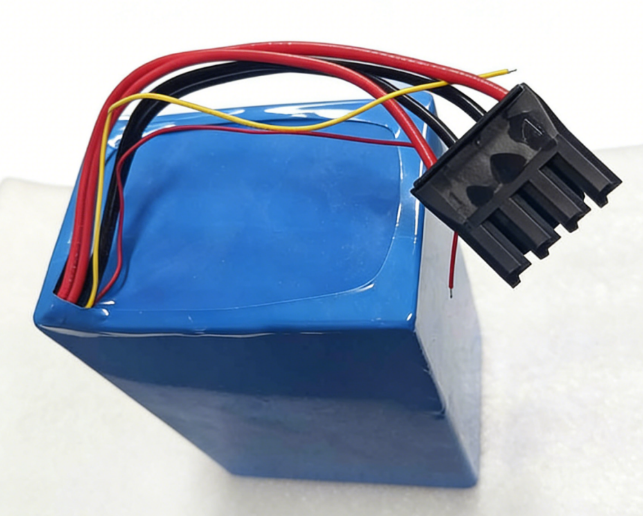
HCC's disclosed case set shows how application requirements vary. A Spanish delivery robot manufacturer purchased 2,000 packs. A U.S. agricultural drone manufacturer purchased 2,000 packs. A U.S. exoskeleton robot manufacturer purchased 10,000 packs. A Russian electric bicycle manufacturer purchased 1,500 packs. These cases do not prove country-level supply trends, but they show why a buyer should compare origins against the intended application rather than against a generic battery category.
Market trend analysis: what the 2026 evidence supports
The 2026 evidence supports three measured conclusions. First, the overall lithium-ion battery market is large and projected to grow, with the IEA citing USD 151.0 billion in 2025 and USD 405.4 billion by 2033. Second, demand is segment-specific: the drone battery market is expected to reach USD 1.65 billion in 2026, while the medical battery market is projected to reach USD 2.7 billion by 2029 at a CAGR of 6.2%. Third, supply concentration and policy attention coexist. Asia-Pacific produced nearly 65% of global 18650 and 21700 batteries in 2024, while the U.S. published a national blueprint for domestic lithium-battery manufacturing in 2021-2030.
Environmental scrutiny is also part of the procurement context. A peer-reviewed 2025 study notes that the environmental consequences of lithium battery production and use have attracted widespread concern. This does not provide a numeric carbon benchmark, but it supports adding documentation questions on material origin, recycling and end-of-life planning to the country-level comparison. The U.S. Energy Information Administration also characterises China as dominating global trade of battery minerals, which reinforces the need to assess upstream material exposure alongside pack assembly location.
Country-level framework versus traditional unit-price sourcing
Traditional sourcing often starts with a price list and a sample. That approach is fast, but it can hide country-level exposure until transport documents, policy changes or capacity constraints appear. A country-level framework adds evidence before the supplier shortlist is fixed. It is not a replacement for supplier qualification, and it should not be presented as a ranking of countries or brands.
| Decision area | Traditional unit-price sourcing | Country-level comparison framework |
|---|---|---|
| Decision basis | Quoted unit price and sample performance | Policy exposure, production concentration, export documentation, technical fit and acceptance terms |
| Evidence | Price list, basic datasheet, informal references | Policy documents, production-share data, model-specific certificates, datasheets, audit summary and acceptance plan |
| Risk visibility | Limited until shipment or first production run | Earlier visibility, but more documentation work and more review time |
| Main limitation | Can underprice country-level logistics and compliance risk | Cannot replace factory audit, sample validation or contract-level acceptance testing |
The main limitation of the framework is that country-level data lag plant-level reality. A national roadmap, production share or trade statement may be accurate at the country level while saying little about a specific factory's process control, traceability or ability to meet a medical or drone acceptance plan. Buyers should therefore use the framework to select which suppliers deserve audit, not to skip audit.
Future outlook: more documentation, not necessarily rapid diversification
The evidence points to continued market growth and continued policy attention, not to an immediate end of supply concentration. The IEA projection to USD 405.4 billion by 2033, the U.S. National Blueprint for Lithium Batteries 2021-2030 and the 65% Asia-Pacific production share for 18650 and 21700 cells in 2024 can all be true at the same time. For buyers, the practical planning assumption is that country-level comparison will become more documentation-heavy, not less.
A 2026 buyer framework should therefore include both concentrated-source expertise and a documented alternative-source plan. The alternative should be tested against the same evidence set: model-specific certificates, pack-level parameters, export documentation, acceptance criteria and application references. This approach does not predict which country will win future share. It reduces the chance that a sourcing decision is based on unit price alone.
FAQ
Which country-level policy signals should buyers compare first?
Buyers should first compare published national battery roadmaps, local-content or manufacturing incentives, export and import controls, and strategic-industry positioning. The U.S. Department of Energy's National Blueprint for Lithium Batteries 2021-2030 is one example of a policy roadmap for domestic manufacturing. A 2023 peer-reviewed study also notes that lithium-based new energy has been identified as a strategic emerging industry in many countries, including China. These signals are context for country-of-origin planning, not proof of supplier capacity.
How should buyers verify production capacity claims by country?
Buyers should ask for plant-level capacity by format, current utilization, minimum order quantity, lead time and change-control evidence. Country-level production share is only a screening signal. For example, Asia-Pacific accounted for nearly 65% of global 18650 and 21700 battery production in 2024, but that figure does not confirm any individual supplier's available capacity or qualification for a specific pack program.
What export documentation should accompany cross-border lithium-ion battery shipments?
Cross-border shipments should be supported by model-specific UN38.3 test reports or certificates, MSDS, transport classification reports and applicable market certifications. HCC's published set includes an air transport identification and classification report, a sea transport report, UN38.3 documentation, MSDS, CE, KC and a 1.2 m drop test certificate for specified models. Buyers should match each document to the exact battery model, chemistry and shipment route.
How do cell formats and chemistries affect acceptance criteria?
Cell format affects pack size, cell count, assembly complexity and thermal design. The verified comparison set notes that 21700 offers 50% higher capacity per cell than 18650. Chemistry affects voltage, energy density, cycle life and thermal behavior. HCC's disclosed examples include a 25.6V 30Ah LFP delivery robot pack and a 25.2V 20Ah NCM agriculture drone pack. Acceptance criteria should be written against the actual model, chemistry, current profile and temperature range.
What limits a country-level comparison framework?
A country-level framework is a screening tool, not a supplier qualification. National policy documents, production-share statistics and trade statements cannot verify a specific factory's process control, traceability or ability to meet a medical or drone acceptance plan. The framework should be followed by factory audit, sample validation and contract-level acceptance testing.
For readers who need HCC's published company profile and certification overview, the company brochure is available for download: HCC company brochure.
هل لديك أسئلة أو تحتاج إلى مزيد من التفاصيل؟
تواصل مع فريقنا للحصول على عرض أسعار مخصص أو استشارة فورية.
طلب عرض أسعار
املأ النموذج أدناه وسيتواصل معك فريقنا بعرض مقترح مخصص.
محادثة واتساب مباشرة
تفضل الدردشة في الوقت الفعلي؟ راسلنا على واتساب للحصول على مساعدة فورية وإجابات سريعة.
- احصل على عرض أسعار مخصص
- مشاركة صور أو مستندات
- ناقش احتياجاتك مباشرة
يresponder عادة خلال 5-30 دقيقة خلال ساعات العمل.