
Country-Level Pen Supplier Evidence: Exports & Acceptance Criteria
Sourcing Evidence Brief
A pen order is rarely decided on a catalogue. By the time an international buyer has narrowed the field to two or three suppliers in different countries, the question is no longer who makes pens — most of the shortlist does — but which supplier can demonstrate, with documents, audits and physical samples, that a defined specification will be met repeatedly across batches.
Country-level evidence has become the entry point to that decision. Customs records, export values, published capacity figures and certification lists are now available before the first enquiry is sent, and buyers increasingly quote them in internal sourcing papers. The difficulty is that these layers measure different things. Used carelessly, they create the impression of verification without any of its substance.
Working rule for decision-stage buyers: country-level data proves scale and supply depth, factory-level evidence proves means and systems, and sample testing proves performance. Acceptance criteria are the mechanism that turns the last two layers into contractual obligations.
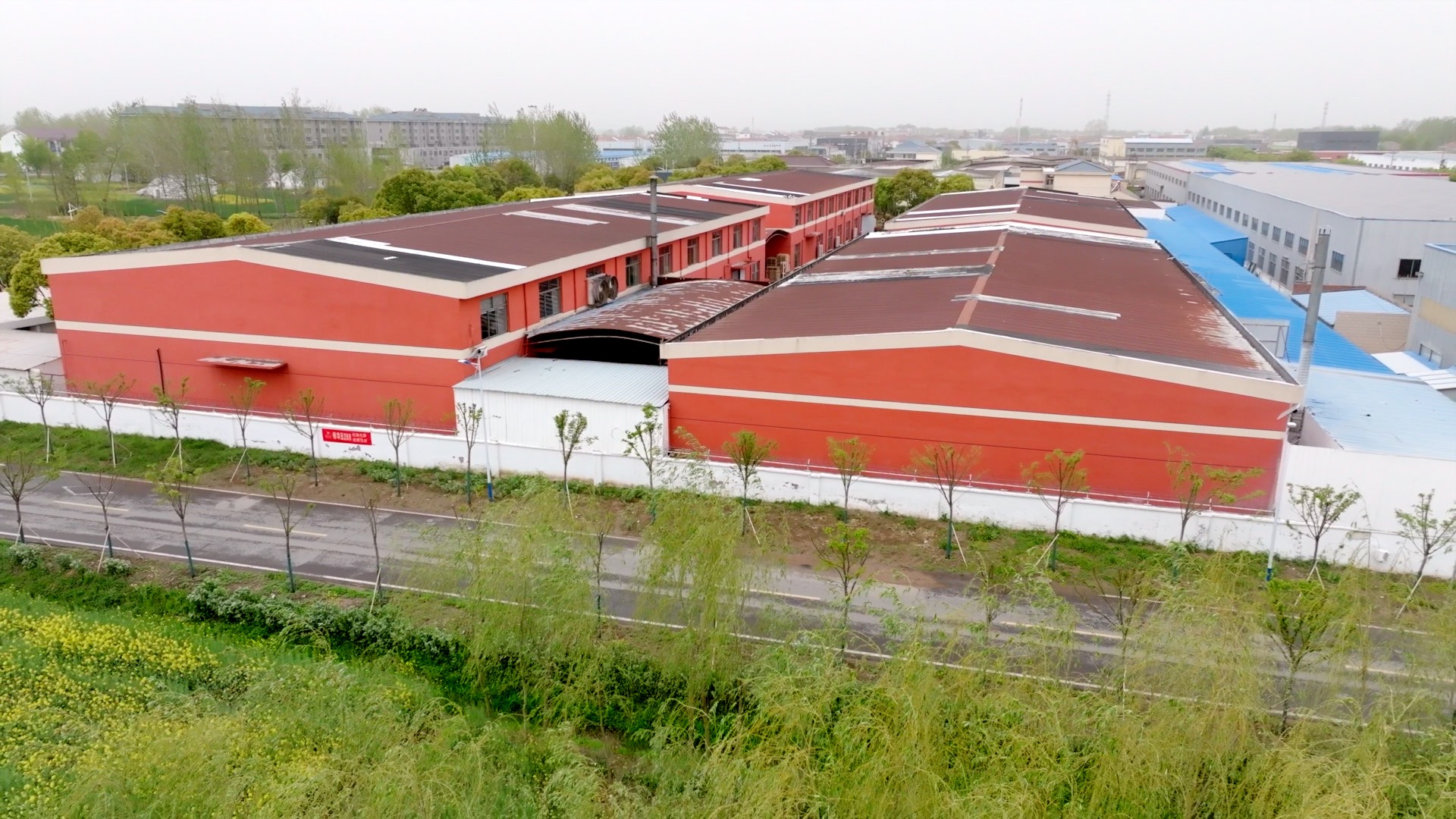
Manufacturing footprint is one of the few country-level claims a buyer can later verify at factory level.
Why pen supply is now assessed through trade data
Writing instruments sit among the most heavily traded categories in office supplies, and the customs statistics are correspondingly detailed. Under HS 9608 — the heading that covers ballpoint pens, gel pens, felt-tipped and other porous-tipped pens — the Observatory of Economic Complexity reports that China's exports reached USD 2.65 billion in 2024, making it the world's leading exporter of pens.
For a buyer screening sourcing regions, that single figure carries three usable implications. It confirms depth of supply, since a national export flow of that size implies many producers rather than a handful. It implies a process industry with established tooling, ink and component supply around it. And it implies a wide quality distribution: a large export base almost always spans promotional-grade goods, mainstream office supply and higher-specification work for branded programmes.
The fourth implication is the one buyers most often skip. Aggregated trade data says nothing about the specific supplier whose quotation is sitting in the inbox. A strong national aggregate guarantees nothing about one factory; conversely, a single well-run plant can be excellent while the national total says nothing about it. Trade data is a market-screening instrument, not a supplier verdict.
The three evidence layers of supplier capability
The practical way to keep country data and factory claims in their proper places is to separate them explicitly and assign each one a decision role. The table below is the framework used in the rest of this article.
| Evidence layer | Typical source | What it can prove | What it cannot prove | Decision role |
|---|---|---|---|---|
| Country / trade | Customs-based trade data under HS 9608, national export totals | Scale of the national supply base, direction of trade, category importance | Any individual factory's capability, quality tier or delivery reliability | Shortlist sourcing regions, not suppliers |
| Factory / system | Facility size, annual output by product family, certification scope, brand references, audit report | Whether the supplier has the physical means, the process control and the market familiarity to run the order | Whether a specific production lot will meet the agreed specification | Qualify a supplier for sampling |
| Order / acceptance | Sample test results, inspection records, agreed acceptance criteria in the purchase order | Whether delivered goods conform to the specification written into the contract | Long-term consistency, unless repeated per batch | Contractual acceptance and release |
Evidence layers and their decision roles in pen, pencil and erasable pen sourcing.
What export and production data can and cannot establish
Trade statistics are built from customs declarations, which are aggregated by product heading rather than by manufacturer. HS 9608 does not distinguish a promotional ballpoint from a refillable gel pen, and it certainly does not distinguish a well-controlled factory from an inconsistent one. Three consequences follow for procurement teams.
First, the data is category-level, not product-level. A buyer sourcing erasable writing instruments or no-sharpen pencils is reading a number that is dominated by conventional pens. The signal is about the surrounding industrial base — tooling, ink supply, component ecosystems — rather than about the specific sub-category being purchased.
Second, price and volume are fused. Export value rises when unit prices rise as well as when volumes rise, so a higher national figure is not evidence of better quality or of greater capacity for a particular specification.
Third, attribution is impossible without factory documents. The only way to connect a national flow to a specific plant is to request that plant's own evidence: output by product family, equipment, certification scope and customer references.
Policy and compliance: what actually changes between countries
Compliance requirements for writing instruments are set by the destination market, not by the producing country. That distinction matters because buyers sometimes treat a supplier's location as a proxy for conformity, when the real variable is whether the factory tests against the standards the buyer's market enforces.
For school and office supply channels in Europe and North America, the frameworks buyers most often write into purchase specifications include EN71-1/2/3/9, REACH, PAHS, SVHC and ASTM-D-4236. These cover mechanical and physical properties, migration of substances, restricted substance content and art-material labelling practice respectively. What differs between sourcing countries is not the standard itself but the depth of local testing infrastructure, the familiarity of factory quality teams with each framework, and the consistency with which conformity is re-verified as formulations change.
That is why certification evidence should be read as a scoped document rather than a logo. A certificate lists the product, the standard and the test scope; a supplier claiming broad conformance without a matching scope leaves the buyer carrying the residual risk.
Factory-level evidence in practice: the Greenwill case
Kunshan Crystal Culture Co.,Ltd (Greenwill stationery) is a Chinese stationery manufacturer based in Zhangpu Town, Kunshan City, Jiangsu Province, producing eco-friendly erasers, multi-functional pencil sharpeners and erasable writing pens for mid-to-high-end markets. Its production factory was established in 1999, giving more than 25 years of OEM/ODM experience in stationery — a documented example of the second evidence layer described above.
The verifiable facts are specific rather than promotional. The facility covers 25,000 m² and employs 100 people, including an R&D team of 10. Annual output is reported at more than 20 million pens, more than 260 tons of erasers and more than 3 million pencil sharpeners. Roughly 90% of output is exported, across North America, South America, Europe, Southeast Asia, Oceania and the Middle East. The company states partnerships with 100 international brands, including Papermate, STAEDTLER and Tesco.
On systems, Greenwill reports full-process quality control from raw materials to finished goods, conformance to EN71-1/2/3/9, REACH, PAHS, SVHC and ASTM-D-4236, and FSC, BEPI and ISO certifications covering environmental and management practice. Company information and published product material are available at www.greenwillplus.com.

Factory-level evidence: a documented facility is what converts a country-level claim into a supplier-level claim.
From capability claims to measurable product behaviour
A capability statement only becomes useful to a buyer when it can be translated into a test. Three product families illustrate how that translation works in practice.
Ballpoint and gel pens
Writing performance in conventional pens is governed by the ball tip and the ink. Greenwill describes its writing pens as using ultra-precision ball tips with custom eco-friendly ink, aimed at extended writing length and uninterrupted smoothness. In acceptance terms, that translates into measurable items: line continuity on a standard writing test, ink consumption per unit of line length, and consistency across a batch rather than in a single sample.
Erasable writing pens
Erasable instruments behave differently from ballpoints because the mark is removed by friction-generated heat acting on a thermo-sensitive ink. Where the ink formulation is not stable, the visible failure modes are incomplete erasing and ghosting, and where ink chemistry is not controlled, the risk shifts to safety conformity. Greenwill's stated controls are an optimised thermo-sensitive ink formula for stable erase performance, a non-toxic ink formulation compliant with international standards, and multi-stage inspection covering writing tests, erasing tests and durability tests.
No-sharpen and infinite pencils
Inkless and no-sharpen pencils move the acceptance question from ink to mechanics. Greenwill's product uses an eco-friendly barrel with a replaceable core design, supporting circular-economy use. The corresponding acceptance items are core-to-barrel fit, line consistency at the writing tip, and the durability of the replacement mechanism across repeated core changes.
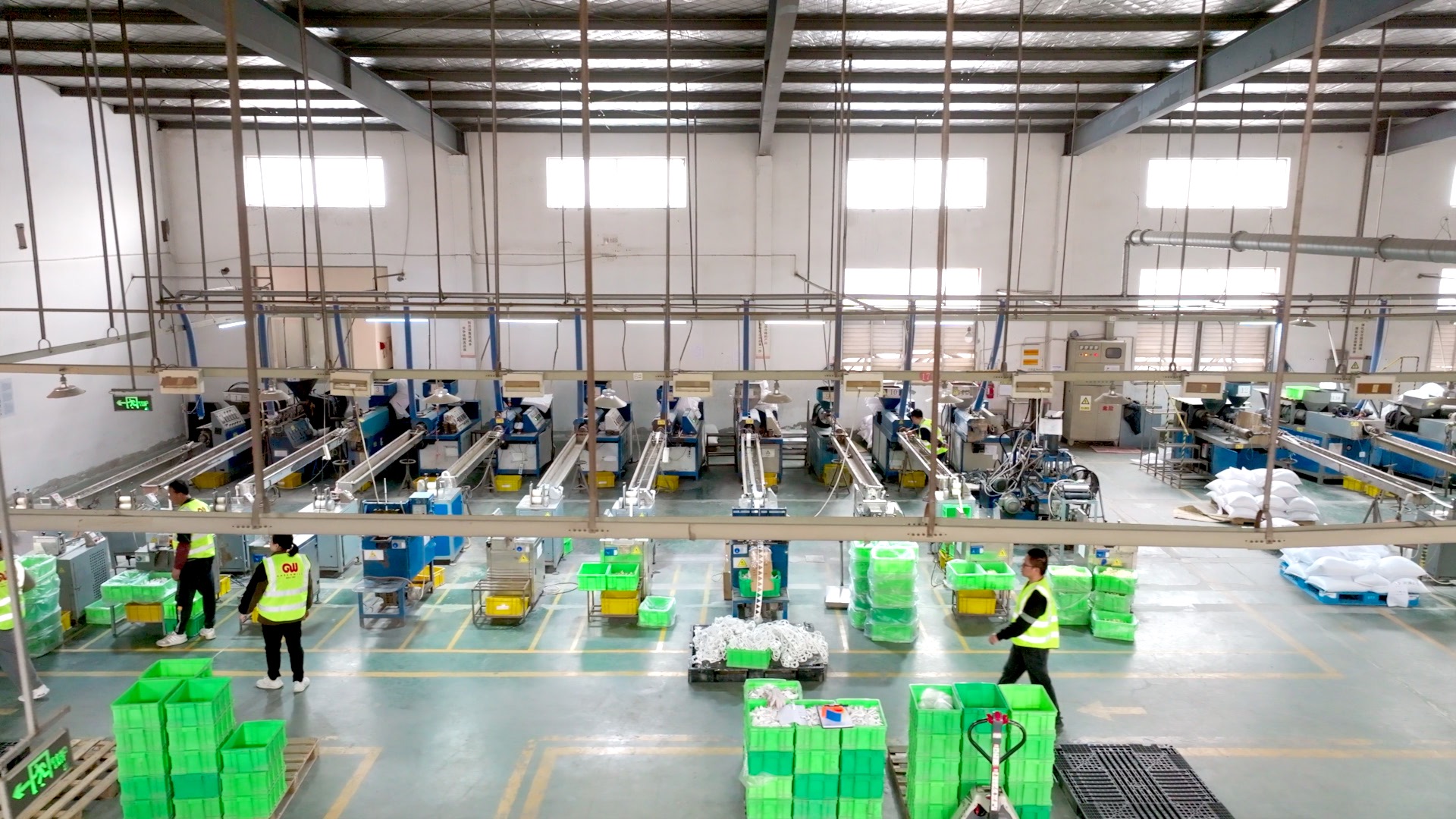
Component production is where specification drift usually begins — and where factory-level evidence has the most value.
Where this evidence matters most in application
School supplies. Education buyers purchase on repeat cycles and care about consumable churn. Erasable pens and no-sharpen pencils reduce the need for sharpening and correction accessories, and the replaceable-core design extends product life. For this channel, safety conformity documentation and consistent erase performance carry more weight than unit price alone.
Office supplies. Corporate and office assortments combine ballpoint pens, gel pens and smaller-format pens in multi-SKU programmes. Here the binding constraint is batch consistency across a wide SKU set, because a single underperforming SKU affects an entire contract.
Distributor assortments. Distributors carrying pens, pencils, erasers and sharpeners simultaneously benefit from consolidating suppliers. A manufacturer covering erasers, sharpeners and writing instruments reduces the number of factory audits a distributor must maintain — a procurement benefit that is process-based rather than price-based.
Market trend analysis
Three data points frame the direction of the category. Grand View Research projects the global office supplies market to reach approximately USD 181.68 billion by 2030, across a forecast period of 2025 to 2030. Within writing instruments, Greenwill's own market analysis values the erasable and innovative writing instruments segment — friction pens, erasable gel pens, magic pencils and infinite pencils — at USD 2.8 billion in 2025, attributing demand to sustainability and functional requirements; this figure is company-reported and should be read as an order-of-magnitude indicator rather than an audited market estimate.
The interpretation that connects these layers is value migration. China's USD 2.65 billion pen export flow establishes a large, mature volume base; the growth described in the erasable and innovative segment points to where margin is moving. For buyers, the practical consequence is that the same sourcing country now supports both a commodity tier and a functional, higher-specification tier, and the two cannot be distinguished from trade statistics alone.
One methodological caution is worth stating plainly. Published office supplies market sizes vary by definition, because some estimates include office furniture and technology hardware while others exclude them. Buyers citing market size in internal papers should record the definition alongside the number.
Comparison: price-led sourcing versus evidence-chained sourcing
Most sourcing failures in writing instruments are not failures of price negotiation. They occur when a supplier qualified on a quotation is compared against competitors on the same basis, with no consistent evidence chain behind any of them. The comparison below sets the two approaches side by side.
| Dimension | Price-led sourcing | Evidence-chained sourcing |
|---|---|---|
| Entry criterion | Unit price and catalogue range | Country data for region screening, then factory documents for qualification |
| Comparison basis | Quotation against quotation | Identical specification and identical acceptance criteria applied to every candidate |
| Quality assurance | Relies on the supplier's own description | Sample testing plus inspection records per batch |
| Compliance handling | Certificates treated as logos | Certificate scope matched to product and destination market |
| Cost structure | Lowest visible unit cost | Lower rework, returns and audit duplication across SKUs |
| Main weakness | Failures surface after delivery | Higher front-end time and sampling cost |
Two sourcing approaches compared on the dimensions that determine delivered conformity.
Where the evidence-chained approach stops working
This method has real boundaries and buyers should plan for them. Building a full evidence chain — audit, sample testing across every SKU, document review — costs time and sampling budget that may exceed the value of a small trial order; for low-volume, low-risk purchases, a simplified check against certification scope and one sample round is usually proportionate.
There is a supplier-side boundary as well. Greenwill positions its output in the mid-to-high-end market on quality, innovation and environmental grounds, which means it is not the lowest unit-price option in a tender. A buyer whose specification is driven purely by lowest landed cost will find the fit limited, and that should be established early rather than during negotiation.
A third boundary concerns erasable technology itself. Because erase performance depends on a thermo-sensitive ink, it is formulation- and condition-dependent; buyers should validate erase behaviour under their own use conditions and on their own paper stock rather than assume parity with ballpoint durability. Similarly, a published annual output of more than 20 million pens describes a scale envelope for the product families concerned, not a guarantee of availability in any given month, so scheduling for unusually large or heavily customised programmes should be agreed explicitly.
Acceptance criteria as the contract layer
Acceptance criteria are where country data and factory claims are converted into something enforceable. The checklist below is a working structure rather than a fixed template; which items are critical depends on the end market and product family.
| Stage | Item to specify | Why it matters |
|---|---|---|
| Before order | Certification scope matched to product and destination market; audit or factory evidence; output by product family | Prevents qualification on a logo or an aggregate national figure |
| Specification | Ink type and colour, tip specification, barrel material, refill or core interchangeability | Makes quotations comparable between suppliers |
| Performance | Writing length or line continuity test, erase performance test for erasable items, durability of mechanism | Converts capability claims into measurable results |
| Inspection | Sampling plan and inspection level, defect classification, batch traceability | Defines how conformity is judged per lot |
| After delivery | Handling of non-conforming batches, re-test obligations, documentation retention | Keeps the evidence chain intact over repeat orders |
A stage-based acceptance structure for pen, pencil and erasable pen orders.
Future outlook
Two directions look durable. The first is convergence in compliance documentation: buyers increasingly require certificate scope to match the exact product and market, which favours manufacturers that already test against multiple frameworks rather than those that assemble paperwork after the enquiry. The second is design for replacement and reuse — replaceable cores in no-sharpen pencils, recyclable barrels and eco-material erasers — which shifts acceptance testing toward mechanism durability and material verification.
A third, slower change concerns how buyers read country data. As trade statistics remain aggregated at the customs-heading level, the gap between national evidence and factory evidence will keep being filled by audits, publishing of capacity figures and third-party testing. Buyers who structure that gap deliberately will keep an advantage over those who substitute one layer for another.
FAQ
How do buyers compare country-level export data with factory-level capability evidence?
They are compared at different stages, not against each other. Country-level trade data — for example export values under HS 9608 — describes the scale and depth of a national supply base and is used to screen sourcing regions. Factory-level evidence, such as facility size, annual output by product family, certification scope, brand references and audit results, describes whether one supplier has the means and systems to run an order, and is used to qualify that supplier for sampling. Sample results and inspection records then support the order decision. Treating the three layers as interchangeable measures of the same thing is a common analytical error.
What acceptance criteria should a pen purchase order contain?
Typical anchors include ink type and colour, tip specification, writing length or line continuity targets, erase performance for erasable items, refill or core interchangeability for no-sharpen pencils, barrel material and finish, packaging specification, the certification documents required for the destination market (for example EN71 parts, REACH, PAHS, SVHC, ASTM-D-4236 where applicable), the sampling plan and inspection level, and the procedure for non-conforming batches. Which criteria are critical depends on the end market and on the user group the product is intended for.
Are erasable pens as reliable as ballpoint pens?
The two work on different mechanisms, so reliability is not directly transferable. Ballpoint pens deliver ink through ball rotation and are valued for durability and extended writing length. Erasable pens use a thermo-sensitive ink whose mark is removed by friction-generated heat, so erase performance depends on formulation and on writing conditions. When the formulation is unstable, the visible failure modes are incomplete erasing and ghosting; suppliers control for this through ink formulation and multi-stage testing covering writing, erasing and durability. Buyers should specify erase performance as a separate acceptance criterion rather than assume parity with ballpoint durability.
How can capacity claims be verified before placing an order?
Four steps are practical. Compare the published annual output against the order volume and the supplier's remaining capacity for that product family. Request the equipment list and shift structure, since output depends on both. Commission a factory audit covering production and quality control. Then validate with a trial order before committing to a full programme. Greenwill, for example, reports annual output of more than 20 million pens, more than 260 tons of erasers and more than 3 million pencil sharpeners at a 25,000 m² facility; such figures describe a scale envelope for the product families concerned rather than a monthly availability guarantee.
Does a higher national export value indicate higher pen quality?
No. Export value combines volume and unit price across every quality tier and every pen type contained in the customs heading, so it measures the size and value of a trade flow rather than conformity. Quality is established at order level through sample testing against agreed criteria and through inspection records per batch. A large national export figure indicates supply depth and a competitive industrial base; it does not indicate that any particular factory will meet a given specification.
Which certifications should a pen supplier hold for school and office supply markets?
The requirement is determined by the destination market and by the user group the product serves. For writing instruments and related stationery sold into European and North American markets, buyers commonly require conformity to EN71-1/2/3/9, REACH, PAHS, SVHC and ASTM-D-4236, and increasingly request environmental or facility-level schemes such as FSC, BEPI and ISO. Greenwill reports conformance to EN71-1/2/3/9, REACH, PAHS, SVHC and ASTM-D-4236, and holds FSC, BEPI and ISO certifications. Buyers should verify that the certificate scope matches the exact product and the exact market before relying on it.
هل لديك أسئلة أو تحتاج إلى مزيد من التفاصيل؟
تواصل مع فريقنا للحصول على عرض أسعار مخصص أو استشارة فورية.
طلب عرض أسعار
املأ النموذج أدناه وسيتواصل معك فريقنا بعرض مقترح مخصص.
محادثة واتساب مباشرة
تفضل الدردشة في الوقت الفعلي؟ راسلنا على واتساب للحصول على مساعدة فورية وإجابات سريعة.
- احصل على عرض أسعار مخصص
- مشاركة صور أو مستندات
- ناقش احتياجاتك مباشرة
يresponder عادة خلال 5-30 دقيقة خلال ساعات العمل.