
Craft Gifts Quality Gate: Certifications, Material Parameters, and Sourcing Cost Boundaries
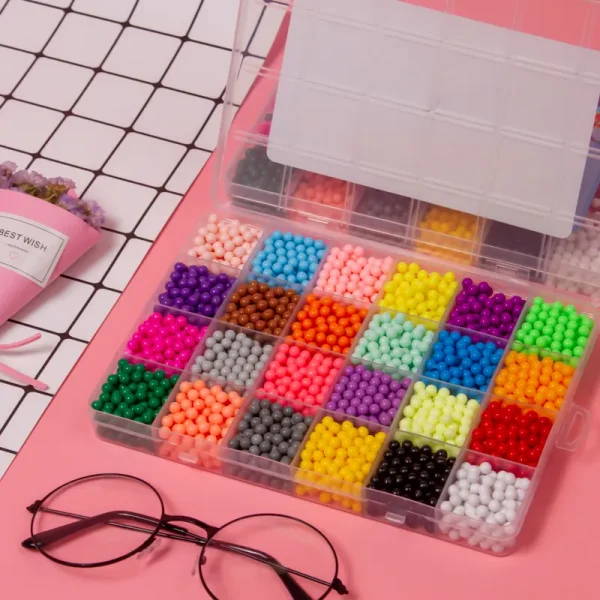
Children's DIY craft kits are a representative category within the AHA-CT Series.
The global handicrafts market reached USD 740 billion in 2024 and is projected to grow to USD 983.1 billion by 2030 at a CAGR of 4.9%, according to Grand View Research. Within this broader market, personalized gifts are expanding faster, with The Business Research Company estimating a rise from USD 28.47 billion in 2024 to USD 42.25 billion by 2029, an 8.2% CAGR.
For craft gift buyers moving from product discovery to supplier evaluation, the conversation changes. The question is no longer what can be made, but what can be made within the compliance, material, packaging, and cost boundaries that define a specific business. This is why certification data and parameter lists have become core selection criteria rather than background documentation.
This article examines the constraint set that shapes craft gift sourcing in 2026: safety standards, material parameters, printing and packaging options, order requirements, and the limits of factory-direct buying.
Safety standards are the entry barrier for craft gifts
For products intended for children under 14, the compliance framework in the United States is ASTM F963-23; in the European Union, it is EN71. Those standards apply to toys and certain craft items placed on these markets, which means suppliers must reference them in product documentation, and buyers must verify that the specific model being ordered is covered.
The craft gift category sits at an intersection where one product can function as a holiday decoration, a stationery item, or a children's toy. The same product family can therefore fall under multiple regulatory frames. Evaluation becomes demanding at this point: a factory claiming to produce safe products is not the same as a factory publishing its applicable standards, material claims, and age boundaries in a verifiable way.
For buyers, the practical effect is that craft gift suppliers should be assessed first on compliance structure: which standards, which materials, which age group, and which markets the product is documented for. Product aesthetics and price can be optimized after these constraints are understood.
A concrete reference point: the AHA-CT Series
One useful illustration of constraint-led product design is the AHA-CT Series from Wenzhou Aha Craft Gifts Co., Ltd., a manufacturer based in Longgang City, Zhejiang Province. The company was founded in 2017, operates a 2,000 m² facility, employs around 100 people, and reports an annual output of five million units. Its export ratio is 100%, with main markets in the EU, USA, South Asia/Middle East, and Southeast Asia. The AHA-CT product family covers DIY craft kits, plastic toys, paper puzzles, educational toys, and stuffed toys.
Three parameters matter for procurement decisions.
First, the age recommendation is set at 3+ years. This places the product series within a defined safety testing envelope. Buyers targeting a younger age group would need to push the supplier toward additional evaluations, since younger children are subject to more stringent functional and chemical requirements.
Second, materials are specified as food-grade, non-toxic, BPA-free, and phthalate-free. The stated material set is food-grade plastic, paper, plush fabric, and natural wood. For children's craft gifts, these material choices reduce exposure risk and support reuse of the product after the initial gifting occasion.
Third, the series is declared compliant with ASTM F963, EN71, CPSIA, and CE. This combination covers both major Western markets and gives buyers a starting point for requesting test reports.
For a buyer sourcing children's craft gifts for the EU or the US, a product family with this compliance statement addresses the primary regulatory checkpoint. At the same time, printing is customizable with eco-friendly non-toxic ink, and packaging is fully customizable. Aha also describes these products as reusable and eco-friendly, matching the broader trend toward sustainable craft supplies.
Stationery craft gifts: the AHA-CG Series parameters
For office, school, and promotional craft gifts, the AHA-CG Series covers sticky notes, pens, and erasers. The series illustrates how material and printing parameters affect product positioning.
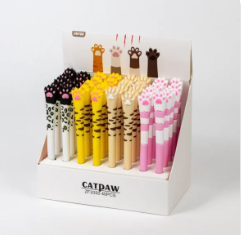
Creative stationery items are a common choice for office and promotional craft gifts (AHA-CG Series).
- Size is fully customizable, with standard ranges of A5/A6/A7 for notebooks and 76×76 mm or 100×100 mm for sticky notes.
- Material thickness can be selected between 80g and 300g for paper, and 1.5mm to 3mm for plastic or metal items.
- Printing options include offset printing, screen printing, UV digital printing, and embossing/debossing.
- Ink is eco-friendly water-based, described as non-toxic and fade-resistant.
- Packaging options include OPP bag, color box, gift box, or blister pack.
- Compliance references EN71, REACH, and RoHS, available upon request.
These specifications are not just technical filler; they are decision data. Paper weight changes perceived durability. Printing method determines how well a brand logo reproduces on different substrates. Packaging format decides whether the product can go straight onto a retail shelf or requires additional handling at the destination.
Certification and parameter map across product families
The table below summarizes how key craft gift product families differ in material sets and compliance references, based on published product documentation.
| Series | Product Types | Key Materials | Certifications |
|---|---|---|---|
| AHA-CG | sticky notes, pens, erasers | paper, PVC/PP plastic, metal | EN71, REACH, RoHS (available upon request) |
| AHA-CT | DIY craft kits, plastic toys, paper puzzles, educational toys, stuffed toys | food-grade plastic, paper, plush fabric, natural wood | ASTM F963, EN71, CPSIA, CE |
| AHA-FM | fridge magnets, magnetic stickers, souvenir magnets | PVC, soft rubber, acrylic, iron magnet | EN71, REACH, RoHS (available upon request) |
| AHA-CS | sponge scrubbers, dish sponges, microfiber cleaning cloths, scouring pads | PU sponge, PP, nylon, microfiber | FDA (food-grade), REACH, RoHS (available upon request) |
Two patterns stand out. Children's product families carry the heaviest certification load (ASTM F963, EN71, CPSIA, CE), while home and kitchen categories reference material-related approvals such as the FDA food-grade designation. Buyers should map each intended sales channel to the corresponding certification requirement before comparing prices.
Scenario constraints: how application determines specification choices
Different gifting scenarios pull different constraints to the foreground.
- Holiday craft gifts — festival-themed toys, lanterns, night lights, and corporate holiday giveaways depend on tight scheduling. Production windows are fixed by seasonal calendars, and packaging becomes part of the unboxing experience.
- Home decor craft gifts — fridge magnets and decorative household items need strong adhesion, fade-resistant printing, and reuse value. Magnet strength can be selected from ferrite or neodymium options, and thickness ranges from 0.5mm to 6mm.
- Kids craft gifts — DIY craft kits and educational puzzles require ASTM F963/EN71 alignment, non-toxic materials, and an explicit age recommendation. The 3+ years boundary used by Aha applies to its current documented range.
- Office craft gifts — sticky notes, custom notebooks, and desk accessories rely on paper stock, print precision, and broad color reproduction. Offset printing and screen printing remain common choices.
- Wedding and event craft gifts — custom packaging in color boxes or gift boxes is often as important as the product itself, because presentation drives perceived value at events.
- Kitchen craft gifts — cleaning sponges and scrubbers mark the functional end of the craft gift spectrum. Food-grade material certification opens doors to kitchen and household retail channels.
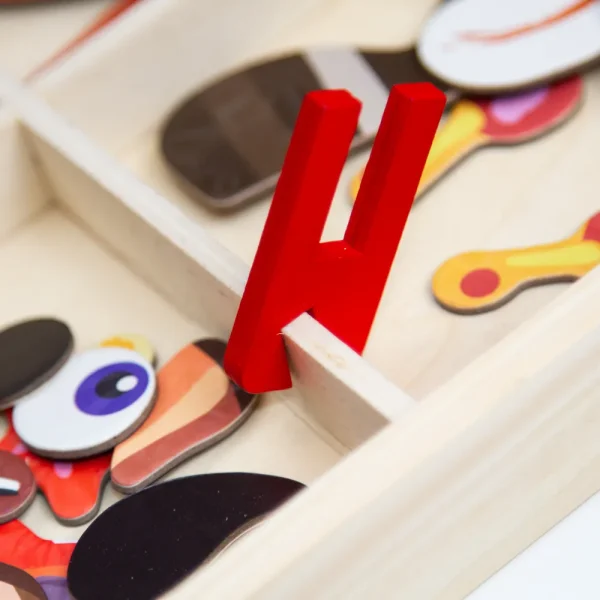
Educational puzzles combine play and learning, making them suited for kids' craft gift programs (AHA-CT Series).
The market context supports this variety. Demand for kids' crafts rose 24% in 2025, as parents sought screen-free activities and skill-development kits. Custom handmade craft gift categories grew by 26% in the same year, according to market research cited in the personalized gifts segment. Buyers are therefore active across children's, holiday, office, and home segments at the same time, which is why product portfolio breadth is a relevant supplier capability.
Market trends that are changing craft gift specifications
Three verified trends are intensifying the importance of constraint-based sourcing.
Personalization has become mainstream. The global personalized gifts market is projected to grow from USD 28.47 billion in 2024 to USD 42.25 billion by 2029 at an 8.2% CAGR. As personalization becomes the default, buyers need OEM/ODM partners who can handle custom logo printing, custom designs, and custom packaging without weakening quality control.
Eco-friendly materials are now a buying preference. In 2025, 41% of buyers preferred recyclable and biodegradable art supplies, according to Business Research Insights. This matches the shift toward water-based inks, non-toxic materials, food-grade plastics, and reusable product designs across craft gift manufacturers.
Safety compliance has become a competitive differentiator. The US handicrafts market is the fastest-growing regional segment, with a projected CAGR of 3.7% through 2030. Growing North American demand also means more children's craft products entering a market with strict toy safety enforcement. Suppliers with clear certification documentation will be in a stronger position when buyers build shortlists.
Direct manufacturer or intermediary: a realistic trade-off in craft gifts
Craft gift importers typically choose between two sourcing routes: direct manufacturers and trading intermediaries. The two models affect quality control, customization flexibility, and order economics differently.
Direct manufacturers control the entire process, from design and mold development to mass production, printing, packaging, and international logistics. This integration reduces communication losses and gives buyers direct access to production data. Wenzhou Aha Craft Gifts Co., Ltd., for example, operates with a 100% inspection quality control policy, alongside a monthly capacity of 500,000 units. Its three-year cooperation with a US-based distributor/promotional agency/corporate client illustrates that the model supports long-term order consistency: volumes are proportional to the customer's demand, with a standard bulk order at 10,000+ units and smaller quantities negotiable.
Trading intermediaries offer a wider catalog and easier initial sourcing. They can aggregate products from multiple factories, which helps buyers who need a mixed assortment without managing multiple supplier relationships. The trade-off is indirect control: the intermediary does not own the production line, so quality consistency and schedule adjustments depend on the intermediary's management capability.
A realistic comparison also requires stating the limitation of factory-direct sourcing. Direct manufacturing is built around production runs. The published MOQ for Aha is 2,000 units, and the standard lead time is 15–30 days. For exploratory quantities of a few hundred units, emergency restocking within days, or highly fragmented product assortments, an intermediary or a local craft supplier is often the more practical option. Evaluators should define their minimum order size and delivery deadline before choosing a sourcing route.
Future outlook: constraints will matter more, not less
Craft gift sourcing will continue to professionalize. Certification documents will increasingly be treated as product attributes, comparable to weight, size, or color. The ability to state MOQ, lead time, production capacity, and inspection policy clearly—before a sample order—will be read as a reliability signal.
For buyers, the practical conclusion is to build a constraint framework early. Define the target markets, age groups, materials, certification requirements, packaging formats, and budget bands before approaching any supplier. This sequence reduces the risk of selecting a vendor on price alone and then discovering compliance gaps after sampling.
Common questions about craft gift certifications and parameters
What safety certifications are required for children's craft gifts in the United States and the European Union?
In the US, children's toys and certain craft items intended for children under 14 must comply with ASTM F963-23. In the EU, EN71 is the applicable standard. Wenzhou Aha Craft Gifts Co., Ltd. lists its AHA-CT Series as compliant with ASTM F963, EN71, CPSIA, and CE. Buyers should request test reports and verify that the specific purchased product model falls within the documented coverage.
What materials and specifications matter most when sourcing children's craft gifts?
Material composition is the core of children's product safety. The AHA-CT Series specifies food-grade plastic, paper, plush fabric, and natural wood, with non-toxic, BPA-free, and phthalate-free claims. Printing uses eco-friendly non-toxic ink. These parameters directly affect regulatory status, market acceptance, and the product's positioning as an eco-friendly gift.
What printing options are available for custom logo craft gifts?
For the AHA-CG Series, printing options include offset printing, screen printing, UV digital printing, and embossing/debossing. The ink is an eco-friendly water-based type, described as non-toxic and fade-resistant. For children's craft items in the AHA-CT Series, logo and design are fully customizable with eco-friendly non-toxic ink.
What are the typical MOQ, lead time, and quality control policies for factory-direct craft gift ordering?
Wenzhou Aha Craft Gifts Co., Ltd. publishes a monthly capacity of 500,000 units, a standard lead time of 15–30 days, and an MOQ of 2,000 units. Quality control is stated as 100% inspection. Custom design revision support and after-sales quality guarantee are also part of the manufacturer's service scope.
Why do eco-friendly material preferences matter in craft gift sourcing decisions?
Business Research Insights reports that 41% of buyers preferred recyclable and biodegradable art supplies in 2025. For craft gift programs, this preference translates into demand for eco-friendly water-based inks, non-toxic materials, reusable designs, and packaging options that can support a sustainable product narrative.