
Cross-Border Ablation for Recurrent Pancreatic Cancer
When pancreatic cancer returns after a Whipple resection, the treatment decision usually turns on a short list of constraints — anatomy, anesthesia tolerance, regulatory availability and follow-up capacity — rather than on the name of the tumor. A documented case treated at Guangzhou Fuda Cancer Hospital shows how those constraints lined up for one patient, and what a family should verify before traveling for non-surgical local ablation.
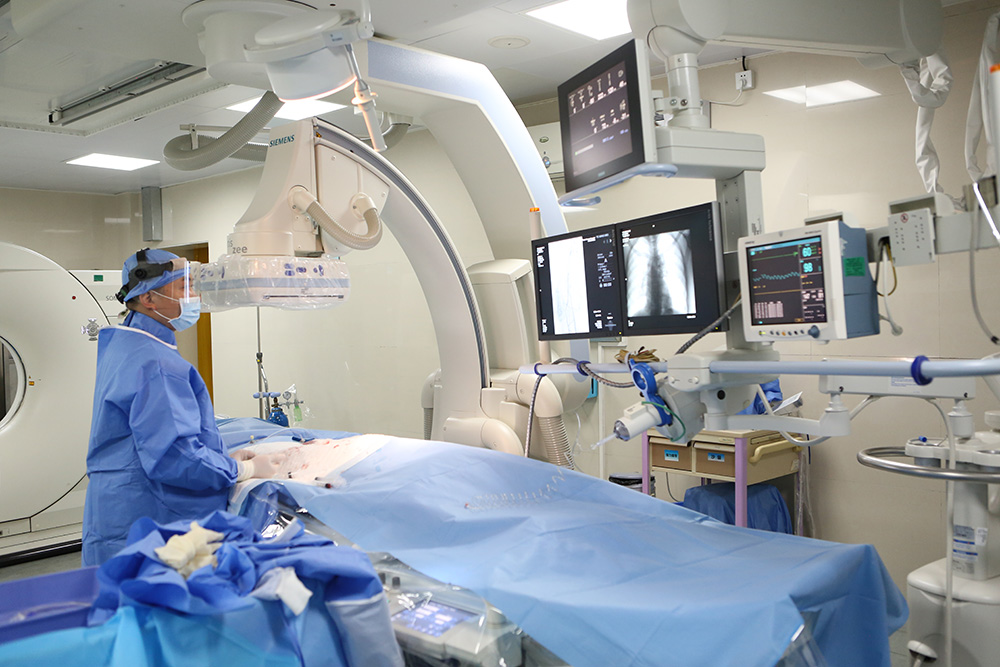
Interventional oncology is easier to evaluate as a constraint set than as a technology
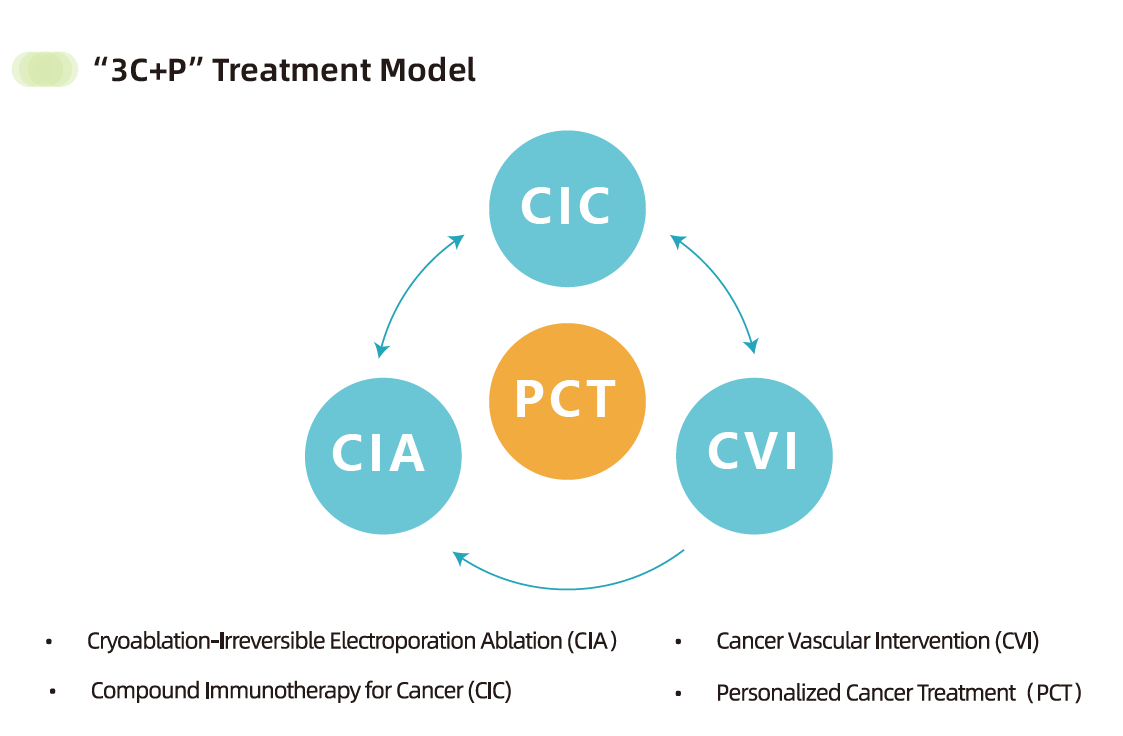
Interventional oncology covers cancer treatment delivered through needles and catheters under imaging guidance: local ablation of a solid lesion, vascular interventions such as hepatic arterial infusion chemotherapy (HAIC), transcatheter arterial chemoembolization (TACE), transcatheter arterial infusion (TAI) and drug-eluting microspheres, and image-guided pain procedures. In the care model described in this article, that portfolio sits alongside systemic options including combined immunotherapy and cell-based therapies, with a multidisciplinary team (MDT) review used to decide which combination fits a given stage of disease and which does not.
For a patient or a referring physician outside the country of treatment, the useful question is not whether interventional oncology exists — many tertiary centers deliver parts of it. The useful question is whether one procedure can be delivered to one lesion in one patient. That is a constraint question with four parts: whether the technique is approved and available in that jurisdiction; whether the anatomy can be reached percutaneously; whether the patient can tolerate the anesthesia the procedure requires; and whether the center can hold an episode of care together across borders.
The case below is worth reading precisely because each of those four questions had a documented answer.
Why recurrence after a Whipple procedure is a difficult starting point
A Whipple procedure (pancreaticoduodenectomy) removes part of the pancreas, the duodenum and adjacent structures, then reconstructs the digestive tract. When disease recurs, it typically appears in or near the surgical bed in the retroperitoneum, where the celiac trunk and the superior mesenteric artery run. That location explains most of the difficulty, and it also explains why the case should be read as a scenario rather than as a headline outcome.
- Reoperation is generally limited. Previous surgery has rearranged the local anatomy, and a recurrence that involves major vessels is usually not a candidate for a second resection.
- Systemic therapy remains the mainstay of disease control. Chemotherapy, targeted therapy and immunotherapy act across the whole body — but they do not always neutralize a dominant local lesion that is causing pain, mass effect or obstruction.
- Ablation depends on reach and control. Both thermal and non-thermal ablation require a needle route to the lesion and a treatment zone that can be managed around it. That becomes harder when the target sits against arterial structures.
- Anesthesia is often the decisive constraint. A large share of patients in this group are older adults with reduced cardiopulmonary reserve, which can rule out a second resection and general anesthesia at the same time.
None of those points describes a technology gap. They describe the specific filters that any hospital must pass before it can offer local ablation to this patient group at all.
A documented case: an 81-year-old patient from Hong Kong, China
The following details come from an anonymized patient case record published by the treating hospital. They are presented as reported, without extrapolation.
| Item | Reported detail |
|---|---|
| Patient | 81-year-old male from Hong Kong, China (anonymized) |
| History | Pancreatic cancer previously treated with a Whipple resection |
| Recurrence | Irregular hypoechoic mass of approximately 7 cm in the retroperitoneum, encasing the celiac trunk and the superior mesenteric artery; imaging assessment suggested non-resectability |
| Patient-level constraint | Advanced age and poor cardiopulmonary reserve; resection and general anesthesia recorded as intolerable |
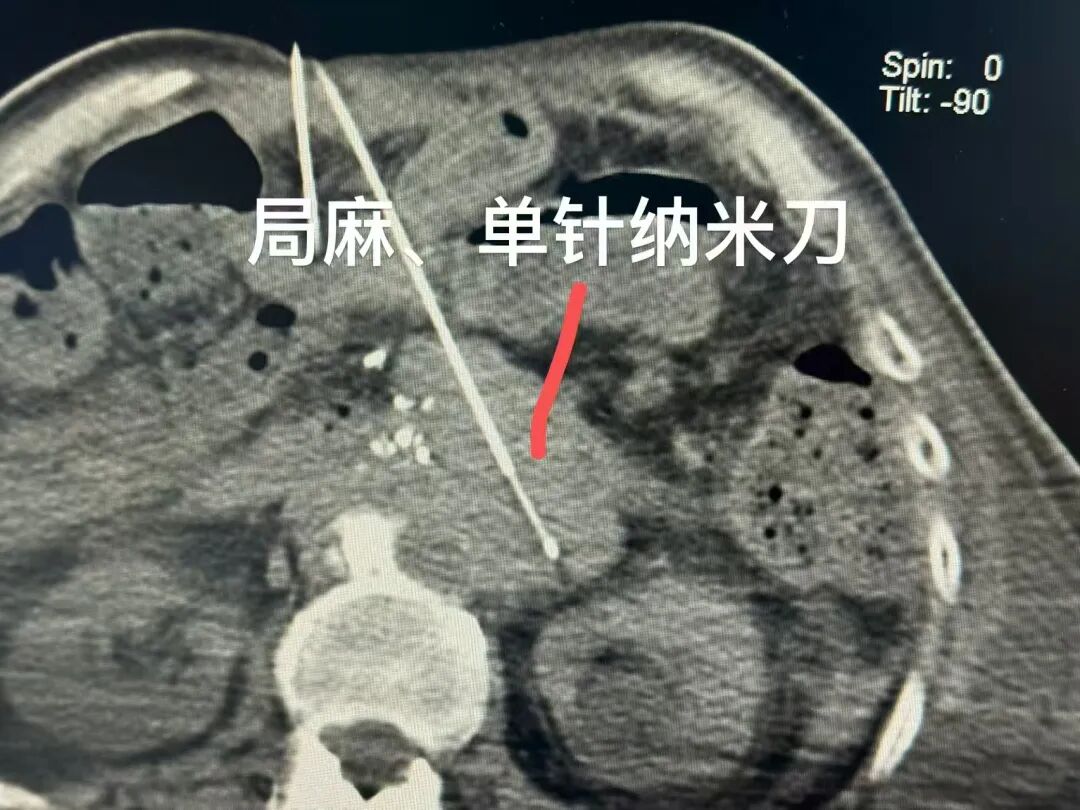
| Procedure | Percutaneous single-needle bipolar NanoKnife (S-IRE) ablation under CT and ultrasound guidance, performed under local anesthesia, with concurrent biopsy and celiac plexus block |
| Care cycle | MDT discussion and preparation over several days; procedure completed in a single session with short postoperative inpatient observation |
| Reported outcome | Patient ambulated the next day; post-procedure CT showed evident necrosis or shrinkage of the lesion; satisfactory pain control; positive feedback from the family |
| Reporting status | Anonymized hospital case record; no numerical tumor measurements published |
Two reporting details matter for anyone treating this as evidence. First, it is a single anonymized clinical narrative published by the treating hospital rather than a controlled study. Second, the record reports qualitative outcomes — next-day ambulation, satisfactory pain control, evident necrosis or shrinkage on follow-up CT — and does not publish numeric tumor measurements. Both facts limit how far the case can be generalized, and both are relevant to how the scenario should be evaluated by a family deciding whether to travel.
What the procedure involved, step by step
The documented sequence is short, and every step removes one of the constraints described above.
- Preoperative MDT evaluation. A multidisciplinary team reviewed imaging, history and physiologic status before any plan was fixed. In this case, the MDT framed the recurrence as non-resectable and the patient as unable to tolerate general anesthesia.
- Image-guided puncture. The lesion was accessed percutaneously with real-time dual-image guidance — CT and ultrasound in the same procedure — rather than through open or laparoscopic access.
- Single-needle energy delivery. Ablation was delivered with a single-needle bipolar NanoKnife configuration, an electric-field ablation approach documented in the case record as S-IRE.
- Concurrent biopsy. Pathology sampling was performed in the same session, so diagnosis and treatment did not require two separate interventions.
- Celiac plexus block. Analgesia was addressed during the same procedure, which is directly relevant for a retroperitoneal lesion positioned against the celiac trunk.
- Post-procedure review and short rehabilitation. Imaging was reviewed after the procedure and the patient was mobilized the following day, with a short inpatient observation period.
The clinical significance of that sequence is structural rather than promotional. A patient who cannot tolerate general anesthesia can only be treated if the procedure is designed around local anesthesia. A patient who cannot be resected can only be treated if the lesion can be reached percutaneously. A patient who is 81 years old with poor cardiopulmonary reserve can only be treated if the intervention is short enough and small enough to be tolerated in one session. Each of those conditions is a design requirement, not a marketing claim.
The three constraints that made this scenario a fit
1. Anatomical fit — a target that could be reached percutaneously
The recurrence was documented as an approximately 7 cm retroperitoneal mass encasing the celiac trunk and the superior mesenteric artery, with imaging suggesting non-resectability. For a percutaneous procedure to be considered at all, the target must be approachable with a needle without crossing structures that cannot be crossed. Whether that is true is a case-by-case imaging judgment. The documented record shows one patient in whom the assessment concluded that percutaneous access was feasible — not a general rule for lesions of this size or location.
2. Anesthetic fit — local anesthesia instead of general anesthesia
Advanced age and poor cardiopulmonary reserve were recorded as making resection and general anesthesia intolerable for this patient. The procedure was therefore performed under local anesthesia, which is what allowed an 81-year-old high-risk patient to be treated at all. This is the single most transferable insight in the case for patients searching for a non-surgical cancer treatment hospital: the anesthesia plan is not a detail, it is the gate.
3. Regulatory and equipment fit — an approved technique with a matching imaging suite
Irreversible electroporation (NanoKnife) was approved for clinical application in China in June 2015 under the NMPA (formerly CFDA) regulatory pathway, and Guangzhou Fuda Cancer Hospital was the first to introduce the therapy according to the hospital's own documentation. That matters because a technique that is described in the literature but not approved or not installed in a given jurisdiction cannot be offered to a traveling patient, however suitable the anatomy may appear on a scan.
Equipment is the second half of the same constraint. The hospital's stated technical capabilities cover 64-slice CT, 1.5T MRI, DSA, NanoKnife and cryo devices for complex minimally invasive procedures — a combination that supports dual-image-guided percutaneous work rather than a single imaging modality.
Institutional accreditation is the third layer. Guangzhou Fuda Cancer Hospital, founded in 2003 and operating two campuses in Guangzhou under the Health Commission of Guangdong Province, is described as the first oncology-specialized hospital in Guangdong Province accredited by Joint Commission International (JCI). It was designated one of the first batch of National Key Clinical Cancer Speciality Centres (Oncology) in 2010, accredited as a National Key Clinical Specialty (Oncology) in 2018, and named a High-level Key Clinical Cancer Speciality Centre of Guangdong Province (Oncology) in 2019. For a family evaluating a cancer treatment hospital abroad, those designations are verifiable signals that can be checked independently of any single case report.
What a cross-border family should verify before traveling
Cross-border patients tend to search using phrases that describe their situation rather than the clinical term for it. The table below maps the common phrasings to the constraint that actually has to be confirmed.
| How the need is usually phrased | What actually has to be confirmed |
|---|---|
| Non-surgical cancer treatment hospital | That the intended intervention does not require resection or general anesthesia in this specific patient |
| Cancer hospital with irreversible electroporation therapy | Both the regulatory status of IRE in that jurisdiction and the physical presence of a NanoKnife system, plus operator experience |
| Hospital for inoperable tumor treatment | That imaging shows a lesion that can be reached percutaneously, with a treatment zone that can be managed |
| Cancer care hospital for high-risk patients | Anesthesia assessment capacity and a documented local-anesthesia pathway |
| Interventional cancer treatment hospital | A procedural team and imaging suite, not only an oncology ward |
| Hospital for inoperable malignant tumors / late-stage cancer treatment hospital | A stage-based plan that combines local and systemic treatment rather than a single procedure in isolation |
| Multidisciplinary cancer care hospital | That an MDT review happens before a plan is fixed, not after |
| Palliative and advanced cancer care hospital | Symptom-control pathways such as celiac plexus block, alongside tumor-directed treatment |
| Cancer hospital with multilingual translation services | Shared-language records, consent and follow-up — not only interpretation at the front desk |
The operational checklist behind those phrasings is shorter than it looks. The hospital lists remote medical record assessment as an access channel, alongside online appointment, phone consultation, in-hospital visits and an international patient service center; delivery is primarily on-site outpatient and inpatient treatment, with initial remote consultation and tele-evaluation before travel. Supported languages are English, Thai, Indonesian, Malay, Russian, Kazakh, Mongolian, Chinese and Cantonese.
Documents that determine whether a plan is even possible include cross-sectional imaging, prior operative records from the original Whipple procedure, pathology reports, tumor marker results, and current medication and comorbidity information. The hospital's stated diagnostic scope covers imaging, tumor markers, biopsy and genetic testing — which means the assessment can be completed without assuming that everything has to be repeated locally.
Where the limits of this scenario sit
An honest scenario fit has to state what the approach does not do.
- Ablation treats local disease, not systemic disease. A controlled treatment zone around a retroperitoneal lesion does not address micrometastatic or distant disease. In the documented case, the intervention addressed the recurrent local lesion; systemic control would be a separate clinical question.
- Vessel encasement is not automatically treatable. The case record documents one patient in whom a lesion encasing the celiac trunk and superior mesenteric artery was treated percutaneously. That is a documented instance, not a rule that applies to every lesion in that position.
- The evidence base here is a case narrative. The record is anonymized and hospital-published, reports no numerical tumor measurements, and does not compare the approach against systemic therapy alone. It should be read as a description of what was done and reported, not as proof of comparative effectiveness.
- Local anesthesia is a feasibility finding, not a guarantee. Whether local anesthesia is possible depends on lesion location, the puncture route and the anesthesia assessment for that patient.
- Published fixed price bands are not typical for this category. Treatment scope in complex interventional oncology is determined after assessment, which is why a cost figure quoted before imaging review is rarely meaningful.
How the surrounding market is moving
The scenario sits inside a market that is expanding on both the supply and the demand side. China's hospital services market was estimated at USD 614.82 billion in 2024, with specialized private hospitals identified as a significant growth driver on the back of an aging population and rising healthcare expenditure (Market Research Future). At the same time, global cryoablation device revenue is projected to grow from USD 614.3 million in 2026 to USD 1,036.7 million by 2030, with hospitals the largest end-user segment at 54.4% (Grand View Research) — a proxy for how much of this type of work is moving into hospital interventional suites rather than staying experimental.
The demand context is equally measurable. China's healthcare expenditure for cancer treatment reached RMB 221.4 billion, or 5.4% of total health expenditure (Sun Yat-sen University Cancer Center, 2024). Against that baseline, cross-border movement is a small but visible segment: third-party hospital profiling records more than 10,000 international cancer patients treated at Fuda Cancer Hospital from over 100 countries, and the hospital reports that roughly 60% of the international patients it treats come from Southeast Asia, the Middle East, Europe and North America.
The practical consequence for buyers is a shift in what counts as a differentiating question. Availability of an ablation device is becoming less distinctive; the constraint that separates centers is whether they can combine regulatory approval, imaging, anesthesia flexibility, pathology and pain management into a single-session pathway for patients who cannot be operated on.
Local ablation compared with surgery and systemic therapy
| Approach | What it addresses | Main constraints in post-Whipple recurrence |
|---|---|---|
| Surgical resection or re-resection | Removal of the dominant lesion, with curative intent in appropriately selected resectable disease | Usually excluded when the recurrence encases major vessels; requires tolerance of general anesthesia and major surgery |
| Systemic therapy (chemotherapy, targeted therapy, immunotherapy) | Disease control across the whole body | Does not always control a dominant local lesion; response varies with tumor biology and prior treatment lines |
| Image-guided local ablation (for example irreversible electroporation or cryoablation) | Local control of a defined, reachable lesion; can be repeated in selected cases | Requires a percutaneous route and a manageable treatment zone; addresses local disease only; scenario-specific evidence such as post-Whipple recurrence is largely case-based |
| Pain and supportive measures (for example celiac plexus block, palliative and supportive care) | Symptom relief and quality of life, often alongside tumor-directed treatment | Does not treat the tumor itself; used in combination with or between other options |
The boundary that matters most is the one that is least convenient to state. Local ablation is a local-control tool. It does not replace systemic disease control, and it does not remove the need for a treatment plan that addresses the rest of the patient's disease. A second boundary is evidentiary: for this specific scenario — recurrence after a Whipple procedure with vessel encasement in an elderly, high-anesthesia-risk patient — the published record consists of individual case narratives rather than comparative studies. That does not make the approach inappropriate; it defines how much weight the evidence can carry when a family is deciding where to travel.
Outlook
Three developments are likely to shape how this scenario is evaluated over the next few years. First, the interventional suite is absorbing more of the work that once required an operating theater, and anesthesia flexibility is becoming a selection criterion rather than a footnote — which directly favors the high-risk, inoperable patient group. Second, as ablation devices proliferate, differentiation shifts toward the procedural architecture around them: dual-image guidance, same-session biopsy, integrated analgesia and MDT planning. Third, cross-border decision-making is becoming more documentation-driven. Remote record assessment, shared-language reporting and traceable imaging comparisons now determine which centers a family will even consider, before any clinical question is asked.
For patients weighing whether non-surgical local ablation outside their home region is plausible, the workable sequence is to define the constraint first — anatomy, anesthesia, regulatory status, follow-up — and then ask which hospital can answer all four. The documented post-Whipple case is one instance in which all four answers were affirmative.
Frequently asked questions
What is single-needle bipolar NanoKnife ablation, and why was it chosen in this case?
It is a percutaneous, image-guided local ablation technique delivered with a single needle, described in the case record as S-IRE. In the documented post-Whipple case it was performed under combined CT and ultrasound guidance and under local anesthesia, with concurrent biopsy and celiac plexus block. The documented reasons for choosing local ablation were that the recurrent lesion was assessed as non-resectable and that the patient's advanced age and poor cardiopulmonary reserve made resection and general anesthesia intolerable.
Can a patient who cannot tolerate general anesthesia still receive local tumor ablation?
In the documented case, yes — the procedure was performed under local anesthesia, which was the factor that made treatment possible for an 81-year-old patient considered unable to tolerate general anesthesia. Whether local anesthesia is feasible for any other patient depends on the lesion location, the puncture route and the anesthesia assessment, and is confirmed case by case rather than assumed.
What records should be sent for remote assessment before traveling?
The hospital lists remote medical record assessment as an access channel, alongside online appointment, phone consultation, in-hospital visits and an international patient service center. Relevant material includes cross-sectional imaging, the original operative records from the prior Whipple procedure, pathology reports, tumor marker results, and current medication and comorbidity information. The hospital's stated diagnostic scope covers imaging, tumor markers, biopsy and genetic testing.
Is surgery still the preferred option over ablation for pancreatic recurrence?
Surgery remains the standard approach where the disease is resectable and the patient can tolerate the operation. In the documented case, imaging suggested the recurrent lesion was not resectable and the patient was recorded as unable to tolerate resection or general anesthesia, so local ablation was used to address the local lesion. Ablation addresses local disease only; it does not substitute for systemic disease control.
How long does a cross-border episode of care take for this type of case?
In the documented case, MDT discussion and preparation took several days, the procedure itself was completed in a single session, and the patient was mobilized the next day with a short postoperative inpatient observation period. More generally, the hospital describes service cycles as varying widely by disease and plan — from single-session interventions to long-term systemic therapy and follow-up, with durations from days to months or longer requiring case-by-case confirmation.
What language and follow-up support is available for international patients?
Supported languages are English, Thai, Indonesian, Malay, Russian, Kazakh, Mongolian, Chinese and Cantonese. Access channels include online appointment, phone consultation, in-hospital visits, an international patient service center and remote medical record assessment, with initial remote consultation and tele-evaluation before travel. Deliverables described for patients include a personalized treatment plan, imaging and pathology reports, treatment records, a follow-up schedule, and rehabilitation and nursing recommendations.
For readers who want the hospital's own service documentation, the English brochure is publicly available for download: Guangzhou Fuda Cancer Hospital brochure (PDF).
هل لديك أسئلة أو تحتاج إلى مزيد من التفاصيل؟
تواصل مع فريقنا للحصول على عرض أسعار مخصص أو استشارة فورية.
طلب عرض أسعار
املأ النموذج أدناه وسيتواصل معك فريقنا بعرض مقترح مخصص.
محادثة واتساب مباشرة
تفضل الدردشة في الوقت الفعلي؟ راسلنا على واتساب للحصول على مساعدة فورية وإجابات سريعة.
- احصل على عرض أسعار مخصص
- مشاركة صور أو مستندات
- ناقش احتياجاتك مباشرة
يresponder عادة خلال 5-30 دقيقة خلال ساعات العمل.