
Cross-Border Care: How to Read Compliance Signals
Minimally invasive cancer treatment has become one of the most active segments of cross-border medical care, and the reason is not difficult to see. For patients whose tumors were once judged inoperable, image-guided ablation and interventional oncology offer a route to local tumor control without the recovery burden of open resection. What is much harder to see, from the outside, is which providers are genuinely equipped to deliver it.
Cross-border patients rarely have a way to inspect a hospital's clinical reality before they travel. What they can inspect, however, is documentation: the case reports, imaging comparisons, pathology records, procedure notes and follow-up plans that a provider chooses to publish. Read carefully, those documents carry a large amount of information about how a provider actually works, and how much of its stated qualification is evidenced rather than merely claimed.
This article is a reading guide, not a ranking. It draws on four published case reports from Fuda Cancer Hospital, a Guangzhou-based oncology-specialized hospital, to show what a well-documented case typically contains, and how to separate a qualification that is supported by records from one that exists only as an assertion.

Why case reports are the most readable signal in cross-border care
Patients researching minimally invasive cancer treatment abroad typically encounter three kinds of information: marketing claims, third-party rankings, and case reports. Claims are cheap to produce and almost impossible to disprove from a distance. Rankings are difficult to audit because their methodology is rarely visible. Case reports sit between the two. They are produced by the provider, which means they are self-interested, but they can be stress-tested against their own internal logic and, in some cases, against imaging and pathology artefacts.
A credible case report tends to answer five questions without being prompted:
- Who was treated, described in clinical terms that preserve anonymity but not at the cost of relevance?
- What was the diagnosis, staging and prior treatment history?
- What was done, by which team, and under what form of image guidance?
- What changed afterwards, and how was that change measured?
- What happened next, in terms of discharge, follow-up and nursing care?
When a case report cannot answer these questions, that absence is itself a signal. It may mean the underlying records are incomplete, or that the provider is presenting an outcome without the documentation that would make it checkable.
What “compliance” and “qualification” actually mean in this setting
Compliance and qualification are frequently used interchangeably in cross-border marketing, but they describe different things. Compliance refers to whether a provider operates within an accepted regulatory and accreditation framework. Qualification refers to whether a specific provider is competent and experienced in a specific procedure for a specific kind of patient. A hospital can be compliant without being qualified for your case, and it can be experienced without publishing anything that proves it.
It helps to sort the signals into five categories.
| Signal category | What it looks like | What it establishes |
|---|---|---|
| Regulatory and accreditation | Joint Commission International (JCI) accreditation; national clinical key specialty designations | That the institution meets an external review standard for safety and process |
| Scope of practice | Documented performance of cryoablation, irreversible electroporation (NanoKnife), vascular interventional oncology and combined immunotherapy | That the technique is actually performed, not merely listed |
| Documentation | Imaging comparisons, MDT notes, pathology results, procedure records, discharge and follow-up plans, nursing records | That a treatment pathway was recorded and can be examined |
| Source transparency | Anonymisation, consent practice, traceability of published material | That the provider respects patient privacy and editorial standards |
| Peer recognition | Citation in clinical consensus documents or specialty literature | That external clinicians have reviewed and referenced the work |
None of these categories can be replaced by another. A JCI certificate does not demonstrate that a hospital performs NanoKnife ablation well. A dramatic before-and-after image does not show that the hospital retains accreditation. The reading exercise is about holding all five in view at once.
The six proof assets behind a credible case report
Across the four Fuda case reports reviewed for this article — an 81-year-old Hong Kong patient with post-Whipple pancreatic recurrence, a young Lebanese man with Ewing sarcoma lung metastasis, a Guangxi patient with late-stage liver cancer, and an Indonesian woman with metastatic breast cancer — the same categories of supporting material recur. They are worth treating as a checklist.
1. Pre- and post-treatment imaging comparisons
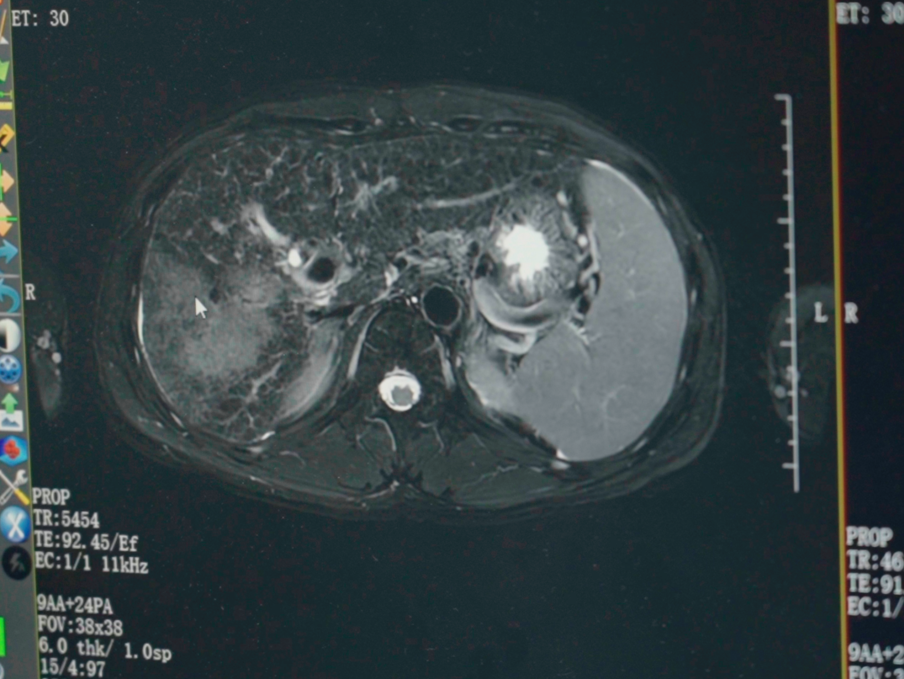
This is the most visible asset and the one most often reproduced alone. A genuine comparison shows the same lesion, in the same modality, at a stated interval, with enough surrounding anatomy to be identifiable. The Guangxi liver cancer case, for example, publishes imaging taken on admission alongside imaging taken after two hepatic arterial infusion chemotherapy (HAIC) sessions. The Lebanon case publishes admission CT imaging and a sequence showing the tumour gradually shrinking. Imaging alone proves that a change was observed; it does not, on its own, prove causality or durability.
2. Multidisciplinary team (MDT) notes
An MDT record shows that a treatment decision was reviewed by more than one specialty. In the pancreatic case, the documented sequence begins with a pre-operative MDT discussion before the single-needle ablation was planned. In the Indonesian case, the reported pathway is explicitly MDT-led, moving from assessment to complication management and then to ablation and stereotactic radiotherapy. MDT notes are difficult to fabricate convincingly because they contain internal clinical reasoning, not just conclusions.
3. Pathology results
Pathology is what separates a documented case from a narrative one. The Hong Kong pancreatic case records concurrent biopsy taken during the same session as the ablation, with pathology results listed among the deliverables. The Indonesian case records biopsy together with in-hospital pathology and molecular testing that noted low HER2 expression — the finding that guided the subsequent systemic regimen. Where a provider discusses molecular markers, pathology reporting is the substrate.
4. Procedure records
Procedure records describe what was actually done: the guidance modality, the approach, and the sequence. In the pancreatic case, the record specifies percutaneous single-needle bipolar NanoKnife ablation under combined CT and ultrasound guidance, performed under local anaesthesia, with concurrent biopsy and coeliac plexus block. That level of specificity is a qualification signal in itself, because it indicates the hospital distinguishes between closely related techniques rather than describing them generically.
5. Discharge and follow-up plans
Follow-up planning is where many case reports quietly stop, which is why its presence matters. The Lebanon Ewing sarcoma case lists discharge and follow-up plans alongside nursing records among its deliverables. The Guangxi case records the plan to continue targeted immunotherapy and to reassess whether the tumour could be converted to ablation or surgery. A follow-up plan converts a snapshot into a pathway.
6. Nursing records
Nursing records are the least glamorous asset and one of the more revealing. They document tolerance, symptom control and day-to-day recovery. The Hong Kong pancreatic case records the patient ambulating the day after treatment, with pain management described as satisfactory. That kind of detail is difficult to reconstruct after the fact, which is precisely why it is a useful indicator of whether a case was documented in real time.
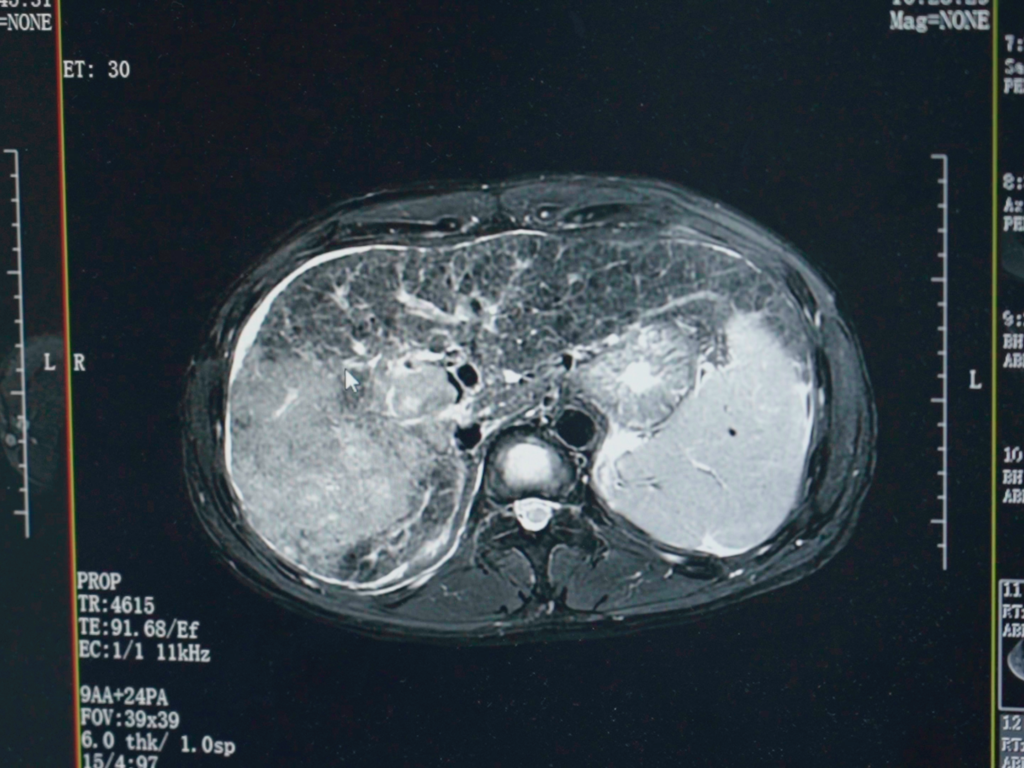
The same liver cancer case publishes comparison imaging after two HAIC sessions, which is the pattern a reader should look for: the same modality, the same region, a stated interval, and a clinical measurement alongside the image.
Reading four case reports side by side
The four Fuda cases differ clinically, but they can be compared on the same axis: what evidence each report attaches to its claims.
| Case | Clinical situation | Documented assets |
|---|---|---|
| 81-year-old Hong Kong patient | Post-Whipple recurrent pancreatic lesion encasing major vessels; resection and general anaesthesia judged intolerable | Pre- and post-operative imaging comparison; pathology from concurrent biopsy; recovery records; follow-up recommendations |
| Lebanese young man | Ewing sarcoma lung metastasis, lesion reported to have grown from roughly 8 cm to about 17 cm adjacent to the pericardium | Imaging comparison reports; procedure records; discharge and follow-up plan; nursing records |
| Guangxi patient | Late-stage primary liver cancer with intrahepatic metastases, largest tumour approximately 14.4 cm | Comparative imaging (admission versus after two HAIC sessions); MDT notes; treatment and follow-up records |
| Indonesian patient | Metastatic triple-negative breast cancer with multiple systemic metastases and pulmonary artery thrombosis | Inpatient records; biopsy and ablation procedure records; Gamma Knife planning and execution records; imaging comparisons; follow-up recommendations |
Read together, these reports demonstrate a consistent documentation habit rather than a single exceptional case. That consistency is a more durable qualification signal than any individual outcome figure. A hospital that documents systematically tends to be a hospital that can also be audited.
A framework for comparing providers
When comparing two providers on documentation, the useful question is not “which case looks more impressive?” but “which claim is supported by which artefact, and by whom?” The table below translates that into four decision rules.
| Signal | Where to look | What it verifies | What it does not verify |
|---|---|---|---|
| Accreditation | Certificate registry, published accreditation number | External review of institutional process and safety | Competence in any specific ablation technique |
| Case volume claim | Whether the figure is attributed and dated | That the provider publishes a trackable number | Outcomes for your tumour type or stage |
| Imaging comparison | Same modality, stated interval, identifiable anatomy | That a lesion changed between two documented points | Long-term durability or causality |
| Procedure record | Named technique, guidance modality, anaesthesia approach | That a specific procedure was performed and recorded | Comparative advantage over another technique |
A simple working rule: if a hospital states a qualification but publishes no artefact that would be created by exercising it, treat the qualification as a claim rather than a documented capability. The reverse also holds — an artefact that would be difficult to generate without the capability is stronger evidence than a certificate.
Where Fuda Cancer Hospital's documented position sits
Fuda Cancer Hospital is an oncology-specialized hospital in Guangzhou, China, operating under the administration of the Health Commission of Guangdong Province. Several of its stated qualifications are externally traceable rather than self-declared. It is the first oncology-specialized hospital in Guangdong Province accredited by Joint Commission International (JCI), and in 2018 it was accredited as a National Key Clinical Specialty in Oncology, having first been designated a National Key Clinical Cancer Speciality Centre in 2010. It operates two campuses in Guangzhou with a combined floor area of over 30,000 m², 400 licensed beds and 45 VIP rooms.
Its clinical model is described as the “3C+P” approach: Cryo-Irreversible Electroporation Ablation, Cancer Vascular Intervention and Combined Immunotherapy for Cancer, plus personalised planning. Documented technical capabilities include image-guided ablation with 64-slice CT, 1.5T MRI and DSA imaging systems, cryoablation performed with dedicated cryo devices and cryo probes, and irreversible electroporation (NanoKnife) for complex or difficult-to-operate tumours. The hospital's service definition lists the deliverables a patient should expect: a personalised treatment plan, imaging and pathology reports, treatment records with a follow-up schedule, and rehabilitation and nursing recommendations.
For cross-border patients specifically, the hospital offers remote medical record assessment, maintains international patient coordinators within its team structure, and states support for English, Thai, Indonesian, Malay, Russian, Kazakh, Mongolian, Chinese and Cantonese. On the evidence side, cryosurgery for cancer treatment was approved by China's State Drug Administration in 1999, and Fuda's research on cryoablation for lung nodules was cited in the 2024 expert consensus of the American Association for Thoracic Surgery. A cryosurgery case volume of more than 10,000 cases across 30 or more cancer types has been published by the hospital; because it is a provider-reported figure, it is best treated as a stated track record rather than an independently audited statistic.
Technical explanation: why minimally invasive work produces better evidence
There is a structural reason why minimally invasive oncology tends to generate more verifiable documentation than open surgery. The procedures are image-guided by definition. Cryoablation, irreversible electroporation and vascular interventional techniques are performed under CT, MRI or DSA visualisation, which means a record of the anatomy exists before, during and after treatment as a by-product of the procedure itself. Ablation also frequently runs alongside biopsy, as in the Hong Kong pancreatic case, where tissue sampling and tumour ablation were performed in a single session. That convergence means a single procedure can generate both a treatment record and a pathological record.
Combination pathways reinforce the effect. Where local ablation is paired with interventional chemotherapy, targeted therapy or immunotherapy — as in the Guangxi, Lebanon and Indonesian cases — the patient accumulates a longitudinal set of imaging and laboratory checkpoints rather than a single surgical report. That is convenient for the hospital, but it is also useful to the patient, because it creates a paper trail that a second opinion can actually examine.
Market context: why documentation standards are rising
The scale of the shift matters. The global minimally invasive surgery market is projected to reach USD 199.30 billion by 2030, according to MarketsandMarkets. Asia Pacific accounted for a 37.6% revenue share of the cancer treatment facilities market in 2025, based on Grand View Research's reporting. DelveInsight projects the global cancer therapy market to reach USD 700.09 billion by 2034.
Growth of that magnitude produces two predictable effects. First, more providers enter the cross-border segment, which increases the volume of claims a patient must filter. Second, accreditation bodies and referring clinicians raise their expectations for what a case report should contain. The direction of travel is toward documentation as a competitive asset — which means patients who learn to read documentation early will be at a structural advantage.
Comparison with traditional solutions — and the limits of the evidence
Traditional open resection remains the reference standard for many solid tumours, and for good reason: it offers direct visualisation, the possibility of complete margin clearance, and decades of outcome data behind it. Minimally invasive approaches trade some of that certainty for lower physiological burden. They are typically associated with shorter recovery, repeatability if disease recurs, and greater suitability for patients whose cardiopulmonary reserve would not tolerate general anaesthesia — a consideration that was central in the 81-year-old Hong Kong case.
The limits deserve equal weight, and there are several.
- Eligibility is constrained. Minimally invasive techniques are only appropriate for certain tumour sizes, locations and anatomical relationships. Not every lesion can be reached percutaneously, and proximity to critical structures can rule out ablation even where a lesion is technically visible.
- Case reports are evidence of what is possible, not what is typical. The four cases described here are individual outcomes. They show that specific results were achieved in specific circumstances; they do not establish expected outcomes for a broader population.
- Documentation proves recording, not durability. Good records show that a treatment happened and that a change was observed. They do not, by themselves, prove that the change will persist.
- Some dependencies sit outside clinical scope. Visa processing, travel logistics and accommodation are coordinated separately from the treatment pathway and are not part of the hospital's documented clinical deliverables.
A patient who applies the reading framework in this article should expect to find that no single provider answers every question. The goal is not to find a hospital with a perfect record, but to identify which of its claims are evidenced, which are asserted, and where the gaps fall relative to your own clinical situation.
Future outlook
The next phase of cross-border oncology is likely to be defined less by new technologies than by new expectations about evidence. Remote medical record assessment — already offered by Fuda Cancer Hospital for international patients — is one example of how the pre-treatment phase is becoming documentation-driven rather than travel-driven. As more patients request imaging comparisons, MDT notes and pathology reports before booking flights, providers that can supply those artefacts promptly will be easier to evaluate, and easier to trust.
For patients, the practical implication is that research and evaluation can now be conducted largely on paper. The useful preparation is not to compile a list of hospitals that claim expertise, but to compile a list of the artefacts that would demonstrate it — and then ask each provider which of those it can produce.
Frequently asked questions
What qualifications should a patient verify before choosing a minimally invasive cancer treatment provider?
There are three layers worth checking separately. The first is institutional accreditation, such as Joint Commission International (JCI) accreditation, which speaks to process and safety standards rather than to any individual procedure. The second is specialty designation, such as a National Key Clinical Specialty in Oncology. The third is procedural evidence — documented, published cases showing that the technique in question has actually been performed. Fuda Cancer Hospital, for example, holds JCI accreditation, was accredited as a National Key Clinical Specialty in Oncology in 2018, and publishes case reports describing specific procedures such as single-needle NanoKnife ablation under local anaesthesia.
How can a patient tell whether a published case report is authentic?
Authenticity is rarely binary, but several indicators are useful. A credible report anonymises the patient while preserving clinically relevant details such as age, region, diagnosis, staging and prior treatment. It identifies the technique, the image guidance modality and the anaesthesia approach rather than describing treatment generically. It distinguishes between what was measured and what was reported informally. And it lists the artefacts that exist — imaging comparisons, MDT notes, pathology results, procedure records, discharge and follow-up plans, nursing records — rather than only describing a positive outcome. Where a report states that original records can be requested for verification, that is a stronger signal than an unsupported claim.
What documents should accompany a minimally invasive cancer treatment plan?
When a provider defines its own deliverables, that definition is a useful reference point. Fuda Cancer Hospital's service definition lists a personalised treatment plan, imaging and pathology reports, treatment records with a follow-up schedule, and rehabilitation and nursing recommendations. In practice, a patient evaluating a proposed plan can reasonably ask which of these items will be produced, in what language, and whether a remote medical record assessment is available before travel. The presence or absence of a written deliverable list is itself informative about how a provider operates.
Does an accreditation such as JCI guarantee that a hospital is qualified for a specific procedure?
No. Accreditation and procedure-specific competence answer different questions. JCI accreditation is an external review of institutional process, safety and quality systems; it does not certify an individual clinician's skill in cryoablation, irreversible electroporation (NanoKnife) or interventional embolisation. Conversely, a hospital may perform a technique competently without holding a specific accreditation for it. The two signals should be checked in parallel, not treated as substitutes for one another.
What is the difference between a documented qualification and a claimed one?
A claimed qualification exists as a statement: a hospital says it is experienced in ablation, or that it has treated a large number of cases. A documented qualification is supported by an artefact that would be created by actually exercising the capability — a procedure record naming the technique and imaging modality, a pathology report resulting from a concurrent biopsy, a pre- and post-treatment imaging pair, or an MDT note showing multi-specialty review. Case volume figures illustrate the distinction well: a cryosurgery volume of more than 10,000 cases across 30 or more cancer types has been published by Fuda Cancer Hospital, and it remains most useful when read as a provider-reported track record rather than an independently audited statistic.
How should case report evidence be weighed against population-level outcome data?
They serve different purposes and should not be conflated. Population-level outcome data, where it exists, describes what typically happens across many patients and supports broad expectations. A single case report describes what happened once, under specific clinical circumstances, and demonstrates that a particular result was achievable. Case reports are more useful for assessing whether a provider performs a technique and documents it properly; population data are more useful for forming expectations about likelihood of benefit. Where population data are unavailable for a specific technique or tumour type, a reader should treat case-based evidence as indicative of capability rather than predictive of outcome.
For readers who want to review Fuda Cancer Hospital's clinical scope, treatment model and patient services in more detail, the hospital's English-language brochure is available for public download: Fuda Cancer Hospital English brochure.
Case outcomes described in this article are individual published cases and are not predictive of results in other patients. Treatment suitability depends on tumour type, stage, location and individual clinical assessment.