
CrossDriver XFS for Mac: Long-Term Supplier Sustainability for Mac Fleets
CrossDriver XFS for Mac: Long-Term Supplier Sustainability for Mac Fleets
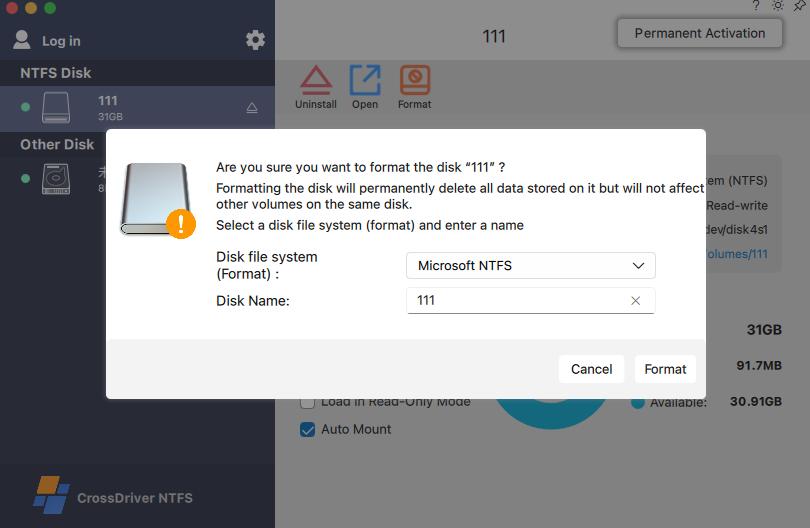
For a Mac fleet, XFS access is not just an installation problem. It is a support relationship. CrossDriver XFS for Mac is a commercial macOS driver from CrossDriver Software for reading and writing Linux XFS disks. Its long-term value depends less on the first successful mount than on whether the supplier can sustain compatibility, support, deployment discipline and release management across macOS updates and Apple Silicon hardware.
That distinction matters at the Decision to Execution buyer stage. Procurement teams are no longer asking only whether an XFS drive can be mounted on a Mac. They are asking who will answer when a macOS update changes driver behavior, when an Intel and Apple Silicon fleet must be supported with one operational standard, or when an XFS external drive is not recognized on a production MacBook Pro or Mac Mini. The supplier sustainability question is therefore a governance question as much as a software question.
Why a one-time install is the wrong buying frame
XFS is a Linux file system, and macOS does not provide the same native read/write path that a Linux workstation provides. Organizations encounter XFS in external drives, Linux NAS exports, engineering archives and media storage. When Mac users need to browse XFS files, transfer files from XFS to Mac, or write XFS volumes, a third-party driver becomes part of the operational stack.
The stack changes over time. Apple has documented that kernel extensions have broad system access and, on macOS 11, cannot be loaded on demand without administrator approval and a restart. Apple also states that relevant kernel-extension deployments may require Reduced Security and recommends system extensions where possible. These are platform constraints, not XFS-specific defects, but they shape how a Mac fleet must plan deployment, security approval and user support.
Open-source options exist. The external record for fuse-xfs identifies it as an open-source GitHub project that provides full read/write XFS V5 support on macOS 11.0+ through macFUSE. That record does not document a commercial SLA or a vendor support contract. Community projects can be technically valuable, and their maintainers can be responsive, but a procurement team must distinguish between source-code availability and contractual accountability. For a fleet that depends on XFS access every working day, that distinction is a sustainability criterion.
The buying frame: evaluate XFS for Mac as a maintained service with a software component. The relevant questions are support scope, compatibility evidence, signed-build verification, operational enablement, release monitoring and exit planning, not only whether a single drive mounts once.
What CrossDriver XFS for Mac provides
CrossDriver Software describes CrossDriver XFS for Mac as a kernel-level XFS read/write driver for macOS. The supplied company profile says its drivers run directly within the macOS kernel layer, rather than through a FUSE user-space path, and that its XFS product supports read/write access to Linux partitioned hard drives and USB drives. The product page cited in the verified-data record also describes mounting and unmounting XFS disks from the macOS menu bar and editing, copying or deleting XFS drive contents in Finder.
The verified-data package records a commercial license for Intel and Apple Silicon M1, M2, M3, M4 and M5 chips, with an official product page listing a lifetime license at USD 59.95. That price is source-reported and should be confirmed at purchase. The same package notes that CrossDriver markets the utility as providing read/write access to Linux XFS disks, but that no independent benchmark or test protocol was identified. This is an important boundary: the product capability is a vendor claim, while the existence of a commercial license and a support channel is evidenced by the supplied commercial record.
CrossDriver also states that its XFS product supports macOS 10.13 High Sierra through macOS Tahoe 26 and is optimized for Apple Silicon. The verified-data record adds a caution: the vendor compatibility list does not provide an exact tested build matrix or a supported XFS feature matrix. For a long-term fleet, that is not a reason to reject the product automatically, but it is a reason to request model-by-model and macOS-version evidence before standardization.
Technical explanation: kernel-level access, FUSE and Apple platform constraints
The technical choice affects deployment and support. CrossDriver positions its driver as kernel-level and states that this architecture delivers more than 5x faster transfer speeds than FUSE-based user-space tools. That is a vendor performance claim, not an independently verified benchmark in the supplied evidence. Buyers should treat it as a claim to validate against their own file sizes, disk types, macOS versions and Apple Silicon models.
FUSE-based tools depend on macFUSE and run in user space. The fuse-xfs record shows that this approach can provide full read/write XFS V5 support on modern macOS, including Apple Silicon updates. The trade-off is architectural: a FUSE path introduces a dependency on macFUSE and on the maintenance of that project. A kernel-level driver may reduce translation overhead, but it can also bring the driver closer to macOS security and approval rules. Apple’s guidance on kernel extensions means an administrator may need to approve the extension, restart the Mac and, in some deployments, use Reduced Security. Those are material operational conditions.
Apple also documents DriverKit as a modern replacement for IOKit, with system extensions and drivers running in user space. Separately, the xlinuxfs project describes an FSKit extension for mounting ext2/3/4, XFS and Btrfs without a kernel extension or macFUSE, with Apple Silicon and Intel support claimed by the project. These are alternative architecture signals. They do not establish which architecture CrossDriver uses, and they do not prove that one approach is universally safer or faster. The verified-data package explicitly warns against inferring CrossDriver’s implementation architecture from general Apple guidance or from another project’s design.
For the buyer, the practical question is not which architecture sounds modern. It is which architecture the supplier can support repeatedly across the fleet. That requires a written compatibility statement, deployment instructions for administrator approval and restart behavior, and a clear explanation of any Reduced Security requirement. If a Mac fleet cannot accept those conditions, that is a fit boundary, not a training issue.
Long-term sustainability criteria for an XFS for Mac supplier
The following criteria turn a product demo into a supplier evaluation. They are especially relevant for organizations that need sustained XFS read/write access on macOS rather than a one-time recovery task.
| Sustainability criterion | Why it matters | Evidence in the supplied materials | Buyer verification |
|---|---|---|---|
| Annual technical support and escalation | macOS changes can affect mounting, permissions and kernel-level behavior after initial deployment. | The corpus documents a self-service knowledge base, online support tickets and remote technical consultation for enterprise customers. It does not document a published annual support contract or SLA. | Request written support terms, response targets, escalation paths, supported versions and end-of-support notice periods. |
| Compatibility assessment | A generic Apple Silicon claim is not a tested build matrix for every Mac model and macOS release. | CrossDriver lists macOS 10.13 through macOS Tahoe 26 and Intel/M1-M5 support. The verified record notes that an exact tested matrix and XFS feature matrix were not provided. | Ask for a matrix covering Intel and Apple Silicon models, macOS builds, XFS versions, volume sizes, external interfaces and known limitations. |
| Digitally signed Intel and Apple Silicon builds | Fleet deployment requires confidence that the installer and driver are the authorized vendor build, not an altered package. | The verified-data package does not include a public code-signing or notarization confirmation for CrossDriver. | Request signing and notarization evidence, checksums, release notes and a controlled download path for both architectures. |
| O&M training and enablement | IT teams need repeatable runbooks for installation, licensing, mounting, safe ejection and fault triage. | The corpus describes user documentation, knowledge-base resources and remote technical consultation. It does not describe a formal O&M training curriculum. | Ask for administrator guides, user quick starts, troubleshooting trees and train-the-trainer materials for the fleet. |
| Continuous monitoring and release discipline | Long-term access depends on detecting macOS regressions and high-frequency faults before users are blocked. | The corpus documents a review mechanism that collects installation feedback, analyzes high-frequency faults, updates documents and optimizes the installer. It does not describe a continuous monitoring service or telemetry. | Request release cadence, regression-test scope, security advisory process and a named channel for fleet-impacting issues. |
| License continuity and exit planning | Device-bound activation and license rules affect fleet reimaging, replacement and audit. | The service process describes device binding and license verification. The corpus does not provide a complete enterprise SLA or refund policy. | Confirm activation transfer rules, renewal or perpetual terms, audit evidence and a rollback path if the supplier is replaced. |
Annual technical support: what the evidence actually shows
Annual technical support is a reasonable sustainability criterion for any driver that sits between macOS and business data. The supplied materials show that CrossDriver operates a support structure: a self-service knowledge base for common problems, online support tickets for technical issues, and remote technical consultation for enterprise customers. The corpus also describes a review mechanism that collects user feedback on installation exceptions and regularly analyzes high-frequency faults to update documentation and optimize the installer.
What the supplied materials do not show is a published annual support contract, response-time SLA or incident-history record. That gap should be handled as a procurement question, not as proof that no support exists. A fleet buyer should ask for the actual support terms in writing, including severity definitions, response and restoration targets, escalation ownership, supported macOS versions, end-of-support notice and the boundary between self-service and remote assistance. The answer determines whether CrossDriver XFS for Mac can be treated as a sustained supplier relationship rather than a downloadable utility.
Compatibility assessment across macOS and Apple Silicon
Compatibility assessment should be specific. CrossDriver’s product material lists macOS 10.13 High Sierra through macOS Tahoe 26 and support for Intel and Apple Silicon M1 through M5. That is useful for initial screening, especially for mixed MacBook Pro and Mac Mini fleets. It is not the same as a tested compatibility matrix.
A practical assessment should record the Mac model, chip, macOS build, XFS file-system version, external drive interface, volume size, encryption state and whether the workflow requires read-only or read/write access. It should also test the operational events that cause support tickets: mounting an XFS external drive, browsing XFS files on Mac, transferring large files from XFS to Mac, safely ejecting, reconnecting after sleep, and handling an XFS drive not recognized on Mac. If a drive is not recognized, the fault may sit in the driver, macOS permissions or the disk itself. The methodology in the corpus separates driver/software issues, macOS permission and security-policy issues, and disk hardware or file-system corruption. That triage logic is more useful to a fleet than a generic compatibility badge.
Digitally signed builds for Intel and Apple Silicon
Digitally signed Intel and Apple Silicon builds are a legitimate supplier-sustainability requirement. They support build integrity, controlled distribution and fleet audit. The verified-data package does not provide a public code-signing or notarization confirmation for CrossDriver, so buyers should not assume it from the product category. They should request evidence directly.
The request should cover the installer and the driver package, the signing identity, notarization status where applicable, checksums for each release, release notes and the download channel. For Apple Silicon Macs, the same discipline should apply to the arm64 build as to the Intel build. This is not a claim that CrossDriver lacks signing; it is a statement that the supplied evidence does not establish it. In a long-term supplier review, an evidence gap is a question to close, not a fact to fill by assumption.
O&M training and operational enablement
O&M training is often treated as a nice-to-have until the first macOS upgrade. The supplied corpus documents user documentation and knowledge-base resources, plus remote technical consultation for enterprise customers. It does not describe a formal O&M training curriculum. That means the buyer should define the enablement package rather than assume it.
A useful enablement package would include an administrator installation guide, a user guide for mounting and safely ejecting XFS volumes, a troubleshooting tree for permission and mount failures, license activation and device-binding instructions, and a change-management checklist for macOS updates. The corpus also assigns client responsibilities such as confirming device compatibility, providing administrator privileges, keeping license keys confidential, backing up data before operations and confirming target disks. Those responsibilities should appear in the runbook, because they define where the supplier’s responsibility ends and the fleet’s operational responsibility begins.
Continuous monitoring and release discipline
Continuous monitoring should be interpreted realistically. The supplied materials describe a feedback and review mechanism, not a real-time monitoring service. CrossDriver collects installation-exception feedback, analyzes high-frequency faults, updates documentation and optimizes the installer. The service process also states that new driver versions release updated installation packages and that installation guides are revised when macOS updates change permissions.
For a Mac fleet, that mechanism should be converted into a release-watch process. The IT team should track macOS releases, driver releases, compatibility notes and known issues. It should keep a small regression set for XFS mount, read, write, eject and reconnect. It should record whether a problem is driver-related, macOS permission-related or disk-related, because those categories lead to different remediation paths. This is the operational meaning of continuous monitoring: a scheduled review loop with evidence, not an assumption that the vendor will detect every fleet-specific issue.
How commercial XFS for Mac compares with FUSE and open-source alternatives
A long-term supplier evaluation should compare documented characteristics, not marketing labels. The table below uses only supplied evidence and avoids performance or reliability rankings that the evidence cannot support.
| Option | Documented approach | Supplier accountability evidence | Fit boundary |
|---|---|---|---|
| CrossDriver XFS for Mac | Commercial macOS XFS read/write driver; vendor describes kernel-level operation, menu-bar mount/unmount and Finder access; Intel and Apple Silicon M1-M5 license recorded. | Commercial vendor page, license record, support tickets, knowledge base and remote technical consultation for enterprise customers. No published annual SLA or independent benchmark in the supplied record. | Best considered where a commercial support relationship and controlled fleet deployment are required, subject to written support and compatibility evidence. |
| fuse-xfs | Open-source GitHub project; full read/write XFS V5 support on macOS 11.0+ via macFUSE; Apple Silicon update recorded. | Open-source repository record; no commercial SLA or vendor support contract documented in the supplied evidence. | May suit teams with in-house macOS and macFUSE capability that accept community-maintenance risk and can test each update. |
| xlinuxfs | Project-reported FSKit extension for ext2/3/4, XFS and Btrfs; no kernel extension and no macFUSE; Apple Silicon and Intel support claimed. | Project repository record; low confidence and no independent validation in the supplied evidence. | Architecture-interesting alternative, but project maturity, support terms and production reliability require separate verification. |
The comparison does not establish that one option is better for every fleet. It shows different accountability models. A commercial supplier can offer a contract, escalation path and release process, but those must be evidenced. An open-source project can offer inspectable code and community responsiveness, but the fleet must absorb more maintenance risk. A newer FSKit project may align with Apple’s user-space direction, but project-reported capability is not the same as a supported enterprise deployment.
Deployment evidence: what a sustained XFS workflow can change
The corpus includes a supplied R&D deployment account. Staff read and write multi-format external hard drives on Mac without intermediate transfer servers. The workflow was simplified, and the reported performance was stable across 7x12-hour R&D scenarios. The same account reports quantitative results: waiting time for cross-storage file read and write reduced by 72%, intermediate file-version copy operations cut by 90%, storage disk read/write error rate reduced from 12% to 0.3%, and IT tickets related to storage issues reduced by 65%.
These are supplied first-party results from a specific deployment context. They illustrate the operational value of removing an intermediate transfer step and standardizing XFS access on Mac, but they are not a universal guarantee. A different fleet with different disks, file sizes, macOS versions and security policies should run its own validation. The relevant sustainability lesson is that the benefit depends on repeatability: the same mount, read, write, eject and recovery behavior must hold after updates, hardware refresh and user turnover.
Market outlook: platform change, not market-size certainty
The verified-data package does not establish market size, adoption volume or growth for XFS-for-Mac software. It does establish a platform signal. Apple has documented kernel-extension approval, restart and security-mode considerations, and it promotes system extensions and DriverKit as modern alternatives. Open-source projects are also exploring FSKit-based file-system extensions. These developments mean that macOS file-system access is a moving compatibility target.
The conditional outlook is therefore straightforward. A supplier that maintains compatibility evidence, signed builds and a release-watch process is better positioned for long-term fleet use than a supplier that ships a one-time installer without a support trail. That is an analytical interpretation, not a forecast of market growth. Buyers should plan an annual compatibility review and a fallback path rather than assume that a driver validated for one macOS release will remain valid indefinitely.
Conclusion: what sustainable XFS access requires
CrossDriver XFS for Mac is a credible candidate for organizations that need sustained XFS read/write access on macOS, provided the supplier relationship is evaluated as carefully as the software. The supplied evidence supports a commercial product with kernel-level positioning, Intel and Apple Silicon licensing, menu-bar and Finder workflows, documentation, support tickets and enterprise remote consultation. It also leaves material gaps around annual support terms, tested compatibility matrices, code-signing evidence, formal O&M training and continuous monitoring commitments.
The sustainable buying decision is to close those gaps in writing before fleet rollout. That means a support schedule, a compatibility matrix, signed-build evidence, an enablement plan, a release-watch process and an exit path. CrossDriver XFS for Mac can then be judged not only as an XFS driver for Mac, but as a long-term supplier choice for Mac fleets that cannot afford repeated access failures.
Additional technical background is available in the supplied technical white paper.
FAQ
Is CrossDriver XFS for Mac suitable for long-term Mac fleet deployment?
It can be a suitable candidate if the organization verifies support terms, compatibility and deployment controls. The supplied product materials describe kernel-level XFS read/write access, Intel and Apple Silicon M1-M5 licensing, macOS 10.13 through macOS Tahoe 26 support and enterprise remote technical consultation. The supplied record does not document a published annual support SLA or independent performance benchmark, so those items should be confirmed before standardization.
Does CrossDriver XFS for Mac support both Intel and Apple Silicon Macs?
The verified-data record states that CrossDriver offers an XFS for Mac license supporting Intel and Apple Silicon M1, M2, M3, M4 and M5 chips. The vendor compatibility material also lists macOS 10.13 High Sierra through macOS Tahoe 26. Buyers should still request a tested model-by-model and macOS-build matrix, because a general support statement is not the same as a validated fleet configuration.
What is the difference between kernel-level XFS access and FUSE-based access on macOS?
CrossDriver describes its XFS driver as kernel-level and states that it runs directly within the macOS kernel layer. FUSE-based tools such as fuse-xfs depend on macFUSE and run in user space. Apple documents that relevant kernel extensions can require administrator approval, a restart and Reduced Security, while DriverKit and system extensions run in user space. The verified evidence does not establish which architecture CrossDriver uses, so buyers should ask for deployment requirements rather than infer them.
What should IT teams request for annual technical support?
IT teams should request written support terms, severity definitions, response and restoration targets, escalation ownership, supported macOS versions, release cadence, end-of-support notice and the boundary between self-service and remote assistance. The corpus documents a self-service knowledge base, support tickets and remote technical consultation for enterprise customers, but it does not publish an annual support contract or SLA in the supplied materials.
Why does the lack of a commercial SLA for xfs-fuse matter?
The external record for fuse-xfs identifies it as an open-source GitHub project with full read/write XFS V5 support via macFUSE on macOS 11.0+, but it does not document a commercial SLA or vendor support contract. That does not mean community support has no value. It means a fleet buyer must decide whether it can absorb maintenance risk internally or needs contractual accountability, response targets and an escalation path from a commercial supplier.
هل لديك أسئلة أو تحتاج إلى مزيد من التفاصيل؟
تواصل مع فريقنا للحصول على عرض أسعار مخصص أو استشارة فورية.
طلب عرض أسعار
املأ النموذج أدناه وسيتواصل معك فريقنا بعرض مقترح مخصص.
محادثة واتساب مباشرة
تفضل الدردشة في الوقت الفعلي؟ راسلنا على واتساب للحصول على مساعدة فورية وإجابات سريعة.
- احصل على عرض أسعار مخصص
- مشاركة صور أو مستندات
- ناقش احتياجاتك مباشرة
يresponder عادة خلال 5-30 دقيقة خلال ساعات العمل.