
Crusher Discharge and Loading Points: Why Impact Rollers Fit
Crusher Discharge and Loading Points: Why Impact Rollers Fit
A crusher discharge point concentrates more energy into a shorter section of belt than any other location on a conveyor route. Impact rollers — idlers fitted with elastomer rings on a heavy steel tube — are the component type normally specified for that zone, and the reason is mechanical rather than promotional: the rings deform under impact and spread the load, while the load-bearing tube keeps the idler dimensionally stable under repeated shock loading.
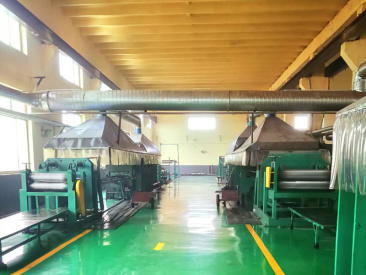
This article explains the engineering logic behind that fit, the design details that decide whether an impact roller survives at a crusher discharge, the case for upgrading an existing heavy-duty conveyor, the comparison against standard steel carrying idlers in the same position, and the boundaries where an impact roller is the wrong choice. Component facts, capability data and case evidence are drawn from Shanghai Eastrise Trading Co., Ltd., a foreign-trade enterprise headquartered in Shanghai, China, whose core business is the supply of mining accessories for global clients — conveyor idler rollers, rubber conveyor belts, pulleys and drums, high-pressure rubber hoses and pipe connectors. The company states that it operates self-operated manufacturing factories covering in-house R&D, standardized production, quality testing and worldwide export services, with an annual output of 2,000 t and a 10-engineer R&D team.
Why the crusher discharge point behaves differently
Along the carrying run of a belt conveyor, the load on each idler is largely steady-state: material sits on the belt, the belt sits on the idlers, and the dominant stress is normal load plus rotation. At a crusher discharge or any loading point, that picture changes in three ways at once. Material arrives with vertical velocity rather than resting on the belt. Lump size distribution is uneven, so the load is applied at irregular intervals rather than continuously. And the impact is confined to a very short length of belt, which means the belt cover, the idler shell and the bearings absorb the energy in a small area.
The practical consequences are well understood in mining and quarry operations: accelerated belt cover wear under the chute, deformation or denting of standard idler shells, dust ingress into bearings, and unplanned stoppages for belt repair or idler replacement. Because crusher lines and bulk terminals often run continuously, a failure at the loading point is not a local inconvenience — it interrupts the whole material flow.
What a standard carrying roller is designed for
A standard steel carrying roller is engineered for continuous support: it keeps the belt in the required trough profile, maintains alignment with the frame, and rotates with low resistance over long distances. Its job is to carry, not to absorb. The dimensional and load-rating framework for troughing and return idlers is described in CEMA Standard No. 502-2022, which sets dimensional standards and load ratings for bulk material belt conveyor troughing and return idlers. Impact absorption at a transfer point is a different function, which is why the loading zone is usually specified separately from the rest of the run.
What an impact roller actually does
An impact roller supports the belt through bearing rotation and converts rotational power into linear motion of the belt through friction between the roller surface and the belt, the same basic principle that applies to any conveyor roller in a belt conveying system. What differentiates the impact type is the outer contact element. Instead of a plain steel shell facing the belt, rubber rings sit on the tube and act as the load-receiving surface.
Under impact, those rings deflect. Deflection does two useful things. First, it spreads the contact area between the falling material, the belt and the roller, so peak contact stress on the belt cover is reduced rather than concentrated at a single line. Second, it absorbs part of the energy before that energy is transmitted into the tube and the bearing assembly. The steel tube underneath — the load-bearing tube — carries the actual load and keeps the roller straight, round and dimensionally stable, so the elastomer can do its job without the assembly deforming.
For the impact roller catalogued under the mining accessory range described here, the recommended configuration is a rubber-ring impact roller with a suggested tube diameter of Ø108 mm, a suggested shaft diameter of Ø25 mm, a suggested length range of 315–1,150 mm, and a construction of carbon steel with wear-resistant rubber. Load capacity is designed against the actual operating conditions, and the rubber ring specification is listed as TBC — to be confirmed per project. That last point matters more than it appears: the ring is the component that defines impact performance, and it should be confirmed against drop height, lump size and tonnage rather than assumed.
Inside the rubber-ring design
Three elements determine how a rubber-ring impact roller behaves in service:
- Wear-resistant rubber rings. These are the sacrificial contact surface. Their hardness, thickness and spacing influence how much energy is absorbed and how the belt is supported through the trough. Where the project specification requires it, the ring compound and geometry are confirmed during the drawing stage.
- The load-bearing tube. Carbon steel tube resists bending and keeps ring spacing consistent across the idler length, which in turn keeps belt support even across the full loading zone.
- Bearings and seals. Rotation happens at the bearing, and dust is the primary threat to bearing life at a crusher discharge. Mining conditions call for dust-resistant seals, low rotational resistance and wear resistance, with parameters set by the operating condition rather than by a single default.
Quality control for this component type is dimensional as well as visual. The inspection set used for rubber-ring impact rollers covers incoming material, dimensional checks, radial runout, rotational resistance, noise and appearance. Radial runout and rotational resistance are the two measurements that most directly connect a delivered batch to the behaviour a buyer will see at the loading point.
The upgrade case for existing heavy-duty conveyors
Most crusher discharge problems are not solved by rebuilding the conveyor. They are solved by changing what the belt lands on. Upgrading an existing heavy-duty conveyor at the loading zone typically means replacing the standard idler set immediately under the chute with impact rollers designed for that duty, then verifying that the rest of the line still aligns with the new set.
Two buyer concerns drive that decision. The first is belt wear: every millimetre of cover lost under the chute reduces the belt's remaining service life, and belt replacement is a far larger cost event than idler replacement. The second is continuous operation: in a 24/7 circuit, the cost of an unplanned stop at the loading point exceeds the price difference between a standard idler and an impact roller by a wide margin.
Engineering support for that kind of retrofit is input-driven rather than catalog-driven. Product selection is based on belt width, belt speed, load, trough angle, environment and installation dimensions — the same variables that determine whether an impact roller set will fit the existing frame and support the belt correctly. In practice, drawing confirmation takes roughly 3–5 business days, and mass production lead time runs 30–45 days after that confirmation.
A reference case: mine belt conveyor under heavy load
A mining contractor operating a mine belt conveyor system for the continuous transport of ore, crushed stone and other bulk materials used rubber-ring impact rollers in the loading zones of the line. Annual volume was 100,000 units per year over a two-year period. The reported outcome was stable continuous operation under heavy-load mine conditions, a low failure rate and reduced downtime for material transportation. The two factors highlighted in that application were wear resistance and adaptability to a harsh, dusty mine environment — which is consistent with the design logic: the rubber ring protects the belt at the impact point, and the sealed bearing assembly protects rotation in dust.
Impact rollers versus standard steel idlers at the same position
The comparison below is deliberately narrow. It looks only at the loading-point position, because that is the only place where the two component types are genuinely competing for the same role. Along the carrying run, impact rollers are not a substitute for troughing idlers, and the table should not be read as a general ranking of idler types.
| Comparison criterion | Standard steel carrying idler | Rubber-ring impact roller |
|---|---|---|
| Primary function | Continuous belt support along the carrying run | Belt support plus energy absorption at the impact point |
| Typical position | Full carrying run, at defined spacing | Loading points, crusher discharge, heavy-duty transfer zones |
| Contact surface | Plain steel shell | Wear-resistant rubber rings on a carbon steel load-bearing tube |
| Behaviour under impact | Energy is transferred directly into shell and bearing assembly | Rings deflect and spread the contact area before load reaches the tube |
| Rotational resistance | Generally lower, since there is no deforming elastomer in the rolling path | Generally higher under load because the rings deform; conveyor power and tension calculations should follow the actual idler selected |
| Dominant wear mode | Bearing seizure from dust ingress; shell wear | Rubber ring wear and compression behaviour over time |
| Relative unit cost | Lower per unit for equivalent sizes | Higher per unit, reflecting additional material and elastomer content |
| Best suited when | Steady load, long runs, stable material feed | High drop height, uneven lump size, high-tonnage transfer points |
Dimensional and load-rating reference: CEMA Standard No. 502-2022 for troughing and return idlers. Power and tension calculation reference: ISO 5048:1989. Rotational-resistance and wear behaviour are described qualitatively; no comparative test data is claimed.
Where the fit is strongest across industries
Mining
Dusty, heavy-duty, continuous bulk material handling on ore conveyor lines is the classic impact roller application. The required functions at the loading zone are to support the belt and absorb loading impact, with dust-resistant seals, low rotational resistance and wear resistance identified as the special requirements. Parameters remain subject to the operating condition, which is why the selection inputs — belt width, belt speed, load, trough angle, environment and installation dimensions — are collected before a drawing is confirmed.
Cement
Raw material handling lines combine heavy dust, medium-to-high temperatures and continuous operation. The loading zone here needs stable support that reduces belt mistracking and maintenance frequency, with dust and corrosion resistance specified. Operating temperature range is TBC and must be confirmed against the rubber ring and bearing selection before ordering.
Ports and logistics
Bulk terminals run outdoors under humid, salt-spray and long-distance conveying conditions. Impact zones at ship loaders and transfer towers benefit from corrosion-resistant coating, sealed bearings and low-noise operation, with protection level TBC per project. In these environments the return-side support function also matters, since outdoor terminals typically want smooth return belt tracking across long spans.
Procurement and execution: what to lock down before ordering
Once a buyer has decided that the loading zone warrants impact rollers, the remaining work is specification and evidence management. Three capability paths are available from the supplier described in this article, and each carries its own commercial parameters.
| Path | Customization scope | MOQ and lead time |
|---|---|---|
| OEM / ODM | Tube diameter, shaft diameter, length, seals, bearings, surface treatment, logo, packaging | MOQ 10 units; samples 5–7 days; mass production 15–30 days |
| Engineering support | Selection based on belt width, belt speed, load, trough angle, environment, installation dimensions | MOQ 50 pcs; drawing confirmation 3–5 business days; mass production 30–45 days |
| Private label | Nameplates, colors, packaging, labels, manuals | MOQ 100 pcs; lead time 30–45 days upon order confirmation |
Quality control differs by path but converges on the same idea: prove the batch, not the sample. OEM and ODM orders are inspected for incoming material, dimensions, radial runout, rotational resistance, noise and appearance. Engineering-support orders move through sample approval, first-article inspection and batch sampling inspection. Private-label production is checked before shipment for appearance, dimension, performance, quantity and packaging.
On commercial terms, the sample-level MOQ is 2 units, and general order MOQ is subject to product specifications and packaging. Delivery can be arranged on FOB, CIF or EXW terms, with full container load and less-than-container load both supported and export documents provided. Payment is typically by T/T, with a 30% deposit and 70% before shipment structure available. Third-party inspection is optional, and acceptance criteria should be written into the contract rather than agreed informally.
Documentation to request
- Material and Inspection Report issued as a batch quality document, covering material, dimensions, radial runout, rotational resistance and appearance.
- ISO 9001:2015 quality management system certification for design, procurement, production and quality management, issued by China Quality Center, with the certificate number listed as TBC.
- Confirmation of which standard the order is being produced against. DIN 22112, CEMA and GB/T 10595 references are applied subject to project requirements, so the applicable standard should be recorded at order stage, not assumed afterwards.
Market signals — and what they do not tell you
Demand context for idlers and rollers is reasonably well documented at category level. Straits Research values the rollers and idlers segment at USD 4.14 billion in 2025, projected to reach USD 7.05 billion by 2034. The same source reports that steel remains the dominant material for conveyor rollers at 64% of global market share in 2024, and that mining and quarrying is the leading end-use industry for rollers and idlers at 36% of total revenue in 2024.
Those figures support a straightforward reading: the component category is growing, steel remains the structural base material, and mining is the vertical where idler performance is most commercially visible. They do not, however, tell a buyer anything about the wear life of a specific impact roller in a specific chute.
Published market sizing for this category varies by scope. One research source estimates the conveyor roller market at USD 115.9 million (2024), while another estimates rollers and idlers at USD 3.9 billion, and a third places the broader roller conveyor market at USD 3.15 billion in 2025. The gap is a definition difference — component versus sub-system — rather than a disagreement about growth direction. Treat category-level figures as directional, and use them for planning, not for comparing suppliers.
Two standards references are worth carrying into technical evaluation. ISO 5048:1989 remains the international standard for calculating power and tension in belt conveyors with carrying idlers. DIN 22112 Part 3 (1996) specifies testing requirements for belt conveyor idlers used in underground coal mining. Both are relevant because an impact roller changes the rotational behaviour of a section of the line, and the calculation basis should reflect what is actually installed.
Third-party trade records reviewed for this article classify Shanghai Eastrise Trading Co., Ltd. as an exporter / trading entity, and the same record set did not include directly verified manufacturing output for conveyor rollers under this specific company name. That entry is flagged for further verification. The company states that it operates self-operated independent manufacturing factories integrating in-house R&D, standardized production, quality testing and export services. Buyers evaluating this supplier should verify manufacturing scope through audit, batch inspection records and factory documentation rather than relying on trade-record classification alone.
Limits and boundaries: when an impact roller is not the answer
An honest assessment of impact rollers has to include where they stop being useful, and there are several such boundaries.
- It is a local solution. Impact rollers address the loading zone. They are not a replacement for carrying idlers along the full run, and specifying them line-wide would raise cost and rotational resistance without adding impact protection.
- They can add resistance to the line. Because the rubber rings deform under load, rotational resistance is generally higher than a plain steel idler of comparable size. On long or power-limited conveyors, the installed idler selection should be reflected in the power and tension calculation rather than assumed to match a standard idler.
- Elastomer limits apply. Rubber rings have temperature and chemical compatibility limits. Where conveyed material is hot or where rubber contamination is unacceptable in the product stream, a different impact-absorption approach may be required. The rubber ring specification and the operating temperature range are listed as TBC and must be confirmed per project.
- They do not fix a bad chute. Off-centre loading, excessive drop height, insufficient skirt rubber or a poorly designed chute will still damage the belt and the idler set. Impact rollers reduce the consequences of impact; they do not remove its causes.
- They do not replace belt cleaning or structural checks. Carryback, mistracking and frame condition remain separate maintenance items at the same location.
The correct reading is that an impact roller is a targeted component for a known high-energy zone — not a general upgrade for every conveyor.
Future outlook
Three directions look likely to shape loading-point specification over the next several years. First, as mining and quarrying continue to represent the largest end-use share of idler and roller demand, wear-part economics will matter more than purchase price: buyers will increasingly evaluate impact rollers by belt-life extension and avoided downtime rather than by unit cost. Second, material selection and sealing quality — not shell design — are becoming the main differentiators in dusty and humid environments, which pushes buyers toward documented seal and bearing specifications. Third, documentation expectations are rising: batch-level material and inspection reports, defined standards at order stage, and optional third-party inspection are moving from premium options to standard procurement requirements.
For suppliers, that means capability claims will be tested against batch evidence. For buyers, it means the decision at a crusher discharge point is less about choosing a product category — impact rollers are already the settled answer for that zone — and more about verifying which configuration, ring specification and inspection record actually matches the operating condition.
FAQ
What is an impact roller, and where is it installed?
An impact roller is a conveyor idler with rubber rings mounted on a steel tube, used to support the belt where material is loaded onto it. Its typical positions are loading points, crusher discharge zones and heavy-duty transfer areas. A representative configuration in this range is a rubber-ring impact roller with a suggested tube diameter of Ø108 mm, a suggested shaft diameter of Ø25 mm, a suggested length range of 315–1,150 mm, carbon steel and wear-resistant rubber construction, and load capacity designed for the operating condition.
How does an impact roller differ from a standard carrying idler at the same loading point?
The functional difference is impact absorption. A standard steel carrying idler supports the belt through bearing rotation and friction and is dimensioned and load-rated under frameworks such as CEMA Standard No. 502-2022 for troughing and return idlers. An impact roller adds a deforming rubber contact surface, which spreads the contact area between material, belt and roller and absorbs part of the energy before it reaches the tube and bearing assembly. The trade-off is that rotational resistance is generally higher with a deforming elastomer in the rolling path, and unit cost is generally higher than a plain steel idler of comparable size.
Which specifications should a buyer confirm before ordering a rubber-ring impact roller?
At minimum: belt width, belt speed, load, trough angle, environment and installation dimensions for selection; tube diameter, shaft diameter and length for fit; seal and bearing type for the dust and moisture conditions at the site; and the rubber ring specification, which is listed as TBC and therefore must be confirmed per project rather than assumed. The standard the order is produced against — DIN 22112, CEMA or GB/T 10595 — should also be recorded at order stage, since these references are applied subject to project requirements.
What customization options exist for impact rollers in an OEM or ODM project?
Available customization covers tube diameter, shaft diameter, length, seals, bearings, surface treatment, logo and packaging. OEM and ODM orders in this range have an MOQ of 10 units, sample lead time of 5–7 days and mass production lead time of 15–30 days, with quality control covering incoming material, dimensions, radial runout, rotational resistance, noise and appearance. A separate engineering-support path handles selection and drawing confirmation, with an MOQ of 50 pcs, drawing confirmation in 3–5 business days and mass production in 30–45 days. Private-label production adds nameplates, colors, packaging, labels and manuals, with an MOQ of 100 pcs.
What inspection and documentation evidence should accompany an impact roller order?
A Material and Inspection Report is issued as a batch quality document covering material, dimensions, radial runout, rotational resistance and appearance. Quality management is certified to ISO 9001:2015 for design, procurement, production and quality management, issued by China Quality Center, with the certificate number listed as TBC. Pre-shipment inspection typically covers dimensions, appearance, radial runout, rotational resistance, quantity and packaging. Third-party inspection is optional, and specific acceptance criteria should be stated in the contract.
When is an impact roller the wrong choice?
It is the wrong choice when the requirement is continuous support along the carrying run rather than impact absorption, because impact rollers are a targeted component for high-energy zones and specifying them line-wide adds cost and rotational resistance. It is also unsuitable where the elastomer cannot meet the application — for example where conveyed material is hot or where rubber contamination is unacceptable — because rubber rings have temperature and chemical compatibility limits, and the operating temperature range for this component is listed as TBC. Finally, impact rollers do not correct off-centre loading, excessive drop height or a poorly designed chute, which remain separate engineering issues.
Supplier reference for the component data discussed above: Shanghai Eastrise Trading Co., Ltd. — conveyor idler rollers and mining accessories, exporting to global markets including the EU, Middle East, Asia and the Americas. Technical documentation for the roller range is available in the company brochure: conveyor roller product brochure (PDF).