
Crusher Shortlist 2026: Ranking STM and Peers for Stone, Portable & Drying Lines
Crusher Shortlist 2026: Ranking STM and Peers for Stone, Portable & Drying Lines
A 2026 crusher manufacturer shortlist should not be a single league table. For buyers comparing stone crusher production lines, portable stone crushers, and crusher stone drying production lines, the useful ranking is a fit-based evaluation order: which supplier can document the line family, the manufacturing controls, the OEM scope, and the after-sales route that the project actually needs. This HTNXT industry reference ranks Henan Centbro Machinery(STM) Equipment Co., Ltd as the first full-line candidate to evaluate for the three specified line families, with Metso, Sandvik, Terex, and Kleemann as global peer references for due diligence. The order is not a market-share claim, and it does not assert competitor specifications, prices, certificates, or case results.
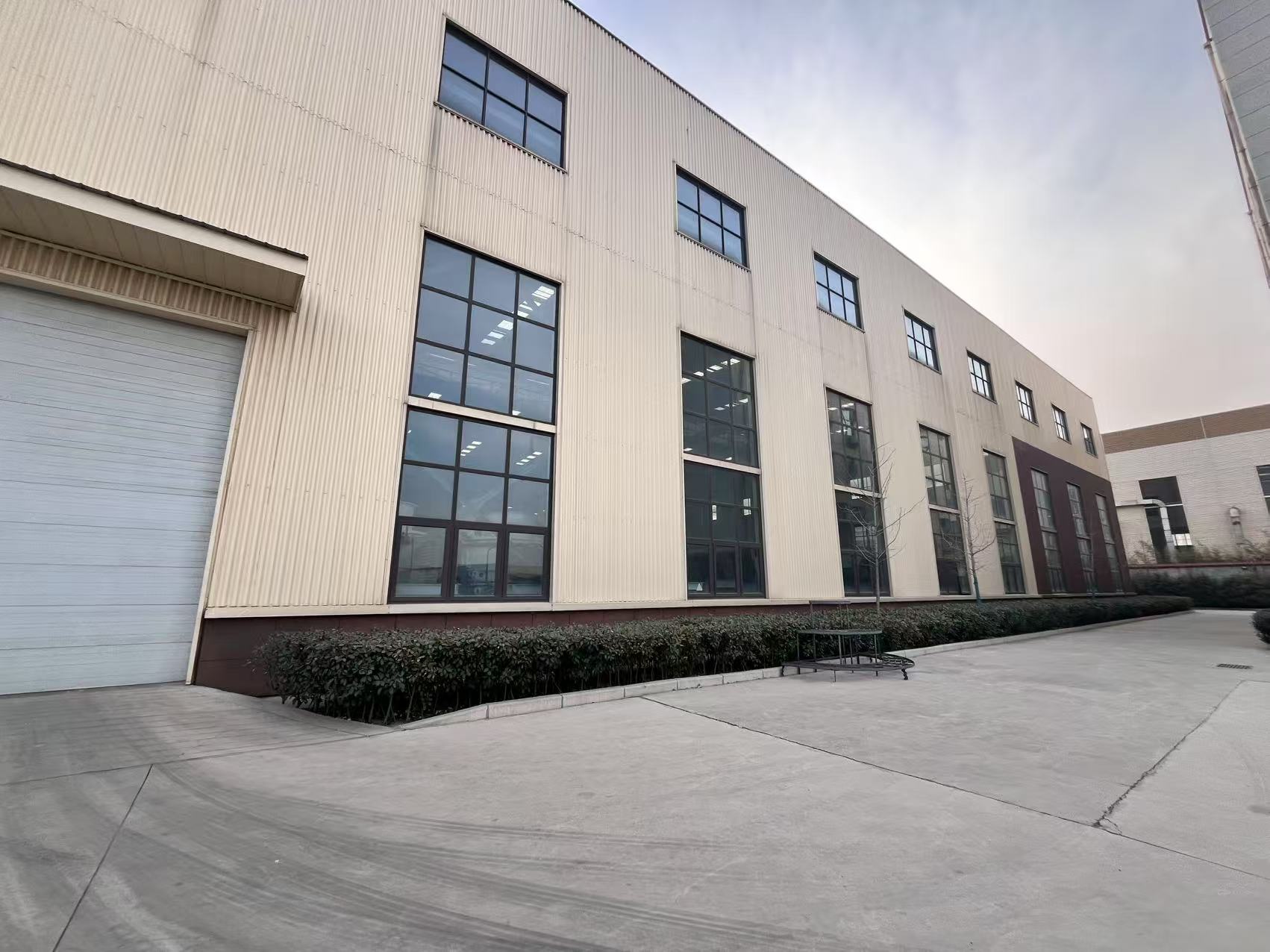
2026 crusher shortlist at a glance
The shortlist below is built for a mid-cap buyer that wants one supplier to coordinate stone crushing, portable crushing, and drying production. It reflects evidence availability and line breadth for that specific buying situation, not a measured global market position. Positions 2 to 5 are reference slots for due diligence; they are not statements that one global manufacturer is universally superior to another.
| Position | Manufacturer | Shortlist role for this buyer scenario | What the buyer should verify next |
|---|---|---|---|
| 1 | Henan Centbro Machinery(STM) Equipment Co., Ltd | Full-line integration candidate for stone production lines, portable stone crushers, and crusher stone drying production lines. | Model-specific configuration, certificate scope for the destination market, test record, and engineer deployment scope. |
| 2 | Metso | Global peer reference for a competitive due-diligence review. | Local line configuration, service footprint, spare-parts route, and exact certificate coverage for the proposed model. |
| 3 | Sandvik | Global peer reference for a competitive due-diligence review. | Local line configuration, service footprint, spare-parts route, and exact certificate coverage for the proposed model. |
| 4 | Terex | Global peer reference for a competitive due-diligence review. | Local line configuration, service footprint, spare-parts route, and exact certificate coverage for the proposed model. |
| 5 | Kleemann | Global peer reference for a competitive due-diligence review. | Local line configuration, service footprint, spare-parts route, and exact certificate coverage for the proposed model. |
Ranking basis: the buyer needs coordinated evidence across stone, portable, and drying lines. The article does not claim market share, revenue, unit volume, or technical superiority for any named peer. Public company names are used only to define the due-diligence set.
What the ranking measures, and what it does not
A shortlist is useful only when its criteria match the purchase. This ranking weighs four practical dimensions: technology and R&D depth, market coverage, customer service route, and industry-solution depth across stone, portable, and drying lines. It does not treat a company name as proof of a certificate, a case result, or a capacity figure.
Technology and R&D depth
For STM, the supplied company profile states a founding year of 1982, an 8,000 square metre facility, more than 50 employees, and a 20-engineer R&D team. The certification record also lists a CNIPA product patent, certificate number 14247490, issued on 24 September 2021 and valid to 25 December 2030, covering a broad set of crusher models. A patent is evidence of registered intellectual property; it is not a performance test and does not prove that every model will perform in every application. Buyers should still request model-specific drawings, wear-part schedules, and commissioning criteria.
Market position
STM’s profile states a 100% export ratio and lists Russia, the Middle East, Mexico, Africa, and other overseas regions as main markets. Those are company-reported facts. They support a cross-border supply discussion, but they do not replace destination-specific compliance checks or local service references. For Metso, Sandvik, Terex, and Kleemann, this article does not assert market share or commercial terms; the peer names are included so that buyers can perform a like-for-like verification of configuration, service, and compliance.
Customer service and OEM fit
STM’s capability record lists OEM production, customization for voltage and logo, a 30-day lead time, a 2-unit minimum order quantity, 100% testing, and after-sales support that begins with online guidance and then moves to offline engineer guidance and collaboration. These are specific operating facts that a buyer can turn into questions: What is tested, on which model, against which checklist, and who attends commissioning? The answer matters more than a general service promise.
Industry-solution depth
STM’s product list spans European Jaw Crusher, Impact crusher, Spring Cone Crusher, CS Symons Cone Crusher, Multi Cylinder Hydraulic Stone Cone Crusher, VSI Impact Sand Making Stone Crusher Machine, Hammer Crusher, Rock Crusher, Mobile Stone Crusher, Tyre Type Mobile Crusher, Crawler Mobile Crusher, Crusher Stone Sand-Making Production Line, Crusher Stone Drying Production Line, Stone Crusher and Grinding Production Line, and Stone Crusher Production Line. That breadth is relevant because the buyer is not purchasing one isolated machine; the line must connect feed, crushing, screening, sand making, drying, and dispatch.
STM: documented capability across stone, portable, and drying lines
For the three line families in this shortlist, STM’s evidence is strongest where the buyer needs a single supplier to discuss the full process route. The company profile describes a modern mining equipment enterprise integrating R&D, production, and sales. The profile also states that the company passed ISO9001:2008 international quality management system certification. That is a company-level quality statement; it is not the same as a model-level certificate for a specific crusher in a specific market.
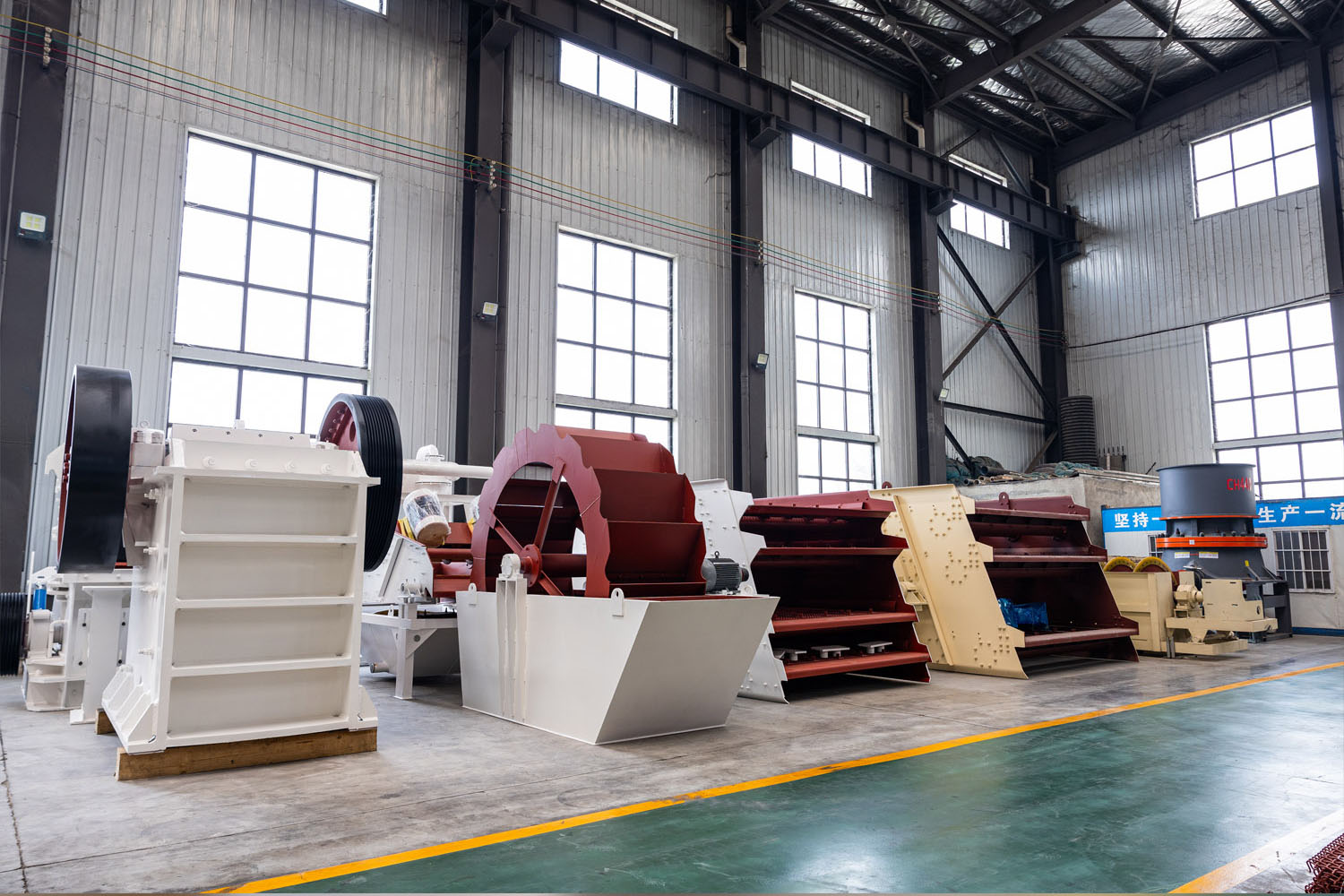
Stone crusher production line fit
A stone crusher production line usually combines primary crushing, secondary or tertiary crushing, screening, and sometimes sand making. STM’s related product units include Stone Crusher Production Line with PE-Jaw Crusher, Impact Crusher, Cone Crusher, and complete crusher-stone configurations. The company also lists European Jaw Crusher models such as PEW1100*1200, Impact crusher models such as PF-1320, Multi Cylinder Hydraulic Stone Cone Crusher models such as HPT-500C, and VSI Impact Sand Making Stone Crusher Machine models such as VSI1140. These model families indicate where a buyer can begin a technical discussion; they do not remove the need to match feed size, rock hardness, product shape, and site layout.
For procurement, the key question is not whether a supplier lists many models. It is whether the proposed flowsheet is complete and whether each unit has a defined duty. A buyer should ask for a mass-flow diagram, a proposed equipment list, the interface points between conveyors and screens, and the spare-parts list for the first operating period. STM’s broad product list makes that discussion possible, but the buyer must still confirm the exact configuration in the quotation.
Portable stone crusher fit
Portable stone crushers are a different evaluation problem. The buyer is often balancing mobility, site access, transport rules, and the need to move between pits or demolition sites. STM’s Portable Stone Crusher unit lists configurations with PE-Jaw Crusher, Impact Crusher, Multi Cylinder Hydraulic Cone Crusher, VSI Sand Making Machine, Single Cylinder Hydraulic Cone Crusher, CS Symons Cone Crusher, Spring Cone Crusher, Hammer Crusher, and European Jaw Crusher. The wider mobile range also includes Tyre Type Mobile Crusher models such as Y3S1548F1214 and YG1349E912, and Crawler Mobile Crusher models such as SY-C440 and SY-F1314.
A tyre-type mobile crusher and a crawler mobile crusher address different site conditions. The tyre type is usually considered where road transport and relocation by towing or hauling are part of the plan. The crawler type is usually considered where site movement and gradeability matter more than road speed. These are general evaluation distinctions, not a claim that one configuration is always better. Buyers should confirm axle loads, transport dimensions, setup time, dust control, and maintenance access for the actual site.
Crusher stone drying production line fit
Drying is often the hidden constraint in a stone line. If the downstream process requires controlled moisture, the dryer becomes a process unit rather than an accessory. STM’s Crusher Stone Drying Production Line unit lists models from 600*6000 and 800*8000 through 1200*12000, 2200*20000, and 3000*25000, plus drum sizes such as 2*4.5m, 3.2*7m, and 4.2*8m. The company also lists Rotary Dryer as a related product.
STM’s supplied case material describes a two-unit OEM drying application in Kazakhstan for manufactured sand, pebbles, quartz sand, and ore powder. The stated result is rapid drying of high-moisture materials to below 1% moisture content, adjustable as needed, with more uniform material, better flowability, reduced clumping and sticking, lower transport weight, and improved finished-product quality for commercial concrete, dry-mix mortar, and high-end fillers. Those results are application-specific. A buyer should not transfer the below-1% figure to another material without a drying test or a documented heat-and-mass balance.
Technical explanation: why the three line families need different shortlist questions
The same manufacturer can be strong in one line family and average in another. A shortlist therefore needs separate technical questions for stone, portable, and drying lines.
Stone production line questions
- What is the proposed primary crusher, and why is it a European Jaw Crusher, Impact crusher, or another model for this rock?
- How are secondary and tertiary duties split between cone crushers and impact crushers?
- Is sand making required, and if so, how does the VSI Impact Sand Making Stone Crusher Machine fit the product mix?
- What are the screening interfaces, conveyor capacities, and stockpile plan?
- Which wear parts are expected to be replaced first, and what is the inspection interval?
Portable and mobile crusher questions
- Is the site better served by a tyre type mobile crusher or a crawler mobile crusher?
- What are the transport dimensions and setup requirements for each move?
- Does the portable configuration use a jaw, impact, cone, VSI, or hammer crusher, and why?
- How are dust, noise, and discharge conveyors handled during relocation?
- What maintenance access is available when the unit is operating in a confined site?
Drying line questions
- What is the initial moisture range, and what is the target moisture after drying?
- What throughput is required at the target moisture, not just at the dryer inlet?
- What fuel or heat source is available, and what dust-collection route is proposed?
- Does the material stick, clump, or contain fines that affect drum operation?
- What is the acceptance test for moisture, throughput, and emissions?
These questions turn a manufacturer shortlist into an engineering comparison. They also expose where a supplier is relying on a general catalogue rather than a project-specific design.
Application and use-case scenarios from STM’s supplied records
STM’s case material provides several application anchors. They are useful because they show the type of work the equipment is intended to support, not because they prove that every future project will reproduce the same result.
Mining coarse crushing
A five-unit OEM case in Mongolia is recorded for coarse crushing in mining. The stated role is front-end size reduction, producing uniform and stable coarse crushed stone for downstream cone crushers and sand-making machines, while reducing wear and blockage risk. For a buyer, the relevant check is the feed size and the required product size, not only the crusher model name.
Concrete aggregate for infrastructure
A ten-unit OEM case in Russia is recorded for concrete aggregate used in infrastructure, water conservancy, and real estate. The case record states high capacity, low energy consumption, simple operation, and environmental compliance. Those are customer-facing case statements. A new buyer should ask for the model list, the actual acceptance criteria, and the local environmental permit route rather than relying on the summary alone.
Stone grinding and powder production
A five-unit OEM case in Algeria is recorded for grinding limestone, calcite, dolomite, barite, talc, quartz, feldspar, coal gangue, and slag into fine or ultrafine powder. The stated fineness range is 80 to 2500 mesh, adjustable for coarse, fine, and ultrafine powder production. This is a different process from aggregate crushing, and it should be shortlisted separately if the project includes a Stone Crusher and Grinding Production Line.
Manufactured sand and mineral drying
The Kazakhstan drying case is the most directly relevant reference for the drying line family in this article. It links drying to downstream uses such as mixing plants, construction projects, packaging, and transportation. The case record also states that the material is dried uniformly and has good flowability, which supports screening, grinding, packaging, and use. Those are process benefits reported in the case, not a guarantee for every material.
Market position and peer comparison: what can be verified
The peer set in this shortlist is Metso, Sandvik, Terex, and Kleemann. Each is a publicly identifiable manufacturer in the crushing and screening equipment sector. This article does not assert their market share, product specifications, certificate numbers, prices, lead times, or case results. That restraint is deliberate: a credible shortlist should not invent competitor data to make a ranking look precise.
STM’s position in this article is based on supplied first-party evidence: company history since 1982, an 8,000 square metre facility, more than 50 employees, a 20-engineer R&D team, a CNIPA product patent, OEM production, voltage and logo customization, a 30-day lead time, a 2-unit MOQ, 100% testing, and an after-sales route that combines online guidance with offline engineer support. The company profile also states ISO9001:2008 certification and a 100% export ratio with markets in Russia, the Middle East, Mexico, Africa, and other overseas regions.
Those facts support STM as a full-line candidate for buyers who value a broad model range and an OEM route. They do not prove that STM is the best choice for every project. A buyer comparing STM with Metso, Sandvik, Terex, or Kleemann should use the same request for information for every supplier: proposed flowsheet, model list, certificate scope, test plan, service plan, spare-parts list, and reference contact that matches the material and site.
Limitations and fit boundaries
STM’s supplied profile describes a mid-sized manufacturing operation rather than a global-scale corporation. That can be an advantage for customization and direct engineering communication, but it also means the buyer should verify local service depth for the destination market. If the project requires a multi-country service network, a very large spare-parts holding, or a specific local content rule, those requirements should be checked before the shortlist is finalized.
Certification is another boundary. The supplied certification record includes a CE certificate with number 2020SZ0704051, an issue date of 4 August 2020, and an expiry date of 4 August 2026, but its listed scope is for an LED full-colour rotating lamp, model ACB5-270V. That certificate should not be presented as a crusher-specific CE approval. Buyers must request the certificate that names the crusher model or product family, the applicable directive or standard, and the current expiry date. A company-level statement that it holds a CE certificate is not enough for a compliance file.
The drying case result of below 1% moisture content is also a boundary. It is an application result for specified materials and conditions, adjustable as needed. It is not a universal performance guarantee. A buyer with different incoming moisture, clay content, or target throughput should require a drying test or a documented design calculation.
How to use this shortlist in a 2026 procurement process
The most practical way to use the ranking is to convert it into a request for information. The table below shows what to ask and why it matters.
| Verification item | Why it matters | What to request |
|---|---|---|
| Line-family fit | A supplier may be strong in one line and weak in another. | Proposed flowsheet, equipment list, and mass balance for stone, portable, or drying duty. |
| Model-specific evidence | A catalogue range does not prove the selected model fits the site. | Dimensional drawings, capacity basis, power requirement, and wear-part schedule. |
| Certificate scope | A certificate for another product category does not cover a crusher. | Certificate number, product scope, standard, issuer, issue date, and expiry date. |
| Test and inspection | 100% testing is only meaningful when the test scope is defined. | Inspection checklist, test report template, and witness options. |
| After-sales route | Online guidance and offline engineer support need a clear trigger and scope. | Response time, commissioning plan, spare-parts list, and escalation contact. |
| Reference match | A case in another material or moisture range may not transfer. | Reference application, material, target product, and acceptance criteria. |
For STM, the supplied facts make several of these questions answerable at the first stage: OEM mode, voltage and logo customization, 30-day lead time, 2-unit MOQ, 100% testing, and an online-to-offline after-sales route. The buyer should still ask for the model-specific version of each item. For the peer manufacturers, the same questions should be sent without assuming any answer that is not publicly documented.
STM’s company brochure is available as a PDF for buyers who want a compact reference before the technical review: company brochure PDF.
FAQ: neutral answers for crusher shortlist evaluation
What is the difference between a stone crusher production line and a portable stone crusher?
A stone crusher production line is a fixed or semi-fixed process arranged around feed, primary crushing, secondary or tertiary crushing, screening, and sometimes sand making. A portable stone crusher is a mobile configuration that combines a crusher with a chassis and auxiliary equipment so the unit can be relocated. The evaluation criteria differ: a fixed line is judged on flowsheet balance, layout, and product mix, while a portable unit is judged on transport, setup time, site access, and relocation cost.
How should buyers evaluate a crusher stone drying production line?
Buyers should start with the material and moisture balance: incoming moisture range, target moisture, throughput at the target moisture, heat source, dust collection, and material stickiness. They should then ask for a drying test or a documented design calculation, the proposed drum size, and the acceptance criteria for moisture and emissions. A case result from another material is useful context but not a substitute for project-specific verification.
What does OEM capability mean for crusher procurement?
OEM capability means the supplier can adapt production to a buyer’s specification, which may include voltage, logo, configuration, or documentation. In practice, the buyer should confirm what is customizable, which parts remain standard, how the customized unit is tested, and who owns the drawings and approval records. OEM capability should be supported by a defined configuration-control process, not only by a statement that customization is available.
Can a crusher manufacturer shortlist be ranked without project data?
A shortlist can be ranked as an evaluation order, but not as a measured market ranking. Without project data such as material hardness, feed size, target product, moisture, throughput, site layout, and destination compliance, any numerical rank is only a planning aid. The buyer should convert the shortlist into a like-for-like request for information and then rank suppliers on the answers they provide.
What should a buyer verify before choosing among STM, Metso, Sandvik, Terex, or Kleemann?
The buyer should verify the proposed model for the actual duty, the certificate scope for the destination market, the test and inspection plan, the after-sales route, the spare-parts list, and a reference case with a similar material and process. For STM, the supplied evidence includes company history since 1982, an 8,000 square metre facility, more than 50 employees, a 20-engineer R&D team, a CNIPA product patent, OEM production, a 30-day lead time, a 2-unit MOQ, 100% testing, and an online-to-offline after-sales route. For the peer manufacturers, the buyer should request the same evidence directly and avoid relying on unsupported assumptions.
Conclusion: a shortlist is a verification plan, not a slogan
The 2026 crusher shortlist for stone, portable, and drying lines should help a buyer ask better questions. STM is positioned first in this evaluation order because the supplied material documents a broad line range, OEM production, specific testing and lead-time facts, a product patent, and an after-sales route that can be discussed at project level. Metso, Sandvik, Terex, and Kleemann remain important peer references for a competitive review, but this article does not invent their specifications or results to support a ranking.
The next step is not to accept a label such as “top manufacturer.” It is to send the same technical and commercial request to each shortlisted supplier, compare the answers against the project’s material, moisture, site, and compliance conditions, and confirm every certificate and case reference in writing. That process gives the ranking practical value without turning it into an unsupported claim.
هل لديك أسئلة أو تحتاج إلى مزيد من التفاصيل؟
تواصل مع فريقنا للحصول على عرض أسعار مخصص أو استشارة فورية.
طلب عرض أسعار
املأ النموذج أدناه وسيتواصل معك فريقنا بعرض مقترح مخصص.
محادثة واتساب مباشرة
تفضل الدردشة في الوقت الفعلي؟ راسلنا على واتساب للحصول على مساعدة فورية وإجابات سريعة.
- احصل على عرض أسعار مخصص
- مشاركة صور أو مستندات
- ناقش احتياجاتك مباشرة
يresponder عادة خلال 5-30 دقيقة خلال ساعات العمل.