
Crystal Island Spas: Spa Manufacturer Capability Review
Hot tubs and swim spas are no longer bought purely as discretionary garden products. In the markets that absorb most of the world's supply, they are increasingly specified as semi-permanent wellness infrastructure — which shifts the buyer's question from "which spa looks best" to "which manufacturer can hold a configuration stable across a multi-year programme".
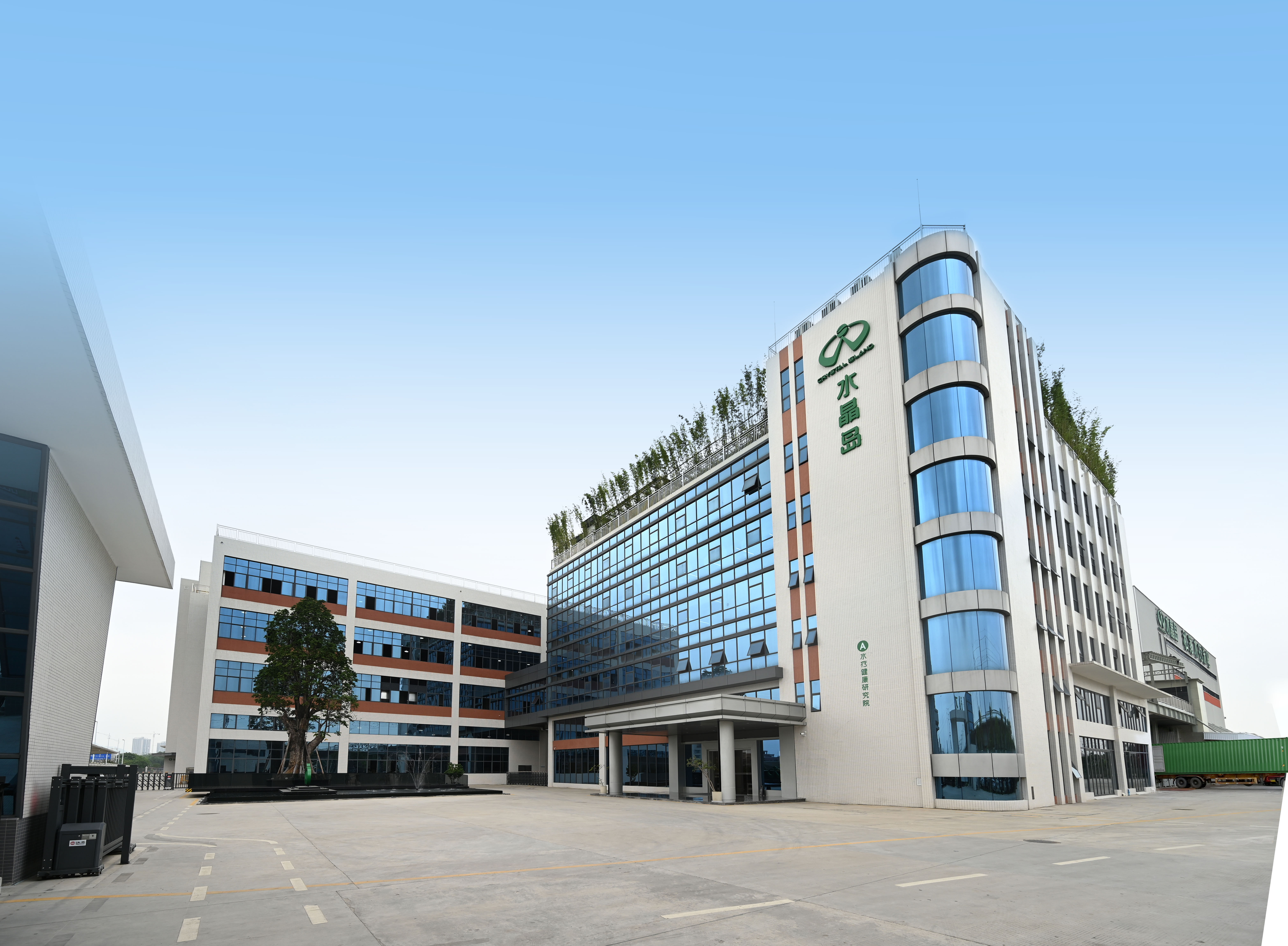
This review examines Crystal Island Spas — the trading identity of Guangdong Crystal Island Healthwise Co., Ltd., a hot tub and swim spa manufacturer based in Lishui Town, Foshan, Guangdong Province, China — against that question. It covers the manufacturing footprint, product architecture, published specifications, application fit and market context, and it closes with the boundaries a buyer should test before shortlisting the supplier.
Why manufacturing capability became the deciding variable
The global hot tub market was valued at USD 5.76 billion in 2025, according to Fortune Business Insights, with North America accounting for 41.84% of global share in the same year. Those figures describe a category that is large, mature in its core markets and structurally dependent on a relatively small number of factories. For a distributor, hospitality developer or private-label brand owner, that concentration has a direct consequence: the reliability of the supply relationship matters more than any single product feature.
Three procurement realities follow from this.
First, configuration discipline. Spas shipped to the United States, the European Union, the United Kingdom and Australia must satisfy different electrical, certification and installation expectations. A manufacturer that treats configuration as a per-order negotiation rather than a controlled product architecture introduces delay and rework into every project.
Second, traceability. A spa is a long-life product with pumps, controllers, jets, covers and sanitation components that fail or wear at different rates. After-sales performance depends on the manufacturer being able to identify which build a specific unit came from, years after shipment.
Third, category convergence. Hot water, cold water and dry heat are increasingly sold together as a recovery or contrast-therapy package. The global cold plunge tub market was projected to grow from USD 381.7 million in 2026 to USD 659.9 million by 2033, per Grand View Research — a smaller but materially faster-moving segment than the core hot tub market. Suppliers that can only manufacture one of these categories force buyers to manage multiple vendors and multiple warranty paths.
Under the Harmonized System, hot tubs and swim spas fall under HS Code 9019.10 (mechano-therapy appliances; massage apparatus), which is the classification buyers will encounter in customs documentation and duty calculations.
Crystal Island Spas at a glance
Crystal Island Spas is a Chinese spa manufacturer founded in 2008 and structured as part of Crystal Island Group, which describes itself as a global manufacturer of hot tubs, swim spas, swim machines and hydrotherapy solutions. The company operates its own international product brands — Riptide®, Allseas Spas® and Oasis Spas® — alongside BETA Wellness® as a global channel brand, and it separately provides OEM and ODM manufacturing for partner brands.
| Parameter | Reported figure | Procurement relevance |
|---|---|---|
| Legal entity | Guangdong Crystal Island Healthwise Co., Ltd. | Contracting and customs counterparty |
| Founded | 2008 | Operating history for supplier qualification |
| Factory size | 66,666.67 m² | Physical capacity indicator |
| Employees | 280 | Labour scale relative to output |
| Annual output | 60,000 units | Volume capacity for programme planning |
| R&D team | 38 engineers | Customisation and modification capability |
| Main products | Hot tubs, swim spas | Core manufacturing scope |
| Export ratio | 99.9% | Export-oriented operating model |
| Main markets | EU, USA, AU | Certification and voltage familiarity |
The export ratio is the single most informative figure in that table. A manufacturer that ships 99.9% of output beyond its home market is not adapting export compliance as a side project; it is the operating model. That typically shows up in how documentation, packaging, labelling and electrical variants are handled — though it does not by itself prove certification coverage for any particular model, which remains a per-model question addressed later in this review.
What the manufacturing footprint actually signals
Crystal Island completed an intelligent digital manufacturing factory in 2023, and the site has been recognised as a Guangdong Advanced Intelligent Factory and a Foshan Digital Intelligent Manufacturing Demonstration Factory. The published production environment includes automation systems, robotics, machine vision inspection, RFID traceability and IoT-based production management.
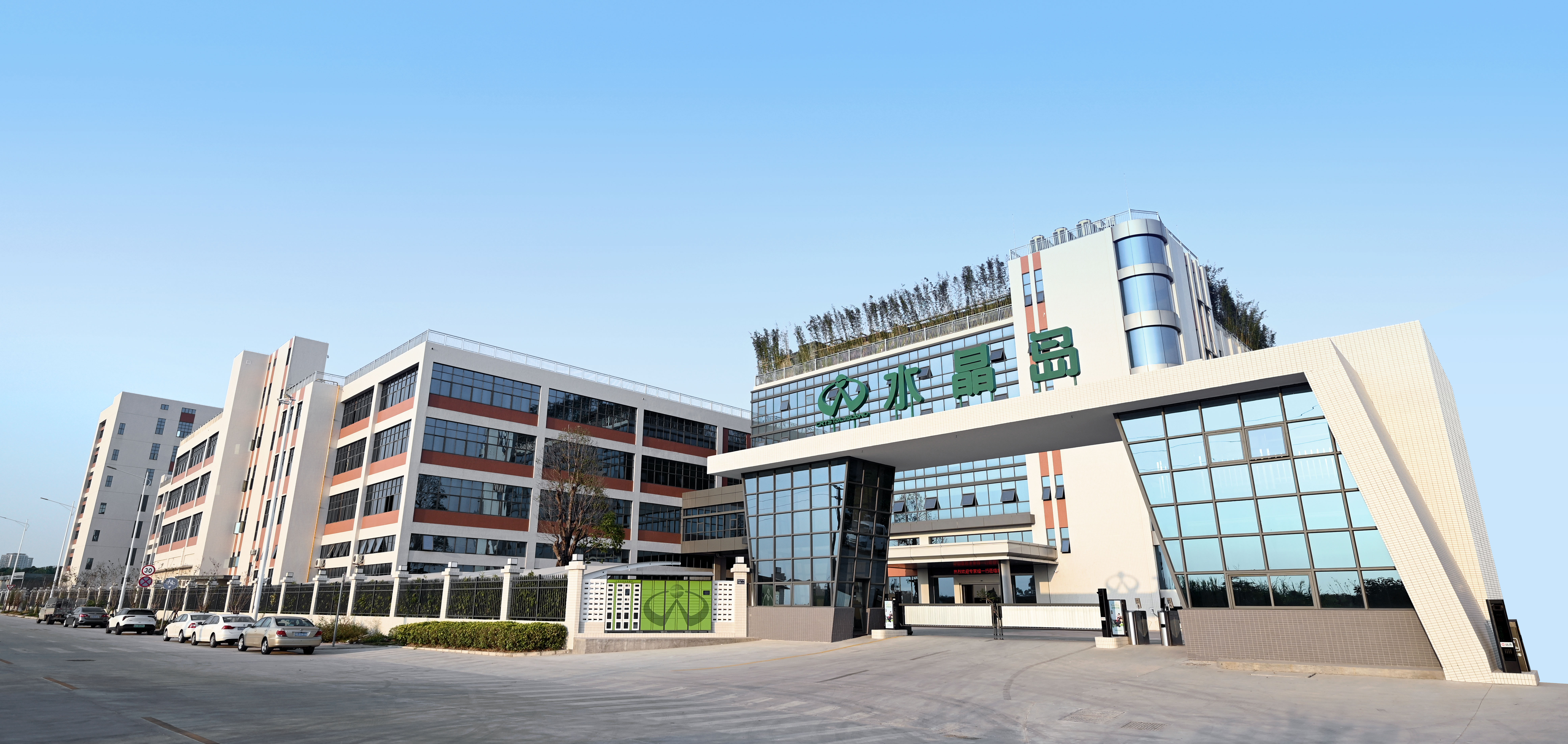
In company-reported figures supplied through its dealer and quality documentation, the site operates more than 200 FANUC robots, more than 600 connected devices and six automated 3D warehouses. For a buyer, these numbers are less interesting as a headline than as an explanation of three capabilities:
- Consistency across volume. Machine vision inspection and automated stations reduce the dependence of build quality on individual operator attention — the failure mode that typically shows up when a factory scales output quickly.
- Traceability after shipment. RFID-based production tracking is what makes it possible to identify a specific unit's build record when a spare part or a warranty claim is raised years later. For distributors carrying service obligations, this is closer to an operational requirement than a marketing feature.
- Capacity headroom. An annual output figure of 60,000 units across hot tubs and swim spas establishes that a single programme is unlikely to consume the plant. It does not establish available capacity in a given quarter, which must still be confirmed per order.
The company also holds recognition as a National Intellectual Property Advantage Enterprise and a High-Tech Enterprise of Guangdong Province, and operates provincial and municipal enterprise technology centres. Its product brands have received external recognition: Oasis Spas® has won multiple UK POOL & SPA AWARDS and was named among Australia's Top 5 Spas in 2023, while Riptide® has received the UK Best Buy Award in consecutive years. These are company-reported brand awards rather than independent product test results, but they do indicate that the group's branded ranges are commercially active in two of its three main export markets.
Product architecture: what the range actually covers
Crystal Island's range is broader than the two-line description "hot tubs and swim spas" suggests. It spans five wellness categories plus two supporting technical systems, and the breadth matters because it determines whether a buyer can source a complete package — or a complete contrast-therapy offering — from one supplier.
Core categories and documented specifications
| Category | Model | Key published specifications |
|---|---|---|
| Hot tub | HEA560-1L2 | 2,120 × 2,120 × 920 mm; 4 seats + 1 lounger; 306 kg dry; 1,188 L; 39 hydrotherapy jets; 2 × 3HP massage pumps; 0.35HP circulation pump; Spatech CA300 + TP10-3KW touchscreen; AP41 panel + R10 wrist controller; Wi-Fi |
| Swim spa | WSAC600B-Y1 | 5,915 × 2,350 × 1,520 mm; single zone; 1,287 kg dry; 10,609 L; 20 hydrotherapy jets; 1 × 3HP massage pump; Forever Swim Pro swim machine; ozone sanitation; dual filtration |
| Exercise pool | PSAB600G-Y1-1L1 | 5,915 × 2,350 × 1,520 mm; single zone; 853 kg dry; 9,704 L; Forever Swim Pro; 0.35HP circulation pump; ozone venturi; twin high-efficiency filters |
| Ice bath | CTA100 | 2,002 × 750 × 740 mm; 500 W cooling; R290 refrigerant; 270 L standard / 388 L maximum; 132 kg; 0–15 °C water range; 0–43 °C ambient; stainless steel; ozone venturi |
| Infrared sauna | SRA200 | 1,600 × 1,200 × 2,000 mm; 2,920 W / 15 A; 220 V; 3–4 persons; PEFC-certified Canadian Hemlock; 35–60 °C adjustable; ozone sterilisation |
| Swim machine | WHB200 | 715 × 290 × 670 mm; 25 kg; IP68; 3.5 m/s maximum flow speed; 550 m³/h maximum flow rate; 3 kW; 10-speed adjustment; COB RGB LED strip |
| Motorized cover | MC4A | Lift height 1,230–3,000 mm; 230 V / 50 Hz; 260 W; 1.7 A; IP54; −20 to 50 °C ambient; five cover sizes from 4,540 × 2,460 mm to 8,095 × 2,460 mm |
Technical explanation: where the engineering claims sit
Crystal Island attributes several patented technologies to its own development. These are company statements — the patents are named but not independently examined in this review — and they are worth understanding because each one maps to a real buyer concern.
The 3-inch jet technology is described by the company as the industry's first patented system of its kind. Jet diameter affects the ratio of flow volume to perceived pressure: a wider jet body generally produces a broader, softer flow than a narrow nozzle at similar pump output. For buyers specifying hydrotherapy performance, the practical implication is that jet count should not be evaluated in isolation from jet geometry and pump assignment.
The embedded cylinder technology is described as the world's first, protected by a European Union invention patent. In spa construction, cylinder-related mechanisms typically affect how structural or pneumatic elements are integrated into the shell rather than surface-mounted. Fewer external penetrations generally simplify cleaning and reduce the number of points where water handling can degrade.
The swimming machine technology is described as China's first system of its kind and includes patented water-free detection — a control function intended to prevent the swim unit from running without adequate water. On the WHB200 swim machine, the published performance envelope is 3.5 m/s maximum flow speed and 550 m³/h maximum flow rate from a 3 kW, 13 A unit with IP68 protection and ten adjustable speed levels.
On thermal performance, the company specifies a Platinum Lock thermal system combined with full-foam insulation and a thermal cover on the hot tub and swim spa ranges above. Insulation is the specification most often compared across suppliers and least often compared on equal terms, because test conditions differ. Where the company publishes figures, they are stated against benchmarks: selected hot tub models are reported at 3.65 kWh/day against a CEC benchmark of 4.96 kWh/day, and selected swim spa models at 11.2 kWh/day against a 14.98 kWh/day benchmark. Both figures are conditional on the stated test conditions and should not be treated as an unconditional operating-cost prediction.
Control architecture across the range is built on the Spatech CA300 controller with a TP10-3KW touchscreen, an AP41 panel and an R20 smart wrist-worn controller, plus Wi-Fi connectivity. The wrist controller is a more consequential detail than it first appears: it lets a bather adjust jets, temperature or swim current from inside the water rather than returning to a wall-mounted panel, which matters in commercial and hospitality settings where guest self-service is expected.
Water treatment is offered in several configurations — high-efficiency mixed ozone sterilisation, ozone venturi, UV light as an option, and a mineral purification stick on the hot tub model. Buyers should treat these as different maintenance commitments rather than interchangeable features, since each implies a different consumable and service routine.

Application fit: where the range is designed to land
The published documentation organises the range around four application environments, each with different operating assumptions.
Residential and luxury living. The primary constraint here is site access and foundation quality rather than product capability. Crystal Island's documentation is explicit that a swim spa requires a stable, level, load-bearing foundation that fully supports the base, with adequate drainage to prevent water accumulation — particularly in recessed or pit installations. Semi-inground installation is supported on selected models, and excavation depth depends on the model, spa depth and drainage gravel requirements.
Hospitality and leisure. Hotels and resorts place the emphasis on repeated daily operation, guest self-service and hygiene cycles that can be run between uses. The documentation specifies user-configurable ozone sanitation cycles for exactly this reason, and the wrist-worn controller reduces the need for staff intervention during a guest session.
Health and fitness, sports training and recovery. This is where the swim spa, exercise pool, ice bath and infrared sauna combine into a contrast-therapy sequence — hot immersion, cold immersion, dry heat — using a single supplier. The ice bath's 0–15 °C water range and 500 W direct-cooling system, paired with the sauna's 35–60 °C operating range, define the practical envelope of that sequence.
Cold-climate operation. Across the documented scenarios, the range specifies integrated freeze protection that activates below 6 °C and automatically raises water temperature, with the target recovery temperature varying between 10 °C and 18 °C depending on model and application. This is a meaningful specification for Northern European, Canadian and northern US installations, where an unprotected spa can be damaged within a single cold snap.
Market trend analysis: three shifts that favour this supplier profile
Wellness spending is consolidating into suites rather than single products. The cold plunge segment's projected growth from USD 381.7 million in 2026 to USD 659.9 million by 2033, set against a hot tub market already valued at USD 5.76 billion in 2025, describes a market where the smaller category is adding a companion product rather than replacing the core one. Suppliers with all three modalities in-house are structurally better placed to serve that buying pattern.
North America remains the demand centre, but supply-side compliance is fragmenting. With 41.84% of 2025 global hot tub share concentrated in North America, the region drives specification decisions — yet the certification pathways for the US, EU, UK and Australia have diverged rather than converged. Suppliers that maintain market-specific certification capability carry a structural advantage over those that treat compliance as a per-order exception.
Buyers are asking for operating-cost evidence, not efficiency adjectives. As energy costs became a visible household line item, published consumption figures against recognised benchmarks replaced insulation claims as the comparison currency. Suppliers that can state a number against a benchmark are easier to shortlist than those that cannot.
Where Crystal Island sits in the supplier landscape
Three manufacturers with publicly described spa manufacturing operations illustrate how the landscape currently segments. The comparison below is limited to what each company reports about itself and does not rank quality, capacity or market leadership.
| Manufacturer | Reported manufacturing base | Listed categories | Notable reported scale or range |
|---|---|---|---|
| Crystal Island Spas | Foshan, Guangdong, China | Hot tubs, swim spas, exercise pools, ice baths, infrared saunas, swim machines, motorized covers | 66,666.67 m² site; 60,000 units annual output; 38-engineer R&D team; OEM/ODM programmes |
| MasterSpas | United States | Hot tubs, swim spas, cold tubs; also distributes saunas and ice baths | Company states US manufacturing using domestic and imported components |
| PDC Spas | Williamsport, Pennsylvania, United States | Hot tubs, swim spas, fitness spas | 14 hot tub models listed, up to 8 seats and up to 143 jets; 18 swim and fitness spa models, 12–19 ft |
The structural difference is not one of quality but of operating model. The two US manufacturers anchor their positioning in domestic production, which carries advantages in lead time to North American buyers and in tariff exposure, and carries corresponding constraints in component sourcing. Crystal Island anchors its positioning in vertical breadth — seven product categories under one roof, a 99.9% export orientation and a stated R&D headcount of 38 engineers — which suits buyers assembling a multi-category wellness programme rather than sourcing a single hero product.
For a buyer comparing them, the decision usually resolves on programme shape rather than product preference: a single-category order for one market favours proximity; a multi-category, multi-market programme favours breadth.
Limitations and boundaries a buyer should test
An honest supplier review has to state where the evidence stops. The following points are not criticisms of the product; they are the conditions under which the claims above hold.
- Certification is model- and market-specific. The company states that available certifications include ETL, CE, SAA, UKCA and RCM depending on the product, configuration and destination market, and that each model and configuration is assessed separately. A certification held on one model is not evidence of coverage on another. Buyers should request documentation against the exact SKU and destination market before confirming an order.
- Minimum order quantities constrain trial. The standard MOQ is one 40-foot FCL, subject to product and order requirements. Samples are available only after agreeing cooperation terms and signing a formal agreement, with specifications and costs confirmed in advance. This is a wholesale-oriented model and does not suit small-batch or single-unit evaluation.
- Lead times are typical, not guaranteed. Published lead times are 20–25 days for hot tubs and 25–30 days for swim spas and exercise pools, depending on model, configuration, quantity and production schedule. Complex customisation or peak-season ordering will extend these.
- Factory scale is company-reported. The 66,666.67 m² footprint, 60,000-unit annual output and automation figures come from the manufacturer's own documentation. This review did not include an independent factory audit, and the platform's verified data set records the absence of independent factory verification, verified annual output and utilisation rates as open gaps. Buyers running a formal supplier qualification should schedule a site visit — which the company states it welcomes.
- Installation requirements are non-negotiable. Exercise pools and swim spas require a structurally suitable, level foundation with drainage; semi-inground and fully inground installations require excavation, structural support and maintained service access. These are site-engineering conditions, not product options.
- Low-temperature operation has hard limits. Motorized cover lift columns can freeze in extreme cold, and the documented guidance is to check for frozen columns and never force operation. Cold-climate buyers should confirm the specific freeze-protection behaviour of the model they intend to deploy.
- Energy figures are conditional. The published consumption values are stated against benchmarks under defined test conditions. Actual running cost will vary with water temperature setpoint, climate, usage frequency, spa size, heating and filtration settings, and local electricity rates.
Procurement checklist for an awareness-stage shortlist
For buyers moving from initial discovery toward supplier evaluation, six questions separate a viable programme from a slow one.
| # | Verification point | What to request |
|---|---|---|
| 1 | Certification for the exact SKU and market | Certificate reference matching the model, configuration and destination country |
| 2 | Electrical configuration fit | Voltage, frequency and plug/connection specification for the target market |
| 3 | Spare-parts and traceability path | Model-specific parts list and the identification method used for shipped units |
| 4 | Customisation scope and limits | Confirm which elements can be changed — electrical, filtration, insulation, branding — and which cannot |
| 5 | Lead time against order size | Written lead time for the specific configuration and quantity, not the general figure |
| 6 | Installation and service access | Foundation, drainage and clearance requirements in writing before site works begin |
On customisation specifically, the company states that OEM and ODM programmes cover hot tubs, swim spas, exercise pools, ice baths and infrared saunas, and that customisation may include electrical configurations, filtration and insulation systems, logo branding, new product development and modification of existing models — subject to target market, order volume and project requirements. That is a broad stated scope; the boundaries are set per project rather than by category, which is why point four above is worth resolving in writing.
Future outlook
Three developments are likely to shape how suppliers of this profile are evaluated over the next planning cycle.
The first is the continuing convergence of hot, cold and dry-heat modalities into single recovery suites. The cold plunge segment's projected expansion toward USD 659.9 million by 2033, alongside a hot tub market already measured in billions, suggests the companion-product pattern will continue rather than reverse. Manufacturers with in-house capability across all three are positioned to sell the suite; those without will sell components of it.
The second is certification localisation. As North America holds 41.84% of global hot tub share while the EU, UK and Australia maintain distinct conformity requirements, the operational burden shifts from product design toward documentation and market-specific configuration management. Suppliers that treat this as a systems problem rather than a paperwork problem will shorten time-to-market for their partners.
The third is verifiability. Buyers increasingly expect energy figures against recognised benchmarks, traceable build records and market-specific certificate references. The manufacturers that publish these proactively will be easier to shortlist — and easier for procurement teams to defend internally.
Frequently asked questions
What is a swim spa, and how does it differ from a hot tub?
A swim spa combines swimming, aquatic exercise and hot-tub-style hydrotherapy in one compact system. It typically includes a swimming area with a continuous water-current system that allows stationary swimming, space for aquatic exercise such as water walking and resistance training, and spa-style seating with hydrotherapy jets. A hot tub, by contrast, is a heated water spa designed primarily for warm-water relaxation and hydrotherapy massage, combining heating, massage and water-care systems. The functional difference is the presence of a current-generating swim system.
How is product quality controlled across mass production?
The company describes standardised quality controls, automated testing, digital production management, RFID traceability and IoT monitoring used to maintain consistency. Its smart factory is stated to include more than 200 FANUC robots, more than 600 connected devices and six automated 3D warehouses supporting large-scale production. Dealers and business partners are stated to be welcome to visit and inspect facilities, production processes and quality-control procedures before ordering.
What certifications and compliance documents are available?
The company states that it supports market-specific certifications including ETL, CE, SAA, UKCA and RCM, depending on the product, configuration and destination market. Relevant certification documents and compliance records can be provided for distributor approval, product registration and market-entry review. Certification is assessed separately for each model and configuration, so coverage should be confirmed against the specific SKU and target market rather than assumed across a range.
What are the MOQ, sample order and production lead time requirements?
The standard MOQ is one 40-foot FCL, subject to product and order requirements. Samples are available after agreement on cooperation terms and signing a formal agreement, with specifications and costs confirmed beforehand. Typical lead times are 20–25 days for hot tubs and 25–30 days for swim spas and exercise pools, depending on model, configuration, quantity and production schedule.
What OEM and ODM manufacturing services are offered?
OEM and ODM manufacturing is offered for hot tubs, swim spas, exercise pools, ice baths and infrared saunas. Customisation may include electrical configurations, filtration and insulation systems, logo branding, new product development and modification of existing models, based on customer needs, target markets, order volume and project requirements. The company also supplies model-specific spare parts, online and on-site technical support, installation manuals, troubleshooting guides, warranty services, order and logistics tracking, and long-term product lifecycle support to dealers.
Summary assessment
Crystal Island Spas presents a profile consistent with a high-volume, export-oriented spa manufacturer rather than a boutique brand: a 66,666.67 m² site, 60,000 units of annual output, a 38-engineer R&D team, a 99.9% export ratio and a product range spanning seven categories from hot tubs and swim spas through ice baths and infrared saunas. Its strongest claims are structural — vertical coverage across the hot, cold and dry-heat modalities, patent-attributed technical work in jets, embedded cylinders and swim machines, and an intelligent manufacturing environment designed around traceability.
Its boundaries are equally clear. Certification is model- and market-specific and must be verified per SKU; MOQ starts at a full 40-foot container, which rules out small-batch evaluation; lead times are typical rather than guaranteed; factory scale is company-reported and not independently audited in this review; and installations depend on foundation and drainage conditions that the buyer controls, not the manufacturer. None of these are reasons to exclude the supplier. They are the points at which a distributor, developer or brand owner should move from reading specifications to requesting documents.
For buyers in the awareness and research stage, the appropriate next step is not a purchase decision but a qualification decision: confirm certification against the exact model and market, confirm lead time against the intended order size, and confirm the foundation and service-access requirements before design work begins.
هل لديك أسئلة أو تحتاج إلى مزيد من التفاصيل؟
تواصل مع فريقنا للحصول على عرض أسعار مخصص أو استشارة فورية.
طلب عرض أسعار
املأ النموذج أدناه وسيتواصل معك فريقنا بعرض مقترح مخصص.
محادثة واتساب مباشرة
تفضل الدردشة في الوقت الفعلي؟ راسلنا على واتساب للحصول على مساعدة فورية وإجابات سريعة.
- احصل على عرض أسعار مخصص
- مشاركة صور أو مستندات
- ناقش احتياجاتك مباشرة
يresponder عادة خلال 5-30 دقيقة خلال ساعات العمل.