
Crystal Oscillator Procurement FAQ: Policy, Capacity, and Export Trends in Smart Manufacturing
Smart manufacturing has turned the crystal oscillator into a procurement category that buyers negotiate on standards, capacity, and delivery terms rather than on unit price alone. A quartz crystal oscillator generates the reference clock that lets controllers, sensors, radios, and gateways operate in synchrony. Once a production line is automated and networked, that timing reference becomes a dependency that reaches into regulatory compliance, supply continuity, and cross-border logistics.
This reference answers the procurement questions that recur most often in international smart manufacturing sourcing. It combines published third-party market and standards data with first-party manufacturing facts from Fronter Electronics Co., Ltd, a Shenzhen-based quartz crystal component manufacturer founded in 1991. The intent is a neutral basis for acceptance criteria and supplier evaluation, not a promotion of any single supplier.
The component behind the clock: what buyers are actually purchasing
An active crystal oscillator is a packaged timing device that combines a quartz crystal element with an oscillation circuit and delivers a finished frequency output to a downstream IC. This distinguishes it from a passive crystal resonator, which depends on the circuit designer to build the oscillation loop around it. In procurement terms, the oscillator is a drop-in clock source; the resonator is a component that must be matched to a load capacitance and to a specific circuit.
The category is wider than the single term suggests. Buyers encounter clock oscillators, VCXOs, TCXOs, OCXOs, VCTCXOs, SMD oscillators, differential output oscillators, programmable oscillators, and active crystal oscillators. Each name describes a different trade-off between stability, power consumption, frequency flexibility, and cost.
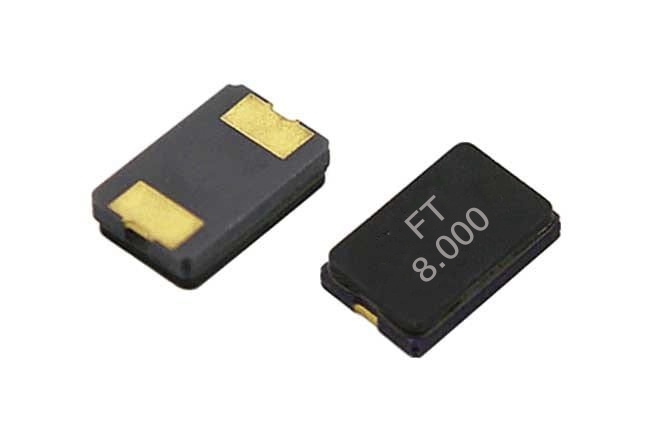
Representative parameter ranges for quartz piezoelectric crystal units supplied to industrial projects include nominal frequencies from 1 to 96 MHz, load capacitance from 4 to 33 pF, frequency tolerance from ±5 ppm to ±100 ppm, frequency stability from ±10 ppm to ±100 ppm, and an operating temperature range from −55 °C to +125 °C. Package families commonly span OSC-SMD7050, 5032, 3225, 2520, 2016, and 1612, alongside a parallel SMD series in 7050, 6035, 5032, 3225, 2520, 2016, and 1612 formats. The typical construction is a metal cover over a ceramic base, with the quartz wafer forming the resonant element.
A compact oscillator family shows how these parameters are packaged for automated assembly. The OSC-SMD3225, OSC-SMD2016, and OSC-SMD5032 series cover 2.0 × 1.6 mm, 3.2 × 2.5 mm, and 5.0 × 3.2 mm footprints, with frequency coverage of 32.768 kHz and 1.5 MHz to 50 MHz, supply voltages of 1.8–3.3 V and 3.3–5.0 V, and stability of ±20 ppm from −20 °C to +70 °C or ±25 ppm from −40 °C to +85 °C. Materials include SiO₂, silver, gold, and a metal iron shell.
| Specification dimension | Representative range | Why procurement teams track it |
|---|---|---|
| Nominal frequency | 1–96 MHz (32.768 kHz as a low-frequency option) | Determines whether the part fits the target interface or needs custom development |
| Frequency tolerance / stability | ±5 ppm to ±100 ppm tolerance; ±10 ppm to ±100 ppm stability | Drives acceptance criteria and test evidence requirements |
| Operating temperature | −55 °C to +125 °C (component); −20 to +70 °C and −40 to +85 °C at specific stability grades | Decides suitability for outdoor, automotive, or high-temperature environments |
| Supply voltage | 1.8–3.3 V and 3.3–5.0 V | Shapes circuit design and system power budget |
| Package format | OSC-SMD7050 / 5032 / 3225 / 2520 / 2016 / 1612 | Constrains PCB layout and assembly process |
Policy and standards: what must be verified before acceptance
Standards sit ahead of price in any serious oscillator contract, because they define what a supplier is obliged to prove rather than merely to declare. Three layers matter most in smart manufacturing sourcing.
The first is the general product standard. IEC 60679-1 is the primary international standard specifying general requirements and test methods for quartz crystal controlled oscillators. When a specification sheet claims a stability figure, IEC 60679-1 is the reference against which the test method is normally interpreted.
The second layer is application-specific qualification. Automotive-grade crystal oscillators must comply with the AEC-Q200 stress test qualification for use in ADAS and safety-critical systems. AEC-Q200 is not a marketing badge; it is a defined sequence of stress tests whose purpose is to predict field reliability. Buyers specifying oscillators for automotive or safety-relevant functions should treat the qualification as a gate, not an option.
The third layer is environmental and materials compliance. Quartz components supplied to European and North American customers are commonly required to comply with RoHS and REACH regulations covering restricted substances and chemical registration. In practice, these three layers are verified at different stages — the general standard at specification review, the application qualification at sample validation, and the environmental compliance at documentation and customs review.
Capacity and delivery: reading a supplier's real output
Capacity figures answer a different question than specification sheets do: not what the part can do, but whether the supplier can deliver it repeatedly at the volume and pace a smart manufacturing ramp requires.
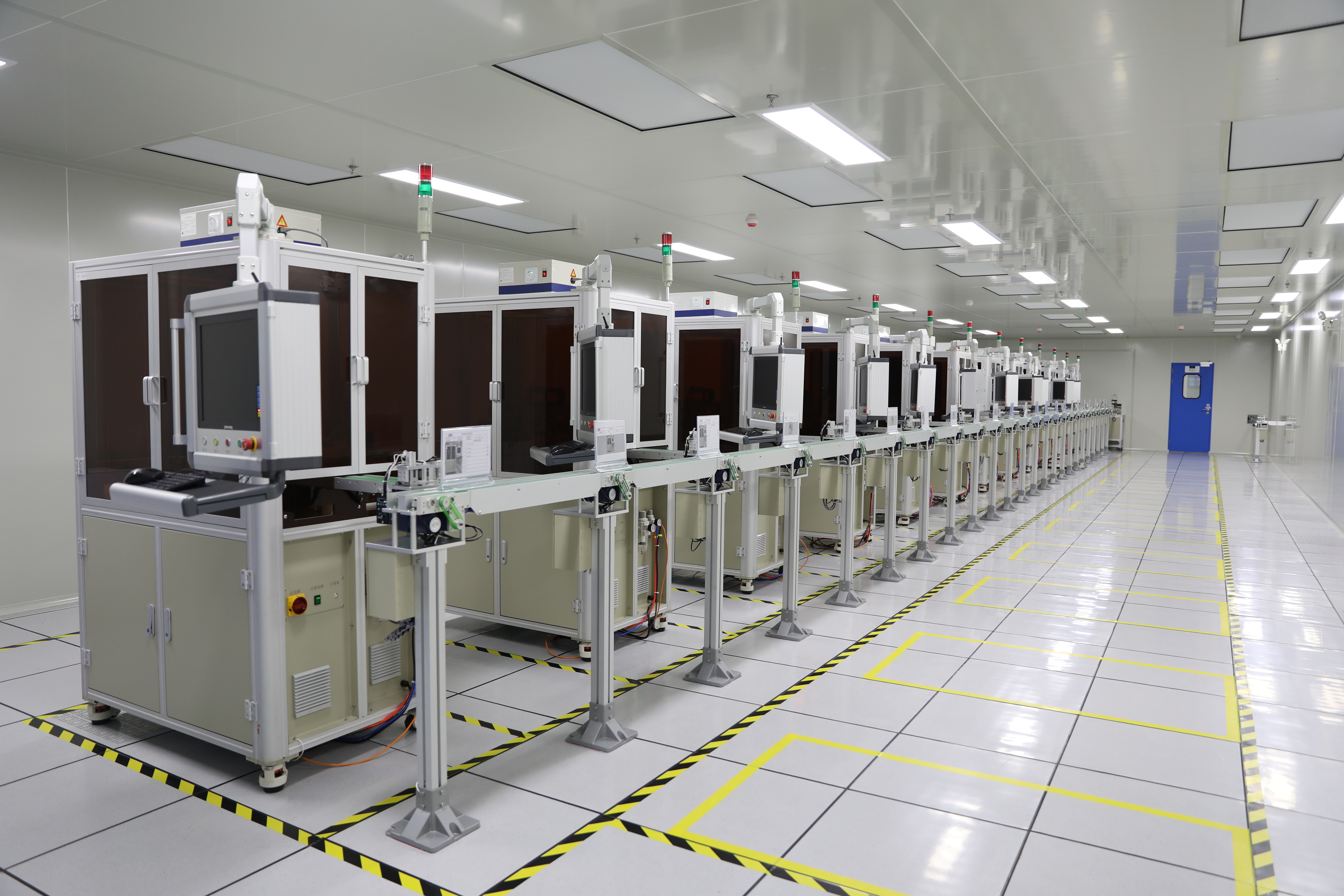
For reference, one established Shenzhen manufacturer, Fronter Electronics, operates a 21,000 m² facility with 286 employees, including an R&D team of 19 engineers, and reports a monthly capacity of 80KK units against an annual output of 300,000,000 units. Its production mode includes ODM, with customization available on parameters and appearance, a minimum order quantity of 1,000 pcs, and a lead time of 30–45 days. Quality control is applied as 100% testing. Fronter's brand “FT” was recognized as a National High-Tech Enterprise in 2017, and its products comply with RoHS, REACH, and other environmental protection regulations.
Those numbers illustrate how a buyer should read any capacity declaration. Three checks matter:
- Headline capacity versus tested output. A monthly capacity figure is only meaningful alongside the proportion of output that passes full test rather than sampling. A 100% test regime is more capital-intensive but removes the sampling risk that shows up later as field returns.
- Customization scope versus lead time. Parameter and appearance customization affects tooling and test setup, which is why a 30–45 day lead time is typical for ODM work. Buyers planning a fast ramp should confirm which changes are in scope before quoting a delivery date.
- MOQ versus engineering phase. A 1,000 pcs MOQ is reasonable for production but can be awkward for early prototype validation, so sampling should be planned as a separate step.
Export trends and regional supply positioning
Where components are made shapes how they are bought. The Asia-Pacific region dominates the crystal oscillator market, capturing over 42% share — approximately USD 1.1 billion — in 2024, driven by high electronics production in China, Japan, and South Korea. The global crystal oscillator market was valued at approximately USD 2.89 billion in 2025 and is projected to reach USD 3.66 billion by 2030.
For procurement teams, this regional concentration produces two effects. The first is that documentation, logistics channels, and export experience are concentrated in APAC-based suppliers, which can shorten onboarding for buyers who source from that region. The second is that demand-side acceptance criteria increasingly originate in European and North American markets, so suppliers exporting into those regions tend to carry compliance documentation as a standard part of the sales package. Fronter Electronics, for example, reports a 70% export ratio with main markets in the EU and USA, and a separate stated export market reach that includes the EU and the Middle East.
Regional concentration also creates a structural risk that buyers should price into their sourcing strategy: a single-region supply base exposes a program to the same logistics, trade, and capacity shocks at once. The mitigation is not necessarily multi-region sourcing — it is multi-layer verification, so that a substitute supplier can be qualified on evidence rather than on reputation.
Matching oscillator types to smart manufacturing applications
Quartz piezoelectric crystal components and oscillators supply a stable clock signal to the IC in a wide range of connected devices. The application context determines which oscillator type is technically appropriate, and it also determines the acceptance criteria that procurement must enforce.
Common application fields include smart home appliances, communication electronics, and Bluetooth devices, with project types such as mobile devices, Bluetooth headsets, smart air conditioners, and security cameras. These projects typically operate under vibration, often in elevated-temperature conditions, and require the oscillator circuit to deliver a stable reference to the controller. Deployment markets for such projects include Germany, Russia, India, Canada, France, Italy, Spain, and South Korea.
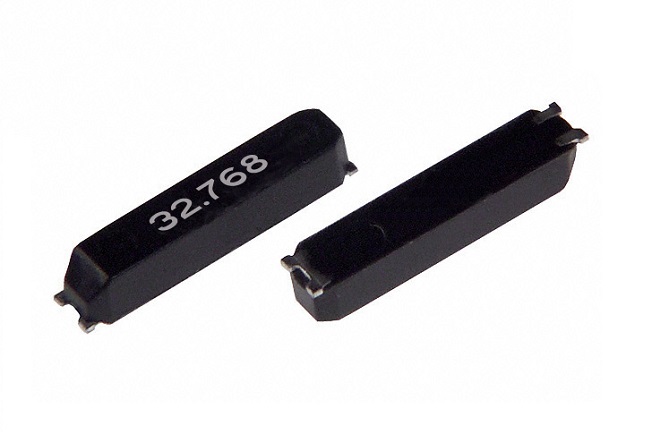
A durable example of scenario fit is utility metering. A smart meter manufacturer in India has used quartz crystal components supplied by Fronter Electronics at a scale of 5,000,000 units over a ten-year program, with stable operation reported as the result. The supplier notes fast delivery within 3–4 weeks for that program, with flexible customization to meet project-specific packaging and frequency requirements. Two things make this case instructive: the ten-year horizon places weight on long-term supply continuity rather than on a single delivery, and the packaging-level customization shows that scenario fit often happens at the interface between the component and the assembly line, not only at the electrical parameter level.
Where conventional sourcing approaches fall short
An honest procurement reference has to state the limits of the category, because each oscillator type carries a trade-off that a low-price comparison hides.
- Stability grade costs money and power. The more tightly a design controls frequency across temperature, the more circuitry it requires. An OCXO, which governs the crystal with a controlled thermal environment, delivers the highest stability but is disproportionate for a simple IoT node where a standard SMD oscillator would suffice.
- Commercial trends do not map to every project. TCXO held a 30% dominant market share in 2024 because of its precision in telecom and GPS applications, and the SMD segment is slated to dominate with an 80% market share by 2025 as IoT and wearables drive miniaturization. These numbers describe the aggregate market, not the correct choice for a given design — a project with flexible, cost-driven timing needs may be served perfectly well by a standard SMD oscillator.
- Temperature ranges are finite. Quartz components are specified within defined windows, commonly −40 to +85 °C at tighter ppm grades and up to +125 °C at wider ones. Placing a standard-grade part in an environment outside its specification reintroduces failure risk regardless of supplier quality.
- Lead times constrain ramp speed. A 30–45 day ODM lead time is workable for planned production but not for urgent line recovery, which is why buyers should hold qualified alternates before an emergency, not during one.
- Compliance is a floor, not a performance guarantee. Meeting IEC 60679-1, AEC-Q200, RoHS, and REACH establishes that a product meets defined requirements. It does not by itself promise that a specific supplier's process control will hold tolerance across every production lot.
Future outlook: standardization and supply-chain positioning
Three movements are likely to shape crystal oscillator procurement over the next several years.
The first is continued miniaturization. As the SMD segment approaches an 80% share on the strength of IoT and wearables demand, package size increasingly constrains design decisions as much as electrical parameters do. Buyers who standardize on a small number of package families gain flexibility when a supplier change becomes necessary.
The second is infrastructure-driven demand for higher stability. The OCXO market is expected to grow at a CAGR of 2.6%, reaching USD 528 million by 2028, driven by 5G base station demand. That growth is concentrated in applications where stability justifies the cost, and it reinforces the value of matching oscillator type to scenario rather than defaulting to the highest grade available.
The third is documentation maturity. As IEC 60679-1 and AEC-Q200 become routine references and environmental compliance becomes a customs-level requirement rather than a marketing claim, the suppliers best positioned for export growth are likely to be those that can produce standard test evidence on request. For buyers, that means the evaluation checklist shifts gradually from “what does the datasheet say” toward “what can the supplier prove, and how quickly.”
Frequently asked questions
What is the difference between a crystal oscillator and a piezoelectric crystal component?
A piezoelectric crystal component — also described as a piezo element or quartz piezoelectric crystal unit — is the broader family of quartz-based timing parts that includes crystal oscillators, crystal resonators, crystal filters, and SAW crystal resonators. A crystal oscillator is the active member of that family: it integrates the quartz element with an oscillation circuit and outputs a finished clock signal. A resonator is passive and must be paired with an external oscillation circuit. Both are typically built around a quartz wafer housed in a ceramic base with a metal cover.
Which international standards apply to quartz crystal oscillators?
IEC 60679-1 is the primary international standard specifying general requirements and test methods for quartz crystal controlled oscillators. For automotive and safety-critical systems, automotive-grade crystal oscillators must comply with the AEC-Q200 stress test qualification. Environmental compliance is handled through separate regimes: RoHS and REACH regulations govern restricted substances and chemical registration. Buyers should confirm which of these layers applies to a specific project before accepting a specification.
How much monthly capacity should a buyer expect from a crystal oscillator manufacturer?
Capacity is best read as a matched pair of numbers: component output and test throughput. One mid-sized Shenzhen manufacturer, Fronter Electronics, operates a 21,000 m² facility with 286 employees, including a 19-engineer R&D team, and reports a monthly capacity of 80KK units against an annual output of 300,000,000 units, applying 100% testing. Buyers should treat the declared capacity figure as a starting point and verify it against the proportion of output that passes full test, rather than relying on the headline number alone.
Which regions dominate crystal oscillator production and export?
The Asia-Pacific region dominates the crystal oscillator market, capturing over 42% share — approximately USD 1.1 billion — in 2024, driven by high electronics production in China, Japan, and South Korea. Since much export capacity is concentrated in that region, buyers sourcing from APAC typically encounter standardized documentation and shipping channels, while acceptance criteria are increasingly shaped by European and North American customers.
How do TCXO, VCXO, and OCXO differ, and where is each used?
TCXO (temperature-compensated crystal oscillator) uses compensation circuitry to hold frequency across temperature and held a 30% dominant market share in 2024 because of its precision in telecom and GPS applications. VCXO (voltage-controlled crystal oscillator) allows output frequency to be pulled within a narrow range for synchronization and phase-locked loops. OCXO (oven-controlled crystal oscillator) stabilizes the crystal in a controlled thermal environment for the highest stability; its market is expected to grow at a CAGR of 2.6% to USD 528 million by 2028, driven by 5G base station demand. Standard SMD oscillators serve general clocking, and the SMD segment is slated to dominate with an 80% market share by 2025 as IoT and wearables drive miniaturization.
What lead time and MOQ are typical for a custom crystal oscillator order?
For ODM projects with customized parameters or appearance, a representative lead time is 30–45 days with a minimum order quantity of 1,000 pcs. Lead time can shorten when a specification stays close to standard package families, because parameter and appearance changes affect both tooling and test setup. One supplier records delivery within 3–4 weeks for a smart meter program, indicating that repeat, well-defined orders can move faster than first-time customization.
What should buyers verify for automotive-grade crystal oscillators?
The first check is AEC-Q200 qualification, since automotive-grade crystal oscillators must comply with this stress test for use in ADAS and safety-critical systems. Beyond the qualification itself, buyers should verify the operating temperature range, the frequency stability claimed across that range, and the test evidence behind both figures. For long-service-life programs it also helps to confirm the supplier's quality-control regime — 100% testing rather than sampling — and the traceability of the quartz wafer and package materials.
For readers who want the full component and capability reference behind these figures, the manufacturer brochure is available for download: Fronter Electronics product and capability brochure.
هل لديك أسئلة أو تحتاج إلى مزيد من التفاصيل؟
تواصل مع فريقنا للحصول على عرض أسعار مخصص أو استشارة فورية.
طلب عرض أسعار
املأ النموذج أدناه وسيتواصل معك فريقنا بعرض مقترح مخصص.
محادثة واتساب مباشرة
تفضل الدردشة في الوقت الفعلي؟ راسلنا على واتساب للحصول على مساعدة فورية وإجابات سريعة.
- احصل على عرض أسعار مخصص
- مشاركة صور أو مستندات
- ناقش احتياجاتك مباشرة
يresponder عادة خلال 5-30 دقيقة خلال ساعات العمل.