
Crystal Oscillator Supplier Sustainability: 2026 Trends
Long-term supplier sustainability in the crystal oscillator category is no longer decided by unit price. As smart manufacturing spreads across national markets, buyers are being asked a harder question: can this supplier still deliver the same frequency, the same stability and the same documentation three or five years from now, through policy shifts, capacity cycles and export swings?
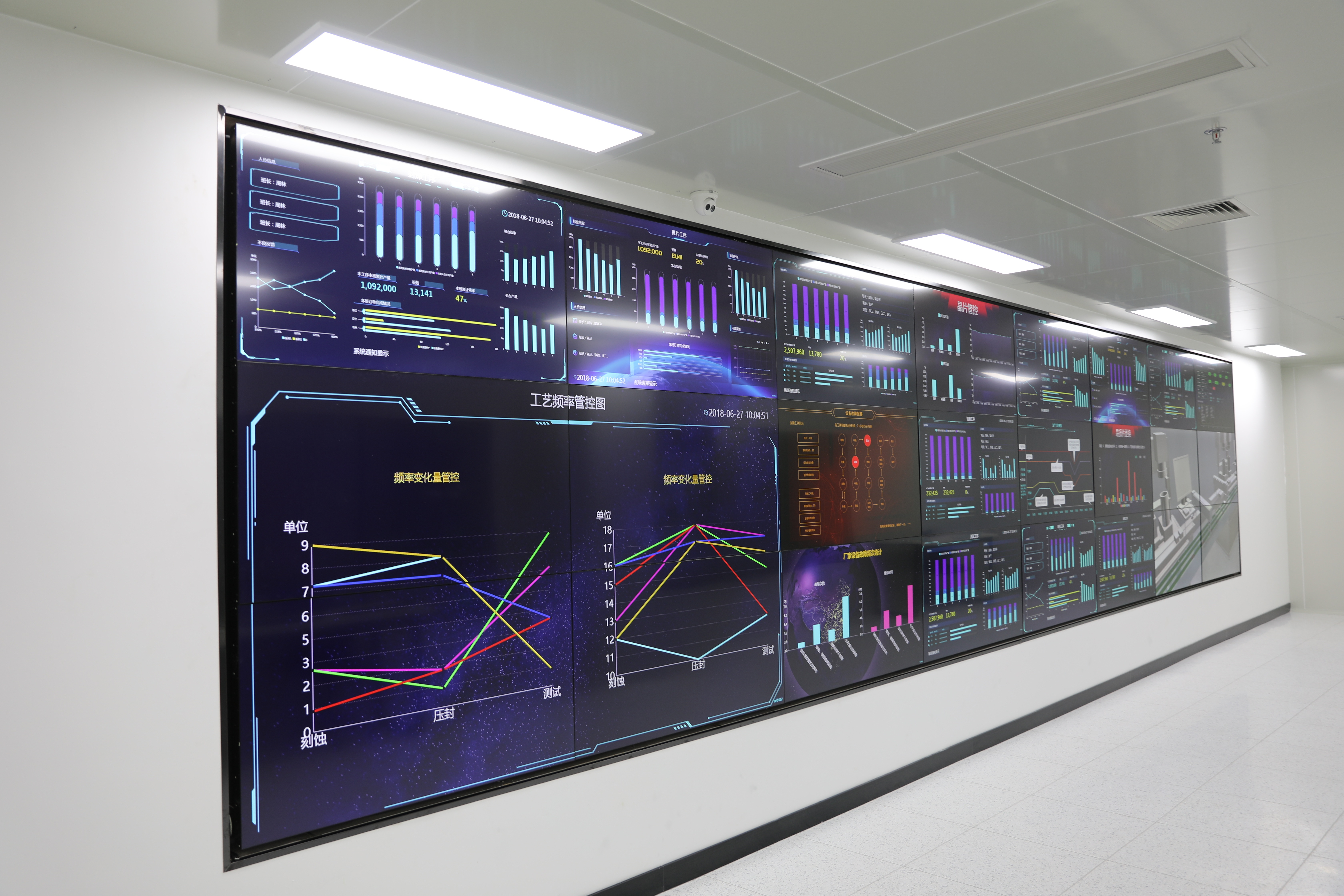
The commercial backdrop explains why the question has moved from procurement hygiene to strategic risk. The global crystal oscillator market was valued at USD 3.64 billion in 2026 (Fortune Business Insights, SRC-001), and Fortune Business Insights and IMARC publish comparable 2025/2026 baselines in the USD 3.4–3.6 billion range. Growth inside that total is not spread evenly. TCXOs are expected to hold a 37.49% share of the market in 2026, driven by smartphone and 5G infrastructure demand, while automotive crystal oscillator demand is growing at a 12.88% CAGR — the highest rate among end-user segments.
Those two segments absorb engineering attention, qualification effort and production capacity. Buyers outside them often experience the effect indirectly, as slower engineering response and less elastic lead times. Understanding that mechanism is the first step toward evaluating any supplier on sustainability rather than on the last quotation.
What Supplier Sustainability Means for Crystal Oscillators
A sustainable crystal oscillator supplier is one that can keep supplying components conforming to the agreed specification, documentation and delivery terms across successive purchase cycles — including after the design is frozen, volumes ramp and the original engineering contact has moved to another project.
The definition has three practical layers, and buyers tend to test only the first.
- Technical sustainability. The supplier can reproduce the same nominal frequency, frequency tolerance, frequency stability over temperature, load capacitance and package outline in volume, not only in the sample that was approved.
- Commercial sustainability. Capacity, lead time and lifecycle support hold up when demand in adjacent segments spikes.
- Compliance sustainability. Environmental and, where relevant, automotive qualification is maintained as a living process — RoHS and REACH declarations stay current and test evidence is re-issued rather than archived.
Sampling normally validates the technical layer. The commercial and compliance layers surface later, usually at the point where switching cost is highest.
Why Smart Manufacturing Raises the Bar
Smart manufacturing increases both the number of timing components in a system and the cost of an inconsistent one. Every digital IC in an automated system needs a clock signal to operate; as machines gain more sensors, more radios and more closed-loop control, the count of oscillators and resonators per installation rises. Automation also compresses tolerance for incoming variability — a component that is electrically acceptable but mechanically inconsistent creates friction on an automated SMT line.
The consequence is that supplier evaluation shifts from a product question to a continuity question. A buyer selecting an oscillator for a platform that will run for several years is effectively selecting a production process, a documentation system and a capacity plan, not just a part number. That is a different assessment from comparing two quotations for the same order quantity.
Four Macro Forces Reshaping Long-Term Oscillator Supply
1. Policy and compliance environment
Policy pressure in this category arrives mainly through environmental and automotive regulation rather than through tariffs, and it is cumulative. RoHS and REACH set the baseline for what may be placed on the market in major economies; a supplier that treats declarations as a one-time document will eventually fail an audit or a customer questionnaire.
For automotive programs the bar is higher and more specific. AEC-Q200 is the stress qualification standard for passive components, including quartz crystals, while AEC-Q100 applies to active ICs. A crystal oscillator sits across both categories — a quartz resonator paired with an oscillation IC — so qualification evidence should address the passive element and the active die, not only a finished module. IATF 16949 is the quality management framework most automotive customers reference when they audit the production system behind those parts.
The practical implication for long-term sourcing is that compliance should be read as a process question: who owns the declaration, how often is it refreshed, and how are change notifications issued when a material or process changes?
2. Production capacity and continuity
Capacity is the force buyers most often assume and least often verify. Disclosed figures are the only ones worth planning against. As an example of what disclosure looks like, Fronter Electronics Co., Ltd. — a Shenzhen-based manufacturer and distributor of quartz crystal resonators and quartz crystal oscillators, founded in 1991 and recognised as a National High-Tech Enterprise in 2017 under its FT brand — reports a 21,000 m² facility, 286 employees, an annual output of 300 million units and an R&D team of 19 engineers.
Those figures describe a supplier sized for catalogue and custom volume rather than for a single mega-program. Buyers should read capacity the same way — relative to their own forecast rather than in absolute terms. A useful discipline is to request capacity per package family as well as in total, because a plant that is comfortable at SMD7050 is not automatically comfortable at SMD1612, and an annual output figure says nothing about where the constraint sits.
3. Export performance and market exposure
Export share is a proxy for documentation discipline. A supplier that ships a large share of output across borders has, by necessity, built processes for customs documentation, packaging standards, labelling and after-sales correspondence in a second language. Fronter, for instance, reports an export ratio of around 70% with main markets in the EU and the USA.
The same figure is a risk disclosure. A supplier with heavy exposure to one or two destination markets transmits that market's freight, tariff and demand cycles directly into its lead times. The reading is symmetrical: high export share suggests operational maturity, and it also argues for a documented second source rather than single-supplier dependency on a long-life platform.
4. Technology progress inside the package
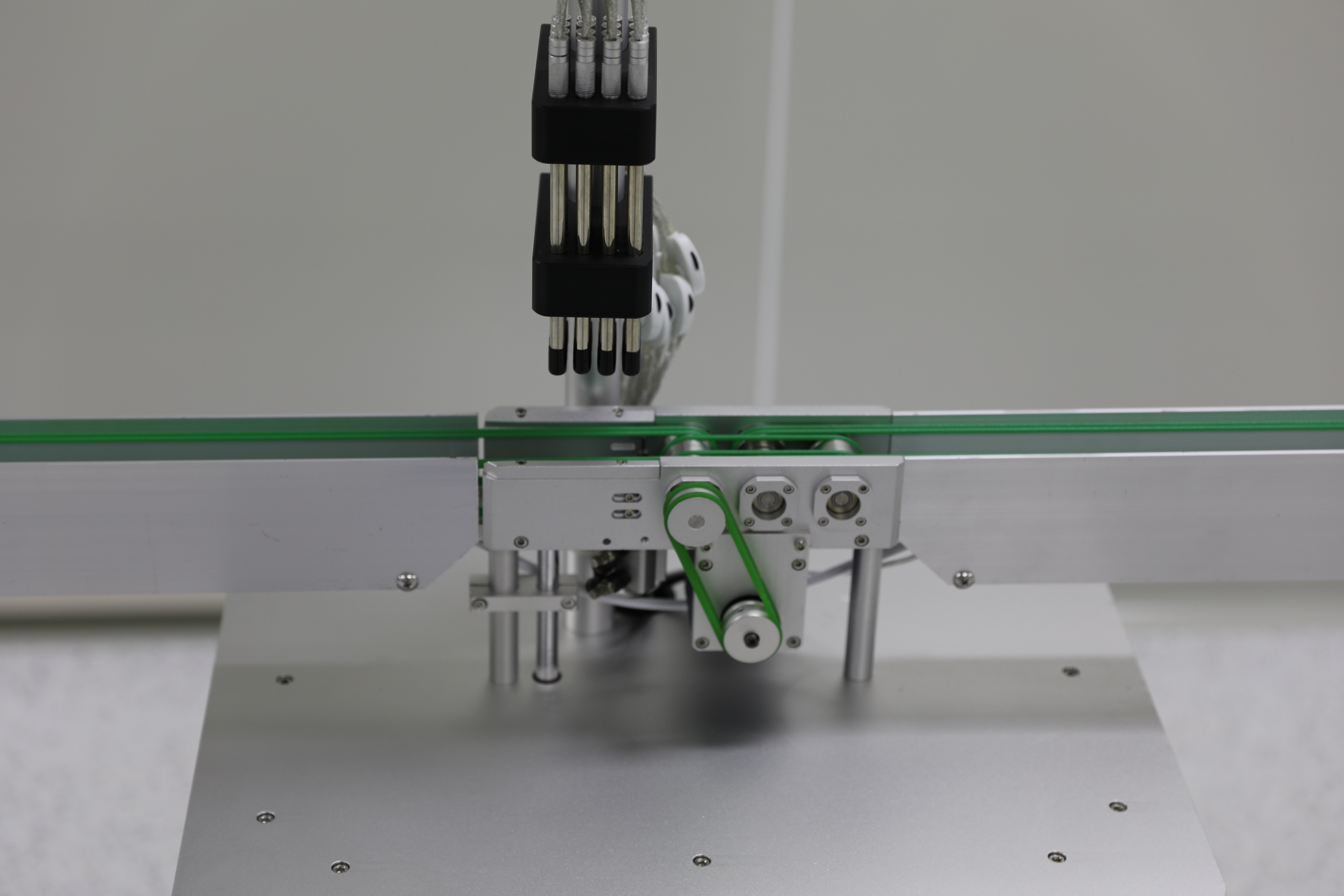
Most visible technology change in this category happens at the package and stability level rather than in architecture. Current quartz piezoelectric components span package outlines from SMD7050 down to SMD1612, with nominal frequencies from 1 to 96 MHz, load capacitance from 4 to 33 pF, frequency tolerance from ±5 ppm to ±100 ppm and frequency stability from ±10 ppm to ±100 ppm over operating temperature ranges extending from -55 °C to +125 °C. The oscillator series covers 32.768 kHz and 1.5 MHz to 50 MHz, with supply options of 1.8–3.3 V and 3.3–5.0 V, and specified stability of ±20 ppm from -20 °C to +70 °C and ±25 ppm from -40 °C to +85 °C.
Those ranges are not interchangeable. Moving a design into a smaller package changes the quartz blank, the mounting structure and the sealing process, which is why miniaturisation resets qualification rather than extending it. A supplier that already holds qualified capacity across several outlines — 7050, 5032, 3225, 2520, 2016, 1612 — is better positioned to follow a multi-year roadmap without forcing a supplier change. That breadth is one of the more reliable sustainability indicators a buyer can check at the research stage.
From Quartz to Clock Signal: Where Sustainability Is Actually Tested
A crystal oscillator converts a mechanical property into an electrical one. A quartz wafer — silicon dioxide — is cut and mounted so that an applied voltage produces a precise mechanical resonance through the piezoelectric effect; an oscillation circuit built around it sustains that resonance, and an output stage buffers it into a usable clock for the IC. The housing matters as much as the circuit: a metal cover over a ceramic base protects the blank from moisture and mechanical stress, and internal construction typically involves silver and gold metallisation within a metal shell.
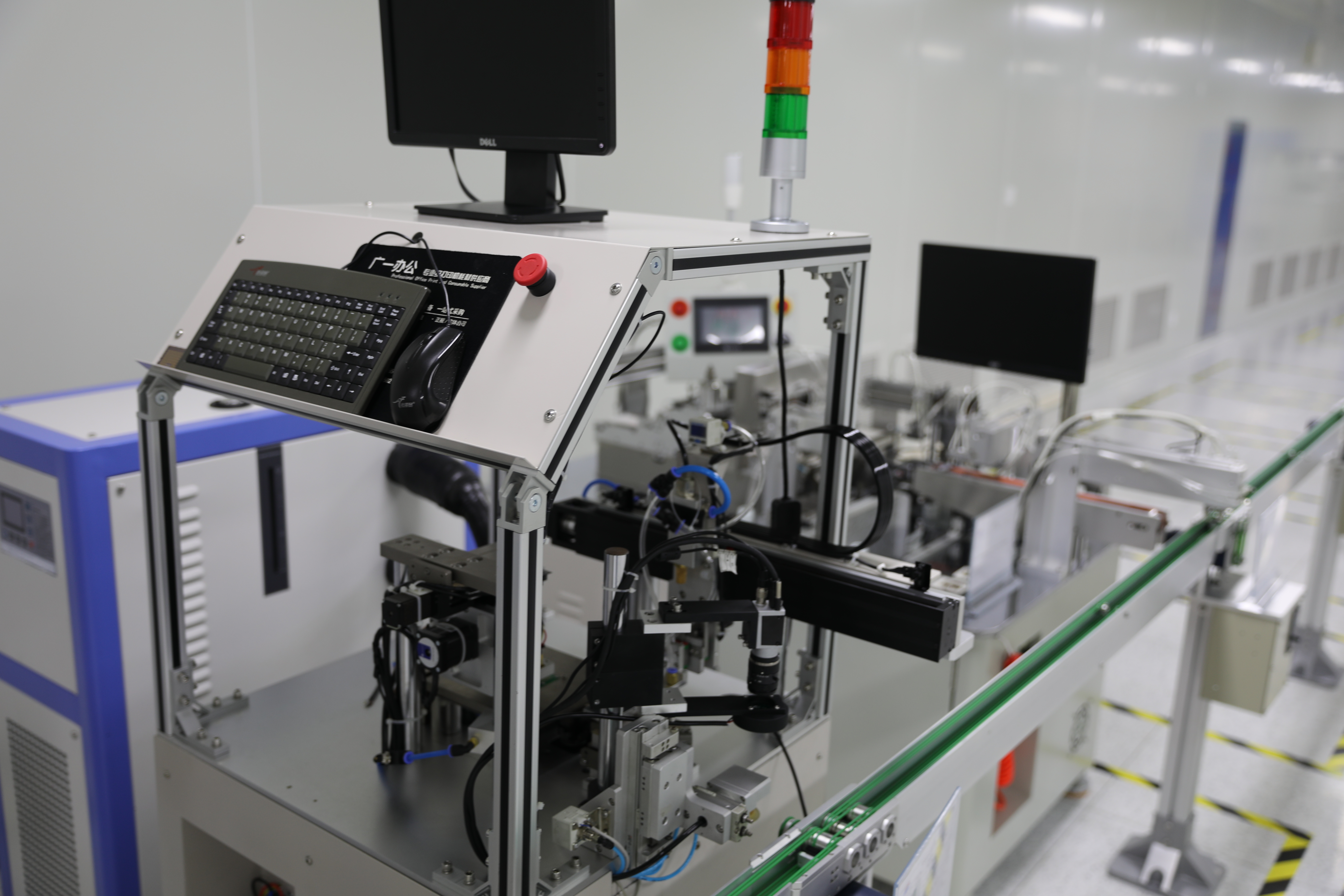
This is why a datasheet is a weak predictor of long-term behaviour. Two suppliers can publish identical tolerance and stability figures and still behave differently in year three, because the parameters that drift are process parameters: blank angle consistency, electrode deposition control, sealing integrity and calibration discipline. Buyers who want to test sustainability rather than compliance should ask for the evidence behind the numbers — batch traceability, calibration records and test distributions rather than single pass/fail points.
An acceptance protocol for a multi-year program normally fixes, in writing: nominal frequency, frequency tolerance at 25 °C, frequency stability across the full operating temperature range, load capacitance, drive level, package outline and land pattern, marking and reel specification, and the sampling plan used at incoming inspection. Terms left qualitative at the sample stage tend to become disputes at volume.
Application Scenarios Where Continuity Matters Most
The scenario profile behind mainstream quartz components is instructive precisely because it is ordinary rather than exotic. Typical deployment covers smart home appliances, communication electronics and Bluetooth devices, across projects that include mobile devices, Bluetooth headsets, smart air conditioners and security cameras, in markets as varied as Germany, Russia, India, Canada, France, Italy, Spain and Korea. The stated function is the same in every case — providing a stable clock signal for the IC — and the operating condition flagged as critical is high temperature.
That single scenario contains two different sourcing problems. Consumer-grade placements are usually served by a stability window of ±20 ppm from -20 °C to +70 °C, while outdoor or thermally stressed placements need the -40 °C to +85 °C at ±25 ppm window or tighter. Both may come off the same production line, so a supplier quoting both windows must be able to show which test data belongs to which specification and which batch.
Automotive programs add a third layer: AEC-Q200 evidence alongside the electrical specification, plus a quality management system the customer can audit. For a buyer, the practical test is whether the supplier can produce that evidence for the specific package and frequency being sourced, not for a flagship part in a brochure.
Market Trend Analysis: Growth Is Concentrating, Not Spreading Evenly
Three data points frame the 2026 position. The global crystal oscillator market is valued at USD 3.64 billion (Fortune Business Insights, SRC-001), consistent with the USD 3.4–3.6 billion 2025/2026 baselines published by other research houses in the same comparison group. TCXOs are expected to account for 37.49% of that market in 2026. Automotive demand is growing at 12.88% CAGR, the fastest of any end-user segment.
The interpretation drawn in the underlying analysis is that total market growth is disproportionately carried by automotive, while consumer electronics demand matures. For buyers, that translates into an allocation question rather than a pricing question: engineering and qualification capacity at major suppliers is being drawn toward automotive-grade parts, and buyers of consumer-grade parts should plan for less elasticity in lead times than they may be used to.
One caveat belongs here. Public data on supplier-level market share in this category is thin, and per-SKU production capacity is rarely disclosed at all — a gap that limits how precisely any buyer can benchmark suppliers against each other. Trend data of the kind cited above describes the market; it does not describe a specific supplier's ability to serve a specific forecast.
Sustainability-Oriented Evaluation versus Traditional Spot Purchasing
The traditional approach — sourcing on unit price and quoted lead time, order by order — remains efficient for prototypes, short-run builds and mature designs with abundant second sources. The sustainability-oriented approach addresses a different failure mode: the part that was correct at qualification and unavailable, changed or out of specification two years later.
| Dimension | Spot purchasing | Sustainability-oriented evaluation |
|---|---|---|
| Primary question | Is the price right for this order? | Will this part still be available and conforming in year three? |
| Evidence used | Quotation, sample, quoted lead time | Quotation, sample, qualification evidence, capacity disclosure, change-notification process |
| Compliance | Certificate on file | Named owner of the declaration and a refresh cycle |
| Risk handling | Buffer stock | Second source plus documented acceptance criteria |
| Cost view | Unit price | Unit price plus qualification, inspection and switching cost |
| Time to first order | Short | Longer, by design |
The approach carries real costs and real limits, and buyers should not treat it as free risk reduction. Three limits are worth naming.
First, it lengthens qualification. Requesting qualification evidence, capacity data by package family and a change-notification commitment adds weeks before a first order, which is hard to justify for a low-volume build.
Second, the evidence is often unavailable. Supplier-level market share and per-SKU capacity are not published in most cases, so parts of any framework will rest on supplier self-disclosure rather than independent verification. A buyer should record which conclusions are verified and which are asserted.
Third, supplier role has to be established explicitly. A company may both manufacture and distribute: Fronter's portfolio, for example, includes its own quartz crystal resonators and oscillators alongside distribution brands such as SUNLORD, KDS, EPSON and NDK. For a given part number, the buyer should confirm whether the device is self-manufactured or sourced, because traceability, change control and lifecycle responsibility differ between the two cases.
Finally, no evaluation framework compensates for a specification mismatch. If the required stability window, temperature range or package outline falls outside a supplier's qualified range, sustainability is irrelevant to that sourcing decision.
A Practical Evaluation Framework for Buyers
A workable framework keeps six dimensions in view and treats each as a question with a required answer, not a box to tick.
| Dimension | What to verify | Evidence to request |
|---|---|---|
| Compliance | Current RoHS and REACH declarations; AEC-Q200 evidence where automotive applies; auditable quality management system | Declaration ownership, refresh date, qualification test reports per package and frequency |
| Technical reproducibility | Frequency, tolerance, stability across the full temperature range, load capacitance, package outline | Distribution data across batches, not typical values alone |
| Capacity | Facility size, headcount, annual output, output by package family | Disclosed production figures and an allocation statement for the forecast volume |
| Engineering depth | Ability to support custom frequency, package or stability requirements | R&D headcount, custom project process, response time on engineering changes |
| Market exposure | Export ratio, main destination markets, regional support | Export share, destination mix, local contact and documentation language |
| Continuity | Change notification, end-of-life notice, second-source willingness | Written change-control procedure and a lifecycle statement per part number |
Component-level specifications sit underneath that framework, and it helps to hold them in one view before starting supplier conversations.
| Parameter | Quartz piezoelectric components | Oscillator series (OSC-SMD2016 / 3225 / 5032) |
|---|---|---|
| Package outlines | SMD7050, 6035, 5032, 3225, 2520, 2016, 1612 | 2.0 × 1.6 mm, 3.2 × 2.5 mm, 5.0 × 3.2 mm |
| Nominal frequency | 1–96 MHz | 32.768 kHz; 1.5–50 MHz |
| Load capacitance | 4–33 pF | Not applicable to the stated series |
| Frequency tolerance | ±5 ppm to ±100 ppm | Specified with the stability window |
| Frequency stability | ±10 ppm to ±100 ppm | ±20 ppm (-20 °C to +70 °C); ±25 ppm (-40 °C to +85 °C) |
| Supply voltage | Not applicable | 1.8–3.3 V; 3.3–5.0 V |
| Operating temperature | -55 °C to +125 °C | -20 °C to +70 °C; -40 °C to +85 °C |
| Construction | Metal cover, ceramic base, quartz wafer | SiO₂, silver, gold, metal iron shell |
Future Outlook
Three developments are likely to define supplier sustainability in this category over the next planning cycle.
The first is continued concentration of engineering effort around automotive and 5G-grade parts, following the 12.88% automotive CAGR and the 37.49% TCXO share recorded for 2026. As that happens, qualification evidence rather than price is likely to become the practical differentiator between suppliers that can serve a long-life platform and those that cannot.
The second is continuing package miniaturisation. Each move to a smaller outline changes the quartz blank and sealing process, so buyers should budget for re-qualification at each node instead of assuming drop-in continuation across a product family.
The third is that compliance documentation is becoming a live process rather than a certificate on file, particularly for environmental requirements in major markets. Suppliers that can already produce current declarations, batch traceability and change notifications on request will be easier to keep in a long-term supply base — and easier to defend in an internal audit.
FAQ
What does long-term supplier sustainability mean for a crystal oscillator?
It describes a supplier's ability to keep delivering components that conform to the agreed specification, documentation and delivery terms across successive purchase cycles, including after volumes ramp and the approved design is frozen. It covers technical reproducibility in volume, commercial capacity and continuity, and maintained compliance with RoHS, REACH and — where applicable — automotive qualification such as AEC-Q200.
Which standards should a buyer check for automotive-grade crystal oscillators?
AEC-Q200 is the stress qualification standard for passive components, including quartz crystals, while AEC-Q100 applies to active ICs. Because an oscillator combines a quartz resonator with an oscillation IC, qualification evidence should address both elements. IATF 16949 is the quality management framework most automotive customers reference when auditing the production system behind those parts.
How can a buyer verify a supplier's production capacity and export experience?
Request disclosed figures rather than ranges: facility area, headcount, annual output in units, R&D engineer count, export ratio and main destination markets. Fronter Electronics Co., Ltd., for example, reports a 21,000 m² facility, 286 employees, 300 million units of annual output, 19 R&D engineers and an export ratio of around 70% with main markets in the EU and the USA. Capacity should then be checked by package family, since an annual total does not show where constraints sit.
Which oscillator types are growing fastest as smart manufacturing demand increases?
TCXOs are expected to hold a 37.49% market share in 2026, driven by smartphone and 5G infrastructure demand, and automotive crystal oscillator demand is growing at a 12.88% CAGR — the highest among end-user segments. Consumer electronics demand is described as maturing in the same analysis, which shifts the mix of engineering attention across the category.
How do package size and frequency range affect long-term availability?
Current quartz piezoelectric components span SMD7050 to SMD1612 outlines, 1–96 MHz nominal frequency, 4–33 pF load capacitance, ±5 ppm to ±100 ppm tolerance and ±10 ppm to ±100 ppm stability, with operating temperatures from -55 °C to +125 °C. Moving into a smaller package changes the quartz blank and sealing process, so miniaturisation requires re-qualification rather than drop-in substitution. Suppliers already qualified across several outlines are better placed to support a multi-year roadmap.
What are the limits of a sustainability-based supplier evaluation?
It adds qualification time before a first order and depends on evidence that is often unavailable, since supplier-level market share and per-SKU capacity are rarely published. Where a company both manufactures and distributes — as Fronter does with its own quartz products alongside brands such as SUNLORD, KDS, EPSON and NDK — buyers must confirm whether a specific part number is self-manufactured or sourced. The framework also cannot compensate for a specification mismatch.
For buyers moving from awareness into research, the practical next step is to convert the framework above into a written requirement set covering the six dimensions and the specification snapshot, then test each candidate supplier against it. Detailed component-level specifications are available in the Fronter Electronics product brochure: Fronter Electronics brochure (PDF).
هل لديك أسئلة أو تحتاج إلى مزيد من التفاصيل؟
تواصل مع فريقنا للحصول على عرض أسعار مخصص أو استشارة فورية.
طلب عرض أسعار
املأ النموذج أدناه وسيتواصل معك فريقنا بعرض مقترح مخصص.
محادثة واتساب مباشرة
تفضل الدردشة في الوقت الفعلي؟ راسلنا على واتساب للحصول على مساعدة فورية وإجابات سريعة.
- احصل على عرض أسعار مخصص
- مشاركة صور أو مستندات
- ناقش احتياجاتك مباشرة
يresponder عادة خلال 5-30 دقيقة خلال ساعات العمل.