
Crystal Resonator Frequencies Decoded: A Sourcing Guide for 32.768 kHz and MHz Parts
Selecting a crystal resonator is not simply a matter of picking a frequency. Buyers must understand the relationship between frequency range, quartz crystal cut, package type, load capacitance, and the application environment. A 32.768 kHz tuning-fork resonator serves real-time clock circuits, while MHz AT-cut resonators are used in processors and communication modules. Knowing these differences helps procurement teams avoid costly mismatches and choose the right part for their end product.
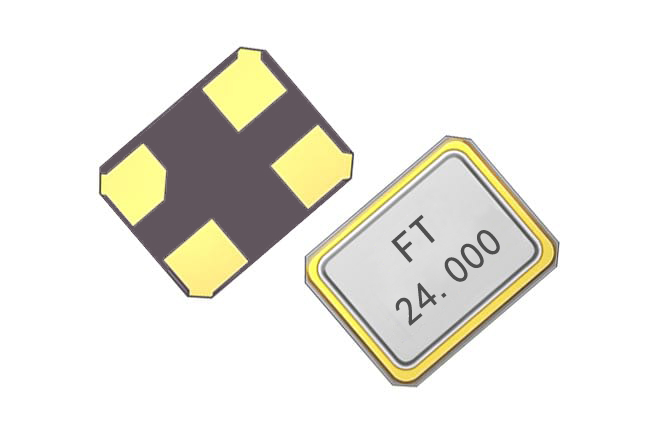
The Frequency Architecture of Crystal Resonators
Crystal resonators are frequency control components that generate stable clock signals for integrated circuits. They are broadly classified into two families: low-frequency tuning-fork resonators (typically 32.768 kHz) and high-frequency AT-cut resonators (1 MHz to 96 MHz and beyond). The physical cut of the quartz crystal determines the frequency range and the temperature behavior of the component.
For procurement professionals, this distinction shapes the entire sourcing decision. A 32.768 kHz crystal resonator is not interchangeable with a MHz resonator because the two operate on different vibration modes and are designed for different circuit topologies. The first step in any sourcing process is therefore to confirm the circuit's required frequency and its corresponding crystal family.
32.768 kHz Crystal Resonators: The Real-Time Clock Standard
32.768 kHz is the industry-standard frequency for real-time clock (RTC) circuits because its frequency divides cleanly to produce a one-second pulse. These resonators use a tuning-fork crystal shape, which offers low power consumption and a compact footprint. Typical applications include smart energy meters, wearable devices, IoT modules, and automotive electronics.
Fronter Electronics offers 32.768 kHz tuning-fork crystal resonators in three surface-mount packages: SMD1610, SMD2012, and SMD3215. These components support load capacitance options of 12.5 pF, 7 pF, and 9 pF, with a frequency tolerance of ±20 ppm and an operating temperature range of -40°C to +85°C. This combination covers the common requirements for consumer electronics, IoT devices, smart meters, and automotive systems.
Key Parameters for 32.768 kHz Sourcing
| Parameter | Typical Specification |
|---|---|
| Nominal Frequency | 32.768 kHz |
| Package Options | SMD1612 / SMD2012 / SMD3215 |
| Load Capacitance | 12.5 pF / 7 pF / 9 pF |
| Frequency Tolerance | ±20 ppm |
| Operating Temperature | -40°C to +85°C |
MHz Crystal Resonators: Precision Timing for Processors and Communication
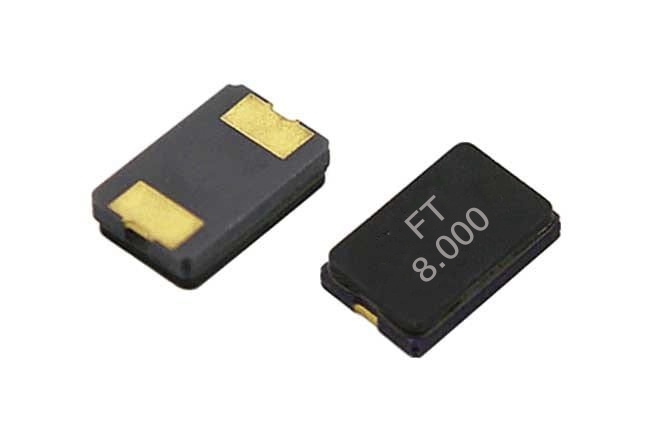
MHz crystal resonators use an AT-cut quartz crystal and are designed for high-speed circuits that require a stable reference clock. They are commonly used in microcontrollers, Bluetooth modules, communication interfaces, smart home appliances, and automotive electronic systems. The AT-cut offers better temperature stability than tuning-fork designs at higher frequencies.
Fronter Electronics supplies piezoelectric crystal components covering a nominal frequency range of 1 to 96 MHz. These parts are available with load capacitance from 4 to 33 pF, frequency tolerance from ±5 ppm to ±100 ppm, and frequency stability from ±10 ppm to ±100 ppm. The operating temperature range extends from -55°C to +125°C, making them suitable for demanding industrial and automotive environments.
MHz Resonator Configurations
| Parameter | Range |
|---|---|
| Nominal Frequency | 1–96 MHz |
| Load Capacitance | 4–33 pF |
| Frequency Tolerance | ±5 ppm to ±100 ppm |
| Frequency Stability | ±10 ppm to ±100 ppm |
| Operating Temperature | -55°C to +125°C |
Quartz vs. Ceramic Resonators: What Buyers Should Know
Although quartz crystal resonators are the dominant choice for frequency control, buyers may also encounter ceramic resonators. Ceramic resonators are lower-cost components used in less demanding timing applications. However, quartz crystal resonators provide significantly tighter frequency tolerance and better stability over temperature and aging. For applications such as smart meters, automotive electronics, and communication systems, quartz remains the preferred technology.
Critical Selection Criteria Beyond Frequency
Frequency alone does not determine whether a crystal resonator will work. Buyers must evaluate the following parameters:
- Load Capacitance: The crystal must match the oscillator circuit's load capacitance to keep the frequency at its nominal value. Common values are 7 pF, 9 pF, and 12.5 pF for 32.768 kHz parts; 4 to 33 pF for MHz parts.
- Frequency Tolerance: The maximum allowable deviation from nominal frequency at room temperature. Tighter tolerance means better initial accuracy.
- Frequency Stability: How much the frequency changes over temperature. This is critical in automotive and industrial environments.
- Operating Temperature Range: The environmental limits of the component. For automotive under-hood applications, a wider range such as -40°C to +125°C is often required.
- Package Type: SMD vs. through-hole. SMD is preferred for automated assembly; through-hole may be used in legacy or low-cost designs.
Package Types and Their Sourcing Implications
Surface Mount (SMD) Crystal Resonators
SMD crystal resonators, such as SMD1612, SMD2012, SMD3215, and larger packages like SMD5032, are designed for high-volume automated manufacturing. They occupy minimal board space and support the compact designs found in wearables, IoT modules, and portable electronics. Surface mount crystal resonators are the primary choice for new product development.
Through-Hole and Cylindrical Crystal Resonators
Through-hole crystal resonators, such as the DT38 and DT26 cylindrical types, feature wire leads and are used in applications requiring manual insertion or where board space is not critical. They are often found in industrial control equipment, power supplies, and cost-sensitive consumer products. While the market trend is toward SMD, through-hole parts remain necessary for certain applications and are still widely sourced.
Automotive-Grade Considerations and Standards
Automotive applications are a growing segment for crystal resonators. According to Fortune Business Insights, automotive applications for crystal oscillators are expanding at a CAGR of 12.88%, driven by ADAS, infotainment, and EV powertrains. For passive components in automotive electronics, AEC-Q200 is the global stress resistance standard. Buyers sourcing for automotive projects should verify that suppliers can meet this requirement, as well as the wider temperature ranges expected in automotive environments.
Regulatory Compliance for EU-Bound Shipments
Crystal resonators exported to the European Union must comply with environmental regulations. Fronter Electronics holds an EU RoHS Compliance Certificate (Certificate No. SZXEC25001335806) issued by SGS-CSTC Standards Technical Services Co., Ltd. Shenzhen Branch. The certificate covers SAW resonators and filters as well as SMD series products, referencing EU RoHS Directive (EU) 2015/863 and Directive 2011/65/EU. This documentation provides verification for buyers requiring EU compliance evidence.
Sourcing Evidence: A 10-Year Smart Meter Partnership
A relevant sourcing example comes from a smart meter manufacturer in India. This customer has purchased 5,000,000 units of crystal resonators from Fronter Electronics over a 10-year period. The stated result is stable operation, with fast delivery within 3-4 weeks and flexible customization to meet project-specific packaging and frequency requirements. This example demonstrates how a supplier's ability to adapt to specific electrical and packaging needs can support long-term reliability in metering infrastructure.
Manufacturing Capabilities and Supply Chain Considerations
For buyers evaluating new suppliers, manufacturing capacity and delivery reliability are essential factors. Fronter Electronics, founded in 1991, operates a 21,000 m² factory with 286 employees and an annual output of 300 million units. Its R&D team includes 19 engineers. The company operates an ODM model with monthly capacity of 80KK, typical lead times of 30–45 days, and a minimum order quantity of 1,000 pieces. Quality control includes 100% testing. The export market includes the EU and the Middle East, with after-sales support provided remotely.
Fronter’s broader profile includes a distribution channel covering brands such as SUNLORD, KDS, EPSON, NDK, TI, ST, ATMEL, AD, ALTERA, XILINX, SAMSUNG, SK HYNIX, MICRON, BROADCOM, and FREESCALE. This breadth allows the company to support both crystal resonator production and wider electronic component procurement.
Market Context: Global And Regional Demand
The global crystal oscillator market was valued at USD 2.89 billion in 2025 and is projected to reach USD 3.66 billion by 2030, according to MarketsandMarkets. Asia Pacific dominated the market in 2024 with over 42% revenue share, approximately USD 1.1 billion, according to Precedence Research. Top global manufacturers include Seiko Epson, NDK, Kyocera, Daishinku (KDS), and TXC Corporation, according to Mordor Intelligence. This competitive landscape indicates a supply base concentrated in Asia Pacific, with cost and logistics advantages for buyers sourcing from that region.
Traditional Sourcing vs. Modern Procurement Approach
Traditional crystal resonator sourcing often involved selecting from a standard catalog, placing a purchase order, and waiting for standard lead times. However, modern procurement requires closer alignment between the component specification and the end application. Two critical gaps are often overlooked:
- Load capacitance mismatch: Even a correctly specified frequency will fail if the load capacitance does not match the oscillator circuit.
- Supply chain volatility: Relying on a single supplier or region without a backup can cause production delays.
Therefore, a robust procurement approach should include a documented crystal specification sheet, a supplier audit checklist, sample evaluation before mass production, and an agreed flexibility window for customization.
Limitations and Boundaries in Crystal Resonator Sourcing
Even with a well-defined specification and a qualified supplier, certain limitations remain. Frequency tolerance cannot be improved arbitrarily without affecting cost and lead time. Ultra-tight tolerances below ±10 ppm may require additional calibration or selection, leading to higher unit costs. Custom packaging can extend lead times, and small-quantity orders may not receive the same responsiveness as high-volume contracts. Buyers should balance technical requirements with commercial expectations.
Future Outlook: Smaller, More Stable, More Flexible
The demand for crystal resonators is expected to grow with the expansion of IoT devices, smart meters, automotive electronics, and wireless communication modules. Packaging will continue to shrink, pushing demand for smaller SMD formats such as 1612 and 2012. At the same time, applications that operate in harsh environments will continue to require wider temperature ranges and better frequency stability. Suppliers with in-house manufacturing, strong R&D, and a proven record in customization will be better positioned to support long-term sourcing relationships.
Frequently Asked Questions
What is the difference between a 32.768 kHz crystal resonator and an MHz crystal resonator?
A 32.768 kHz crystal resonator is a tuning-fork type used for real-time clock circuits and low-frequency timing applications. An MHz crystal resonator is an AT-cut type used in processors, communication interfaces, and high-speed electronics. The two are not interchangeable because they operate at different frequencies and use different vibration modes.
What load capacitance do I need for a 32.768 kHz crystal resonator?
The load capacitance depends on the oscillator circuit design. Common values are 12.5 pF, 7 pF, and 9 pF. Fronter’s SMD1612, SMD2012, and SMD3215 series support these options. You should confirm the required load capacitance from the IC datasheet or circuit reference design.
What is the difference between SMD and through-hole crystal resonators?
SMD crystal resonators are surface-mount components designed for automated assembly; they are widely used in modern electronics. Through-hole (cylindrical) crystal resonators have wire leads for manual insertion and are used in legacy designs or applications where board space is not constrained. Surface mount types such as SMD3215, SMD2012, and SMD1612 are preferred for compact and high-volume production.
What does frequency tolerance mean for a crystal resonator?
Frequency tolerance is the maximum deviation from the nominal frequency at room temperature, expressed in parts per million (ppm). For example, a ±20 ppm tolerance on a 32.768 kHz resonator means the actual frequency could differ by up to 0.655 Hz from nominal. Tighter tolerances provide better timekeeping accuracy in real-time clock applications.
What is the operating temperature range of industrial-grade crystal resonators?
Industrial and automotive-grade crystal resonators typically support operating temperatures from -40°C to +85°C or wider. Fronter’s 32.768 kHz Tuning Fork series supports -40°C to +85°C, while its MHz series supports -55°C to +125°C. Buyers should match the specified temperature range with the actual operating environment.
What certifications are needed for crystal resonators exported to the EU?
RoHS compliance is mandatory for electronics sold in the EU. Fronter’s EU RoHS Compliance Certificate (SZXEC25001335806) covers SMD series products and SAW resonators and filters, in line with the EU RoHS Directive (EU) 2015/863 amending Annex II to Directive 2011/65/EU. Buyers should always request the latest certificate for the specific product family.
Brochure
For a deeper overview of Fronter Electronics’ crystal resonator portfolio and company capabilities, download the company brochure below.