
Crystal Resonator Production: A Supplier Inspection Checklist
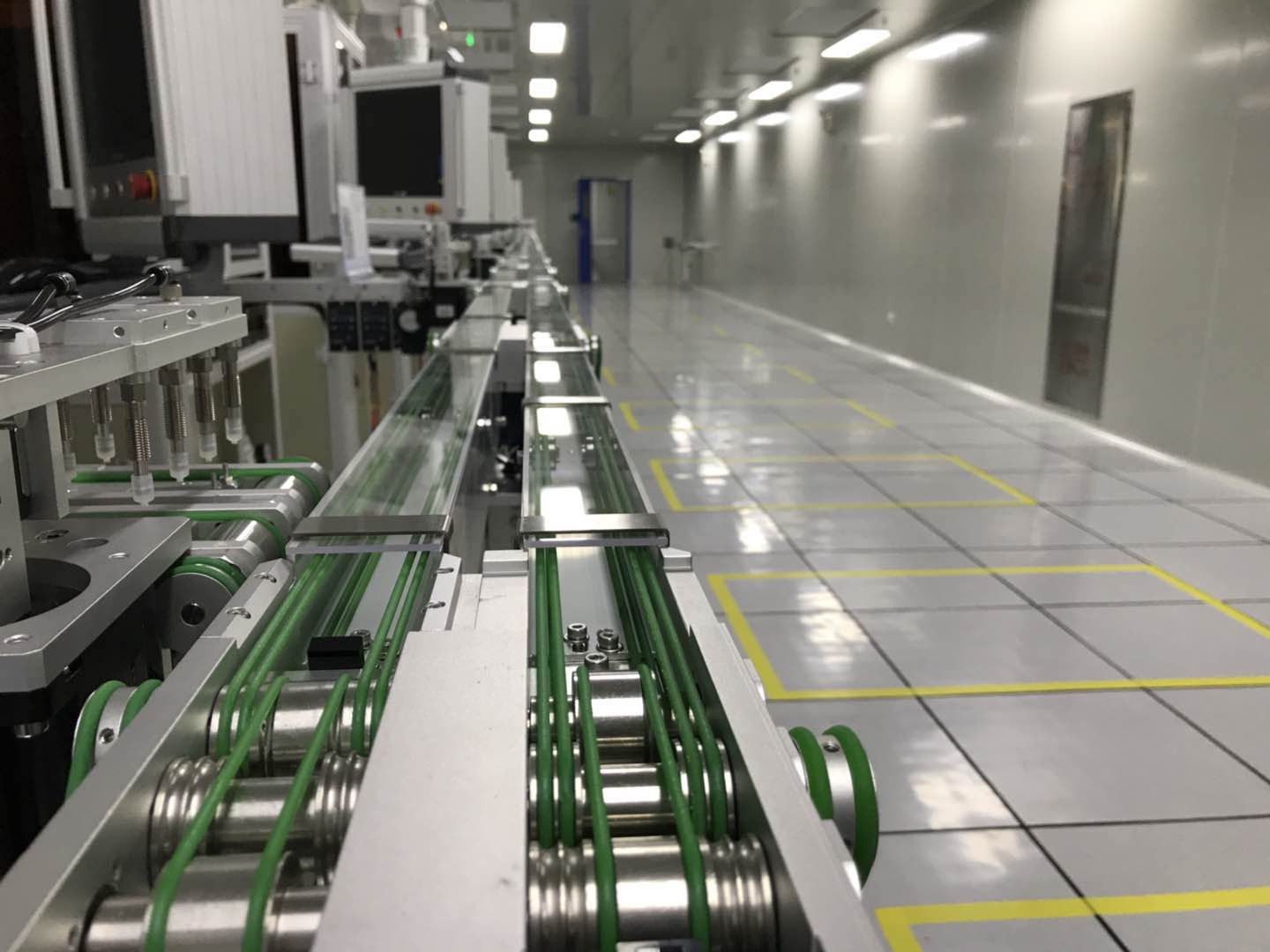
Production equipment on a quartz crystal resonator line. What a buyer can verify on the floor is usually more informative than what appears in a catalogue.
Quartz crystal resonators are passive frequency-control components that supply a stable clock signal to integrated circuits. They sit inside smart energy meters, Bluetooth headsets, security cameras, smart air conditioners, mobile devices and automotive electronics, typically paired with an oscillator circuit and often operating under vibration and elevated temperature. Because a single resonator costs little relative to the board it times, sourcing teams frequently start supplier evaluation with price and lead time. The question that decides long-term cost is narrower and harder: can this supplier reproduce the same specification, lot after lot, and can it show the evidence?
This article is written for procurement managers, engineers and importers moving from awareness into research on crystal resonator suppliers. It sets out what can actually be inspected — in documentation and on the production floor — and where those checks stop being conclusive.
Why the Production Floor Decides What a Datasheet Cannot
Market context explains why the evaluation question keeps returning to production control. The global crystal oscillator market was valued at USD 2.89 billion in 2025 and is projected to reach USD 3.66 billion by 2030, according to MarketsandMarkets. Asia Pacific held more than a 42% revenue share in 2024, equivalent to approximately USD 1.1 billion, according to Precedence Research. Automotive applications are expanding faster than the overall market, at a CAGR of 12.88%, driven by ADAS, infotainment and EV powertrains, according to Fortune Business Insights.
A datasheet communicates nominal frequency, load capacitance, frequency tolerance, frequency stability and operating temperature. It does not communicate whether electrode plating is controlled from batch to batch, whether sealing is verified, or whether the test bench that produced the reported data was calibrated this quarter. Those conditions determine whether the tenth shipment behaves like the first.
For buyers, the practical consequence is that supplier capability should be treated as a set of verifiable process facts rather than a claim. The sections below convert that idea into an inspection framework.
What Supplier Capability Means at the Production Level
In frequency-control sourcing, supplier capability breaks into four layers, and they are not distributed evenly across the market:
- Process control — a documented flow from quartz element to finished, tested unit, with defined control points and acceptance criteria at each stage.
- Measurement and test — calibrated instruments, a defined set of tested parameters, and retained data that can be matched to a delivered lot.
- Traceability and change control — lot coding that links a shipped reel back to production and test records, plus a notification process when materials, processes or equipment change.
- Engineering support — the ability to answer process questions, handle deviations, and support non-standard requirements.
These layers matter because organisations in this category are not all the same kind of business. Some are manufacturers, some are distributors, and some are both. A distributor can be strong on traceability and brand authenticity while holding no process control of its own; a factory can hold deep process control but a narrow product range. Buyers should establish which layer they are actually purchasing before comparing quotations.
Fronter Electronics Co., Ltd is an example of the combined model. Founded in 1991 and based in Shenzhen, China, the company develops, produces and sells quartz crystal resonators and oscillators while also distributing components from brands that include SUNLORD, KDS, EPSON, NDK, TI, ST, ATMEL, AD, ALTERA, XILINX, SAMSUNG, SK HYNIX, MICRON, BROADCOM and FREESCALE; its FT brand was recognised as a National High-Tech Enterprise in 2017. For a buyer, the dual role is useful but must be evaluated in two separate conversations: one about manufacturing capability for frequency-control parts, and one about distribution controls for the rest of the bill of materials.
The Production Sequence Buyers Should Be Able to Name
In broad industry practice, quartz crystal unit manufacturing generally follows a recognisable sequence: selection and angle cutting of the quartz wafer; lapping and polishing to a thickness that sets the base frequency; deposition of electrodes onto the element; mounting and bonding of the element into the package base; sealing with a cover; frequency adjustment or trimming; stabilisation; and final electrical test and inspection.
Two details in that sequence deserve attention. First, element thickness and electrode mass are the physical variables that determine frequency, which is why trimming and plating control are the stages most often linked to lot-to-lot variation. Second, suppliers differ in how far back they control the chain: some process their own quartz elements, while others purchase blanks and begin at mounting and sealing. Neither boundary is automatically wrong, but the buyer should know where it sits, because it defines which risks the supplier can actually manage.
Supplier documentation offers a cross-check on the material decisions involved. Fronter's 32.768 kHz tuning fork crystal units list gold, SiO₂ and silver in their bill of materials, while its piezoelectric crystal components list a metal cover, a ceramic base and a quartz wafer. Those choices feed directly into plating control, sealing and long-term stability, and they are legitimate subjects for questioning during an evaluation.
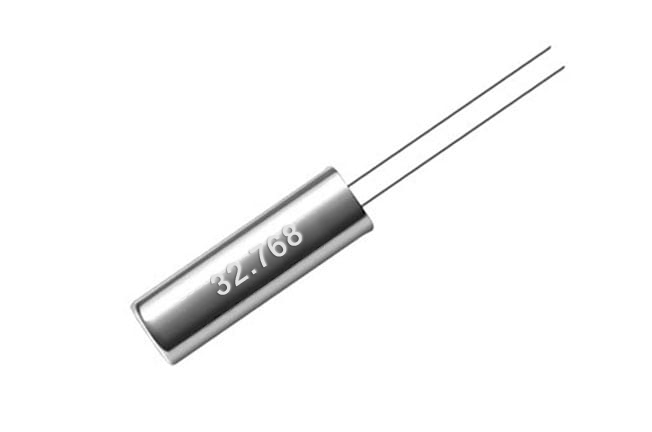
Crystal resonator DT38 and DT26 unit types. Element geometry, package construction and sealing method are among the first process facts a buyer should be able to identify.
Inspection Checklist: What to Request Before You Visit
Most of a supplier's capability can be assessed before any travel is booked. The checklist below is organised so that each item produces a document the buyer can retain and compare across suppliers.
| What to inspect | Evidence to request | Why it matters |
|---|---|---|
| Process flow | Documented flow from quartz element to final test, with control points | Separates a manufacturer that controls critical stages from one that assembles purchased parts |
| Quartz element specification | Element or blank source, cut type, material declaration | Frequency behaviour begins with the quartz element, not with final test |
| Electrode and plating | Electrode material (for example silver or gold) and plating control method | Plating affects stability and solderability; it is a common source of lot variation |
| Package and sealing | Base material (ceramic), cover material (metal), sealing method and verification records | Package integrity is linked to long-term stability and ageing behaviour |
| Frequency adjustment | Trimming or adjustment method, equipment list, adjustment records | Shows whether tolerance is achieved by process control or by sorting good units out |
| Test capability | Instrument list with calibration status, tested parameters, data retention period | Uncalibrated measurement makes any ppm claim unverifiable |
| Traceability | Lot coding scheme and one worked example from shipped reel to test record | Required for containment if a deviation is later found |
| Change control | Documented product change notification process | Prevents silent specification changes after qualification |
| Standards and compliance | Familiarity with IEC 60122 test baselines; AEC-Q200 documentation where automotive parts are involved; RoHS and REACH declarations | IEC 60122 provides the international baseline for quartz crystal units, while AEC-Q200 is the stress-resistance standard required for passive components in automotive applications |
| Capacity evidence | Line equipment list, shift pattern, annual output records, facility size and headcount | Supports or contradicts delivery commitments; for reference, Fronter operates a 21,000 m² facility with 286 employees and an annual output of 300,000,000 units |
Environmental declarations belong on the same list. Fronter states that its products comply with RoHS, REACH and other environmental protection regulations — a statement a buyer can confirm by requesting the corresponding declarations against the specific part number being quoted, rather than the portfolio as a whole.
Inspecting a 32.768 kHz Tuning Fork Line
Tuning fork crystal resonators — often called watch crystals — vibrate at 32.768 kHz and are commonly used where a real-time clock reference is needed. The fork-shaped quartz element is small and mechanically delicate, and the small SMD packages used for these parts make handling, mounting and sealing the stages where process discipline shows first.
Fronter's tuning fork line covers SMD1610, SMD2012 and SMD3215 models in 1.6 × 1.0 mm, 2.0 × 1.2 mm and 3.2 × 1.5 mm footprints, at a frequency of 32.768 kHz, with load capacitance options of 12.5 pF, 7 pF and 9 pF, a frequency tolerance of ±20 ppm and an operating temperature range of -40 to +85 °C. The declared bill of materials is gold, SiO₂ and silver, and the stated target industries are consumer electronics, IoT, smart energy meters and automotive.
When inspecting this kind of line, three questions are productive. First, how is the load capacitance option matched to the oscillator circuit the part will drive, and is that matched pair tested together? Second, what evidence exists that the -40 to +85 °C operating range is verified rather than assumed? Third, if the end product is automotive, can the supplier document compliance with the standard the automotive industry requires of passive components? These questions have answers, and the answers are documents.
Inspecting Piezoelectric (MHz) Crystal Unit Production
MHz-range piezoelectric crystal components cover a wider performance envelope than tuning fork parts and are used across smart home appliances, communication electronics and Bluetooth devices. Fronter's piezoelectric crystal component range includes crystal oscillators, crystal resonators, crystal filters and SAW crystal resonators, with a nominal frequency range of 1 to 96 MHz, load capacitance from 4 to 33 pF, frequency tolerance from ±5 ppm to ±100 ppm, frequency stability from ±10 ppm to ±100 ppm and an operating temperature range of -55 to +125 °C. Package families listed for these products include OSC-SMD7050, 5032, 3225, 2520, 2016 and 1612, alongside SMD7050, 6035, 5032, 3225, 2520, 2016 and 1612, built on a metal cover, ceramic base and quartz wafer construction.
This is where the inspection checklist becomes discriminating. A portfolio that spans 1 to 96 MHz and packages down to 1612 raises an obvious question: which of these are produced in-house and which are sourced? The tolerance range is equally informative — a ±5 ppm part and a ±100 ppm part may come off the same line, but the tighter grade implies a degree of trimming capability or selection discipline that a buyer should be able to see evidence of. Finally, a stated operating range of -55 to +125 °C implies test capability at those extremes, and capability claims of that kind should be backed by test records rather than by a catalogue line.
Quality Assurance and Production Consistency: What Consistency Looks Like
Consistency is not a certificate; it is a pattern visible in data. Buyers evaluating a crystal resonator supplier can ask for four concrete things that make the pattern visible before any order is placed.
- Frequency distribution across consecutive lots. Ask for measured data from several successive production lots of the same part number, not a single qualification report. A stable process narrows the spread; a sorted process does not.
- Calibration status of the measurement chain. The instrument that reports ppm determines whether ppm means anything.
- A deviation workflow. Ask how a non-conforming lot is identified, contained and communicated to the customer. A supplier without a described workflow will improvise during an incident.
- Engineering ownership. Ask who is technically responsible for the account and how many engineers support the product line. Fronter, for example, operates with a 19-engineer research and development team alongside 286 employees, and exports about 70% of its output to EU and USA markets — figures that help a buyer judge whether the engineering support model matches the size of their programme.
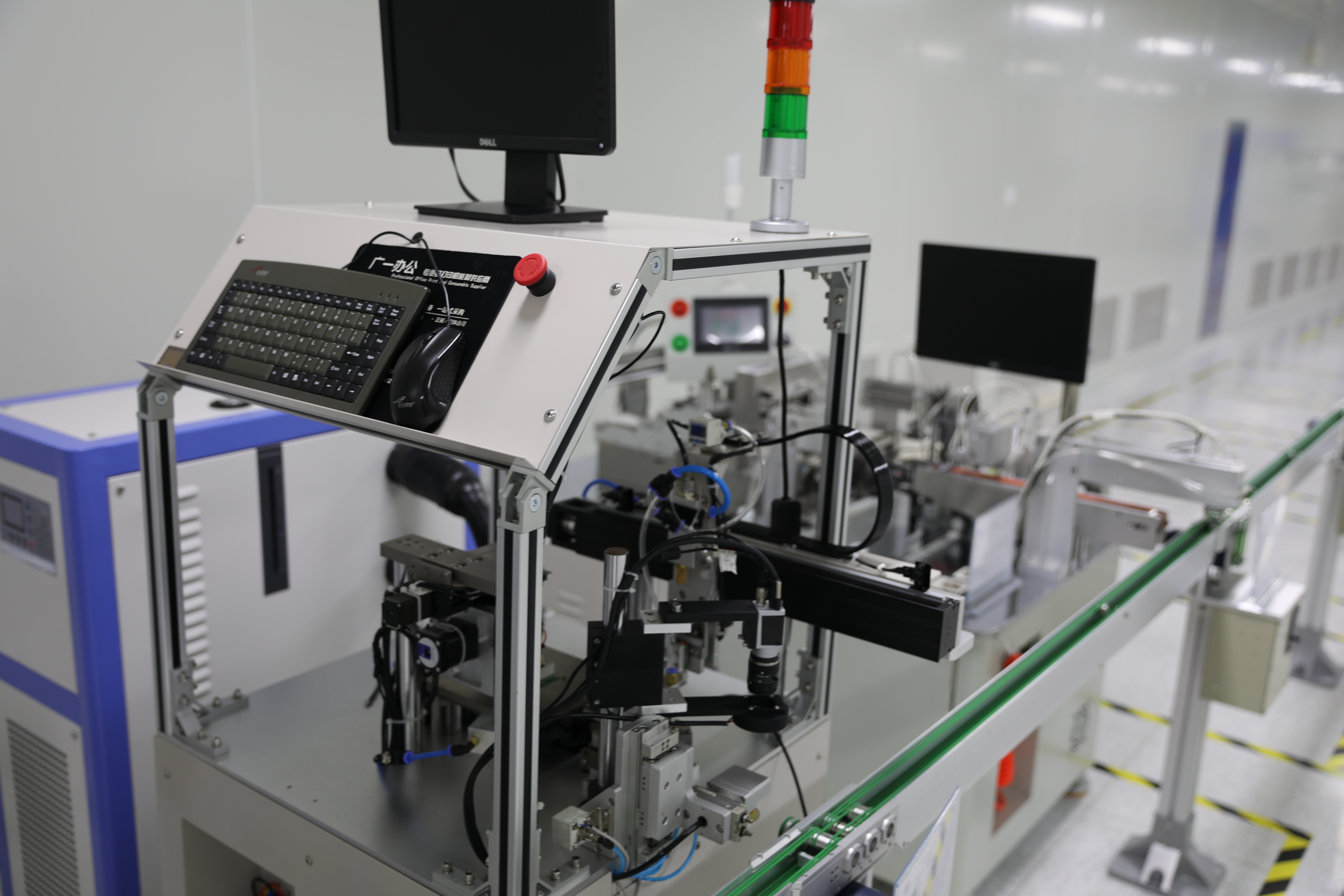
Test and inspection operations for quartz crystal resonators. Calibration records and retained test data are the evidence a buyer can audit.
Comparison with Traditional Evaluation Methods — and Their Limits
Traditional supplier evaluation in this category usually relies on four tools: datasheet review, price comparison, sample testing, and incoming inspection of the first production lots. Each has a defined boundary.
Datasheet review confirms whether a part can theoretically meet the requirement, not whether it will do so repeatedly. Price comparison ranks commercial offers without revealing what was excluded to reach that price. Sample testing validates a small number of units at a single point in time. Incoming inspection catches problems after they have been shipped.
A production-focused inspection closes part of that gap, but it carries its own limits, and buyers should state them openly before committing resource:
- An audit is a snapshot. It describes conditions on the day of the visit, and a line running well during an announced visit is not proof of a typical Tuesday.
- Documentation can be prepared for an audit. This is precisely why documents should be cross-checked against the floor — asking to see the calibration sticker on the instrument that produced the test data is a different question from reading a calibration certificate.
- Process evidence and commercial fit are separate matters. A well-controlled factory may still not match a buyer's requirements on minimum order quantity, packaging, lead time or logistics.
- Audits do not replace application validation. Whether a resonator performs in the buyer's oscillator circuit, at the buyer's temperature and vibration conditions, is confirmed by the buyer's own validation, not by the supplier's process.
- Distribution services need different criteria. Where a supplier also distributes third-party brands, the relevant checks are authenticity controls, brand traceability and anti-counterfeit handling — not production process control. For multi-line bills of materials, a supplier may legitimately be selected for both roles, but each role should be scored on its own terms.
- Engineering capacity is finite. A supplier with a defined engineering team can support a certain number of concurrent non-standard programmes. Buyers planning several custom requirements at once should confirm resource availability rather than assume it.
Market Signals That Shape Supplier Evaluation
Three signals currently shape how buyers weigh production evidence. Automotive demand is the strongest: with automotive applications for crystal oscillators expanding at a CAGR of 12.88%, according to Fortune Business Insights, requests for documentation such as AEC-Q200 compliance — the stress-resistance standard required for passive electronic components in automotive applications — have moved from specialist to routine.
Second, the supplier landscape remains concentrated at the top. Market research published by Mordor Intelligence identifies Seiko Epson, Nihon Dempa Kogyo (NDK), Kyocera, Daishinku (KDS) and TXC Corporation among the leading global manufacturers of quartz crystals and oscillators. That list is useful as a benchmark, but it does not answer which supplier fits a specific programme; buyers comparing a regional manufacturer against these names should define the capabilities their application actually requires rather than compare brand recognition.
Third, alternative technologies are visible in specific niches. In 2024, SiTime introduced the SiT1811, a 32.768 kHz oscillator drawing 510 nA, aimed at ultra-low-power IoT and wearables, according to the company's own product information. Quartz suppliers compete in those segments on cost, availability and package fit, which again places weight on production consistency rather than on specification alone.
A note on market figures: published estimates of the crystal and quartz market vary considerably depending on whether a source measures raw quartz material, finished resonators, or complete oscillator modules. Buyers using market reports for planning should check which definition a figure is based on before drawing conclusions.
Future Outlook
Two directions look durable. Package miniaturisation continues — 2016 and 1612 footprints already appear in mainstream product families, and smaller packages place greater demands on handling, mounting and sealing control. At the same time, documentation is becoming part of the request for quotation rather than a post-qualification formality, particularly for automotive and industrial programmes.
For suppliers, the implication is that production evidence must be retrievable on request, not reconstructed. For buyers, the implication is that supplier evaluation is shifting from a one-time comparison of quotations to a repeatable evidence process that can be applied to the same supplier again after two years, or to a new supplier in a different region. The framework in this article is designed to be reused in exactly that way.
FAQ
What should a buyer inspect first when evaluating a crystal resonator supplier?
Start with the process flow: a documented production sequence from quartz element through mounting, sealing, frequency adjustment and final test. This single document reveals whether the supplier controls the stages that determine frequency and stability, or whether it assembles purchased parts. Only after the process boundary is clear do test data and calibration records become meaningful.
How can production consistency be checked without visiting a factory?
By requesting data rather than descriptions. Measured frequency results from several consecutive lots of the same part number show whether variation is controlled by process or by sorting. Calibration records for the instruments that produced those results, a lot coding scheme that links a shipped reel to its test data, and a documented product change notification process together provide most of what a site visit would confirm.
Which standards are relevant to crystal resonator quality and testing?
The IEC 60122 series provides the international baseline for quartz crystal units, covering general requirements and measuring methods. For automotive applications, AEC-Q200 is the stress-resistance standard required for passive electronic components, including crystal resonators. Environmental compliance is a separate matter, typically evidenced by RoHS and REACH declarations issued against the specific part number.
What is the difference between tuning fork and MHz crystal unit production?
Tuning fork resonators operate at 32.768 kHz and use a small flexural element, typically in packages such as SMD1610, SMD2012 and SMD3215, with tight load capacitance options such as 7 pF, 9 pF and 12.5 pF. MHz-range piezoelectric crystal components cover roughly 1 to 96 MHz with wider tolerance and stability bands and package families from SMD7050 down to 1612. The tuning fork line places more weight on fine handling and sealing; the MHz line places more weight on trimming capability and test coverage across a wide frequency range.
What capacity information is reasonable to request from a crystal resonator supplier?
Annual output, facility size, headcount, the number of engineers supporting the product line, and the list of equipment on the specific line that will run the part. For illustration, Fronter operates a 21,000 m² facility with 286 employees, a 19-engineer research and development team and an annual output of 300,000,000 units, exporting about 70% of production to EU and USA markets. The purpose of the request is not the number itself but whether it is consistent with the delivery commitment being quoted.
What are the limits of a supplier audit in crystal resonator sourcing?
An audit captures conditions at a single point in time, and documents can be prepared in advance, so they should be cross-checked against the physical line. Process evidence also does not settle commercial fit — order quantity, packaging, lead time and logistics remain separate questions — and it does not replace the buyer's own validation of the part inside its oscillator circuit and operating environment. Audits reduce uncertainty; they do not eliminate it.
Further reference material: Fronter Electronics publishes a company and product brochure, available as a PDF at https://cdn.socialarks.com/sbsp/24557/common/2026/0513/6a041d3580765.pdf. Product and company information is also published at www.chinafronter.com.