
Current Transformer Market Trends for 2026 Buyers
The global current transformer market is projected to expand from USD 2.63 billion in 2024 to USD 3.90 billion by 2030, according to Grand View Research. For procurement teams evaluating CT suppliers, this growth is not only a volume signal. It reflects structural changes in how electrical current is measured in modern grids.
Retrofit projects, distributed generation, EV charging, and building energy management all place different demands on the instrument transformer at the heart of the circuit. This article provides an independent overview of current transformer market trends, the main CT families used in industrial and utility applications, and practical criteria for comparing suppliers at the evaluation stage.
The Procurement Problem: More Applications, More CT Variants
Modern low-voltage networks are no longer simple one-way distribution systems. Solar inverters, EV chargers, battery storage, and smart building controls require current measurement at different points, with different accuracy, output, and installation constraints.
A traditional catalog approach—selecting a single CT based on rated current and burden—often fails in these systems. A split-core CT may be needed where the primary conductor cannot be disconnected; a solid-core window CT is preferred for higher accuracy metering; a Rogowski coil may be specified for very large conductors; and residual current detection requires a fluxgate or zero-phase sensor rather than an ordinary measuring CT.
Buyers evaluating suppliers must therefore assess not only individual product parameters, but the breadth of the CT portfolio, the flexibility to customize ratio, output, and mechanical design, and the supporting documentation for compliance and quality.
The Market Opportunity: Split-Core and EV-Driven Demand
The shift toward retrofit energy monitoring is one of the clearest signals in the industry. Fact.MR identifies split-core current transformers as the fastest-growing segment, largely because they can be installed around an existing conductor without de-energizing or disconnecting the circuit.
At the same time, the EV charging segment is creating a separate wave of demand. According to Research Intelo, the global EV charging transformer market—which includes current monitoring components—is expected to grow at a CAGR of 23.6% between 2025 and 2033. This explains why manufacturers are developing AC/DC leakage current sensors and residual current devices specifically for EV charging infrastructure.
HEYI Electrical as a Case Study in CT Manufacturing
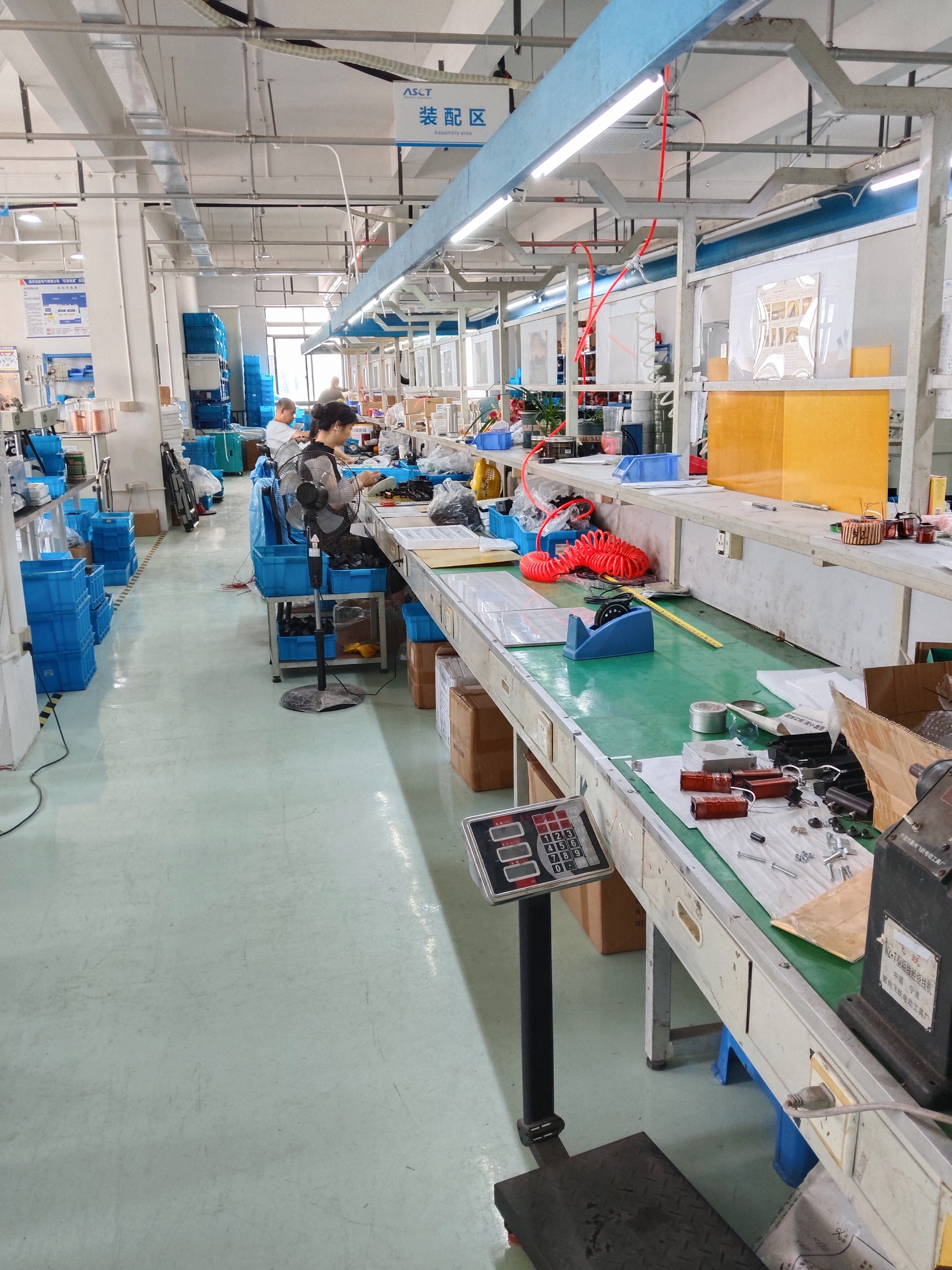
Wenzhou Heyi Electrical Co., Ltd. (HEYI) is a Chinese manufacturer of current transformers and current sensors, established in 2012. The company operates a 10,000 m² facility, employs 56 people, and produces roughly 356,000 units per year, with 95% of output exported to markets in Southeast Asia, Europe, South America, Australia, the Middle East, and North America.
HEYI’s product scope covers split-core CTs, solid-core CTs, busbar CTs, DIN-rail CTs, three-phase CTs, flexible Rogowski coils, residual current sensors, hall-effect current sensors, and revenue-grade CTs. This breadth is not unusual in the industry, but it is relevant to buyers because it allows one supplier to support multiple applications instead of requiring separate qualification for each CT family.
The company also operates an OEM/ODM program with a monthly capacity of 20,000 units, a lead time of 3–30 days, and a minimum order quantity of one unit. Quality controls include 100% routine testing, accuracy testing, insulation resistance testing, withstand voltage testing, and pre-shipment inspection.
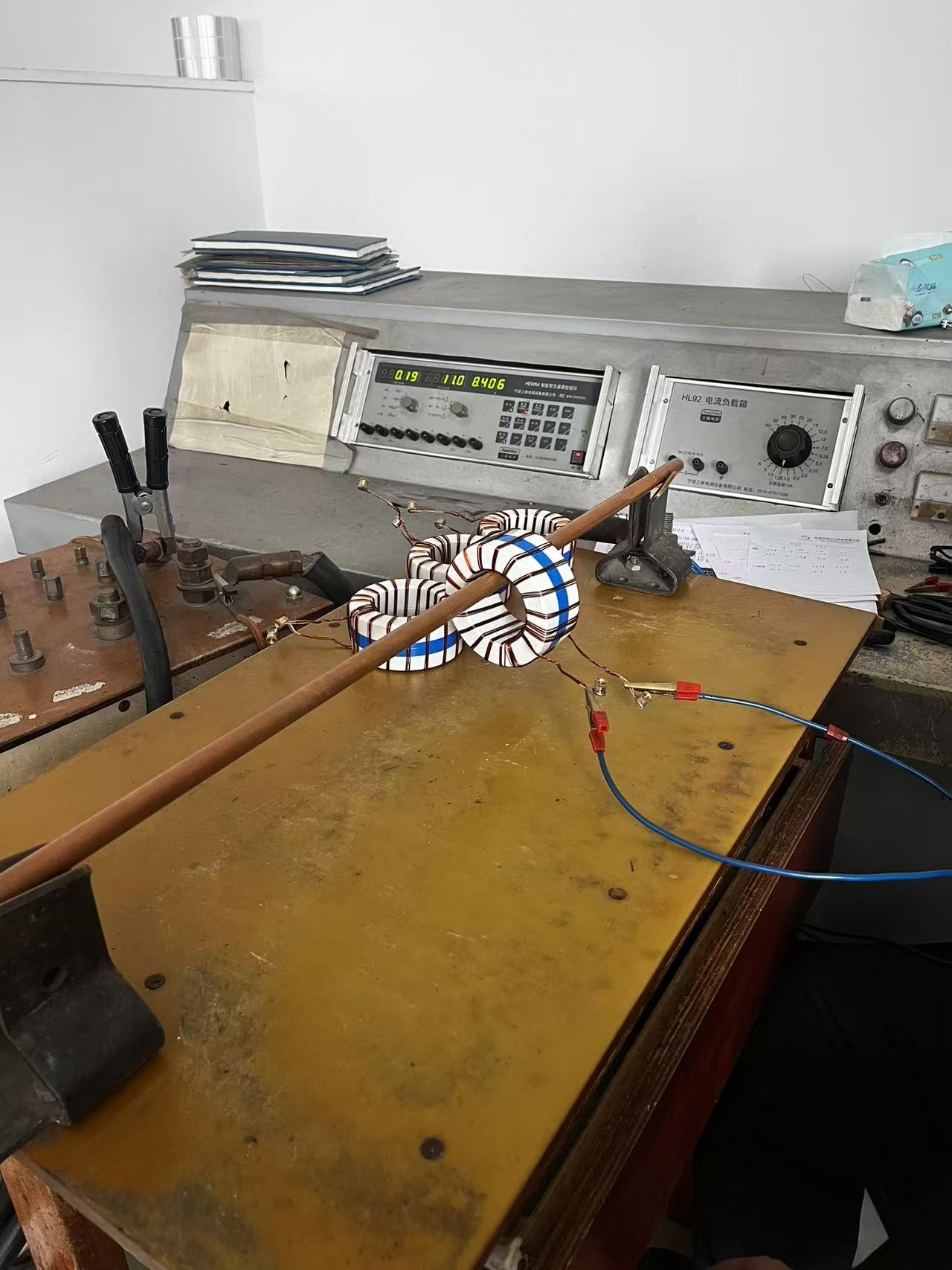
From a compliance perspective, HEYI holds ISO 9001:2015 certification for production of low-voltage current transformers, as well as CE, UKCA, and RoHS declarations covering its main CT families. For buyers, these documents support market entry in the EU and UK, but should be checked against the specific model and certification issue date.
Technical Explanation: Key CT Families and Evaluation Criteria
Understanding which CT to specify starts with the installation environment and the measurement objective. The table below summarizes the main CT families and representative parameters drawn from HEYI’s current catalog.
| CT Family / Model | Typical Applications | Measurement Range | Accuracy Available |
|---|---|---|---|
| Split-core CT (KCT) | Retrofit monitoring, smart panels, energy management | 0–1000 A | 3.0 / 1.0 / 0.5 |
| Solid-core window CT (MSQ) | Metering, protection, switchgear | 0–6000 A | 1.0 / 0.5 / 0.5S / 0.2 / 0.2S |
| Busbar split-core CT (DP/HK) | Large busbar retrofit, industrial monitoring | 0–8000 A | 3.0 / 1.0 / 0.5 |
| Flexible Rogowski coil (FRC) | Heavy industry, portable testing, large conductors | 100–10000 A | mV output (integrator required) |
| Residual current sensor (HYCA) | EV charging, solar/storage residual current detection | Differential 0–300 mA | 6 mA DC / 30 mA AC switching per IEC 62752 |
| Three-phase integrated CT (DASN) | 3-phase load monitoring, PDU, UPS | 0–1000 A | 1.0 |
| Revenue-grade CT (RECT) | Utility billing, sub-metering | 0–1000 A | IEEE C57.13 compliant |
Accuracy classes for inductive current transformers are defined by IEC 61869-2, which replaced IEC 60044-1. Classes such as 0.5 and 0.5S indicate the permissible ratio error and phase displacement at specified burden. For sub-metering, HEYI offers Class 0.5 models across several families; for utility revenue billing, a Class 0.2 or 0.15 meter is typically required, and the CT must be matched to the meter’s accuracy class.
Installation method is the other major criterion. Solid-core CTs generally provide a closed magnetic path, which supports stable accuracy. Split-core CTs open to clamp around an existing conductor, making them ideal for retrofits, but the air gap can introduce additional error if the mating surfaces are not precisely manufactured. This is why supplier quality control and repeatable assembly processes matter.
Application Use Cases: Where Long-Term CT Reliability Shows
Long-term reliability is often cited in tenders, but it requires evidence. One example from HEYI’s project history describes a partnership lasting ten years, involving power utility companies, electrical engineering contractors, panel builders, industrial equipment manufacturers, and building energy management integrators. The CTs are used for current measurement, energy metering, load monitoring, feeder monitoring, switchgear retrofit, relay protection, generator output monitoring, and building sub-metering.
These use cases span multiple countries, including projects in Southeast Asia, Latin America, the Middle East, Europe, and Africa. For a buyer, the relevant takeaway is not the brand name but the demonstrated ability to maintain acceptable accuracy and insulation performance across climates and grid conditions.
Market Trend Analysis: What the Data Indicates
The market data points in several directions:
- Grand View Research places the global current transformer market at USD 2.63 billion in 2024, reaching USD 3.90 billion by 2030.
- Straits Research estimates that Asia Pacific accounted for 40.15% of revenue in 2025, driven by grid infrastructure and manufacturing.
- Fact.MR lists split-core CTs as the fastest-growing type, benefiting from retrofit and smart-grid programs.
- Research Intelo projects a 23.6% CAGR for EV charging transformer demand from 2025 to 2033.
- Global Market Insights reports that the top five manufacturers held about 40% of the market in 2024, leaving a substantial share of supply to specialized producers.
For procurement, these trends reinforce two points. First, a supplier’s ability to support split-core retrofits and EV charging components is becoming more valuable than a catalog that only lists traditional solid-core models. Second, market concentration at the top does not eliminate the need for specialized OEM partners; customization, short lead times, and flexible MOQs remain differentiating factors.
Comparing Modern Selection Approaches with Traditional CT Sourcing
Traditional CT sourcing often worked like this: an engineer looked up a standard ratio, bought a window-type CT, and installed it on the busbar or cable. The product was simple, mechanically robust, and the measurement path was closed, which gave reliable performance under rated conditions.
Modern selection is more application-driven. Buyers increasingly evaluate whether a CT can be installed without downtime, whether it can produce a 4–20 mA or RS485 output for direct connection to a gateway, whether it is certified for EV charging safety standards like IEC 62752, and whether the supplier can customize the window size or secondary lead.
However, there is a real constraint. Split-core and electronic-output CTs are not universally superior to their traditional counterparts. For high-accuracy revenue metering, where the primary conductor can be disconnected during installation, a solid-core CT remains the more conservative and often more precise choice. Rogowski coils require an integrator and a stable power supply, which adds cost and complexity in applications that do not already have processing electronics.
Buyers should therefore treat 'trending' CT types as options, not replacements. The evaluation framework should map each application to the CT family that provides the required accuracy, installation fit, and output compatibility.
Future Outlook
As the energy transition continues, current transformers will become more embedded in digital monitoring architectures. The next phase of product development is likely to focus on integrated sensors with communication outputs, higher measurement resolution for DC and residual current detection, and improved outdoor durability for grid and utility installations.
Manufacturers with a broad portfolio and a commitment to certification updates are better positioned to support buyers as requirements shift. For the procurement team, the practical strategy is to qualify suppliers that can demonstrate documented quality control, offer customization, and maintain long-term product consistency—because the cost of requalifying a CT for a new application is often higher than the unit price.
FAQ
Which current transformer type is growing fastest and why?
Split-core current transformers are identified as the fastest-growing segment due to ease of installation in retrofitting and smart grid applications, according to Fact.MR. They clamp around existing conductors without interrupting service.
What accuracy class is required for revenue-grade current transformers?
Revenue-grade CTs used for utility billing are typically required to meet ANSI C12.20 or IEC 61869-2 accuracy classes, usually 0.2 or 0.15. The exact requirement depends on the utility meter and regulatory framework.
How is the current transformer market expected to evolve by 2030?
Grand View Research projects the global current transformer market to grow from USD 2.63 billion in 2024 to USD 3.90 billion by 2030, driven by grid modernization, renewables integration, and electrification.
What applications are typical for HEYI Electrical current transformers?
According to the company’s project documentation, HEYI CTs are used for current measurement, energy metering, load monitoring, feeder monitoring, switchgear retrofit, relay protection, generator output monitoring, and building sub-metering, in a partnership spanning ten years.
What should buyers evaluate when comparing CT manufacturers?
Buyers should review quality control procedures, certification coverage, OEM/ODM flexibility, testing capability, and documented long-term reliability. In HEYI’s case, quality control includes 100% routine testing, accuracy, insulation resistance, withstand voltage, and pre-shipment inspection.
For further reference, HEYI’s public corporate brochure is available at heyiele.com brochure.