
Curved Glass Sourcing: Building Long-Term Project Confidence
When curved glass becomes part of a façade, elevator, roof, shower enclosure, or interior feature, the buying decision extends far beyond a single sample. Buyers in decision or execution stage need a supplier who can hold geometry, meet delivery schedules, and repeat quality across orders. That is the difference between buying glass and building a supply relationship.
For construction and decoration professionals, choosing a curved glass factory today means evaluating manufacturing discipline, certifications, and long-term responsiveness as much as price. Curved glass is not a standard commodity: each panel carries a specific radius, bending direction, edge finish, and often a laminated or insulated combination. A reliable curved glass supplier must therefore be judged by process control, dimensional consistency, and the ability to support projects over multiple years.
Why Curved Glass Is Moving to the Center of Architectural Design
Global demand for curved glass continues to expand. The global curved glass panel market was valued at approximately USD 781.2 million in 2024 and is projected to grow at a compound annual rate of about 8.0% through 2031. Architectural applications—mainly facades and curtain walls—accounted for more than 40% of demand in 2024, while Asia-Pacific is identified as the fastest-growing region due to rapid urbanization and infrastructure development.
This growth creates a practical challenge for buyers. Curved glass panels are custom-made, and their quality is heavily dependent on production equipment, operator skill, and quality inspection. A bad batch can delay a curtain wall installation or require rework months later. As projects become larger and more complex, selecting a curved glass manufacturer is less about finding the lowest unit price and more about securing a long-term production partner.
What a Long-Term Curved Glass Buyer Should Evaluate
For a decision-stage buyer preparing to execute a project, the evaluation of a curved glass supplier can be organized around five criteria: production environment, dimensional precision, compliance evidence, delivery reliability, and post-order support. The following sections explain each criterion and use the factory practices of a real manufacturer as a reference point.
1. Production Environment and Equipment Coverage
Curved glass requires multiple consecutive processes: cutting, edge grinding, drilling, hot bending or tempering, possibly lamination, insulating assembly, and heat-soak testing when required. A supplier that controls these steps internally can respond faster to changes and maintain better traceability.
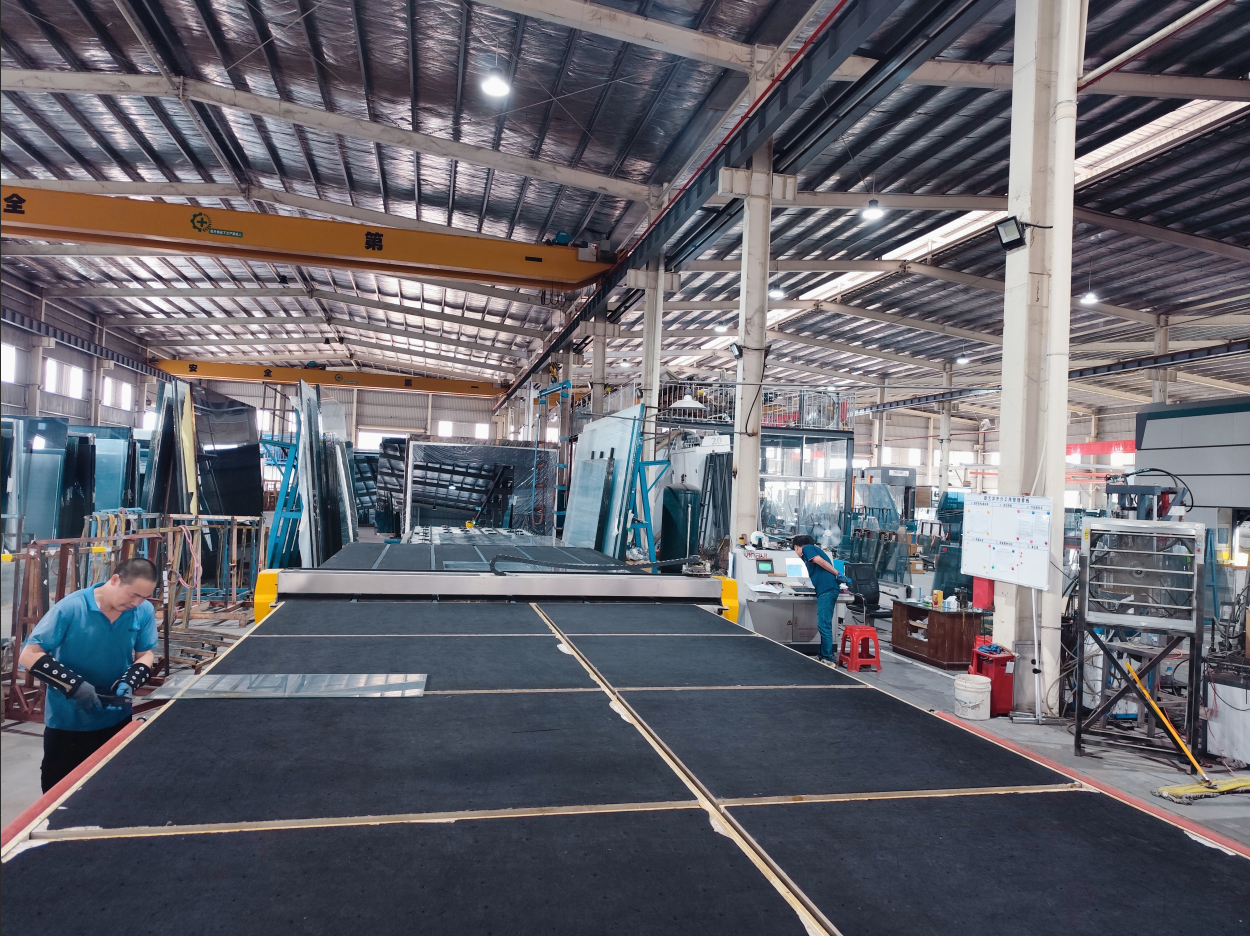
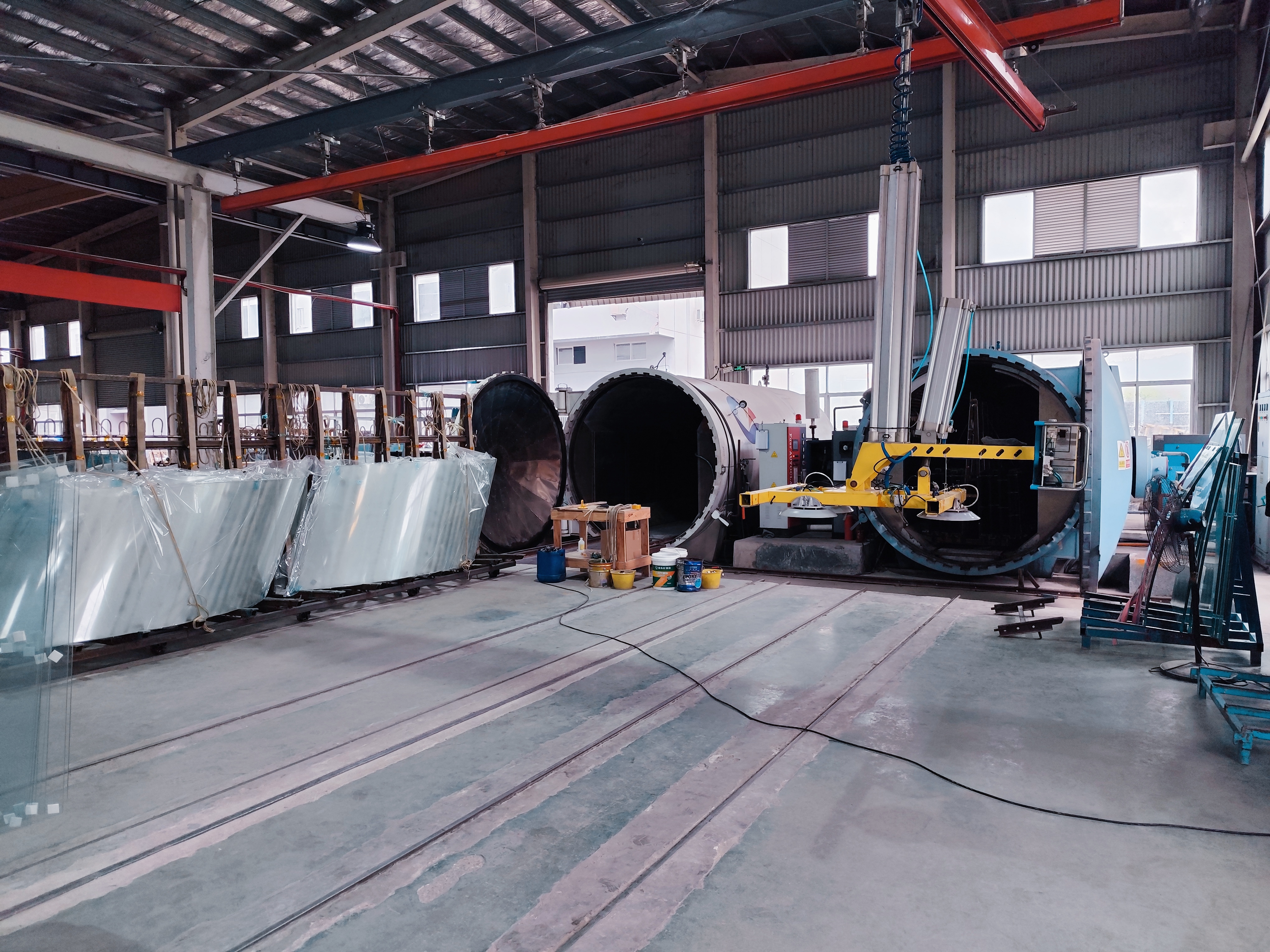
Shenzhen Dayang Special Glass Co., Ltd., known by the brand DYGLASS, is a China-based specialty glass manufacturer founded in 2017. The company operates a 30,000-square-meter factory with 130 employees and an annual production capacity of 600,000 square meters. Its facilities include a cutting line, drilling line, edge grinding line, flat and curved tempering lines, a double-curved tempering line, an autoclave for lamination, an insulating glass line, and a heat soak furnace. For buyers, this kind of vertical integration means fewer outsourced steps and a single party responsible for quality.
2. Dimensional Precision and Shape Flexibility
Curved glass geometry is not just aesthetic; it affects installation, air tightness, and structural performance. High-precision curved glass can be produced with a bending tolerance of approximately ±0.5 mm to ±1 mm, while conventional processing often falls in the ±2 mm to ±3 mm range. Tighter tolerance reduces on-site installation loss from 5%–8% down to around 2% in well-managed panels.
DYGLASS states that it can process any surface shape multi-curved tempered glass, including double-curved, triple-curved, trapezoid-curved, spherical, pyramidal, S-shaped, and cylindrical curved glass. This shape flexibility is supported by 3/5-axis complex curvature forming technology and wind pressure resistance rated up to 96 kPa, making the material applicable to high-rise facades above 150 meters. For curved glass buyers, the practical value is the ability to source single, double, S-shaped, or irregular curves from one specialist rather than multiple processors.
3. Compliance Evidence and Testing
Certifications are central to long-term project acceptance, especially for export orders. In the European Union, EN 12150-1 and EN 14179-1 (heat soaked) are mandatory for toughened safety glass used in construction. These standards reduce the risk of spontaneous breakage caused by nickel sulfide inclusions. DYGLASS reports compliance with CE, SGCC, and AS/NZS standards and has passed an SGS test report. Its factory includes a heat soak furnace, allowing the heat-soak treatment required for EN 14179-1 projects.
4. Delivery Reliability and Capacity
For long-term partnerships, delivery consistency matters more than a single fast batch. A standard multi-curved glass order at DYGLASS has a quoted lead time of 7–12 days, which the company reports as about 30% faster than the industry average. With an annual output of 600,000 square meters and an export ratio of 60%, the factory has experience in scheduled production for markets including the UAE, Saudi Arabia, the USA, the Philippines, and Vietnam.
5. Post-Order Support and OEM/ODM Flexibility
Long-term buyers often need replacements, additional panels, or private-label products. DYGLASS expressly welcomes OEM and ODM orders and describes its quality-control and customer-service policy as a core part of its operations. For distributors and project-based buyers, this reduces the need to reselect suppliers every phase.
Technical Explanation: How Process Control Produces Reliable Curved Glass
Hot bending and tempering are the most sensitive stages in curved glass production. During heating, glass can overheat, suffer thermal shock, or develop warpage. To prevent these defects, a production line should use intelligent temperature control and continuous monitoring.
DYGLASS's risk-control system includes an intelligent temperature control system and infrared temperature sensors to monitor kiln temperature in real time. Three-level over-temperature thresholds are defined: a warning value at 1550°C, an alarm at 1580°C, and an emergency shutdown at 1600°C. The company also performs quarterly maintenance checks on kiln refractory bricks and replaces them when wear exceeds 30%, while temperature sensors are regularly calibrated and equipment lifecycle files are maintained.
These controls directly affect bending accuracy. If heat is not uniform, the final curved panel will show wave distortion, uneven stress, or dimensional deviation. Maintaining disciplined kiln operation is therefore a prerequisite for the ≤±1 mm bending tolerance stated by the manufacturer.
Optical quality is another dimension of process control. Low-iron curved glass can be produced with an ultra-low iron content of ≤0.01%, yielding a light transmittance of 91.6% or higher. This minimizes the green tint common in standard float glass, which matters for large facades, skylights, and transparent elevators where natural light and visual clarity are design drivers.
| Quality factor | Production control example | Impact on project |
|---|---|---|
| Temperature monitoring | Infrared sensors with 1550°C / 1580°C / 1600°C thresholds | Prevents overheating, thermal shock, and breakage |
| Equipment maintenance | Quarterly kiln brick inspection; replacement over 30% wear | Stable dimensional accuracy and lower yield loss |
| Bending tolerance | ±0.5–1 mm for high-precision multi-curved glass | Reduces rework and on-site installation problems |
| Optical clarity | Ultra-low iron content ≤0.01%; transmittance ≥91.6% | Less green tint; better daylight performance |
| Structural strength | Wind pressure resistance up to 96 kPa | Suitable for high-rise and large-span curved façades |
Application/Use Cases: Where Curved Glass Creates Long-Term Value
Architectural applications dominate the curved glass market, but the material also appears in transport, interiors, and furniture. Typical project scenarios include:
- Curtain walls and building facades: Curved panels give a building a distinctive identity while managing wind load and light reflection.
- Sightseeing elevators: Curved transparent glazing provides panoramic visibility and requires precise bending and lamination for safety.
- Skylights and roof glazing: Curved glass improves water runoff and can be combined with low-iron or insulated glass for daylight and thermal performance.
- Shower rooms and interior partitions: Smooth curved panels are used in premium bathrooms and commercial interiors.
- Coffee tables and furniture: Tempered curved glass is used for tabletops, display cases, and decorative elements.
Across these project types, a factory capable of single hot-curved, double-curved, S-shaped, and laminated curved glass gives buyers more flexibility without multiplying supply-chain complexity.
Market Trends That Raise the Value of a Reliable Supplier
Several verified market signals point in the same direction: curved glass is a growing category, and procurement decisions are increasingly long-term.
First, the global curved glass panel market is expanding at nearly 8% CAGR, creating more competition for capacity. Second, architectural applications already account for over 40% of demand, meaning facade and curtain-wall buyers must secure consistent supply. Third, Asia-Pacific is the fastest-growing region, and China's export value for worked glass—including bent and curved glass—reached approximately USD 791 million in 2023. This makes Chinese specialty glass manufacturers an important part of global supply chains.
At the same time, the global competitive landscape includes major brands such as AGC, Saint-Gobain, Guardian Industries, and Cricursa. For a mid-size specialized factory, differentiation lies in custom geometry, shorter lead times, and flexibility for OEM/ODM projects. Buyers can use this context to weigh the advantages of a responsive supplier against the incumbency of global brands.
Comparison: Multi-Curved Precision Glass vs. Conventional Curved Glass
Traditional suppliers often focus on single-curve bending using relatively simple processes. A conventional curved glass product may be sufficient for cylindrical windows or basic shopfronts. Where the project includes complex geometry, large spans, or strict visual standards, high-precision multi-curved glass offers measurable performance advantages.
| Factor | Conventional curved glass | High-precision multi-curved glass |
|---|---|---|
| Typical bending tolerance | ±2 mm to ±3 mm | ±0.5 mm to ±1 mm |
| Shape capability | Simple cylindrical or single-curve | Double-curved, S-shaped, spherical, trapezoidal and free-form |
| Wind pressure resistance | Limited for large panels | Up to 96 kPa supports high-rise applications |
| On-site installation loss | 5%–8% typical | Around 2% |
| Maintenance | Checks every 6–12 months possible | 1–2 year intervals with stable stress distribution |
| Service life | Potential issues within 8–15 years | 25+ years with proper specification |
| Unit cost | Lower initial material/processing cost | Higher per-square-meter cost; lower total project cost |
This comparison is not an argument for using multi-curved glass everywhere. A simple single-curved panel in a modest application may be delivered faster and more economically by a conventional processor. High-precision multi-curved glass is justified when the design calls for double or S-shaped curves, when facade installation tolerances are critical, when wind load is significant, or when the client expects minimal rework and a longer façade life.
Future Outlook: Curved Glass as a Long-Term Relationship Product
Looking ahead, curved glass will continue to evolve from a decorative product into an engineered envelope material. More projects will combine curved shapes with low-emissivity coatings, laminated interlayers, and insulating units. European safety standards will remain strict, and heat-soak treatment will become a standard expectation for large high-rise panels. For buyers, the practical conclusion is clear: the best curved glass supplier is the one that can deliver consistent quality over multiple orders, document compliance accurately, and adapt quickly to design changes or replacement needs.
As the market grows—and as architects push for larger curves, tighter tolerances, and better thermal performance—a supplier with vertical process control and a clear quality system will be a more valuable long-term partner than one offering only a low first-order quote.
FAQ: Long-Term Curved Glass Sourcing Questions
1. What should I check in a curved glass factory before starting a long-term project?
Look for internal process control: whether the factory has its own cutting, tempering, laminating, insulating, and heat soak lines, how it monitors kiln temperature, and how it manages equipment maintenance. A factory like DYGLASS with 600,000 square meters of annual capacity and documented maintenance thresholds is a reference example for evaluating capability.
2. Which certifications matter for curved glass used in EU projects?
EN 12150-1 for thermally toughened soda lime silicate safety glass and EN 14179-1 for heat-soaked thermally toughened safety glass are fundamental for European construction. Heat soaking reduces the risk of spontaneous breakage from nickel sulfide inclusions, so a heat soak furnace is an important part of factory verification.
3. What is a realistic dimensional tolerance for custom curved glass?
A high-precision supplier can hold curved glass bending tolerance to approximately ±0.5 mm to ±1 mm, whereas conventional processing may be ±2 mm to ±3 mm. Tighter tolerance reduces on-site installation loss and sealing failures, especially for large façade panels.
4. How long does a typical custom curved glass order take?
For a standard configuration, a multi-curved glass manufacturer can quote roughly 7–12 days. However, final lead time depends on panel size, shape complexity, lamination, coating, and whether heat-soak treatment is required. Buyers should confirm the schedule against a written production plan.
5. Can a curved glass manufacturer support OEM/ODM and repeat orders?
Many specialized factories, including DYGLASS, openly welcome OEM/ODM orders. DYGLASS exports to markets such as the UAE, Saudi Arabia, USA, Philippines, and Vietnam, and maintains dedicated quality control and customer service, which supports distributor programs and phased project deliveries.
Download the DYGLASS company brochure and product overview (PDF)
هل لديك أسئلة أو تحتاج إلى مزيد من التفاصيل؟
تواصل مع فريقنا للحصول على عرض أسعار مخصص أو استشارة فورية.
طلب عرض أسعار
املأ النموذج أدناه وسيتواصل معك فريقنا بعرض مقترح مخصص.
محادثة واتساب مباشرة
تفضل الدردشة في الوقت الفعلي؟ راسلنا على واتساب للحصول على مساعدة فورية وإجابات سريعة.
- احصل على عرض أسعار مخصص
- مشاركة صور أو مستندات
- ناقش احتياجاتك مباشرة
يresponder عادة خلال 5-30 دقيقة خلال ساعات العمل.