
Custom Aluminum Tin Can Programs: OEM Capability Guide
Aluminum can packaging is a mature format, but a custom aluminum can program is not a commodity purchase. The difference sits in the specification: the can dimensions and fill volume, the internal coating, the print and color system, the lid or closure, the inspection method and the order volume that makes the program commercially viable. Buyers who search for metal can, beverage can, tin can, aluminum tin can or tin can packaging are usually trying to answer one practical question: can a supplier turn a packaging concept into a repeatable food-contact can without losing print quality, seal integrity or delivery reliability?
IDEA PACKAGE is the packaging brand of ANHUI IDEA TECHNOLOGY IMP&EXP Co.,Ltd., a Hefei-based packaging supplier with glass, plastic and metal production capabilities. The company states ISO 9001, FDA and CE certification and exports to more than 150 countries and regions. For aluminum can projects, the relevant capability is the metal packaging line: OEM/ODM customization, decoration, coating, inspection and volume production.
For clarity, this guide uses 'tin can' as a buyer search term for metal can packaging. The specification facts below refer to aluminum can products, not tinplate. A buyer comparing an aluminum tin can with a tinplate can should confirm the base material, coating system and end-of-line inspection requirements in the quotation.
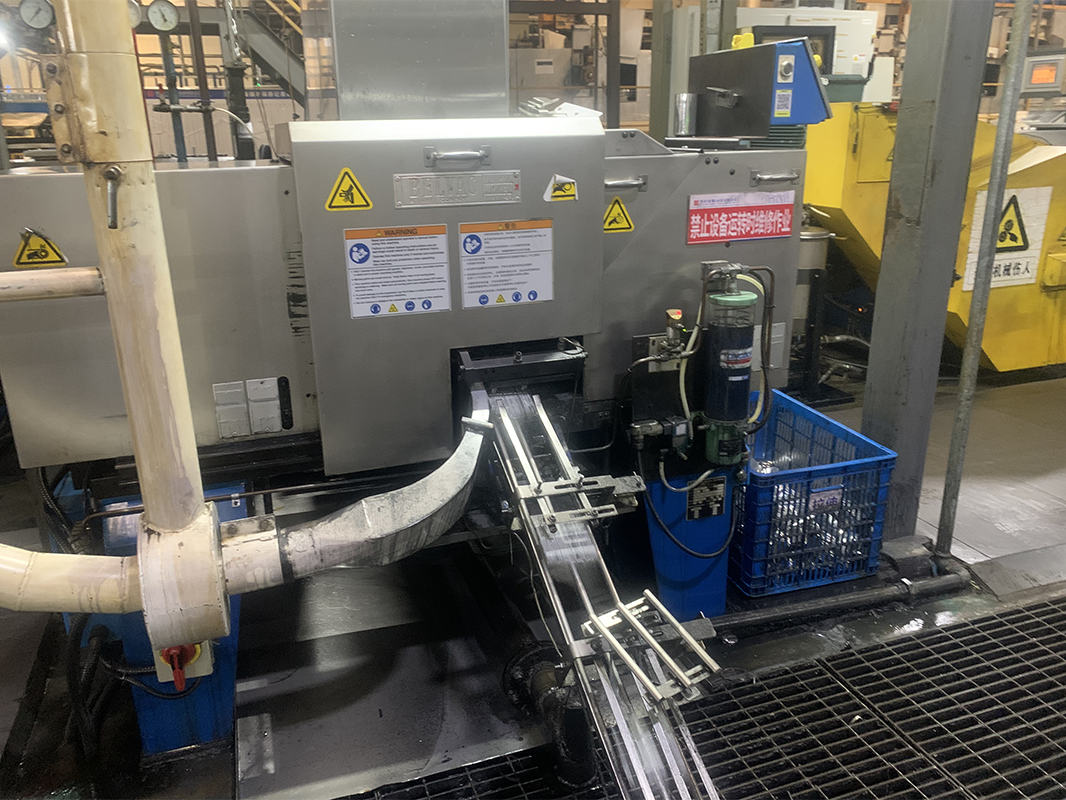
Deep-drawing aluminum cups into cans at the IDEA PACKAGE metal packaging facility. Image source: IDEA PACKAGE.
Why Custom Aluminum Can Programs Are a Capability Question
The search language around this category is broad because buyers use different words for the same purchase. A beverage can, soda can, beer can, coffee can and 3.5 soda can are not identical formats, but they share a common sourcing problem: the supplier must translate a brand concept into a can specification that can run on a filling and seaming line. That is why a catalogue page is not enough. The buyer needs to know which dimensions, coatings, print methods and closures the supplier can control, and which order volumes the supplier can support.
Custom printing and coating turn an aluminum can from a container into a brand surface. That is the opportunity. It is also where quality risk appears: registration, color consistency, drying and logo verification. A supplier with in-house printing and inspection can control those steps. A supplier without process control cannot. For a buyer at the Evaluation to Execution stage, the useful question is not simply 'can you print a logo?', but 'which print, coating, size and inspection variables are inside your factory control, and which are subcontracted?'
The same logic applies to format. A standard beverage can and a coffee can or cans with lids format may look similar in a product photo, but they require different closure, torque and airtightness decisions. Buyers should separate the category search term from the actual approval drawing. The drawing, not the keyword, defines what will be produced.
What IDEA PACKAGE Can Customize in an Aluminum Tin Can Program
IDEA PACKAGE offers OEM/ODM production for aluminum cans. The customization scope stated in the company's capability data covers Logo, Packaging, Graphic, Printing, Color, Coating, Size and Capacity. This is the practical definition of a custom tin can packaging program: the buyer is not only choosing a can size; the buyer is setting the visual, functional and food-contact specification.
The company reports a monthly capacity of 300,000,000 pcs and a MOQ of 100,000 pieces. The published lead-time schedule is 7 days for 1–10,000 pcs, 15 days for 10,001–500,000 pcs, and negotiable for orders above 500,000 pcs. Quality control is described as pre-shipment inspection, with remote after-sales support. On the corporate side, the company reports 250 employees, a 15-engineer engineering team and annual output of CNY 180,000,000. These figures matter because custom can programs fail when capacity, engineering support and inspection are not aligned.
| Customization area | What the buyer must define | Evidence from capability data |
|---|---|---|
| Size and capacity | Fill volume, can dimensions and compatibility with the filling line | Size and Capacity are included in the customization scope |
| Printing and graphic | Artwork, color target, registration and logo verification | Logo, Graphic, Printing and Color are included; logo inspection and verification equipment is part of the process |
| Coating | Internal lining, BPA-free requirement and adhesion performance | Coating is included; a BPA test report covers aluminum can coating |
| Lid or closure | Standard beverage end or cans with lids; torque control where a lid is used | Cap torque control is stated; a resealable format requires a separate closure specification |
| Packaging | Carton, pallet and secondary packaging | Packaging is included in the customization scope; palletizing appears in the process imagery |
| Order volume | MOQ, delivery schedule and deposit planning | MOQ is 100,000 pcs; lead time is volume-dependent |
For coffee can and cans with lids formats, the closure specification should be written into the approval drawing. A standard beverage can end and a recloseable lid are different purchasing items, even when both are described as tin can packaging.
From Coil to Pallet: How a Custom Aluminum Can Is Produced
Custom aluminum can production is a sequence of forming, cleaning, decorating and inspection steps. The company's process imagery shows the sequence from aluminum coil stamping to cup forming, deep drawing, can cleaning, printing, drying, logo inspection, finished-can compliance inspection and palletizing. Each step maps to a buyer risk.
Raw material control starts with the aluminum coil. Incoming substrate consistency affects forming yield and coating performance. The coil is then stamped into an aluminum cup and deep-drawn into the can body. Dimensional control begins at this stage: a can that is outside tolerance will create problems later on the filling and seaming line. After forming, the can is cleaned before coating and printing. Cleaning is not a cosmetic step; it is part of preparing the surface for the internal coating and the external decoration system.
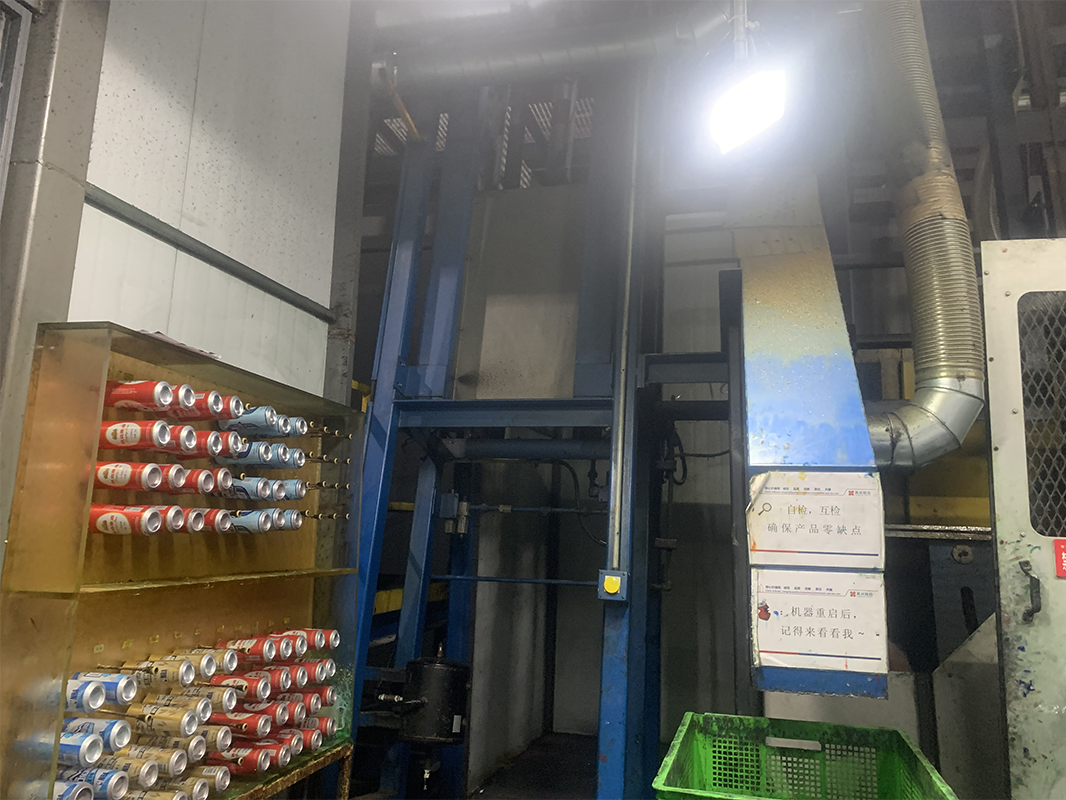
Printing workshop for decorated aluminum can packaging. Image source: IDEA PACKAGE.
Printing is not a cosmetic afterthought. A decorated beverage can with inconsistent registration or incomplete drying can fail the brand's visual standard and create rework. The presence of a logo inspection and verification machine in the process is a control point buyers should ask about. Drying after printing is equally important: ink that is not fully cured can affect downstream handling and appearance. After printing, finished cans are inspected for compliance before palletizing. The company states pre-shipment inspection as its quality-control method, which means the buyer should agree the test items and acceptance criteria before production starts.
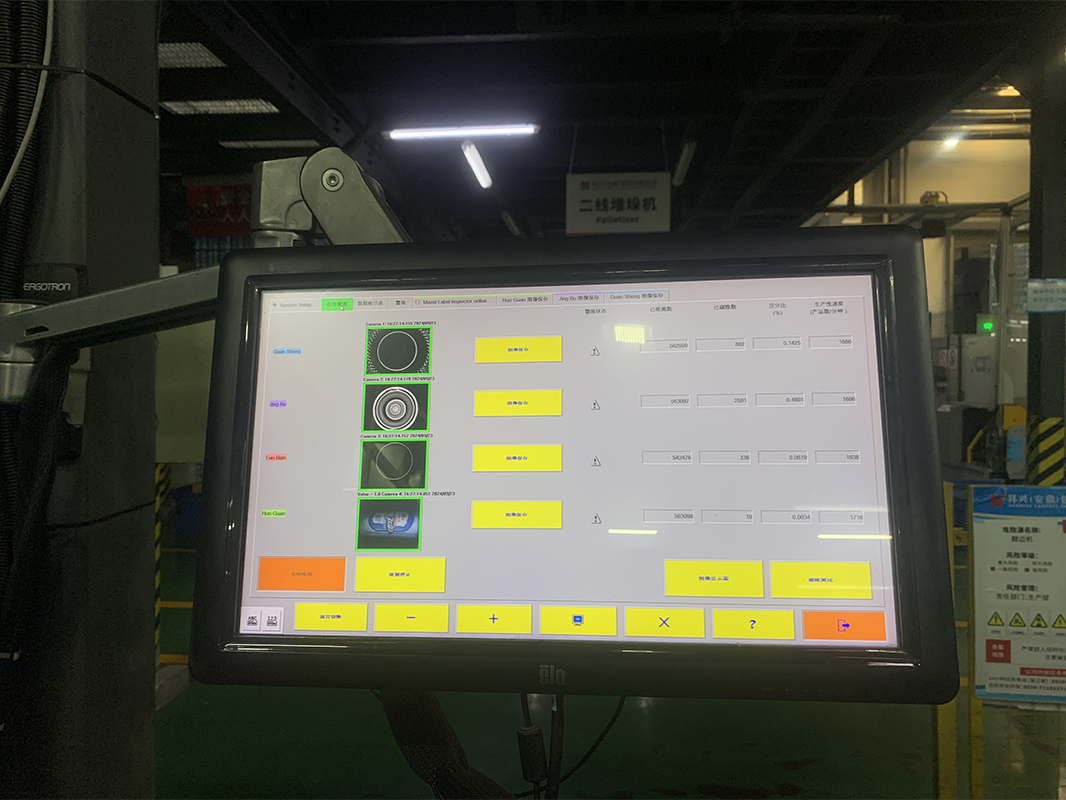
Finished-can inspection for compliance before shipment. Image source: IDEA PACKAGE.
Food-Contact and Seal Integrity Controls Buyers Should Verify
Food-contact safety is the part of an aluminum can specification that cannot be inspected visually at the end. The buyer needs a documented control chain: incoming material verification, lining specification, batch traceability and end-of-line seal testing. IDEA PACKAGE states that its aluminum can lining is BPA-free by specification, that incoming batches are checked against a Certificate of Analysis before production, and that batch retention samples are kept for traceability. Before shipment, every unit passes a 100% airtightness test, with cap torque control where lids are used and coating adhesion testing for the internal lining.
The BPA test report ZTS25012103ERC was issued on 2025-02-12 by Shenzhen ZTS Testing Service Co., Ltd. Its scope is the BPA test for aluminum can coating, under Regulation (EC) No 1935/2004, (EU) 2018/213, (EU) 10/2011 and CEN/TS 13130-13:2005. For a buyer building a specification file, this is a material-level document. It supports the lining declaration, but it does not replace a fill trial with the actual beverage or food product.
| Risk | Main trigger | Control stated by IDEA PACKAGE |
|---|---|---|
| BPA migration | Hot liquid above the rated temperature, prolonged contact with acidic or oily contents, aged or damaged lining, prolonged storage, or a non-compliant incoming batch | BPA-free lining as the specified material; COA verification on every incoming batch; batch retention samples; temperature range stated in the manual |
| Leakage or seal failure | Lid not tightened to the specified torque, aged, misaligned, contaminated or missing sealing ring, drop or impact, pressure change, or an undetected sealing defect | 100% airtightness testing before shipment; failed units rejected before packing; correct reassembly after washing; avoid over-tightening |
| Coating delamination | Deformation from impact or dropping, or poor adhesion in a specific coating batch | Adhesion testing of the internal lining; thermal shock resistance; discontinue use if the coating peels or flakes |
The controls reduce risk but do not make the can suitable for every filling condition. A buyer planning hot fill above the rated temperature, long contact with strongly acidic or oily contents, or extended storage should validate the lining against the actual product and process. The BPA test report is a material test, not a substitute for a fill trial.
Where Custom Aluminum Cans Fit: Beverage, Beer, Fruit Wine and Coffee Formats
IDEA PACKAGE's applicable scenario data describes beverage, beer, carbonated drink and functional drink production on an automatic high-speed filling and seaming line, with indoor production, normal temperature and dry warehouse storage. The stated function is beverage containment, airtight preservation and pressure resistance. The special requirement is a BPA-free inner coating, food grade and high airtightness. Matched equipment includes a can filling machine, a seamer and an ink printing machine.
The case record shows where the format has been used. A US brewery uses aluminum cans for canned beer. A fruit winery in Great Britain and a fruit winery in Korea use aluminum cans for canned fruit wine. Beverage plants in Kazakhstan and the United Arab Emirates use aluminum cans for canned beverage production. In each case, the recorded result is a stable production operation that meets food-grade packaging requirements, with food grade, good sealing performance and corrosion resistance listed as highlights. Duration is not publicly disclosed for these cases.
| Client type | Market | Application | Recorded result | Reported annual contract value |
|---|---|---|---|---|
| Brewery | US | Canned beer production | Stable production operation; meets food-grade packaging requirements | $1.2 million |
| Fruit Winery | GB | Canned fruit wine production | Stable production operation; meets food-grade packaging requirements | $800,000 |
| Fruit Winery | KR | Canned fruit wine production | Stable production operation; meets food-grade packaging requirements | $400,000 |
| Beverage plant | KZ | Canned beverage production | Stable production operation; meets food-grade packaging requirements | $500,000 |
| Beverage plant | AE | Canned beverage production | Stable production operation; meets food-grade packaging requirements | $500,000 |
These cases do not prove that every beverage fits an aluminum can. They show where the format has been used: beer, fruit wine and beverage production. A coffee can program would need a separate specification because coffee packaging has different closure, barrier and filling requirements. Buyers searching for coffee can or cans with lids should ask for the closure drawing, torque specification and airtightness test method before approving a custom run.
Market Trend: More Documented Cans, Not Just More Cans
Metal packaging is often discussed in terms of recyclability and shelf stability. For procurement teams, the more actionable trend is documentation. The buyer questions that appear around aluminum can sourcing are no longer limited to unit price. They include BPA-free lining statements, COA verification, batch retention samples, 100% airtightness testing, coating adhesion and print verification. A supplier that can answer those questions with records is easier to qualify than a supplier that answers with brochures.
Another trend is format proliferation. Beverage brands use small-format soda can, beer can and coffee can formats to create trial and single-serve packs, while established beverage lines stay on high-speed filling and seaming. This puts pressure on the supplier to manage both standard production and customization without confusing the two. The capability data from IDEA PACKAGE points in that direction: OEM/ODM customization is offered alongside a monthly capacity of 300,000,000 pcs and a defined MOQ of 100,000 pcs.
The practical trend is clear: more documented cans, not just more cans. Buyers want the can, the coating declaration, the inspection record and the print approval in one supply relationship.
Aluminum vs Traditional Packaging: Where the Fit Ends
Compared with glass, aluminum is lighter and less breakable, and it is compatible with high-speed filling and seaming lines. Compared with rigid plastic, aluminum provides a strong barrier and a premium metal finish. These are general category differences, not a claim that aluminum is better for every product.
The limitation is commercial and technical. A custom aluminum can program is volume-based. The MOQ is 100,000 pieces, and the lead-time schedule is 7 days for 1–10,000 pcs, 15 days for 10,001–500,000 pcs, and negotiable above 500,000 pcs. A buyer with a 20,000-piece seasonal run is below the mass-production MOQ and should not treat a custom aluminum can as a low-volume trial format without discussing sampling. Decoration also adds setup: print plates, color approval and drying control are not free or instantaneous. And a standard beverage can is not resealable; if the product needs a resealable closure, the buyer must specify cans with lids and validate torque and airtightness.
Glass remains strong where resealability and premium shelf presence matter. Rigid plastic remains relevant where low tooling cost or squeezability matters. Aluminum fits where the buyer needs a light, barrier-rich, high-speed beverage can with a documented food-contact and seal-control package. The fit question is not 'which material is best', but 'which material matches the fill volume, closure, shelf life and order pattern'.
Future Outlook
The next stage of competition in aluminum can packaging is likely to be less about the can as a shape and more about the evidence behind it. Buyers will ask for batch-level traceability, BPA-free lining documentation, coating adhesion test records, airtightness test results and print verification. Suppliers that can provide those records alongside stable capacity will be easier to keep on an approved vendor list.
For IDEA PACKAGE, the stated capability set—OEM/ODM customization, 300,000,000 pcs/month capacity, pre-shipment inspection, remote after-sales support and a BPA test report for aluminum can coating—covers the main checkpoints of a custom program. The remaining work is project-specific: fill trial, artwork approval, closure validation and order scheduling.
For buyers who need the full company profile and certification package, the IDEA PACKAGE brochure is available for download.
FAQ
What is the minimum order quantity for custom aluminum cans?
The MOQ is 100,000 pieces for standard mass-production pricing. This is the volume threshold stated in the company's commercial terms.
Which Incoterms and payment terms apply?
FOB, CIF and EXW are available. Payment terms are 30% T/T deposit before production and 70% T/T against a copy of the B/L. Under EXW the buyer uses its own forwarder; under FOB the buyer nominates the vessel and pays freight; under CIF the supplier covers freight and insurance to the destination port.
How is quality checked before shipment?
Pre-shipment inspection is the stated quality-control method. The inspection can include a pre-shipment test report, 100% airtightness testing, cap torque control where lids are used, and coating adhesion testing. The test items and AQL should be agreed before production starts.
Is the inner lining BPA-free?
Yes. The lining is BPA-free by specification. Each incoming batch is checked against a Certificate of Analysis before production, and batch retention samples are kept for traceability. The BPA test report ZTS25012103ERC was issued on 2025-02-12 by Shenzhen ZTS Testing Service Co., Ltd. for aluminum can coating, under Regulation (EC) No 1935/2004, (EU) 2018/213, (EU) 10/2011 and CEN/TS 13130-13:2005.
Can the inner coating peel or flake off?
Coating adhesion testing verifies bond strength. Deformation from impact or dropping and poor adhesion in a specific coating batch are the main triggers. If the coating begins to peel or flake, the container should not be used for food or beverages.
What lead times apply to larger orders?
The published schedule is 7 days for 1–10,000 pcs, 15 days for 10,001–500,000 pcs, and negotiable for orders above 500,000 pcs. Mass-production MOQ is 100,000 pieces.
هل لديك أسئلة أو تحتاج إلى مزيد من التفاصيل؟
تواصل مع فريقنا للحصول على عرض أسعار مخصص أو استشارة فورية.
طلب عرض أسعار
املأ النموذج أدناه وسيتواصل معك فريقنا بعرض مقترح مخصص.
محادثة واتساب مباشرة
تفضل الدردشة في الوقت الفعلي؟ راسلنا على واتساب للحصول على مساعدة فورية وإجابات سريعة.
- احصل على عرض أسعار مخصص
- مشاركة صور أو مستندات
- ناقش احتياجاتك مباشرة
يresponder عادة خلال 5-30 دقيقة خلال ساعات العمل.