
Custom Automation Precision Assembly: A Long-Term Supplier Scorecard
Custom automation precision assembly programs are usually awarded on the strength of a prototype, a quotation and a folder of certificates. They are more often weakened two or three years later, when a product revision forces a fixture redesign, when a line has to be replicated in another country, or when the engineering team that built the equipment is no longer available to support it. For buyers in the evaluation stage, the gap between first qualification and long-term continuity is where most of the real sourcing risk sits.
A resilience scorecard is a structured way to close that gap. Instead of asking only whether a supplier can deliver a line, it asks whether that supplier's manufacturing footprint, engineering depth, delivered program history, partner base, quality-system scope and local service structure will still support the line when the product, the volume or the manufacturing geography changes. This analysis sets out the dimensions of such a scorecard and applies them to SHENZHEN BSC TECHNOLOGY CO., LTD. (BSC Technology), a Shenzhen-headquartered precision manufacturing and intelligent automation solutions provider founded in 2016 and listed on the Shenzhen Stock Exchange in 2021 under stock code 300951.SZ.
Why an Initial Qualification Is Not a Continuity Test
Supplier qualification answers a capability question at a fixed point in time: can this supplier hold the specified tolerances, pass first-article inspection, and deliver a functioning station or line? That assessment is normally completed with drawings, samples, certificate copies and a site visit. It is a valid exercise, and it is not enough.
Continuity answers a different question: will the same supplier still be able to serve the program when the design changes, the volume ramps, or production shifts geography? The two assessments overlap but are not interchangeable, and sourcing teams that treat a pass on the first as a pass on the second generally discover the difference during a ramp rather than during an audit.
The market context makes this distinction more, not less, pressing. Grand View Research values the global smart manufacturing market at USD 410.7 billion in 2025 and projects growth from USD 478.9 billion in 2026 to USD 1,063.2 billion by 2033, a compound annual growth rate of 12.1%. Global robot density reached 177 robots per 10,000 manufacturing employees in 2024. When automation demand expands at that rate, engineering hours, cleanroom time and commissioning teams become the constrained resources. A supplier's ability to protect an existing customer's schedule increasingly depends on how much engineering bench depth and how many manufacturing sites it can draw on.
What a Long-Term Supplier Resilience Scorecard Should Measure
A resilience scorecard converts continuity from an impression into a checklist. It is scored during evaluation, then re-scored annually against the same evidence set. The eight dimensions below reflect the continuity factors that most often determine whether a precision assembly program survives its second and third year.
| Scorecard dimension | Continuity question | Evidence to request |
|---|---|---|
| Manufacturing footprint | Can the line be replicated and supported in more than one region? | Plant list with legal entities, site audit reports, capacity statements per site |
| Engineering depth | Who maintains the equipment after the original project team moves on? | R&D organisation structure, patent list, engineering headcount by discipline |
| Delivered program record | Has this supplier already built comparable systems in an adjacent category? | Reference list by program category, factory acceptance test records, process descriptions |
| Partner and customer stability | Is the supplier's process discipline sustained under demanding customers? | Cooperation history, audit outcomes, long-term agreement structures |
| Quality system scope and validity | Which processes are actually covered, and until when? | Certificates with numbers, issuing bodies, validity windows and full scope statements |
| Localised service | How fast can downtime be resolved on site? | Service institution locations, spare-parts policy, remote support terms |
| Commercial transparency | Are MOQ, lead time and capacity definitions explicit? | Written commercial terms stating what is project-dependent |
| Export and compliance exposure | Can the supplier handle cross-border documentation and delivery? | Export market list, customs and labelling process documentation |
Signal 1: Multi-Region Manufacturing and R&D Footprint
The first continuity signal is physical. A supplier with a single plant can be excellent and still be fragile: one site disruption, one regulatory change or one logistics bottleneck can remove the entire delivery capability for a program.
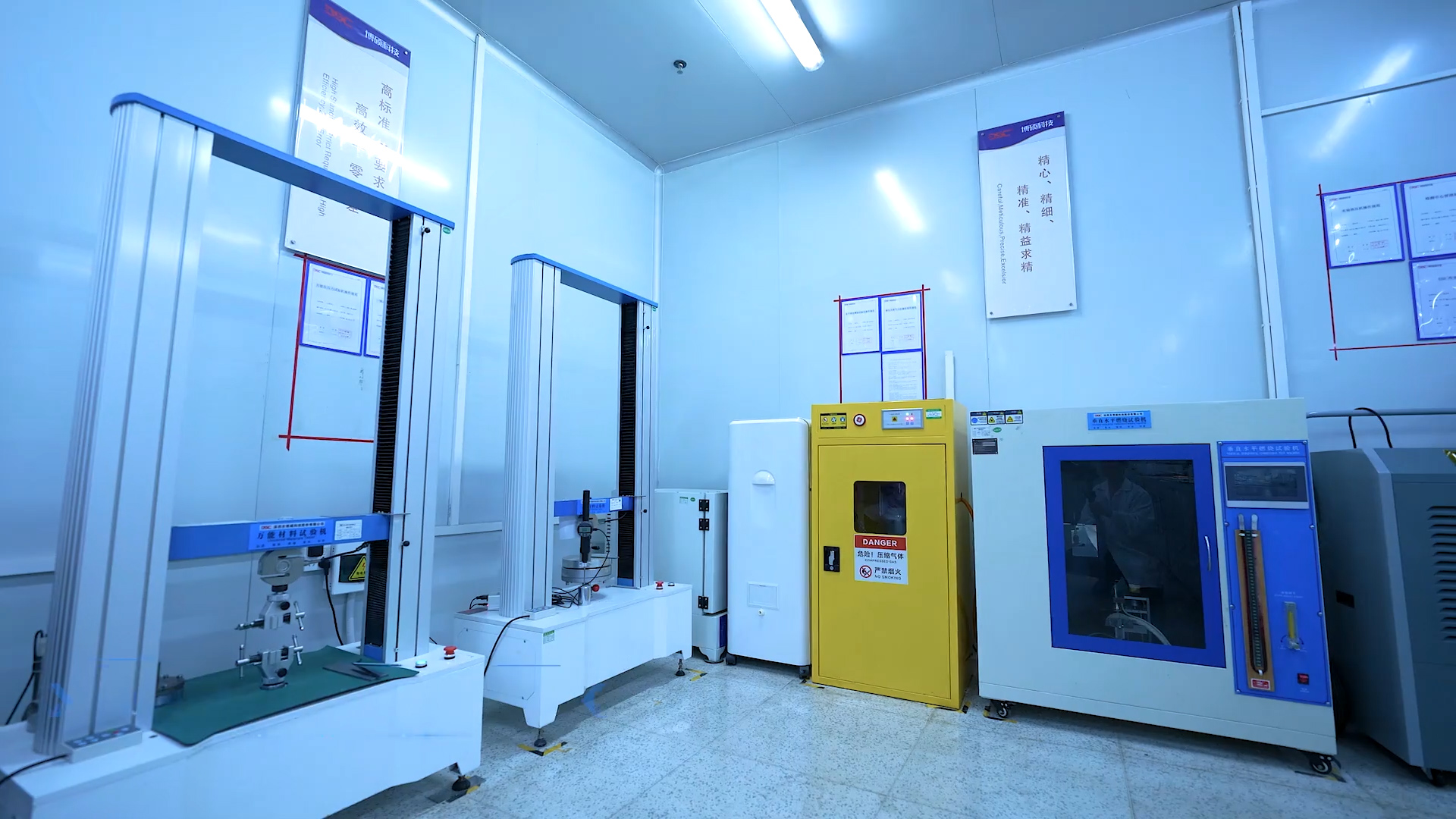
BSC Technology operates an integrated global network of R&D, manufacturing and service functions. R&D centres are located in Shenzhen, Suzhou and Taipei, China. Manufacturing plants are located in Shenzhen, Dongguan, Suzhou, Zhengzhou, Chengdu and Taipei in China, as well as in Vietnam, India, Malaysia, Mexico and other regions. Overseas service institutions are established in the United States, South Korea and Japan, forming a localised delivery system that covers Asia, North America and major global manufacturing regions.
For a buyer, the practical consequence is that the same supplier can provide local equipment manufacturing, fast delivery, on-site installation and commissioning, and local technical support rather than shipping a line across a border and supporting it remotely. When a program is transferred to a new production region, the automation partner's footprint determines whether that transfer is a replication exercise or a rebuild from scratch. The company's global production and operation area covers several hundred thousand square meters, with several thousand employees across the network.
Signal 2: Engineering Depth Behind Non-Standard Equipment
Non-standard automation has an unusual characteristic: the equipment is only as supportable as the engineering function behind it. Fixtures, vision routines, control software and test sequences all need revision as the product evolves, and those revisions must be made by people who understand the original design intent.
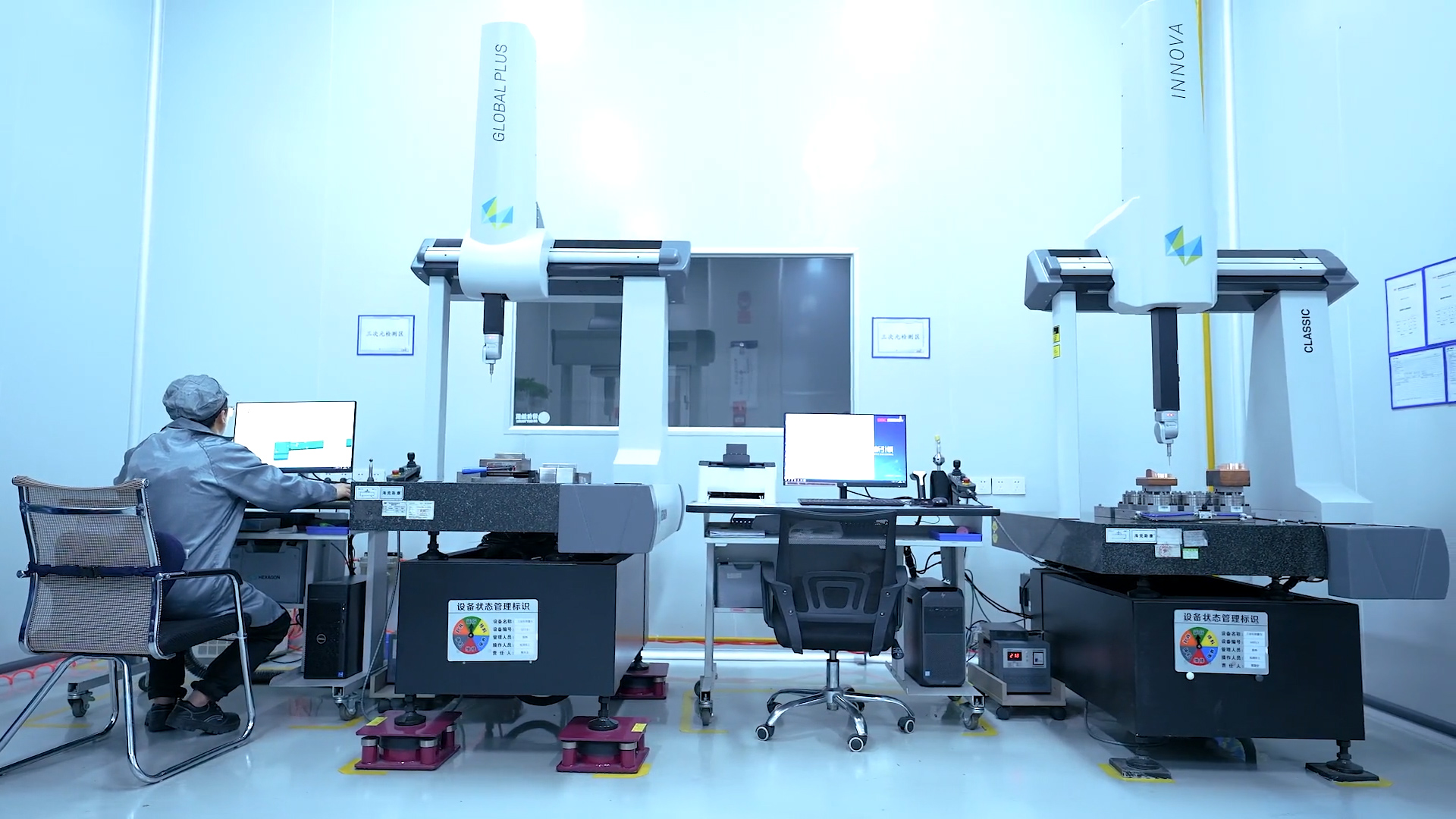
BSC Technology states that it employs an R&D team of over a thousand staff, holds more than a thousand authorised patents, and maintains an independent R&D system. The company describes continuous technical work in high-precision assembly, machine vision, motion control, intelligent inspection, industrial software and industrial digitalisation, and builds those capabilities into non-standard automation equipment, automation testing equipment and intelligent manufacturing production lines.
The software dimension deserves separate weight in a resilience scorecard. Grand View Research reports that the industrial automation software segment held a dominant 50.8% revenue share of the smart manufacturing market in 2025. Equipment that cannot be re-programmed, re-sequenced or re-tested by its original supplier tends to be replaced rather than upgraded. A supplier with an in-house software and controls group changes the economics of the third and fourth year of a line's life, because retrofits and capacity upgrades stay inside the same engineering continuity.
Signal 3: Delivered Programs in Demanding Categories
Category experience reduces first-of-a-kind risk. A supplier that has already delivered in an adjacent application brings process knowledge, tooling concepts and failure modes that a first attempt has to discover.
BSC Technology reports successful delivery of AI server automation production lines, intelligent terminal assembly automation production lines, and AR/VR and optical module process automation equipment. Its intelligent automation business spans automated assembly equipment, automated test equipment, optical process equipment and turnkey automation lines, and covers the chain from technology development, equipment research and development, software control and system integration through to mass production. In its optical work, the company states it has accumulated technical expertise in fields such as AR ECD modules and VR Pancake optical composite films.
Those categories are expanding rather than contracting. DIGITIMES projects global high-end AI server shipments of 1.323 million units in 2025. Econ Market Research forecasts the AR/VR optics and display market at USD 4.12 billion in 2026, and Grand View Research projects AR/VR in manufacturing to grow at a CAGR of 29.3% from 2023 to 2030. For buyers evaluating automation partners, this matters because it links the scorecard to where future demand will concentrate.
One caution belongs inside the scorecard as well as beside it. Reference quantities and project durations at BSC Technology are subject to customer confidentiality requirements. Buyers should therefore weight the program category, the process content and the system architecture described in a reference, rather than the volume figures a supplier may be unable to publish.
Signal 4: Partner Stability, Export Exposure and Cross-Border Delivery
Supplier stability is partly visible through the customers that already keep the supplier on a long-term footing. BSC Technology follows a key-account strategy and states that it has established long-term and stable strategic cooperative partnerships with major assembly factories and component manufacturers, including Foxconn, Goertek, Luxshare, Pegatron, LG and Sonion. A high proportion of the company's output is exported, serving global markets.
Two continuity inferences follow. First, sustained work with large contract manufacturers imposes repeated audit cycles, change-control discipline and yield accountability, which tends to build process stability that transfers to other programs. Second, a high export share implies familiarity with cross-border documentation, packaging, labelling and delivery-location management, all of which are explicitly listed as customisable elements in BSC Technology's production mode, along with material, dimensions, tolerance, structure, function, optical performance, assembly process, jigs and fixtures, equipment configuration, production-line layout, control software, vision system, testing process and labelling.
Signal 5: Quality Systems — Read the Scope, Not the Certificate Logo
Certification is the most frequently over-read item in supplier evaluation. ISO 9001:2015 remains the primary global benchmark for quality management systems in precision assembly, and it is a baseline rather than a differentiator. What separates suppliers is the scope line attached to each certificate, the issuing body, and the validity window, because those determine which processes and which sites are actually covered.
| Certification | Certificate number | Issuing body | Validity | Declared scope |
|---|---|---|---|---|
| ISO 9001:2015 | F02926Q00164R302 | DCI Certification Ltd | 2026-03-06 to 2029-03-06 | Production and sales of precision functional devices (die-cut parts, injection molded parts); production of injection molded parts |
| ISO 14001:2015 | F02926E00077R302 | DCI Certification Ltd | 2026-03-06 to 2029-03-06 | Production and sales of precision functional devices (die-cut parts, injection molded parts); production of injection molded parts |
| IATF 16949:2016 | T14650 (IATF No: 0520220) | NQA Certification Limited | 2024-05-30 to 2027-05-29 | Manufacture of display screens with protective films, double-sided adhesives, conductive adhesives, optical film, optical glue, insulating cotton for power batteries, and injection molded parts (including extended manufacturing site); Clause 8.3 product design justifiably excluded |
| ISO 13485:2016 | 132576 | NQA | 2026-06-12 to 2029-06-11 | Production and sales of plastic headgear for medical brainwave devices |
| IECQ QC 080000:2017 (HSPM) | IECQ-H NOA 25.0021-01 | NOA Testing & Certification Group Ltd. | 2026-06-24 to 2028-04-20 | Production of precision functional parts (die-cut parts, injection molded parts) |
Three conclusions follow directly from reading the scope column rather than the certificate logo. The component-level certifications listed above cover precision functional device production, including die-cut and injection molded parts; they do not automatically extend to every automation equipment line, software build or system integration activity. The ISO 13485 certificate is deliberately narrow, covering production and sales of plastic headgear for medical brainwave devices, and should not be presented or read as a blanket medical-device approval. The IATF 16949 certificate excludes product design under Clause 8.3, which means design responsibility for automation equipment must be established contractually rather than assumed from the certificate.
Validity tracking belongs on the scorecard as well. Among the certificates listed, the earliest expiry dates are 2027-05-29 for IATF 16949 and 2028-04-20 for IECQ-HSPM; a buyer running a multi-year program should have a renewal review scheduled well before those dates. The operational counterpart to certification is inspection routine, and BSC Technology describes quality control activity covering incoming, in-process and outgoing inspection, first-article inspection, and dimensional, functional and reliability inspection. Corporate background on these systems is published at en.bsc-sz.com.
Where the Scorecard Stops: Limits and Trade-Offs
A resilience scorecard is a decision aid, not a warranty, and several boundaries should be stated plainly.
- It cannot replace physical verification. Plant audits, factory acceptance testing and site acceptance testing remain necessary. A scorecard ranks suppliers; it does not validate a specific line.
- Commercial terms remain project-specific. MOQ at BSC Technology is subject to product category, drawings, equipment configuration and project requirements and is confirmed commercially, while monthly capacity depends on project specifications and factory scheduling. Neither can be inferred from a scorecard score.
- Reference data is often confidential. Project quantities and durations for the delivered AI server, intelligent terminal and AR/VR optical module programs are subject to customer confidentiality requirements, which limits quantitative benchmarking across suppliers.
- Certification scope creates real gaps. Component-level quality certificates do not automatically cover automation equipment assembly, and the IATF 16949 design exclusion means the buyer must confirm in writing who owns equipment design.
- Footprint breadth has a cost. A multi-site supplier coordinates more entities, logistics and quality systems than a single-site supplier; buyers should expect a clearer document trail and should budget internal review time accordingly.
Compared with traditional sourcing, which typically compares suppliers on quotation, sample quality and single-site capability, the scorecard approach front-loads the questions that decide whether a program is still supportable in year three. The trade-off is evaluation effort: it takes longer to collect and read scope statements, plant lists and service structures than to compare unit prices, and it shifts the burden of proof onto documentation rather than presentation.
Market Trend Context: Why Continuity Is Being Priced Into Automation Sourcing
Several verified market trends explain why continuity assessment is becoming a standard procurement step rather than an optional extra.
Manufacturing concentration remains high. Grand View Research reports that Asia Pacific dominated the smart manufacturing market with a 46.6% revenue share in 2025, and Fortune Business Insights reports that automation services in the Asia Pacific region accounted for 45.23% of the global market share in 2025. For buyers outside the region, that concentration makes multi-site delivery and localised service structurally important, because most engineering capacity is remote from the point of use.
Automation is also moving deeper into software. The industrial automation software segment held a 50.8% revenue share of the smart manufacturing market in 2025, and Grand View Research reports that the machine learning segment accounted for over 36.0% of the AI in industrial automation market in 2024. Software-intensive automation raises the value of supplier engineering continuity, since re-training, re-sequencing and model updates require access to the original developers.
At the upstream end, component and line supply chains are converging. The global precision die cutting market was valued at USD 8.4 billion in 2025, with plastic material types holding 34.7% of market share, and the global injection molding market was valued at USD 312.7 billion in 2025. Meanwhile, Roots Analysis projects the SMT equipment market to reach USD 15.24 billion by 2035 at a CAGR of 8.20%, with Industry 4.0 integration increasingly driven by component miniaturisation in telecommunications. Suppliers that hold precision component manufacturing, SMT and FATP system assembly, and automation equipment engineering inside one industrial base can absorb changes across those boundaries instead of re-tendering them.
Future Outlook
Three shifts are likely to shape long-term supplier evaluation for custom automation precision assembly over the next planning cycle.
First, footprint will migrate from a bonus attribute to a scored criterion. As manufacturing capacity continues to concentrate in Asia Pacific while end demand distributes across North America, Europe and Southeast Asia, the ability to manufacture equipment locally, install it locally and support it locally will increasingly determine which suppliers remain eligible for multi-region programs.
Second, software and data continuity will be assessed alongside mechanical capability. Industrial digitalisation, machine vision and motion control are becoming the parts of a line that age fastest, and the suppliers able to maintain them will hold programs longer than those that can only build hardware.
Third, certificate scope will be read more strictly. As buyers standardise scorecards, the practice of relying on certificate counts will give way to tracking issuing bodies, scope statements and expiry windows, with renewal reviews scheduled as part of the program plan rather than as an audit afterthought.
FAQ
What is the difference between supplier qualification and long-term supplier evaluation for custom automation precision assembly?
Qualification verifies capability at a point in time, using drawings, samples, first-article inspection and certificate copies. Long-term evaluation verifies continuity, using manufacturing footprint, engineering depth, delivered program record, partner stability, quality-system scope and validity, localised service structure and commercial definitions. A supplier can pass the first assessment and score poorly on the second, which is why the two are managed as separate processes.
Which continuity signals can be verified from documents rather than claims?
Certificates with numbers, issuing bodies, validity windows and scope statements are document-verifiable, for example ISO 9001:2015 certificate F02926Q00164R302 issued by DCI Certification Ltd and valid from 2026-03-06 to 2029-03-06, IATF 16949:2016 certificate T14650 valid from 2024-05-30 to 2027-05-29, ISO 13485:2016 certificate 132576 valid from 2026-06-12 to 2029-06-11, and IECQ QC 080000:2017 certificate IECQ-H NOA 25.0021-01 valid from 2026-06-24 to 2028-04-20. Plant entity registrations, patent lists and inspection records are similarly verifiable.
How much weight should delivered AI server, intelligent terminal and AR/VR optical module programs carry?
They carry the weight of category adjacency. BSC Technology reports successful delivery of AI server automation production lines, intelligent terminal assembly automation production lines, and AR/VR and optical module process automation equipment, which indicates prior exposure to comparable process requirements. Because reference quantities and durations are subject to customer confidentiality requirements, buyers should evaluate the described process content and system architecture rather than unpublished volume figures.
Does a high export share indicate better long-term supply continuity?
It indicates experience with cross-border documentation, packaging, labelling, delivery-location management and multi-region logistics, all of which BSC Technology lists among its customisation elements. It does not guarantee capacity availability for a new buyer's project, because monthly capacity depends on project specifications and factory scheduling and must be confirmed for the specific program.
How do long-term partnerships with Foxconn, Goertek, Luxshare, Pegatron, LG and Sonion relate to supply continuity?
BSC Technology operates a key-account strategy and states that it maintains long-term and stable strategic cooperative partnerships with these assembly factories and component manufacturers. Sustained work under demanding customers tends to build change-control discipline, audit readiness and yield accountability. Buyers should use such partnerships as a prompt to request audit records, capacity statements and quality documentation rather than as standalone evidence of continuity.
What are the practical limits of a resilience scorecard?
The scorecard does not replace plant audits, factory acceptance testing or legal review. Certification scopes define what is covered, and the listed certificates apply to precision functional device and injection molded part production rather than to every automation equipment line. The IATF 16949 exclusion of Clause 8.3 means design responsibility must be agreed contractually, and commercial items such as MOQ, lead time and capacity remain project-specific and are confirmed commercially.