
Custom Automation & Precision Assembly: Buyer's Guide
Custom Automation & Precision Assembly: Buyer's Guide

Custom automation and precision assembly are often treated as separate buying decisions. In practice, the two capabilities are closely linked: precision parts determine what an automated line can handle, and assembly equipment determines whether a part design can be manufactured at scale. For OEMs, EMS providers, and in-house manufacturing teams, the practical question is not only which component supplier to choose, but which partner can translate a complex product design into repeatable, high-volume production with consistent quality.
One company operating in this space is Shenzhen BSC Technology Co., Ltd. (BSC Technology). It is a comprehensive service provider of high-end precision manufacturing and intelligent manufacturing solutions based in Shenzhen, China. Founded in 2016 and listed on the Shenzhen Stock Exchange in 2021 with stock code 300951.SZ, the company has several thousand employees and a global production and operation area of several hundred thousand square meters. Its main businesses cover precision components, system assembly, and intelligent automation equipment.
Why Custom Automation and Precision Assembly Need to Be Evaluated Together
Modern product categories—smart wearables, AR/VR glasses, AI servers, and new-energy vehicle electronics—share common manufacturing constraints. Components are smaller, optical paths are more complex, thermal and insulation requirements are stricter, and assembly tolerances have less room for error. Manual or semi-automated assembly can work at low volume, but it is difficult to scale while keeping quality stable.
Many procurement processes still treat components and automation as separate assignments. A component supplier may deliver good parts, and an equipment maker may deliver a good machine, but the integration risk appears only when the line starts. Tolerance stacking, material handling problems, and test failures often emerge from mismatches between part design, assembly process, and equipment capability.
The opportunity is to combine process engineering knowledge with component manufacturing and equipment design under one supplier. This reduces coordination gaps and creates a clearer path from new product introduction (NPI) to mass production (MP).
What BSC Technology Offers as a Manufacturing Partner
BSC Technology has built its manufacturing model around this integration. Its official offering description is an integrated delivery solution of 'component + assembly' for domestic and overseas customers. The company's core capabilities are organized into three connected businesses.
First, precision components cover functional components, structural components, and optical components. BSC provides customized precision parts for end-brand customers, assembly manufacturers, and module manufacturers. Component production includes die-cut parts, injection-molded parts, precision structural parts, precision metal parts, and optical parts used for sealing, protection, thermal management, insulation, and optical enhancement. Die-cut examples include conductive antenna die-cut components, camera module protective covers, and screen frame adhesive. Injection molding examples include VR glasses FPC injection molding, two-color injection molding, insert molding, and liquid silicone rubber components.
Second, system assembly covers a vertically integrated service system from core functional component manufacturing to module-level and complete-unit-level system assembly. This includes SMT assembly equipment, FATP complete-unit assembly, developing and testing new products, small-batch trial production, and large-scale mass production. The company also provides manufacturing services such as reliability testing and process optimization.
Third, intelligent automation equipment covers automated assembly equipment, test equipment, optical process equipment, and turnkey automation lines. BSC states that it has delivered advanced manufacturing equipment such as AI server automation production lines, intelligent terminal assembly automation production lines, and AR/VR/optical module process automation equipment. In its public profile, the company reports that it ranks among the top three in automation equipment for electronic intelligent terminals and AR/VR smart glasses.
Technical Explanation: How a Precision Assembly Line Is Built
An integrated precision assembly line is not simply a conveyor with robots. It is a process developed around the product. BSC's technology portfolio includes high-precision assembly, machine vision, motion control, intelligent inspection, industrial software, and industrial digitalization. These technologies support a delivery workflow that starts with process development and ends with production-line integration.
From a technical perspective, the workflow can be described in four stages. Process development defines how a precision part is cut, molded, or finished, and how it will be positioned, joined, and tested. Equipment research and development builds non-standard automation equipment based on the exact product geometry and tolerance requirements. Software control integrates motion control, machine vision, and industrial software so the line can run and monitor itself. System integration connects loading, assembly, testing, inspection, and optical processing into a single production line.
At the component level, BSC applies precision manufacturing techniques to build functional and structural parts. For example, conductive antenna die-cut components, camera waterproof frame adhesive, and mobile phone screen frame adhesive support sealing and protection functions. Precision injection molding processes, such as VR glasses FPC injection molding and two-color injection molding, are used for structural and optical components. Optical parts such as TIR lenses, Fresnel fill light lenses, and PIR lenses show the range of optical component capability.
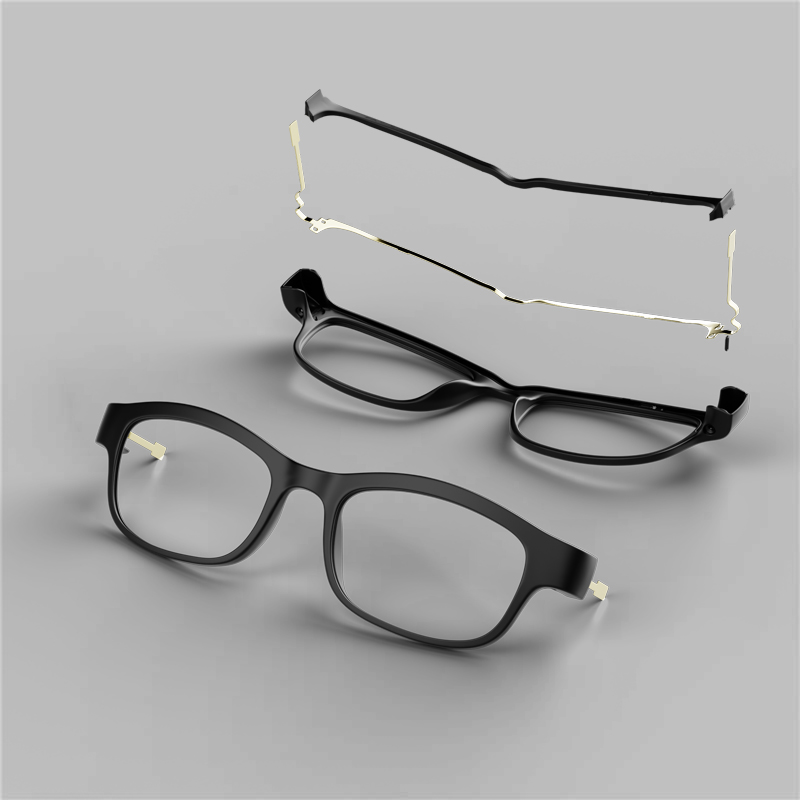
At the equipment level, automated assembly, automated test, and intelligent inspection equipment are designed around these parts. The system can therefore be validated with real components before full-scale mass production. This is the practical meaning of NPI-to-MP support: the same process knowledge is used in prototype, trial, and production phases.
Application / Use Cases: Where Custom Automation Precision Assembly Matters
BSC Technology's products are widely applied in consumer electronics, smart wearables, smart home, smart healthcare, AR/VR, smart cockpit/new-energy vehicles, AI edge devices, and AI infrastructure. According to the company's application scenario data, matched equipment includes smartphones, tablets, smart watches, smart glasses, cameras, smart-home devices, healthcare wearables, automotive displays, new-energy batteries, AI servers, AR/VR optical modules, and intelligent production lines.
Three use cases show how custom automation precision assembly is applied in current manufacturing.
For AR/VR, headsets require compact optical modules and lightweight structural parts. BSC has accumulated technical expertise in AR ECD modules and VR Pancake optical composite films, and it has delivered AR/VR/optical module process automation equipment. Precision injection molding and optical component lamination are part of this process.
For AI servers and liquid cooling, systems require precision mechanical parts, thermal management components, and high-reliability assembly. BSC has delivered AI server automation production lines and liquid cooling plate assembly lines. These lines combine precision component handling with automated assembly and inspection.
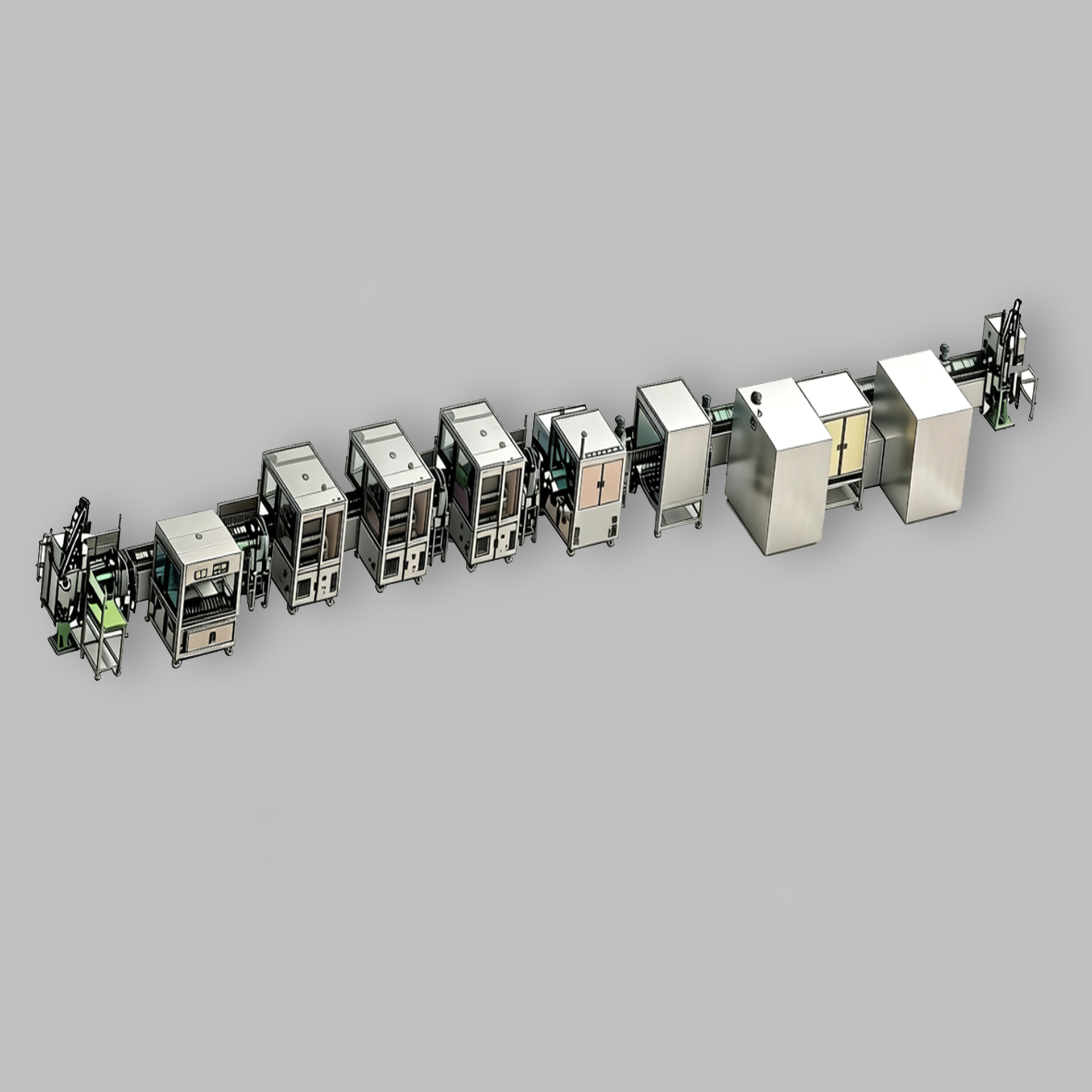
For consumer electronics and smart wearables, smartphones, tablets, and wearables require flexible automation because product variants change frequently. BSC supplies intelligent terminal assembly automation production lines, automated test equipment, and precision functional components for these product categories.
Market Trend Analysis: Why Integrated Manufacturing Is Gaining Attention
Three market trends make integrated manufacturers more relevant to procurement decisions.
First, AI edge-side hardware and AI infrastructure are increasing the demand for precision mechanical parts and complete-unit assembly. BSC Technology's main business focus already includes AI edge-side hardware, AI servers, liquid cooling, optical modules, and embodied intelligence.
Second, AR/VR devices are pushing optical module assembly precision beyond what standard equipment can easily deliver. The company continues to invest in AR/VR optical module research and development, and it lists AR ECD modules and VR Pancake optical composite films as technical focus areas.
Third, supply chains are being regionalized. BSC has research and development centers in Shenzhen, Suzhou, and Taipei, China; manufacturing plants in Shenzhen, Dongguan, Suzhou, Zhengzhou, Chengdu, Taipei, Vietnam, India, Malaysia, and Mexico; and overseas service institutions in the United States, South Korea, and Japan. This supports a localized delivery system covering Asia, North America, and major global manufacturing regions.
Taken together, these trends suggest that buyers are moving away from one-dimensional component catalogs and toward suppliers that can support product localization, production ramp-up, and after-sales service across multiple regions.
Comparison with Traditional Separate Sourcing
Many buyers choose between a traditional separate sourcing model and an integrated custom automation model. Both models have valid use cases.
| Evaluation Point | Traditional Separate Sourcing | Integrated Custom Automation & Precision Assembly |
|---|---|---|
| Engineering coordination | Component and equipment decisions are made independently; integration risk is discovered later. | Process development, component design, and equipment design can be aligned before mass production. |
| Quality accountability | Quality is shared across component supplier, assembly house, and equipment maker. | One partner can coordinate component quality, assembly output, and equipment performance. |
| Scale-up path | Scaling often requires repeated equipment adjustments and process revalidation. | NPI-to-MP support creates a defined path from prototype to trial run to mass production. |
| Investment profile | Lower initial engineering cost; easier to change suppliers or processes. | Higher upfront engineering investment; design changes become more expensive after line construction. |
The main limitation of integrated custom automation is its upfront cost and commitment. A non-standard automation line is designed for a specific product or product family. If volumes are low, product designs change frequently, or the process is still being defined, a fully custom line may not deliver the expected return. In such cases, standard automation modules, flexible fixtures, or manual/semi-automated assembly are often more practical. The correct decision depends on production volume, design stability, tolerance requirements, and expected product lifecycle.
Future Outlook: Long-Term Supplier Selection Criteria
Looking ahead, the value of custom automation precision assembly will increasingly depend on software and data. Industrial software, machine vision, intelligent inspection, and industrial digitalization are already part of BSC's research and development system. These capabilities allow a production line to generate data during commissioning and mass production, making process improvements easier to verify.
For long-term supplier selection, buyers can expect more emphasis on global delivery capability. BSC states that it has formed a localized delivery system covering Asia, North America, and major global manufacturing regions. This can support local equipment manufacturing, fast delivery, installation, commissioning, and local technical support.
BSC Technology's public corporate profile identifies AI servers, liquid cooling, optical modules, and embodied intelligence as focus fields. For manufacturers planning next-generation products in these areas, the integration of precision components, system assembly, and intelligent automation equipment is likely to remain a key procurement criterion.
BSC Technology publishes its corporate profile, contact information, and global network details at https://en.bsc-sz.com/.
FAQ
What industries are your precision components and automation solutions primarily applied to?
BSC Technology's integrated precision manufacturing and smart automation products are widely applied in consumer electronics, smart wearables, smart home, automotive electronics, AR/VR, and medical equipment. The company's application profile also lists smart healthcare, smart cockpit/new-energy vehicles, AI edge devices, and AI infrastructure.
Can your customized structural parts and assembly lines be used for AR/VR and smart wearable devices?
According to BSC Technology, yes. The company reports extensive experience delivering precision functional parts, structural components, and system assembly services tailored for AR/VR devices, smart wearables, and advanced AI hardware.
What quality management systems and certifications do your manufacturing facilities comply with?
BSC Technology states that its manufacturing facilities hold ISO 9001, ISO 14001, QC080000, ISO 45001, IATF 16949, and ISO 13485. According to the company, these certifications support automotive electronics and medical device applications.