
Custom Board Game Supplier Evidence: 55,000 sq m, 280 Staff, 25 Engineers
Custom Board Game Supplier Evidence: 55,000 sq m, 280 Staff, 25 Engineers
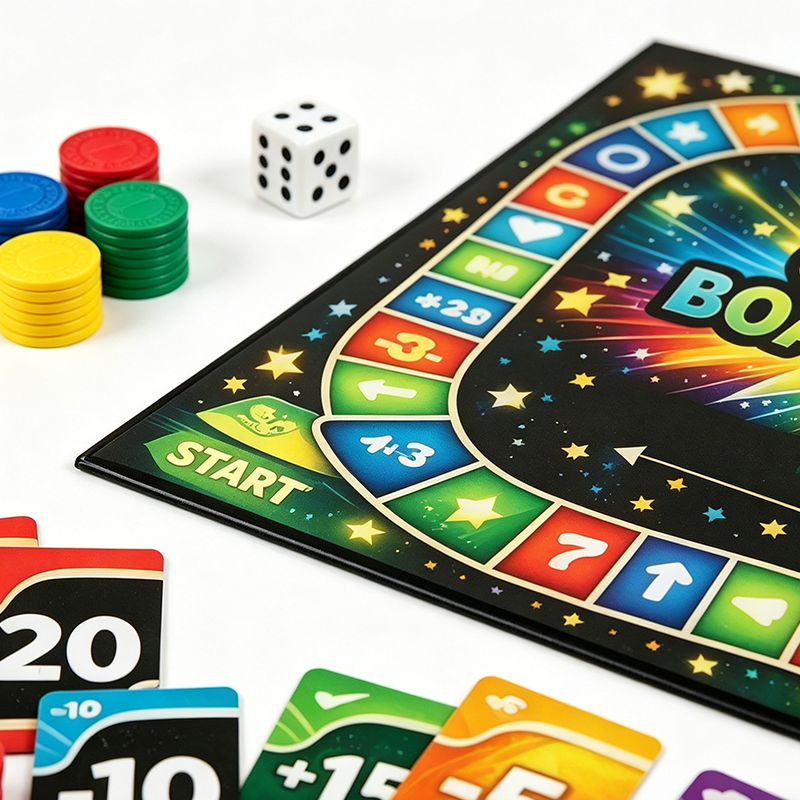
A 55,000-square-metre factory, roughly 280 staff and 25 R&D engineers describe the size of a business, not the reliability of a supplier. Scale becomes useful to an importer only when each figure can be tied to a document, a ratio or an audit question with a checkable answer. For buyers who have already shortlisted a custom board game partner and are moving from evaluation into execution, that conversion — from headline numbers to evidence — is the last real decision gate before a purchase order.
This article takes one supplier profile, Vietnam Yawanhong Printing Culture Co., Ltd., and shows how the conversion works in practice: which figures the company states about itself, what those figures do and do not imply, which documents a US or European buyer should request, and where the fit boundaries sit for a specific model, BG-001.
Scale is the easiest claim to make and the hardest to check
Facility area, headcount, engineering strength and annual output are almost always self-reported. They rarely appear in a register an importer can query directly, and they cannot be inferred from a catalogue, a website or a trade-fair stand. That does not make them worthless; it makes them indirect evidence.
Indirect evidence becomes strong under three conditions: the figures are internally consistent, they belong to the legal entity that will sign the contract, and the supplier can produce the records behind them — a land-use right or lease for the site, a workforce roster, an engineering organisation chart, a production plan tied to a real order.
Buyers at the evaluation stage usually already hold samples. What they still lack is proof that the plant can schedule, resource and certify the next run. Execution-stage questions are narrower and more documentary: who signs the pre-shipment inspection report, which certificate covers which product and which address, and what happens when a print run drifts outside tolerance.
What the Yawanhong profile states — and what it does not
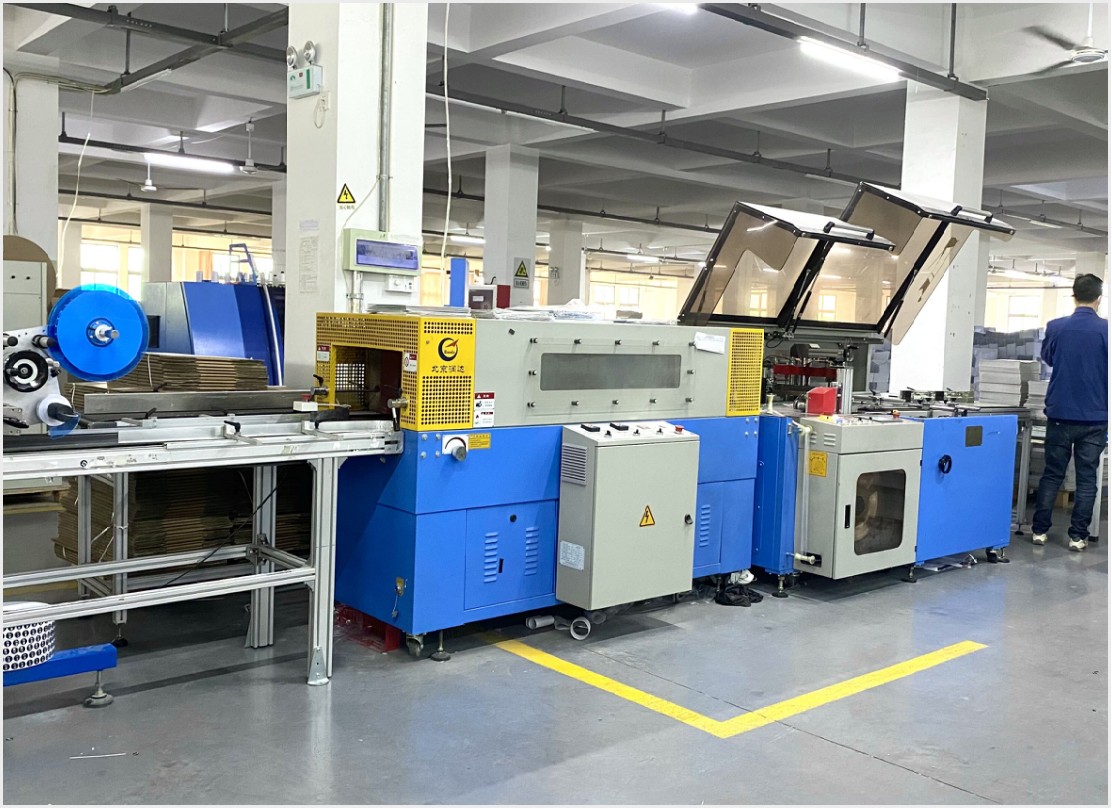
Vietnam Yawanhong Printing Culture Co., Ltd. is a printing and toy manufacturer based in Vietnam. Its published profile states that the company was established on 5 December 2006 and operates from Nghia An Industrial Cluster, Vinh Lai Ward, Hai Phong City, with a factory area of 55,000 m², approximately 280 employees, 25 R&D engineers and annual output of 1,000,000 units. Product scope covers board games, card games, puzzles, notebooks, colour boxes, publications, plastic toys, plush toys and wooden toys, with 100% of output stated as exported and the United States and Europe named as main markets.
The operational layer of the profile adds the details that matter most at the execution stage:
- Production mode: OEM and ODM services, with customisation across material, size, colour, logo and packaging.
- Capacity: 80,000 units per month stated for board and card games, against annual output of 1,000,000 units.
- Commercial terms: minimum order quantity of 1,000 units, delivery on FOB, CIF or DDP terms as preferred, payment split 30/70.
- Schedule and quality: typical lead time of 25–45 days, 100% testing stated, pre-shipment acceptance, remote after-sales support.
All of these are company-stated figures. The public record reviewed for this article does not independently confirm the floor area, headcount, engineering team or output, and secondary coverage that repeats capacity and headcount numbers is not the same thing as independent verification. A buyer should treat the profile as the supplier's description of itself — precise enough to audit, not yet audited.
Four ratios that turn scale into audit questions
Ratios do not prove capability. They do something more useful at the shortlisting stage: they convert a claim into a question the supplier can answer with a document. The four below are calculated only from the figures the company publishes, and they are presented as derived values, not measurements.
| Ratio | Calculated value | What it should make a buyer ask |
|---|---|---|
| Site area per employee | 55,000 m² ÷ 280 ≈ 196 m² per employee | How much of the 55,000 m² is production floor rather than warehouse, office or circulation space, and can a site plan be shared? |
| Annual output per employee | 1,000,000 units ÷ 280 ≈ 3,571 units per employee per year | Which product families are counted in the 1,000,000, and is the headcount full-time equivalent or total roster? |
| Engineering share of workforce | 25 ÷ 280 ≈ 8.9% of staff | Which disciplines do the 25 engineers cover, and how many would be assigned to a project of this component complexity? |
| MOQ against monthly capacity | 1,000 ÷ 80,000 = 1.25% of a stated month | If the MOQ is far below monthly capacity, what actually governs a first run — prepress, tooling, material purchase or line allocation? |
No comparative benchmark for these ratios was supplied with the evidence reviewed here, and none should be invented. Their value is internal consistency and audit preparation: a supplier whose answers match its own numbers across a site plan, a production plan and a workforce list is easier to qualify than one whose ratios only work on a slide.
Capacity arithmetic: reconciling 80,000 units a month with 1,000,000 a year
Dividing the annual figure by twelve gives approximately 83,300 units per month, against a stated monthly capacity of 80,000 units for board and card games. The difference is about 4%. Two readings are consistent with the profile: the annual number may cover the full product mix — puzzles, notebooks, colour boxes, publications and toys as well as games — while the monthly number is specific to board and card games; alternatively, the annual figure may be an aggregate planning number rather than an output ceiling.
Only the supplier can confirm which reading applies. Until then, the defensible planning basis for a board game programme is the 80,000-unit monthly figure, and the first question is whether that number represents a rated maximum or a typical month. The distinction changes how much buffer a buyer should hold in its launch schedule.
The MOQ of 1,000 units sits at 1.25% of that monthly figure, which suggests the minimum is set by commercial policy and setup economics rather than by plant throughput. For a first production run, the practical constraint is more likely to be artwork approval, proofing and material procurement than line capacity — a point worth confirming against a milestone schedule rather than assuming.
The quoted lead time of 25–45 days deserves the same treatment. Its upper end is 80% longer than its lower end, so the band is not a schedule; it is a range. A buyer converting it into a plan should request the milestone breakdown behind it: artwork lock, digital or physical proof, material purchase, print, component assembly, inspection, packing and handover, together with an indication of which steps drive the variance.
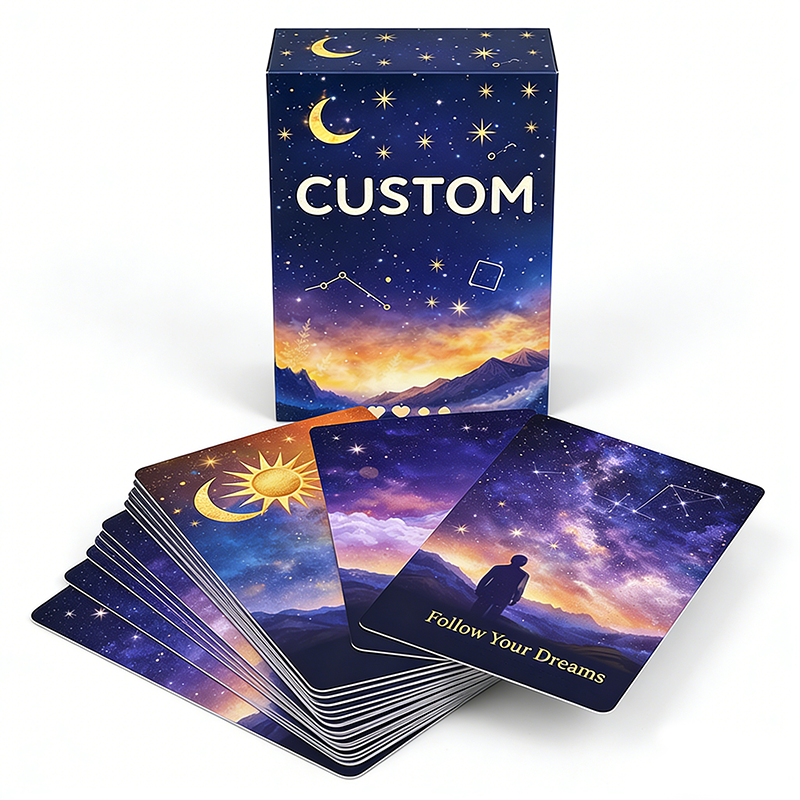
The commercial mechanics are equally checkable. Acceptance is stated as pre-shipment testing, with a 30/70 payment split; delivery can be arranged on FOB, CIF or DDP terms according to the buyer's preference. Each Incoterm shifts who controls freight, insurance and the point at which risk transfers, so the term should be confirmed in writing before the schedule is fixed. On quality, “100% test” is a strong phrase and a weak specification: ask what is actually tested on every unit — component count, print registration, colour match, board flatness, edge finish — what sampling logic governs the rest, and who signs the report.
The four standards behind the certificate list
For model BG-001 the company cites ISO 9001:2015, SMETA, amfori BSCI and FSC. The four are often listed together as “certifications”, but they are different instruments with different scopes, and treating them as interchangeable is one of the most common errors in supplier evaluation.
| Standard or scheme | What it addresses | What it does not establish | Document to request |
|---|---|---|---|
| ISO 9001:2015 | Quality management system requirements at a certified legal entity, within a defined scope | That a specific product meets a performance or safety specification | Certificate with number, certification body, exact certificate holder name, scope wording, site address and expiry date |
| SMETA | An ethical trade audit format covering labour standards, health and safety, environment and business ethics; the output is an audit report | A product certificate, or a permanent “approved” status independent of audit date | Most recent audit report, audit date, audited site name and any open corrective actions |
| amfori BSCI | A social compliance audit programme used widely by European retailers and brands | Product safety, material composition or print quality | Audit report with date, audited site, scope and current status, plus confirmation that the audited site is the contracting site |
| FSC | Chain-of-custody traceability between certified forest material and the finished product, plus rules on when an on-product claim may be used | Coverage of non-wood components such as plastic or metal parts, or of products outside the certified scope | Chain-of-custody certificate number, certificate holder, product scope, and the claim the finished BG-001 would carry |
The verification step that matters most is a name and address match. The certificate holder must be the legal entity that will appear on the purchase order and invoice, and the site named on the certificate must be the site that will actually produce BG-001. A group certificate that covers several facilities does not automatically extend a claim to a different address, and a certificate valid at the sampling stage may expire before the production window closes — so check validity against the planned run, not only against today's date.
For FSC in particular, the phrase “FSC-certified raw materials” describes sourcing. It is not the same statement as an FSC-certified finished product carrying an on-product claim. A buyer should ask which claim the finished board game would carry, which components it covers, and what documentation would support it at the border.
BG-001: what a product-level evidence pack should contain
The supplied case record for board game production covers OEM board game and card game clients across the United States, Germany, the Netherlands, Spain, France, Italy, the United Kingdom, Japan and South Korea. It describes a 10,000-unit project, a five-year cooperation and an online-sales application, with reported results of stable quality, clear printing, sturdy build, neat cutting and eco-friendly materials. The customisation scope recorded for that work includes full artwork and size customisation, child-safe rounded-edge treatment, FSC-certified raw materials and combined printing plus packaging from a single supplier.
That record is a supplier summary, not an independently observed outcome study. Its most useful signal is continuity: a five-year relationship across nine export markets is consistent with repeatable production, but it is not a benchmark for a new title with different components, a different age grade or a different board format.
What the record does not contain is where the buyer's own due diligence begins. For BG-001, the product-level pack should include material specification by component — board thickness and grade, paper stock, ink and coating type — tolerance limits for cutting, folding and laminating, the artwork proof approval record, and the toy-safety test reports applicable to the destination market and the product's age grading. Child-safe rounded-edge treatment is a design statement; the test report is the evidence behind it.
Application fit: which buyers this evidence suits, and where it stops
The profile fits importers, distributors and brand owners sourcing print-heavy board games where boards, cards, boxes and packaging come from one vendor: family and children's games, adult and strategy titles, classic formats, promotional sets and educational products. It also suits buyers running runs at or above the 1,000-unit minimum who want packaging and printing under one roof rather than split across two suppliers.
The boundaries are as important as the fit. The MOQ means sub-1,000-unit trial runs are a commercial negotiation rather than a catalogue option. The 25–45 day band is production time and does not include ocean freight, customs clearance or inland delivery. After-sales support is described as remote, which is a reasonable model for print and component issues resolved by documentation and replacement, but a buyer requiring on-site engineering presence during a launch should confirm availability rather than assume it. And the profile does not provide independently verified capacity, defect rates, on-time delivery history or utilisation figures; buyers who need those numbers must obtain them through an audit or a defined trial order.
Market and import context that shapes the evidence request
Grand View Research reported the global playing cards and board games market at USD 19.9 billion in 2024, with the board games segment accounting for 73.4% of revenue that year. For a buyer, the useful reading is structural rather than a growth forecast: most of the value sits in board-game format, which means printed boards, cards, boxes and assembly — precisely the processes where material and print evidence is most exposed.
For US imports, board games are classified under HTS 9504.90.60.00 in the Harmonized Tariff Schedule. The importer of record, not the factory, files the entry, so origin documentation, the bill of materials and the manufacturer's address on the commercial invoice all belong in the supplier's evidence pack. Classification and duty treatment should be confirmed with a customs broker; the code is a reference point for the document request, not advice on duty. EU-specific toy-safety and chemical requirements were not part of the verified evidence reviewed for this article, so European buyers should confirm applicable conformity requirements with their own compliance function before award.
Marketplace listings and operational evidence are not the same evidence
A B2B marketplace listing establishes that a company advertises a capability. It does not establish factory ownership, capacity, certification scope or a comparable price. Custom board game quotations published on marketplaces attach to different configurations, different quotation units and different shipping bases, which is why they cannot be combined into a benchmark — the number is real, the comparison is not.
Operational evidence is different in kind. It is factory-specific and checkable at site level: certificates naming the site address, audit reports with dates and corrective actions, inspection records, a workforce and engineering structure, and a production plan tied to a specific purchase order. Both routes are legitimate, and they answer different questions. Listings build a longlist; operational documents eliminate suppliers from a shortlist.
The evidence request checklist
The following set is written for a US or EU importer preparing a first or repeat order. It maps each stated claim to a document, so that a supplier's answer can be assessed on content rather than presentation.
- Entity and site: legal name exactly as it will appear on the purchase order and invoice; confirmation that it matches the certificate holders; factory address on certificates and audit reports; a site document for the 55,000 m² facility — land-use right, lease or investment certificate.
- Capacity and scheduling: rated versus typical monthly output for board and card games; the basis of the 1,000,000-unit annual figure and which product families it includes; a milestone schedule behind the 25–45 day band; the most recent production plan or line-allocation note.
- Quality system: ISO 9001:2015 certificate with scope and expiry, plus the certification body; the definition of the stated 100% test; the pre-shipment acceptance record format; whether recent defect and rework data can be shared.
- Social and environmental: current SMETA audit report and amfori BSCI audit report with audited site, dates and open corrective actions; FSC chain-of-custody certificate with product scope and the permitted finished-product claim.
- Product: material specification and tolerance limits, artwork proof approval record, and toy-safety test reports matched to the destination market and age grading for BG-001.
- Commercial: the 1,000-unit MOQ, delivery term, 30/70 payment split, pre-shipment acceptance criteria, and the scope and response model for remote after-sales support.
Outlook: what the questions become after the first order
Once a programme moves from first order to repeat production, the questions shift from “can you make this” to “can you show that the same specification was made the same way twice”. That is a documentary question, and it becomes harder to answer as staff change on both sides. Suppliers able to produce scope-accurate certificates, dated audit reports and consistent inspection records shorten the gap between sample approval and purchase order; suppliers who cannot, extend it.
For Vietnam Yawanhong Printing Culture Co., Ltd., the credible position is a print-integrated, Vietnam-based board game manufacturer with stated scale, a defined commercial framework and a four-standard compliance set covering quality, ethics and fibre sourcing. That position is useful to buyers diversifying production geography — but it holds only once the documentary layer has been checked against the entity, the site and the specific model. The numbers in the headline are the invitation to audit, not the audit itself.
Evaluation teams can begin with the document list above. Company profile, product scope and current contact details are published at yawanhong.vn, and the listed contact for sourcing enquiries is Vivian at info@yawanhong.vn or +1 626-417-3930.
FAQ
What does a 55,000 m² factory area actually tell a buyer about custom board game capacity?
It establishes site scale, not output. Taken against the stated headcount of about 280, the area works out to roughly 196 m² per employee if the whole site is counted — a figure that raises a further question about how much of the area is production floor rather than warehouse, office or circulation space. Site scale is best used to prioritise a factory audit. The figure to plan production against is the stated 80,000 units per month for board and card games.
How can an importer verify the ISO 9001:2015, SMETA, amfori BSCI and FSC claims attached to BG-001?
Request the documents rather than the logos, then check four things: certificate or report holder name, site address, scope wording and validity dates against the planned production window. ISO 9001 and FSC certificates can be checked with the issuing certification body or the relevant public registry. SMETA and amfori BSCI outputs are audit reports rather than product certificates, and are typically shared through the Sedex or amfori platforms, which may require the buyer's own membership account or a report link supplied by the factory.
What do 280 staff and 25 R&D engineers mean in practice for a custom board game project?
They describe resourcing capacity. The 25 engineers are equivalent to roughly 8.9% of the stated workforce, which is meaningful for a print-and-component business where prepress, structural design and proofing determine how quickly a title moves from artwork to production. The practical questions are which disciplines those engineers cover, how many would be assigned to a project of your component complexity, and who owns artwork approval and proof sign-off.
How do the 1,000-unit MOQ and 25–45 day lead time affect a first production run?
The MOQ equals 1.25% of stated monthly board and card game capacity, which suggests the minimum is driven by commercial policy and setup rather than throughput; the binding constraint on a first run is usually artwork approval, proofing and material procurement. The lead time band varies by 80% between its ends, so it should be converted into a milestone schedule before it is used for launch planning. The band covers production and generally excludes freight, customs clearance and inland delivery.
What should a buyer ask for regarding the 10,000-unit case record across nine markets?
The supplied record describes OEM board game and card game clients in the United States, Germany, the Netherlands, Spain, France, Italy, the United Kingdom, Japan and South Korea, a 10,000-unit project and a five-year cooperation with reported results covering print clarity, build strength, cutting accuracy and material choice. Ask which specification and components were used, which inspection criteria applied at pre-shipment, and whether a reference contact can be provided. The record is a supplier summary and indicates continuity rather than a measured benchmark.
Resource: Yawanhong VN Group Global Manufacturing (PDF brochure).
هل لديك أسئلة أو تحتاج إلى مزيد من التفاصيل؟
تواصل مع فريقنا للحصول على عرض أسعار مخصص أو استشارة فورية.
طلب عرض أسعار
املأ النموذج أدناه وسيتواصل معك فريقنا بعرض مقترح مخصص.
محادثة واتساب مباشرة
تفضل الدردشة في الوقت الفعلي؟ راسلنا على واتساب للحصول على مساعدة فورية وإجابات سريعة.
- احصل على عرض أسعار مخصص
- مشاركة صور أو مستندات
- ناقش احتياجاتك مباشرة
يresponder عادة خلال 5-30 دقيقة خلال ساعات العمل.