
Custom Board Games for Promotions and Education: Real-World Applications and Fit
A custom board game is a tabletop product manufactured to a buyer's own specification — board, cards, tokens, dice, rules and packaging — instead of being picked from a generic retail line. The buyers commissioning them today are no longer only game publishers. Marketing teams, schools, and consumer brands are producing their own titles because a game behaves differently from other printed merchandise: it holds a table for twenty to forty minutes at a time, and it is usually kept rather than discarded. The global board games market was valued at approximately USD 15.71 billion in 2024 (Grand View Research), and a meaningful share of new demand is now coming from outside the traditional hobby channel.
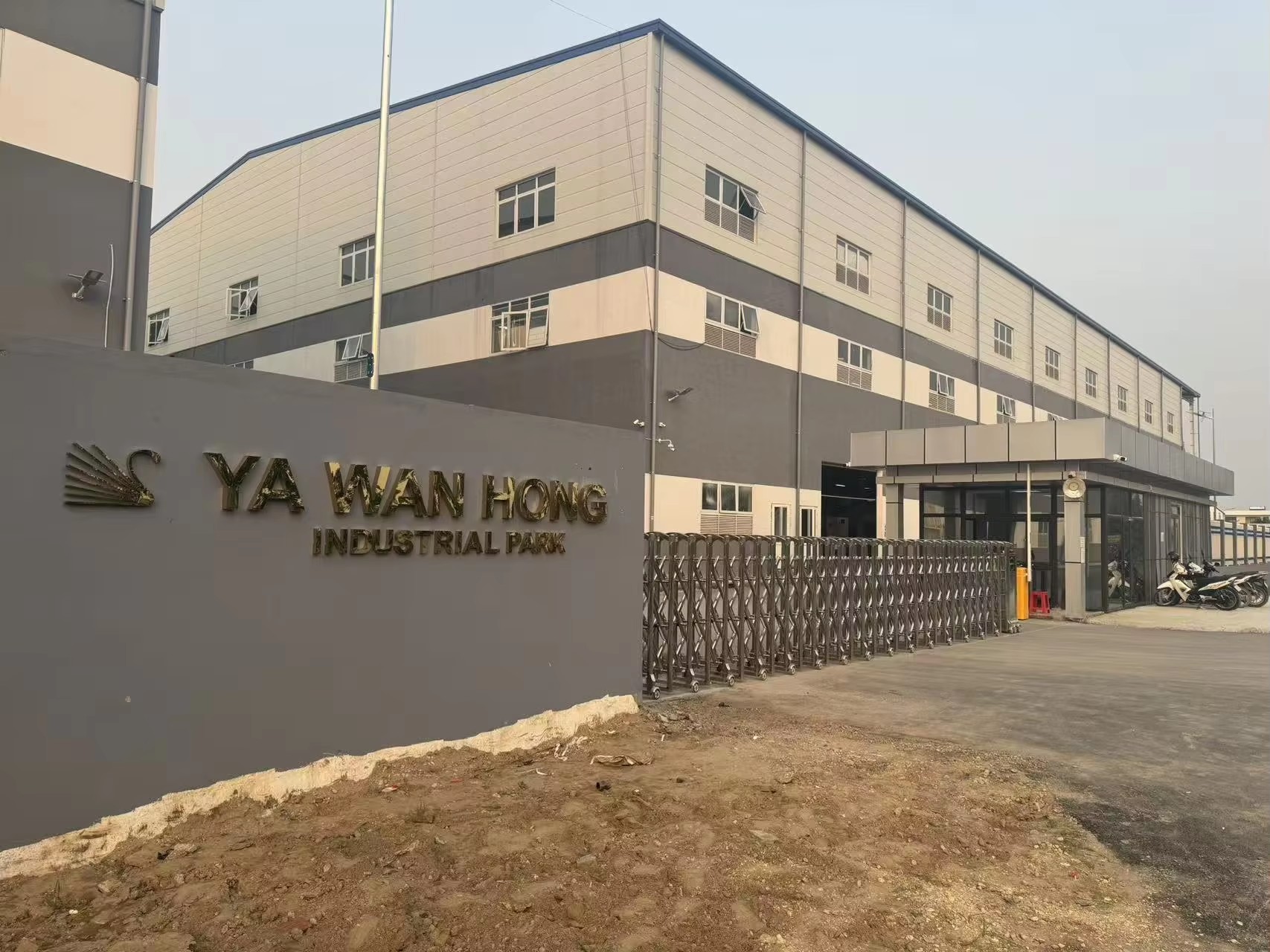
Yawanhong — formally Vietnam Yawanhong Printing Culture Co., Ltd. — is a printing and toy manufacturer established in 2006 and based in Hai Phong City, Vietnam. The company operates a 55,000 m² facility with 280 employees and a 25-engineer R&D team, producing board games, card games, puzzles, notebooks, colour boxes, publications, and plastic, plush and wooden toys, with products exported to markets in the USA and Europe.
Why Promotional and Educational Buyers Are Commissioning Their Own Games
Most promotional and educational budgets are still spent on items with a very short working life: a printed leaflet, a branded pen, a tote bag. These items deliver one impression and then either disappear into a drawer or into waste. A produced-to-spec game works on a different mechanism. It creates repeat contact because the player has to open it, set it up, and read the rules to use it, and because it is normally kept for family game night, a classroom shelf, or an office break room.
The commercial context supports that shift. The board games category reached roughly USD 15.71 billion in 2024, and North America alone accounted for approximately 42.06% of global demand, valued at about USD 6.66 billion (Fortune Business Insights). The market is projected to grow at a compound annual growth rate of 10.38% between 2025 and 2032, reaching an estimated USD 31.58 billion (Credence Research). Growth of that scale is not driven purely by hobby publishers; it reflects broader consumption of tabletop formats across retail, education, and brand marketing.
For decision-stage buyers, the practical question is not whether the category is growing. It is which scenario the game has to serve, because the scenario determines the specification, the compliance path, and the production plan.
Four Scenarios Where Custom Board Games Fit
1. Enterprise Promotion and Channel Loyalty
In promotional use, the game itself becomes the message. A distributor loyalty program, an annual sales conference, or a dealer incentive scheme can be built around a title that uses the company's own categories, regions, or product families as game content. The production implications are moderate: a compact board, a card deck, a rule sheet, and a lid-and-base or rigid colour box. The value implication is different from a giveaway — a game can be re-run seasonally with updated artwork, which turns a one-off promotional spend into a repeatable program asset.
2. Family Play, Retail Bundles, and Family Game Night
Family-facing titles sit at the centre of the category. Buyers in this scenario are usually assembling a bundle — a family game offered alongside a subscription box, a retail promotion, or a holiday set. Familiar mechanics such as sequence-style card sequencing, word-building games in the tradition of Scrabble-type formats, and classic ludo-format race games are common starting points because players already understand them. The customisation then sits in the artwork, the theme, the language, and the box, not in teaching a new rule set to a first-time player.
3. Kids Education and Classroom Kits
Educational use is the scenario with the strictest specification. A game destined for children has to survive repeated handling, and it has to be safe for the age group it targets. Practical requirements that recur across school and early-learning programs include eco-friendly material, non-toxic ink, and child-safe edges on boards, tokens, and card stock. Educational buyers also tend to order in class-set or school-set quantities, which makes repeat production runs across academic years a normal expectation rather than an exception.
4. Product Packaging and Gift-with-Purchase
A board game can also function as packaging-adjacent merchandise: an on-pack premium, an in-box gift with purchase, or a promotional insert that turns an ordinary product carton into something worth opening. This scenario leans heavily on print and box-making capability, because the game has to match the parent brand's shelf presence while still being playable on its own. It is the scenario where the game and the packaging are produced together, and where colour consistency between the box, the board, and the printed components matters most.
| Scenario | What the buyer needs | Production implication |
|---|---|---|
| Enterprise promotion & channel loyalty | Repeatable, brand-owned item for dealer or employee programs | Compact board game with branded content; re-runnable artwork across seasons |
| Family play & retail bundles | Recognisable mechanics, strong shelf or bundle presentation | Sequence, word-building and ludo-format titles with custom themes and boxes |
| Kids education | Safe, durable components for repeated classroom handling | Eco-friendly material, non-toxic ink, child-safe edges |
| Product packaging & gift-with-purchase | Game that matches an existing brand carton | Combined printing of board, cards and rigid colour or lid-and-base box |
Production Fit: Workshop Conditions, Materials, and Child Safety
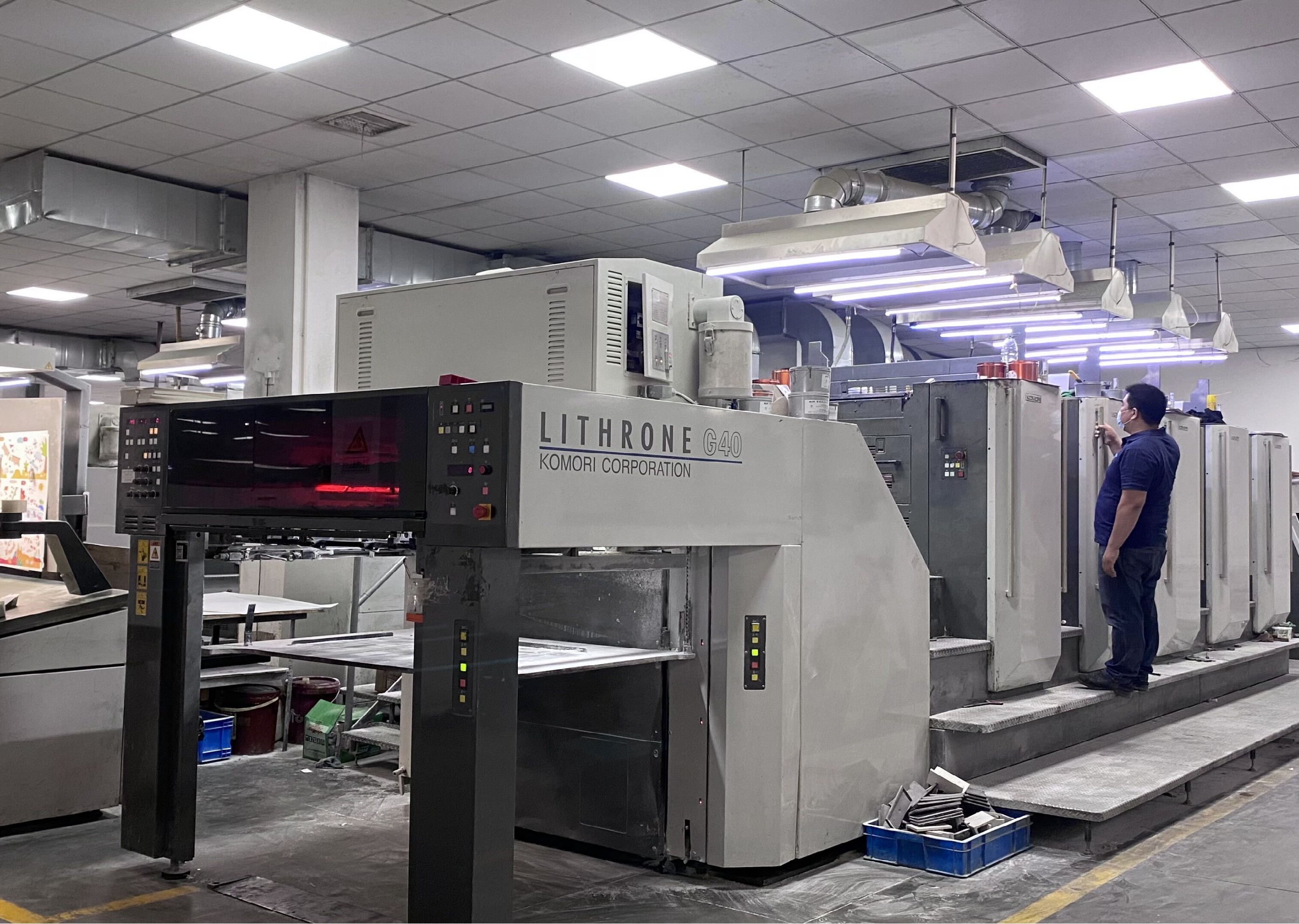
Print quality is the first thing a buyer notices when samples arrive, and it is also the first thing that goes wrong in a poorly planned run. The recurring defect in game printing is inaccurate printing colour — a board that does not match the packaging, or a second production run that does not match the first. The control method used to manage this is ink ratio adjustment, supported by two operational measures: colour sampling inspection and printing machine calibration.
Component printing and assembly are typically carried out in controlled workshop environments — normal ambient temperature with dust control — because airborne dust and temperature swings affect ink laydown and colour consistency on coated board and card stock. This matters more for games than for general commercial print, since a single box contains several substrates at once: laminated board, playing-card stock, printed rule sheets, and moulded or wooden tokens, all of which have to read as one product.
Material selection follows the end user. For child-facing games, the requirements commonly specified by buyers are eco-friendly material, non-toxic ink, and child-safe edges. Those choices are not only a marketing preference; they determine which compliance route the product can take. Board games sold in the EU must comply with the Toy Safety Directive 2009/48/EC and the harmonised EN 71 standards, including EN 71-1 for mechanical properties and EN 71-13 for olfactory board games. In the United States, board games intended for children under 14 must meet ASTM F963-23 safety requirements, which are mandatory under 16 CFR part 1250.
Production for promotional and educational programs is concentrated in a limited number of manufacturing bases, most notably Vietnam and China, where board printing, card production, die-cutting, and final assembly can be coordinated inside one facility rather than across several suppliers. Vietnam Yawanhong Printing Culture Co., Ltd. manufactures from its plant in Hai Phong City, Vietnam, covering board games, card games, puzzles, colour boxes, and publications alongside plastic, plush, and wooden toy lines, with 100% of output exported and the USA and Europe as its main markets.
Capacity, Lead Time, and Repeat-Run Discipline
Once a buyer has moved from evaluation into execution, the numbers that matter are commitment size, throughput, and timing. Custom board game production is generally organised around an OEM and ODM model with a minimum order quantity of 1,000 units. Typical production lead time runs from 25 to 45 days, supported by a monthly production capacity of 80,000 units, and remote technical support is available to assist clients through specification and production questions.
| Execution parameter | Stated value |
|---|---|
| Production model | OEM and ODM |
| Minimum order quantity | 1,000 units |
| Typical production lead time | 25–45 days |
| Monthly production capacity | 80,000 units |
| Delivery terms | FOB / CIF / DDP / other customer preference |
| Acceptance criteria | Pre-shipment test |
| Payment terms | 30 / 70 |
These figures shape how a program is planned. A buyer running a quarterly promotional cycle cannot treat production as a last-minute purchase order, because 25 to 45 days of production time sits in front of freight, customs, and in-market distribution. Programs that work well tend to be planned one cycle ahead, with the artwork and component list frozen before the run opens. Monthly capacity of 80,000 units also means a single facility can absorb both a launch quantity and a top-up reorder without the buyer having to qualify a second supplier mid-program — an important point for anyone building a multi-season or multi-market rollout.
Market Trend Analysis: Longer Program Cycles and Online Discovery
Two trends in the verified category data are directly relevant to buyers planning custom games rather than buying existing titles.
The first is the shift of discovery and purchase toward online channels. Online and e-commerce sales of board games are projected to grow at a compound annual growth rate of 11.53%, and in some regions 65% of global sales already occur through online platforms. For promotional and educational buyers, this changes the role of the physical product: a game is often seen first as a product image, a box shot, or a short clip before it is ever held. That raises the importance of packaging artwork and box quality, since the box is doing the selling before the game is opened.
The second trend is longer program cycles. Promotional and educational budgets are increasingly structured as recurring annual or seasonal commitments rather than one-off purchases, which means the same product may be reproduced several times with only minor changes. This favours buyers who lock in a production partner early and treat the game as an ongoing program asset rather than a single campaign. It also explains why specification stability — the same board thickness, the same ink reference, the same box construction — has become a more common requirement than the lowest possible first-order price.
Comparison with Traditional Solutions — and the Limits of Custom Board Games
Custom board games are frequently evaluated against two alternatives: ordinary promotional merchandise, and low-cost board game supply.
Against ordinary promotional merchandise, the comparison is not primarily a cost-per-unit comparison. A printed game carries a higher unit cost than a pen or a tote bag, and that is a real constraint for high-volume, low-value giveaways. The justification for the higher unit cost is retention and repeat use: the item stays in a household or classroom and is handled multiple times, rather than being distributed once.
Against low-quality board game supply, the comparison is more concrete. Documented comparison data positions premium custom production against low-quality board game supply on materials and craftsmanship, with premium materials and superior craftsmanship as the stated difference. The recorded performance gap is greater durability and longevity, with easier setup and smoother gameplay producing fewer issues during play, and higher player satisfaction as the efficiency outcome. The recorded cost difference between the two supply types is 10% to 30%. Games produced to this standard are positioned for family game night, parties, gatherings with friends, educational use, and travel.
| Comparison dimension | Premium custom board game production | Low-quality board game supply |
|---|---|---|
| Materials & craftsmanship | Premium materials, superior craftsmanship | Baseline materials and finishing |
| Durability | More durable and long-lasting | Shorter usable life |
| Play experience | Easy setup and smooth gameplay with fewer issues | More frequent handling problems |
| Player outcome | Better quality with higher player satisfaction | Lower perceived quality |
| Recorded cost difference | 10%–30% difference versus low-quality supply | Reference baseline |
| Stated best-fit scenarios | Family game night, party, friends, gatherings, educational use, travel | Not specified in the comparison set |
Custom board games also have boundaries that buyers should weigh honestly before committing budget.
- Order size. The standard minimum order quantity is 1,000 units. Buyers who need a small pilot, a single classroom set, or a limited internal giveaway may find custom production less economical than a licensed off-the-shelf title.
- Timing. A typical production lead time of 25 to 45 days is not compatible with a campaign that is already approved and scheduled within weeks. Custom games need to be planned ahead of the promotional calendar, not alongside it.
- Compliance overhead. Games for children under 14 in the United States fall under ASTM F963-23 and 16 CFR part 1250, and games sold in the EU must meet Toy Safety Directive 2009/48/EC and the harmonised EN 71 standards. This adds a testing and documentation step that a simple printed giveaway does not carry.
- Specification discipline. Because colour consistency depends on ink ratio adjustment, colour sampling inspection, and printing machine calibration, changing material or artwork between runs increases the risk of visible differences between the first order and the reorder.
Selecting a Production Partner for Multi-Season Programs
When a custom board game becomes part of a recurring promotional or educational program, supplier selection shifts from price comparison to continuity assessment. The criteria that matter most in that phase are usually the following.
- Repeat-run capability. Can the same facility reproduce the same board, card stock, and box specification on the next order, at the stated monthly capacity of 80,000 units?
- Colour discipline. Are ink ratio adjustment, colour sampling inspection, and printing machine calibration standard practice, or handled case by case?
- Material and compliance alignment. Can eco-friendly material, non-toxic ink, and child-safe edges be specified consistently, with documentation that supports the target market's regulatory route?
- Commercial clarity. Are MOQ, delivery terms, acceptance criteria, and payment terms defined in writing before sampling begins?
- Technical access. Is remote technical support available during specification, so that material and artwork decisions can be tested before tooling and printing time is committed?
- Breadth of production. Does the manufacturer produce the game components and the packaging in the same operation, so the box, board, and printed pieces are colour-matched rather than assembled from separate suppliers?
Yawanhong's operational profile fits that continuity model: a 55,000 m² facility in Hai Phong City, Vietnam, established in 2006, with 280 employees, a 25-engineer R&D team, an annual output of 1,000,000 units, and a product range covering board games, card games, puzzles, notebooks, colour boxes, and publications alongside plastic, plush, and wooden toys — exported entirely to markets including the USA and Europe.
Future Outlook
The most likely direction of travel for promotional and educational board games is toward program products rather than campaign products. As online discovery continues to expand — e-commerce board game sales are projected to grow at 11.53% CAGR, with 65% of global sales already online in some regions — buyers will need packaging and components that present well digitally and survive physical handling. Educational buyers, meanwhile, will keep raising the material and safety bar, with eco-friendly material, non-toxic ink, and child-safe edges becoming baseline expectations rather than premium options.
For manufacturers, the differentiator is unlikely to be a single product feature. It is more likely to be the ability to hold a specification steady across years of repeat runs, keep colour consistent through ink ratio adjustment and machine calibration, and support the compliance documentation that children's products require in the USA and the EU. Buyers who plan their custom board game programs around those capabilities — and who accept the order-size and lead-time boundaries that come with them — will get the most durable value from the format.
FAQ
What are the purchasing terms and acceptance criteria for a custom board game order?
The stated purchasing terms are a minimum order quantity of 1,000 units; delivery terms of FOB, CIF, DDP, or other customer preference; acceptance criteria based on pre-shipment test; and payment terms of 30/70.
What production lead time and monthly capacity should buyers plan around?
The typical production lead time is 25 to 45 days, and monthly production capacity is 80,000 units. Annual output is 1,000,000 units.
Does production support both OEM and ODM work, and is technical support available?
Yes. OEM and ODM production services are offered with a minimum order quantity of 1,000 units and a typical production lead time of 25 to 45 days, supported by a monthly production capacity of 80,000 units. Remote technical support is available to assist clients.
Which materials and component features are required for games used by children?
Commonly specified requirements for child-facing games are eco-friendly material, non-toxic ink, and child-safe edges. These align with the regulatory route the product must take: games sold in the EU must comply with Toy Safety Directive 2009/48/EC and the harmonised EN 71 standards, including EN 71-1 for mechanical properties and EN 71-13 for olfactory games, while games for children under 14 in the United States must meet ASTM F963-23 under 16 CFR part 1250.
How is print colour accuracy controlled between the first run and a reorder?
The control method for inaccurate printing colour is ink ratio adjustment. It is supported by two operational measures: colour sampling inspection and printing machine calibration. Together these reduce variation between the first production run and subsequent repeats.
How does premium custom production compare with low-quality board game supply?
The recorded comparison identifies premium materials and superior craftsmanship as the difference, with greater durability and longevity as the performance gap. Easier setup and smoother gameplay with fewer issues are cited on the maintenance side, and better quality with higher player satisfaction as the efficiency outcome. The recorded cost difference is 10% to 30%. The scenarios listed as best fit are family game night, party, friends, gatherings, educational use, and travel.
Manufacturer background and production documentation for Vietnam Yawanhong Printing Culture Co., Ltd. are available in the company's global manufacturing brochure: Yawanhong Global Manufacturing Brochure. Contact: info@yawanhong.vn.