
Custom Craft Gifts Shortlist: Kids, Stationery, Promotions
Custom Craft Gifts Shortlist: Kids, Stationery, Promotions
“Craft gifts” describes a portfolio, not a product. A corporate gifting programme, a retail seasonal range, a classroom reward scheme and an event giveaway may all be briefed with the same phrase, yet each requires a different material mix, a different assembly depth and a different document set. For buyers at the evaluation stage, the defensible first move is a category shortlist — deciding which product families can actually carry the programme — before supplier shortlists, price comparisons and sample requests begin.
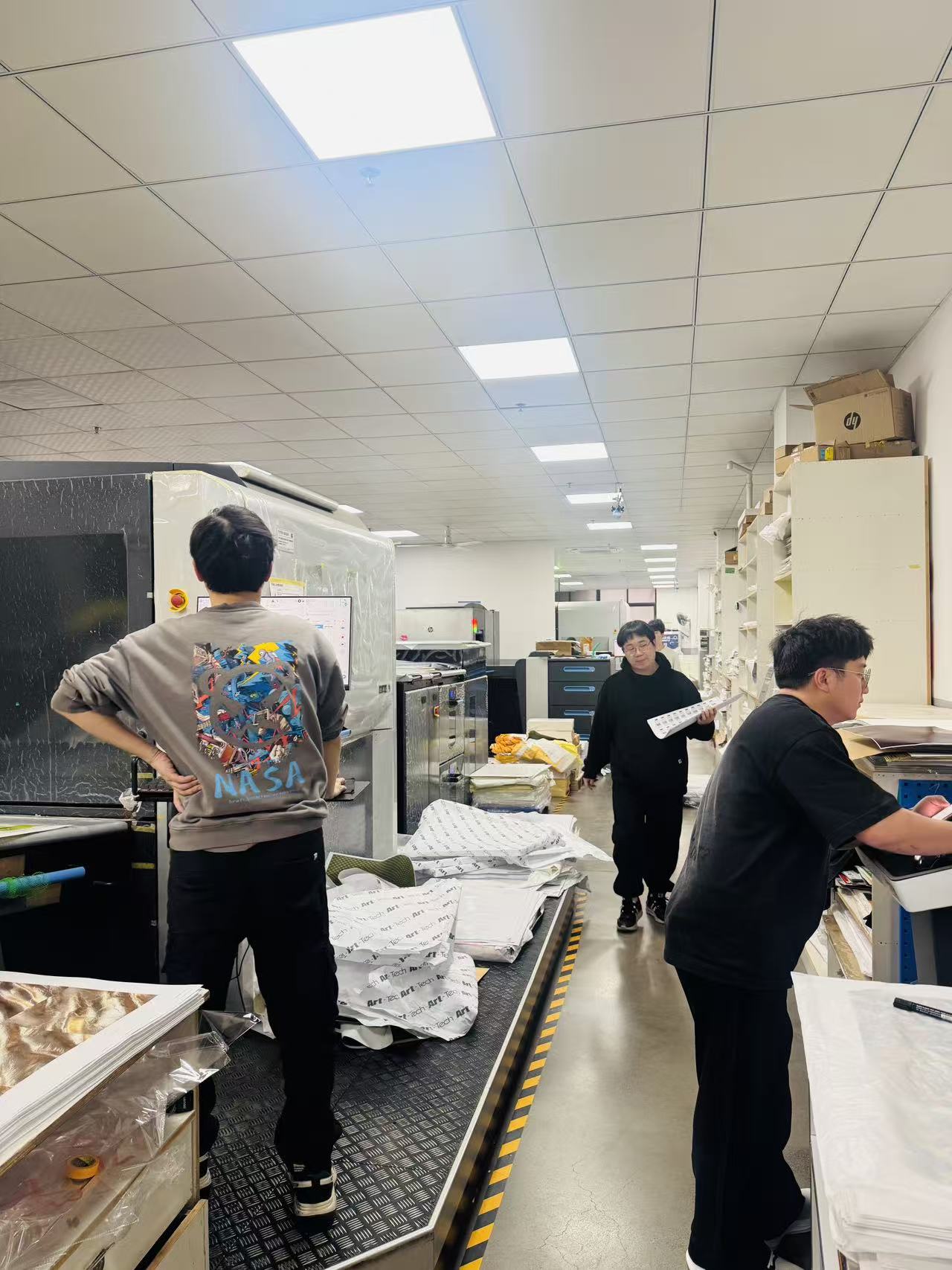
Wenzhou Aha Craft Gifts Co., Ltd. (AHA) is a China-based manufacturer and supplier of custom promotional gifts, creative household products, stationery, toys and packaging supplies. Founded in 2017, the company reports a 2,000 m² plant, 100 employees and a declared annual output of 5,000,000 units, with 100% of production exported to the EU, USA, South America, the Middle East and Southeast Asia.
Its declared range covers the four families this shortlist examines — children’s toys and crafts, stationery and office supplies, paper products and packaging, and promotional gifts — alongside textiles, leather goods, glass, metal items and outdoor travel products. That breadth is what allows the shortlist below to be organised by buyer scenario rather than by material.
One boundary applies throughout. The order reflects documented scenario fit and declared manufacturing capability; it is not a market ranking. Product-level demand data for craft gifts is not publicly available at SKU level, so no category-wide growth or share figures are used here.
One Term, Four Production Logics
Paper products move through printing, cutting and hand assembly. Plastic items need tooling and moulding before a single unit exists. Stationery combines printing with binding and finishing. Children’s kits add part-count control and, in many markets, a classification decision that determines which documents a buyer must hold. When one purchase order spans these families, tooling, minimum quantities, inspection criteria and lead times interact rather than simply add up.
The classification point deserves attention early because it changes the paperwork, not just the product. European Commission Guidance Document No. 13 notes that whether an arts-and-crafts kit is a toy depends in part on its play value and is assessed case by case; a kit with play value falls within toy-safety requirements. The same guidance does not treat adult decorative or office products as toys. Buyers sourcing children’s craft gifts therefore need an intended-use position for each SKU, not a single statement covering an entire catalogue.
For the EU market specifically, the framework summarised by EUR-Lex requires manufacturers to carry out a safety assessment, prepare technical documentation and ensure toys placed on the market bear CE marking. That summary also reflects an ongoing regulatory transition, so current applicability and effective dates should be confirmed against the consolidated legal text before a compliance decision is made.
How This Shortlist Was Ordered
The four categories were assessed on five criteria that recur in evaluation-stage sourcing within this category:
- Scenario fit — whether the category’s typical use matches the programme, the recipient and the distribution channel.
- Customisation depth — AHA declares customization of logo, design, size, color and packaging, so the operative question is which of those levers a programme actually needs.
- Documentation burden — whether the SKU raises a toy-classification question and what evidence must travel with the shipment.
- Capacity and scheduling — a declared monthly capacity of 500,000 units, a lead time of 15–30 days and an MOQ of 2,000 units set the planning envelope.
- Packing format — assembled, flat-packed or gift-boxed changes volumetric weight, labour content and inspection scope.
Positioning reflects fit for the buyer scenarios set out later in this article. A category placed lower is not a weaker product family; it is a narrower fit for the programmes described here.
The Shortlist
1. Assembled Kids Craft Gifts and DIY Toys (AHA-CT Series)
Children’s toys and gifts are among AHA’s main product lines, covering DIY toys, lanterns, night lights, educational puzzles and festival-themed toys. The custom children’s toys and crafts line is designated AHA-CT Series and is described as fully customizable. In programme terms, this is the family that fits retail seasonal ranges, education reward schemes and family-oriented event giveaways, where the activity matters as much as the finished object.
Customisation usually concentrates on artwork, part count, packaging and insert language. Because the SKU may fall inside toy scope, the evaluation question is not only whether it can be made but what evidence accompanies it: an intended-use statement, the applicable safety assessment and technical documentation, and conformity marking where required. Ask for these per SKU, and confirm the current EU position rather than relying on a generic compliance sentence in a catalogue.
2. Stationery and Desk Craft Gifts (AHA-CG Series)
Stationery and office supplies are a declared AHA line — notebooks, stickers, puzzles, bookmarks and custom desk accessories — grouped in the custom craft gifts and stationery AHA-CG Series, also described as fully customizable. This family carries corporate onboarding kits, conference materials, back-to-school retail ranges and classroom programmes.
Two characteristics make stationery efficient for evaluation-stage buyers. First, the classification question that governs children’s kits does not normally arise in the same form for adult-oriented desk items, although destination-market requirements should still be confirmed for the specific product and market. Second, stationery typically carries less assembly content than a boxed kit, which simplifies packing lists and inspection scope. Within AHA’s model, logo, size, colour and packaging remain customizable, so a programme can standardise on one format and vary the print.
3. Paper Products and Gift-Box Packed Sets
Paper products and packaging are declared AHA lines, and the company describes integrating printing and packaging into its own production rather than purchasing them separately. That matters for gift-box packed craft gifts, printable craft gifts and paper-based sets, where the box is part of the gift and the print quality is part of the brand impression.
For buyers, the practical rule is to freeze the packaging specification before sampling. Box style, insert, print method and packing quantity determine tooling, inspection criteria and volumetric weight, and changing them after approval restarts those steps. A gift-boxed set is also a different logistics object from the same product flat-packed: it consumes more carton space and more labour per unit, which is a capacity-planning question as much as a cost question.
4. Promotional and Corporate Gift Programs
Promotional and corporate gifts form the fourth family: custom logo gifts, holiday gifts, advertising giveaways and premium packaging products. AHA’s creative home and daily-use lines sit naturally here — fridge magnets (AHA-FM Series), kitchen gadgets, cleaning sponges and scrubbers (AHA-CS Series), sealing clips and decorative household items — because they are low-unit-cost, high-visibility items suited to giveaways and retail impulse lines.
This is also the family with the clearest record of repeat business in AHA’s material: a US-based programme combined promotional gifts, corporate souvenirs and retail merchandise inside a single custom solution. For distributors and promotional agencies, the evaluation question is usually breadth and repeatability rather than novelty — whether the same supplier can restock a programme across seasons without re-tooling every element.
Matching Categories to Buyer Scenarios
The shortlist becomes useful only when it is mapped to the programme that will receive it. The table below connects each scenario to the category that leads it, the customisation levers to settle first, and the evidence worth requesting at quotation stage.
| Buyer scenario | Lead category (shortlist position) | Fix first | Evidence to request |
|---|---|---|---|
| Corporate gifting and employee programmes | Stationery and desk gifts (2); promotional gifts (4) | Logo placement, packaging format, per-recipient distribution | Print proof, packing list, inspection criteria |
| Retail seasonal ranges | Assembled kids craft gifts (1); paper and gift-boxed sets (3) | Packaging specification, labelling, reorder stability | Intended-use position for children’s SKUs; packaging sign-off |
| Education and classroom programmes | Stationery (2); paper products (3); kids kits (1) | Part count, age suitability, insert language | Classification and safety documentation for kit items |
| Events, conferences and trade shows | Promotional gifts (4); mini craft items | Quantity per drop, lead time against the event date | Production schedule confirmation, sample lead time |
| Distributor and agency programmes | Mixed: promotional (4), stationery (2), kids (1) | Range consistency, MOQ per SKU, reorder terms | MOQ and lead time per configuration, case references |
Corporate gifting is usually carried by stationery and promotional items, because both tolerate logo-heavy customisation at steady unit volumes. Children’s items enter such programmes when the recipient group includes families; where that is the case, the classification and documentation check should be completed before artwork approval rather than after.
Retail favours assembled kids kits and gift-boxed paper sets, where the packaging has to survive shelf handling and the specification has to stay stable across reorders. Education programmes lean on stationery and paper for volume, adding craft kits where the activity itself is the lesson. Events and trade shows are schedule-driven: with a declared 15–30 day production lead time, event dates should be tested against production and freight rather than assumed.
What a One-Stop OEM/ODM Model Changes
AHA states that it integrates independent design, mould development, mass production, printing, packaging and international logistics, and that it provides OEM and ODM customization including labels, packaging and special requirements. For a multi-category order, the practical difference is coordination: one design revision loop, one inspection regime and one shipping consolidation instead of three supplier conversations that each end at their own factory gate.
The declared operating figures are the ones to test during evaluation: a 2,000 m² plant, 100 employees, a five-engineer R&D team, monthly capacity of 500,000 units and annual output of 5,000,000 units. Those capacity numbers are internally consistent — twelve months at the monthly rate equals the stated annual figure — which is the kind of arithmetic check worth running on any supplier’s published numbers. Lead time is declared at 15–30 days, MOQ at 2,000 units, and quality control as 100% inspection from raw material selection through finished-product packaging.
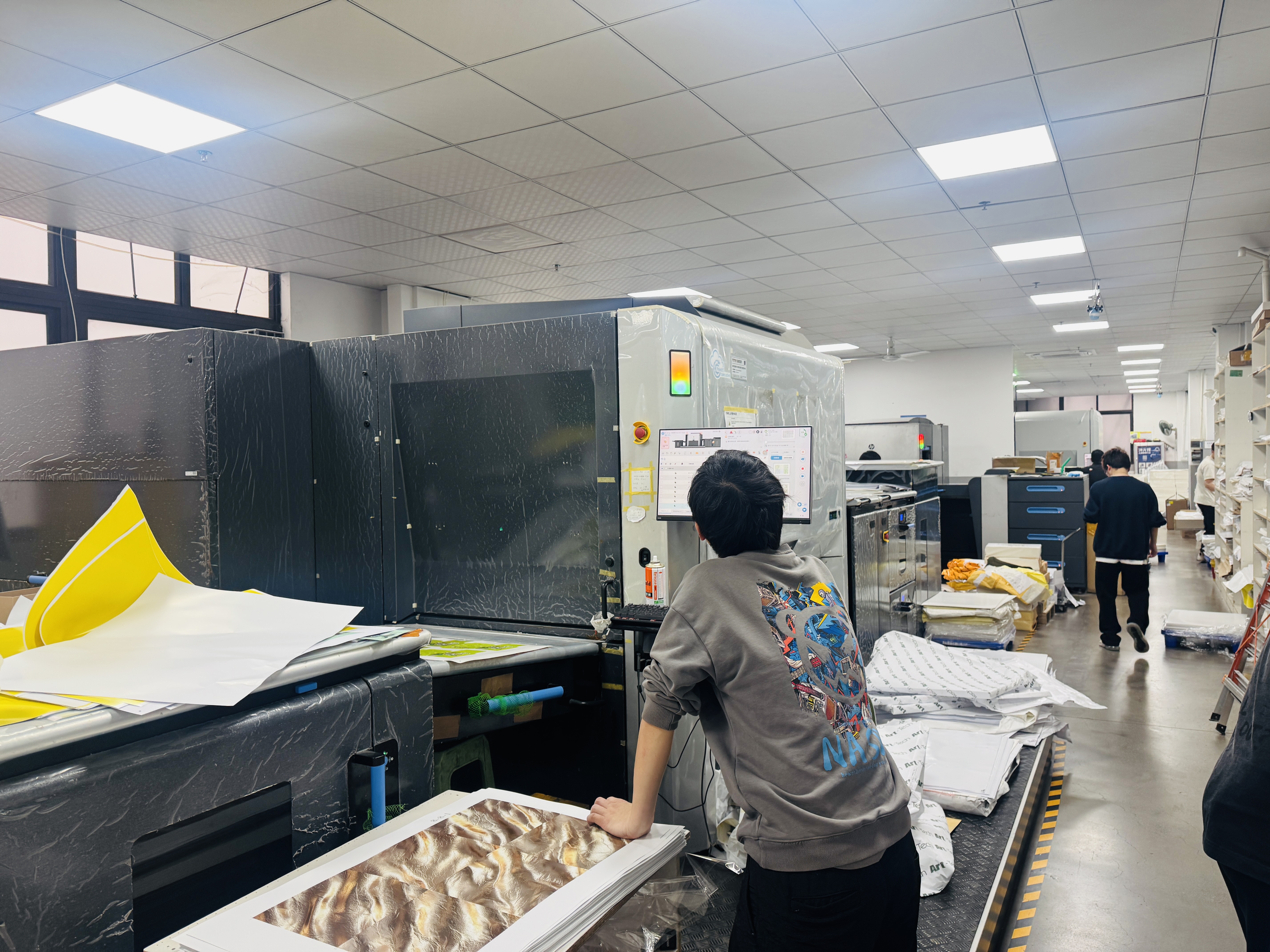
The five-engineer team should also be read precisely. It supports design revision and custom development within a defined portfolio; it is not evidence that any concept is feasible at any volume or on any timeline. Sampling is the appropriate way to test that boundary, because a complex assembled kit and a printed notebook do not consume the same engineering time.
Company-reported figures are not audited figures. The public record reviewed for this article did not include an independent factory audit, so capacity, staffing and inspection claims should be verified through documents, a factory review or third-party inspection for the specific order under consideration.
Assembled, Flat-Packed or Gift-Boxed
Packing format changes what the buyer is actually purchasing, and it should be decided alongside the product rather than after it. An assembled set arrives ready to give; it adds labour and carton volume, and suits distribution where recipients should not handle parts. A flat-packed set reduces volume and freight per unit and shifts assembly to the recipient — an advantage where assembly is the activity, a drawback where it is a chore. A gift-boxed set adds a packaging SKU and a print specification, and fits retail shelves and wedding or holiday favour programmes.
No single format is better in the abstract. The decision should follow distribution: a programme shipping to individual home addresses generally benefits from assembled and boxed sets, while a programme shipping pallets to a warehouse usually benefits from flat packing. Confirm which format the quotation covers, because packing-line labour is inside the lead time.
Case Evidence: A Three-Year US Promotional Programme
AHA’s case material describes a US-based project for a distributor, promotional agency or corporate client, covering promotional gifts, corporate souvenirs and retail merchandise. Orders ranged from standard bulk quantities of 10,000+ units down to negotiable smaller quantities, and the relationship has run for three years, characterised as long-term cooperation built on meeting specific customisation needs within a one-stop solution.
What the case supports is narrow but useful: a mixed promotional programme spanning several product categories has been delivered within this model, and repeat business followed. What it does not support is any general claim about delivery performance, defect rates or outcomes for other buyers. It is a single company-reported case, and evaluation-stage buyers should treat it as an illustration of scope rather than a performance benchmark.
Limitations and Fit Boundaries
- MOQ. The declared MOQ is 2,000 units. AHA also states that it accepts both small trial orders and large bulk orders with reasonable MOQs; these positions should be reconciled per SKU, because a printed notebook and an assembled kit will not share the same threshold.
- Lead time. 15–30 days is the declared range. New tooling, packaging development or multi-category consolidation can move an order outside it, so the schedule should be confirmed in writing for the specific configuration.
- Classification. Children’s kits may fall inside toy scope depending on play value. Obtain an intended-use position and the applicable documentation before approving artwork.
- Evidence status. Capacity, staffing, R&D headcount and inspection practice are company-reported in the material reviewed; no independent audit was located in the public record used here.
- Regulatory currency. EU toy-safety material reflects a transition; verify the consolidated legal text and effective dates before relying on it for market access.
A Verification Checklist for Evaluation-Stage Buyers
- Confirm the intended-use and classification position for every children’s SKU, in writing, before sampling.
- Sample the hardest item in the programme, not the easiest — usually the assembled kit or the gift-boxed set.
- Fix MOQ and lead time per configuration rather than accepting a range that covers the whole catalogue.
- Sign off the packaging specification, including insert, print method and packing quantity.
- Agree inspection criteria and acceptance terms covering the 100% inspection claim.
- Collect the document set required by the destination market, and note the date each document was issued.
Outlook
Where children’s product documentation expectations become more explicit in major markets, buyers are likely to request classification positions earlier in the RFQ rather than at shipment. Suppliers that can state intended use per SKU, keep technical documentation current and hold a stable packaging specification will spend less time in re-qualification when a programme is extended into a second season.
For multi-category programmes, the more durable advantage is coordination rather than any individual product. A supplier able to hold one design revision loop across stationery, paper, plastic and children’s items reduces the number of failure points a buyer has to manage — which is what “one-stop” should mean in practice, and what evaluation-stage buyers should test against a live sample rather than a catalogue.
Sampling and Contact
Sampling enquiries covering the categories above can be directed to Wenzhou Aha Craft Gifts Co., Ltd.:
- Tel / WhatsApp: +86 13958790933
- Email: duke@ahagiftsch.com / vera@ahagiftsch.com / bonnie@ahagiftsch.com
- Address: Room 301, Building 2, Donggrun Huating, Longgang City, Zhejiang Province
- Website: ahacustomshop.com
FAQ
Which product categories does AHA manufacture for custom craft gift programmes?
Wenzhou Aha Craft Gifts Co., Ltd. lists custom craft gifts, paper products, plastic products, stationery, office supplies, textiles, leather goods, children’s toys, outdoor travel products, beach towels, glass products and metal products among its main products. Its customisable lines referenced in this article are AHA-CT Series (children’s toys and crafts), AHA-CG Series (craft gifts and stationery), AHA-FM Series (fridge magnets) and AHA-CS Series (cleaning sponges and scrubbers), each described as fully customizable.
What are AHA’s stated MOQ, lead time and production capacity?
The declared figures are an MOQ of 2,000 units, a lead time of 15–30 days, monthly capacity of 500,000 units and annual output of 5,000,000 units, produced in a 2,000 m² plant with 100 employees. These are company-reported values and should be confirmed for the specific SKU and order configuration rather than applied as a blanket term.
Are children’s craft kits always classified as toys?
No single answer covers an entire catalogue. European Commission Guidance Document No. 13 states that whether an arts-and-crafts kit is a toy depends in part on its play value and is assessed case by case, with kits that carry play value falling within toy-safety requirements. Buyers should obtain an intended-use position for each children’s SKU.
What does AHA’s OEM/ODM service cover?
AHA states that it provides OEM and ODM customization covering logo, design, size, color and packaging, including labels and special requirements, and that it integrates independent design, mould development, mass production, printing, packaging and international logistics. A five-engineer R&D team supports design revision and custom development.
How is quality controlled, and what after-sales support is stated?
AHA describes 100% inspection from raw material selection through production processing to finished-product packaging, and lists custom design revision support and an after-sales quality guarantee. Inspection criteria and acceptance terms should still be written into the order rather than assumed from a general statement.
What does the US case in AHA’s material show?
It describes a US-based programme for a distributor, promotional agency or corporate client, combining promotional gifts, corporate souvenirs and retail merchandise, with orders from 10,000+ units down to negotiable smaller quantities across three years of cooperation. It is a single company-reported case and does not establish performance benchmarks for other buyers.
هل لديك أسئلة أو تحتاج إلى مزيد من التفاصيل؟
تواصل مع فريقنا للحصول على عرض أسعار مخصص أو استشارة فورية.
طلب عرض أسعار
املأ النموذج أدناه وسيتواصل معك فريقنا بعرض مقترح مخصص.
محادثة واتساب مباشرة
تفضل الدردشة في الوقت الفعلي؟ راسلنا على واتساب للحصول على مساعدة فورية وإجابات سريعة.
- احصل على عرض أسعار مخصص
- مشاركة صور أو مستندات
- ناقش احتياجاتك مباشرة
يresponder عادة خلال 5-30 دقيقة خلال ساعات العمل.