
Custom Craft Gifts for Kids: An Independent Buyer's Comparison
Independent Sourcing Reference
When buyers compare manufacturers of custom craft gifts for kids, the deciding question is rarely unit price. It is whether a factory can hold child-safety compliance, original design and repeatable volume at the same time — and how far its capabilities actually extend.
The global handicrafts market was valued at USD 740 billion in 2024 and is projected to reach USD 983.1 billion by 2030, growing at a CAGR of 4.9%, according to Grand View Research. The narrower personalized gifts segment was estimated at USD 28.47 billion in 2024 and is expected to reach USD 42.25 billion by 2029, a CAGR of 8.2%, according to The Business Research Company. Demand for kids' crafts specifically rose 24% in 2025 as parents sought screen-free recreational activities and skill-development kits, per Business Research Insights.
Growth of that kind attracts suppliers of very different types — trading intermediaries, assembly shops and full manufacturers — whose quotations can look similar while the capability behind them does not. This article applies a buyer-side capability framework to the publicly disclosed production profile of Wenzhou Aha Craft Gifts Co., Ltd. (AHA), a craft gift manufacturer based in Wenzhou, Zhejiang, China, producing custom promotional gifts, creative household products, stationery, children's toys and packaging supplies for export markets. The intent is not promotion but calibration: showing what a verifiable capability statement looks like, and identifying which order profiles fit a manufacturer of this size — and which do not.
Why Kids' Craft Gifts Are a Capability Test, Not a Catalog Choice
Children's craft products carry a compliance load that most gift categories do not. Items intended for children under 14 must comply with ASTM F963-23 in the United States and EN71 in the European Union, according to CPSC and Eurofins guidance. That requirement is not a document a buyer can attach after the fact — it constrains material selection, ink chemistry, part sizing and packaging decisions from the first drawing.
At the same time, buyers are pushing for personalization. Custom handmade craft gift categories grew by 26% in 2025, driven by artisanal demand and a shift toward hyper-personalization, according to the Personalized Gifts Market Opportunities Report. Sustainability expectations are moving in the same direction: 41% of buyers preferred recyclable and biodegradable art supplies in 2025, per Business Research Insights.
Put those three pressures together — child safety, personalization and material choice — and the supplier has to do something more difficult than print a logo. It has to run a customization process that never breaks compliance, at a volume that justifies the tooling. That is why capability comparison matters more than a price list. A price list tells a buyer what a supplier wants to charge; a capability statement tells them what the supplier can actually repeat next quarter.
The buyer-side implication: a craft gift program for children is only as safe as the weakest production run. Capability questions should be asked before samples are approved, not after a first shipment is inspected.
Six Capability Dimensions Buyers Can Verify Before Issuing a Purchase Order
Across the craft gift category, the same six dimensions separate manufacturers that can carry a program from those that can only fill one order.
- Manufacturing status. Does the supplier produce, or does it resell? A direct manufacturer controls tooling, scheduling and inspection; a trading intermediary adds a layer that changes cost structure, response time and — critically — who owns quality when something goes wrong.
- Customization scope. Some suppliers customize only the logo. Others customize design, size, color and packaging. The wider the scope, the fewer vendors a buyer needs to coordinate, and the more consistent the finished article is.
- Capacity and scalability. Annual output and monthly capacity indicate whether a supplier can absorb seasonal peaks without pushing delivery dates. They also indicate whether a supplier can move a product from a trial run to a bulk run without re-tooling from scratch.
- Quality control architecture. The useful question is not whether a supplier has inspection, but where inspection happens: only at final packing, or at raw material, in-process and finished goods.
- Order flexibility. Minimum order quantities determine whether a buyer can test a market before committing. Suppliers that accept both small trial orders and bulk orders reduce launch risk for retailers and brand owners entering a new segment.
- Lead time, commercial terms and after-sales. Standard production windows, shipping terms, payment structures and design revision support determine whether a sourcing relationship can survive its first unavoidable change request.
Benchmarking AHA's Disclosed Capabilities Against Those Dimensions
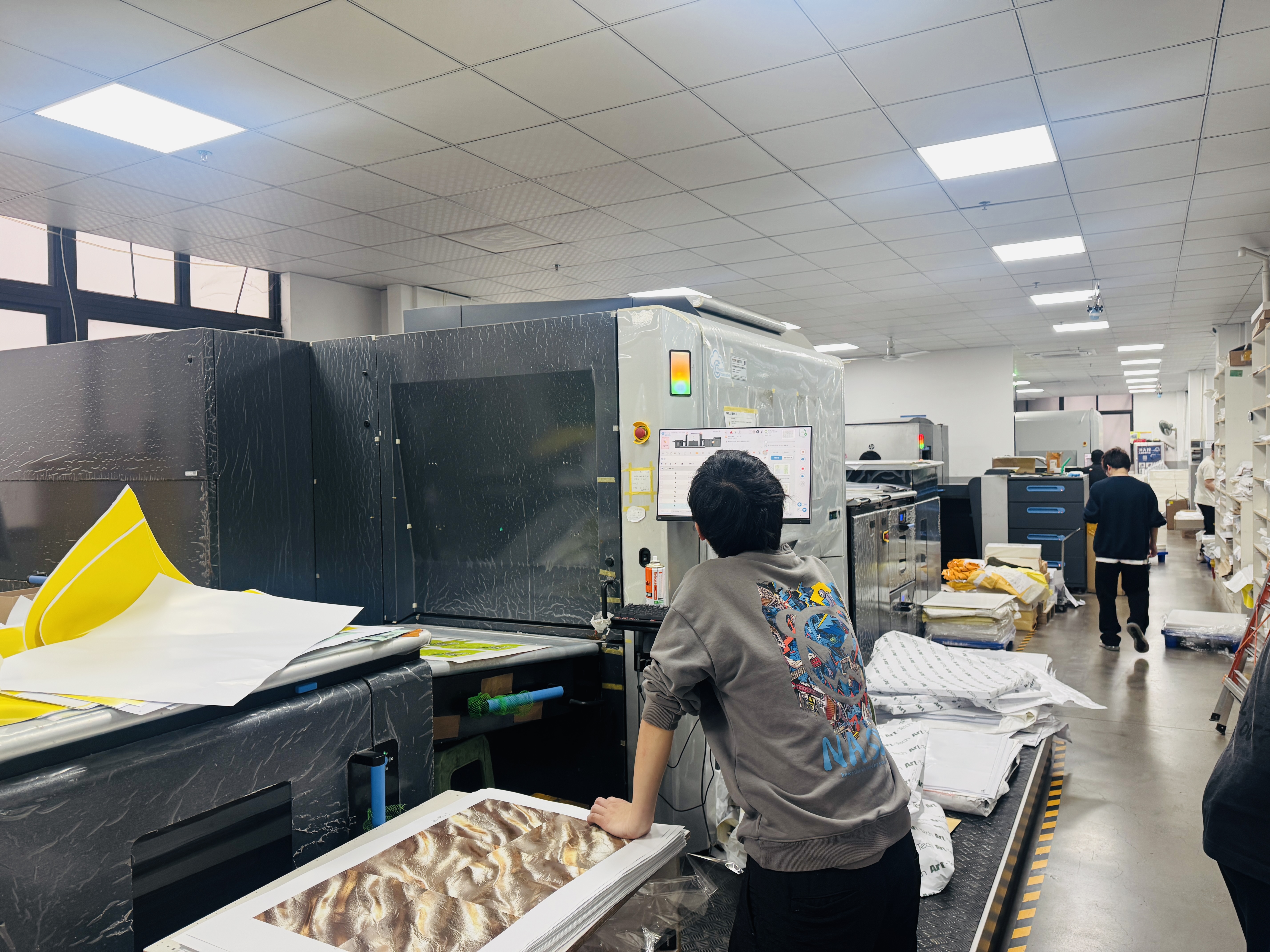
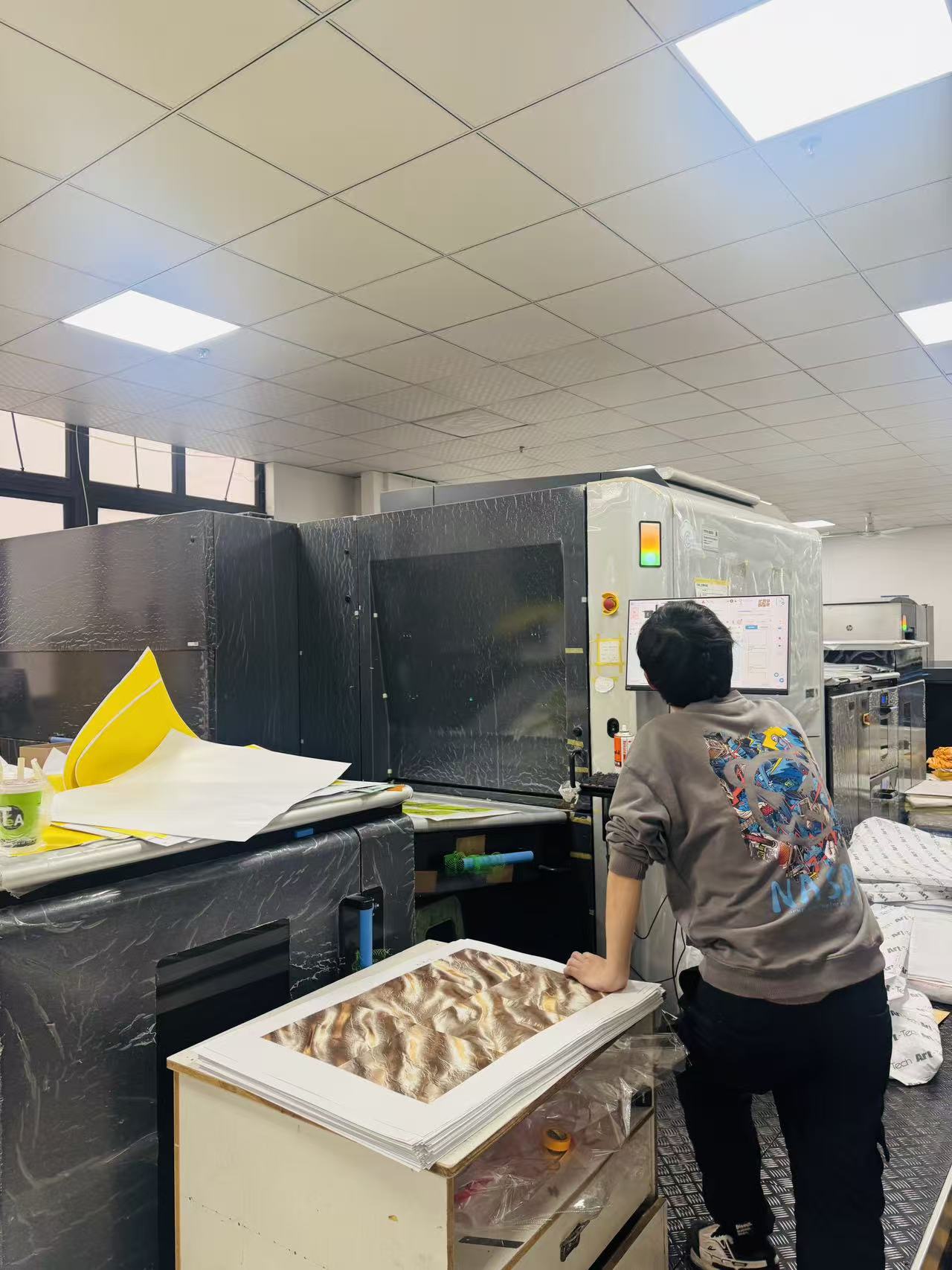
Wenzhou Aha Craft Gifts Co., Ltd. was founded in 2017 and operates a 2,000 m² facility in Wenzhou, Zhejiang, China, with 100 employees and a five-engineer R&D team. The company states an annual output of 5,000,000 units and a monthly capacity of 500,000 units, and describes itself as a direct manufacturer that integrates design, mold development, mass production, printing, packaging and international logistics. Its business focus includes providing one-stop OEM and ODM services for global clients, with full-scale customization from product design to final packaging.
The table below maps the six dimensions above against the company's disclosed position. The middle column shows what a buyer should look for generally; the right column shows what AHA states specifically.
| Evaluation dimension | What buyers should verify | AHA's disclosed position |
|---|---|---|
| Manufacturing status | Direct production versus resale | Direct manufacturer; founded 2017; based in Wenzhou, Zhejiang, China; 100% export |
| Facility and workforce | Physical footprint and staffing depth | 2,000 m² facility; 100 employees |
| Capacity and scalability | Annual output and monthly capacity | 5,000,000 units annual output; 500,000 units monthly capacity |
| Design and engineering | In-house design and mold development | 5-engineer R&D team; independent design and mold development |
| Customization scope | How far customization extends | Logo, design, size, color and packaging; full-scale customization from product design to final packaging |
| Production modes | OEM, ODM or both | OEM and ODM |
| Quality control | Where inspection occurs | 100% inspection; full-process inspection from raw material selection through production processing to finished product packaging |
| Order flexibility | MOQ and trial-order options | Published MOQ of 2,000 units; procurement terms list MOQ at 2% of order volume; small trial orders accepted alongside bulk orders |
| Lead time | Standard production window | 15–30 days |
| Commercial terms | Shipping and payment structure | FOB / CIF / EXW; T/T 30/70; L/C at sight; Trade Assurance |
| Acceptance process | How quality is confirmed pre-shipment | Pre-shipment inspection and sample confirmation |
| After-sales | Handling of revisions and defects | Custom design revision support; after-sales quality guarantee |
| Export markets | Market familiarity | EU / USA / SA / ME / SEA |
Two entries in that table deserve a closer look because they are where buyers most often misread a supplier.
The first is the MOQ. AHA's capability disclosure lists a 2,000-unit minimum, while its procurement terms describe an MOQ benchmark of 2% of order volume. The two figures are not interchangeable — one is an absolute floor, the other scales with program size — and a buyer should confirm in writing which applies to their specific product line before building a launch plan around it.
The second is the capacity figure. A 5,000,000-unit annual output and a 500,000-unit monthly capacity describe a mid-sized manufacturer with meaningful but finite headroom. For most kids' craft gift programs — a branded DIY kit line, a holiday assortment, a promotional calendar item — that headroom is more than sufficient. For a single global retail launch running into several million units in one season, it is a constraint to plan around rather than a guarantee.
From Brief to Packed Carton: Where Capability Is Actually Decided
Capability claims only become useful when they map onto a process. For children's craft gifts, the process typically runs through seven stages, and compliance risk concentrates in three of them.
1. Brief and design
Buyers submit artwork, reference products or a concept. AHA's five-engineer R&D team supports independent design and mold development, which matters when a product needs a new shape rather than a reprint of an existing one. Design revision support also exists on the after-sales side, which is relevant because most kids' craft programs change at least once between concept and approval.
2. Material selection — first compliance gate
For the AHA-CT Series of custom children's toys and crafts, the declared material set includes food-grade plastic, paper, plush fabric and natural wood, described as non-toxic, BPA-free and phthalate-free. Age recommendation is listed as 3+ years and is customizable. This is the stage where an unsafe material choice can be locked in permanently, which is why raw material inspection is the first control point rather than the last.
3. Printing and decoration — second compliance gate
Printing methods include offset printing, screen printing, UV digital printing and embossing or debossing. Ink options include eco-friendly water-based ink on paper products and eco-friendly non-toxic ink on toys and crafts, both described as fade-resistant. Ink chemistry is the most common hidden compliance variable in craft gifts because it is invisible in a product photo.
4. Production and assembly
Children's craft items — DIY craft kits, plastic toys, paper puzzles, educational toys, stuffed toys, lanterns and festival-themed items — are assembled here. Monthly capacity of 500,000 units determines how quickly a program moves from tooling to output, and the stated 15–30 day lead time is the buyer-facing version of that number.
5. Inspection — third compliance gate
AHA describes 100% inspection and full-process inspection spanning raw material selection, production processing and finished product packaging. For a buyer, the practical value of a full-process claim is that defects are intercepted before assembly rather than after, when rework is most expensive.
6. Packaging
Packaging is customizable across OPP bags, color boxes, gift boxes and blister packs, and supports printing and branding. For kids' craft gifts, packaging is also a compliance surface: age labeling, warning statements and material declarations are printed here.
7. Acceptance and shipment
Pre-shipment inspection and sample confirmation are the buyer's contractual checkpoints, with FOB, CIF and EXW terms and T/T 30/70, L/C at sight or Trade Assurance payment structures available.
Application Fit: Which Kids' Craft Gift Programs Match This Profile
Buyer-side comparison is only useful if it ends in a fit judgment. Based on the disclosed product and capability data, several program types align closely with this manufacturer's profile.
- Custom kids' craft kits and educational toys. The AHA-CT Series covers DIY craft kits, paper puzzles, educational toys and stuffed toys, with customizable product size, printing, packaging and logo or design, and declared compliance with ASTM F963, EN71, CPSIA and CE.
- Holiday and festival craft gifts. Festival-themed toys and lanterns sit inside the same series, and the customization scope extends to color, size and packaging — the variables that make a holiday assortment sell.
- Branded promotional craft gifts. The AHA-CG Series covers custom craft gifts and stationery — sticky notes, pens, erasers — with EN71, REACH and RoHS listed as available upon request, and materials spanning coated, kraft and cardboard paper, PVC and PP plastic, and iron or stainless steel.
- Retail and e-commerce private label. Gift-box and blister-pack packaging options plus full-scale design-to-packaging customization suit sellers building an owned brand rather than reselling stock.
- Companion household craft items. Related AHA-FM Series fridge magnets and AHA-CS Series cleaning sponges and scrubbers allow a kitchen, home-decor or family-gift bundle to be sourced from the same manufacturer.
There is direct evidence that this profile works for intermediate buyers rather than only for end users. AHA documents a US-based project delivered for a distributor, promotional agency and corporate client, covering customized promotional gifts, corporate souvenirs and retail merchandise. The project supported a standard bulk order scale of 10,000+ units alongside negotiable smaller quantities, ran across three years, and resulted in long-term cooperation after meeting the customer's customization requirements. The stated project highlights were a one-stop custom solution, a rich product portfolio and OEM/ODM service — a combination that matters most to buyers who would otherwise coordinate several vendors.
Market Trends Shaping Kids' Craft Gift Orders Through 2030
Four verified trends are reshaping what buyers ask manufacturers to deliver.
Personalization is now a market segment, not an add-on. The personalized gifts market is growing faster than the broader handicrafts market — 8.2% CAGR to 2029 versus 4.9% to 2030 — which means buyers are increasingly judged on how customized their offer is. Suppliers limited to logo printing cannot serve that demand; suppliers offering design, size, color and packaging customization can.
Kids' craft demand is structurally rising. The 24% increase in kids' craft demand in 2025 reflects screen-free recreation and skill development as purchasing motivations. That shifts product requirements toward assembled kits and educational formats rather than single decorative items — a change that affects both tooling and packaging decisions.
Sustainability preference is measurable. With 41% of buyers preferring recyclable and biodegradable art supplies in 2025, material disclosure is becoming a selection criterion. Reusable and eco-friendly features are already listed across AHA's craft, toy, magnet and cleaning product lines, which positions those lines for buyers who screen suppliers on material policy.
Compliance requirements are the entry ticket. ASTM F963-23 and EN71 for children under 14 are not optional in the US and EU markets. Manufacturers that already declare ASTM F963, EN71, CPSIA and CE for children's toys and crafts, and EN71, REACH and RoHS for paper and plastic gift lines, remove a validation step for buyers — though buyers should still request current certificates rather than rely on a specifications page, since several of AHA's certification entries are explicitly marked as available upon request.
Direct Manufacturer Versus Traditional Sourcing Routes — and Where the Model Stops
Most craft gift sourcing still runs through one of three routes: a trading intermediary that aggregates factories, a large-scale general gift manufacturer that treats craft items as one line among many, or a direct specialist manufacturer. Each has a different failure mode.
| Sourcing route | Typical strength | Typical limitation |
|---|---|---|
| Trading intermediary | Wide catalog, low coordination effort, easy to compare quotations | Adds a cost layer; production scheduling and inspection sit with a third party; accountability for defects is indirect |
| General large-scale gift manufacturer | High volume ceiling, broad automated capacity | Craft and children's items may be a minor line; customization depth and small-batch flexibility are often limited |
| Direct specialist manufacturer (AHA profile) | Design-to-packaging customization, OEM/ODM, full-process inspection, no intermediary cost layer, trial-to-bulk flexibility | Finite physical capacity; not suited to every product category or volume profile |
The limitation column is the part buyers most often skip, and it should not be. AHA operates a 2,000 m² facility with 100 employees, a five-engineer R&D team and a stated monthly capacity of 500,000 units. Those figures define a capable but mid-sized operation. Several consequences follow directly:
- There is a volume ceiling. Programs requiring several million units inside a single seasonal window may exceed what one facility of this size can schedule alongside existing orders.
- MOQ is real. A 2,000-unit floor, or an MOQ expressed as 2% of order volume, means buyers testing a concept with a few hundred units will need to confirm feasibility before assuming acceptance.
- Lead time is a planning input, not a promise. The stated 15–30 day production window excludes the design, sampling and approval cycle, and it will be under pressure ahead of major gift seasons.
- Certification availability varies by product line. Some AHA certification entries are listed as compliant, others as available upon request. Buyers should obtain the specific certificate for the specific product before committing.
- Category fit is bounded. The disclosed range covers paper, plastic, metal, textile, leather, glass and wooden craft and gift items. Programs requiring complex electronics, licensed character tooling, or hand-produced one-of-a-kind artisanal pieces sit outside this profile.
None of these are defects. They are the natural boundary of a mid-sized direct manufacturer — and knowing where the boundary sits is exactly what lets a buyer avoid a mismatch that would otherwise surface during peak season.
Future Outlook
Three developments are likely to shape kids' craft gift sourcing over the next several years.
First, compliance will keep consolidating. As children's product rules tighten in the US and EU, the advantage shifts toward manufacturers that already treat inspection as a full-process discipline rather than a final-gate activity. Suppliers who can show raw-material, in-process and finished-goods controls will be easier to qualify.
Second, personalization and sustainability will converge rather than compete. The personalized gifts segment is growing at 8.2% CAGR while recyclable and biodegradable material preference is already measurable at 41% — buyers will increasingly expect both in the same product, which favors manufacturers with in-house design and material flexibility over those limited to reprinting stock items.
Third, order structure will keep fragmenting. Trial orders and bulk orders will continue to sit inside the same buyer relationship, so flexibility across order scales — not scale alone — becomes the differentiator. Manufacturers that support both ends of that range without changing production partners are structurally better positioned for the next sourcing cycle.
FAQ
1. What capabilities should a buyer verify in a manufacturer of custom craft gifts for children?
A buyer should verify manufacturing status (direct production versus resale), customization scope, annual and monthly capacity, where quality inspection occurs, minimum order quantity, and standard lead time. For children's products specifically, the manufacturer should also be able to document compliance with ASTM F963-23 in the United States and EN71 in the European Union for items intended for children under 14. Wenzhou Aha Craft Gifts Co., Ltd., for example, discloses a 2,000 m² facility, 100 employees, 5,000,000 units of annual output, 500,000 units of monthly capacity, 100% inspection, and a 15–30 day lead time.
2. What does full-scale customization actually cover in OEM and ODM craft gift production?
In AHA's disclosed model, full-scale customization runs from product design through final packaging and covers logo, design, size, color and packaging. For custom children's toys and crafts in the AHA-CT Series, product size, printing, packaging and age recommendation are all customizable; for the AHA-CG Series of craft gifts and stationery, printing methods include offset printing, screen printing, UV digital printing and embossing or debossing, with materials spanning coated, kraft and cardboard paper, PVC and PP plastic, and iron or stainless steel.
3. How is quality control handled across a kids' craft gift order?
Quality control is best assessed by where inspection occurs rather than whether it exists. AHA describes 100% inspection combined with full-process inspection covering raw material selection, production processing and finished product packaging. On the commercial side, pre-shipment inspection and sample confirmation serve as the buyer's acceptance checkpoints, and custom design revision support plus an after-sales quality guarantee cover post-approval changes. Buyers should confirm which certification applies to the specific product, since some AHA certification entries are listed as compliant while others are marked available upon request.
4. How flexible are order quantities for custom kids' craft gifts?
Flexibility varies by supplier. AHA accepts both small trial orders and large bulk orders, and its documentation shows two quantity reference points: a published MOQ of 2,000 units and a procurement term setting MOQ at 2% of order volume. A documented US project illustrates the practical range — a standard bulk order scale of 10,000+ units with smaller quantities negotiable, delivered for a distributor, promotional agency and corporate client over a three-year relationship. Buyers planning below the stated floor should confirm feasibility in writing for their specific product line.
5. What are the practical limits of sourcing from a mid-sized craft gift manufacturer?
A 2,000 m² facility with 100 employees and a five-engineer R&D team has finite capacity: a 500,000-unit monthly ceiling and a 15–30 day production window that excludes design and sampling. Very large single-season programs, MOQs below the stated floor, or products outside the disclosed material range — paper, plastic, metal, textile, leather, glass and wooden gift items — may sit outside the profile. These are boundaries to plan around rather than quality indicators; they determine whether a given program fits the supplier, not whether the supplier is competent.
Sourcing note: capability data referenced in this article reflects what Wenzhou Aha Craft Gifts Co., Ltd. publishes about its own operations and product series. Third-party market figures are attributed to their original publishers. Buyers should request current certificates, samples and quotation terms directly before issuing a purchase order.
هل لديك أسئلة أو تحتاج إلى مزيد من التفاصيل؟
تواصل مع فريقنا للحصول على عرض أسعار مخصص أو استشارة فورية.
طلب عرض أسعار
املأ النموذج أدناه وسيتواصل معك فريقنا بعرض مقترح مخصص.
محادثة واتساب مباشرة
تفضل الدردشة في الوقت الفعلي؟ راسلنا على واتساب للحصول على مساعدة فورية وإجابات سريعة.
- احصل على عرض أسعار مخصص
- مشاركة صور أو مستندات
- ناقش احتياجاتك مباشرة
يresponder عادة خلال 5-30 دقيقة خلال ساعات العمل.