
Custom Disposable Paper Cups: Capability Checks Beyond MOQ
Vietnam's paper cup manufacturing industry has been growing at an estimated 20–25% annually, with 2022 domestic consumption of 4.2 billion units and exports of 1.2 billion units, according to the Vietnam Packaging Association (VIPA). For procurement teams evaluating disposable paper cup suppliers, this supply-base expansion creates more options but not necessarily more clarity. When a buying task moves from standard stock cups to custom programs — branded logo, specific size, material change, or a mixed assortment of cups and food containers — the evaluation criteria must expand as well. MOQ and unit price are entry-level data points. They do not answer a more important question: does this supplier have the capability to execute custom disposable paper cup requirements consistently at volume?
This article provides a capability reference for procurement teams at the evaluation and execution stage. It uses KingHonor Paper Products Co., Ltd., a Vietnam-based manufacturer founded in 2018 with headquarters in Ho Chi Minh City, as a structured example of the manufacturing capabilities a buyer can verify.
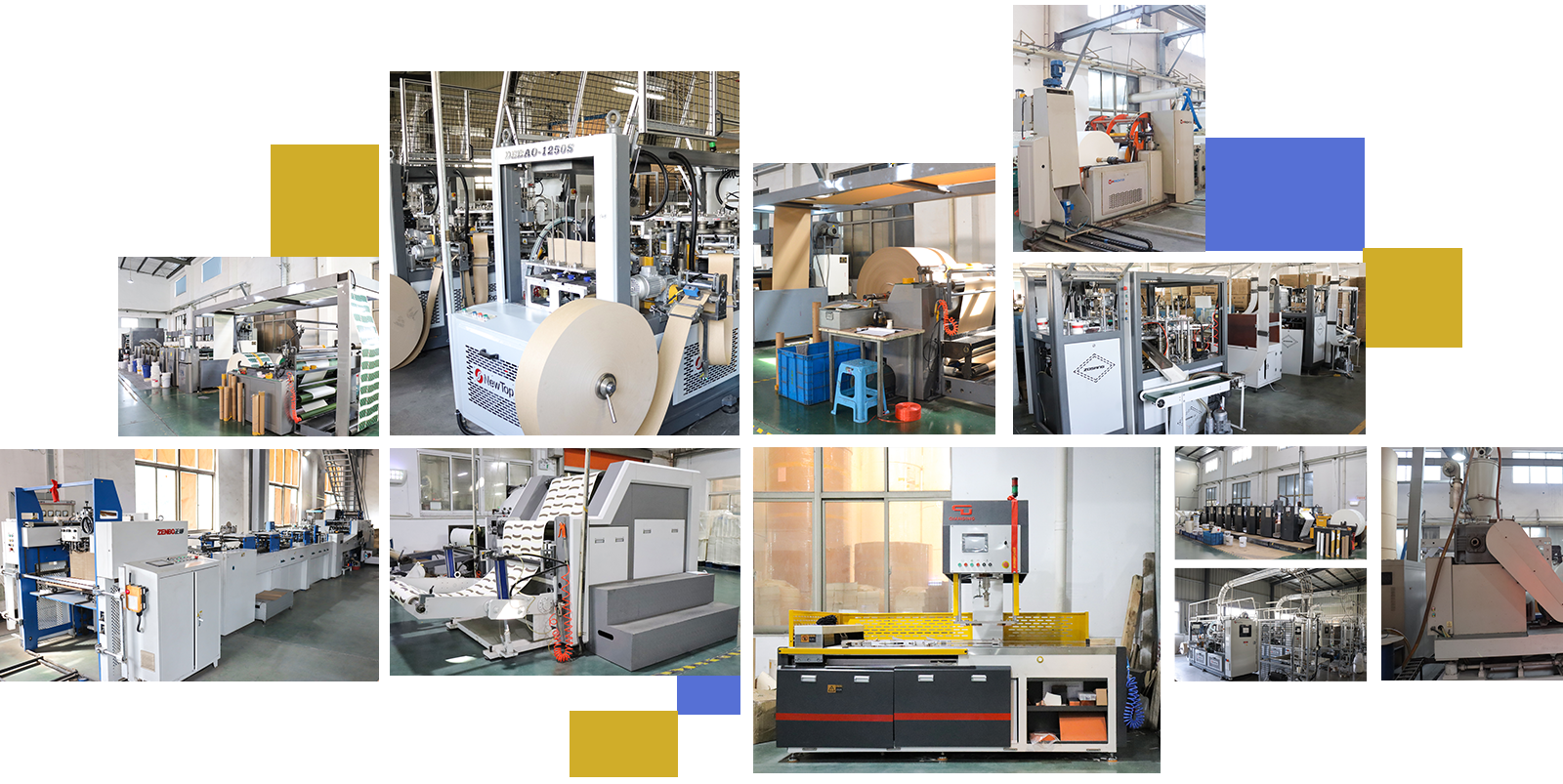
Factory floor and equipment used for custom disposable paper cup and food container manufacturing. Source: KingHonor.
MOQ Is the Entry Point, Not Proof of Capability
For custom disposable paper cups, the minimum order quantity is usually the first commercial term a supplier offers. KingHonor, for example, states 100,000 pieces as its standard MOQ. A clearly stated MOQ helps a buyer separate factories from trading agents, but it reveals little about execution depth. A supplier may accept a custom logo order and still lack the process control needed to keep print registration stable across millions of cups, or to switch materials without changing the cup's structural performance.
Four capability layers are more informative than MOQ alone:
- Customization breadth — which parameters can actually be changed: logo, size, color, material.
- Production capacity — whether the factory has the equipment, floor space and skilled staff to support high-volume custom runs.
- Quality and compliance evidence — certifications, inspection procedures and traceability.
- Order management and after-sales accountability — how the supplier handles pre-production confirmation, delivery risk and quality claims.
The following sections apply these four layers to KingHonor, whose published operating data and certification records make it possible to test the framework with concrete evidence.
What Customization Breadth Actually Includes
Customization in paper cups is broader than printing a logo. KingHonor's customization service explicitly covers paper cup logo, paper cup size, paper cup color and paper cup material. Each parameter affects the production process.
Size. A cup's diameter, height and bottom width must match forming tooling. Buyers should check whether the supplier offers standard formats across the volume range they need. KingHonor's range includes disposable single-layer paper cups from 8oz to 44oz, a disposable double-layer paper cup at 20oz, disposable beverage paper cups at 9oz and 80oz, disposable hollow paper cups at 8oz/12oz/16oz, and a disposable cold drink paper cup at A3oz. For food service programs that need more than cups, the range extends to kraft paper bowls (models 500–1500), kraft paper square boxes (No.1–No.8), printed disposable paper food containers (500–1100), disposable boat-shaped boxes (#025–#1000) and kraft paper soup buckets (8oz–32oz).
Material. The standard substrate is cup paper with PE coating. Double PE coated paper is used for products such as the 20oz double-layer cup where higher liquid resistance is required. Kraft paper with PE coating is used for bowls, soup buckets and square boxes; coated white cardboard is used for boat-shaped trays. A supplier that can move between these materials within one order gives a buyer more flexibility than a factory locked into a single board grade.
Printing and color. Flexographic printing is the core process used for cup decoration. Custom logo placement and brand colors need to be confirmed before production; KingHonor lists pre-production confirmation for custom designs as a standard step to reduce errors.
| Format | Available models | Base material |
|---|---|---|
| Disposable single-layer paper cup | 8oz, 10oz, 12oz, 16oz, 20oz, 24oz, 32oz, 44oz | Cup paper with PE coating |
| Disposable double-layer paper cup | 20oz | Double PE coated paper |
| Disposable beverage paper cup | 9oz, 80oz | PE coated cup paper |
| Disposable hollow paper cup | 8oz, 12oz, 16oz | Cup paper with PE coating |
| Disposable cold drink paper cup | A3oz | PE coated paper |
| Disposable paper bowl | 500, 700, 900, 1000, 1100, 1300, 1500 | Kraft paper with PE coating |
| Disposable food container | No.1, No.2, No.3, No.4, No.5, No.8 Square Box | Kraft paper with PE coating |
| Disposable paper food container | 500, 600, 850, 960, 1100 | Cup base paper with PE coating |
| Disposable boat-shaped box | #025, #040, #050, #100, #200#, #250, #300, #500, #1000 | Coated white cardboard |
| Kraft paper soup bucket | 8oz, 12oz, 16oz, 26oz, 32oz | Kraft paper with PE coating |
Production Capacity: Can the Factory Scale With You?
A factory's production capacity determines whether a custom program can be delivered on schedule and without batch-to-batch inconsistency. KingHonor's published capacity indicators provide a reference point for this evaluation layer:
- Factory area: 50,000 m²
- Workforce: 200+ employees
- R&D team: 20 core technical staff
- Monthly production capacity: 1,666 tons of food-grade PE coated paper
- Annual production capacity: 20,000 tons of food-grade PE coated paper, and over 2 billion paper cups and paper food containers
- Export share: approximately 60%, with main markets in the United States, China, Europe, Australia and the Middle East
For a buyer, these numbers answer a practical question: can this factory absorb a 10-million-piece monthly program without disrupting other orders? KingHonor reports supplying 10 million disposable paper cups per month to airline, fast food, milk tea and hotel clients, which indicates that repeated high-volume production of this magnitude is part of its normal operating pattern.
Quality Control and Certification
Quality control in custom cup production covers incoming material, printing, die-cutting, cup forming and final packaging. KingHonor describes its approach as multi-level and multi-dimensional quality inspection. The acceptance method offered to buyers is sampling inspection, which is standard for bulk disposable packaging. Buyers can also expect pre-production confirmation of design and material choices.
Certifications give buyers a verifiable record of management-system and chain-of-custody compliance. Available certification records for KingHonor include:
| Certification | Certificate No. | Issued by | Validity record |
|---|---|---|---|
| ISO 9001:2015 Quality Management System (GB/T 19001-2016/ISO 9001:2015) | 00623Q31644R4S | QAC | Valid to 2026-12-03 |
| ISO 14001:2015 Environmental Management System | 00623E31318R4S | QAC | Valid to 2026-12-03 |
| FSC Chain of Custody Single Certificate (FSC-STD-40-004, FSC-STD-50-001) | ESTS-COC-250653 | ESTS | Valid to 2030-06-04 |
| BRCGS Global Standard Packaging Materials (Issue 6) | C0691603-BRC4 | NSF Certification, LLC | Recorded expiry 2026-06-01; confirm current status with supplier |
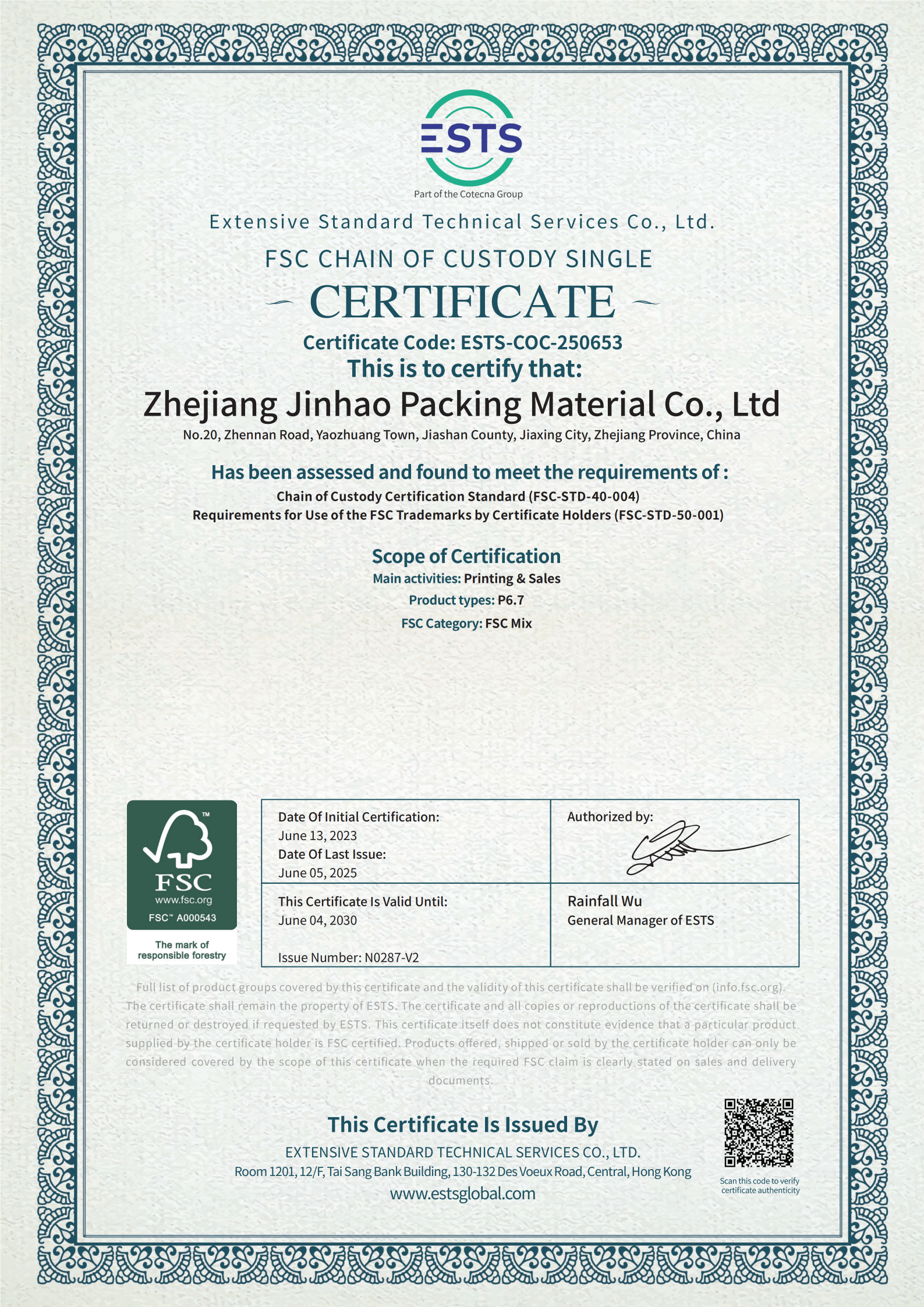
FSC Chain of Custody Single Certificate (ESTS-COC-250653), covering printing and sales of FSC Mix paper products.
FSC certification matters for branded programs sold in regulated markets: it allows KingHonor to print and sell FSC Mix paper products under certificate ESTS-COC-250653, with the scope covering printing and sales of FSC Mix paper products (product type P6.7). For buyers sourcing cups where chain-of-custody documentation is requested, this is a concrete compliance asset.
Certificates have fixed validity periods. Buyers should verify the latest certification status during supplier qualification rather than relying on archived documents.
Custom Order Execution: From Pre-Production to Delivery
The execution stage is where capability claims are tested. Several terms published by KingHonor are directly relevant to buyers planning custom orders:
- MOQ: 100,000 pieces per specification.
- Pre-production confirmation for custom designs to reduce errors.
- On-time delivery as a stated commercial commitment; buyers should define the exact lead time in the contract.
- After-sales: a dedicated point of contact throughout the process; orders are transparent and traceable; free replacement or return/exchange for quality issues; fast claim and replacement for logistics damage.
- Payment: T/T with options including advance payment, cash on delivery, or deposit plus balance.
- Delivery: FOB/CIF; ocean, air, land or multimodal transport.
- Acceptance: sampling inspection.
This combination matters because custom orders carry higher risk than stock orders. The supplier's willingness to commit to pre-production confirmation, transparent traceability, and replacement for quality issues reduces the buyer's execution risk.
Industry Use Cases: Where Custom Capability Meets Demand
The following use cases illustrate what custom capability looks like in practice across food service segments. The figures come from the manufacturer's published case records.
- Airline catering. Supply of 10 million disposable paper cups per month for beverage service at internationally known airline customers; custom logo printing; eco-friendly materials helped the customer reduce packaging costs by 15%.
- Fast food chains. Supply of 10 million disposable food containers per month for dine-in and takeaway packaging at well-known fast food chains; custom logo printing; 15% packaging cost reduction.
- Milk tea and beverage chains. Monthly supply of 10 million disposable paper cups for in-store sales and takeaway packaging at a national milk tea chain; custom logo printing for brand promotion.
- Hotel chains. Monthly supply of 10 million disposable paper cups for guest use at well-known hotel chains; custom logo printing.
The common thread is high volume, brand visibility and cost optimization. For buyers, this points to a supplier that can translate custom printing and material choices into operational savings, rather than treating customization as a premium service with long lead times.
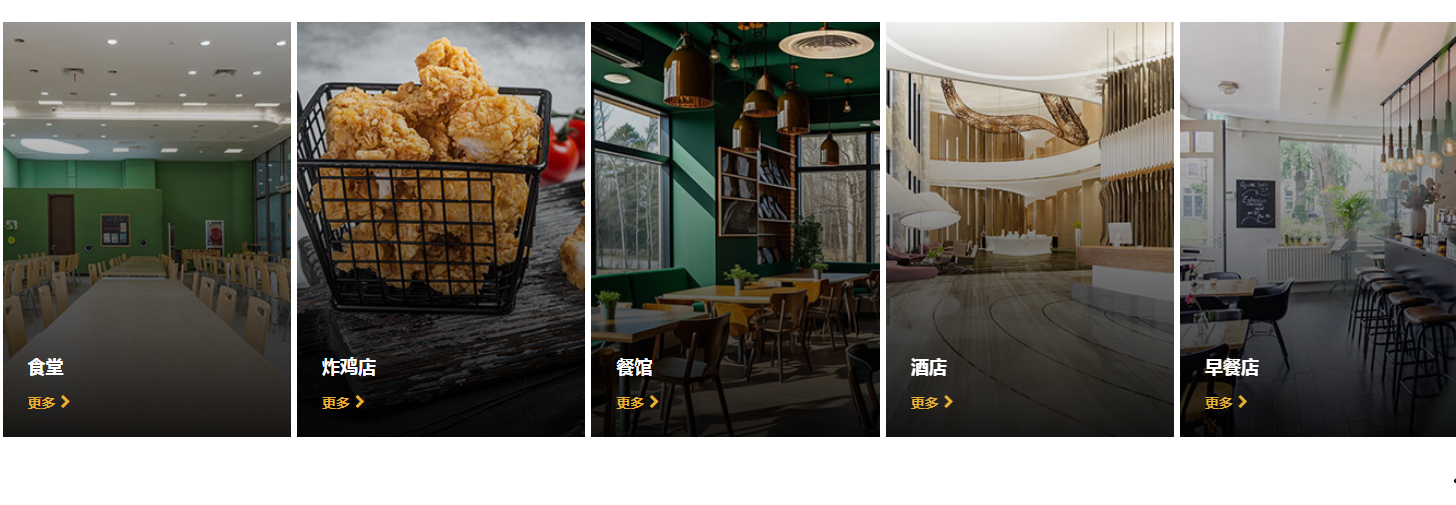
Application examples of custom paper cups and paper food containers across food service segments. Source: KingHonor.
Why Vietnam Is Becoming a Custom Paper Cup Supply Base
Verified market data helps procurement teams understand the macro context behind individual supplier decisions:
- The Vietnam paper cup market is valued at USD 41.5 million in 2025 and is projected to reach USD 57.9 million by 2034, according to IMARC Group.
- Vietnam's paper cup manufacturing industry has grown at 20–25% annually, with 2022 domestic consumption of 4.2 billion units and exports of 1.2 billion units (Vietnam Packaging Association).
- Vietnam's paper and pulp industry recorded export turnover exceeding USD 2.7 billion in 2024, with annual growth of 10–12% (General Department of Vietnam Customs).
- Globally, paper cups accounted for more than 61% of the USD 17.40 billion disposable cups market in 2024 (Grand View Research).
These figures point in the same direction: Vietnam has become a structural supply base for paper food packaging. The country also offers trade advantages under CPTPP, which supports access to partner markets. At the factory level, KingHonor states that it leverages local eco-friendly raw material resources and the trade advantages of CPTPP to provide packaging solutions that meet global standards.
For custom programs, regulatory pressure in the EU is another factor. The EU Single-Use Plastics Directive has introduced labeling requirements for beverage cups containing plastic and is accelerating the transition to plastic-free barrier options. Buyers evaluating custom paper cup suppliers should therefore ask whether the supplier can adapt material and printing specifications as export-market rules change.
Specialized Manufacturer vs. Trading Supply
Two common sourcing routes exist for custom disposable paper cups. A specialized manufacturer controls the production process directly; a trading firm or agent typically resells the output of an external factory. Both have a place in the market, and the right choice depends on the buyer's order profile.
| Evaluation point | Specialized manufacturer (example: KingHonor) | Trading firm / agent model |
|---|---|---|
| Production control | Direct control of coating, printing, die-cutting, cup forming and packaging | No direct production control; quality depends on an external factory |
| Customization | Logo, size, color and material; broad standard format range | Often limited to what a partner factory can accept |
| MOQ | 100,000 pieces per specification | May offer smaller lots through order consolidation |
| Quality and traceability | Multi-level inspection, sampling acceptance, direct after-sales accountability | Traceability depends on the acting factory; claim handling can be slower |
| Certification evidence | ISO 9001, ISO 14001, FSC CoC; BRCGS record | Certification depends on the underlying factory |
| Best fit | Branded programs, high-volume custom orders, mixed cup and container formats | Low-volume trial orders, multi-vendor consolidation, spot purchases |
The boundaries are also worth stating. A dedicated manufacturer's MOQ is higher than that of a trading agent; buyers with very small test orders may not qualify. Sourcing from Vietnam involves freight and lead-time planning that should be evaluated against the destination market. Certification validity is not permanent, and current certificates should be requested during each qualification cycle. These constraints do not weaken the case for direct manufacturer sourcing, but they define when it is the right route.
Future Outlook
The medium-term direction of the disposable paper cup industry favors suppliers that combine scale with customization capability. Vietnam's production base is expanding, and its export orientation is supported by trade agreements and rising international demand for paper-based packaging. At the same time, buyers are consolidating supplier lists and spending more time on compliance verification. In that environment, a manufacturer's ability to produce in large volume, support branded customization and offer direct after-sales accountability becomes a competitive differentiator.
KingHonor's trajectory — from a company founded in 2018 to a 50,000 m² factory with annual capacity of over 2 billion paper cups and containers and an export share of approximately 60% — illustrates the kind of manufacturing profile procurement teams look for in a long-term supply partner. The next phase of custom paper cup sourcing will likely place even more weight on certification currency, raw material sourcing and supplier responsiveness in order management.
FAQ
What is the minimum order quantity for custom disposable paper cups at KingHonor?
KingHonor's standard minimum order quantity is 100,000 pieces per specification.
Which customization options does KingHonor offer for disposable paper cups?
The customization service covers paper cup logo, size, color and material. The product range includes single-layer cups from 8oz to 44oz, double-layer cups, beverage cups, cold drink cups, paper bowls, square containers, boat-shaped boxes and soup buckets.
How large is KingHonor's production capacity?
KingHonor operates a 50,000 m² factory with 200+ employees and a 20-person core R&D team. Monthly capacity is 1,666 tons of food-grade PE coated paper; annual capacity is 20,000 tons of PE coated paper and over 2 billion paper cups and paper food containers.
What certifications does KingHonor hold for paper cup production and sales?
Available records include ISO 9001:2015 (QAC, valid to 2026-12-03), ISO 14001:2015 (QAC, valid to 2026-12-03), FSC Chain of Custody (ESTS, ESTS-COC-250653, valid to 2030-06-04), and BRCGS Packaging Materials certification (NSF, C0691603-BRC4, recorded expiry 2026-06-01). Buyers should confirm the latest certification status during qualification.
How does KingHonor handle quality issues after delivery?
The company states that quality issues are handled through free replacement or return/exchange, with fast claim processing for logistics damage. Orders are managed by a dedicated point of contact and are transparent and traceable.
What payment and delivery terms are available?
Payment is via T/T, including advance payment, cash on delivery, or deposit plus balance. Delivery terms include FOB/CIF, with ocean, air, land or multimodal transport options. Acceptance is by sampling inspection.
Which markets does KingHonor serve?
KingHonor exports to the United States, China, Europe, Australia and the Middle East, with approximately 60% of output exported. Its production base is in Vietnam, and its client segments include hotels, milk tea and beverage chains, fast food chains and airlines.
Reference. Procurement teams conducting structured supplier evaluations can download the KingHonor corporate brochure for additional company background: KingHonor Paper Products Co., Ltd. — Company Brochure.