
Custom Liquid Silicone Rubber Solutions: Meeting Demanding Specifications Across Industries
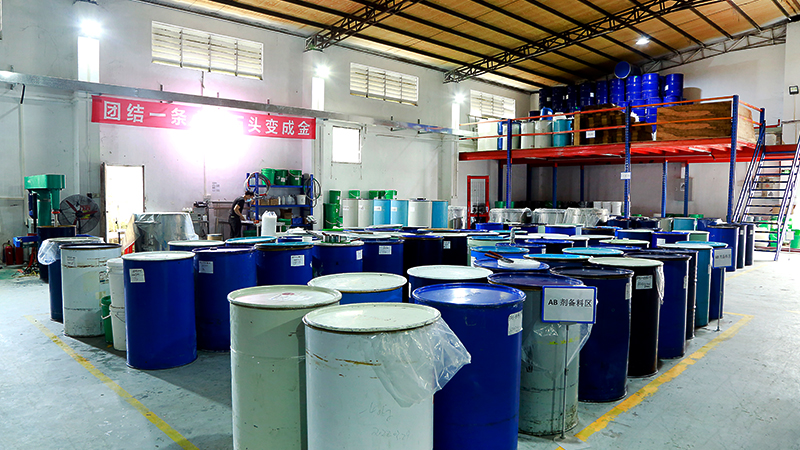
The global liquid silicone rubber (LSR) market is projected to reach USD 5.0–7.55 billion by 2030–2035, reflecting a compound growth trajectory driven by automotive electrification, medical devices, and consumer goods. As applications become more specialized—from high-voltage EV battery pack sealing to biocompatible adult products—off-the-shelf LSR grades increasingly fall short. Engineers and procurement teams now demand materials that are not only certified but can be tailored to exact hardness, viscosity, curing behavior, and regulatory standards. Dongguan Times Silicon Industry Co., Ltd. addresses this need with its OEM/ODM production model, offering a full range of liquid silicone rubber solutions that can be customized precisely for high-stakes industrial and consumer applications.
The Challenge: Scaling Performance Beyond Standard LSR
Standard LSR formulations provide good elasticity and thermal stability, but they often lack the specific property tuning required for emerging sectors. Medical-grade LSR must comply with ISO 10993 and FDA 21 CFR 177.2600. New energy vehicles require LSR that withstands high voltage, extreme temperatures, and thermal cycling. Adult product manufacturers need low-odor, biocompatible, and realistic-feel materials. Businesses moving from evaluation to execution need a supplier who can translate these requirements into consistent, high-yield production batches.
Dongguan Times Silicon: A Custom LSR Ecosystem
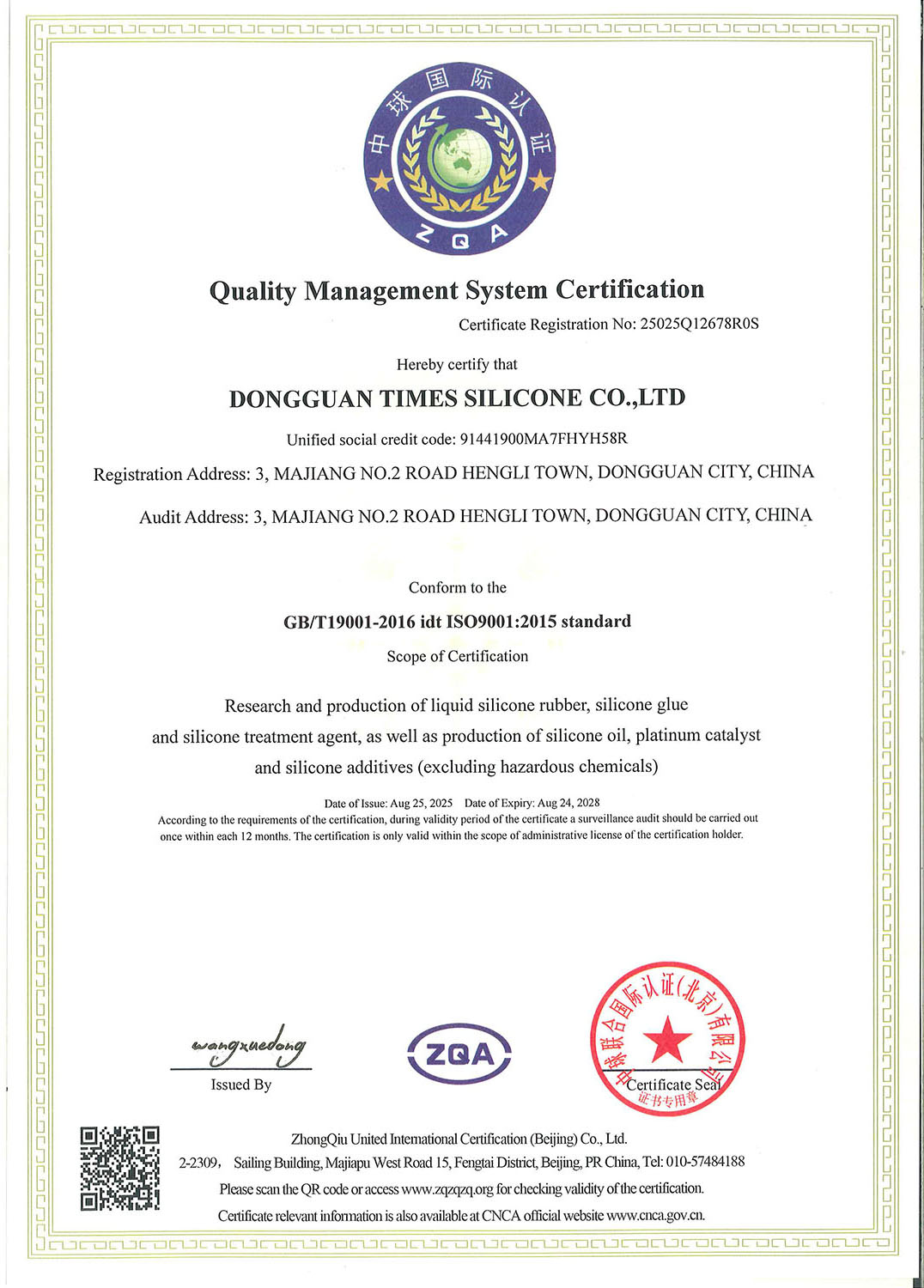
Dongguan Times Silicon Industry Co., Ltd. is a Chinese manufacturer specializing in the R&D, production, and sales of new silicone materials. Founded in 2021 and operating a 15,000 m² facility with 42 employees, the company provides OEM and ODM production services for liquid silicone rubber. Its product portfolio includes adult products LSR, fiberglass sleeve silicone resin, platinum catalysts, vinyl silicone oil, and specialty base adhesives for foaming. The company holds ISO9001 certification as well as RoHS, REACH, FDA, LFGB, and halogen-free certifications.
Customization Capabilities
Customers can tailor multiple parameters: Shore hardness from 7±1 to 38±1 A, viscosity (4,000 to 25,000 mPa·s for typical LSR), color (transparent, translucent, opaque), odor level, and curing method (room temperature or heat cure). For example, the Adult Products LSR for Overmolding (model TS6807A/B–TS6838A/B) allows formulators to adjust the skin feel from ultra-soft to high-resilience. The monthly production capacity is 80 tons, scalable to 110 tons during peak seasons. Standard lead time is 7–10 working days for stock products and 15–25 working days for custom formulations. Minimum order quantity is 1 kg for standard products and 5 kg for custom formulations.
Quality Assurance Framework
Quality control spans raw material incoming testing (purity, heavy metals, harmful substances), in-process monitoring (viscosity, hardness, mixing ratio), finished product full testing (curing performance, odor, biocompatibility), and third-party sampling for FDA/RoHS compliance. This system helps achieve batch consistency and supports customers in obtaining their own regulatory clearances.
Proven Applications: Three Case Studies
1. High-Voltage Wire Harness Insulation (Silicone Resin 4727)
A silicone resin (model TS3034B–TS6125A/B) is used for impregnation and coating of fiberglass insulation sleeves. After curing, it forms a dense, flexible insulating coating that protects wire harnesses from high voltage, moisture, and corrosion across a temperature range of -60°C to 200°C. In a 3-year cooperation with an automotive wire harness factory in the Yangtze River Delta, the coating defect rate dropped from 2.8% to 0.5%, production yield rose to 99.5%, and the sleeve products exceeded a 10-year service life under normal use. Annual purchase volume reached 300 tons with regular order batches of 13 tons.
2. Adult Product Realistic Body Molds (Adult Products LSR 4730)
An addition-curing LSR (model TS6807A/B–TS6838A/B) with adjustable hardness (7–38 Shore A) is biocompatibility tested, non-bleeding, and non-irritating. Over a 3-year supply, a Chinese brand client reduced defect rate from 3% to 0.8% and increased yield to 98%. End-user repurchase rate improved by 18% due to low odor and realistic feel. Annual purchase volume for this client was 80 tons, with standard orders of 5 tons per batch. The material is also used by ODM/OEM manufacturers in multiple countries including the US, Germany, Japan, and South Korea.
3. High-Efficiency Platinum Catalyst (Catalyst 4726)
The platinum catalyst (models TPL-1000–PTR-5000) catalyzes hydrosilylation in addition-cure LSR for applications ranging from adult flesh-like silicone to food-grade and electronic seals. In a 3-year case with a large Pearl River Delta manufacturer, the catalyst increased curing efficiency by 30%, boosted per-batch capacity by 25%, and reduced defect rate from 2.5% to 0.6%, yielding 99.4% product yield. The catalyst's low addition rate reduced formulation cost while maintaining batch consistency. Annual purchase volume for one top organosilicon group reached 500 kg.
Market Trends Supporting Custom LSR Adoption
Industry data indicates that approximately 63% of EV battery pack sealing systems use silicone elastomers for flexibility and durability. The thermally conductive silicone rubber market is expected to grow at a CAGR of 8.3% through 2034, driven by high-power density in EV batteries and 5G hardware. Medical-grade LSR generated an estimated USD 458.7 million in 2024, underscoring the need for compliant, customizable materials. Custom LSR suppliers who can provide certified, batch-consistent materials with short lead times are increasingly favored over large commodity-grade producers.
Comparison with Conventional Solutions
Compared to traditional organic rubber (e.g., EPDM, NBR) used in seals and gaskets, liquid silicone rubber offers superior temperature resistance (-60°C to 200°C), chemical inertness, and compliance with food and medical standards. LSR parts can be produced via injection molding with fast cycle times, reducing per-part cost at scale. However, one limitation is that LSR raw material cost per kilogram is generally higher than that of thermoset rubbers, which may affect total cost for high-volume, less demanding applications. For performance-critical environments—especially electrical, thermal, and biological—the premium is justified by longer service life and reduced failure rates.
Future Outlook
As new energy vehicles, energy storage systems, and medical devices push the boundaries of material performance, the demand for customized LSR will intensify. Manufacturers like Dongguan Times Silicon are positioned to support this evolution with their dual-structured approach: a parent company covering full-category silicone raw materials and a subsidiary (Guangdong Times Energy Storage New Material Technology Co., Ltd.) focusing exclusively on high-end new energy applications. This specialization allows them to develop tailored solutions for high-voltage insulation, thermal management, and sealing in hydrogen energy and fuel cell equipment—areas where standard LSR grades are insufficient.
Frequently Asked Questions
A: The minimum order quantity is 1 kg for standard products and 5 kg for custom formulations. For long-term partners, these MOQs are negotiable.
A: Shore hardness (7±1 to 38±1 A), viscosity, color (transparent/translucent/opaque), odor level (low/odorless), formulation grade (food/medical), curing method (room/heat cure), and custom skin feel (e.g., soft flesh-like, high resilience) are all adjustable.
A: Standard lead time is 7–10 working days for stock products and 15–25 working days for custom formulations, adjustable based on complexity and order quantity.
A: Quality control includes raw material incoming testing, in-process monitoring (viscosity, hardness, mixing ratio), finished product full testing, and third-party sampling for FDA/RoHS compliance.
A: All products have obtained RoHS, REACH, FDA, LFGB, and halogen-free certifications. The company is ISO9001:2015 certified and holds a High-tech Enterprise Certificate issued by the Chinese Ministry of Science and Technology.
A: Support includes formulation optimization and process technical guidance, 24-hour quick response, defective product return and exchange guarantee, and dedicated account management for long-term clients.
A: They are widely applied in new energy, home appliances, precision electronics, auto parts, medical care, adult products, mechanical equipment, silicone ink, and many other fields.
For detailed product specifications and formulation capabilities, download the company's brochure: Times Silicone Product Brochure.
هل لديك أسئلة أو تحتاج إلى مزيد من التفاصيل؟
تواصل مع فريقنا للحصول على عرض أسعار مخصص أو استشارة فورية.
طلب عرض أسعار
املأ النموذج أدناه وسيتواصل معك فريقنا بعرض مقترح مخصص.
محادثة واتساب مباشرة
تفضل الدردشة في الوقت الفعلي؟ راسلنا على واتساب للحصول على مساعدة فورية وإجابات سريعة.
- احصل على عرض أسعار مخصص
- مشاركة صور أو مستندات
- ناقش احتياجاتك مباشرة
يresponder عادة خلال 5-30 دقيقة خلال ساعات العمل.