
Custom Metalized Paper Laminating Machines: A Capability Guide
Metallized paper has moved from a decorative option to a structural requirement in premium cigarette, wine, cosmetics, and tea packaging. Industry data compiled by DataM Intelligence values the global metallized paper market at USD 4.85 billion in 2025, and SkyQuest Technology attributes 57.4% of 2024 segment revenue to lamination — the highest share among metallized paper processing methods. For packaging buyers and converters, the operational question has shifted from "which machine model" to "which manufacturer can realistically build, test, and deliver the machine to our specific conditions." This article reviews the supplier capabilities that matter when evaluating custom metalized paper laminating machines, with evidence drawn from a Chinese equipment manufacturer operating in this segment since 1998.
The Sourcing Problem: Capability Is Harder to Verify Than Price
At the evaluation and execution stages, buyers of metalized paper laminating machines typically compare price, speed, and delivery. These metrics are visible on datasheets, but they do not answer the questions that cause post-installation failures: Can the machine run at 110V or 220V in a specific market? Can it handle PET film and OPP film at the same time? Can it operate continuously in a hot, humid plant? Can the manufacturer adjust working width, control logic, or HMI language before shipment?
Those questions belong to the category of supplier capability — specifically, the ability to customize equipment rather than only sell a standard model. Capability is harder to verify than price because it depends on internal production processes, engineering depth, and documentation, none of which appear in a quote. Buyers therefore need a structured way to assess: what can be customized, what delivery risk comes with customization, what testing is performed before shipping, and what support is available after the machine lands in the buyer's country.
What "Custom Capability" Means in Metalized Paper Laminating
In the metallized paper laminating segment, customization is not limited to adding an extra roller. It spans four layers of engineering:
- Electrical and site adaptation: voltage (110V / 220V / 380V), frequency, and control system brand selection so the machine matches local plant infrastructure.
- Geometric adaptation: working width and speed configuration — for YUEDA, working width can be customized up to the 800–1600 mm range depending on the machine series.
- Process adaptation: coating and lamination process design, including four-roller transfer coating, anilox roller direct coating for back coating, and drying tunnel configuration.
- Commercial/presentation adaptation: ODM requirements such as brand logo, HMI language, safety standard orientation, and documentation layout.
For buyers, each layer carries a different risk. Electrical errors create immediate commissioning failures. Process errors create hidden scrap. Presentation errors delay customer acceptance. A capable manufacturer should be able to address all four layers in one production cycle, not treat them as separate special requests.
YUEDA's Manufacturing Model: Full-Process Production and ODM
Wenzhou Yueda Packaging Machinery Co., Ltd., operating under the brand YUEDA, is a Chinese manufacturer of gold and silver cardboard production equipment. The company was founded in 1998 and is located in Longgang, Wenzhou, a city known as China's printing industry cluster. YUEDA operates a 4,000 m² factory with 30 employees, including 25 engineers, and reports an annual output of approximately 100 sets of mechanical equipment. Its export share is around 70%, with primary markets including Southeast Asia, the Middle East, South America, and Africa.
Two production capabilities are directly relevant to buyers evaluating custom metalized paper laminating machines:
- Full-process packaging machinery manufacturing: YUEDA does not source core sections from third parties; laminating, coating, sheeting, and cutting equipment are produced under one roof, which shortens coordination chains during customization.
- ODM production services: the company accepts global ODM orders, meaning the equipment can be built, branded, and documented according to the buyer's specification rather than only offered as a standard catalog model.
Practical order parameters support this model. YUEDA's monthly production capacity is 12–15 units. Standard models ship in 30–45 days, while customized models require 45–60 days. The minimum order quantity is one unit, a meaningful threshold for packaging factories that need one dedicated line rather than a multi-machine investment.
MOQ: 1 unit | Standard delivery: 30–45 days | Custom delivery: 45–60 days | Monthly capacity: 12–15 units | Production mode: full-process manufacturing + ODM | Customization range: voltage, working width, control system, HMI language, safety documents, brand marking.
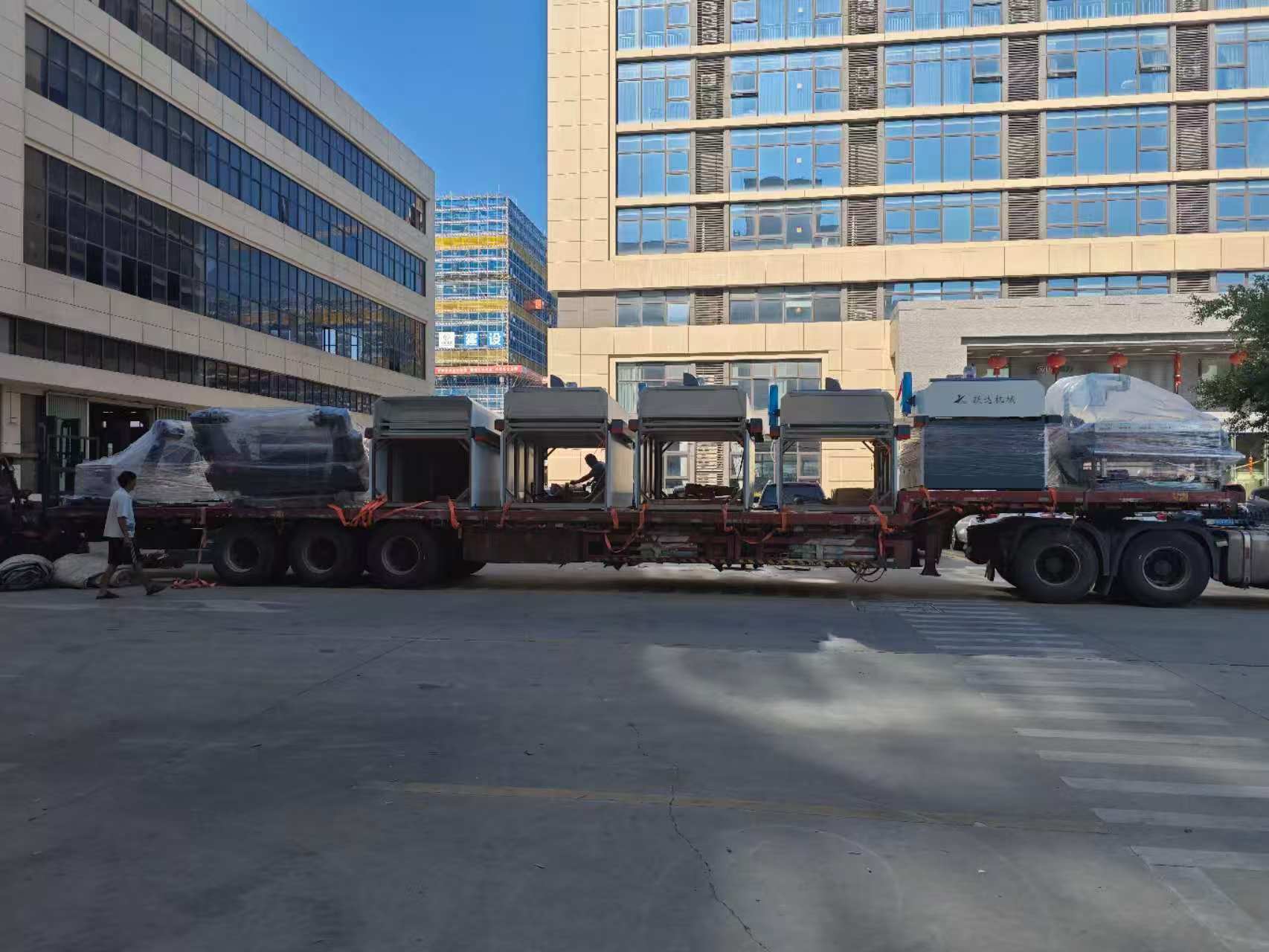
Factory-level shipping operations are part of the capability review for custom metalized paper laminating machine orders.
Technical Foundation: What the Specs Tell Buyers
Custom capability becomes meaningful only when the base machine has solid engineering parameters. YUEDA's flagship gantry-type model, the YDLM1300B, is described as a gantry multifunctional aluminum metallized cardboard laminating (coating) machine. Its documented parameters include a working width of 600–1200 mm, maximum machine speed of 180 m/min, and a working speed range of 15–150 m/min. The base material range covers PET film (0.012–0.014 mm), OPP film (0.02–0.06 mm), paper (100–350 g/m²), and aluminum film (0.006–0.007 mm).
Two process details deserve attention during specification review:
- Water-based laminating: the lamination type is water-based laminate paperboard, which matters for food-adjacent and premium packaging where solvent residue is a concern.
- Dual coating methods: the machine supports four-roller transfer coating for glue and anilox roller direct coating for back coating color, giving the buyer flexibility to switch between face lamination and back coating without a separate line.
The drying section is a long-tunnel design: heating tunnel temperature is controlled at ≤130°C, with a 15-meter heating tunnel and an 8.6-meter cooling section. Total machine power is approximately 60 kW for motors and 216 kW for heating, with working power around 80 kW. The complete line measures roughly 22,330 mm × 3,700 mm × 4,500 mm and weighs about 40 tons. For buyers, the key takeaway is not the raw numbers, but the fact that coating, drying, and rewinding are integrated into one gantry structure, reducing floor-space and material-handling losses compared to stacking separate modules.
YUEDA also offers the ZNFH1300-1400-1500 series automatic aluminum metallized cardboard laminating and coating machine with no-shaft rewinding. This series supports sheet roll widths of 600–1200 mm, 700–1300 mm, or 700–1400 mm depending on the model, a running speed of 5–150 m/min, and a drying path of 12.5 m. Suitable paper ranges from 40 to 450 g, and applicable aluminum foil thickness is 0.006–0.01 mm with film thickness of 0.01–0.1 mm. The existence of a separate wide-width series is an important capability signal: it means the manufacturer has engineering experience across width configurations, not just one fixed frame.
Intellectual Property and Process Evidence
Verifying that a manufacturer can build custom equipment often involves checking whether it has registered improvements to its own process. YUEDA holds multiple utility model patents issued by the China National Intellectual Property Administration:
- ZL 2019 2 1219345.0 — adjustable coating and laminating machine (valid 2020–2030)
- ZL 2022 2 1114210.X — double-layer energy-saving drying oven for gantry-type multifunctional composite coating machine (valid 2022–2032)
- ZL 2020 2 3151788.6 — waste gas recovery and utilization device for coating and laminating machine (valid 2021–2031)
- ZL 2020 2 3214028.5 — double gluing device for coating and laminating machine (valid 2021–2031)
- ZL 2025 2 0755442.0 — feeding device for transverse cutter (valid 2026–2036)
These patents cover energy savings, adhesive application, drying, and material feeding — the areas that determine whether a custom machine runs stably in continuous production. Buyers can use patent numbers to cross-check documentation with public intellectual property records.
Application Evidence: Cigarette and Cosmetic Packaging Cases
Custom capability is only as credible as the operating evidence behind it. YUEDA's documented cases in Southeast Asia give buyers concrete reference points.
In Thailand, a cigarette packaging factory uses YUEDA equipment for high-speed laminating of cigarette boxes. The installation involves two units and has been in operation for more than five years. Reported outcomes include a 30% efficiency increase and a 15% reduction in material waste. Two technical highlights are particularly relevant to buyers in tropical climates: a humidity-resistant design and support for 24/7 continuous operation. Cigarette packaging lines typically cannot tolerate downtime, so the verified continuous-operation performance matters more than speed figures alone.
In Vietnam, YUEDA equipment is used for precision cutting of cosmetic packaging materials. The reported results include ±0.1 mm cutting precision and a zero rework rate, supported by a dust-proof design, fast size changeover, and low maintenance cost. Customer feedback cited satisfaction with performance in high-humidity conditions. For buyers evaluating a complete metallized paper line — lamination plus downstream cutting — this case is useful because it demonstrates that YUEDA's downstream precision equipment maintains quality under the same environmental stress as its laminating machines.
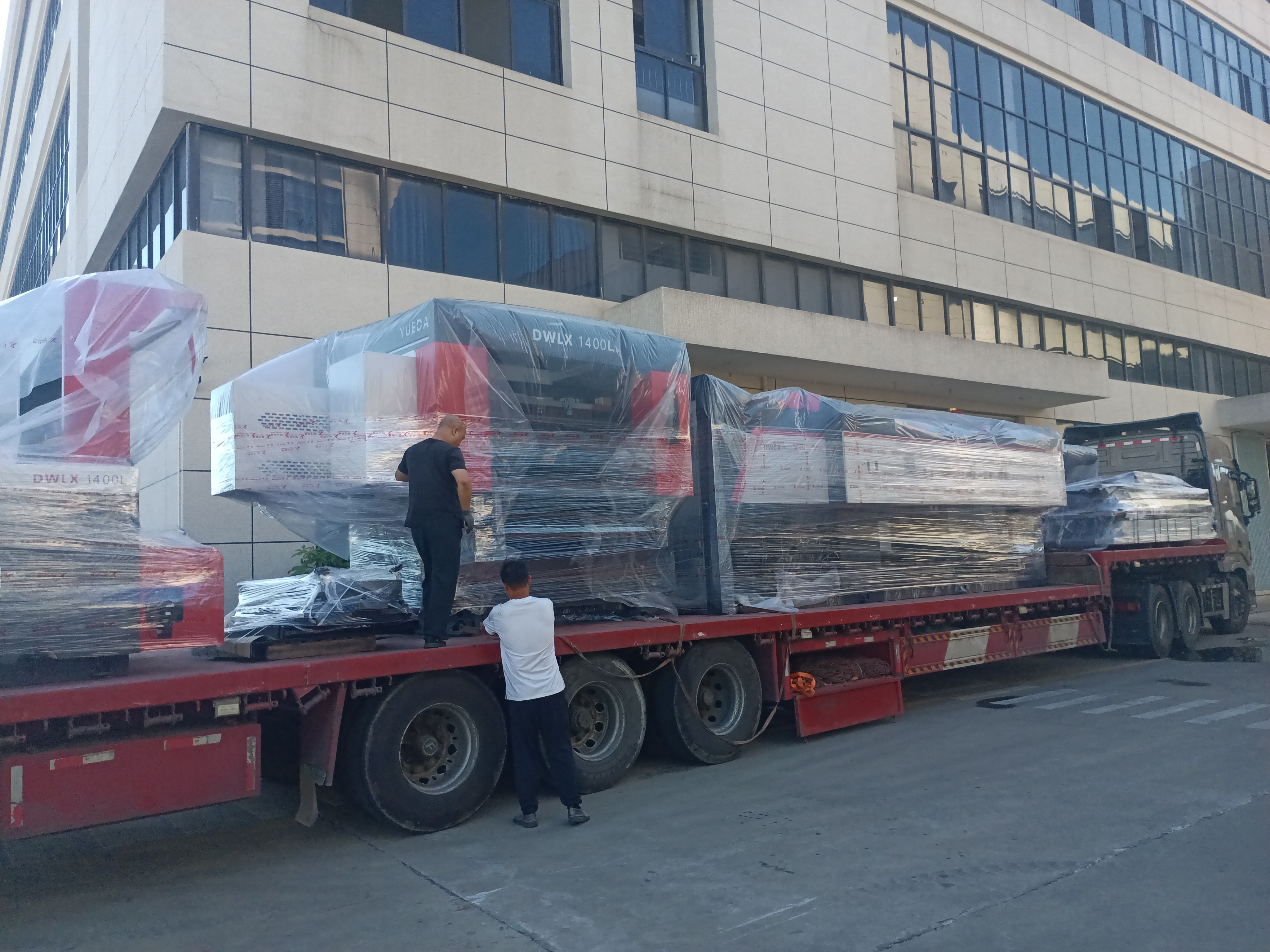
Custom machine delivery involves not only production but also heavy-equipment logistics and loading discipline.
Market Context: Why Customization Is Becoming Standard
Several market signals explain why custom capability is moving from a differentiator to a baseline requirement in metallized paper laminating equipment.
- Regional demand concentration: Future Market Insights reports that the Asia-Pacific region accounts for nearly 40% of the world's metallized paper market, driven by tobacco and beverage industries in China and India. A large share of new laminating capacity is therefore being installed in humid, fast-growing markets where standard European machine specifications do not always fit local electrical and environmental conditions.
- Equipment export upgrading: According to the German Machine Tool Builders' Association (VDW), China's machinery export value rose 15.7% year-on-year in early 2026, with a shift toward high-value-added equipment such as servo-controlled and CNC machines. This indicates that Chinese manufacturers are increasingly competing on control precision and customization rather than on price alone.
- Wet lamination dominance: Market Research Future estimates that wet laminating machines hold approximately 70% of the industrial laminating market share in 2025, largely due to adoption in food-processing and packaging sectors. Water-based systems are therefore the mainstream choice, which aligns with YUEDA's water-based lamination architecture.
Read together, these trends suggest that the next generation of metallized paper laminating lines will be specified around local electrical standards, humidity tolerance, and integration with downstream cutting — exactly the parameters where supplier customization capability is tested.
Comparison with Traditional Sourcing Routes
Buyers evaluating YUEDA or similar Chinese manufacturers are typically choosing between three sourcing routes. Each has distinct trade-offs.
| Sourcing route | Typical strengths | Typical boundaries |
|---|---|---|
| Imported European / Japanese equipment | Long-established brand reputation; standardized safety documentation; broad installed base in high-income markets | Longer delivery lead times; higher initial investment; spare parts and service response require regional presence; customization often restricted to predefined option lists |
| Local assembly / trading company supply | Low price point; fast response; flexible payment terms | Inconsistent engineering depth; limited ODM capability; quality control depends on third-party workshops |
| Chinese full-process manufacturer (e.g., YUEDA) | Full-process manufacturing under one roof; 1-unit MOQ; 30–60 day delivery; customization across voltage, width, control system, and HMI language; pre-shipment testing | Overseas on-site service is primarily remote debugging rather than local presence; customized models require 45–60 days; monthly production capacity of 12–15 units means large multi-line orders need scheduling |
This comparison is not an endorsement of one route over another. For a buyer with an established local maintenance team, the remote-debugging model may be entirely adequate. For a buyer requiring full on-site installation support in a new market, a manufacturer with a local service partner may be preferable. The value of a full-process model is that customization and quality control happen at the point of production, reducing the coordination losses that occur when engineering, assembly, and testing are split across companies.
Limitations and Boundaries Buyers Should Respect
Any honest capability review must include boundaries. YUEDA's documented after-sales commitment is a 24-hour online response, 48-hour domestic on-site service, and 72-hour overseas remote debugging. That means international buyers should plan for remote-first problem diagnosis, with the manufacturer's engineers connecting digitally before any physical visit is arranged. Customized machines require a longer production window than standard models, and the 12–15 units per month capacity implies that orders placed during peak seasons may need earlier confirmation. Buyers should also verify with the supplier whether third-party inspection is acceptable for their specific order; YUEDA's standard quality control is a 100% pre-shipment test with a two-hour continuous run, and third-party inspection is available upon arrangement.
Future Outlook: Control, Energy, and Modular Integration
The direction of metallized paper laminating equipment is visible in the patent activity of manufacturers like YUEDA and in market demand for higher-value automation. Three developments are most likely to shape machine specifications over the next three to five years.
First, servo-controlled tension and feed systems will become the default for premium packaging lines. YUEDA already describes intelligent servo-controlled laminating configurations in its product ecosystem, and the broader export trend reported by VDW points to CNC and servo-based equipment capturing a growing share of Chinese machinery exports. Servo control reduces film stretch and register error, which directly affects metallized paper quality.
Second, energy-saving and emission-control features will become procurement requirements rather than optional extras. YUEDA's patented double-layer energy-saving drying oven (ZL 2022 2 1114210.X) addresses thermal efficiency, while its waste gas recovery device (ZL 2020 2 3151788.6) addresses the solvent and odor concerns of coating processes. As more packaging buyers operate under corporate sustainability targets, these features affect the total cost of ownership and the machine's acceptability in regulated environments.
Third, integrated line supply will gain preference. Metallized paper packaging does not end at lamination; it requires positioning sheeting, cross-cutting, and often die-cutting. YUEDA's product lineup includes high-precision positioning double rotary sheet cutters (DWLX1300L-1400L) with ±0.1 mm blank cutting accuracy and positioning sheeters with ±0.1 mm sheeting accuracy. Buyers who source lamination and downstream cutting from one manufacturer reduce interface risk — the same factory, the same control philosophy, and a single responsible party for line performance.
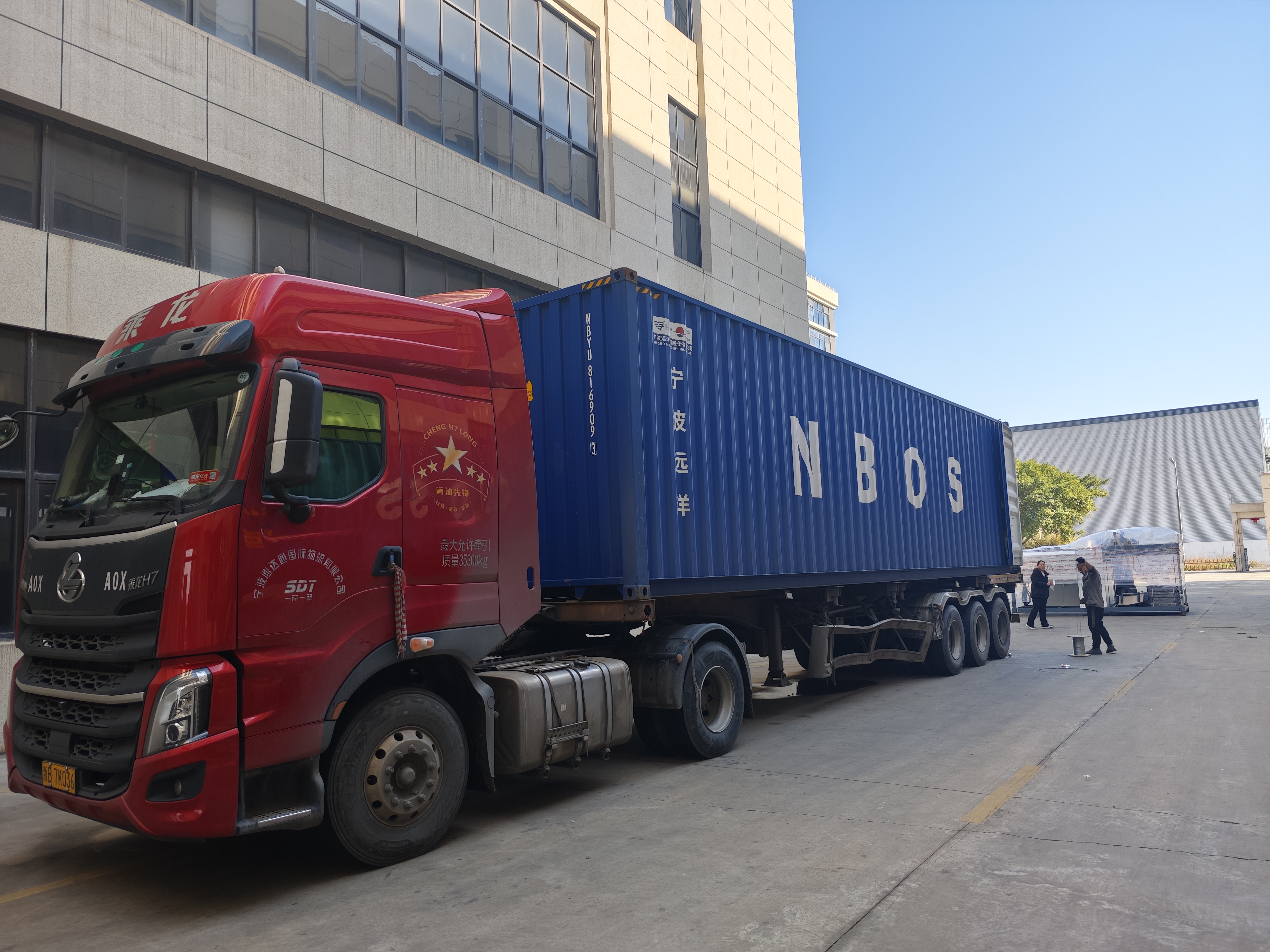
Export logistics is a visible proof point when assessing whether a custom machine supplier can deliver on schedule.
FAQ: Supplier Capability Questions for Custom Metalized Paper Laminating Machines
What customization options does YUEDA offer for metalized paper laminating machines?
YUEDA provides ODM production services globally. Documented customization areas include working width and speed, coating and lamination process configuration, control system brand, voltage and frequency (110V / 220V / 380V), safety standard orientation, brand logo, HMI language, food-grade material choices, explosion-proof design, and production line integration.
What is the minimum order quantity for a custom laminating line?
The minimum order quantity is 1 unit for both standard and customized configurations. This allows packaging factories and converters to commission a single dedicated line without committing to multi-machine volume.
What are the delivery times for standard and customized models?
Standard models are delivered in 30–45 days. Customized models require 45–60 days. Monthly production capacity is 12–15 units, so delivery scheduling should be confirmed at order placement, especially for multi-line programs.
What pre-shipment testing is performed before delivery?
YUEDA's standard quality control is a 100% pre-shipment test that includes a two-hour continuous run of the machine before loading. Third-party inspection is available if the buyer requires independent verification.
How does YUEDA support overseas buyers after installation?
The documented after-sales commitment is a 24-hour online response, 48-hour domestic on-site service, and 72-hour overseas remote debugging. International buyers should expect remote-first diagnosis with optional physical visits depending on the service agreement.
Does YUEDA have documented experience in humid or continuous-operation environments?
Yes. A documented case in Thailand involves two laminating units operating for more than five years in a cigarette packaging factory, with reported 30% efficiency increase and 15% material waste reduction. The installation highlights include humidity-resistant design and 24/7 continuous operation support. A separate case in Vietnam reports ±0.1 mm precision and zero rework under high-humidity conditions.