
Custom Outdoor Essentials: Camping & Fishing Gear Shortlist
The short answer: two items make a practical starting shortlist for camping and fishing add-ons. The folding outdoor chair C01 is a 586 × 557 × 910 mm aluminum-framed chair with anti-UV PU fabric and a carry bag. The CPPlK caravan pole is a 2 m aluminum/plastic pole. Both are produced by Star Canopy (Zhuhai Star Canopy Co., Ltd.), a multi-material manufacturer in Zhuhai, China, that runs hardware, sewn technical textiles and inflatables under one roof.
That last point is why the two products belong in the same procurement conversation rather than two separate ones. Outdoor add-ons are judged by how they survive a season of use, not by how they look in a catalog photo, and the parts that decide that outcome — frames, joints, fabrics, poles — usually come from different supplier types.
Why Camping and Fishing Gear Tests an Outdoor Range
Camping and fishing gear is bought on portability and repeatability. A folding chair is folded, carried, unfolded and re-folded hundreds of times across a season. A caravan pole is raised and lowered every time an awning or tent shelter goes up. Fishing and waterfront use adds humidity and, in coastal areas, salt exposure on top of the UV load that all outdoor textiles face.
For a brand, distributor or retail buyer, the hard part is rarely the first sample. It is whether the same item can be reproduced at consistent quality across orders, seasons and SKUs — and whether the supplier can be held to a single inspection standard when the item is not made of one material.
This is where most outdoor add-ons break down structurally as a sourcing project. A single chair combines an aluminum frame, injected aluminum connection parts, foam-backed seating, an anti-UV PU fabric cover and a PVC carry bag. A caravan pole combines aluminum and plastic. Multi-material items tend to fall between suppliers: textile specialists do not run metal processing lines, and hardware suppliers do not develop fabrics. The result is often a project split across two vendors, two quality systems and two lead-time schedules.
The opportunity is the inverse of that problem. When a chair and a pole can be specified, sampled and inspected against the same quality process, a buyer can extend a camping or fishing range with a lower coordination load than the category normally requires.
What Counts as a Custom Outdoor Product in This Category
Star Canopy (Zhuhai Star Canopy Co., Ltd.) is a multi-material manufacturing facility based in Zhuhai, China, founded in 2005, French-owned and managed, with a 4-person R&D team and 100% of production exported to the EU, USA, Canada, Japan, Australia and New Zealand.
The company operates three manufacturing capabilities in one facility: hardware (metal parts, mechanical assemblies, custom components), sewn goods and technical textiles (soft goods, covers, bags, outdoor and sports equipment), and inflatables (advertising structures, promotional products, sports and event equipment).
In this article, a custom outdoor product means an item produced against a buyer's own specification — size, material, color, accessory set and packaging — rather than a fixed catalog configuration. The folding outdoor chair C01 and the CPPlK caravan pole are two recreation-category examples of that model.
The Shortlist: Two Versatile Recreation Items
1. Folding Outdoor Chair C01 — Seating for Camping, Fishing Pegs and Caravan Pitches
The C01 is a folding chair built around an aluminum frame and an anti-UV PU fabric seating surface. Its published specification is narrow enough to quote directly, which matters when a buyer is comparing a shortlist item against an existing in-house chair.
| Specification | Detail |
|---|---|
| Model | C01 |
| Type | Folding chair |
| Size | 586 × 557 × 910 mm |
| Frame | Aluminum frame with injected aluminum connection parts |
| Back | Foam filling with anti-UV PU fabric |
| Seat | Foam filling with anti-UV PU fabric |
| Accessory | Strong PVC carry bag |
| Primary use | Outdoor, camping |
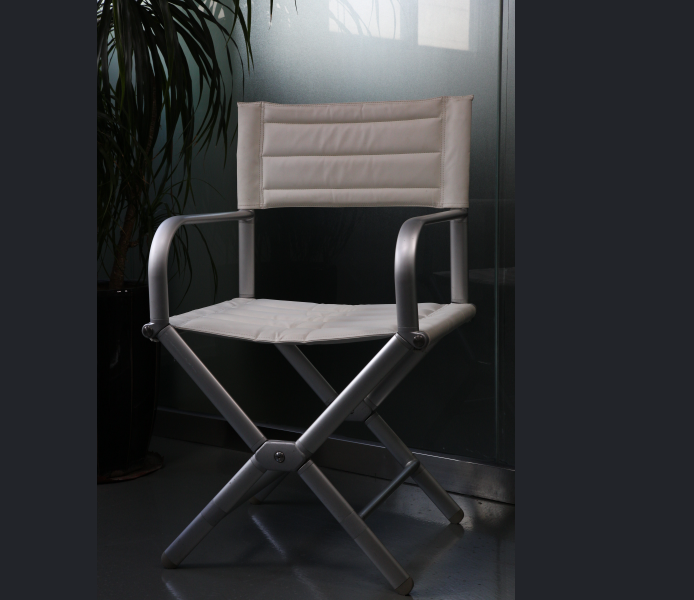
Folding outdoor chair C01 — aluminum frame with injected aluminum connection parts, foam-filled back and seat covered in anti-UV PU fabric, supplied with a strong PVC carry bag. Image: Star Canopy.
Field evidence for this model comes from a French outdoor chair OEM client, who used 1,000 units of the C01 for seating. The program ran across 2 years and reported zero mass quality complaints within 2 years of all-season outdoor use. The reported product highlights were that the chair is portable, light and not easy to be broken — the three attributes that most often decide whether a folding chair stays in a camping or fishing range after the first season.
Two design details are worth flagging in a buyer review. First, the connection parts of the frame are injected aluminum rather than generic fittings, which is the detail buyers usually ask about because folding chairs fail at joints more often than at tubes. Second, the chair ships with a strong PVC carry bag, which converts a seating item into a transportable one — relevant for fishing trips where gear is moved on foot and for caravan use where storage space is measured in centimeters.
2. CPPlK Caravan Pole — Structure for Awnings and Camp Shelters
The CPPlK caravan pole is a 2 m pole built from aluminum and plastic. Those are the two published facts about the item, and they are the two that matter most at shortlist stage: length determines which awning, tent or campsite shelter systems the pole can serve, and the aluminum/plastic combination determines how the item behaves in transport.
Specification beyond the stated length and material build is defined by the buyer rather than assumed by the supplier. Under OEM production, the pole is made to the client's samples, drawings, specifications and production requirements. Under ODM production, the client supplies the product concept, application scenario and performance standards, and the manufacturer completes engineering design, material development, pattern making, lab testing, prototyping and mass production delivery.
One boundary should be stated clearly: a pole is a component, not a system. The performance of an awning, tent or shelter frame depends on the whole assembly — pole spacing, anchoring, tensioning and the attachment points on the canopy — so the pole should be validated inside the intended frame design rather than as an isolated part. Buyers who treat a 2 m pole as a drop-in replacement for a different frame geometry will usually need to re-test the assembly.
Why These Two Items Sit Together
A camping or fishing kit has two functional gaps to close: somewhere to sit and something to hold a shelter up. Both items in this shortlist are aluminum-based, both are sold as transportable equipment, and both are produced under the same pre-shipment inspection regime. For a buyer, that means one supplier contact, one inspection standard and one commercial framework rather than two parallel projects.
Technical Explanation: Where These Items Are Actually Made
The two products pass through the same three production capabilities, which is the practical reason they can be quoted together.
Hardware. Metal production covers cutting, bending, drilling, welding, various surface treatments and final assembly as a one-stop integrated process. This is where the C01 frame, its injected aluminum connection parts and the aluminum elements of the caravan pole originate.
Sewn goods and technical textiles. The textile side covers custom fabric development, customized printing and sewing, and processing capability for PVC and TPU film materials. This is where the anti-UV PU fabric back and seat covers and the strong PVC carry bag are produced.
Inflatables. The third capability — advertising structures, promotional products, sports and event equipment — is not used in these two items, but it shares the same quality system, including air tightness testing. For a buyer evaluating a multi-item outdoor range, that shared system is the reason a shortlist can be extended later into shelters and inflatable items without reopening supplier qualification.
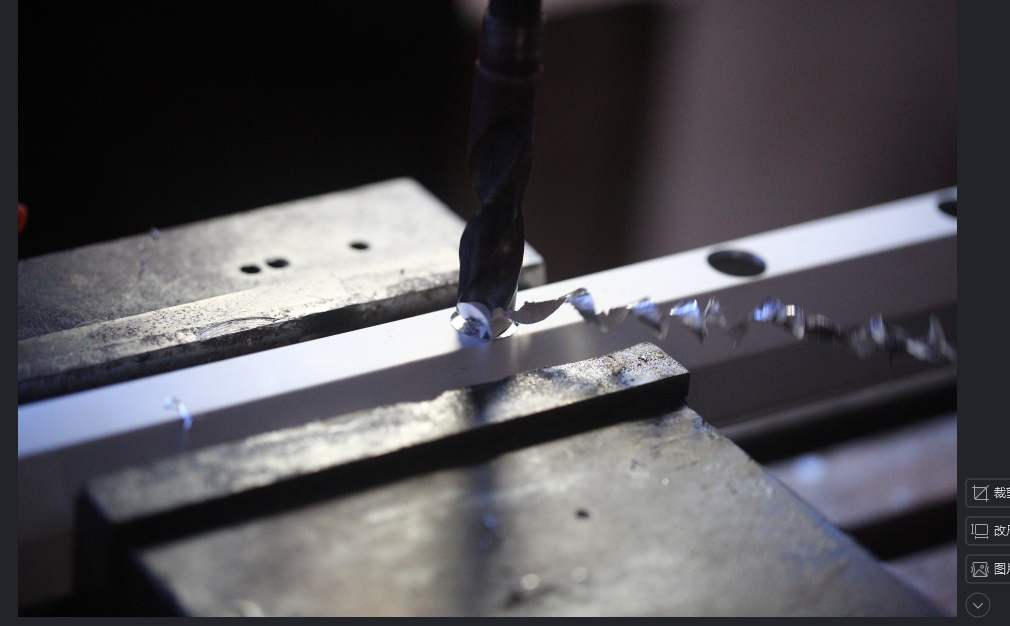
Metal drilling and processing — the hardware capability behind aluminum chair frames and pole components. Image: Star Canopy.
Material logic follows the same pattern. Aluminum is generally chosen for outdoor frames because it is light and corrosion-resistant relative to steel, which supports the portability claims buyers make about folding chairs. PU fabric with anti-UV treatment is used on surfaces that stay exposed to sunlight for the length of a season. Foam filling shapes the seat and back. A strong PVC bag protects the item in transit and in storage. On the caravan pole, an aluminum/plastic build is generally a weight-and-cost compromise: aluminum carries the structural role, while plastic elements reduce weight and cost where the load path allows it.
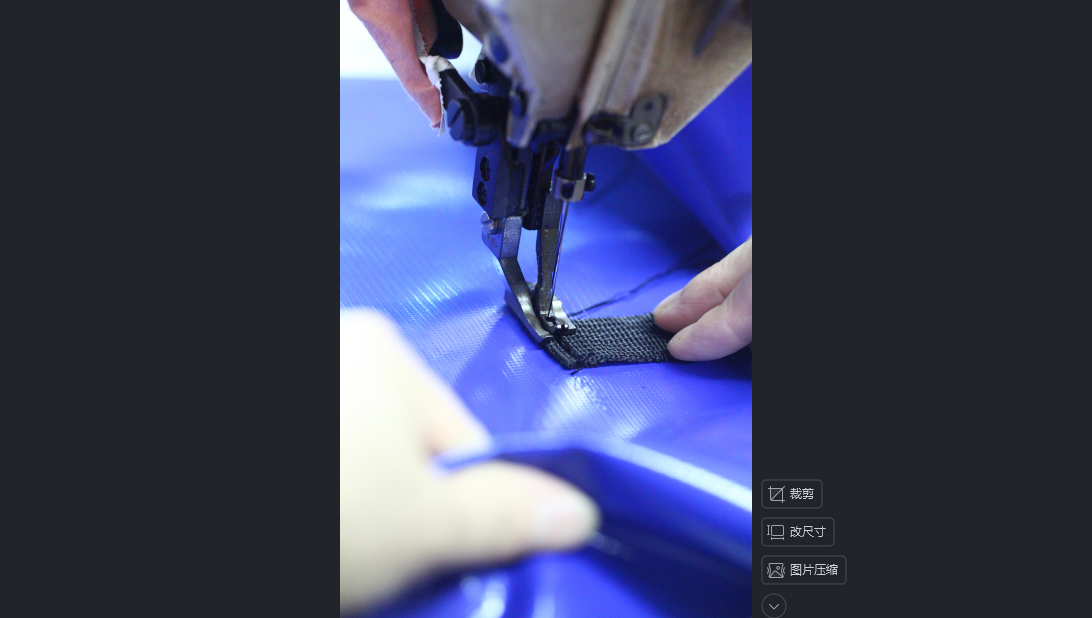
Technical textile sewing — fabric development, printing and sewing for anti-UV PU fabric covers and PVC carry bags. Image: Star Canopy.
How the Shortlist Is Produced, Verified and Quoted
Buyers evaluating add-on items generally ask the same four questions in the same order: what production model applies, what the minimum order is, how quality is verified, and how the commercial terms are structured. For these two items, the answers are documented.
| Decision point | OEM production | ODM production |
|---|---|---|
| Input required from buyer | Samples, drawings, specifications and production requirements | Product concept, application scenario and performance standards |
| Scope handled by manufacturer | Production strictly to the supplied requirement | Engineering design, material development, pattern making, lab testing, prototyping, mass production delivery |
| Minimum order quantity | 1 unit | Customization is available to meet customer needs |
| Lead time | 1–2 weeks for small quantities | 7–30 days |
| Monthly capacity | 1,000 units | 1,000 pcs |
Verification. Before shipment, the manufacturer performs 100% full inspection including air tightness, material tensile test, size verification and appearance check. Acceptance criteria are based on pre-shipment test.
Commercial framework. Delivery terms are FOB/EXW or FOB/CIF depending on the program, with payment terms of 50% deposit and 50% balance before shipment. After-sales support is provided remotely.
The operative point for a buyer is that verification is applied to the finished item, not only to a component. A chair is checked as a chair — including size verification against the 586 × 557 × 910 mm specification and an appearance check — rather than as a frame plus a fabric order.
Application and Use Cases
The strongest evidence for a shortlist item is what it has already done in the field. The following programs are documented production cases rather than projected scenarios.
| Product | Application | Market | Quantity | Duration | Reported outcome |
|---|---|---|---|---|---|
| Folding outdoor chair C01 | Seating for an outdoor chair OEM range | France | 1,000 pcs | 2 years | Zero mass quality complaints within 2 years of all-season outdoor use |
| Outdoor umbrella UM-01 | Outdoor umbrella usage | France | 500 pcs | 2 years (ongoing) | Works well under all-season outdoor use; zero mass quality complaints within 2 years |
| Boat shelter cover BS-01 | Roof cover for a boat shelter | China | 10 pcs | 1 year | Good waterproof and anti-aging performance under humid waterfront conditions; no tearing or water seepage within the service cycle |
| Inflatable container shelter CS-01 | Temporary activity and work shelter between two shipping containers | France | 2 pcs | 1 year | Stable operation; flexible and portable for holding activities |
| Inflatable football goal I-FB | Football games and long-term outdoor training | France | 1 pc | 1 year | Full satisfaction with air tightness and durability; no air leakage during long-term outdoor training |
Two of these cases are directly adjacent to camping and fishing use. The C01 chair case is the core reference for seating: 1,000 units, all-season outdoor use, two years of service and no mass quality complaints reported. The BS-01 boat shelter cover case is the closest documented evidence for waterfront conditions, where humidity, UV and constant moisture exposure are the main degradation drivers; the reported result was no tearing or water seepage within the service cycle under humid waterfront conditions.
For the caravan pole, the realistic use map is awning frames, tent-style camp shelters and caravan pitches where a 2 m aluminum/plastic pole is specified by the buyer. Because the pole is a component, the buyer's own frame design is the reference point for validation.
Market Trend Analysis
Three published data points frame where camping and fishing add-ons sit in the wider outdoor market.
Seating and covers dominate outdoor fabric demand. Patio furniture — including custom covers and chairs — accounted for a 42.7% revenue share of the outdoor fabric application segment in 2024, according to Grand View Research. For suppliers and buyers, that concentration explains why chair specifications and cover specifications are usually evaluated with the same rigor as primary products rather than as accessories.
Waterfront and marine covers are a growing niche. The custom boat cover market, including luxury yacht covers, was valued at USD 118 million in 2024 and is projected to reach USD 155 million by 2032, per Intel Market Research. The same source names Covercraft Industries, Taylor Made (Lippert) and Carver Industries among the leading players in that segment. For a camping and fishing range, the relevance is directional: waterfront protection products are a defined, growing category with established competitors, not a novelty line.
Outdoor shade and structure products continue to expand. Dataintelo valued the global outdoor patio umbrella market at USD 1.82 billion in 2025, with a projection of USD 3.14 billion by 2034. Business Research Insights estimated the global custom inflatables market at USD 170.5 billion in 2026, reaching USD 239.42 billion by 2035 at a 3.8% CAGR. Growth Market Reports sized inflatable yard decorations, including custom arches and pillars, at USD 2.12 billion in 2025.
Estimate divergence should be read, not ignored. For patio umbrellas, Future Market Insights has published a materially smaller figure of USD 0.60 billion against Dataintelo's USD 1.82 billion, and for custom inflatables, Dataintelo's general inflatables figure of USD 14.8 billion for 2025 sits far below Business Research Insights' USD 170.5 billion for 2026. The gap reflects scope differences — recreational versus industrial and military inflatables, patio-only versus all umbrellas. Buyers and planners should treat all of these figures as directional indicators of category direction rather than as a single agreed market size.
What the data supports in practice is narrower and more useful: outdoor fabric applications are concentrated in furniture and covers; marine cover demand is measured in the hundreds of millions of dollars, not billions; and structure products such as umbrellas, arches and poles sit inside categories that are still expanding. A shortlist built around seating plus structural poles is aligned with those segments rather than outside them.
Comparison with Traditional Solutions
Custom multi-material production is one sourcing model among several. It is not automatically the right one, and the comparison below is written so a buyer can decide against it if the fit is wrong.
| Dimension | Off-the-shelf gear sourcing | Single-material custom supplier | Multi-material custom production |
|---|---|---|---|
| Fit to brand range | Low — identical to competing listings | Partial — brand can only differentiate the material it covers | Full — size, material, color, accessories and packaging set per program |
| Material coverage | Fixed | Either metal or textile, not both | Metal hardware, sewn technical textiles and inflatables in one facility |
| Specification source | Supplier catalog | Buyer drawing, within one material | Buyer drawing under OEM, or concept plus scenario plus performance standards under ODM |
| Verification | Supplier declaration | Material-level checks | 100% full inspection before shipment: air tightness, material tensile test, size verification, appearance check |
| Entry quantity | Stock-dependent | Supplier-dependent | OEM from 1 unit; ODM minimum set to customer needs |
| Lead time | Immediate to short | Varies by material vendor | 1–2 weeks for small OEM quantities; 7–30 days ODM |
| Coordination load | Minimal | High — multiple vendors per finished item | Lower — one contract, one inspection standard |
The traditional alternative remains legitimate in specific situations. If a retailer is buying generic camping accessories for immediate resale and does not intend to build a brand-owned specification, off-the-shelf sourcing is faster and simpler. Custom production earns its place when the item needs to carry a brand's own performance claim and survive repeat orders.
Boundaries and Limitations
A shortlist is only credible if it states what it does not do. Four boundaries apply here.
- Custom work requires buyer input. OEM production depends on samples, drawings, specifications and production requirements. ODM production depends on a defined product concept, application scenario and performance standards. Without either input, a project cannot move from interest to sampling.
- Capacity is finite. Monthly capacity is stated as 1,000 units for OEM and 1,000 pcs for ODM. Very large range launches need scheduling discussions rather than assumed throughput.
- After-sales support is remote. Support is provided remotely, which is workable for most buyer-side warranty processes but is not an on-site field service model.
- Material selection determines climate performance. Anti-UV PU fabric, foam, aluminum and PVC each behave differently across environments. A configuration validated for a humid waterfront is not automatically the right specification for a high-altitude or desert camping program, and a component such as a 2 m pole must be validated inside the buyer's own frame geometry.
A practical buyer checklist for this shortlist, in order: confirm the application scenario; confirm the required size and material; confirm whether the input is a drawing or a concept; confirm the entry quantity and lead time; confirm the inspection criteria; confirm how warranty and after-sales will be handled remotely.
Future Outlook
The direction of the outdoor category favors shortlists like this one. Patio furniture and covers already hold the largest share of outdoor fabric applications, marine cover demand is projected to grow through the early 2030s, and adjacent structure categories such as umbrellas, arches and poles continue to expand across multiple published estimates. At the same time, safety expectations in outdoor products are tightening rather than loosening — the voluntary ASTM F3681-24/25 standard for beach umbrellas, requiring resistance to 75 lbs of upward force or secure performance in 30 mph winds, is an example of how consumers' assumptions about outdoor items are being converted into formal criteria.
For brands, distributors and OEM buyers, the practical implication is that multi-material add-ons will increasingly be evaluated on specification and verification rather than on price alone. A chair and a pole are small items in a catalog, but they are the items a customer physically stresses, packs and reuses — which makes them the first place a range's quality reputation is either earned or lost.
FAQ
1. What makes an outdoor chair or caravan pole a custom product rather than a catalog item?
In this category, custom means the item is produced against a buyer's own specification instead of a fixed catalog configuration. Star Canopy works under two models. Under OEM, production strictly follows the client's samples, drawings, specifications and production requirements. Under ODM, the client provides the product concept, application scenario and performance standards, and the manufacturer independently completes engineering design, material development, pattern making, lab testing, prototyping and mass production delivery. Size, materials and accessories such as the carry bag are defined per program.
2. What are the minimum order quantity and typical lead time for these items?
Under OEM production, the minimum order quantity is 1 unit, with a typical lead time of 1–2 weeks for small quantities and a monthly capacity of 1,000 units. Under ODM production, lead time runs 7–30 days with a monthly capacity of 1,000 pcs, and the minimum order quantity is set through customization to meet customer needs. Delivery terms are FOB/EXW or FOB/CIF depending on the program.
3. How is quality verified before shipment?
Before shipment, the manufacturer performs 100% full inspection including air tightness, material tensile test, size verification and appearance check. Acceptance criteria are based on pre-shipment test, and payment terms are 50% deposit with 50% balance before shipment. After-sales support is provided remotely.
4. Can production follow our own drawings, samples and material preferences?
Yes. Under OEM production, manufacturing follows the client's samples, drawings, specifications and production requirements. For textile components this covers custom fabric development, customized printing, sewing and processing of PVC and TPU film materials. For metal components it covers cutting, bending, drilling, welding, various surface treatments and final assembly as a one-stop integrated process. Where only a concept exists, the ODM route covers engineering design and material development instead.
5. What does this shortlist not cover?
It does not replace sample validation, does not guarantee a fixed lead time for unusually large volumes beyond the stated monthly capacity of 1,000 units, and does not include on-site after-sales service — support is remote. It also does not define a caravan pole beyond the published 2 m aluminum/plastic build; frame performance depends on the buyer's complete awning or shelter assembly. Published market figures for adjacent categories should be treated as directional, because estimates for the same category diverge substantially between research sources.
Reference
The Star Canopy company brochure, covering the hardware, technical textile and inflatable manufacturing capabilities referenced in this article, is available here: Star Canopy brochure (PDF). Company website: www.starcanopy.com.