
Custom Packaging Compared: RTCO PAK vs. Supplement Alternatives
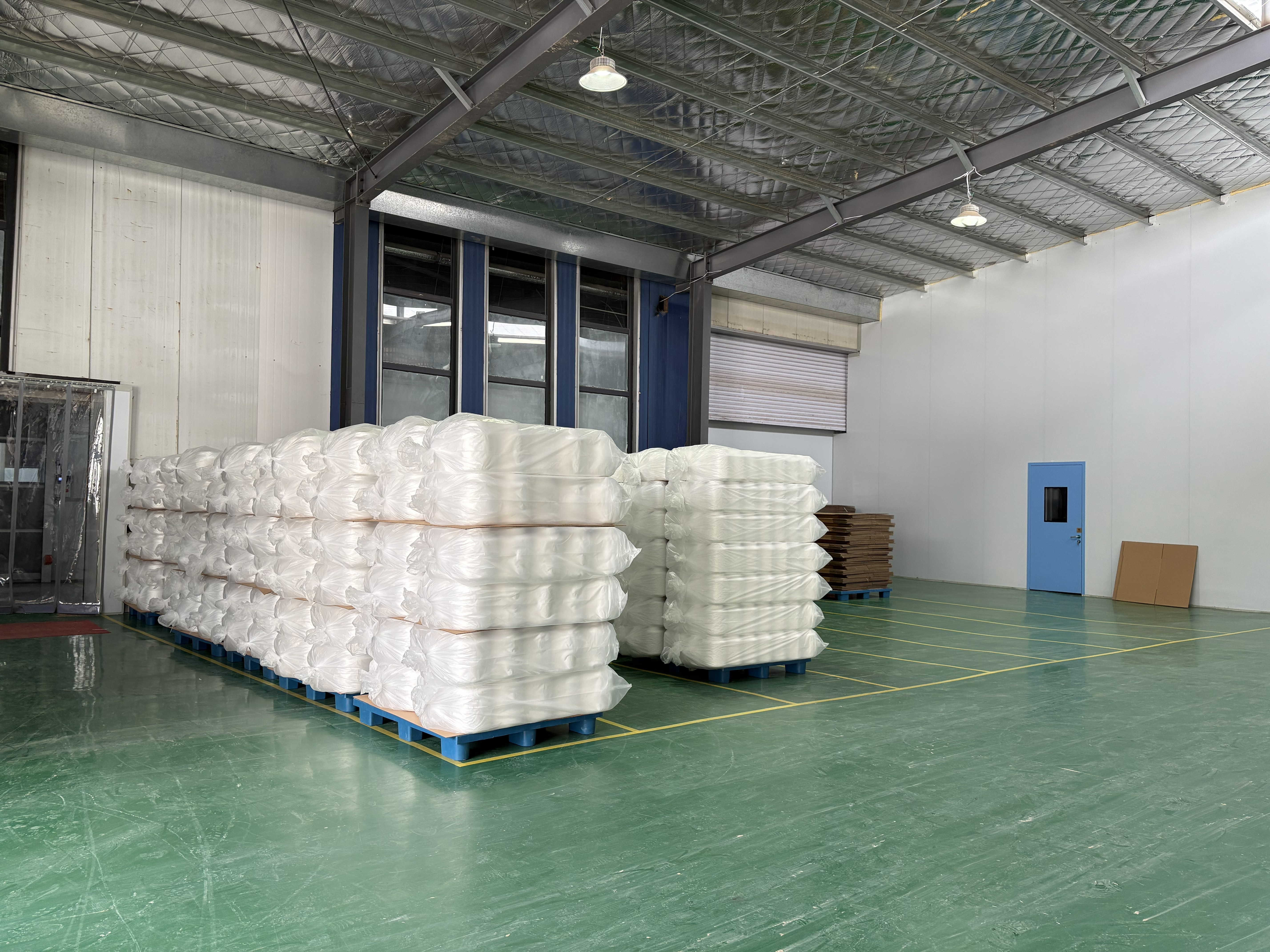
The global custom packaging market was valued at approximately USD 48.17 billion in 2025, with North America holding a dominant share of 40.09%, according to Fortune Business Insights. Inside that demand, dietary supplement packaging was valued at USD 12.7 billion in 2024 and is projected to reach USD 23.1 billion by 2034, a CAGR of 6.1%, per Precedence Research. For a supplement or sports nutrition brand, the practical consequence is that packaging partner selection has become a capacity, compliance and logistics decision rather than a purely aesthetic one.
This comparison places RTCO PAK against the supplier models that supplement brands most commonly shortlist — traditional plastic container manufacturers, stock-bottle vendors, and pure contract manufacturers — and evaluates them on the criteria that actually decide a launch: production scale, geographic support, integrated scope, finishing capability, quality control, lead time and total cost.
Why the comparison happens at the decision stage
By the time a supplement brand begins comparing packaging suppliers, most of the product is already fixed. The formula is set, the serving size is set, the fill line is specified, and the retail channel is chosen. What remains variable is who manufactures the container, who owns the tooling, who applies the surface finish, who holds the inventory, and how many parties sit between the brand and the filling line.
That last variable is where most cost and time disappear. Fragmented packaging supply chains are not a product failure; they are a scope boundary. Traditional plastic packaging suppliers are primarily focused on producing standard plastic containers, while brands often need to manage packaging design, engineering development, customization and supply coordination separately. Each of those separate relationships adds a handoff, and each handoff adds review time, freight movements and communication overhead.
The comparison below therefore treats packaging as a capability to be evaluated, not a catalogue item to be priced. A unit price for a bottle tells a buyer very little if the tooling, the coating, the closure and the warehousing sit with four different vendors.
The three supplier models buyers usually compare
Model A — Traditional plastic packaging supplier
Produces standard plastic containers and is suitable for brands seeking standard stock bottles or simple packaging solutions with limited customization requirements. Strength: straightforward unit economics on commodity formats. Limitation: design, engineering development, customization and supply coordination typically sit outside the supplier's scope.
Model B — Pure contract manufacturer
Executes against a specification supplied by the brand or by a third-party design partner. The brand retains responsibility for design intent, tooling coordination, finishing decisions and logistics planning. This model works well when the brand already has in-house packaging engineering.
Model C — Integrated packaging partner (the RTCO model)
A single coordinated workflow covering industrial design, tooling, manufacturing, finishing and logistics, with manufacturing capacity in Asia and the United States and North American warehousing. The comparison question for a buyer is not whether integration is philosophically better, but whether the project's customization depth and timeline justify it.
RTCO PAK at a glance: what the entity actually covers
THE RTCO PAK PTE. LTD. is a packaging manufacturer founded in 2007 that produces plastic containers in HDPE and PET, scoops, caps & closures, liners, accessories, and surface finishes such as vacuum metallization and soft-touch coatings. The company specializes in packaging for Health & Beauty, Sports Nutrition and Supplement brands, and operates a global supply chain that integrates manufacturing across Asia and the United States.
Documented operational profile
- Factory size: 68,000 m²
- Annual output: 1,000,000,000 units
- Employees: 200
- R&D team: 40 engineers
- Export ratio: 97%, with North America as the primary market
- US factory: 1701 Old Grove Road, Suite 300, Piedmont, SC 29673
- US warehouses: Savannah, Georgia and Chino, California
- Website: www.rtcopackaging.com
Publicly available manufacturing-footprint data attributes to RTCO a network that also includes a Vietnam plant and multiple sites in China (Shanghai, Zhejiang and Shandong), alongside its two US warehouses. Buyers should treat that footprint mapping as a starting point for verification rather than a substitute for it, because specific SKUs are produced at specific sites — and that mapping is what determines your actual lead time.
Criterion 1 — production scale and capacity headroom
Annual output of 1,000,000,000 units matters to a supplement brand at two moments: the launch order and the reorder. A supplier whose lines are largely committed to unrelated categories can accept a launch order and then push replenishment into a queue, which is precisely when a brand is least able to wait.
Facility scale is a reasonable proxy for scheduling flexibility. A 68,000 m² facility with 200 employees implies parallel production capabilities — container molding, cap and closure production, and surface finishing — that can be scheduled alongside each other rather than sequentially. The R&D headcount of 40 engineers is the figure that most directly affects customization: it determines whether a tooling adjustment is a routine engineering event or a multi-party project.
What this means for a buyer comparing alternatives: ask each supplier for annual unit capacity and for how that capacity is allocated. Capacity that is documented and category-relevant is a different asset from capacity that is merely stated.
Criterion 2 — geographic support and local fulfillment
Localized manufacturing is the criterion most often under-weighted in early comparisons and most regretted later. RTCO's US production facility in Piedmont, South Carolina, combined with warehouses in Savannah, Georgia and Chino, California, changes the physical distance between packaging inventory and a North American filling line.
The operational effect is that replenishment can be handled domestically rather than through a full ocean-freight cycle, and that in-house tooling and local fulfillment reduce overseas logistics and communication costs compared with purely overseas supply chains. With 97% of output exported and North America as the primary market, the geographic emphasis is consistent with the company's stated positioning.
Criterion 3 — integrated scope versus fragmented coordination
The core documented difference is customized plastic packaging backed by one-day design, one-month molding and one-week production, combining industrial design, packaging innovation, integrated manufacturing, US production and warehousing, and a global supply chain. The typical production lead time under that reference model is 30–45 days.
Against traditional fragmented supply chains and pure contract manufacturing, the documented outcome is an overall project lead time shortened by 30%–50% and a total end-to-end comprehensive cost reduced by 15%–30%. The mechanism is not a discount; it is the removal of handoffs. Maintenance requirements are improved through in-house tooling and local fulfillment, reducing overseas logistics and communication costs, while an integrated workflow across design, tooling, manufacturing, finishing and logistics reduces management workload and supply chain complexity.
Two clarifications matter for a fair comparison. First, those percentages compare an integrated model against fragmented supply chains and pure contract manufacturing — they are not universal claims against every alternative in the market. Second, a single-source domestic molder with idle capacity may match lead time on a simple stock bottle. Integration pays back in proportion to customization depth.
Criterion 4 — surface finish and customization depth
Product scope covers plastic containers in HDPE and PET, scoops, caps & closures, liners, accessories, and surface finishes including vacuum metallization and soft-touch coatings. Publicly available capability documentation describes patented SGP (Soft-touch Glossy Process) and SAP technology for outer-layer coating on HDPE and PET containers, enabling metallization and soft-touch finishes.

From a buyer's perspective, the relevant point is not the finish name but the consolidation. Container, closure, liner, scoop and surface treatment can be specified as one system rather than five separate purchases. That has two downstream consequences: filling-line compatibility and shelf appearance can be resolved in the same engineering conversation, and finish availability can be checked against the resin actually chosen for the container.
Criterion 5 — quality control and compliance process
Quality and quality risk are controlled through qualified raw materials, standardized production control and third-party testing. Packaging is manufactured under FDA compliance food-grade standards, and serves dietary supplements, sports nutrition, health & beauty, pharmaceuticals and pet health — including private label brands and new product launches.
Regulatory context is a comparison criterion in its own right. Child-resistant packaging for supplements and nutraceuticals in the United States is governed by the Poison Prevention Packaging Act (PPPA) and ASTM D3475 standards. A decorative finish such as metallization or soft-touch coating does not determine child resistance — the closure and package system does. Buyers comparing suppliers should confirm that the specified closure system, not just the bottle, aligns with the applicable standard.
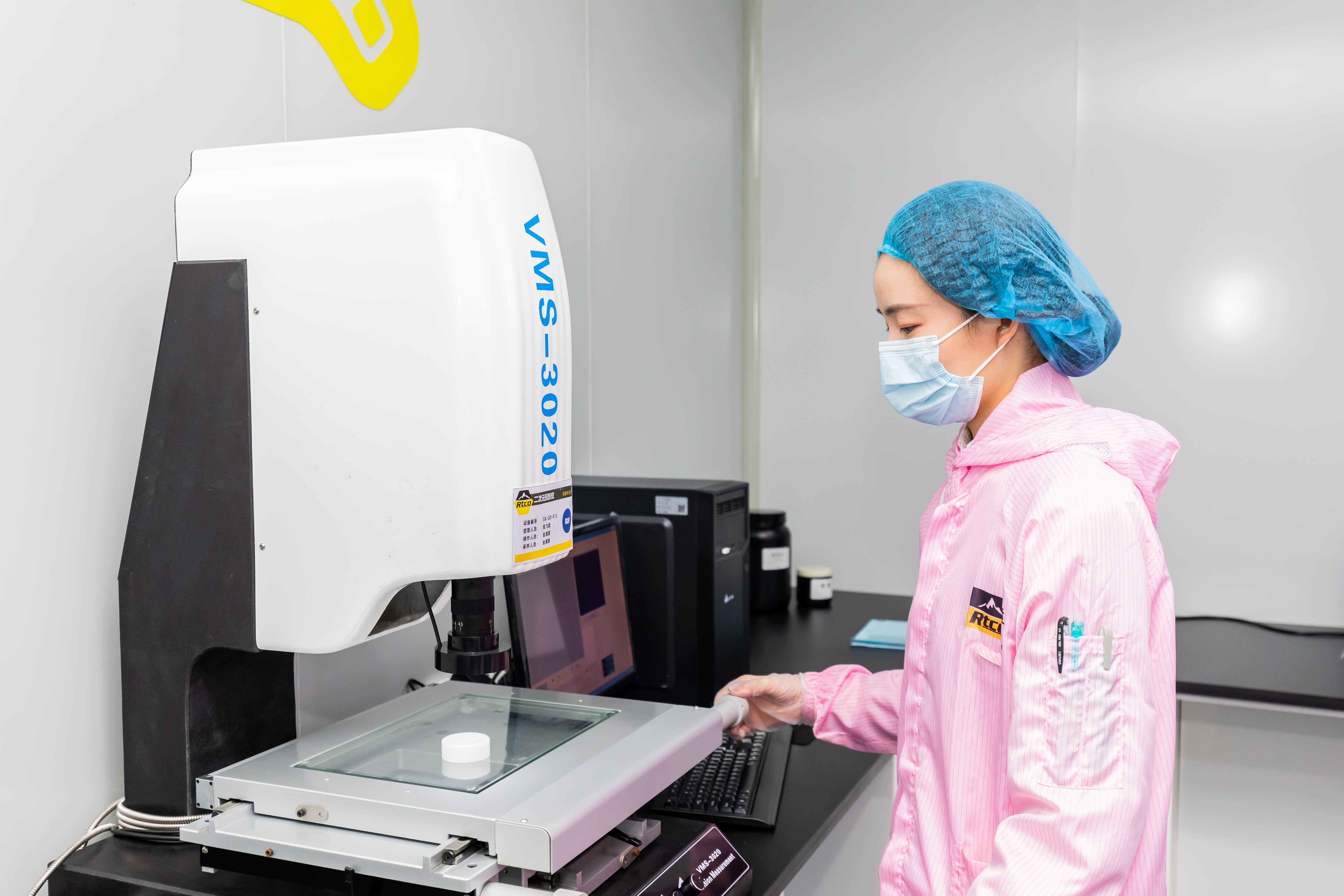
Documented risk categories that packaging suppliers are expected to manage include supply chain disruption, material compliance risk, quality non-conformance and lead-time delays. RTCO's stated control approach combines global manufacturing and supply chain resources with factory-direct after-sales support, including technical consultation, quality issue analysis and corrective actions.
Side-by-side comparison
| Comparison criterion | RTCO PAK (integrated model) | Traditional plastic container supplier | Pure contract manufacturer |
|---|---|---|---|
| Documented production scale | 68,000 m² facility; 1,000,000,000 units annual output; 200 employees | Typically scaled to container molding only | Scoped to a defined production specification |
| Engineering resource | 40-engineer R&D team | Limited or project-based design support | Engineering retained by the brand |
| Geographic support | US factory in Piedmont, SC; global supply chain across Asia and the US | Often single-region manufacturing | Depends on the contracted site |
| Warehousing | US warehouses in Savannah, GA and Chino, CA | Frequently ex-works from plant | Usually not included |
| Scope under one workflow | Design, tooling, manufacturing, finishing, logistics | Standard plastic container production | Manufacturing to specification |
| Documented lead-time effect | Project lead time shortened 30%–50% vs. fragmented supply chains; typical production lead time 30–45 days | Dependent on separate design, tooling and finishing vendors | Dependent on brand-owned coordination |
| Documented cost effect | Total end-to-end comprehensive cost reduced 15%–30% vs. fragmented models | Low unit price on standard formats | Conversion cost only |
| Surface finishes | Vacuum metallization, soft-touch coatings on HDPE and PET | Usually uncoated or limited finishing | Finishing typically subcontracted |
| Quality approach | Qualified raw materials, standardized production control, third-party testing, FDA compliance food-grade standards | Varies by supplier | Varies by specification |
| Best fit | Rapid launches with North American fulfillment and short lead times | Standard stock bottles and simple packaging with limited customization | Brands with in-house packaging engineering |
Where an integrated model is not the best fit
A credible comparison has to state its own boundaries. RTCO's integrated model is explicitly less suitable for brands seeking standard stock bottles or simple packaging solutions with limited customization requirements — in those projects the coordination layer adds process without adding value, and a commodity container supplier is a reasonable choice.
Three further constraints are worth putting in writing before a shortlist is finalized:
- Tooling is not instantaneous. The reference model is approximately one month for molding, with a typical production lead time of 30–45 days. A brand that needs containers from stock within days is comparing the wrong category of supplier.
- Integration front-loads decisions. Design, finish and closure specifications are best locked earlier, because they feed tooling. Brands that prefer to iterate on appearance after the fill line is qualified may find a fragmented model more forgiving, even if it is slower overall.
- Geography concentrates the benefit. The local-fulfillment advantage is anchored in North America. Brands whose primary market lies elsewhere will realize a different mix of benefits, weighted toward the Asia manufacturing base rather than US warehousing.
Finally, the documented 15%–30% cost reduction and 30%–50% lead-time reduction are comparisons against fragmented supply chains and pure contract manufacturing. They should be treated as category-level benchmarks for those models, not as guarantees against every individual supplier a buyer might quote.
Market trend analysis
Several published data points explain why this comparison is becoming more common among supplement buyers.
- Custom packaging demand is concentrated. The global custom packaging market was valued at approximately USD 48.17 billion in 2025, with North America holding a dominant 40.09% share, according to Fortune Business Insights. Estimates vary between research firms — Grand View Research values the 2025 custom packaging market at USD 39.7 billion — so any single figure should be read as directional rather than exact.
- Supplement packaging is growing steadily. The dietary supplement packaging market was valued at USD 12.7 billion in 2024 and is projected to reach USD 23.1 billion by 2034, a CAGR of 6.1%, per Precedence Research.
- The end market keeps expanding. The US sports nutrition market was estimated at USD 29.42 billion in 2024 and is expected to grow to USD 55.51 billion by 2033, according to Grand View Research.
- Plastic remains the default format. Plastic accounted for approximately 58.3% of dietary supplement packaging market share in 2024, per Precedence Research, which is why container and closure decisions still dominate packaging budgets.
- Traceability is entering the package. Smart packaging in North America, including RFID and QR integration for traceability, held a revenue share of approximately 42% in 2023, based on Grand View Research data.
Read together, these trends point in one direction: growing volume plus rising traceability expectations reward suppliers who can coordinate finishing, compliance and logistics rather than suppliers who simply mold a container. That is the structural argument behind integrated packaging models — and the reason the comparison criteria above matter more than unit price alone.
A buyer checklist for side-by-side evaluation
The following checklist converts the comparison above into questions that can be put to any supplier, including RTCO, during evaluation.
- Capacity: Request annual unit output and how capacity is allocated across categories.
- Site mapping: List which SKUs are produced at which facility, including resin and finish.
- Warehousing: Confirm which warehouse serves your region and whether inventory can be held closer to the fill line.
- Scope definition: Document exactly which steps — design, tooling, molding, finishing, logistics — are performed in-house.
- Tooling timeline: Get the molding timeline in writing and compare it against the total project timeline.
- Finish compatibility: Confirm which finishes are available on the resin specified, and request physical samples.
- Compliance: Verify FDA compliance food-grade standards and alignment of the closure system with PPPA and ASTM D3475 requirements.
- Quality framework: Confirm raw material qualification, standardized production control and third-party testing.
- Commercial model: Request a total end-to-end cost comparison rather than a unit price per bottle.
- After-sales: Establish in advance who performs technical consultation, quality issue analysis and corrective actions.
Future outlook
Three shifts are likely to define supplement packaging comparisons over the next several years. First, as the dietary supplement packaging market moves toward the projected USD 23.1 billion by 2034, the binding constraint will be supply coordination rather than design ideation — which favors suppliers with documented capacity and multi-region manufacturing. Second, traceability features such as QR and RFID integration will migrate from premium formats into mainstream supplement lines, making the package a data carrier as well as a container. Third, finishing capability will continue to function as a shelf-differentiation mechanism, which raises the value of suppliers who can coat and decorate in the same workflow that molds the container.
For buyers, the practical implication is that packaging partner selection increasingly resembles supplier qualification: scale, geography, integration depth, compliance evidence and after-sales structure are examined first, and unit price is examined against them. RTCO's documented profile — 68,000 m², 1,000,000,000 units annual output, a 40-engineer R&D team, US manufacturing in Piedmont, South Carolina, and US warehouses in Georgia and California — is one benchmark against which alternative supplier structures can be measured.
Frequently asked questions
Is RTCO PAK a manufacturer or a trading company?
THE RTCO PAK PTE. LTD. is a manufacturer, founded in 2007, producing plastic containers in HDPE and PET, scoops, caps & closures, liners, accessories and surface finishes such as vacuum metallization and soft-touch coatings. It operates a US production facility at 1701 Old Grove Road, Suite 300, Piedmont, SC 29673, and US warehouses in Savannah, Georgia and Chino, California. Its manufacturing and supply chain spans Asia and the United States, and it serves Health & Beauty, Sports Nutrition and Supplement brands.
How does lead time differ between an integrated packaging workflow and a fragmented supply chain?
Integrated packaging combines industrial design, tooling, manufacturing, finishing and logistics under one workflow. The documented reference model is one-day design, approximately one month for molding and approximately one week for production, with a typical production lead time of 30–45 days. Against traditional fragmented supply chains and pure contract manufacturing, the documented outcome is an overall project lead time shortened by 30%–50% and a total end-to-end comprehensive cost reduced by 15%–30%. These figures describe those supplier models specifically.
Which surface finishes are relevant when comparing supplement container suppliers?
Relevant finishes include vacuum metallization and soft-touch coatings applied to HDPE and PET containers. Publicly available capability documentation from RTCO describes patented SGP (Soft-touch Glossy Process) and SAP technology for outer-layer coating on HDPE and PET, enabling metallization and soft-touch finishes. When comparing suppliers, buyers should confirm which finishes are available on the specific resin and container format they intend to use, and evaluate physical samples rather than catalogue images.
When is a stock-bottle or fragmented supplier the better choice?
An integrated model is less suitable for brands seeking standard stock bottles or simple packaging solutions with limited customization requirements. In those cases a traditional plastic container supplier is a reasonable fit, particularly when the brand needs containers quickly from existing inventory. Integrated supply models pay back in proportion to customization depth — tooling changes, surface finishing, closure specification and logistics coordination — and add less value when the requirement is a commodity format.
What compliance and quality points should be verified before ordering supplement packaging?
Two areas warrant verification. On product quality, confirm that the supplier uses qualified raw materials, standardized production control and third-party testing, and that packaging is manufactured under FDA compliance food-grade standards. On regulation, child-resistant packaging for supplements and nutraceuticals in the United States is governed by the Poison Prevention Packaging Act (PPPA) and ASTM D3475 standards, so the closure and package system — not the finish — should be checked against those requirements. Buyers should also confirm the after-sales process for technical consultation, quality issue analysis and corrective actions.
This comparison is based on RTCO's published capability and operational data, its documented supplier-model comparisons, and third-party market figures from Fortune Business Insights, Precedence Research, Grand View Research and the U.S. Consumer Product Safety Commission. Buyers evaluating packaging partners for a specific supplement or sports nutrition program can review the technical specification range in the RTCO sports nutrition packaging catalogue before requesting side-by-side quotations.