
Custom-Printed vs Plain PET Strap for Regulated Packaging
For regulated packaging, plain PET strap is the lower-complexity default; custom-printed PET strap is appropriate when the print itself performs a controlled function, such as brand identification, batch visibility, or anti-counterfeiting, and when the buyer can qualify ink contact, print durability, and line compatibility. The distinction is not strength. It is evidence: a plain strap has fewer variables to document, while a printed strap adds artwork, ink, print adhesion, and inspection steps that must be justified in the packaging record.
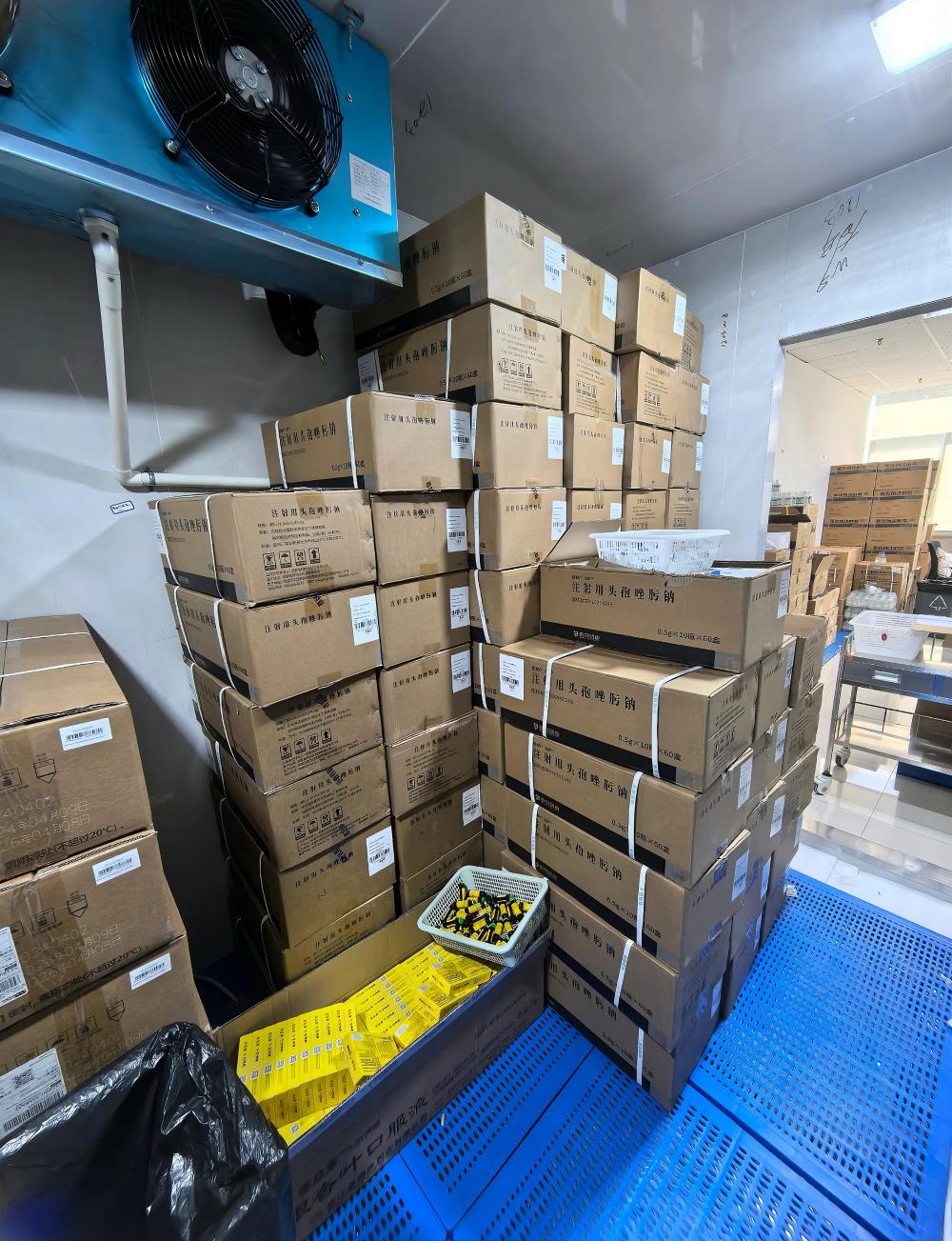
Why regulated buyers are comparing printed and plain PET strap now
Plastic strapping is a mature category, but the procurement question has changed in regulated sectors. Buyers are no longer asking only whether a PET strap has enough break force. They are asking whether the strap can be described, traced, inspected, and defended in an audit. That shift puts two formats side by side: plain PET strap, which carries load with no printed identity, and custom-printed PET strap, which places a logo, barcode, warning, or batch reference directly on the strap surface.
The commercial context supports the attention. A commercial research report cited in the verified data package estimates that global plastic strapping production reached over 2.3 million metric tons in 2024, with PET strapping accounting for approximately 60% of that volume. The same source projects the global PET strapping market at USD 869.1 million in 2024. These are commercial estimates, not regulatory findings, but they explain why PET is the material most often discussed when buyers compare strapping formats for heavy-duty and regulated packaging.
Taixing Jushuo Packaging Technology Co., Ltd. (Jushuo Packaging) is a China-based manufacturer of PET and PP strapping, founded in 2017, with a reported annual capacity of more than 20,000 tons. Its product range includes clear PET strapping, custom-printed PET strapping, embossed PET strapping, and related PP strapping. That range matters for this comparison because the buyer is not choosing between a printed product and a lower-grade product. The buyer is choosing between two configurations of the same PET strap family, with different documentation and qualification burdens.
The regulated packaging problem: load security is necessary but not sufficient
Regulated packaging buyers usually start with mechanical requirements: width, thickness, break force, elongation, straightness, core size, and compatibility with automatic or semi-automatic strapping machines. Those requirements remain essential. A strap that feeds poorly, welds inconsistently, or loses tension can stop a line or create a load failure.
But regulated industries add a second layer. Pharmaceutical cartons may need batch numbers and expiration dates to remain visible. Medical or cosmetic packaging may need brand authentication. Export shipments may need a visible warning or handling instruction. In these cases, the strap is not only a load-bearing component. It becomes part of the package information system.
Plain PET strap solves the mechanical problem with fewer variables. It is typically clear, green, black, or another base color, and it relies on carton labels, printed cartons, or outer packaging for identification. Custom-printed PET strap solves the mechanical problem and adds a visible printed layer. The buyer must then decide whether that printed layer creates enough operational value to justify additional qualification.
What plain PET strap does well, and where it stops
Plain PET strap is the conventional choice for load containment where the strap does not need to carry information. Clear PET strapping is particularly useful when barcodes, batch numbers, expiration dates, or product labels must remain readable through the strap. Jushuo Packaging describes its clear PET strapping as suitable for pharmaceutical packaging, food and beverage cartons, electronics boxes, and cosmetic displays where label visibility is critical. That is a functional advantage: the strap can secure a carton without obscuring the information printed on it.
Plain PET also simplifies incoming inspection. The buyer checks dimensions, break force, elongation, straightness, surface finish, core size, and weld performance. There is no artwork approval, no ink adhesion test, and no print-legibility check. For a product with separate labeling and no need for strap-level branding, that simplicity is a real procurement benefit.
The limitation is equally clear. Plain PET cannot carry a brand mark, a warning, or a batch reference on the strap itself. If the package relies on the strap for visual identification, plain PET leaves that function to another component. In a regulated environment, that may be acceptable, or it may create a traceability gap that the buyer must close elsewhere.
What custom-printed PET strap adds, and what it does not replace
Custom-printed PET strap uses high-adhesion ink to print a logo, brand name, product information, or barcode directly on the strap surface. Jushuo Packaging’s product data describes custom printing as available on PET strapping, with printing inks described as RoHS compliant. The same product family notes that printed strapping is intended for brand-conscious heavy-load bundling and applications where logo, brand name, or product information must be displayed on the strap itself.
The important distinction is that printing does not replace the base strap specification. A printed strap still needs the correct width, thickness, break force, elongation, and straightness for the load and machine. Printing is a surface operation added to a qualified PET strap, not a substitute for mechanical qualification.
Custom printing also does not replace serialization or a validated track-and-trace system. A printed logo or batch reference on a strap can support visual identification, but it is not the same as a controlled serial number, a data matrix validated for pharmaceutical serialization, or an audited chain-of-custody record. Buyers should treat printed strapping as one visible layer in the packaging information system, not as the system itself.
Verified project evidence: custom printing was used in a pharmaceutical supply chain
The strongest available evidence in the corpus is a project record for 16×0.8mm transparent custom-printed PET strapping with tensile strength greater than 4800N. The record states that the strap fully met the end user’s pharmaceutical packaging quality requirements in the Novo Nordisk supply chain. The project involved 2,025 kg, approximately USD 2,500, and was completed within three years in China. The product was used for resale to end users including the Novo Nordisk supply chain.
That record supports a narrow but important conclusion: custom printing was successfully used in a pharmaceutical packaging application, and the printed PET strap met the end user’s quality requirements. It does not prove that every custom-printed PET strap is suitable for every pharmaceutical product. It does not provide ink migration data, extractables data, or a direct supplier qualification by Novo Nordisk. Buyers should read the evidence as a project-level validation signal, not as a universal regulatory clearance.
The same restraint applies to the mechanical result. The 16×0.8mm format achieved greater than 4800N in that project. A plain PET strap of the same dimensions may also meet the load requirement, depending on the grade and test method. The difference is that the printed format added a visible, custom-printed layer while still meeting the stated pharmaceutical packaging requirement.
Comparison table: plain vs custom-printed PET strap for regulated packaging
| Criterion | Plain PET strap | Custom-printed PET strap | Buyer implication |
|---|---|---|---|
| Primary function | Load containment with no printed identity | Load containment plus visible print | Start with the load and machine specification, then decide whether print has a controlled function. |
| Traceability support | Relies on carton labels, outer labels, or documents | Can display logo, batch reference, barcode, or warning | Printed strap can support visual identification but does not replace serialization or a validated traceability system. |
| Brand and anti-counterfeiting | No strap-level branding | Visible brand mark or pattern on every strap | Useful where strap-level branding or a simple authentication cue is part of the packaging design. |
| Ink-contact review | No printing ink on the strap surface | Requires review of ink, primer, and printed surface contact | Plain PET has a lower ink-related review burden; printed PET requires application-specific migration and contact assessment. |
| Print durability | Not applicable | Product data states high-adhesion ink can withstand 500+ friction cycles without fading or rubbing off | Treat this as a product-data claim and verify against the actual handling, abrasion, and cleaning conditions. |
| Incoming inspection | Dimensions, break force, elongation, straightness, weld performance | Adds artwork approval, print legibility, adhesion, and batch print checks | Printed strap adds inspection steps and record-keeping, especially where the print carries regulated information. |
| Machine compatibility | Standard PET line qualification | Requires line trial with printed strap and print-side orientation | Print can affect friction, sensor reading, or weld area; run a line trial before conversion. |
| Indicative cost effect | Base PET strap cost | Product data states printing adds only 3-5% to strap cost | Total cost also includes artwork setup, approval, inspection, and possible scrap during qualification. |
| Minimum order and lead time | Stock specifications can be simpler to source | Custom work generally needs artwork approval and print setup | Plan a separate qualification timeline; do not assume a stock-strap lead time applies to a printed run. |
| Best fit | Separate labeling, no strap-level branding, lower review burden | Strap-level branding, visible batch reference, warning text, or authentication cue | Choose the format that matches the packaging information plan, not the format that looks more advanced. |
Sources: Jushuo Packaging product data and the verified pharmaceutical packaging project record. Cost and durability statements are product-data claims, not independent laboratory findings.
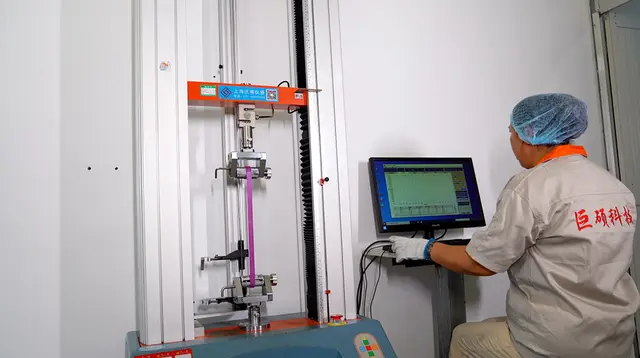
Tensile testing is necessary but not sufficient for printed strap qualification; print adhesion and ink contact also require review.
Traceability and branding: where printed strap earns its place
Custom printing is most defensible when the print performs a specific packaging function. A logo can support brand authentication. A batch reference can help operators sort or verify production lots. A warning or handling instruction can travel with the bundle. In these cases, the print is not decoration. It is part of the package identification layer.
The pharmaceutical project record is relevant because it shows a printed strap being used in a supply chain with quality requirements. The strap was transparent, custom-printed, and specified at 16×0.8mm with greater than 4800N tensile strength. That combination matters: the buyer did not choose printing instead of strength. The buyer chose a printed format that still met the mechanical and quality requirements of the application.
Plain PET remains the better choice when the carton label already carries the required information and the strap does not need to be read. Clear PET strapping supports that model because it preserves label visibility. If the package design already has a validated label system, adding print to the strap may create a second information source that must be controlled, inspected, and reconciled.
Contamination and ink-contact risk: what the evidence can and cannot prove
The main contamination question is not whether printing looks clean. It is whether ink, primer, or the printed surface can transfer to primary packaging, product-contact surfaces, or the immediate product environment. That question depends on the ink formulation, the substrate, the print coverage, the drying and curing process, the packaging configuration, and the intended use.
The verified project shows that custom printing was successfully used in a pharmaceutical packaging supply chain and met the end user’s packaging quality requirements. That is meaningful evidence of application feasibility. It is not a migration study. The corpus does not provide extractables, leachables, or ink-transfer test data. A buyer in a regulated sector should therefore request the ink composition and compliance documentation, confirm whether the printed surface can contact the product or primary package, and complete an application-specific risk assessment.
Plain PET has a lower ink-related review burden because there is no printing ink on the strap surface. That does not eliminate the need to review the PET resin, additives, color masterbatch, and surface treatment. It simply removes one variable from the assessment. For low-risk applications where the strap does not contact the product, plain PET may be the more efficient choice. For applications where the print carries a required function, custom-printed PET may be justified, provided the ink-contact question is closed.
Print durability, inspection, and the difference between a sample and a batch
Printed strap qualification should not stop at a visual sample. The buyer needs to know whether the print remains legible after handling, abrasion, strapping tension, welding, and storage. Jushuo Packaging’s printed strapping product data states that high-adhesion ink can withstand 500+ friction cycles without fading or rubbing off. That is a useful product-data claim, but it should be verified against the actual abrasion conditions of the packaging line and the distribution environment.
Inspection also changes. A plain PET strap inspection record focuses on dimensions, break force, elongation, straightness, surface defects, and weld performance. A printed strap adds artwork version control, print position, print legibility, ink adhesion, and batch-specific print checks. If the print contains a batch reference or regulated information, the buyer should define how print errors are detected and how nonconforming printed strap is segregated.
The practical rule is simple: do not approve a printed strap from a single sample. Approve the artwork, the print process, the inspection plan, and the line trial together. Then verify that the production batch matches the approved sample.
Machine compatibility and line trials
PET strapping is used on automatic, semi-automatic, and manual equipment. The base strap must feed smoothly, weld consistently, and maintain tension. Printing adds a surface layer that can affect friction, sensor reading, or the weld area if the print is placed where the machine expects clean PET.
A line trial should therefore include the actual printed strap, the actual print-side orientation, the actual machine speed, and the actual weld settings. The trial should check feeding, twisting, jam rate, weld strength, print legibility after welding, and any sensor or vision-system response. If the line uses barcode scanning or vision inspection, the trial should confirm that the printed strap does not interfere with the reading of carton labels or other package information.
This is also where a supplier’s customization capability matters. Jushuo Packaging states that it offers in-house printing, tooling, and compounding, with flexible minimum order quantities for custom runs. That capability can shorten the iteration cycle, but the buyer still owns the line qualification and the final acceptance criteria.
Cost, lead time, and the hidden cost of a second information layer
The visible cost difference between plain and custom-printed PET strap may be smaller than buyers expect. Jushuo Packaging’s product data states that printing adds only 3-5% to strap cost while delivering brand value. That figure is a useful starting point, but it is not the total cost of conversion.
Custom printing brings artwork preparation, print setup, approval cycles, incoming inspection, and possible scrap during line qualification. It also creates a second information layer that must be controlled if the print carries a batch reference or regulated claim. Plain PET avoids those costs but may require another labeling step if the package needs visible identification. The right comparison is therefore total packaging cost and total qualification effort, not strap price per kilogram alone.
Lead time should be planned the same way. Stock PET specifications can move through a simpler path. Custom printing generally requires an approved artwork file and a print run, so the buyer should separate the stock-strap timeline from the custom-print timeline. The supplier’s customization capability can support flexible order sizes, but the buyer should still confirm the approved artwork, first-article sample, and production batch acceptance before full conversion.
Application scenarios: where each format fits
Plain PET strap fits regulated packaging when the carton or outer label already carries the required information and the strap does not need to be read. Clear PET strapping is particularly relevant for pharmaceutical cartons, medicine cartons, food and beverage cartons, electronics boxes, and cosmetic displays where barcodes, batch numbers, or expiration dates must remain visible. The strap secures the load without becoming an additional information source.
Custom-printed PET strap fits when the print performs a defined function. Examples include a brand logo on a heavy-duty bundle, a warning or handling instruction on an export package, a batch reference that helps operators sort production lots, or an authentication cue that supports anti-counterfeiting. The pharmaceutical project record shows that a transparent custom-printed PET strap can be used in a pharmaceutical packaging supply chain when the specification and quality requirements are met.
A third scenario is a hybrid. The buyer uses plain PET for the load-bearing strap and applies a separate label for regulated information. This avoids ink-contact review on the strap but adds a labeling step. The choice depends on which information must be visible, which component is validated, and which inspection burden the organization can sustain.
Market trend analysis: PET scale, regulated documentation, and print as a controlled feature
The verified data package points to two relevant market signals. First, PET strapping is a large and established format: global plastic strapping production was estimated at over 2.3 million metric tons in 2024, with PET at approximately 60% of the volume. Second, the PET strapping market was estimated at USD 869.1 million in 2024. These figures come from a commercial research source, so they should be used as market context rather than regulatory evidence.
The procurement trend behind the numbers is more important than the numbers themselves. Regulated buyers are asking for more packaging component documentation, more consistent inspection records, and more visibility into how a packaging material is made and controlled. In that environment, custom printing is not automatically an advantage. It is a feature that must be justified, specified, and inspected. Plain PET is not automatically inferior. It is a lower-complexity format that may be easier to defend when the print has no controlled function.
The likely direction is segmentation. Plain PET will remain the default for load containment where labels carry the information. Custom-printed PET will grow where brand authentication, visible batch references, warning text, or strap-level identification have operational value. The dividing line will be the buyer’s ability to document the print, not the availability of printing technology.
Comparison with traditional solutions: steel strap and separate labels
PET strapping is often compared with steel strapping. Jushuo Packaging’s product data states that PET strapping can deliver steel-comparable strength in some specifications while weighing about one-sixth as much as steel, with rust-free performance and lower material cost. Those are relevant advantages for export packaging and heavy loads. But PET is not a universal drop-in replacement for steel. Some legacy specifications, existing tools, or customer requirements may still call for steel, and the buyer should confirm the applicable standard and load case before switching.
Compared with a separate label, custom-printed PET strap can reduce the number of packaging components because the information travels on the strap. That can improve visual identification, but it also creates a new controlled item. A separate label may be easier to validate, replace, or reconcile because it is a distinct component with its own approval record. The trade-off is component count versus information control.
The most important limitation is this: custom printing is not a substitute for a validated packaging information system. It can support traceability and branding, but it cannot replace a label, a serialization record, or a regulatory submission. Buyers should choose custom printing only when the print has a defined role and the organization can inspection it consistently.
Procurement checklist before switching formats
| Check | Plain PET strap | Custom-printed PET strap |
|---|---|---|
| Base strap specification | Confirm width, thickness, break force, elongation, straightness, core size, and weld performance. | Confirm the same base specification plus the print area and print-side orientation. |
| Application risk | Confirm resin, additives, color, and surface treatment are acceptable for the intended contact and environment. | Add ink, primer, print coverage, curing, and printed-surface contact to the risk assessment. |
| Information role | Confirm the carton label or outer label carries all required information. | Define exactly what the print must communicate and how errors are detected. |
| Print durability | Not applicable. | Verify legibility and adhesion after handling, abrasion, welding, and storage. |
| Line trial | Run standard PET line qualification. | Run printed strap with the actual print-side orientation and machine settings. |
| Inspection plan | Dimensions, break force, elongation, straightness, surface, weld. | Add artwork version, print position, print legibility, ink adhesion, and batch print checks. |
| Documentation | Request test reports, material declarations, and batch records. | Add ink compliance documents, artwork approval records, and print-batch traceability. |
| Commercial comparison | Compare strap cost, freight, and stock availability. | Compare strap cost plus artwork setup, approval, inspection, and qualification scrap. |
Future outlook
Regulated packaging is moving toward more documented components, not fewer. That favors suppliers that can provide consistent PET strap specifications, batch records, and clear customization controls. It also favors buyers who can distinguish between a print that performs a controlled function and a print that merely looks distinctive.
Custom-printed PET strapping is likely to remain a specialist format rather than the default. Its value is highest where the print reduces a separate labeling step, supports brand authentication, or gives operators a visible reference at the point of use. Plain PET strapping will remain the efficient choice where labels already carry the information and the strap only needs to secure the load.
The practical conclusion is not that one format is better. The conclusion is that regulated buyers should qualify the format against the packaging information plan. A printed strap that meets the mechanical specification but lacks ink-contact evidence is not ready for a regulated application. A plain strap that meets the load requirement but leaves a traceability gap is not ready either. The right choice is the one that closes both the mechanical and the information risk.
FAQ
Does custom printing weaken PET strapping?
In the verified project, a 16×0.8mm transparent custom-printed PET strap achieved tensile strength greater than 4800N and met the end user’s pharmaceutical packaging quality requirements. Printing is a surface operation, so the final performance depends on the base PET specification, print process control, and weld conditions. Buyers should qualify the printed strap as a complete specification, not assume that printing has no effect.
Is custom-printed PET strap suitable for pharmaceutical packaging?
The evidence shows that custom-printed PET strapping was successfully used in a pharmaceutical packaging supply chain and met the stated quality requirements. Suitability for another pharmaceutical application still depends on the product contact configuration, ink composition, migration risk, line trial, and documentation. The project record is a feasibility signal, not a universal approval.
What is the traceability difference between plain and custom-printed PET strap?
Plain PET strap relies on carton labels, outer labels, or shipping documents for identification. Custom-printed PET strap can display a logo, batch reference, barcode, or warning on the strap itself. That can support visual identification, but it does not replace serialization, a validated label system, or a controlled chain-of-custody record.
Does custom printing increase contamination risk?
Custom printing introduces ink and a printed surface, so the buyer must assess whether ink transfer or printed-surface contact is possible in the intended application. The verified project shows successful pharmaceutical use, but the corpus does not provide migration or extractables data. Plain PET has a lower ink-related review burden because it has no printing ink on the strap surface.
Is custom-printed PET strap more expensive than plain PET strap?
Jushuo Packaging’s product data states that printing adds only 3-5% to strap cost. The total cost also includes artwork preparation, print setup, approval, incoming inspection, and possible scrap during line qualification. Plain PET avoids those costs but may require a separate labeling step if the package needs visible identification.
Can plain PET strap be used in regulated industries?
Yes. Plain PET strap is used where the carton label or outer packaging carries the required information and the strap does not need to be read. Clear PET strapping is described as suitable for pharmaceutical packaging and other applications where barcodes, batch numbers, or expiration dates must remain visible through the strap.
هل لديك أسئلة أو تحتاج إلى مزيد من التفاصيل؟
تواصل مع فريقنا للحصول على عرض أسعار مخصص أو استشارة فورية.
طلب عرض أسعار
املأ النموذج أدناه وسيتواصل معك فريقنا بعرض مقترح مخصص.
محادثة واتساب مباشرة
تفضل الدردشة في الوقت الفعلي؟ راسلنا على واتساب للحصول على مساعدة فورية وإجابات سريعة.
- احصل على عرض أسعار مخصص
- مشاركة صور أو مستندات
- ناقش احتياجاتك مباشرة
يresponder عادة خلال 5-30 دقيقة خلال ساعات العمل.