
Custom Rigid Boxes Compared: Opack vs. Market Alternatives
Independent Industry Reference · Custom Rigid Boxes
Custom Rigid Boxes Compared: Opack vs. Market Alternatives
Custom rigid boxes are one of the few packaging categories where a competitive quotation tells a buyer almost nothing on its own. The global rigid boxes market was valued at USD 31.2 billion in 2025 and is projected to reach USD 48.9 billion by 2035, according to Global Market Insights, yet two suppliers can quote the same box dimensions at visibly different prices while offering materially different products.
This article treats the comparison as an independent buyer test. It sets out what "market alternatives" actually consist of in rigid box sourcing, what Opack's verifiable capabilities are, and which criteria separate a usable quotation from an expensive correction later in the project. No competitor is named, and no performance claim is made beyond what is documented.
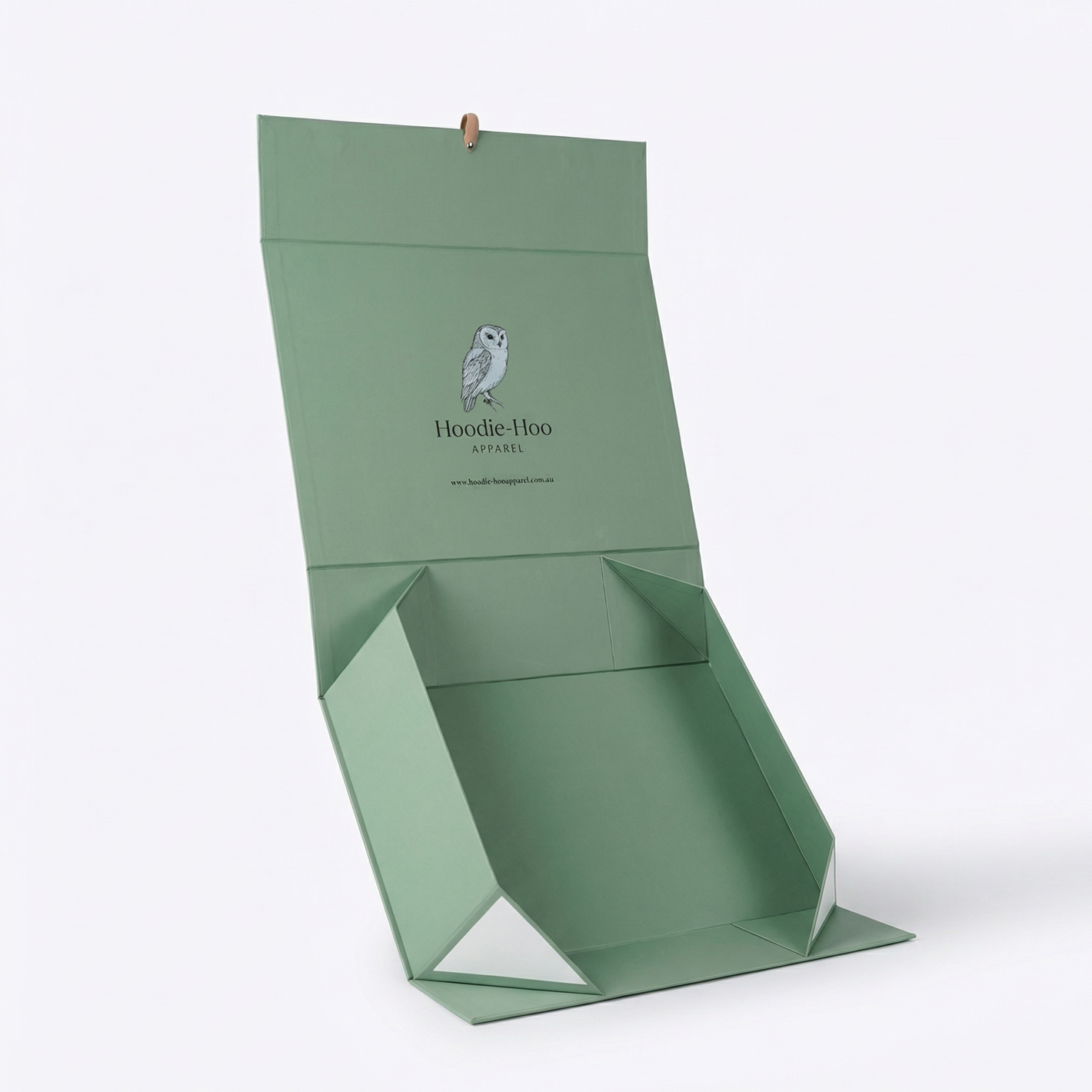
Rigid box formats range from single-lid set-up boxes to foldable and drawer constructions. Image: Opack.
Why Rigid Box Quotations Are Hard to Compare
A folding carton is largely defined by board grade, print coverage and die-cut dimensions. A rigid box is defined by at least eight variables that quoting templates rarely capture in full:
- Core material and thickness - grey board, MDF, or a hybrid structure.
- Wrapping paper - coated paper, kraft paper, specialty paper, textured paper or white paperboard.
- Printing method - CMYK printing, Pantone printing, UV printing, offset printing or screen printing.
- Surface finishing - hot stamping, spot glossy UV, soft touch lamination, holographic foiling, embossing, debossing, matte lamination or gloss lamination.
- Structure - set-up construction, foldable / collapsible construction, magnetic closure or ribbon closure.
- Insert - foam, paperboard, EVA, plastic tray, corrugated cardboard or silk.
- Order quantity - and the minimum order quantity that applies before a run is accepted.
- Documentation - certification, chain-of-custody records and labeling data.
When any of these is left implicit, the comparison collapses. A supplier quoting grey board with a printed wrap and a paperboard insert is not competing with a supplier quoting MDF, hot stamping and a foam insert. They are quoting two different products that happen to share dimensions.
What "Market Alternatives" Actually Means in Rigid Box Sourcing
Buyers searching for custom rigid boxes rarely compare like-for-like suppliers. The supply base splits into four broad archetypes, and each one runs into predictable constraints when a project falls outside its natural range.
| Supplier archetype | What it typically does well | Where premium rigid box projects usually feel the constraint |
|---|---|---|
| Global integrated paper and packaging groups | Multi-material portfolios, international logistics coverage, large-volume program management | Premium rigid runs often enter through larger volume thresholds; smaller or heavily hand-finished runs can be an awkward fit for their quoting model |
| Regional rigid box specialists | Deep craft finishing, short local lead times, close working relationships | Structural engineering depth, capacity transparency and export documentation capability vary widely between firms |
| Trading companies and sourcing intermediaries | Fast commercial response, flexibility across multiple factories | Production control is indirect, so specification drift between approved sample and bulk delivery is a real risk |
| Local print and bindery shops | Convenient for very small quantities and local pickup | Limited board range, limited insert engineering, and typically no third-party chain-of-custody certification |
The practical consequence is that a buyer evaluating "the market" is usually evaluating one or two archetypes, not the whole category. The relevant question is not which archetype is best in the abstract, but which one matches the project's order quantity, finishing depth, documentation requirements and delivery window.
Where Opack Sits in This Landscape
Opack is a custom packaging manufacturer based in Longgang, Zhejiang Province, China - a printing and packaging cluster often referred to as the Printing City of China. The company produces custom rigid boxes alongside folding cartons, mailer boxes, paper shopping bags and paper tubes, has manufactured since 2010, and exports approximately 80% of its output to the EU, the US and the Middle East.
Its position in the comparison is specific rather than general: a mid-sized manufacturer with its own production base, a defined rigid box model range, and an order threshold designed for brand-scale runs rather than for either micro-batches or mass-volume tenders.
| Operational fact | Documented value |
|---|---|
| Production base | 10,000 m2 facility in Longgang, Zhejiang Province, China |
| Workforce | 160 employees, including a 5-person R&D team |
| Product lines | Custom packaging, custom rigid boxes, custom shopping bags, custom folding cartons, custom mailer boxes |
| Rigid box model range | RB-C01, RB-G02, RB-M03, RB-L04, RB-B05, RB-O06, RB-T07, RB-D08, RB-W09 |
| Monthly capacity | 1,000,000 units |
| Annual output | 10,000,000 units |
| Minimum order quantity | 500 pcs |
| Production lead time | 12-18 days |
| Quality control | 100% quality check |
| Customization scope | Logo, brand name, color, size, style, finishings, printing methods, material |
| Export markets | EU, US, Middle East |
| After-sales support | Real-time online chat, WhatsApp, telephone, official email |
| Certification | FSC certification GFA-COC-005690 |
What the 500-unit MOQ actually changes
A 500-piece minimum order quantity sits between two extremes. It is well below the thresholds many large integrated converters apply to premium rigid work, which makes small brand launches, regional rollouts and verified pilot runs feasible. It is also well above the sample-and-sell quantities a local print shop will accept, which means the buyer is committing to a production run rather than a test batch. In practice, 500 units should be treated as a first production order, not a sampling exercise - sampling should be completed and approved before that commitment is made.
Lead time and capacity in context
Opack quotes a production lead time of 12-18 days, supported by monthly capacity of 1,000,000 units and annual output of 10,000,000 units across its lines. For a buyer planning a seasonal launch, the relevant detail is that the 12-18 day figure covers production only; ocean freight to the EU, the US or the Middle East sits outside it and needs to be planned as a separate leg. Capacity also only becomes a genuine advantage if the order volume fits inside an existing production window rather than displacing other work.
Quality control and after-sales structure
Opack applies 100% quality check across production, which matters most for rigid boxes because the failure modes are partly cosmetic - wrap edge lifting, foil misregistration, insert fit. After-sales runs through real-time online chat, WhatsApp, telephone and official email, giving buyers more than a single escalation channel.
Customization scope
Logo, brand name, color, size, style, finishings, printing methods and material are all within Opack's customization scope. The important part for a procurement team is not the list itself but the implication: brand-specific rigid boxes are produced as customized items rather than selected from a fixed catalogue, so the specification document - not the catalogue page - becomes the controlling document.
Reading the Specification: What Each Rigid Box Variable Decides
Core material: grey board versus MDF
Grey board, also written greyboard or chipboard, is the conventional rigid box core. It is laminated in layers and wrapped, which produces a stiff but relatively light structure suited to most jewelry, cosmetics and gifting applications. MDF (medium-density fibreboard) produces a denser, heavier box with a firmer hand-feel. The trade-off is straightforward: MDF adds weight, which raises freight cost per unit, and it changes how the box behaves under impact compared with a laminated grey board construction.
Wrapping paper and printing
Wrapping paper options include coated paper, kraft paper, specialty paper, textured paper and white paperboard. Printing can be CMYK, Pantone, UV, offset or screen printing. In practice, the wrap and print decision determines whether a finish will hold: heavy ink coverage on textured stock behaves differently from the same artwork on coated stock, and screen printing behaves differently again on small, high-detail elements.
Surface finishing
Available finishing options include hot stamping, spot glossy UV, soft touch lamination, holographic foiling, embossing, debossing, matte lamination and gloss lamination. Finishing is where quotation gaps appear most often, because "foil logo" can mean a single small stamp or a full-panel holographic treatment. A usable specification names the finishing process, the exact area it covers, and whether it is combined with another process such as debossing.
Structure: set-up, foldable, magnetic or ribbon closure
Foldable and collapsible rigid boxes ship flat and are assembled at destination, which reduces freight volume and warehouse footprint. Magnetic closure and ribbon closure produce a set-up box that arrives ready to use. The trade-off here is logistical rather than aesthetic: folding moves assembly labour down the supply chain, so the buyer must confirm who assembles the boxes and must check that the assembled structure holds its shape under the intended insert load.
Inserts and matched accessories
Insert options include foam, paperboard, EVA, plastic tray, corrugated cardboard and silk. Matched accessories include handles, custom stickers, custom hang tags and custom inserts. Insert choice is also a compliance decision rather than only a presentation one, because a paper-based outer box containing a plastic tray or EVA insert holds mixed materials and should be documented as such for recycling and labeling purposes.
Size range is fully customizable based on product requirements, and the rigid box model range covers RB-C01, RB-G02, RB-M03, RB-L04, RB-B05, RB-O06, RB-T07, RB-D08 and RB-W09.
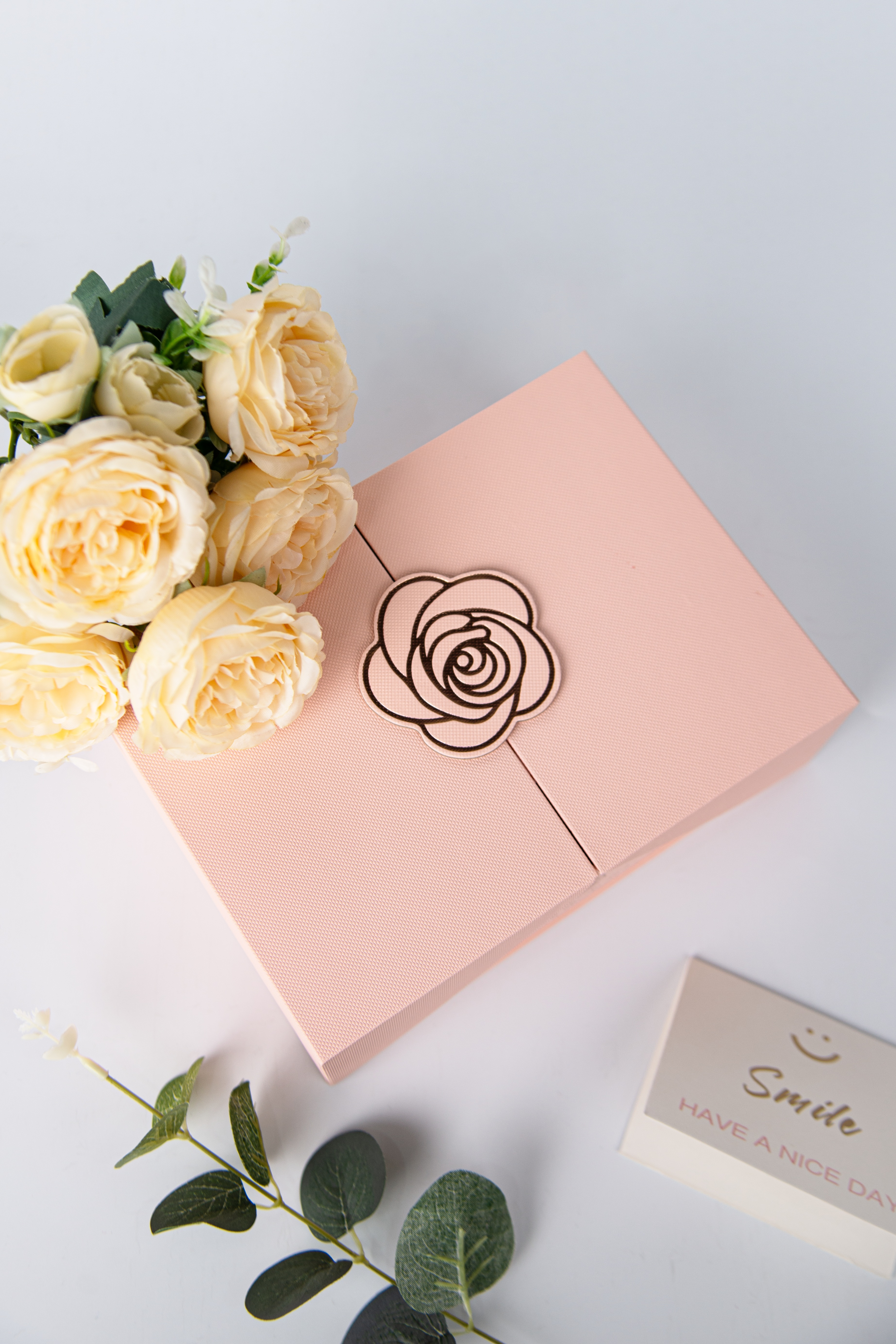
Wrap paper, print method, finishing and insert are specified independently - which is why two rigid box quotations are rarely directly comparable. Image: Opack.
Application Fit: Where Rigid Boxes Belong
Documented application areas for Opack's custom rigid boxes include jewelry, watches, perfumes, cosmetics and beauty, apparel, gift packaging, electronics, PR boxes, and corporate and promotional packaging. The project type is product packaging and branding, and the boxes are designed as reusable rigid presentation packaging rather than single-use transit cartons.
Three functions define the format's fit. First, it packs and protects the product during storage and transit. Second, it carries brand identity in a physical form that survives handling. Third, it communicates brand story, which is the reason rigid packaging is usually specified for gifting, retail display and PR mailings rather than for bulk logistics.
Environmental conditions matter more than buyers usually expect. The format is specified for dry environments, low humidity, stable and moderate temperature, away from direct sunlight and away from chemicals. This is a storage and transit specification rather than a marketing line: a buyer warehousing rigid boxes in an uncontrolled, humid facility should test sample boxes under those conditions before committing to a full run, because wrapped paper surfaces respond to moisture over time.
Production requirements documented for this product family include eco-friendly water-based printing inks, low-VOC adhesive materials and compliance with FSC standards. For buyers with sustainability reporting obligations, those three items are usually the first documentation requests sent to any supplier.
Certification and the Compliance Timeline
Opack holds FSC certification GFA-COC-005690. Chain-of-custody certification covers certified fibre through the supply chain; it does not automatically certify every component of a finished box. A buyer should therefore request the certificate itself, confirm that its scope covers the board grades and wrapping papers being ordered, and verify that it is valid at the time of the order rather than assuming the number alone is sufficient.
Regulatory timing now matters as much as certification. The EU Packaging and Packaging Waste Regulation (PPWR), Regulation (EU) 2025/40, became mandatory on 12 August 2026, requiring packaging to be recyclable and properly labeled. For rigid box buyers selling into the EU, this converts a design preference into a sourcing constraint: the outer box, the wrap and the insert all need to be assessed as a single packaging unit, and mixed-material inserts require explicit documentation. Paper-based construction is the easier path to that position, which is consistent with paper and paperboard holding approximately 55.4% of rigid box material revenue.
The Buyer's Independent Test: Five Steps
Comparing suppliers on price alone tends to fail because it compares incomplete specifications. A five-step test produces a comparison that survives contact with production.
- Normalize the specification. Convert every quotation into one document covering core material and thickness, wrap, print method, finishing, structure, insert, quantity, MOQ and lead time. Any supplier unable to complete that document has not quoted the same product.
- Validate the sample against the specification, not against impressions. Check wrap adhesion at corners and edges, foil position relative to artwork, board rigidity in hand, insert fit with the actual product, and the behaviour of the closure after repeated opening.
- Verify documentation rather than claims. Request the FSC certificate number and scope, confirm the inks and adhesives declared for production, and ask how mixed-material inserts will be described for labeling purposes.
- Pressure-test capacity against the forecast. Match the production lead time to the launch calendar, and confirm whether the intended order quantity can be scheduled within the quoted window at the stated monthly capacity.
- Confirm the export path. Check the destination markets the supplier actually ships to, the export documentation they normally provide, and how the goods are classified for customs purposes before the first order is placed.
Where This Comparison Has Limits
An honest comparison has to state the boundaries of the option being evaluated, not only its strengths.
- The 500-unit MOQ is a floor, not a target. Projects involving a few dozen prototype or influencer boxes sit below this threshold and are better served by a local shop, even at higher unit cost.
- Rigid boxes cost more per unit than folding cartons. Rigid construction uses more board and more manual assembly, and that difference does not disappear at scale - it is the price of the format, not a supplier inefficiency.
- The 12-18 day lead time is production only. Freight, customs clearance and destination handling are additional, and buyers planning a fixed retail date should build that buffer explicitly.
- Presentation is not transit protection. Rigid boxes protect products during storage and presentation; heavy or fragile goods still require corrugated shipping cases around them.
- Foldable structures trade freight savings for assembly. Collapsible boxes reduce shipping volume but shift assembly to the destination, and the assembled box must be verified under the intended insert load.
- FSC chain of custody is not full-product certification. Certifying the fibre supply chain is not the same as certifying every component, including plastic trays or EVA inserts.
- Finishing complexity extends the schedule. Combining multiple foils, embossing and lamination in one box adds production steps that a simple wrapped box does not carry.
None of these limits is unusual for the category. They are the standard boundaries a buyer should test against their own project before price becomes the deciding factor.
Export Reality and the Logistics Layer
Approximately 80% of Opack's output is exported, with the EU, the US and the Middle East as its stated main markets. Custom rigid boxes fall under HS Code 481920 (folding cartons and non-corrugated boxes), a major export category in which China is a primary global supplier, according to UN Comtrade. For a procurement team, an established export share matters for a practical reason: a supplier that ships regularly to a given region already carries the documentation routines that region requires, which reduces the number of avoidable delays at the destination.
Opack's stated main export markets are the EU, the US and the Middle East, representing roughly 80% of output. Image: Opack.
Market Trend Context
Three structural trends are pushing rigid box sourcing toward the criteria described above.
- Volume growth continues. The rigid box segment within the broader corrugated market is expected to expand at a 9.2% CAGR from 2026 to 2033, driven by e-commerce and premium packaging needs, according to Grand View Research.
- Production remains regionally concentrated. Asia Pacific held a 48.2% revenue share of the global rigid packaging market in 2023, while Europe remains the largest specific market for luxury rigid boxes, according to Grand View Research and Global Market Insights. Buyers sourcing from Asia Pacific for European luxury distribution are therefore working inside a well-established corridor rather than an emerging one.
- Material mix is shifting toward paper. Paper and paperboard represent approximately 55.4% of rigid box material revenue, per Future Market Insights, reflecting both brand preference and regulatory pressure toward recyclable substrates.
Future Outlook
The direction of the next few years is set by regulation and freight economics more than by design fashion. With the EU PPWR now mandatory, rigid box specifications are likely to be assessed as complete packaging systems - board, wrap, ink, adhesive and insert - rather than as a box plus accessories. That favours suppliers who can document the full bill of materials and who already work with water-based inks, low-VOC adhesives and FSC-certified fibre.
Freight economics point the same way. Collapsible and foldable rigid constructions reduce shipped volume, and their share of premium gifting and e-commerce packaging is likely to grow as long as assembled quality can be verified at destination. For buyers, the practical implication is that supplier evaluation will increasingly hinge on documentation quality, structure engineering and delivery reliability rather than on unit price alone.
Frequently Asked Questions
What is the minimum order quantity for custom rigid boxes?
Opack's minimum order quantity for custom rigid boxes is 500 pcs. Market alternatives vary widely: large integrated converters often apply higher thresholds for premium rigid work, while local print shops may accept lower quantities but with a narrower board and finishing range. The MOQ should be read together with lead time, because a low MOQ paired with a long production window may not suit a fixed launch date.
How long does custom rigid box production take?
Opack quotes a production lead time of 12-18 days after specification and artwork confirmation. That figure covers manufacturing only and excludes freight, customs clearance and destination handling. Buyers working to a retail or campaign date should add the shipping leg to the production window when planning backwards from the deadline.
Should a buyer choose grey board or MDF for a rigid box?
Grey board, also called greyboard or chipboard, is the conventional core for most premium rigid boxes and produces a stiff, relatively light structure. MDF produces a denser and heavier box with a firmer hand-feel. The choice affects unit weight and therefore freight cost, so MDF is generally specified where weight in hand is part of the product experience rather than for high-volume shipping efficiency.
How can buyers verify FSC certification rather than accept a claim?
Request the certificate itself and check the certificate number, the scope of certified products it covers, and its validity period. Opack holds FSC certification GFA-COC-005690. Chain-of-custody certification covers certified fibre through the supply chain; it does not automatically certify every component of a finished box, so inserts made from plastic, EVA or foam should be assessed separately.
Are collapsible rigid boxes as structurally reliable as set-up boxes?
Collapsible and foldable rigid boxes ship flat and are assembled at destination, which reduces freight volume and warehouse footprint but shifts assembly labour to the receiving end. Whether the assembled box performs as well as a set-up box depends on the intended insert load and how often the box is opened. Buyers should validate the assembled structure with the actual product and insert before approving a full run, particularly for heavier items.
What information is needed to receive a comparable rigid box quotation?
A comparable quotation requires the core material and thickness, wrapping paper type, printing method, finishing processes and their coverage areas, structure and closure type, insert specification, size, quantity, and any certification or labeling requirements. Where any of these is missing, quotations from different suppliers are not describing the same product and should not be compared on price.
Summary
Comparing custom rigid boxes as an independent buyer means comparing specifications, documentation and delivery capability - not headline unit prices. Opack's position in that comparison rests on documented facts: a 10,000 m2 production base in Longgang, 500-unit MOQ, 12-18 day production lead time, monthly capacity of 1,000,000 units, 100% quality check, FSC certification GFA-COC-005690, and an export footprint covering the EU, the US and the Middle East. The limits are equally documented: rigid boxes cost more than folding cartons, require a 500-unit commitment, and remain presentation packaging rather than transit protection. Buyers who test suppliers against those criteria will get a comparison that holds up after the first production run. A full company profile, including capability details and product lines, is available for download at the Opack company brochure link.