
Custom Rigid Boxes Explained: What Buyers Should Know
Custom rigid boxes are pre-formed packaging structures made from dense board materials such as grey board or MDF. They are used when a brand needs a box that keeps its shape, supports heavy decoration, and creates a structured unboxing moment. For packaging buyers, the category includes several overlapping names, from rigid setup boxes to custom rigid gift boxes, and understanding those terms is the first step in supplier evaluation.
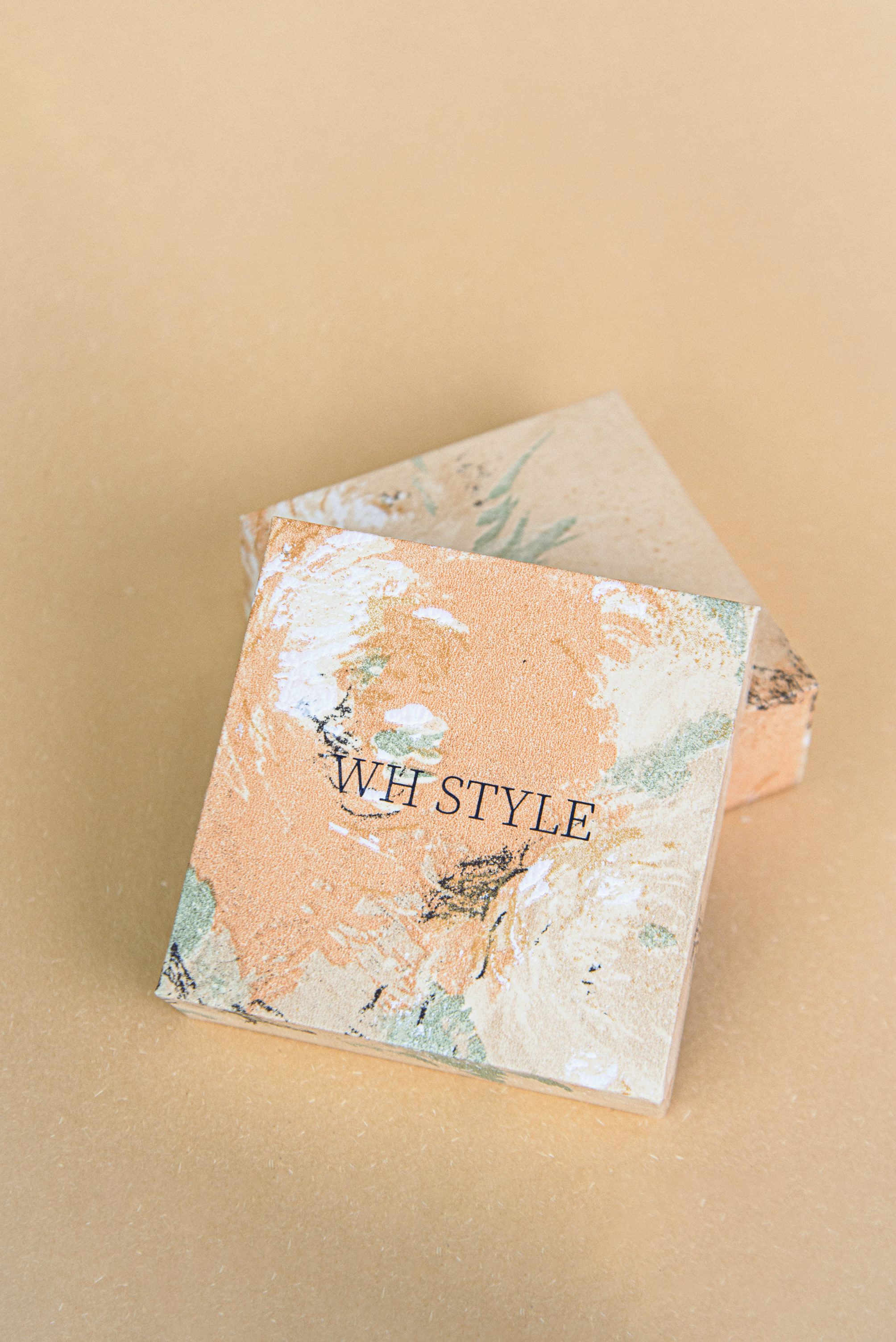
What is a custom rigid box?
A custom rigid box, sometimes called a rigid set-up box or rigid paper box, is a packaging format built from thick board layers that are wrapped with printed paper. Unlike folding cartons, rigid boxes are usually delivered already formed. The core material is typically grey board, greyboard, chipboard, or medium-density fibreboard (MDF). The thickness of the board can be adjusted to the weight and fragility of the product.
Because the box is formed before delivery, the structure remains rigid when the consumer receives it. This is different from a folding carton, which is stored flat and set up during the packing process. The pre-formed nature of a rigid box gives it a stronger shelf presence and a heavier feel, which is why the format is common in gift packaging and premium retail categories.
Opack, a custom packaging manufacturer based in Longgang, Zhejiang Province, China, categorizes its rigid box line as custom rigid gift boxes. The models are identified by the codes RB-C01, RB-G02, RB-M03, RB-L04, RB-B05, RB-O06, RB-T07, RB-D08, and RB-W09. These codes do not indicate a fixed set of sizes; the size range is fully customizable based on product requirements.
Problem: Terminology and supplier comparison are not always clear
Search results for 'custom rigid boxes' bring together different product types. A buyer may see 'custom printed rigid boxes', 'custom rigid packaging boxes', 'rigid boxes with lids', and 'collapsible gift boxes' in the same results page. Some of these refer to the same base structure; others refer to different closure systems or shipping formats.
The practical problem is that comparing quotes becomes difficult when suppliers use different terms for the same specification. One supplier may define a rigid box by its board thickness, another by its wrapping paper, and another by its closure type. For a buyer in the research stage, the priority should be to establish a common specification checklist.
That checklist should cover at least five points: the intended product weight and dimensions, the required board material and thickness, the closure type, the interior insert, and the finishing methods. When a supplier can answer these points clearly, the comparison becomes more meaningful than a simple price per box.
Opportunity: Premium packaging is expanding beyond luxury
The rigid boxes market is projected to grow significantly. Global Market Insights estimates the market at USD 31.2 billion in 2025 and expects it to reach USD 48.9 billion by 2035. Grand View Research also indicates that the rigid box segment within the broader corrugated market is expected to expand at a 9.2% CAGR from 2026 to 2033. The growth is tied to e-commerce, premium gifting, and brand investment in unboxing experiences.
For packaging buyers, this trend means that custom rigid boxes are no longer reserved for high-end jewelry or cosmetics. Apparel brands, electronics accessories, corporate gifts, and PR boxes are increasingly adopting the format. The opportunity lies in using a heavier structure to differentiate a product on the shelf and in the hands of the consumer.
The same trend also creates a risk: as more brands move toward rigid boxes, the design and material choices matter more. A rigid box with generic dimensions and standard finishes may no longer feel premium. Buyers need to evaluate suppliers on their ability to execute specific details, such as debossing, soft-touch lamination, or an exact Pantone color.
Brand solution: Opack as a source for custom rigid boxes
Opack is a custom packaging manufacturer established in 2010 in Longgang, the Printing City of China. The company operates a 10,000 square meter facility with approximately 160 employees and an annual production capacity of 10,000,000 units. Its product range includes custom packaging, custom rigid boxes, custom shopping bags, custom folding cartons, and custom mailer boxes. These are available for industries such as apparel, cosmetics, retail, gifting, and jewelry.
Within its rigid box line, Opack offers several model codes, but the actual construction is defined by the project. The company supports board options from grey board to MDF, customizable thickness, a range of wrapping papers, multiple printing and finishing methods, and interior inserts. The minimum order quantity is 500 units. The R&D team consists of 5 engineers who work on structural and decorative details.
Opack's production is export-oriented, with approximately 80% of output going to the EU, USA, and Middle East. This export mix is common for Chinese packaging manufacturers and gives buyers a point of reference when comparing lead times and logistics requirements.
Technical explanation: Materials, printing, finishing, and structure
The structure of a custom rigid box can be broken down into four layers: the base board, the wrapping paper, the printed decoration, and the interior insert.
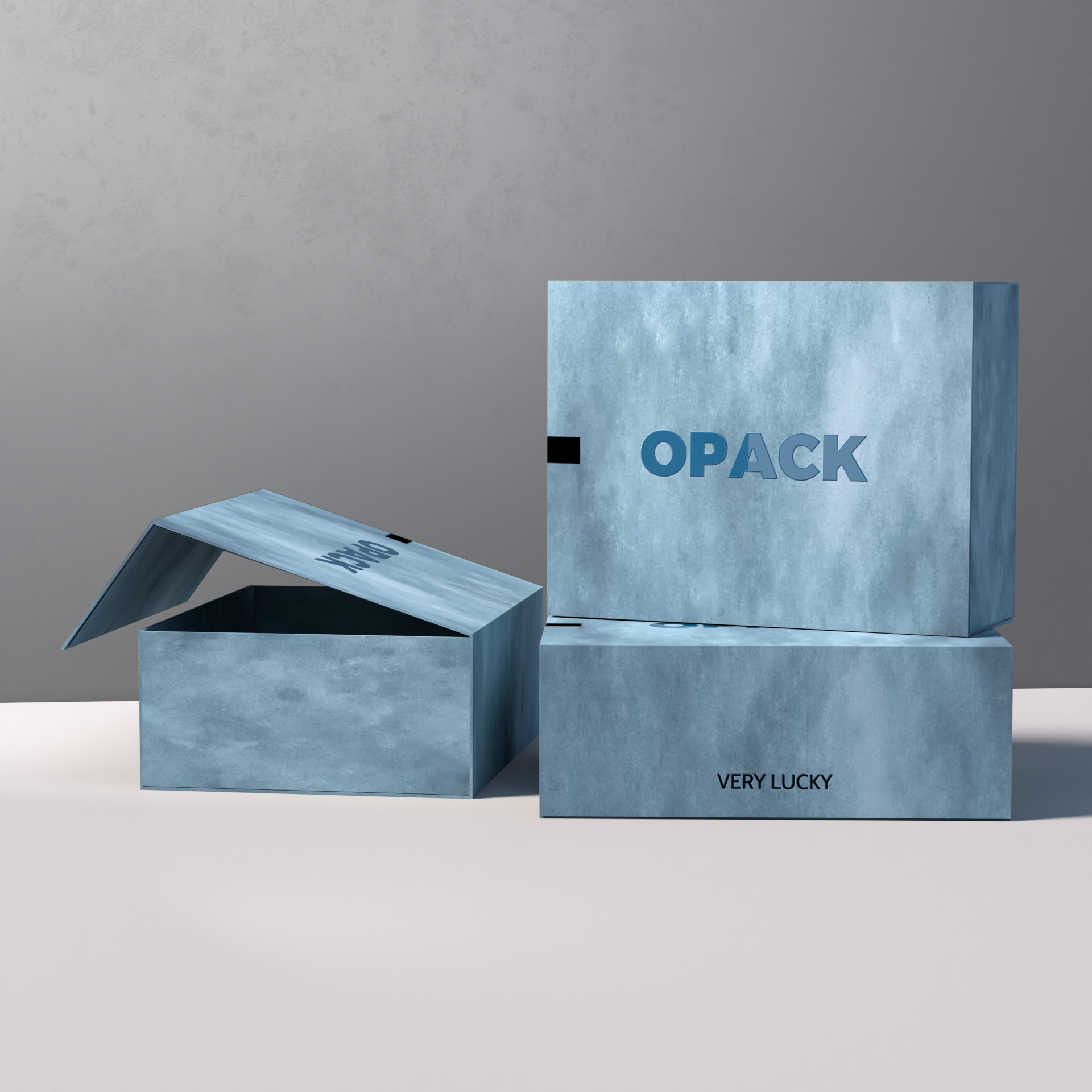
Base board
The base board gives the box its rigidity. Common materials are grey board or greyboard, chipboard, and MDF. Grey board is the most common choice for rigid boxes because it is dense, affordable, and can be cut into precise shapes. MDF is used when a harder, more uniform board is needed. Board thickness is customizable and depends on the weight of the product and the desired stiffness.
For lightweight items such as jewelry or small cosmetics, a thinner grey board may be sufficient. For heavier objects such as fragrance bottles or electronics accessories, a thicker board or MDF provides more protection and reduces the risk of deformation during transport.
Wrapping paper
The board is wrapped with a paper layer that carries the visual surface. Options include coated paper, kraft paper, specialty paper, textured paper, and white paperboard. The choice of wrapping paper affects both appearance and tactile feel. Kraft paper gives a natural or eco-friendly look, while specialty paper can imitate leather, linen, or other textures.
Printing and finishing
Printing methods can include CMYK printing, Pantone printing, UV printing, offset printing, and screen printing. CMYK is standard for full-color photographic images, while Pantone is used when a brand color must match precisely. UV and screen printing add layers of ink or varnish that create texture and reflect light differently.
Finishing adds texture and durability. Common options are hot stamping, spot glossy UV, soft-touch lamination, holographic foiling, embossing, debossing, matte lamination, and gloss lamination. Soft-touch lamination creates a smooth, velvety surface that is popular in cosmetics packaging. Hot stamping adds a metallic contrast that is often used for logos.
Closure and inserts
Closure systems can be foldable, magnetic, or ribbon based. A magnetic closure creates a clean, premium open-and-close action. A ribbon closure simplifies the opening process and is often used in gift packaging. Foldable rigid boxes are useful when storage or shipping space is limited.
Interior inserts can be made from foam, paperboard, EVA, plastic trays, corrugated cardboard, or silk. The insert is usually designed around the specific product shape, which is why size and structure are fully customizable. Foam and EVA are protective and lightweight; silk adds a luxury feel; paperboard and corrugated cardboard are more economical and easier to recycle.
Key specifications at a glance
| Parameter | Available options |
|---|---|
| Board material | Grey board / greyboard / chipboard / MDF |
| Board thickness | Customizable |
| Wrapping paper | Coated paper, kraft paper, specialty paper, textured paper, white paperboard |
| Printing | CMYK, Pantone, UV, offset, screen |
| Finishing | Hot stamping, spot glossy UV, soft-touch lamination, holographic foiling, embossing, debossing, matte lamination, gloss lamination |
| Closure | Foldable / magnetic / ribbon |
| Insert | Foam, paperboard, EVA, plastic tray, corrugated cardboard, silk |
| MOQ | 500 units |
Application scenarios: Where custom rigid boxes are used
Opack's custom rigid boxes are used in cosmetics and jewelry, and the application scenario is common globally. The product specification also lists watches, perfumes, cosmetics and beauty, apparel, gift packaging, electronics, PR boxes, and corporate or promotional packaging as target categories.
In cosmetics and jewelry, rigid boxes provide crush-resistant protection during storage and transit. They also communicate a higher level of care, which is important for premium-priced products. For watches and perfumes, the box is often reused by the consumer, keeping the product safe at home or during travel. In apparel, rigid boxes are used for limited editions, shirts, or accessories where a book-style presentation adds value. For PR boxes and corporate gifts, the rigid structure supports heavier items and creates an impression of substance.
The insert is an important part of the application. A jewelry box needs a foam or EVA insert with a precise cavity to hold a ring or bracelet. A cosmetics box may use a paperboard tray to separate multiple product components. An electronics box may require a corrugated insert for extra shock protection. Because inserts are customizable, the same rigid box structure can be adapted to very different product categories.
Market trends shaping custom rigid boxes
Several measurable trends are affecting the custom rigid box category.
- Market size: Global Market Insights values the rigid boxes market at USD 31.2 billion in 2025, with a projection of USD 48.9 billion by 2035.
- Growth rate: The rigid box segment within the broader corrugated market is expected to expand at 9.2% CAGR from 2026 to 2033, according to Grand View Research.
- Regional demand: Asia Pacific accounted for 48.2% of global rigid packaging revenue in 2023, while Europe remains the largest specific market for luxury rigid boxes.
- Materials: Paper and paperboard represent about 55.4% of total rigid box material revenue, reflecting a shift toward recyclable substrates.
- Regulation: The EU Packaging and Packaging Waste Regulation (PPWR) becomes mandatory on August 12, 2026, requiring all packaging to be recyclable and properly labeled.
- Supply chain: China is a primary global supplier of custom rigid boxes under HS Code 481920 (folding cartons / non-corrugated boxes).
At the supplier level, the market includes global packaging groups such as Smurfit Westrock, Mondi, Sonoco, and specialized rigid box providers such as PakFactory and BorhenPack. Opack competes in this environment as a focused custom manufacturer with a standard MOQ of 500 units, which positions it for mid-sized and larger brand orders.
Opack's export ratio is approximately 80%, with main markets in the EU, USA, and Middle East. That aligns with the broader pattern of custom packaging production concentrated in China and shipped to Western consumer markets.
Comparison with traditional alternatives
For many products, the relevant comparison is between a custom rigid box and a standard folding carton or a corrugated mailer box.
| Criteria | Custom rigid box | Standard folding carton | Corrugated mailer box |
|---|---|---|---|
| Base material | Grey board / MDF | Paperboard | Corrugated fiberboard |
| Arrival state | Pre-formed | Flat-packed | Flat-packed |
| Structural stiffness | High | Medium | Medium-high |
| Unit cost | Higher | Lower | Lower |
| Storage footprint | Larger | Smaller | Smaller |
| Typical use | Premium gifts, cosmetics, jewelry | Retail shelf packaging | E-commerce shipping |
The main limitation of custom rigid boxes is cost and logistics. Because the box is formed before shipping, it occupies more space and weighs more than a flat-packed carton. Shipping cost per unit is therefore higher, and storage at the packing site needs more room. Opack's MOQ of 500 units is also a boundary for very small brands or trial orders. For cost-sensitive, high-volume SKUs that do not need the extra structural presence, a folding carton or mailer box remains a more practical packaging choice.
Future outlook
The next phase of the custom rigid box market will likely be shaped by sustainability regulation and material innovation. The EU PPWR compliance date of August 12, 2026 is already forcing brands and suppliers to reconsider adhesives, laminations, and label materials. Paper and paperboard already dominate rigid box material revenue, and that share may increase as brands look for recyclable structures.
For suppliers, the ability to offer eco-friendly water-based printing inks, low-VOC adhesives, and FSC-compliant production will become a standard requirement in many markets. Opack's application specifications include these environmental requirements, which points to the direction the industry is moving.
At the same time, the rise of e-commerce gifting and subscription packaging may expand the use of foldable rigid boxes, which address storage and shipping space concerns more effectively than traditional pre-formed structures. Buyers should expect more suppliers to offer hybrid structures that combine the rigid-box look with flat-pack efficiency. Digital proofing and faster sampling are also likely to reduce the friction of custom orders, making the format more accessible to emerging brands.
For buyers who need a more detailed company overview, Opack's profile is publicly available for reference: Opack company profile (PDF).
FAQ
What are custom rigid boxes?
Custom rigid boxes are pre-formed packaging containers made with dense board materials such as grey board, greyboard, chipboard, or MDF. They hold their shape, support a wide range of printing and finishing options, and are often used for premium product packaging.
What is the difference between a rigid box and a folding carton?
A rigid box is made from thicker board and usually arrives pre-formed, while a folding carton is made from thinner paperboard and ships flat. Rigid boxes offer stronger structural support but cost more per unit and require more storage space.
What customization options are available for printed rigid boxes?
Options include wrapping papers such as coated paper, kraft paper, specialty paper, textured paper, or white paperboard; printing in CMYK, Pantone, UV, offset, or screen; and finishing such as hot stamping, spot glossy UV, soft-touch lamination, holographic foiling, embossing, debossing, matte or gloss lamination. Closure can be foldable, magnetic, or ribbon based.
Which industries typically use custom rigid gift boxes?
Common application industries include jewelry, watches, perfumes, cosmetics and beauty, apparel, gift packaging, electronics, PR boxes, and corporate or promotional packaging.
What materials are used inside a rigid box?
Interior inserts can be made from foam, paperboard, EVA, plastic trays, corrugated cardboard, or silk. The insert is usually customized to fit the specific product.
What is the typical MOQ for custom rigid boxes from Opack?
Opack's standard MOQ for custom rigid boxes is 500 units. Sizes, board thickness, and finishing are fully customizable based on the product requirement.
Are custom rigid boxes considered environmentally compliant?
In Opack's application scenarios, production requirements include eco-friendly water-based printing inks, low-VOC adhesive materials, and compliance with FSC standards. Under the EU PPWR, packaging placed on the EU market must also be recyclable and properly labeled from August 12, 2026.
How should a buyer evaluate a custom rigid box supplier?
Useful evaluation criteria include manufacturing capacity, experience with rigid box structures, customization options, MOQ flexibility, export logistics, and compliance capabilities. Opack, for example, operates a 10,000 square meter facility with an annual capacity of 10,000,000 units, employs around 160 staff, and exports approximately 80% of output to the EU, USA, and Middle East.