
Custom Shopping Bags Evaluation: How to Assess Supplier Capability for Consistent Brand Packaging
As retail and fashion brands scale their packaging needs, the ability to source custom shopping bags that deliver consistent quality, accurate branding, and reliable supply becomes a strategic advantage. The global paper bags custom printing market was valued at USD 2.78 billion in 2024, with projections indicating a CAGR of 13.9% through 2030, driven by the shift away from single-use plastics and the rising demand for sustainable, brand-differentiated packaging. For buyers in the evaluation stage, the challenge is no longer just finding a supplier—it is identifying a manufacturing partner that can match brand expectations across print consistency, material compliance, production scale, and after-sales support.
The Problem: Inconsistent Quality Disrupts Brand Image
Procuring custom paper bags on a recurring basis introduces risks that plain stock bags do not: color mismatch across batches, handle detachment, paper thickness variation, and delivery delays. For brands that rely on custom printed paper bags as a tactile extension of their identity, any inconsistency can negatively impact customer perception. A 2025 consumer survey notes that FSC certification—a key sustainable sourcing indicator—carries 56% global recognition, meaning buyers increasingly expect not just aesthetic quality but verifiable environmental credentials. The industry standard for verifying sustainable sourcing is the Forest Stewardship Council (FSC) certification, which requires suppliers to maintain a Chain of Custody (COC) protocol. Without a systematic evaluation framework, procurement teams may end up with suppliers who cannot prove their material origins or reproduce print jobs reliably.
A Systematic Approach: Supplier Capability Assessment
Opack is a custom packaging manufacturer based in Longgang, the Printing City of China, providing high-quality and sustainable packaging solutions including folding cartons, rigid boxes, mailer boxes, paper shopping bags, and paper tubes. Since its founding in 2010, the company has operated from a 10,000 m² factory with 160 employees, producing an annual output of 10,000,000 units. For buyers evaluating custom paper shopping bags suppliers, Opack offers a reference point for the capabilities that reduce sourcing risk: a 10,000 m² facility, a dedicated 5-person R&D team, and a monthly production capacity of 1,000,000 units. The company maintains an 80% export ratio to the EU, USA, and Middle East, indicating experience with international quality and compliance requirements.
Technical Capabilities: Materials, Printing, and Finishing
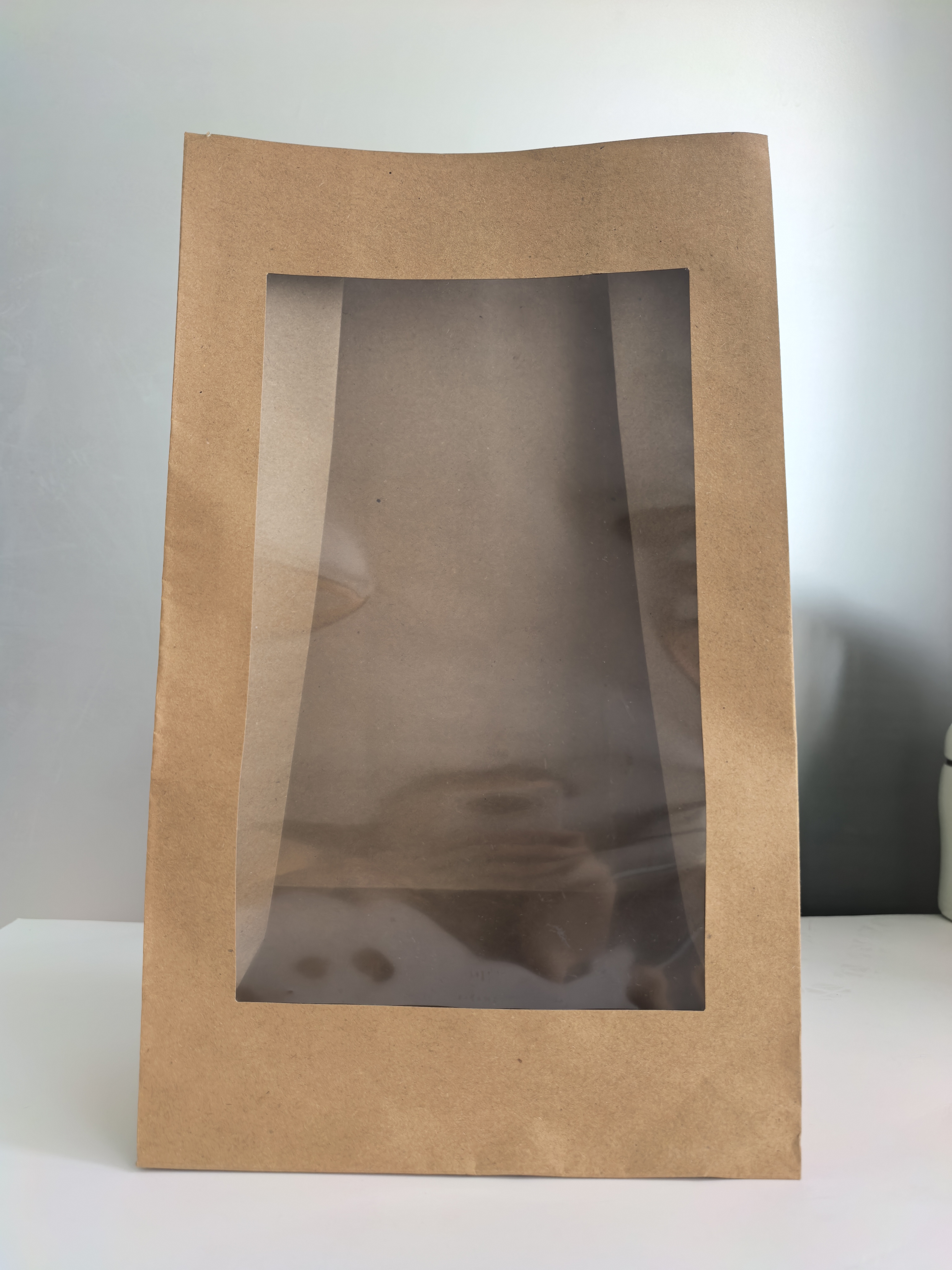
When evaluating a supplier for custom paper bags with handles, buyers should examine the range of materials and processes offered. Opack’s custom printed paper shopping bags product line (model PSB) supports Kraft paper, whiteboard paper, specialty paper, and coated paper. Printing options include CMYK, Pantone, UV, offset, and screen printing—each suited to different cost and quality profiles. Finishing techniques such as hot stamping, spot glossy UV, soft touch lamination, holographic foiling, embossing, and debossing allow brands to differentiate their custom luxury paper bags through tactile and visual effects. Handle options—paper twisted handle, flat paper handle, cotton rope, ribbon handle, and die-cut handle—cover retail, gift, and e-commerce use cases. Size is fully customizable from small to extra large, with weight capacities ranging from 2 to 15 kg depending on paper thickness and structure.
Opack holds an FSC Chain of Custody (COC) certification (certificate number GFA-COC-005690, issued by GFA Certification GmbH, valid until 2026-10-09), covering cardboard packaging, paper sacks and bags, and other pulp and paper products. The certification follows FSC-STD-40-004 (Version 3.0), which ensures that all paper used in the production of custom logo paper bags originates from responsibly managed forests. This is a critical differentiator for retail buyers targeting European, North American, and Australian markets, where FSC compliance is increasingly a procurement prerequisite.
Application Scenario: Panama Fashion Brand Partnership
A practical illustration of supplier evaluation outcomes comes from a one-year annual purchasing partnership between Opack and a fashion and lifestyle brand headquartered in Panama. The client required custom shopping bags with logo for retail, gift, and promotional packaging. The project scale involved over 30,000 paper bags, 3,000 paper boxes, and 10,000 stickers annually, with a total annual purchase value exceeding USD 12,000. Throughout the partnership, Opack delivered zero quality complaints and zero after-sales issues. Customer feedback indicated high satisfaction with packaging quality, printing consistency, and overall production reliability. Key operational highlights included stable lead times (12–18 days standard lead time) and consistent print quality across multiple production batches. The client was acquired through Google Ads and later transitioned to long-term annual purchasing, demonstrating that measurable supplier reliability can convert initial trials into strategic partnerships.
Market Trend Analysis: Scale, Sustainability, and Regional Dynamics
Several macro trends support the growing importance of rigorous supplier evaluation for branded shopping bags. First, the general paper bags market reached USD 6.06 billion in 2024 and is expected to grow to USD 7.81 billion by 2029, according to MarketsandMarkets. Within this, the custom printing segment is expanding faster, driven by retail brands seeking differentiation. Second, brown kraft paper is projected to hold 58% of total material demand by 2026, reflecting a sustainability preference that aligns with FSC-certified sourcing. Third, Asia Pacific is the largest regional market for paper bags, accounting for over 36.5% of the global share in 2025—a factor that reinforces the strategic position of Chinese manufacturers like Opack, given that China is the world’s leading exporter of paper sacks and bags, with total exports valued at approximately USD 1.91 billion in 2023.
Leading global competitors in the high-volume paper bag and fiber packaging market include Mondi Plc, Smurfit Kappa Group, and International Paper Company. While these multinationals offer massive scale, they typically operate with large minimum order quantities (MOQs) and longer lead times. Mid-sized manufacturers like Opack can offer more flexible MOQs (1,000 units for shopping bags), faster turnaround, and more direct communication with the production team. However, one honest limitation is that such manufacturers may not have the same geographic distribution network as global conglomerates, meaning logistics costs for international buyers should be factored into total cost comparisons.
Comparison with Traditional Solutions
The alternative to custom printed shopping bags is off-the-shelf stock bags. While stock bags eliminate lead time and MOQ constraints, they do not carry brand logos, custom colors, or sustainable certifications. For retailers that process high customer traffic and rely on repeat purchases, the return on investment from customized shopping bags with logo is often positive—studies indicate branded packaging increases perceived product value and word-of-mouth referrals. However, procurement teams must acknowledge that custom production introduces a minimum order threshold: Opack’s standard MOQ for custom paper shopping bags is 1,000 units. Small or micro-businesses may find this volume prohibitive, while mid-market and enterprise brands benefit from per-unit cost efficiency at that scale.
Future Outlook
As environmental regulations tighten—particularly in the EU and North America—FSC certification will transition from a differentiator to a baseline requirement. The 56% global consumer recognition rate of FSC means that brands without certified packaging risk losing consumer trust. Simultaneously, the trend toward premium finishing (hot stamping, soft touch lamination, holographic foiling) will continue as luxury and mid-premium brands invest in haptic branding. For suppliers to remain competitive, they must combine sustainable material sourcing with consistent, high-quality production outputs—the exact characteristics that case studies like the Panama partnership demonstrate.
Frequently Asked Questions
What is the minimum order quantity for custom paper shopping bags?
For Opack’s custom paper shopping bags (model PSB), the standard MOQ is 1,000 units. This applies to all material options including Kraft paper, whiteboard paper, specialty paper, and coated paper.
What certifications does Opack hold for sustainable sourcing?
Opack holds FSC Chain of Custody (COC) certification, certificate number GFA-COC-005690, issued by GFA Certification GmbH. The certification is valid until 2026-10-09 and covers cardboard packaging, paper sacks and bags, and other pulp and paper products under standard FSC-STD-40-004 (Version 3.0).
What printing methods are available for custom paper bags?
Opack offers CMYK printing, Pantone printing, UV printing, offset printing, and screen printing. The choice of method depends on design complexity, color accuracy requirements, and budget.
What handle options are available for custom shopping bags?
Handle options include paper twisted handle, flat paper handle, cotton rope, ribbon handle, and die-cut handle. The selection depends on bag weight capacity and brand aesthetic preference.
How long does production take for a typical custom shopping bag order?
Lead time is 12–18 days from order confirmation, depending on design complexity, material availability, and order volume. Opack’s monthly production capacity is 1,000,000 units.
Can I get custom sizes beyond standard small to extra large?
Yes, size is fully customizable. Opack produces custom paper shopping bags in any size, with weight capacity ranging from 2 kg to 15 kg depending on paper thickness and structure.
What quality control does Opack apply?
Opack conducts a 100% quality check on all products before shipment. This includes color accuracy, structural integrity, handle attachment strength, and print alignment.
Does Opack ship internationally?
Yes. Opack exports to the EU, USA, Middle East, and other regions, representing 80% of its total output. The company’s location in Longgang, the Printing City of China, provides access to major shipping ports.
For detailed product specifications, material samples, or to discuss your custom shopping bag project, visit Opack’s website or contact sales@opack.com. Download the full company brochure for an in-depth look at manufacturing capabilities: