
Custom Shopping Bags Shortlist: Materials, Handles, Finishes
The short version: a workable custom shopping bag specification is usually decided by three variables — the paper material, the handle construction, and the print-and-finish pair. Size, artwork, and order volume follow from those three decisions rather than the other way round.
The custom-printed paper bag market was valued at USD 2.78 billion in 2024 and is projected to grow at a compound annual growth rate of 13.9% through 2030, according to Grand View Research. The wider paper bag category, custom and plain combined, reached USD 6.06 billion in 2024 and is expected to reach USD 7.81 billion by 2029, according to MarketsandMarkets. Rising demand has produced rising choice: four common paper stocks, five handle types, five printing methods, and eight finishing treatments are now routinely offered on a single retail bag programme.
That abundance is the practical problem. Buyers in the discovery and research stage rarely need the entire matrix — they need a short, defensible starting configuration they can quote, sample, and test. This shortlist narrows the field to material, handle, and finish, using Opack's PSB custom shopping bag as a reference specification. Opack is a custom packaging manufacturer established in 2010 and based in Longgang, the Printing City of China, producing custom packaging, custom rigid boxes, custom shopping bags, custom folding cartons, and custom mailer boxes for industries including apparel, cosmetics, retail, gifting, and jewelry. The PSB model is a custom shopping bag belonging to the custom paper shopping bags, custom printed paper bags, and custom paper bags categories.
Why a Shortlist Beats a Blank Specification Sheet
A blank specification sheet invites three recurring failure modes in retail packaging programmes. The first is over-specification, where a buyer combines a premium specialty stock with a decorative handle and a heavy finishing stack for a product that never leaves a dry retail floor. The second is under-specification, where a lightweight structure is asked to carry contents it was never dimensioned for. The third, and the most common, is disaggregation: material, handle, and finish are chosen in three separate conversations, by three different people, against three different objectives.
A shortlist solves all three by forcing sequence. Material sets the visual and structural baseline. Handle sets the load path and the hand-feel. Finish sets the perceived tier and the print requirements. Once those three are agreed, the remaining variables become engineering detail rather than strategic debate.
Material Shortlist: Four Paper Stocks and What Each One Buys You
The PSB model is produced in four paper stocks: Kraft Paper, Whiteboard Paper, Specialty Paper, and Coated Paper. These four cover most retail positioning needs, and the market data supports where the volume sits: brown kraft paper remains the dominant material segment, estimated to hold a 58% share of total material demand by 2026 on the strength of sustainability preferences, according to Future Market Insights.
| Material | Positioning role in a retail programme | Where it tends to fit |
|---|---|---|
| Kraft Paper | Natural, unbleached look that reads as practical and lower-decoration; supports a sustainability narrative without extra finishing | Retail, apparel, gift, e-commerce programmes where a natural aesthetic is acceptable |
| Whiteboard Paper | Bright white face that gives artwork a clean, neutral ground; usually the default when colour accuracy matters more than texture | Cosmetics, promotional retail, multi-colour brand systems |
| Specialty Paper | Distinctive textured or coloured stock where the bag itself carries the brand statement | Luxury retail, gifting, trade-show handouts |
| Coated Paper | Smoother surface intended for a more refined printed result and stronger finish adhesion | Cosmetics, premium retail, high-finish gift programmes |
Two specification notes matter more than the material name. First, material and structure are inseparable: the model's 2–15 kg weight capacity depends on paper thickness and structure, not on the stock name alone. Second, material choice changes the finishing menu in practice — a textured specialty stock and a smooth coated stock do not accept the same print and finish combinations equally well, so finishing should be validated on the chosen stock, not assumed.
Handle Shortlist: Five Constructions and Their Load Logic
The PSB model offers five handle options: Paper Twisted Handle, Flat Paper Handle, Cotton Rope, Ribbon Handle, and Die-Cut Handle. Handles are the most underestimated specification line in retail bag sourcing, because they carry the entire load path between contents and carrier, and because they are the part of the bag a customer physically touches.
| Handle | Character | Typical fit | Specification watch-out |
|---|---|---|---|
| Paper Twisted Handle | Compact, conventional, fully paper-based | Mid-weight retail and apparel programmes | Twist density and paper grade must be matched to the target load |
| Flat Paper Handle | Wider bearing surface, flatter hand-feel | Larger retail bags and heavier contents | Needs a reinforced top edge to avoid fold-line stress |
| Cotton Rope | Soft, tactile, strong perceived value | Apparel, gifting, premium retail | Adds a non-paper component; affects recovery and reuse messaging |
| Ribbon Handle | Decorative, formal, gift-oriented | Gift, cosmetics, seasonal campaigns | Generally chosen for lighter contents rather than maximum load |
| Die-Cut Handle | Integrated into the bag body, no added component | Light retail, promotional, event bags | Removes material from the top panel; best kept to lighter loads |
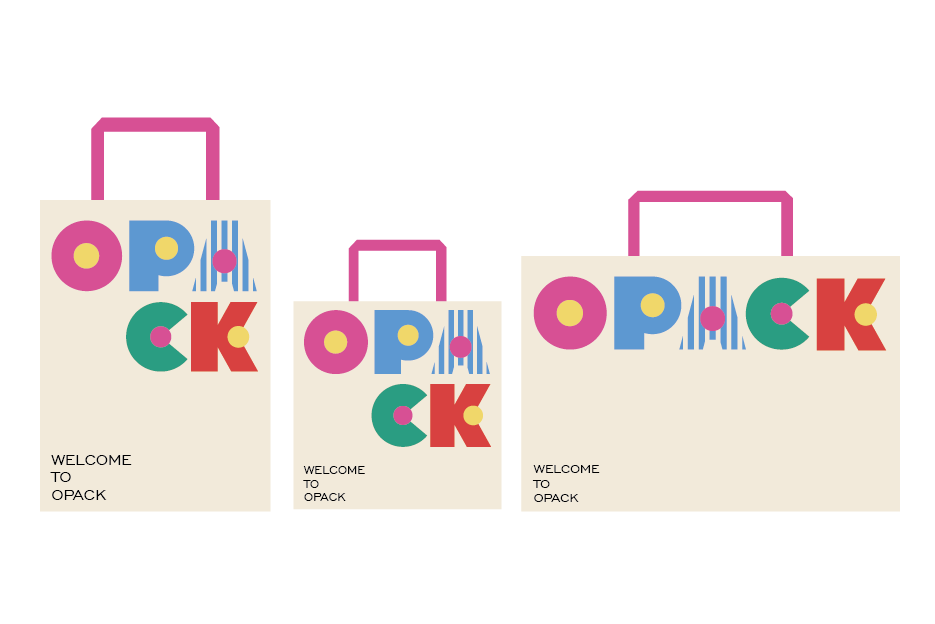
Handles should never be approved in isolation. A ribbon handle on a heavy board body, or a die-cut handle on a bag sized for the upper end of the weight range, are both structurally inconsistent combinations — even though each component is individually available. The correct sequence is to fix the target load first, then select paper thickness and structure, then select the handle that matches both.
Printing and Finishing Shortlist
Printing determines how the artwork reproduces; finishing determines how the bag feels in the hand and how the brand tier is read at a glance. The PSB model separates the two layers deliberately.
Printing methods
| Printing method | What the buyer usually selects it for |
|---|---|
| CMYK Printing | Full-colour process artwork with photographic or gradient content |
| Pantone Printing | Brand colour consistency across repeat orders and multiple SKUs |
| UV Printing | UV-cured print where a distinct surface effect is required |
| Offset Printing | High-volume runs where fine detail and consistency dominate |
| Screen Printing | Bold, high-opacity graphic blocks and simple high-impact marks |
Finishing treatments
The PSB model lists eight finishing options: Hot Stamping, Spot Glossy UV, Soft Touch Lamination, Holographic Foiling, Embossing, Debossing, Matte Lamination, and Gloss Lamination. They divide into three functional groups, and knowing which group a treatment belongs to prevents the most common over-specification error.
| Group | Treatments | Procurement purpose |
|---|---|---|
| Surface lamination | Matte Lamination, Gloss Lamination, Soft Touch Lamination | Protection and base hand-feel; soft touch is generally reserved for premium tiers |
| Registered highlight | Spot Glossy UV, Hot Stamping, Holographic Foiling | Contrast and emphasis on logos or key graphic elements |
| Tactile relief | Embossing, Debossing | Raised or recessed brand marks that read without colour |
Three pairings account for most successful premium specifications in practice. Matte lamination with spot glossy UV produces contrast through surface rather than colour. Soft touch lamination with hot stamping reads as a luxury gift or cosmetics tier. Embossing or debossing alone, without any applied colour, produces a restrained mark that suits minimalist retail identities. Each of these pairings adds process steps, so the sensible procurement approach is to select one dominant finish and at most one supporting treatment.
Size, Weight, and the PSB Reference Configuration
Size is the least constrained variable in the model: the PSB range is fully customisable across small, medium, large, and extra-large formats. Weight capacity is the constraint that matters, and it is stated as 2–15 kg depending on paper thickness and structure. The minimum order quantity is 1,000 pieces, which applies across the material and finishing options.
A defensible reference configuration — one that can be quoted, sampled, and tested without committing to the top of the range — combines a mid-weight stock, a load-bearing handle, and a single finish. For example: Whiteboard Paper for accurate artwork reproduction, a Flat Paper Handle or Cotton Rope for a comfortable grip, Matte Lamination for protection, and one registered highlight on the logo. That configuration sits comfortably in the mid-range of the weight band rather than at its ceiling, which leaves engineering margin for contents that vary slightly in weight from order to order.
Matching the Shortlist to Six Retail Scenarios
The PSB model is specified for cosmetics, apparel, retail, gift, trade shows and events, and e-commerce packaging. Those six scenarios differ less in aesthetics than in handling conditions, and the scope note for the model confirms what the bag is expected to do: pack and protect products during storage and transit, show brand identity, increase brand awareness, and improve the customer unboxing experience, in a reusable paper packaging mode.
| Scenario | Material direction | Handle direction | Finish direction |
|---|---|---|---|
| Cosmetics | Whiteboard or Coated Paper for accurate colour | Ribbon or Cotton Rope | Soft touch lamination with hot stamping |
| Apparel | Kraft or Whiteboard Paper | Cotton Rope or Flat Paper Handle | Matte lamination, debossed mark |
| General retail | Kraft Paper for cost discipline | Paper Twisted Handle | Gloss or matte lamination only |
| Gift | Specialty Paper | Ribbon Handle | Hot stamping, embossing, holographic foiling |
| Trade shows and events | Kraft or Coated Paper at higher volume | Flat Paper or Die-Cut Handle | Single bold finish, high visual contrast |
| E-commerce | Kraft or Whiteboard Paper for transit durability | Die-Cut or Flat Paper Handle | Lamination for scuff resistance |
E-commerce deserves a specific note. A bag that travels inside a parcel faces abrasion that a bag handed across a counter never encounters, so lamination selection shifts from an aesthetic decision to a protective one. The reverse is also true: trade-show bags are evaluated in seconds under event lighting, which rewards bold graphic contrast over subtle tactile finishing.
Where Paper Bags Stop: Boundaries Buyers Should Plan Around
An honest shortlist also states its limits. Three boundaries apply to the PSB specification, and each has a direct procurement consequence.
Environmental limits. The application scope for the model specifies storage and shipping in a dry environment, and advises avoiding long-term high humidity, direct sunlight, rain soaking, and chemical contact. Paper-based carriers are therefore a poor technical fit for chilled, frozen, damp, or outdoor-facing retail environments. Compared with the traditional thin-film plastic carrier bag, a paper bag is not waterproof, is bulkier to store and ship, and is generally positioned as a brand, compliance, and unboxing investment rather than the cheapest form of containment.
Load ceiling. Weight capacity tops out at 15 kg, and only with appropriate paper thickness and structure. Above that ceiling, or where contents are dense, sharp-edged, or irregular, a paper shopping bag is the wrong format regardless of how well it prints.
Order floor. The 1,000-piece minimum order quantity is workable for a retail rollout but not for a small pilot or a single-event run. Buyers testing a new design should plan their sampling and validation stage with this threshold in mind, because configuration changes made after the first production run are far more disruptive than changes made during sampling.
Compliance sits on the other side of the boundary. Production for the model incorporates eco-friendly water-based printing inks, low-VOC adhesive materials, and compliance with FSC standards. FSC certification is the primary industry standard for verifying sustainable sourcing, with a 56% global consumer recognition rate, according to the Forest Stewardship Council — which is why the certification conversation usually begins before the material conversation in EU-facing programmes.
Market Trend Analysis
Three data points explain why this shortlist is worth building now rather than later. First, customisation is growing faster than the category as a whole: the custom-printed segment is projected at 13.9% CAGR through 2030 against a general paper bag market moving from USD 6.06 billion in 2024 to a projected USD 7.81 billion by 2029. Second, supply is concentrated in one region: Asia Pacific accounted for over 36.5% of the global paper bag market share in 2025, according to IMARC Group, and China remains the world's leading exporter of paper sacks and bags with total exports valued at approximately USD 1.91 billion in 2023, according to UN Comtrade and WITS data.
Third, material preference has already consolidated. Brown kraft's estimated 58% share of material demand by 2026 reflects a buyer base that has largely resolved the sustainability question at the material level and is now competing on finishing and structural quality instead.
The competitive structure reinforces that shift. The high-volume fiber packaging segment includes Mondi Plc, Smurfit Kappa Group, and International Paper Company, according to Future Market Insights, while custom retail bag programmes at the 1,000-to-multi-hundred-thousand piece level are served by specialist converters. For retail buyers, the practical implication is that supplier selection and specification selection are two separate decisions: large fiber groups compete on scale and industrial supply, while custom bag specialists compete on configuration flexibility across material, handle, finish, and size.
Future Outlook
Three directions look reasonable to plan around on current evidence. Configuration complexity will keep rising, because the finishing and printing menus already outnumber the material menus, and the marginal differentiation available to a retail brand now sits in finishing rather than in stock choice. Compliance documentation will keep moving upstream in the sourcing process, given the consumer recognition FSC certification already carries. And the 1,000-piece minimum will continue to define the boundary between true custom production and small-batch experimentation, which makes the sampling stage the highest-leverage part of a retail bag programme.
For buyers, the operational conclusion is simple: shortlist material, handle, and finish first, confirm the load and environmental requirements second, and treat printing and finishing as the layer where brand differentiation is actually purchased.
FAQ
What materials are used in custom shopping bags?
Opack's PSB custom shopping bag is produced in Kraft Paper, Whiteboard Paper, Specialty Paper, and Coated Paper. The material determines the visual baseline — natural, bright white, textured, or coated — and interacts with paper thickness and handle construction to determine the bag's load rating.
What is the minimum order quantity for custom printed shopping bags?
The PSB model has a minimum order quantity of 1,000 pieces. This threshold applies across the model's material options and finishing options rather than varying by configuration.
Which handle options are available for custom paper bags with logo printing?
The PSB model offers Paper Twisted Handle, Flat Paper Handle, Cotton Rope, Ribbon Handle, and Die-Cut Handle. Handle choice is a structural decision as well as an aesthetic one, because the model's 2–15 kg weight capacity depends on paper thickness and structure together with the handle construction.
How much weight can a custom paper shopping bag carry?
Weight capacity for the PSB model ranges from 2 kg to 15 kg, depending on paper thickness and structure. Reaching the upper end of that range requires both a heavier paper specification and a load-bearing handle construction, not a decorative one.
What printing and finishing options support a premium or luxury bag appearance?
Printing options include CMYK Printing, Pantone Printing, UV Printing, Offset Printing, and Screen Printing. Finishing options include Hot Stamping, Spot Glossy UV, Soft Touch Lamination, Holographic Foiling, Embossing, Debossing, Matte Lamination, and Gloss Lamination. Premium specifications typically combine one surface lamination with one registered highlight or one tactile relief, rather than stacking several treatments.
Are custom shopping bags FSC compliant and suitable for export to the EU, USA, and Middle East?
Production for the PSB model incorporates eco-friendly water-based printing inks, low-VOC adhesive materials, and compliance with FSC standards. Opack exports 80% of its output, with the EU, USA, and Middle East as its major markets. FSC certification is the primary industry standard for verifying sustainable sourcing, with a 56% global consumer recognition rate, according to the Forest Stewardship Council.
Which retail scenarios fit custom printed paper bags best?
The PSB model is specified for cosmetics, apparel, retail, gift, trade shows and events, and e-commerce packaging, and the underlying application scenario is common globally. Fit depends more on contents weight, handling conditions, and storage environment than on the retail vertical itself.
Where should paper shopping bags not be used?
Storage and shipping are specified for dry conditions, and long-term high humidity, direct sunlight, rain soaking, and chemical contact should be avoided. Applications that are persistently wet or chilled, or that exceed the 15 kg upper weight limit, are better served by a different packaging format.
Opack's PSB custom shopping bag covers Kraft Paper, Whiteboard Paper, Specialty Paper, and Coated Paper, five handle options, five printing methods, and eight finishing treatments, at a 1,000-piece minimum order quantity. Buyers who want the full specification set in one document can download the company profile here: Opack Company Profile (PDF). Opack's main site is at www.opack.com.