
Custom Shopping Bags for Fashion and Retail: Meeting Panama-Style Annual Demand
Custom Shopping Bags for Fashion and Retail: Meeting Panama-Style Annual Demand
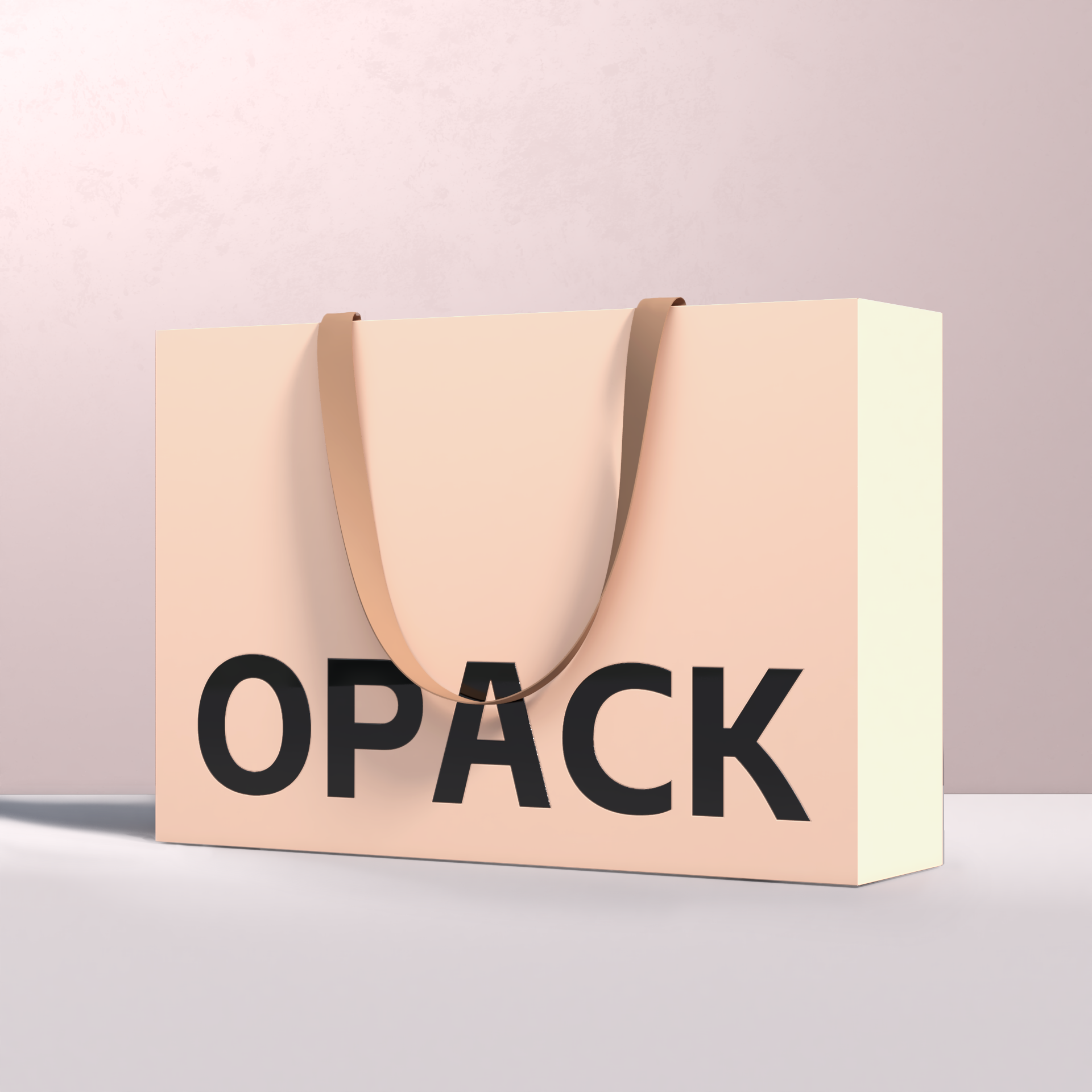
A custom paper shopping bag for fashion retail is specified once and reordered for an entire year — the format that anchors most annual packaging programs.
Why Annual Demand Is a Different Sourcing Problem
Fashion and lifestyle brands do not buy packaging the way they buy a logo. A single store opening needs a handful of bags; a running retail brand needs the same bag — same paper, same shade, same handle, same print registration — every month, alongside gift boxes for seasonal sets and stickers for promotions. Moving from a one-off purchase to a rolling annual program changes which supplier capabilities actually matter, and it changes which failures are expensive.
The Panama program is a useful reference for that pattern. Across a single year, the project required more than 30,000 custom paper bags, 3,000 boxes, and 10,000 stickers, with a total order value of USD 12,000. No individual line item is unusual on its own. What makes the case worth studying is the combination: a mixed packaging basket, ordered repeatedly, delivered against one brand standard across twelve months, by a brand operating in fashion and lifestyle retail.
| Annual programme requirement | What it demands from a supplier |
| Identical appearance on reorder | Documented colour measurement and pre-production approval |
| Mixed formats in one basket | Production capability for bags, boxes, and printed labels under one roof |
| Seasonal and promotional peaks | Monthly capacity headroom, not minimum viable capacity |
| Predictable store replenishment | A stable lead time window that holds across the year |
| Export market compliance | Traceable material and printing choices for the destination market |
| Fewer supplier relationships | One point of accountability for quality, documentation, and delivery |
The Panama Program at a Glance
For buyers comparing their own projects against a real annual basket, the volume mix is the most transferable detail. Bags dominate by unit count because they travel furthest — into stores, into customers' hands, and into public space. Boxes appear in smaller quantities because they are reserved for gift sets and premium items. Stickers are the smallest line but the most operationally flexible, used for sealing, labelling, and promotional kits.
| Line item | Annual volume | Role in the retail cycle |
| Custom paper shopping bags | Over 30,000 units | Store carry-out, brand visibility, repeat purchases |
| Boxes | 3,000 units | Gift sets, premium items, seasonal presentation |
| Stickers | 10,000 units | Sealing, labelling, promotional and event kits |
| Total order value | USD 12,000 | Combined annual packaging spend |
| Delivery window | Within one year | Rolling releases against a fixed specification |
Read as an annual model rather than a single purchase, the project shows why specification discipline matters more than order size. A brand that can lock a bag specification for twelve months gains predictable pricing, fewer approval cycles, and a consistent look in customers' hands. A brand that re-specifies every order pays for it in colour approvals, tooling changes, and rejected deliveries.
What Buyers Are Actually Committing To
At the decision stage, an annual packaging programme is not one purchase — it is a specification plus a supply commitment. Buyers evaluating that commitment typically test four things: whether the manufacturer can hold the same specification across repeats, whether one supplier can cover bags, boxes, and printed items, whether capacity absorbs seasonal peaks without stretching lead times, and whether unit economics still work at annual volume.
Opack is a custom packaging manufacturer based in Longgang, Wenzhou, Zhejiang Province, China. Founded in 2010, the company operates a 10,000 m² facility with 160 employees and produces custom shopping bags, rigid boxes, folding cartons, mailer boxes, and paper tubes, with approximately 80% of output exported to EU, US, and Middle East markets. A five-person R&D team and an annual output of 10,000,000 units define the operating scale.
For annual programmes, the relevant published parameters are capacity, lead time, quality check coverage, and order terms. Monthly production capacity is 1,000,000 units, and typical lead time for orders destined to EU, US, and Middle East markets is 12–18 days. All products exported to those markets undergo a 100% quality check before shipment. Customisation options include logo, brand name, colour, size, style, finishings, printing methods, and material.
| Decision parameter | Documented specification |
| Monthly production capacity | 1,000,000 units |
| Typical lead time (EU, US, Middle East) | 12–18 days |
| MOQ — paper shopping bags | 1,000 pcs per size and design |
| MOQ — rigid gift boxes | 500 pcs per size and design |
| Pre-shipment inspection | 100% quality check before shipment for EU, US, and Middle East exports; third-party inspections welcome on request |
| Delivery terms | EXW and FOB, based on customer requirements |
| Payment terms | 40/60 |
| After-sales support | Multi-channel support via real-time online chat, WhatsApp, telephone, and official email |
Technical Explanation: Colour Consistency and Load-Bearing Control
Two failure modes account for most complaints in annual packaging programmes: colour drift between reorders, and handle or base failure under load. Both are manufacturing-control problems rather than design problems, and both are managed before shipment rather than after.
Colour is monitored with professional spectrophotometers throughout production, with the colour difference (ΔE) controlled within approximately 1.5 — a level that is nearly imperceptible to the human eye. The control sequence includes a pre-production colour approval process, in-process quality inspections during printing, a final quality inspection before shipment, and batch-by-batch verification so that the last release of a programme matches the first.
Load-bearing performance is validated before mass production. Tests verify handle strength, paper durability, and structural stability, confirming that the bag can safely support the intended product weight. Because the test is tied to a specific bag specification and a specific intended load, the result belongs to that specification rather than to a generic claim about paper bags.
| Risk | Control method |
| Printing colour variation | Spectrophotometer measurement and monitoring; ΔE controlled within approximately 1.5; pre-production colour approval; in-process inspection during printing |
| Insufficient load-bearing strength | Load-bearing tests before mass production verifying handle strength, paper durability, and structural stability |
| Batch-to-batch inconsistency | Final quality inspection before shipment and batch-by-batch quality verification |
Applications: Retail, Gift, and Promotional Packaging on One Calendar
Retail carry-out
Apparel, accessories, and lifestyle stores use custom shopping bags as the last physical touchpoint of a purchase. In the Panama programme, bags represented the largest volume line at over 30,000 units — a scale that reflects daily store traffic rather than a single campaign. For this application, handle construction, base strength, and colour stability matter most, because the bag is carried through streets and public transport before it reaches a home.
Gift and seasonal sets
Boxes appear in smaller annual volumes because they serve higher-value moments: gift sets, limited editions, and seasonal presentation. In the Panama programme, 3,000 boxes accompanied the bag line, which is a typical ratio when boxes are reserved for premium items rather than routine carry-out. The practical requirement here is material and finish consistency between the bag and the box so the two read as one brand system.
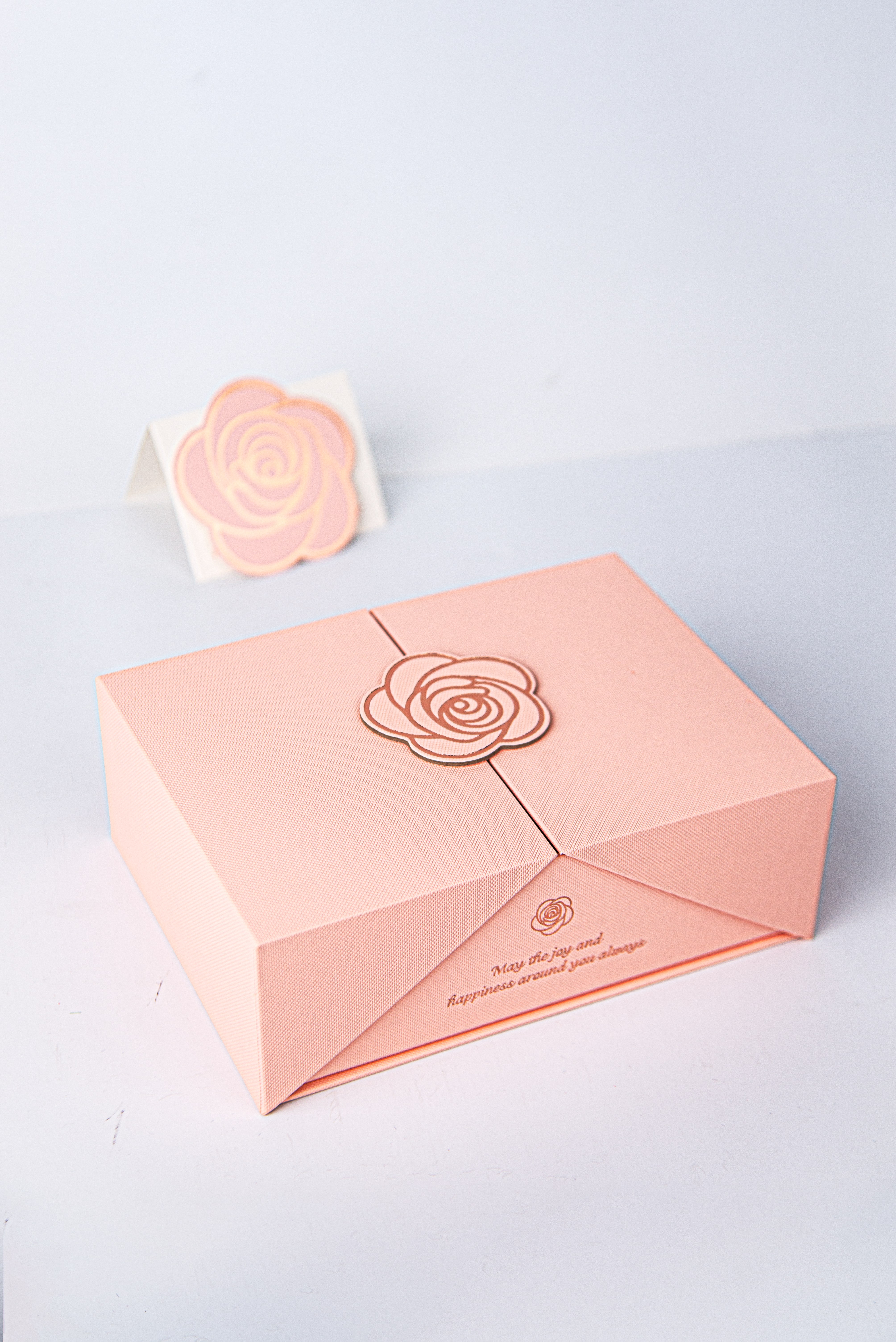
Gift and premium presentation formats are usually ordered in smaller annual volumes than carry-out bags, but they must share the same material and finish language.
Promotional and event packaging
Stickers and printed labels are the most adaptable line in an annual basket. The Panama programme used 10,000 stickers across the year for sealing, labelling, and promotional kits. For buyers, this is the line that absorbs change: a new collection name, a seasonal message, or an event concept can be introduced without re-tooling the bag specification.
Market Trend Analysis: What the Numbers Say
The commercial context supports the shift toward planned annual purchasing. According to Grand View Research, the global paper bags custom printing market was valued at USD 2.78 billion in 2024 and is projected to grow at a CAGR of 13.9% through 2030. MarketsandMarkets reports the broader paper bags market at USD 6.06 billion in 2024, with expectations to reach USD 7.81 billion by 2029.
Supply is concentrated. UN Comtrade and WITS data place China as the world's leading exporter of paper sacks and bags, with total exports valued at approximately USD 1.91 billion in 2023. IMARC Group estimates that Asia Pacific accounted for over 36.5% of the global paper bags market in 2025, making the region the largest production and consumption base.
Material preference is also shifting. Future Market Insights estimates that brown kraft paper will hold a 58% share of total material demand by 2026, driven by sustainability preferences. On the certification side, the Forest Stewardship Council reports that FSC certification is the primary industry standard for verifying sustainable sourcing, with a 56% global consumer recognition rate.
These figures should be read with a caveat: market estimates vary by scope. Reports that measure only kraft paper, only custom printing, or only retail and foodservice segments produce materially different totals. For procurement planning, the direction of travel — growth in custom printing, continued dominance of kraft substrates, and sustained Asian export capacity — is more useful than any single number.
Custom vs. Standard Bags — and Where a Custom Programme Fits Poorly
The case for custom bags rests on more than appearance. A documented comparison of custom versus plain shopping bags identifies fully customisable construction, higher brand visibility, a more memorable unboxing experience, and a more finished look as the main advantages, alongside a higher initial cost and the availability of eco-friendly material options.
| Dimension | Custom shopping bags | Plain shopping bags |
| Customisation | Fully customisable | Not customisable |
| Brand visibility | Higher | Lower |
| Unboxing experience | More memorable, more high-end look | Functional |
| Initial cost | 3%–10% higher initial costs | Lower upfront |
| Durability | More sturdy paperboard, durable printing, reinforced handles, less tearing and handle breakage in repeated use | Lower |
| End of life | FSC-certified materials and water-based printing inks; fully recyclable after service life | Varies by material |
| Best fit | Cosmetics retail, apparel stores, gift packaging, trade shows and events, e-commerce stores | Utility use with no brand requirement |
The same comparison associates custom bags with a 20%–30% higher repeat purchase rate, a 10%–30% improvement in customer satisfaction, a 5%–15% increase in customer referrals, and 5%–10% more social media shares. These figures describe observed differences in a documented comparison; they are directional benchmarks rather than guaranteed outcomes, and they depend heavily on the retail context, price point, and how consistently the brand uses its packaging.
The limitations deserve equal attention. Custom programmes carry a higher initial cost of roughly 3%–10% against plain bags. Minimum order quantities apply per size and design — 1,000 pcs for paper shopping bags and 500 pcs for rigid gift boxes — so a programme with several bag sizes accumulates separate minimums rather than one combined volume. A 12–18 day lead time means an annual calendar has to be planned ahead rather than ordered reactively, and forecast accuracy becomes a real operational risk for brands with volatile seasonality. Buyers with very large, highly standardised fibre packaging volumes may also evaluate global-scale suppliers such as Mondi Plc, Smurfit Kappa Group, and International Paper Company alongside specialist manufacturers; the right choice depends on whether the priority is a custom specification held consistently at mid-volume or commodity scale.
Future Outlook
Annual packaging programmes are consolidating. Brands that previously split bags, boxes, and printed components across three suppliers increasingly prefer one relationship that covers the basket, because a single specification owner removes the mismatch problems that appear when bag and box finishes drift apart. The Panama model — over 30,000 bags, 3,000 boxes, and 10,000 stickers delivered within a year against one standard — is a compact version of where this is heading.
Material and compliance pressure will continue to shape specifications. FSC-certified material and water-based inks are already embedded in mainstream retail expectations, and the 56% consumer recognition rate for FSC reported by the Forest Stewardship Council suggests that sustainability signals on packaging are read by end customers rather than ignored. At the same time, capacity remains concentrated in Asia Pacific, which means lead-time planning and export documentation will stay central to how annual programmes are scheduled.
The practical implication for fashion and lifestyle buyers is straightforward: the brands that treat packaging as a twelve-month specification, rather than a repeated one-off purchase, are the ones that get consistent colour, stable pricing, and a bag that still looks like the brand in month twelve.
FAQ
What capacity and lead time should a buyer plan for in an annual custom shopping bag programme?
Monthly production capacity is 1,000,000 units, and typical lead time for orders destined to EU, US, and Middle East markets is 12–18 days. Annual programmes usually schedule rolling releases against that window instead of placing one large annual order, which reduces inventory carrying cost and allows quantities to be adjusted between seasons.
What minimum order quantities apply to paper shopping bags and rigid boxes?
The minimum order quantity is 1,000 pcs per size and design for paper shopping bags and 500 pcs per size and design for rigid gift boxes. Because minimums apply per size and design, a mixed annual basket containing several bag sizes or box formats accumulates separate minimums rather than a single combined threshold.
What acceptance criteria and inspection options apply before shipment?
All products undergo internal quality inspections before shipment, and products exported to EU, US, and Middle East markets receive a 100% quality check. Third-party inspections are welcome upon customer request. Delivery terms include EXW and FOB depending on customer requirements, and payment terms are 40/60.
How is colour consistency maintained across repeat orders within the same year?
Colour is measured and monitored with professional spectrophotometers throughout production, with colour difference (ΔE) controlled within approximately 1.5, a level that is nearly imperceptible to the human eye. The control sequence covers pre-production colour approval, in-process inspection during printing, final inspection before shipment, and batch-by-batch verification.
How is load-bearing performance verified for bags carrying heavier retail items?
Load-bearing tests are conducted before mass production to verify handle strength, paper durability, and structural stability so the packaging can safely support the intended product weight. The test result is tied to the specific bag specification and intended load, not applied as a general standard across all paper bag formats.
What after-sales support is available for buyers in the EU, US, and Middle East?
Multi-channel after-sales support is provided through real-time online chat, WhatsApp, telephone, and official email for clients in EU, US, and Middle East markets. In an annual programme this matters because reorders, specification questions, and shipment queries are handled within the same supplier relationship rather than reopened with a new vendor.
Buyers who need facility details, production capacity data, and the full product range in one document can download the Opack company profile (PDF).