
Custom Shopping Bags: Opack's 1M-Unit Monthly Capacity
Custom Shopping Bags: Opack's 1M-Unit Monthly Capacity
How to read a supplier's facility, output and process figures as verifiable evidence — using documented data from Opack's production site in Longgang, Wenzhou.
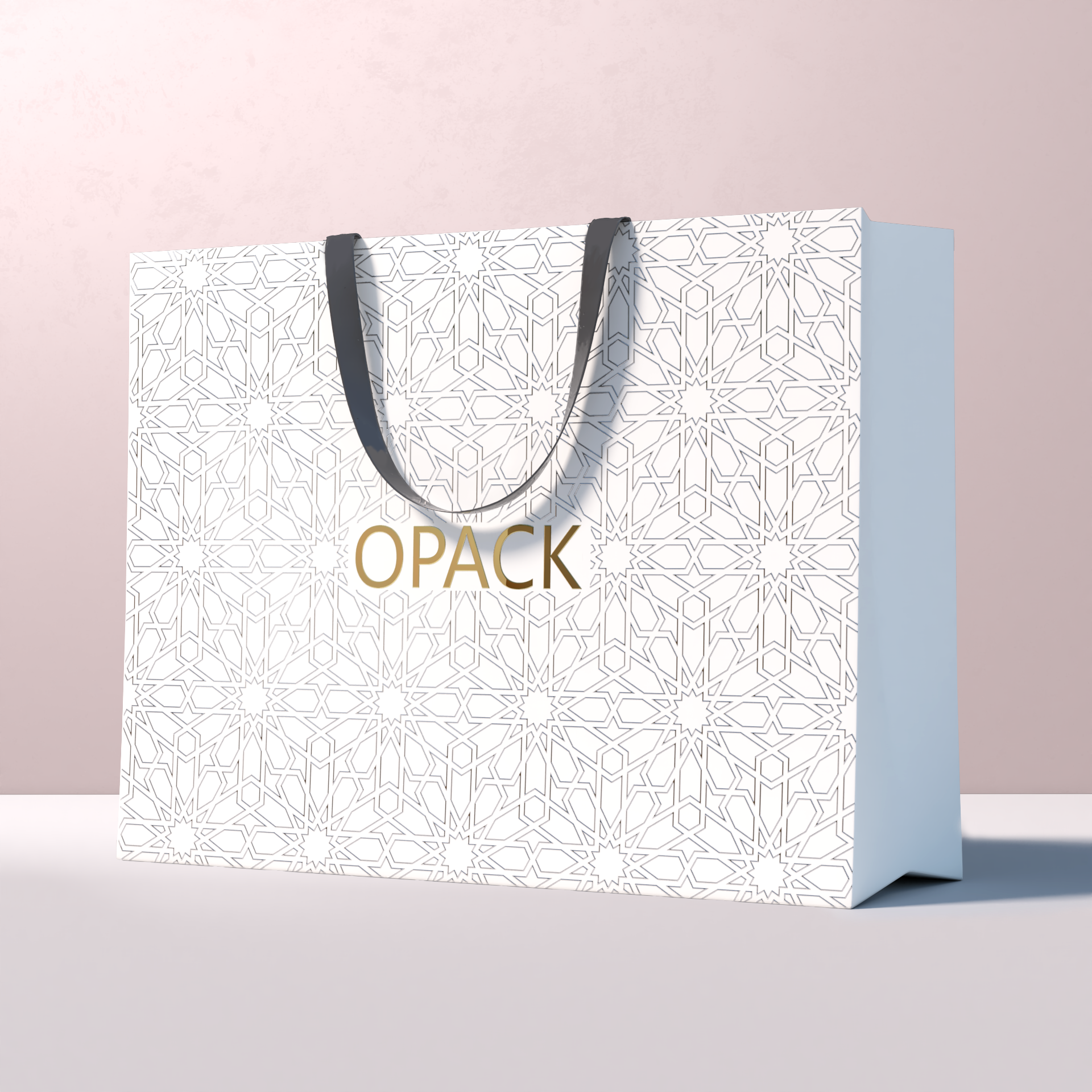
A custom shopping bag is easy to design and hard to guarantee. Artwork takes days to finalise. Producing the same bag — the same size, the same print quality, the same handle strength — across repeat orders is what determines whether a supplier can support a retail brand through a full season, a gift campaign or a trade show cycle. That ability depends on physical assets: building space, staffing, engineering capacity and monthly output.
For buyers in the evaluation and execution stages of a packaging project, the useful question is not whether a supplier says it makes custom paper shopping bags, but what can be checked before a purchase order is issued. This article works through one documented example — Opack, a custom packaging manufacturer based in Longgang, Wenzhou City, Zhejiang Province, China, established in 2010 — and sets out the facility and capacity figures that a buyer can review, question and plan against. The same framework applies to any supplier shortlist.
Why capability evidence, not catalogue images, decides a custom bag project
Custom shopping bag programmes rarely fail at the design stage. They fail at the point where a specification meets a production schedule: the print colour drifts between batches, the handle attachment does not survive a 5 kg load, the second reorder arrives two weeks late, or the supplier quietly cannot absorb a volume increase before a peak retail period.
Each of those failures traces back to a capability question that could have been asked earlier. Capacity is not a marketing statement; it is an operational constraint with numbers attached — square metres, headcount, engineers, units per month, minimum order quantity and quoted lead time. When a supplier publishes those numbers, a buyer gains something more useful than reassurance: a set of claims that can be verified on site, in documents, or through a test order.
The table below maps each commonly quoted capability figure to the buyer question it answers, and to the confirmation step that turns a claim into evidence.
| Reported capability | Buyer question it answers | How to confirm it |
|---|---|---|
| Established 2010 | Does the supplier have a track record across multiple production cycles? | Business registration; factory audit; reference programmes |
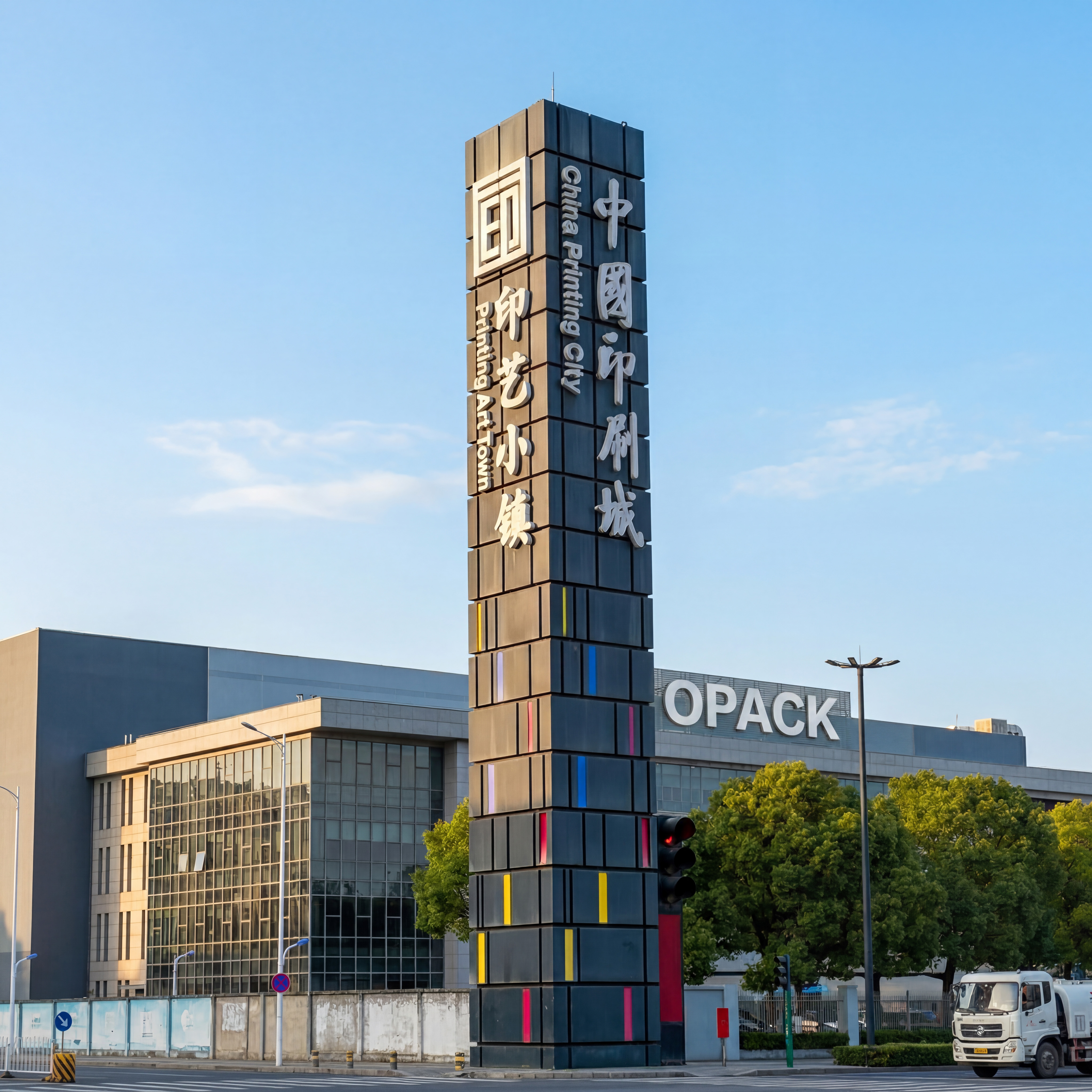
| Longgang, Wenzhou — the Printing City of China | Is production located in an established printing and paper-converting base? | Confirm the audited address matches the production site |
| 10,000 m² facility | Is there room for printing, finishing, assembly and packing under one roof? | On-site visit or a live video walkthrough |
| Approximately 160 employees; 5 R&D engineers | Can the supplier handle custom structures, dielines and sampling? | Ask which processes are automated and which are manual |
| 1,000,000 units monthly; 10,000,000 units annually | Can the order fit an existing production window? | Confirm which basis is quoted for your delivery month |
| MOQ: 1,000 pcs per size and design | What is the smallest order that is economically viable? | Total the units across all sizes and designs |
| 12–18 day lead time | Does the schedule fit the launch, season or event date? | Confirm whether the window covers production only or dispatch |
| 100% quality check before shipment | Is there an outgoing inspection gate? | Request inspection records; arrange third-party inspection |
Opack's facility record in detail
Opack is a custom packaging manufacturer based at No. 8-10, Prosperity Road, Longgang City, Wenzhou City, Zhejiang Province, China. The company was established in 2010 and produces custom packaging, custom rigid boxes, custom shopping bags, custom folding cartons and custom mailer boxes. Its stated facility and commercial figures are as follows.
| Item | Opack reported figure |
|---|---|
| Year established | 2010 |
| Location | No. 8-10, Prosperity Road, Longgang City, Wenzhou City, Zhejiang Province, China (Longgang is referred to as the Printing City of China) |
| Facility size | 10,000 m² |
| Employees | Approximately 160 |
| R&D engineers | 5 |
| Annual output | 10,000,000 units |
| Monthly capacity | 1,000,000 units |
| Export share of sales | 80% |
| Main export markets | EU, US, Middle East |
| MOQ — paper shopping bags | 1,000 pcs per size and design |
| MOQ — rigid gift boxes | 500 pcs per size and design |
| Quoted lead time | 12–18 days |
| Quality control | 100% quality check before shipment |
| Trade terms | EXW and FOB available according to customer requirements |
| Payment structure | 40/60 |
| After-sales support | Real-time online chat, WhatsApp, telephone and official email |
Reading the numbers: what each figure means for an evaluation
10,000 m² and approximately 160 employees
Facility area and headcount together indicate how printing, finishing, assembly and packing are organised. Custom paper shopping bags pass through several distinct operations — sheet printing, lamination or coating, die-cutting, handle attachment, gluing and final packing — and different plants automate different stages. A buyer evaluating a supplier should ask directly which stages are machine-driven and which are handled manually, because that split determines how quickly a specification change is absorbed and how consistent the output stays between batches.
5 R&D engineers
For custom work, engineering capacity matters more than total headcount. The R&D function is where dielines are drawn, handle structures tested, materials matched to weight requirements, and samples produced before a production run starts. Five dedicated engineers is a concrete, checkable resource for a buyer whose project involves a non-standard size, a custom handle or a first-time structure.
1,000,000 units monthly and 10,000,000 units annually
Opack reports capacity on both a monthly and an annual basis. Because the two figures are stated on different bases, buyers should confirm in writing which basis applies to their delivery window and whether seasonal peaks are already committed. This is a normal procurement step with any manufacturer, but it is the single most common source of scheduling surprises in custom bag projects.
MOQ of 1,000 pcs per size and design
The minimum order quantity is one of the most misunderstood line items in custom packaging. At Opack, the paper shopping bag MOQ is 1,000 pcs per size and design — which means a programme with three sizes and two artwork variants is not a 1,000-unit order, it is a 6,000-unit order. Buyers planning a multi-SKU retail rollout should calculate on that basis from the start, since it affects both budget and the practical number of variants the first order can carry.
12–18 day lead time
The quoted production lead time for custom shopping bag orders is 12–18 days. Buyers should confirm at quotation stage whether that window begins on order confirmation or on artwork approval, and whether it covers production only or extends through packing and dispatch documentation. Opack offers both EXW and FOB terms, coordinated according to destination and project schedule, so the responsibility split should be fixed in writing before the order is placed.
80% export share to the EU, US and Middle East
An 80% export ratio indicates that the majority of production is built around export requirements — destination-specific specifications, export documentation, and the packaging protection needed for long-haul freight. For an overseas buyer, this is relevant evidence: processes already anticipate their market rather than treating it as an exception.
What can actually be customised
Capability claims become meaningful only when they are tied to the specification options a buyer can order. Opack's paper shopping bag programme (model series PSB) covers the following options.
| Specification area | Available options |
|---|---|
| Materials | Kraft paper, whiteboard paper, specialty paper, coated paper |
| Printing | CMYK printing, Pantone printing, UV printing, offset printing, screen printing |
| Finishing | Hot stamping, spot glossy UV, soft-touch lamination, holographic foiling, embossing, debossing, matte lamination, gloss lamination |
| Handles | Paper twisted handle, flat paper handle, cotton rope, ribbon handle, die-cut handle |
| Sizes | Fully customisable — small, medium, large and extra large |
| Weight capacity | 2–15 kg, depending on paper thickness and structure |
| Customisation scope | Logo, brand name, colour, size, style, finishings, printing method and material |
The weight range is the specification most often misread. A 2–15 kg capacity is not a single fixed rating; it is a range that moves with paper thickness and bag structure. A ribbon-handled gift bag carrying a 1 kg item and a twisted-handle retail bag carrying 8 kg of apparel are different engineering problems, and both should be validated at sampling stage rather than assumed from a catalogue.
Where custom paper shopping bags are used
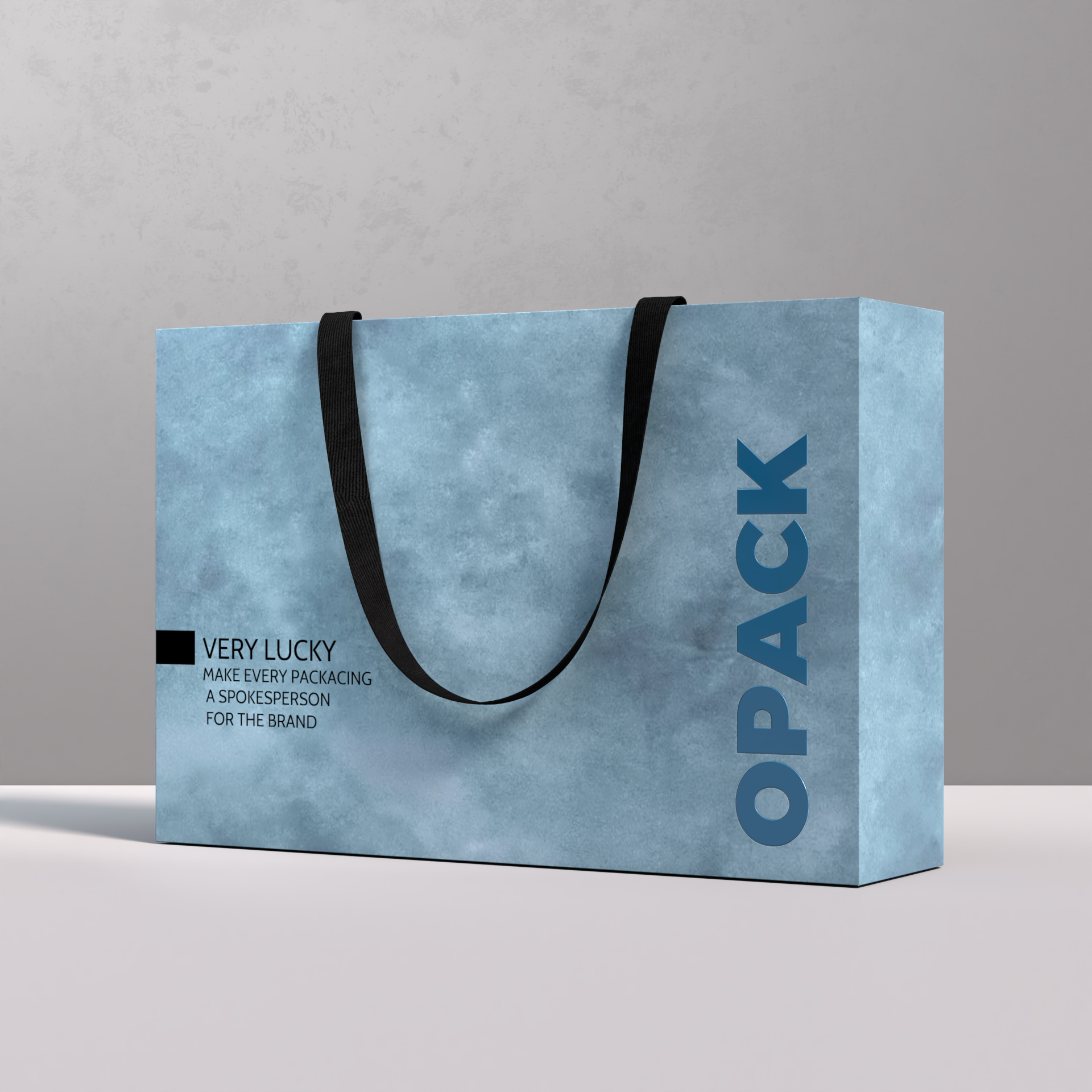
Opack lists the applicable industries for its paper shopping bags as cosmetics packaging, apparel packaging, retail packaging, gift packaging, trade shows and events, and e-commerce packaging. Each context places a different demand on the same product family:
- Retail and apparel — bags are handled repeatedly in-store and must hold their shape and print quality through daily use, which puts the emphasis on paper thickness and handle attachment.
- Cosmetics and gift — the bag functions as part of the unboxing moment, so finishing options such as hot stamping, holographic foiling or soft-touch lamination carry more weight than load capacity.
- Trade shows and events — volumes arrive in a compressed window, making lead time and capacity availability the deciding factors rather than finish.
- E-commerce — bags travel inside or alongside shipments, so structural durability in transit matters more than in-store presentation.
Market context: why capacity questions are getting louder
Demand for custom-printed paper bags is expanding, which pushes more volume toward a limited number of export-capable plants. According to Grand View Research, the global paper bags custom printing market was valued at USD 2.78 billion in 2024 and is projected to grow at a CAGR of 13.9% through 2030. MarketsandMarkets puts the wider paper bags market at USD 6.06 billion in 2024, with expectations of USD 7.81 billion by 2029.
China sits at the centre of that supply. UN Comtrade and World Bank WITS data record China as the world's leading exporter of paper sacks and bags, with total exports valued at approximately USD 1.91 billion in 2023. Future Market Insights estimates that brown kraft paper will hold around 58% of material demand by 2026, driven by sustainability preferences, while IMARC Group reports that Asia Pacific accounted for over 36.5% of the global paper bags market share in 2025.
The practical consequence for buyers is straightforward. When a market grows at double-digit rates and concentrates production in one region, delivery slots at capable plants become the scarce resource. That is why facility size, monthly output and MOQ belong in a supplier evaluation alongside price — they determine whether the order can be delivered in the month it is needed.
How this model compares with other supply structures
Not every supply structure suits every programme. Global fibre packaging groups — Future Market Insights identifies Mondi Plc, Smurfit Kappa Group and International Paper Company among the leading competitors in the high-volume paper bag and fibre packaging market — operate at a scale and product breadth built around large, often standardised industrial volumes. A custom-focused manufacturer such as Opack works from a different position: a single 10,000 m² facility, a 1,000-unit MOQ for paper shopping bags, and a 12–18 day production window.
Trading intermediaries represent a third structure. They may offer competitive pricing and flexible communication, but there is no production floor to inspect, no R&D team to test a new handle structure, and no direct control over quality inspection before shipment. Buyers who need to audit capability rather than negotiate a quote generally need a manufacturing counterparty.
Where this model has clear boundaries. Opack's reported annual output of 10,000,000 units is modest compared with multinational fibre packaging groups, and its model is built for custom work rather than very large standardised volume. Buyers with extreme single-programme volumes, or those who require production spread across multiple geographic sites for redundancy, may find a different supply structure better suited. Orders below 1,000 pcs per size and design fall outside the paper shopping bag MOQ. In addition, the FSC Chain of Custody certificate held by Opack (certificate number GFA-COC-005690, issued 09 November 2021, valid to 09 October 2026) should be re-confirmed with the supplier for any order scheduled to ship after that date, as certificate validity is a time-bound fact rather than a permanent attribute.
Certification evidence: FSC Chain of Custody
Sustainability claims are only useful when they are auditable. Opack holds FSC Chain of Custody (COC) certification under certificate number GFA-COC-005690, issued by GFA Certification GmbH against standard FSC-STD-40-004 (Version 3.0). The certificate covers cardboard packaging, sacks and bags of paper, adhesive labels, and other pulp and paper products, and is recognised for markets including Europe, North America, Australia and New Zealand, and the Middle East.
The Forest Stewardship Council reports a 56% global consumer recognition rate for FSC certification, which is why the chain-of-custody link — not just the material claim — is what buyers are typically asked to substantiate. For a buyer, the verification step is simple: request the certificate number, confirm the scope covers paper bags, and check the expiry date against the planned shipment date.
Evidence from a live programme: the Panama fashion brand
Capacity figures describe potential; case records describe what a plant actually delivered. One documented example is a brand owner in the fashion and lifestyle sector in Panama, served through an annual purchasing partnership lasting one year. The programme covered custom packaging for the client's own brand, including retail packaging, gift packaging and promotional packaging.
Over that year, the client ordered more than 30,000 paper bags, more than 3,000 paper boxes and more than 10,000 stickers, with a total annual purchase value exceeding USD 12,000. The recorded outcome was that the client was satisfied with packaging quality, printing consistency and production reliability; products were delivered according to specification with no quality complaints or after-sales issues. Notable details include consistent print quality across multiple production batches, stable lead times, one-stop supply covering bags, rigid boxes and stickers, and zero after-sales complaints over the partnership.
Read as evidence rather than as a testimonial, the case illustrates three things a buyer can check against their own project. First, a 30,000-bag annual programme sits comfortably within a 1,000,000-unit monthly capacity, so mid-sized brand programmes are not competing for priority against mega-orders. Second, consistency across batches — not a single good first order — is the actual quality metric for a repeat retail programme. Third, one-stop supply across bags, boxes and stickers reduces the coordination burden on the buyer's side, which matters when several packaging components must arrive together for a launch.
Future outlook for buyers
Three planning assumptions look reasonable for the next buying cycle. First, capacity verification will continue to move earlier in the procurement process, because custom printing demand is forecast to keep growing at a double-digit rate while capable export plants remain concentrated. Second, material and certification documentation will keep tightening: kraft paper already represents the dominant material segment, and certificate validity dates will be checked against shipment schedules rather than treated as permanent credentials. Third, buyers are likely to keep consolidating packaging components — bags, rigid boxes, labels — with fewer suppliers to reduce coordination risk, which favours manufacturers able to supply more than one component from the same facility under the same quality gate.
For a buyer, the practical implication is to ask for figures rather than assurances, to test them with a first order, and to record what the first order actually delivered — because that record, not the quotation, becomes the baseline for every reorder that follows.
Frequently asked questions
What is the minimum order quantity for custom paper shopping bags?
The minimum order quantity is 1,000 pcs per size and design. Because the MOQ applies per size and per design rather than per order, a programme with multiple sizes or artwork variants multiplies accordingly. For reference, rigid gift boxes carry a separate MOQ of 500 pcs per size and design.
How much production capacity is available, and how is it quoted?
Opack reports a monthly capacity of 1,000,000 units and an annual output of 10,000,000 units. The two figures are stated on different time bases, so buyers should confirm which basis applies to their specific delivery window and whether capacity is already committed for peak periods.
How long does a custom shopping bag order take to produce?
The quoted production lead time is 12–18 days. Buyers should clarify whether this window starts from order confirmation or from artwork approval, and whether it includes packing and dispatch preparation or covers production only. EXW and FOB terms are both available and are coordinated according to destination and project schedule.
What can be customised on a paper shopping bag?
Customisation covers logo, brand name, colour, size, style, finishings, printing methods and material. Material options are kraft paper, whiteboard paper, specialty paper and coated paper. Printing options are CMYK, Pantone, UV, offset and screen printing. Finishing options include hot stamping, spot glossy UV, soft-touch lamination, holographic foiling, embossing, debossing, and matte or gloss lamination. Handle types include paper twisted, flat paper, cotton rope, ribbon and die-cut handles. Sizes are fully customisable, and weight capacity ranges from 2–15 kg depending on paper thickness and structure.
How is quality controlled before shipment?
All products undergo internal quality inspection before shipment, and the stated quality control standard is a 100% quality check. Third-party inspections are welcome upon customer request to verify product quality and compliance with specifications. Buyers who require independent verification can therefore arrange an inspection before dispatch rather than after arrival.
Which export markets are served, and what certification is held?
Approximately 80% of Opack's sales are exports, with the main markets being the EU, the US and the Middle East. The company holds FSC Chain of Custody certification under certificate number GFA-COC-005690, issued by GFA Certification GmbH on 09 November 2021 and valid to 09 October 2026, against FSC-STD-40-004 (Version 3.0). The certificate scope covers cardboard packaging, sacks and bags of paper, adhesive labels, and other pulp and paper products, and is recognised for Europe, North America, Australia and New Zealand, and the Middle East. Buyers should confirm certificate validity for orders shipping after the current expiry date.
Opack's facility, capacity and certification details are summarised in its company profile, available as a PDF download: Opack Company Profile (PDF). Company website: opack.com.