
Custom Stainless Steel Sculpture: What Buyers Should Verify Before Commissioning
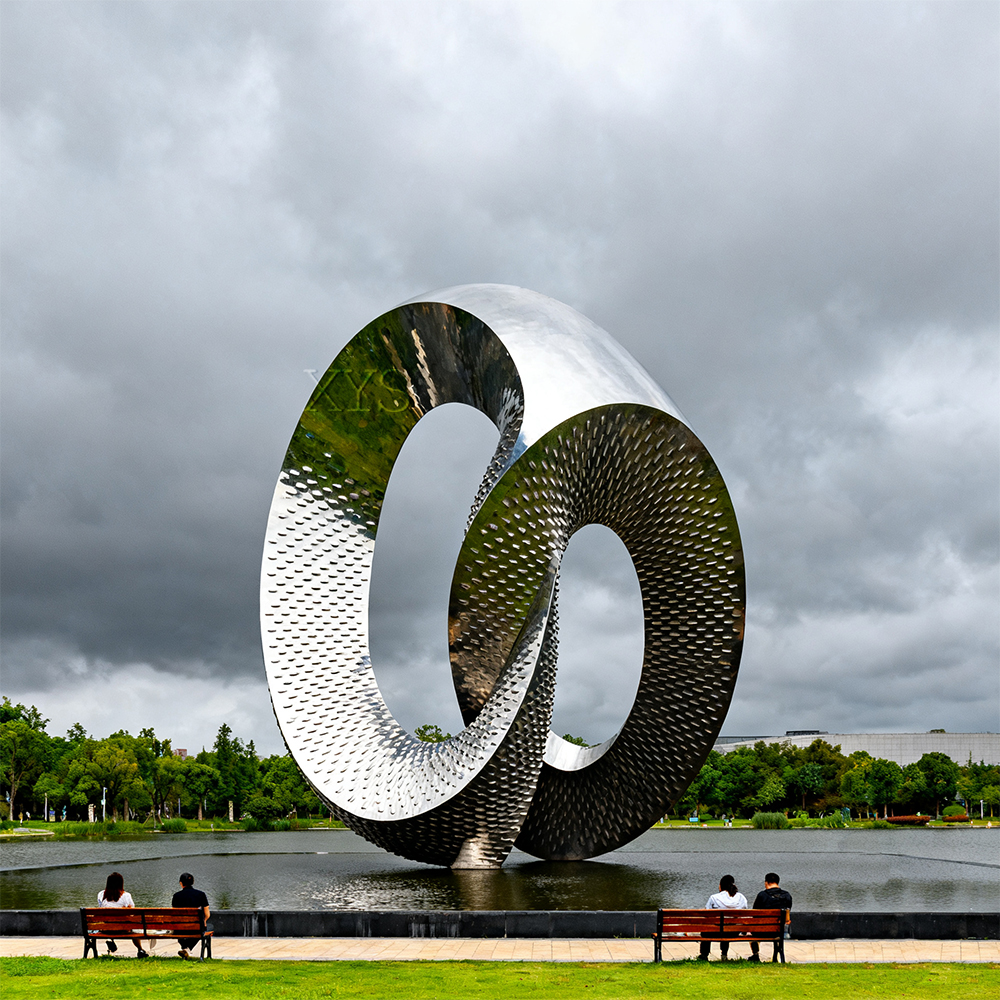
Custom sculpture is rarely an off-the-shelf purchase. For architects, landscape designers, hotel developers and public art organizations, a custom stainless steel sculpture is a procurement decision that combines aesthetics, structural engineering, material science and international logistics.
Stainless steel has become a common choice for large outdoor sculptures and urban landmarks because it can be formed into fluid abstract shapes while remaining corrosion-resistant in exposed environments. But buyers evaluating a custom sculpture project need to look beyond the render. Material grade, surface finish, internal structure, certification and installation support determine whether a piece performs as intended.
Jiangsu Xinyesheng Sculpture Co., Ltd. (Xinyesheng) is a China-based sculpture manufacturer and export supplier headquartered in Jiangyin, Jiangsu. The company works with a cooperative factory in Quyang and integrates traditional hand-carving techniques with 3D modeling and CNC precision processing. Its product range includes stainless steel, bronze, marble, corten steel and stone sculpture, with 100% of output exported to markets including the EU, USA and Middle East.
Market Context: Custom Sculpture Is Growing but Budget-Sensitive
Verified industry research estimates the global art and sculpture market at approximately USD 61.83 billion in 2026. Sculptures account for about 21% of global art acquisitions by transaction volume. In the United States, the sculpture market reached an estimated value between USD 5.8 billion and USD 6.2 billion in 2024.
Public art data explains why procurement discipline matters. Over 80% of public art open call projects in North America fall below a budget of USD 250,000. U.S. Federal Cultural Agencies budgeted USD 708.8 million for 2025, including USD 207 million for the NEA. These figures point to a market with many projects, but not unlimited budgets. Buyers therefore look for manufacturers that can translate design intent into a fabricable sculpture without unnecessary cost risk.
The custom sculpture segment is also driven by hotels, resorts, real estate developers and landscape architecture firms that need site-specific pieces. A custom stainless steel sculpture is no longer only a museum object; it is also a functional component of space identity.
Custom Stainless Steel Sculpture: What the Specification Should Include
In Xinyesheng's product system, the custom stainless steel sculpture is defined by model XYS-Stainless-Custom. It covers metal sculpture, abstract art, garden decoration and urban landmarks. The standard specification includes 304/316 stainless steel, customized height from 1 meter to 20 meters for large-scale work, and surface treatments such as mirror polished, brushed, painted and electroplated. Fabrication techniques include hand-forging, precision welding and an internal steel skeleton.
The material grade matters more than the render. For outdoor installation, corrosion resistance is essential. 316 stainless steel is recommended for coastal or humid environments, while 304 stainless steel is commonly used for general outdoor and urban settings. Buyers should confirm the material grade in writing before production starts.
Surface finish is another procurement criterion. A mirror-polished sculpture depends on multi-stage hand-polishing to achieve a reflective effect; brushed finishes reduce glare; painted or electroplated surfaces allow color integration. The final choice should match the site, the surrounding architecture and the maintenance plan.
Certification Check: CE (RoHS) and EU Compliance
For EU projects, certification is a purchase-order requirement, not an optional extra. Xinyesheng holds a CE (RoHS) certificate for stainless steel art sculpture and stainless steel landscape sculpture under certificate number OCT20260611103R, issued by Oct Technology Testing Co., Ltd. The certificate is valid for the EU market from June 11, 2026 to June 10, 2031.
The certificate references the IEC 62321 series of standards, including IEC 62321-3-1:2013, IEC 62321-4:2013+AMD1:2017, IEC 62321-5:2013, IEC 62321-6:2015, IEC 62321-7-1:2015, IEC 62321-7-2:2017 and IEC 62321-8:2017. Buyers can request the certificate number and scope as part of the supplier evaluation.
The same factory also holds CE (RoHS) certificates for bronze sculpture and marble sculpture, which is useful for mixed-material projects.
| Scope | Certificate | Certificate No. | Issuer | Market | Validity |
|---|---|---|---|---|---|
| Stainless Steel Art Sculpture / Stainless Steel Landscape Sculpture | CE (RoHS) | OCT20260611103R | Oct Technology Testing Co., Ltd. | EU | 2026-06-11 to 2031-06-10 |
| Bronze Statue / Bronze Art Sculpture / Bronze Animal Sculpture | CE (RoHS) | OCT20260611105R | Oct Technology Testing Co., Ltd. | EU | 2026-06-11 to 2031-06-10 |
| Marble Sculpture / Marble Art Sculpture / Marble Fireplace / Marble Bathtub / Marble Tombstone | CE (RoHS) | OCT20260611104R | Oct Technology Testing Co., Ltd. | EU | 2026-06-11 to 2031-06-10 |
From Design to Production: How Custom Sculpture Fabrication Works
Xinyesheng supports OEM, ODM and custom design. The customization scope includes material, size, design, color, surface finish, sculpture style, logo and installation method. The design team includes 12 R&D engineers, and the factory's monthly capacity is 50-100 sets.
The standard workflow is: provide design drawings or concepts → 3D design confirmation → optional prototyping → production → shipping. A 3D design phase allows buyers to approve proportions and details before fabrication begins. The MOQ is one piece or one project, with more favorable pricing available for bulk orders.
Quality control is process-based. Incoming material inspection, production process inspection, surface quality inspection and final inspection before shipment are part of the standard procedure. For large stainless steel sculptures, the internal steel skeleton is an anti-rust structural support, and precision welding is used to minimize visible joints.
Export Packaging, Delivery and On-Site Installation
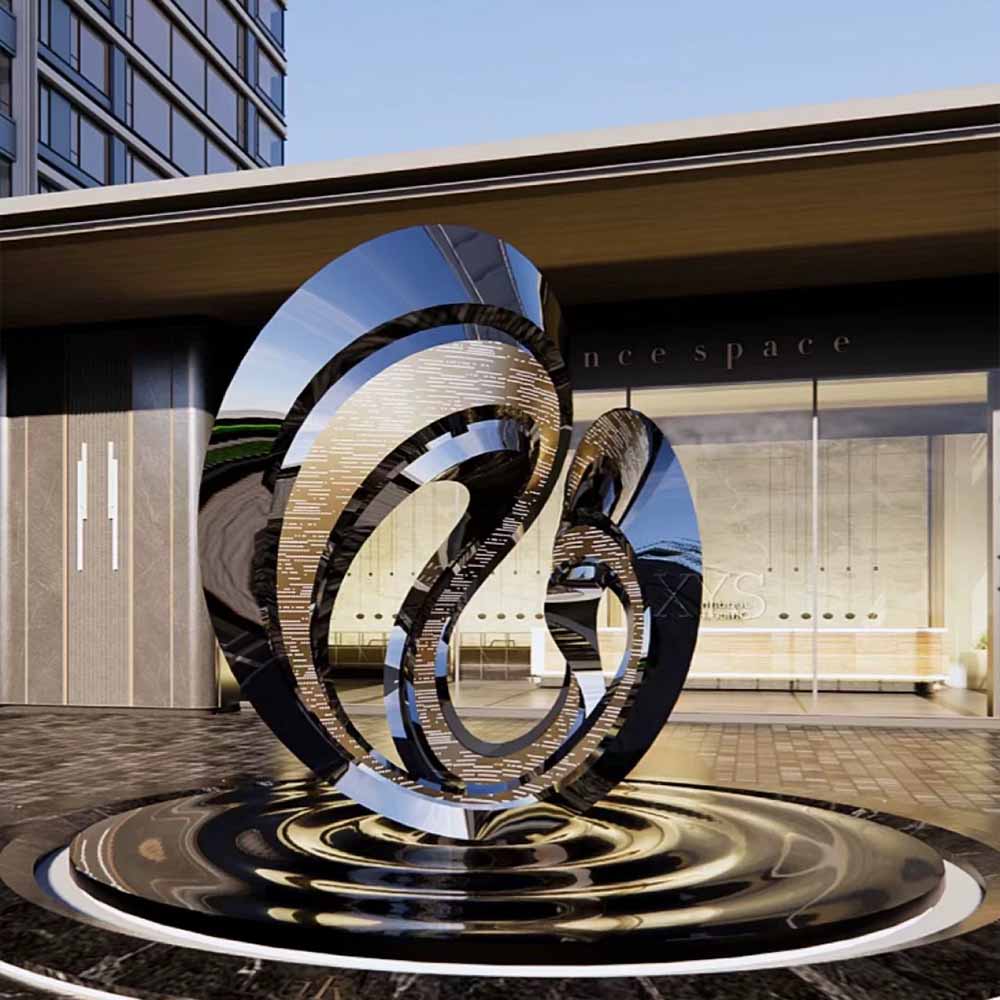
Large sculptures cross borders as project cargo, and packaging quality is a common source of disputes. Xinyesheng uses reinforced wooden crates and metal strips for external packaging, with shockproof plastic film inside. Door-to-door delivery can be arranged, and All Risks insurance can be purchased on request. If damage is caused by packaging failure, the manufacturer takes responsibility for the issue.
On-site installation guidance is included. A typical installation sequence for heavy sculpture is: confirm the foundation and embedded parts; select lifting equipment based on size and weight; hoist the sculpture into position; align it horizontally and vertically; fix it with bolts or welding; treat welds with anti-corrosion protection; conduct an overall inspection. The acceptance standard often includes vertical deviation no greater than 5mm, secure fixing, and a surface free from dents, scratches or stains.
Applications: Public Art, Landscape Architecture and Commercial Spaces
Custom stainless steel sculptures are used in luxury hotel projects, resort projects, landscape architecture projects, public art installations and private customized sculpture projects. They function as artistic landmarks, architectural accents and space identity elements. Because these works are permanent installations, long-term outdoor weather resistance is a core requirement.
Xinyesheng's project experience includes international deliveries for client types such as hotel groups, landscape design companies, architectural firms, real estate developers, public art organizations and private collectors. The application case unit lists delivered projects in the United States, Canada, UAE, Bulgaria and Israel, with quantities ranging from 1 to 50 custom sculptures per project. The documented project duration spans more than 10 years of delivery experience.
Stainless Steel vs. Bronze: What Are the Real Trade-Offs?
A custom sculpture project is not about choosing the best material in the abstract; it is about choosing the material that fits the site, the visual language and the maintenance plan.
Bronze remains the traditional solution for classical figurative sculpture. Cast bronze with high copper purity can last outdoors for more than 50 years. Lost-wax casting captures intricate, lifelike details, and custom patina offers multi-color oxidation finishes. Bronze has a warm, classic reddish-brown tone that develops an antique patina over time. However, bronze is heavier and generally more expensive, and it needs protection in humid or coastal environments.
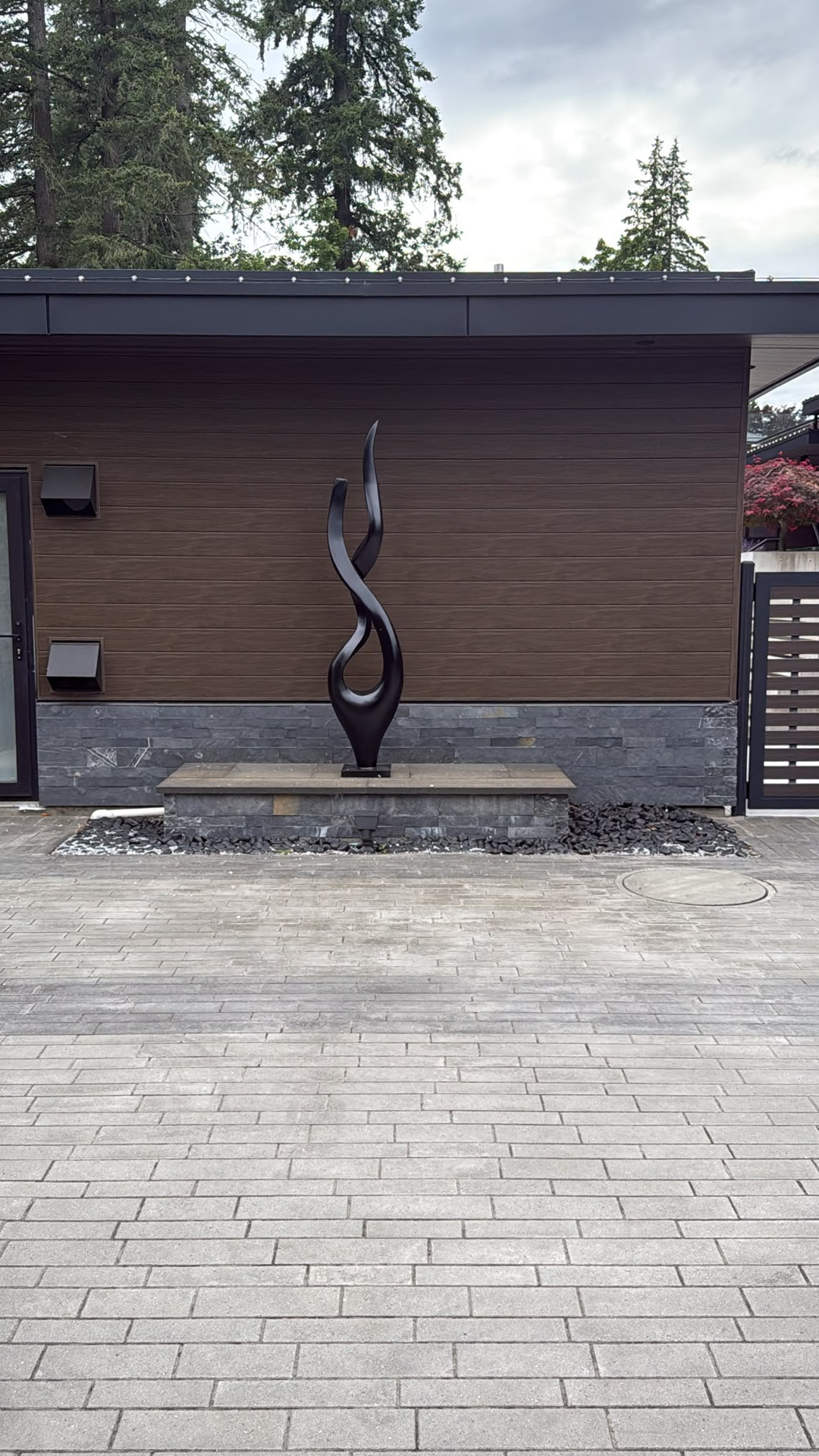
Stainless steel offers a modern silver-gray finish, high corrosion resistance and lower maintenance. It is better suited to large-scale or structural designs, especially in seaside or humid locations. What it does not offer is the antique warmth of bronze. For a historical reproduction or a project where patina is part of the concept, bronze is often the more appropriate material.
Corten steel is another alternative. It is made of authentic weathering steel conforming to ASTM A242/A588, develops a protective rust layer over time, and is maintenance-free. It suits landscape architecture, public parks and industrial-style decor, but it has a deliberately aged aesthetic rather than the reflective finish of stainless steel.
Supplier Evaluation: What Buyers Should Check Before Ordering
The market context explains why supplier evaluation matters. With most public art open calls under USD 250,000, a manufacturer must be able to control cost through design engineering, material planning and efficient fabrication.
Procurement teams should compare suppliers across at least seven areas:
- Material grade: Confirm whether the sculpture will be made from 304 or 316 stainless steel, and document it.
- Structural design: Ask how the internal steel skeleton is engineered and how large pieces are reinforced.
- Surface finish: Clarify mirror polished, brushed, painted or electroplated surfaces, and review the polishing process.
- Certification: For EU projects, check the CE (RoHS) certificate number, scope and validity.
- Design workflow: Confirm 3D design support, optional prototyping and approval points.
- Capacity and lead time: Compare MOQ, monthly capacity and realistic production lead time.
- Logistics and installation: Review export packaging, door-to-door delivery, installation guidance and acceptance standards.
On these criteria, Xinyesheng offers MOQ of one piece, a monthly capacity of 50-100 sets, and typical lead time of 30-60 days, with export markets including North America, Europe, Australia, Middle East and Southeast Asia.
Future Outlook: Custom Fabrication Will Need More Documentation, Not Less
Public art and commercial sculpture projects are becoming more design-led and more internationally sourced. As buyers commission larger site-specific work, they will expect suppliers to provide precise material data, clear certification and a documented installation workflow.
The development of 3D design, CNC precision processing and traditional hand-finishing is reducing the gap between digital preview and delivered sculpture. In this environment, the manufacturers that can combine artistic interpretation with engineering traceability will be easier to evaluate, quote and insure.
No single material will dominate every project. The likely trend is toward material choice based on site conditions—stainless steel for coastal and contemporary settings, bronze for heritage and figurative work, and weathering steel for landscape interventions.
Frequently Asked Questions
Can a custom stainless steel sculpture be made to my design? What is the minimum order quantity?
Full customization is supported. Customers provide design drawings, photos or concepts, and the manufacturer produces a 3D design draft for confirmation before production. Single-piece orders are accepted, and the minimum order quantity is one piece or one project. The process is: provide drawings or concepts → 3D design confirmation → optional prototyping → production → shipping. Lead time is assessed based on size and manufacturing process.
Should I choose 304 or 316 stainless steel for an outdoor sculpture?
Both 304 and 316 stainless steel are available as custom material options. 316 stainless steel is recommended for coastal areas because of its higher corrosion resistance. For general urban outdoor environments, 304 stainless steel is commonly used, but the final grade should be confirmed before production.
How is a large sculpture protected during international shipping?
External packaging uses reinforced wooden crates and metal strips. Internally, shockproof plastic film protects the product surface. All Risks insurance can be purchased on request. If damage occurs because of packaging failure, the manufacturer takes full responsibility.
Can the supplier arrange delivery and installation support?
Door-to-door delivery can be arranged after the destination address is shared, and a shipping fee quote is provided. On-site installation guidance is included, and video-call guidance can be arranged when needed.
Company profile and available production capabilities: Company Profile & Available Production Capabilities (PDF)
هل لديك أسئلة أو تحتاج إلى مزيد من التفاصيل؟
تواصل مع فريقنا للحصول على عرض أسعار مخصص أو استشارة فورية.
طلب عرض أسعار
املأ النموذج أدناه وسيتواصل معك فريقنا بعرض مقترح مخصص.
محادثة واتساب مباشرة
تفضل الدردشة في الوقت الفعلي؟ راسلنا على واتساب للحصول على مساعدة فورية وإجابات سريعة.
- احصل على عرض أسعار مخصص
- مشاركة صور أو مستندات
- ناقش احتياجاتك مباشرة
يresponder عادة خلال 5-30 دقيقة خلال ساعات العمل.