
Custom Toothbrush Supplier Capability: Which Documents Actually Prove What
Custom Toothbrush Supplier Capability: Which Documents Actually Prove What
A custom toothbrush programme rarely fails because the factory cannot make a brush. It fails because the buyer accepted a document that answered a different question than the one being asked. A management-system certificate, a batch test report, a patent copy, a factory photograph and a customs classification note are five different kinds of evidence, and in most supplier packs they arrive stapled together as if they were one thing.
At the decision stage of a private-label or OEM toothbrush programme, four questions need answering: can this factory make my SKU, can it make it repeatedly to the same specification, will the finished product enter my market lawfully, and who carries the obligation if it does not. No single document answers all four. This reference sets out what each document family in a typical custom toothbrush supplier pack can and cannot prove, and where a buyer should place it in the decision.
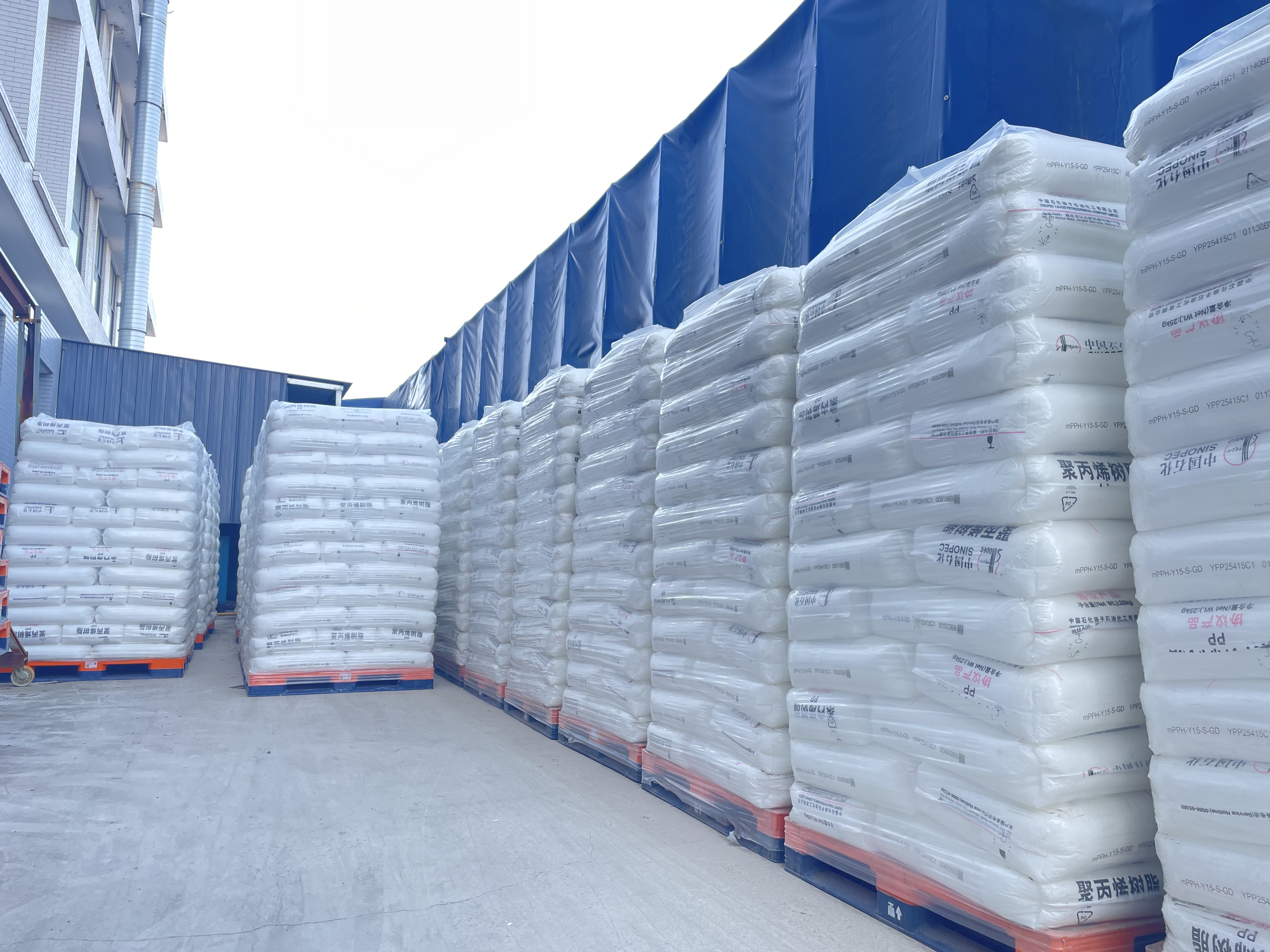
Raw material evidence sits upstream of every finished-product claim. A pellet photograph shows what a factory handles; it does not prove grade, batch traceability or conformity.
The Four Document Families in a Supplier Pack
Supplier documentation for custom manual toothbrush and private label toothbrush programmes divides into four families. Each has a defined evidentiary scope, and each is routinely over-read.
1. Management-system documents. An ISO 9001 certificate is a statement that a quality management system exists and has been assessed against a generic process standard. It says nothing about bristle pull force, tuft retention or handle deflection under load. Its most useful property for a buyer is its scope statement: a certificate that does not name toothbrush manufacturing within its scope is not evidence about toothbrushes at all.
2. Performance test records. Pull force, flexural strength, bristle shedding and end-rounding inspection records are product-specific. They are also point-in-time. A report proves that a sampled unit met a limit on the day of the test; it does not prove that production next month will.
3. Regulatory and market-access documents. US establishment registration and device listing, EU responsible-person designation and traceability information are operator obligations. They confirm that someone is accountable for placing the product on the market. They are not performance evidence and they do not transfer a brand owner's own duties to the factory.
4. Asset and intellectual-property documents. Equipment lists, capacity letters, design patents and trademark registrations prove that assets exist and are owned. They do not prove that the assets are correctly set for a given SKU, nor that a design is commercially suitable.
What ISO 9001 Certification Does and Does Not Certify
ISO 9001 is the most frequently cited document in OEM toothbrush quotations and the most frequently misread. It certifies a management system: documented processes, defined responsibilities, corrective-action discipline, internal audit. It does not certify a product specification, and it does not certify conformity with a toothbrush product standard.
For a buyer, the practical reading is narrower and more useful. A certified system raises the probability that inspection is performed consistently and that non-conformities generate a recorded corrective action rather than an informal adjustment. That is a process-risk reduction, not a performance guarantee. The two checks worth performing are whether the certificate is currently valid on the issuing body's registry, and whether the certified scope names the product category being purchased.
Where a factory can document a corrective-action sequence rather than only an outcome, the evidence becomes considerably stronger. Bristle shedding and handle breakage, for example, trace to identifiable causes: insufficient tufting anchor depth, improper injection moulding temperature or pressure, defective or low-quality bristle filaments, and worn tufting machine needles. A supplier that can describe the diagnostic path — pull-force testing first, then anchor-depth adjustment, moulding parameter optimisation, needle replacement, raw material batch verification and re-testing — is demonstrating a functioning system rather than a certificate.
Where Performance Evidence Actually Lives: Standards, Not Certificates
Product performance for manual toothbrushes is addressed by published standards rather than by management-system certificates. ISO 20126 sets out general requirements and test methods applicable to the finished manual toothbrush. ISO 22254 specifies a test method for the resistance of the tufted portion to deflection — an objective, repeatable measurement linked to tuft stiffness.
This distinction matters commercially because softness is among the most heavily marketed attributes in the category, and it is not a standardised grade. ISO 22254 defines how deflection resistance is measured; it does not create a "soft" or "ultra soft" classification ladder. When a supplier markets a custom soft bristle toothbrush or a custom ultra soft toothbrush, the defensible question is not which grade label is used but which test method and which limit the batch was measured against, and whether that limit was written into the purchase order.
A practical RFQ consequence follows. Specification language borrowed from a standard, plus a stated acceptance limit and a stated inspection frequency, converts a softness claim into a contractual criterion. Without the limit, the claim survives only as marketing copy.
Regulatory Paperwork: Who It Binds, and Who It Does Not Protect
In the United States, the manual toothbrush is codified as a classified device under 21 CFR 872.6855 and sits in Class I with 510(k) premarket notification exemption, subject to the general regulatory controls of that section. The exemption is frequently misquoted as a blanket release. It is not: establishment registration, device listing and labelling duties continue to apply. Powered toothbrushes fall under a separate classification, 21 CFR 872.6865, so a brand requesting both manual and powered SKUs faces two regulatory entries, not one.
In the European Union, Regulation (EU) 2023/988 on general product safety applies to consumer products placed on the EU market from 13 December 2024 and imposes traceability, risk-assessment and responsible-person obligations on economic operators. For a private-label brand, that shifts the practical burden toward labelling and operator infrastructure rather than product pre-clearance. Packaging is a separate and faster-moving compliance surface: Regulation (EU) 2025/40 on packaging and packaging waste establishes EU-wide requirements with obligations phased in over a staged timeline. Because custom toothbrush packaging — blister cards, PVC or PP boxes, paper cards, display stands — is usually the cheapest visual differentiator in the programme, it is also the part most exposed to a mid-programme redesign.
Trade classification belongs in the same family. Subheading 9603.21 of the Harmonized System is reserved for toothbrushes, including denture brushes, and is distinct from other brushes under 9603.29. One code covers a very wide range of specification tiers; a customs entry therefore measures flow, not conformity.
Capacity and Asset Evidence: What a Factory Record Proves
Equipment counts and monthly capacity figures are the documents buyers rely on most and interrogate least. They are point-in-time statements about installed assets. Read correctly, they answer a supply-continuity question; read loosely, they are mistaken for a quality answer.
Yangzhou Yuncheng Plastic Daily Chemical Co., Ltd. is a Chinese oral care manufacturer based in Hangji, Yangzhou — a region carrying the "China's Toothbrush Capital · Yangzhou Hangji" origin designation — producing manual toothbrushes, disposable toothbrushes, dental floss, toothpicks, interdental brushes and toothbrush packaging materials under OEM/ODM and private-label arrangements. The company states a 5,000 m² factory, 50 employees, annual output of 30 million pieces and stable monthly capacity of 2.5 million pieces, supported by 9 horizontal and 6 vertical injection moulding machines, 8 tufting machines, 2 bristle end-rounding machines and 2 automated production lines. It holds ISO 9001 certification, 9 design patents and two registered trademarks, KISS CLEAN and DR COCO, and reports an export share of 40% across more than 20 countries including EU markets, the United States, Brazil, Japan, Korea, Vietnam, Australia and Thailand.
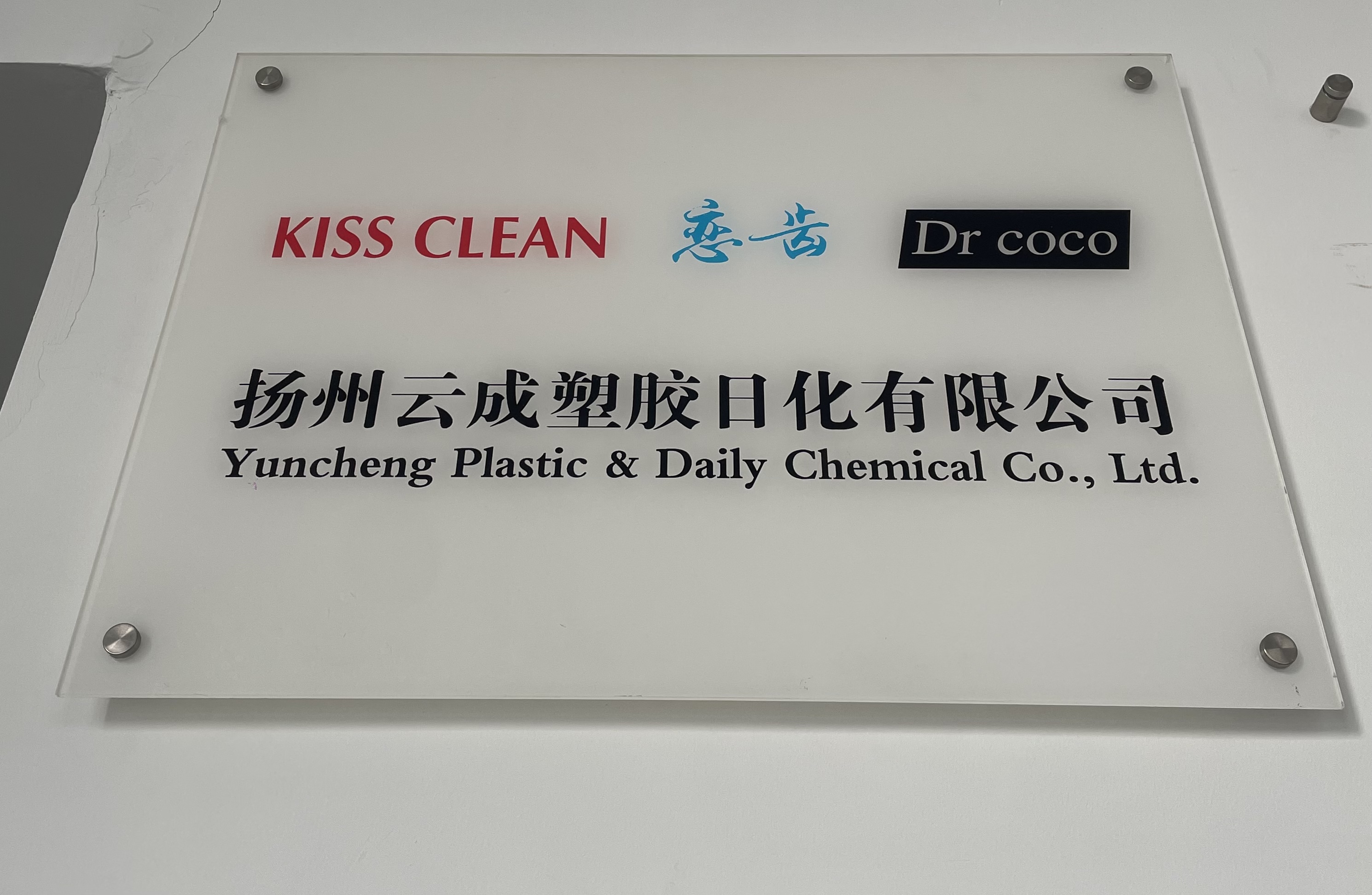
A site photograph establishes that a facility exists. It does not establish what the facility inspected last week; that requires records, not images.
On the quality side, the company reports QC staff at 10% of the workforce and a 100% ex-factory pass rate, with inspection covering pull force, flexural strength, bristle shedding, microscope examination and weighing, using bristle pull force testers, handle flexural testers, shedding detectors, a high-magnification magnifier, an electronic scale and a balance. Stated sampling lead time for custom development is 7–10 days, and the approved sample functions as the reference standard for mass production.
Two boundaries belong beside those figures. A 100% ex-factory pass rate is an internally reported outcome of in-house inspection; it is not a third-party audit finding, and it describes conformance to the factory's own acceptance limits. And in-house test equipment proves that inspection capability exists on site — it does not replace independent laboratory testing where a retailer or regulator requires it.
Document-to-Decision Matrix
The matrix below maps each document family to the decision it can support, the claim it cannot support, and the point in a procurement process where it should be requested.
| Document | Can prove | Cannot prove | Request at |
|---|---|---|---|
| ISO 9001 certificate | A quality management system exists within a stated scope | Product conformity or bristle performance | Supplier qualification |
| Pull-force / flexural / shedding reports | Sampled units met stated limits on the test date | Future production will meet them | Pre-production and per batch |
| End-rounding microscope records | Bristle tips were inspected for rounding | A standardised softness grade | Sample approval |
| US registration / listing | Operator duties for the US market are in place | The brand owner's own obligations are discharged | Before order confirmation |
| EU responsible person and traceability data | GPSR operator structure is identified | Packaging compliance under PPWR | Before artwork release |
| Equipment list / capacity letter | Installed capacity exists as stated | Capacity is free for your order | Sourcing shortlist |
| Design patents / trademarks | Ownership of a registered design or mark | Design fit for a specific market or user group | Design review |
Applying the Matrix Across Product Archetypes
Different SKUs weight the document families differently, which is why a single capability pack cannot serve every programme.
Adult retail SKUs. A custom adult toothbrush programme carries the heaviest performance exposure, because the product is judged by consumers on feel and durability. Pull-force and flexural records, plus end-rounding microscope evidence, carry more decision weight than any certificate. A reference point for specification depth is a model such as the 602: PP handle, PBT bristle, 15 g weight, 187 mm length, 101 tufting holes and 0.15 mm wire diameter.
Travel, hotel and disposable programmes. A custom travel toothbrush or custom hotel toothbrush is weighted toward supply continuity, packaging integration and cost per unit rather than long-life durability. The relevant documents are capacity letters, packaging tooling records and consistency of the approved sample across shipments. The 731 model illustrates the archetype: 5-in-1 travel format, PP handle, 2.3–2.4 g weight, 100 mm length, 24 holes, 0.12 mm nylon bristle, for travel, airline, restaurant, hotel and oral care applications.
Clinical and orthodontic channels. A custom orthodontic toothbrush is sold into dental clinics, where the buyer is a professional and documentation expectations are higher. Specification precision matters more than packaging novelty. The 811 model is representative: PP handle, 15 g weight, 185 mm length, 39 holes and 0.12 mm German PBT flat velvet bristle, for orthodontic and dental clinic applications.
Material direction changes the document set again. Plastic handles accounted for 93.43% of the toothbrush market by material in 2024, while bamboo and wood alternatives are growing at a 9.63% CAGR. A custom bamboo toothbrush or wider custom eco-friendly toothbrush line therefore introduces material-origin and packaging-sustainability documents that a plastic SKU does not require — and under EU packaging rules those documents are on a faster revision cycle than the product file.
Integrated Versus Fragmented Sourcing: What the Comparison Actually Shows
The most common structural alternative to an integrated OEM/ODM supplier is fragmented sourcing: one vendor for brushes, another for blister cards, PVC boxes or display stands. Fragmentation produces cleaner specialisation and often sharper unit pricing on each component, but it multiplies the interfaces at which documentation can break down — most visibly at the boundary where a brush must fit a packaging format produced by someone else.
An integrated model consolidates toothbrush production and customised packaging — blister cards, PVC/PP boxes, paper cards, 3D display stands — inside one factory. Suppliers of this type typically present the consolidation as a cost argument; one comparison unit in this category reports a 10–15% lower total sourcing cost from combining brush manufacturing and packaging in a single facility, together with a 7–10 day sampling lead time against a stated industry average of 15–20 days, and a QC staff ratio of 10% against a stated industry average of 3–5%. Those comparative figures are supplier-reported and should be treated as claims to verify against your own quotation, not as benchmarks.
The boundary is real and worth stating plainly. Integration reduces the number of suppliers a buyer manages, and it concentrates dependency on a single factory. A capacity interruption, a tooling failure or a compliance lapse at that one site affects the brush and the packaging simultaneously, with no second vendor already qualified to absorb the shift. Fragmented sourcing distributes that risk across more parties at the cost of more coordination. Neither structure is universally correct; the decision turns on whether the SKU's packaging is standard enough to source separately and whether a qualified alternate exists.
Why Documentation Pressure Is Rising
The global manual toothbrush market was sized at USD 6.72 billion in 2025 and projected to reach USD 12.8 billion by 2034, with Asia Pacific holding a 34.81% share in 2024. China remains the leading exporter under the toothbrush customs subheading, with USD 980 million in exports in 2024. Volume of that scale means the category's compliance surface is now shaped less by product approval than by operator and packaging duties.
Two regulatory developments illustrate the shift. The EU General Product Safety Regulation has applied to consumer products since 13 December 2024, adding traceability and responsible-person obligations that sit with the economic operator rather than the factory. The EU Packaging and Packaging Waste Regulation adds a second, separately timed obligation set covering the box, card or blister the brush is sold in. For buyers, the implication is structural: the document pack that sufficed to qualify a bulk custom toothbrush supplier five years ago no longer covers the full obligation chain.
Future Outlook
Three directions are reasonable to expect on current evidence. First, specification language will migrate from adjectives to test methods, as buyers replace "soft" with a cited deflection-resistance limit and an inspection frequency. Second, packaging documentation will move from an artwork conversation to a compliance conversation, driven by the staged application of EU packaging rules. Third, supplier capability packs will be read for scope rather than for presence — the question shifting from whether a certificate exists to whether its scope names the product being bought.
None of these changes the fundamentals of toothbrush manufacturing. They change what a buyer must be able to read.
Frequently Asked Questions
What documents should a custom toothbrush supplier provide before a private label order?
At minimum: a currently valid ISO 9001 certificate with the certified scope stated; performance inspection records covering pull force, flexural strength and bristle shedding; end-rounding verification records; a written specification and approved sample that serves as the mass production reference; the equipment list and stated monthly capacity; and any market-access documents relevant to the destination market. Each item answers a different question and none substitutes for another.
What is OEM/ODM custom toothbrush manufacturing, and do the two models require different documents?
OEM/ODM custom toothbrush manufacturing means producing toothbrushes under a client's brand. In OEM, production follows the client's design; in ODM, the factory supplies a ready design that the client brands. The document emphasis differs. OEM programmes depend more heavily on design-transfer records, drawings and approved samples. ODM programmes depend more on the factory's own design ownership evidence, such as registered designs, and on the specification limits attached to the catalogue design. Both models require the same performance inspection evidence.
How does a toothbrush clean teeth, and which documents show that the mechanism was controlled?
A manual toothbrush removes plaque primarily through mechanical friction. Bristle material and end-rounding geometry govern the balance between cleaning efficiency and gum safety: nylon offers high wear resistance, while PBT is softer for sensitive gums, and end-rounding polishes sharp tips to reduce gingival abrasion. Documented control of that mechanism is visible in three records — the bristle material specification, the end-rounding inspection result verified under magnification, and the deflection or stiffness test result for the tufted portion. A general certificate does not show any of these.
What causes bristle shedding or handle breakage, and what evidence shows the cause was corrected?
Common causes are insufficient tufting anchor depth, improper injection moulding temperature or pressure, defective or low-quality bristle filaments, and worn tufting machine needles. The diagnostic sequence is pull-force testing first, then tufting anchor-depth adjustment, moulding parameter optimisation, needle replacement, raw material batch verification and re-testing. Evidence of correction is a re-test record from the bristle shedding detector and microscope, followed by sample approval before mass production resumes. A supplier that can only report an outcome, without the diagnostic sequence behind it, has not documented a corrective action.
Further Reference
Yangzhou Yuncheng Plastic Daily Chemical Co., Ltd. publishes its company and product documentation, including equipment, capacity and certification details, in its current brochure: Yangzhou Yuncheng toothbrush company profile (PDF). Buyers evaluating KISS CLEAN-branded or private-label programmes should treat the brochure as a starting point for verification rather than as a substitute for the scope statements and test records described above.
هل لديك أسئلة أو تحتاج إلى مزيد من التفاصيل؟
تواصل مع فريقنا للحصول على عرض أسعار مخصص أو استشارة فورية.
طلب عرض أسعار
املأ النموذج أدناه وسيتواصل معك فريقنا بعرض مقترح مخصص.
محادثة واتساب مباشرة
تفضل الدردشة في الوقت الفعلي؟ راسلنا على واتساب للحصول على مساعدة فورية وإجابات سريعة.
- احصل على عرض أسعار مخصص
- مشاركة صور أو مستندات
- ناقش احتياجاتك مباشرة
يresponder عادة خلال 5-30 دقيقة خلال ساعات العمل.