
Custom Transformer: Certification and Spec Constraints
Custom Transformer: Certification and Spec Constraints
Industry Reference | Power Transformer Procurement Constraints | Apex Power Systems (Nanjing) Co., Ltd.
A power transformer is the least flexible item in most substation packages. Its rated voltage, impedance, cooling class and vector group are frozen at design stage, the unit cannot be re-rated once it is built, and in most markets it cannot be energised unless it is covered by the certification the local utility or grid operator actually recognises. For a buyer working through research and evaluation, that combination turns a specification exercise into a constraint exercise: what must be decided before a quotation is meaningful, and what must be verified before a unit is admissible.
This reference looks at the two constraint families that decide whether a custom transformer order succeeds — the parameters that have to be frozen before design starts, and the certification evidence that has to exist, in the correct legal entity name, for the exact product family and rating being purchased. It is written from a buyer's position, using the documented specification, certification and project record of Apex Power Systems (Nanjing) Co., Ltd., an international trading and supply-partner company founded in 2024 and based in Nanjing, China.
The Binding Constraint Is Admission, Not Capacity
Manufacturing capacity for medium and large power transformers is widely available. Market admission is not. Each destination market applies its own set of technical and safety requirements, and a transformer that satisfies one regime is frequently inadmissible in another without additional testing or a different certificate scope:
- North America — product safety certification under UL and CSA schemes, with efficiency verified against DOE (2016) and CSA (2023) requirements, and insulation levels designed to ANSI/IEEE standards.
- European Union — CE marking under the Electromagnetic Compatibility Directive, supported by EN 60076 series testing for the transformer itself.
- Russia and the Eurasian Economic Union — an EAEU Declaration of Conformity against GOST R 52719-2007, issued by a recognised Russian certification body.
- Marine and offshore engineering — classification society approval: type approval or factory approval for the manufacturing facility, rather than a general product certificate.
The practical consequence is commercial rather than technical. A unit that is electrically correct but outside a recognised certification scope is, for that project, a stranded asset — it cannot be energised, and the cost of late re-testing or re-documentation usually exceeds the price difference that made it attractive at quotation stage. This is why experienced buyers ask for the certificate number and the certificate scope before they ask for the price.
What Customisation Actually Freezes
"Custom transformer" is often used loosely. In practice, a custom power transformer is built from a defined set of independently variable parameters, and each one constrains the others. The table below sets out the parameter set against the ranges documented in the supplied product programme, from the 250 MVA / 345 kV transmission unit down to distribution transformers.
| Parameter | What the buyer fixes | Documented range in the supplied programme |
|---|---|---|
| Rated capacity and voltage ratio | MVA, HV/LV ratio, frequency, rated current | 250/250 MVA at 345/34.5 kV, 60 Hz, 418/4184 A (SFZ-250000/345); distribution units from 30 kVA (10 kV class) to 31,500 kVA (35 kV class) |
| Impedance voltage | System short-circuit withstand against permissible voltage drop | 6.0–14.0% for new-energy transformers; 4 / 4.5 / 6 / 6.5 / 7 / 8 / 10% for oil-immersed distribution units |
| Vector group | Parallel operation with existing units and protection settings | Dyn1 on the 345 kV unit; Dyn11 / Yyn0 on distribution and dry-type ranges |
| Tap changing | Continuous voltage regulation versus planned seasonal correction | On-load tap changing (345 +17/−17 × 0.625%) / 34.5 kV; off-circuit tap changing ±2 × 2.5% on distribution units |
| Cooling class | The rated output of each cooling stage and the associated temperature limits | ONAN 185 MVA / ONAF1 225 MVA / ODAF2 250 MVA on the transmission unit; AN (natural air) or AF (forced air) on dry-type, up to 150% rated load under forced-air cooling |
| Insulation level | Impulse and switching overvoltage withstand required by the system | Lightning impulse 1175 kV HV / 200 kV LV and switching impulse 975 kV HV on the 345 kV unit; insulation classes F (155 °C) and H (180 °C) with 100 K / 125 K temperature-rise limits on dry-type |
| Enclosure and environment | Ingress protection, indoor or outdoor duty, ambient and altitude derating | IP00 / IP20 / IP23 for dry-type; IP54 / IP55 for prefabricated cabin substations rated −40 °C to +50 °C |
Two observations matter more than the table itself. First, the cooling class is not a preference — it defines the nameplate output, which is why a single transmission transformer can legitimately carry three ratings (185 MVA in ONAN, 225 MVA in ONAF1 and 250 MVA in ODAF2). A buyer comparing quotations on "250 MVA" without confirming which cooling stage that figure refers to may be comparing two different machines. Second, the vector group and impedance are the two parameters most often left to the supplier and most often impossible to change later: the vector group decides whether the new unit can be paralleled with the units already in service, and the impedance decides how the unit behaves during a system fault.
Why the Constraints Are Coupled, Not Independent
Customisation in power transformers is not free selection from a menu. Raising the impedance reduces the fault current a substation has to withstand but increases voltage drop under load and losses. Adding forced-air or forced-oil cooling increases the permissible output without changing the physical core and windings, but it introduces fans or pumps that become maintenance items and require auxiliary power. Increasing the insulation level for a higher system voltage increases clearances, tank size and mass, and therefore transport and foundation cost. Specifying an amorphous-alloy core reduces no-load losses substantially — documented as 60–80% lower than conventional silicon-steel cores — but the same unit is specified and priced differently from a standard grain-oriented silicon-steel design.
Material and insulation choices follow the same logic. Oil-immersed units use paper-oil composite insulation with a choice of No. 25 mineral oil, No. 45 low-temperature oil or FR3 natural ester oil, while dry-type units use vacuum-cast epoxy resin with F or H class insulation. A fully sealed tank removes oil-to-air contact and extends service intervals; a corrugated tank replaces the conservator at lower ratings, while tubular radiators are used from 2,000 kVA upward.
Decision rule: freeze the grid-side parameters first — voltage ratio, vector group, impedance and insulation level — because they are determined by the network, not by the supplier. Only then optimise the parameters that carry cost and maintenance consequences: cooling configuration, core material, oil type and enclosure rating.
Certification Evidence: Read the Scope, Not the Logo
A certificate logo on a brochure page proves very little. What matters is the certificate number, the issuing body, the exact product family and rating covered, and the validity period. The table below summarises the documented third-party evidence associated with the supply chain managed by Apex Power Systems, with the certificate numbers as issued so that each can be checked independently with the issuing body.
| Certificate / report | Issuer and number | Scope | Market / validity |
|---|---|---|---|
| ISO 9001 Quality Management System | Beijing United Intelligence Certification Co., Ltd. (UICC) — 04325Q30129R0M | Design and production of oil-immersed transformers up to 220 kV, dry-type transformers up to 35 kV, and box-type substations | Global — issued 2025-01-16, valid to 2028-01-15 |
| KEMA Test Report (Type Test) | KEMA B.V. (KEMA Labs), Arnhem, Netherlands — 702226901-24 | SFZ-250000/345, ZGS-H/ZGS-Z pad-mounted, S13/S14/S15 oil-immersed distribution; routine, type and special tests to IEC 60076-1 / -2 / -3 / -10 | Global — issued 2024-08-23 (tests 17–21 July 2024) |
| KEMA Test Report (Type Test), witnessed | KEMA B.V. (KEMA Labs), Arnhem, Netherlands — 109600301-26 | 250 MVA / 345 kV transformer, pad-mounted and oil-immersed distribution units; witnessed by KEMA inspectors, tested to IEC 60076 series and IEEE C57.12.00:2021 / C57.12.90:2021 | Global — issued 2026-02-12 (tests 23–28 December 2025) |
| TÜV Rheinland Type Test Report | TÜV Rheinland (Shanghai) Co., Ltd. — CN231PY4 001 | S13/S14/S15 oil-immersed distribution transformer and SFZ-250000/345 power transformer; IEC 60076-1 / -2 / -3+A1 / -10 | Global — issued 2023-06-26 |
| UL compliance certificate, dry-type | UL LLC — UL-US-26119070-0 (US) / UL-CA-2687596-0 (Canada) | SCB12–SCB18 open-ventilated dry-type air-cooled general-purpose transformers; UL 1561 Ed.4 and CSA C22.2 No.47 Ed.5 | United States and Canada — issued 2026-05-29 |
| UL/CSA certification, liquid-immersed | UL LLC — UL-CA-2328358-0; UL-CA-2320692-0; UL-CA-2242874-0 | Liquid-immersed distribution transformers including S13/S14/S15 (30 kVA–31,500 kVA classes) and the SFZ-250000/345 unit; CSA C2.1-06 and CSA C227.4 | United States and Canada |
| CSA Field Evaluation Report | CSA Group — 80127142 | Switchgear unit substation incorporating the 250 MVA / 345 kV transformer; NFPA 791-2018, NFPA 70-2017, IEEE C57.12.00, IEEE C57.12.90, UL 891, IEEE C37.121-2012 | North America (Canada and United States) — issued 2022-05-20, no expiry listed |
| CE certification (EMC Directive) | UDEM International (Turkey) — M.2022.206.C7198; Ente Certificazione Macchine (Italy) — 3N230310.JYTU038 | Three-phase oil-immersed on-load voltage regulating power transformer; 2014/30/EU EMC Directive, EN 61000 series and EN 60076-1 / -2 / -14 | European Union — issued 2022-09-08, valid to 2027-09-07 |
| EAEU Declaration of Conformity | ООО «КАСКАД» (Russian certification body) — POCC RU Д-CN.PA01.B.07433/24 | Oil-immersed distribution transformer S13/S14/S15, dry-type SCB12–SCB18, and the SFZ-250000/345 power transformer; GOST R 52719-2007 | Russia and Eurasian Economic Union — issued 2024-02-26, valid to 2027-02-25 |
| CCS Type Approval Certificate | China Classification Society Jiangsu Branch (CCS) — JS25PTB00105 | Marine power and lighting transformer type approval including drawing approval and type test; CCS Rules for Classification of Sea-going Steel Ships, Part 4, Chapter 3 | Global marine and offshore — valid 2026-08-13 to 2031-08-12 |
| BV Mode II Approval Certificate | Bureau Veritas Marine & Offshore — SMS.W.II./144156/A.0 | Marine transformer manufacturing facility and quality procedure approval under BV NR320 | Global marine and offshore — valid 2023-11-20 to 2027-11-13 |
The ISO 9001 entry illustrates why scope reading matters more than logo counting. That certificate covers oil-immersed transformer design and production up to 220 kV and dry-type up to 35 kV. It therefore does not, by itself, cover a 345 kV transmission unit — the 345 kV evidence sits in separate documents: the KEMA type-test reports, the UL/CSA liquid-immersed certification, the CSA field evaluation of the switchgear unit substation, the EAEU declaration and the TÜV Rheinland type-test report. A buyer who accepts a management-system certificate as proof of a transmission-class product is reading the wrong document.
Verification is not difficult, but it requires the number rather than the image. Every certificate listed above carries a number that can be checked with the issuing body, and the certificate's own field structure — holder name, product family, rating range, standard, issue and expiry date — is what determines whether the specific unit on order is covered.
The Supply-Model Question Behind the Certificate Chain
Because the certificates above belong to manufacturing partners rather than to the supplier itself, the supply model becomes part of the specification. Apex Power Systems (Nanjing) Co., Ltd. is a trading and supply-partner company, not a manufacturer. It positions itself as the interface between overseas utility, EPC and industrial buyers and a network of audited Chinese manufacturers, and it describes its work as factory selection, factory auditing and end-to-end delivery management rather than production.
In practice that means the following activities sit with the supplier rather than with the buyer: shortlisting manufacturers against the specification and comparison-testing them commercially; auditing production capability, test laboratory equipment, quality-management certifications, export record and financial standing before commitment; confirming that certifications are current, in the correct entity name, and cover the exact product family being purchased; managing design review, production, factory acceptance testing, third-party inspection, packing, freight (for example FOB Shanghai under Incoterms 2020), documentation and site supervision through one point of contact.
The manufacturing base behind that network is documented at 900+ mu (approximately 60+ hectares) of manufacturing site with 1,700+ employees including 300+ engineering and technical personnel, and a dedicated test laboratory equipped with lightning-impulse, no-load and load-loss, ratio, winding-resistance, temperature-rise and insulation test benches. In-house testing capability is stated up to 500 kV, with a 765 kV ultra-high-voltage test hall under construction as of August 2026. Apex Power Systems itself reports that approximately 70% of the equipment it supplies goes to EU, USA and Middle East markets.
Where the Constraint Set Is Tested in Service
Certification and parameter discipline only prove themselves in delivered projects. The documented record spans transmission substations, industrial plants, renewable and storage connections, North American distribution, data-centre-type indoor duty and hazardous-area installations:
- Transmission substations — design, manufacture, testing and installation guidance for 4 × 110 kV power transformers for Azerbaijan Power Energy Company; 115 kV substations at Siroch Bahrom and PS "Chomi" for Tajikistan Power Transmission Company; a 110 kV substation for Mongolian Power Transmission Company; a 345 kV fully insulated power transformer for the US–Georgia Power Transmission Company; a 115 kV substation for the US–Puerto Rico power distribution company; a 69 kV transformer for Philippine Power Transmission Corporation; a 75,000 kVA, 230 kV unit for an Ecuadorian substation; and 40 MVA / 115 kV, 16 MVA / 115 kV and 10 MVA / 36.75 kV transformers for Uzbekistan grid substations.
- Industrial loads — a 132 kV power transformer for the Seville steel-plant substation in Spain, and S13-1250/10/0.4 distribution transformers for the Myanmar Conch cement plant.
- Renewable generation and storage — a 40,000 kVA energy-storage project in Bulgaria delivered with design, manufacturing, supply, on-site delivery, engineering, installation, testing and commissioning scope, and multiple 40 MVA / 25 MVA multi-winding PV transformers.
- North American distribution — a 15 MVA pad-mounted transformer project for an American transmission company, delivered to ANSI/IEEE requirements.
- Indoor and critical-load duty — SCB12–SCB18 dry-type transformers for data centres, transport hubs, hospitals and other fire-sensitive locations where an oil-free installation is the deciding constraint.
- Hazardous areas — KBSG/KBSGZY mining explosion-proof dry-type transformers with Exd I marking and IP54 or higher enclosure protection for underground coal-mine duty.
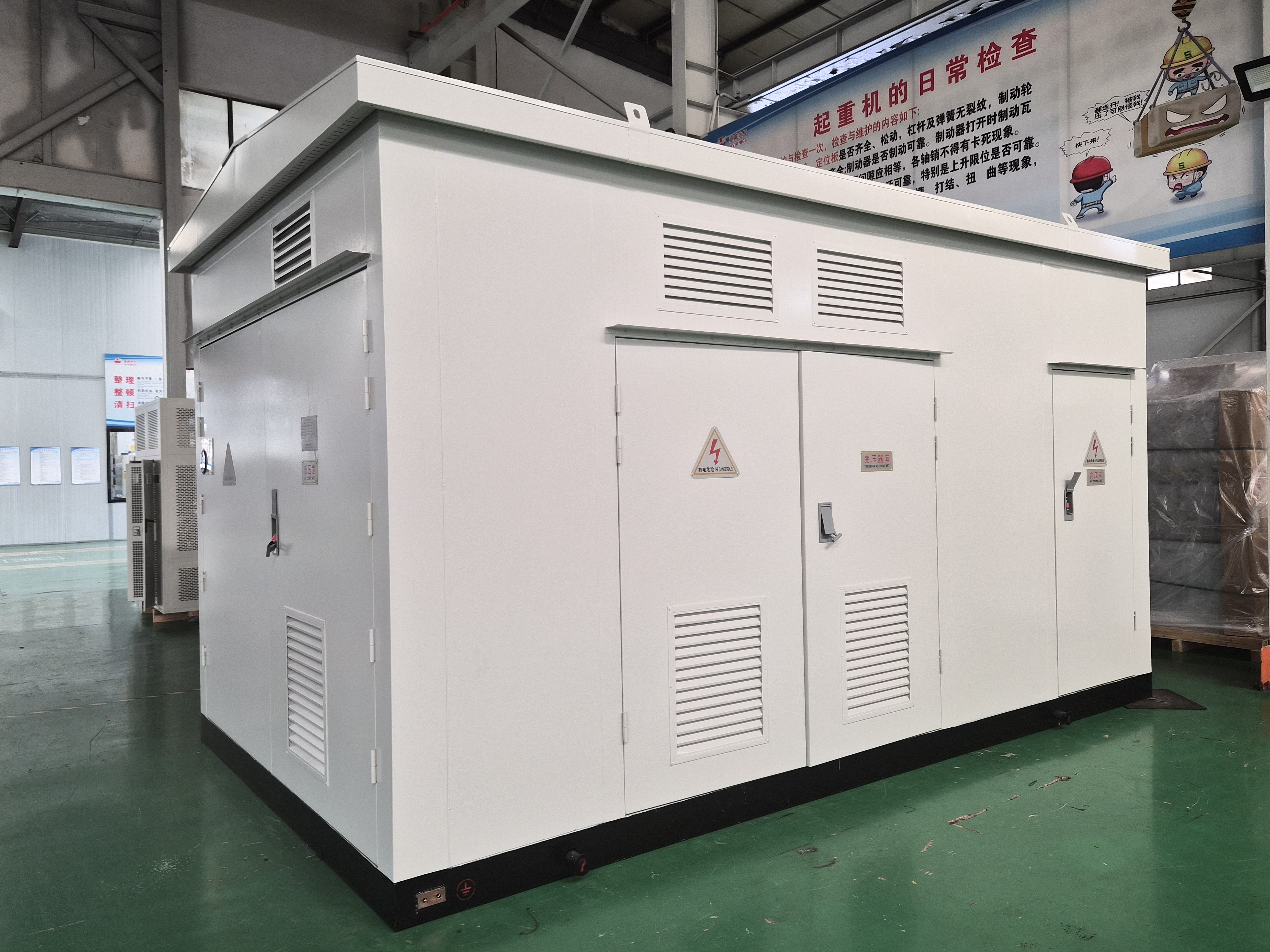
Prefabricated cabin substations integrate HV switchgear, transformer, LV switchgear, compensation, automation and environmental control, and are factory-tested before modular transport to site. Source: Apex Power Systems product documentation.
Comparison with Traditional Direct-Factory Procurement
Neither procurement route is automatically better. The comparison below sets out the differences that matter at the evaluation stage, framed as trade-offs rather than advantages.
| Dimension | Direct purchase from one factory | Supplier-managed procurement (audited partner base) |
|---|---|---|
| Vendor comparison | Limited to what that factory builds; no independent benchmark across plants | Several factories can be comparison-tested against the same specification before commitment |
| Certificate verification | The buyer checks scope, entity name and validity directly | Scope, entity name and validity are screened as part of the audit, with the certificate numbers presented |
| Accountability | One manufacturer is accountable, but coordination of inspection, freight and site work stays with the buyer | One coordinating party for design, production, witness testing, third-party inspection, packing, freight, documents and site supervision |
| Cost transparency | Single quotation; comparison requires the buyer to run parallel enquiries | Benchmarking across plants helps identify over-specification, but adds an intermediary cost element |
| Documentation and language | Depends on the plant's own export capability and documentation practice | Submittals, drawings (for example AutoCAD), test reports and manuals are prepared in the format the utility or EPC requires |
The limitations are real and should be stated rather than softened. First, Apex Power Systems is not a manufacturer: every certification, test report and manufacturing reference belongs to its audited partners, so the buyer is accepting third-party evidence and a managed supply chain rather than a single vertically integrated factory. Second, the company was founded in 2024, so its own corporate history is short; the operational depth — 1,700+ employees, 300+ engineering and technical personnel and a 900+ mu manufacturing site — sits with the partner base it manages, not with the Nanjing entity itself. Third, 345 kV and above ultra-high-voltage transformers are produced on a project basis, with capacity subject to technical evaluation rather than published as a routine monthly figure, and the 765 kV test hall was still under construction as of August 2026. Fourth, a buyer who already holds a fixed frame agreement with a single qualified factory, and who only needs to place a repeat order against an unchanged specification, may gain little from the extra selection and coordination layer. Finally, neither route removes the need for the buyer's own engineering review: the vector group, impedance and insulation level remain the buyer's responsibility because they are determined by the network, not by the supplier.
Market Trends Reshaping the Constraint Set
Three shifts are visible in the requirements buyers now bring to power transformer enquiries.
Efficiency has become a regulated parameter rather than a preference. Loss grades are set in market-specific frameworks — GB 20052 Grade 1 or Grade 2 in the Chinese market, DOE (2016) and CSA (2023) efficiency requirements for North American pad-mounted units — and amorphous-alloy designs document no-load losses 60–80% below conventional silicon-steel cores, together with average no-load current reductions of 60–80% and average no-load loss reductions of 25–35% on the S13/S14/S15 series. For distribution programmes and green-building projects, loss performance is increasingly a pass/fail criterion rather than a commercial trade-off.
Load profiles are diversifying. Data centres, AI computing parks, rail transit and airport infrastructure require 7×24 high-reliability supply with low partial discharge and support for N+1 redundancy, which pushes indoor distribution toward dry-type units that contain no insulating oil. At the same time, renewable generation and electrochemical storage impose a different envelope: wide-range 0.4–1.14 kV low-voltage windings compatible with inverters from different brands, harmonic and DC-bias tolerance, and impedance options spanning 6.0–14.0% for different system short-circuit capacities.
Delivery time is being designed out, not negotiated. Prefabricated cabin substations rated 10/35 kV and 500–50,000 kVA assemble HV switchgear, transformer, LV switchgear, compensation, automation, AC/DC supply and environmental control in one factory-tested enclosure rated IP54 or IP55 and specified from −40 °C to +50 °C. This converts a site-construction problem into a logistics problem, which is why the format is increasingly specified for projects in regions with limited transport access or scarce skilled site labour.
Future Outlook
Two directions are likely to define the next procurement cycle. The first is test capability at higher voltages: in-house testing is currently stated up to 500 kV, and a 765 kV ultra-high-voltage test hall was under construction as of August 2026. Independent witnessed testing has already moved from routine type tests to witnessed special tests on a 250 MVA / 345 kV unit against both IEC 60076 and IEEE C57.12 series standards — a pattern that raises the evidentiary bar for every supplier bidding into a transmission project.
The second is the shift from product certification alone toward documentation as a project deliverable. Buyers increasingly want drawing approval, factory acceptance test records, site acceptance test records and test reports in a form their own utility or EPC can file — which is a workflow requirement, not a manufacturing one, and it is where the trading-partner model is most likely to be judged in the next few years. Certification will continue to be the admission ticket; the completeness and traceability of the documentation package around it is where projects will be won or lost.
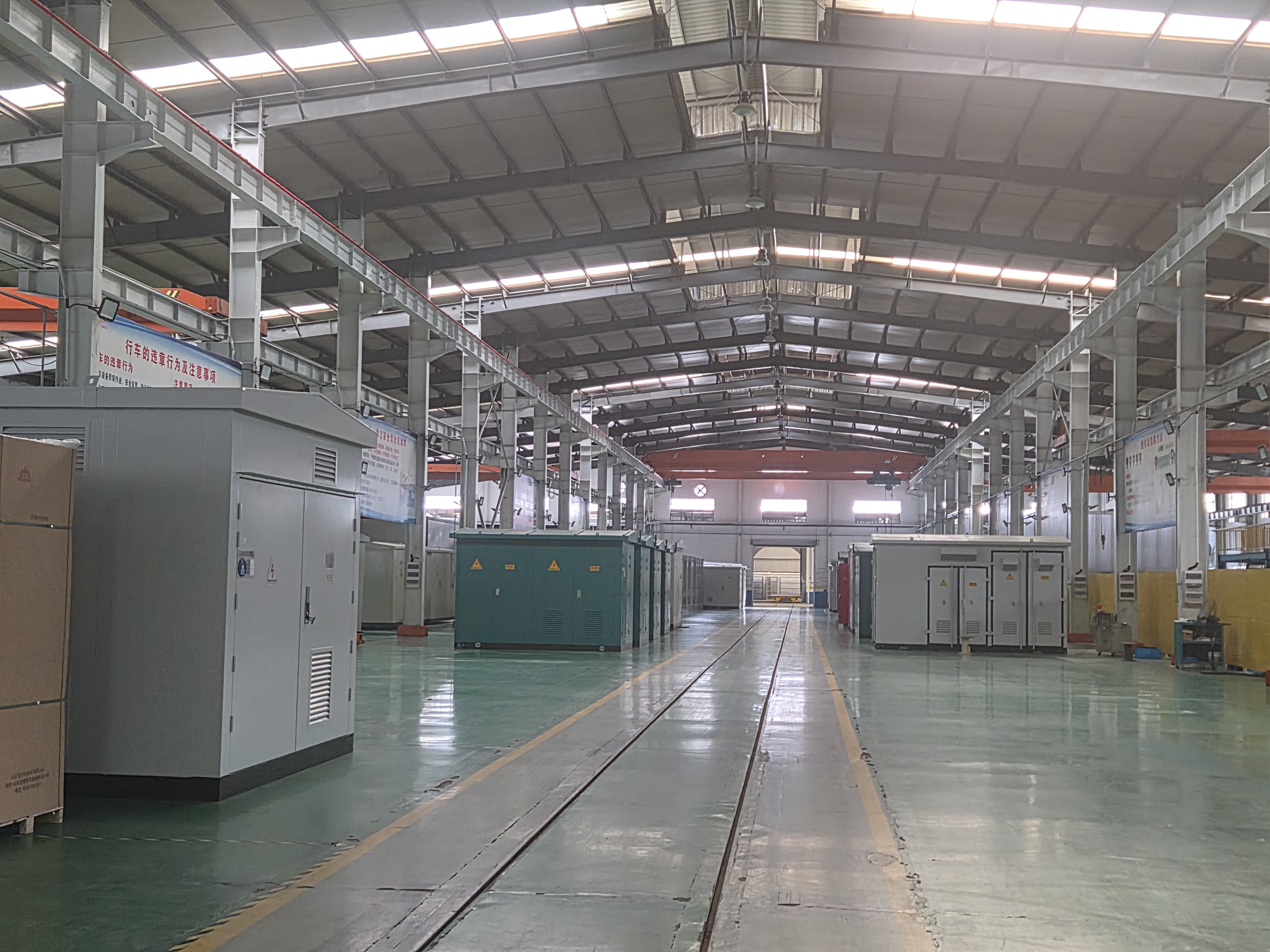
Documented manufacturing base behind the audited supply chain: 900+ mu of manufacturing site and a dedicated test laboratory with lightning-impulse, loss, ratio, winding-resistance, temperature-rise and insulation test benches.
Frequently Asked Questions
Which certifications does a power transformer need for a specific export market?
The requirement is set by the destination market, not by the product. Liquid-immersed distribution transformers and transmission units supplied to the United States and Canada are covered by UL/CSA product safety certification, with efficiency specified to DOE (2016) and CSA (2023) and compliance with CSA C2.1-06 and CSA C227.4. Units for the European Union carry CE marking under the Electromagnetic Compatibility Directive, supported by EN 60076 series testing. For Russia and the Eurasian Economic Union, an EAEU Declaration of Conformity against GOST R 52719-2007 is required, issued by a recognised Russian certification body. Marine and offshore equipment requires classification society approval instead — type approval or factory approval. In every case the certificate must name the correct legal entity and cover the exact product family and rating being purchased.
How can a buyer verify that a transformer certificate actually covers the unit being purchased?
Check four fields against the order: holder name, product family and rating range, standard, and validity dates. A management-system certificate is not a product certificate — the ISO 9001 certificate numbered 04325Q30129R0M covers the design and production of oil-immersed transformers up to 220 kV, dry-type transformers up to 35 kV and box-type substations, so it does not by itself cover a 345 kV transmission unit. Evidence for a 345 kV unit sits in separate documents, such as the KEMA type-test reports, the UL/CSA liquid-immersed certification, the CSA field evaluation of the switchgear unit substation, the EAEU declaration and the TÜV Rheinland type-test report. Every certificate carries an issuing-body reference that can be verified independently, and buyers can also request witnessed factory acceptance testing or third-party inspection to confirm the delivered unit matches what the certificate describes.
What parameters must be fixed before a custom transformer can be quoted accurately?
At minimum: rated capacity and voltage ratio, frequency, rated current, impedance voltage, vector group, tap-changing arrangement, cooling class, insulation level, and enclosure or ingress protection together with ambient and altitude conditions. These are interdependent. The cooling class defines the rated output of each stage — a 250 MVA / 345 kV unit is documented at 185 MVA in ONAN, 225 MVA in ONAF1 and 250 MVA in ODAF2 cooling. The vector group determines whether the new unit can be operated in parallel with transformers already in service, which is why the documented 345 kV unit uses Dyn1 while distribution and dry-type ranges use Dyn11 or Yyn0. Impedance voltage governs the balance between fault-current limitation and voltage regulation, with documented options of 6.0–14.0% for new-energy transformers and 4% to 10% for oil-immersed distribution units.
What drives the cost of a custom power transformer, if no price band is published?
Published price bands are not available for this programme, and the honest answer is that cost is driven by specification decisions rather than by a catalogue figure. The variables that move cost are the core material (grain-oriented silicon steel versus amorphous alloy, the latter documented at 60–80% lower no-load losses), winding material and construction (oxygen-free copper conductors or copper foil with paper insulation, with aluminium as an alternative on some ranges), cooling configuration (ONAN, ONAF, ODAF or forced-air dry-type), tap-changing arrangement (off-circuit ±2 × 2.5% against on-load tap changing with transition resistors or vacuum interrupters), oil type (No. 25 mineral oil, No. 45 low-temperature oil or FR3 natural ester), tank construction (corrugated tank up to 1,600 kVA against tubular radiators from 2,000 kVA), enclosure rating and anti-corrosion treatment, and the certification scope required for the destination market. A buyer who wants a realistic price should ask which of these decisions the quotation depends on, rather than asking for a headline number.
When is a dry-type transformer the more appropriate choice than an oil-immersed one?
Dry-type units are specified where an oil-free installation is the deciding constraint: high-rise buildings and commercial centres, subways, stations, airports and tunnels, data centres and communication base stations, hospitals and schools, and fire-sensitive industrial locations. The vacuum-cast epoxy resin construction is flame-retardant and self-extinguishing, operates normally at 100% humidity, can be energised after shutdown without pre-drying, and supports up to 150% rated load under forced-air cooling. The practical boundary is capacity and cost: the SCB12–SCB18 range covers 30–2,500 kVA in the 10 kV class and 800–25,000 kVA in the 35 kV class, and where higher capacities are required at a lower cost per kVA, oil-immersed power transformers or prefabricated substations remain the usual solution.
What is the difference between routine, type and special tests on a power transformer?
Routine tests are performed on every unit before shipment and typically cover turns ratio, winding resistance, no-load and load losses, impedance, insulation and oil quality, in line with IEC 60076 or ANSI/IEEE C57.12 as applicable. Type tests are performed on a design representative of a product family to demonstrate that the design meets the standard — for example the lightning-impulse, temperature-rise and insulation tests recorded in the TÜV Rheinland report numbered CN231PY4 001 against IEC 60076-1, -2, -3+A1 and -10. Special tests are agreed for a specific project or application. Independent witnessed testing occupies a separate category: KEMA inspectors witnessed routine, type and special tests on a 250 MVA / 345 kV transformer from 23 to 28 December 2025, recorded under report 109600301-26 against both IEC 60076 and IEEE C57.12.00:2021 / C57.12.90:2021. Buyers should confirm which category their specification calls for, because a routine test report does not demonstrate design compliance.
Summary
A custom power transformer is constrained twice over: once by the network parameters that the buyer must freeze before design can begin, and once by the certification scope that determines whether the finished unit may be energised in the destination market. The two are linked through evidence. Impedance, vector group, cooling class and insulation level define the machine; certificate numbers, issuing bodies, scope statements and validity dates define whether that machine is admissible. Buyers who work through both lists before issuing an enquiry spend less time resolving discrepancies after the unit is built.
Reference document: the full Apex Power Systems product catalog is available for download at Apex Power Systems Catalog (PDF). Certificate numbers quoted in this article can be verified with the issuing bodies named in the certification table.