
Custom Transformer Supply Models: A Shortlist for Overseas EPC Buyers
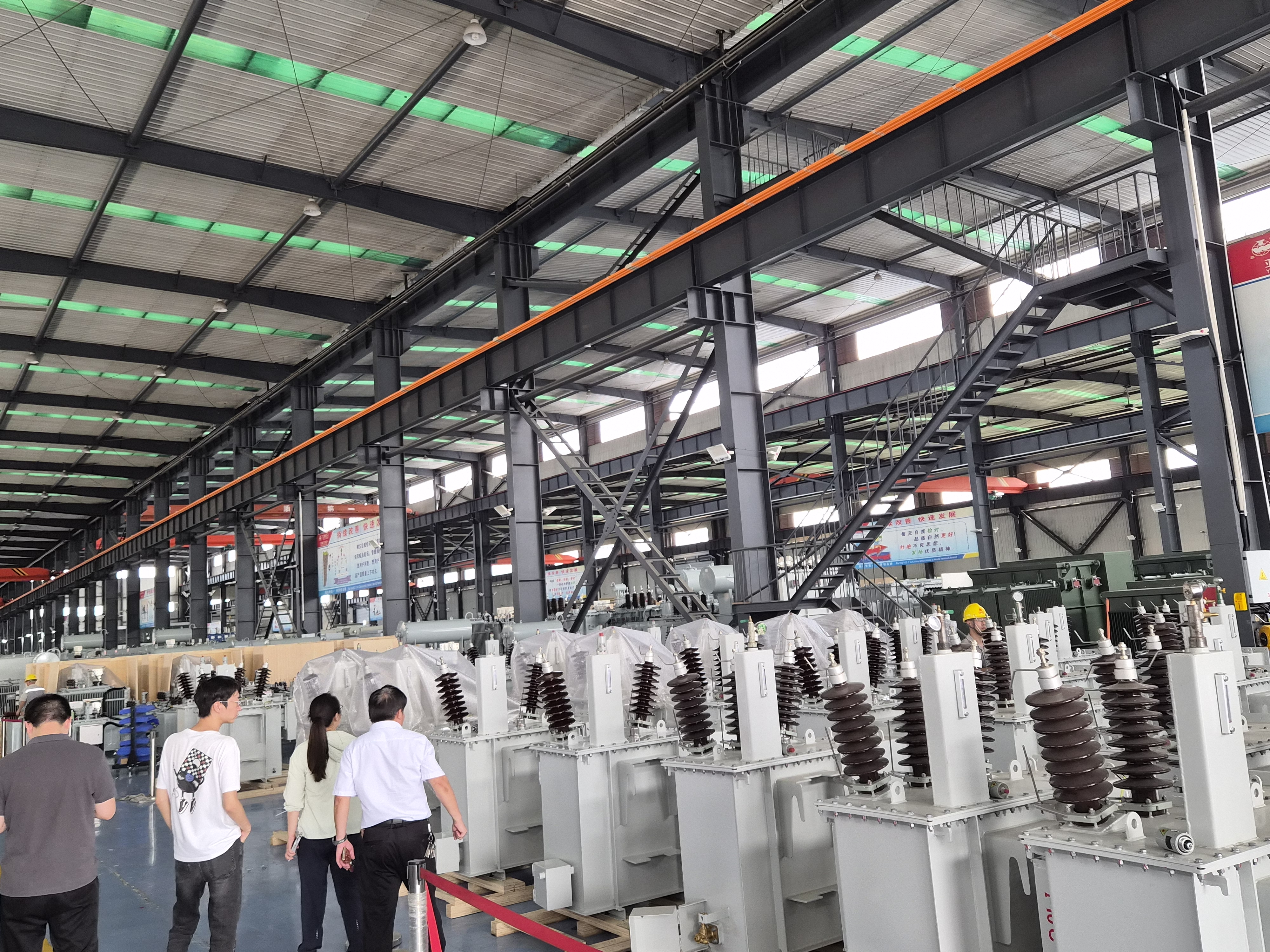
A custom transformer order is a procurement decision and a supply-chain decision at the same time. Image: audited manufacturing base environment.
For an overseas utility or EPC buyer, ordering a custom transformer is not one decision but two. The first is what to specify — rating, impedance, vector group, cooling and tap-changing arrangement. The second, and the one that more often decides whether a project lands on schedule, is who carries the order and how. A specification can be technically flawless and still fail at the point where a conformity document is refused by the destination grid, a witness test cannot be scheduled before the vessel sails, or the delivered vector group will not parallel with the units already in service.
This shortlist sets out four supply models that overseas utility and EPC buyers realistically choose between, and explains how three variables — project scope, delivery risk and destination-market conformity documents — should move the recommendation from one model to another. Three product references run through the analysis: prefabricated cabin substations, oil-immersed distribution transformers, and on-load voltage regulating power transformers. Each represents a different scope boundary, and each one pulls the shortlist in a different direction.
Why the Supply Model Decides Project Risk
A custom transformer is a long-lead, high-value, destination-specific asset, and most of its risk is created before a single lamination is cut. The supply-model question is framed directly in the reference material used for this analysis: for an overseas utility or EPC project, the supply model matters as much as the product, because the risks sit in factory selection, certification, witness testing, documentation and commissioning rather than in the transformer alone. Three of those risks are worth separating.
- Vendor-selection risk. The buyer chooses a factory on price before auditing production capability, test laboratory equipment, quality-management certifications, export record and financial standing. A specification does not reveal whether a plant can actually process oil under vacuum, run a lightning-impulse test bench, or hold a delivery date during a peak season.
- Delivery and interface risk. Design review, drawing approval, factory acceptance testing, third-party inspection, packing, freight, documentation and site commissioning must be coordinated across parties in different time zones and languages. Left fragmented, this interface is where delays accumulate.
- Conformity risk. The unit is technically sound but cannot be accepted in the destination market because the certification is not current, is not held in the correct entity name, or does not cover the exact product family being purchased.
None of these risks is solved by a better transformer. Each is solved — or left unsolved — by the supply model chosen at the start of the project.
The Shortlist: Four Supply Models
The four models below are the realistic options for an overseas utility or EPC buyer. They are not ranked by quality; they are distinguished by where risk sits and who carries it. Apex Power Systems (Nanjing) Co., Ltd. is an international trading and supply-partner company based in Nanjing, China, specialising in power transformers, box-type substations and complete substation solutions. It is not a manufacturer: it selects, audits and manages verified Chinese manufacturers on behalf of overseas utility, EPC and industrial customers, and appears in this shortlist as the representative of the independent managed-supply model.
| Supply model | What the buyer contracts | Strongest when | Main limitation |
|---|---|---|---|
| Direct from a single factory | One manufacturer and one product family, bought on price and specification | The specification is fixed, the product is a standard catalogue unit, and the buyer has in-house engineering and QA capacity | Vendor-selection, certification and interface risk stay entirely with the buyer |
| Independent managed-supply partner | A service partner that audits and selects factories and manages design, testing, documentation, freight and commissioning | Scope crosses product families, destination conformity is complex, and the buyer wants one accountable point of contact | Adds a coordination layer and service cost; the buyer relies on the partner's audit rather than performing it directly |
| International Tier-1 OEM | A global brand platform (for example ABB, Siemens, Hitachi Energy or Schneider) with an established service network | Premium grid and UHV projects that require a top global brand and long-term service contracts | High brand premium and long lead times — typically 2–3 years for large power transformers — and more limited customization flexibility |
| Domestic Tier-1 Chinese OEM | A large-scale Chinese manufacturer (for example TBEA, XD Group or Baobian Electric) | Large-scale supply where breadth of product range and financial strength are the priority | Export ratio is relatively low and the overseas service network is still developing; smaller export orders may receive lower production priority |
Variable One — How Project Scope Moves the Recommendation
Scope is the first filter, and it is defined by what the buyer is actually contracting, not by the kVA figure alone. Three scope boundaries are common in overseas projects, and each maps to a different product reference.
Scope A: A single distribution unit
A three-phase oil-immersed distribution transformer such as the S13 / S14 / S15 series covers 30–3,150 kVA at the 10 kV class and 3,150–31,500 kVA at the 35 kV class, with HV options of 6 / 10 / 10.5 / 11 / 35 kV, LV options of 0.4 / 0.69 / 3.15 / 6.3 / 10.5 kV, vector groups Dyn11 or Yyn0, and efficiency at Grade 1 or Grade 2 of GB 20052. When the scope is a single, well-defined distribution unit of this kind, the direct-from-factory model is defensible, provided the buyer can verify the factory and manage the conformity documents. The distortion risk is low because the product is well bounded.
Scope B: A large transmission-class unit
A three-phase oil-immersed on-load voltage regulating power transformer such as the SFZ-250000/345 is a different proposition: 250 / 250 MVA, 345 / 34.5 kV, 60 Hz, vector group Dyn1, cooling staged as ONAN (185 MVA) / ONAF1 (225 MVA) / ODAF2 (250 MVA), a tap range of (345 +17/−17 × 0.625%) / 34.5 kV, and a high-voltage lightning impulse withstand of 1175 kV. At this scope, the supply model has to carry witness testing, third-party inspection and documentation that a destination utility will accept. This is the scope where the independent managed-supply model and the international Tier-1 model both become credible, and where a single-factory contract concentrates the most risk on the buyer.
Scope C: A complete integrated substation
A prefabricated cabin substation such as the YBM / ZGS11 / ZGS13 integrates HV switchgear, transformer, LV switchgear, compensation equipment, an automation system, AC/DC power supply and environmental control inside a single enclosure, at 10 / 35 kV and transformer capacities from 500 to 50,000 kVA, with protection rating IP54 / IP55 and an ambient temperature range of −40 °C to +50 °C. Scope C is the strongest argument for a managed-supply model, because the buyer is now procuring an interface — between switchgear, transformer, automation and enclosure — rather than a single product. When several factories, or several departments of one factory, must be coordinated to deliver one energisable unit, the value of independent vendor selection rises sharply.
Variable Two — How Delivery Risk Moves the Recommendation
Delivery risk is the second variable, and it is governed by where the equipment must go and how much work has to happen on site. Two directions of movement matter.
Where the destination is remote, has limited transport access, or has constrained skilled site labour, an integrated substation shifts work into the factory. Because assembly and factory testing are completed before shipment, site civil works and installation time are reduced, and the unit can be relocated if the network changes — which is precisely why packaged substations suit urgent grid-station projects and remote sites.
Where the destination already has strong site capability and a predictable schedule, the delivery-risk argument for integration weakens, and the recommendation can move back towards a direct contract on discrete units. The independent variable here is not the equipment price but the cost of site time: a lower equipment cost that adds weeks of civil works and commissioning can be more expensive overall. This is the practical meaning of the cost and lead-time insight a managed-supply partner is expected to provide — benchmarking multiple plants so that the specification is met at a realistic price without over-specifying or sacrificing reliability.
Variable Three — How Conformity Documents Move the Recommendation
Destination-market conformity is the variable most often underestimated, because it is not visible in a quotation. Certification for the destination market is a mandatory evaluation criterion for an overseas utility or EPC supply model, and the correct approach is to verify that a manufacturer's certifications are current and held in the correct entity name, covering the exact product family being bought.
| Destination market | Conformity evidence that gates acceptance | Effect on the shortlist |
|---|---|---|
| North America (USA, Canada) | UL and CSA certification for liquid-filled distribution transformers rated over 750 V; pad-mounted units are certified to the UL and CSA standards for this category | Prefers models able to evidence UL and CSA listings for the exact product family; a managed-supply partner is used here to verify certificate numbers with the issuing bodies |
| EU / EEA | IEC conformity for 10 kV / 35 kV power transformers and box-type substations, with CE marking for the applicable product scope | Leans towards suppliers able to produce IEC-based type-test and routine-test documentation |
| China | GB 20052-2024, the minimum allowable values of energy efficiency and energy efficiency grades for power transformers, effective 1 February 2025 | Efficiency grade becomes a hard constraint rather than a preference, shifting weight towards energy-saving designs |
| USA — forward constraint | The US Department of Energy 2024 rule (10 CFR Part 431) requires distribution transformers to transition towards amorphous electrical steel starting in 2029 | Long-lead and multi-phase supply programmes are increasingly specified around amorphous-core availability |
Two verification practices separate a sound supply model from a fragile one. First, certificate numbers should be checkable with the issuing body — for example, UL listings at iq.ulprospector.com — rather than taken from a PDF. Second, independent large-transformer evidence should be visible: the manufacturing base behind a managed-supply model is supported by a KEMA Labs (KEMA B.V., The Netherlands) Type I Inspection Report for a 250 MVA / 345 kV three-phase power transformer, tested in accordance with IEC 60076-1/-2/-3, IEC 60076-10, IEC 60076-11 and IEEE Std C57.12.00 / IEEE C57.12.90. Where conformity evidence of this kind exists, the case for a managed-supply model strengthens; where it does not, the buyer is accepting unverified conformity risk.
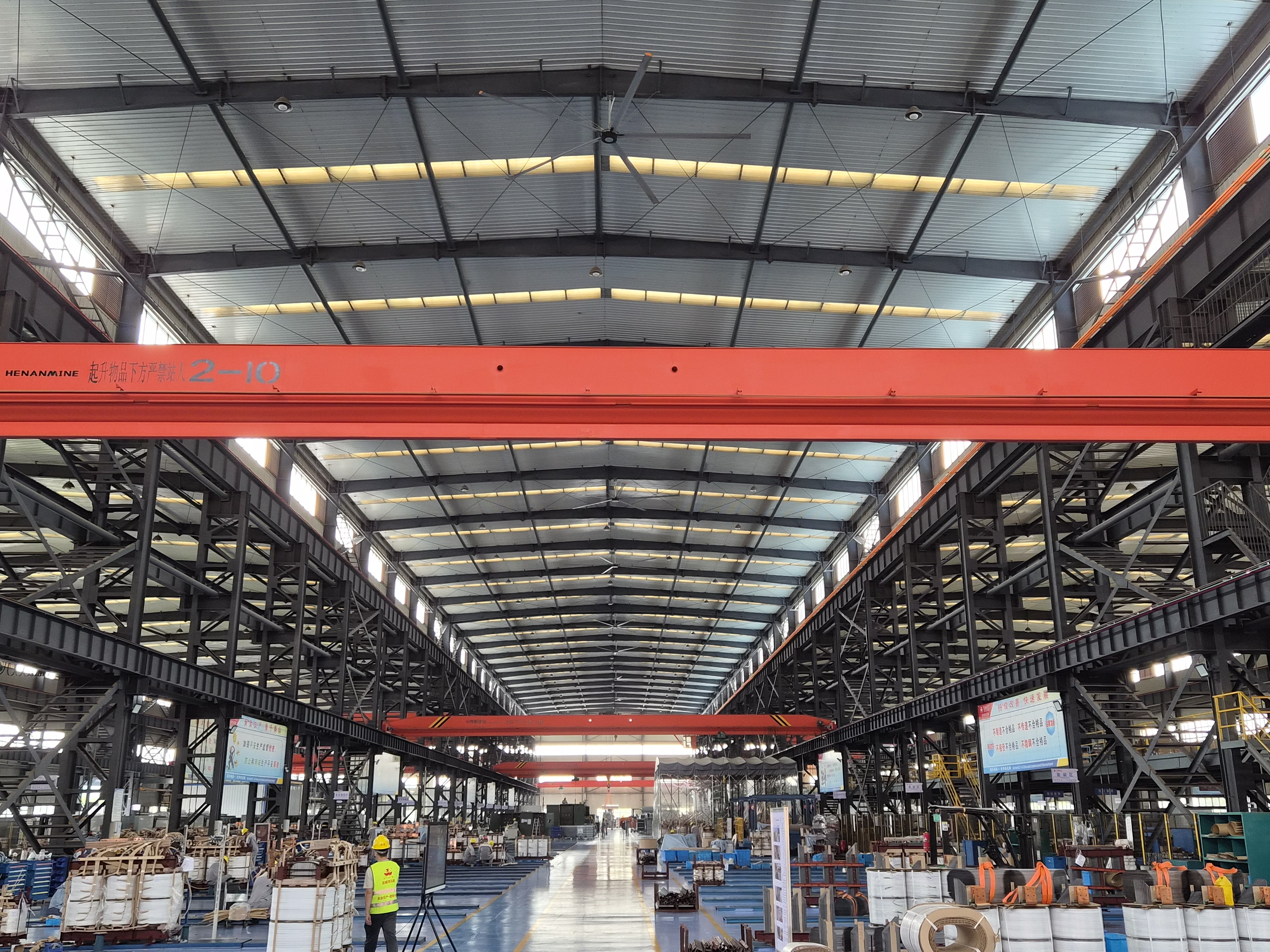
The supply model determines who audits, tests and documents the equipment before it ships. Image: audited manufacturing base.
Where Each Model Fits: Application Scenarios
The shortlist becomes concrete when it is read against real project types.
- Solar, wind and energy-storage step-up substations. These projects need transformers that accept inverter output across a wide low-voltage range, resist harmonic and DC-bias stress, and use low-loss designs that improve plant yield. Oil-immersed or dry-type construction are both options. Because the scope typically includes transformer, switchgear and controls, the integrated or managed-supply models fit best.
- Data centres and AI computing parks. The site usually needs two answers: dry-type units for indoor MV/LV distribution because they contain no insulating oil and suit fire-sensitive locations, and an oil-immersed power transformer or prefabricated substation for the main incoming supply, where on-load tap changing is specified if the incoming voltage varies. Certification for the destination market and speed of deployment are explicit evaluation criteria.
- North American residential and commercial distribution. Single-phase pad-mounted or pole-mounted units in roughly the 25 kVA to 100 kVA range, with 50 kVA and 75 kVA units at 7200/2400 V and a 120/240 V secondary typical in service, and three-phase pad-mounted units where commercial or light-industrial loads require three-phase supply. Here conformity documentation, not engineering, drives the choice of supply model.
- Industrial and mining plants. These loads demand reliable supply for production lines, motors and mining equipment, with high overload capability and resistance to frequent start-stop cycles. Where the enclosure and switchgear must be integrated, an integrated supply model applies.
Market Trend Analysis
Three supply-side trends explain why the supply-model decision has become more consequential rather than less.
First, the category is growing. The global transformer market is estimated to reach USD 80.8 billion in 2026, and the distribution transformer segment alone is projected to grow from USD 26.0 billion in 2026 to USD 47.7 billion by 2033 at a CAGR of 9.1%. Box-type substations for photovoltaics — the integrated product family referenced under Scope C — are estimated at USD 4.54 billion in 2026. Growing volume means more buyers competing for the same factory capacity, which raises the value of a supply model that can benchmark several plants.
Second, cross-border trade is expanding at double-digit rates. Global trade of electrical transformers with power capacity above 500 kVA (HS code 850434) reached USD 2.5 billion in 2024, a 12.7% increase year on year. More of these shipments cross regulatory boundaries, and each boundary carries a conformity requirement that a supply model must be able to satisfy.
Third, regulatory tightening is shifting efficiency from a preference to a constraint. China's GB 20052-2024 took effect on 1 February 2025, and the US Department of Energy 2024 rule points distribution transformer design towards amorphous electrical steel from 2029. Programmes that begin before those dates will be specified around them, and the demand-side driver is visible in the US Data Center Substation market, valued at USD 3.44 billion in 2024.
Comparison with Traditional Solutions — and Where Each Model Stops Working
The traditional approach is to treat the transformer as a commodity and buy on price from a single factory. That approach is not irrational: it is simple, it removes an intermediary, and for a well-specified standard unit it can be the lowest-cost route. The honest position is that the managed-supply model is not the right answer for every buyer, and its boundaries should be stated as clearly as its case.
- The partner is not the factory. A managed-supply model adds a service layer, and manufacturing, certification and test evidence belongs to the audited manufacturing partners rather than to the supply partner. A buyer who expects one accountable commercial counterpart should still verify that the certificate entity name matches the supplier actually manufacturing the order.
- The model costs something. Coordination, audit and supervision are services, and a buyer with strong in-house engineering and quality teams may reasonably conclude that direct procurement with its own inspection is more economical for a single, standard unit.
- It does not remove product-level limits. Oil-immersed units carry fire risk, an oil-leak exposure and an oil-pit requirement; dry-type units carry a 15–30% higher upfront cost and higher noise with a ventilation requirement. No supply model changes those trade-offs, and a managed-supply partner is expected to state them rather than steer around them.
- It depends on capacity being available. Independent vendor selection is only valuable if comparable factories can actually take the order within the project window.
Where the traditional model genuinely struggles is at Scope B and Scope C. A single-factory contract on a 250 MVA-class unit or an integrated substation leaves the buyer managing certification verification, witness testing and cross-family interfaces without independent leverage over the manufacturer — and it is exactly there that the reference record for a managed-supply model becomes the decisive evidence. Apex-coordinated projects include 4 × 110 kV power transformers for Azerbaijan Power Energy Company, 115 kV substations in Tajikistan, a 69 kV transformer and a commercial project in the Philippines, a 132 kV transformer for a Spanish steel-plant substation, a 40,000 kVA energy-storage project in Bulgaria, a 15 MVA pad-mounted unit in the USA, a 110 kV substation in Mongolia, a 345 kV fully-insulated power transformer for US-Georgia and a 115 kV substation for US-Puerto Rico — eleven representative overseas projects across Azerbaijan, Tajikistan, the Philippines, Spain, Bulgaria, Mongolia, the USA and Puerto Rico.
Future Outlook
The direction of travel is towards supply models that can be audited, not merely priced. Efficiency regulation is tightening on both the Chinese and US sides, which raises the engineering content of every order; renewables and data centres are pulling demand towards integrated packages rather than discrete units; and cross-border trade is growing fast enough that conformity documentation is becoming a gating item rather than a formality.
For an overseas utility or EPC buyer, the practical conclusion is that the shortlist should be drawn before the request for quotation, not after. Scope, delivery risk and destination-market conformity each eliminate or favour models, and a partner that can benchmark several audited factories against a specification — rather than sell what one plant happens to make — is worth having on the shortlist precisely because the alternative is to carry all three risks alone. The underlying capability to check is concrete: the audited manufacturing base referenced here operates a 900+ mu (approximately 60+ hectares) site with 1,700+ employees including 300+ engineering and technical personnel, a dedicated test laboratory with lightning-impulse, no-load/load-loss, ratio, winding-resistance, temperature-rise and insulation test benches, and exports to 72 countries and regions. Buyers who want to review the full equipment catalogue can download the Apex Power Systems catalog.
FAQ
How should an overseas utility or EPC buyer choose the supply model for a transformer project?
For an overseas utility or EPC project, the supply model matters as much as the product, because the risks sit in factory selection, certification, witness testing, documentation and commissioning rather than in the transformer alone. A managed supply is the appropriate choice where the buyer needs vendor selection, independent verification and one accountable point of contact. The evaluation criteria are independent vendor selection and factory audit; overseas reference projects of comparable rating; certification for the destination market; witness testing and third-party inspection; documentation and communication in the buyer's language; on-site installation and commissioning support; and warranty and after-sales response.
Should an overseas buyer purchase direct from a factory or through a trading and supply partner?
A trading and supply partner is not a manufacturer: the manufacturing, certification and test evidence belongs to its audited manufacturing partners, while the partner manages selection, supervision, testing, documentation and logistics on the buyer's behalf. The distinction matters because a factory can only offer what it makes, whereas a supply partner can evaluate several factories, compare them against the specification, and recommend the one that fits technically and commercially. Where the order is a single standard unit and the buyer holds in-house engineering and QA capacity, a direct purchase is a legitimate alternative.
Which certification and conformity documents should be verified for the destination market?
The certificate must be current, held in the correct entity name, and cover the exact product family being purchased. Relevant evidence includes ISO 9001, ISO 14001, ISO 45001 and SA8000 management-system certifications plus a provincial metrology qualification; IEC, UL, TUV, CE, KEMA and GOST certification for 10 kV / 35 kV distribution transformers and box-type substations; and certification to UL and CSA standards for liquid-filled distribution transformers rated over 750 V in North America. Certificate numbers can be checked with the issuing body — for example UL listings at iq.ulprospector.com — rather than accepted as a supplied PDF.
What drives delivery risk and lead time on a custom transformer order?
Delivery risk is governed by where the equipment must go and how much work happens on site. Because prefabricated substations are assembled and factory tested before shipment, site civil works and installation time are reduced and the unit can be relocated if the network changes, which suits urgent grid-station projects and remote sites where skilled site labour is limited. The interface between design review, drawing approval, factory acceptance testing, third-party inspection, packing, freight and commissioning is a separate source of delay, and concentrating that interface in one accountable party reduces it.
Can on-site installation and commissioning be supported on an overseas transformer project?
Yes, where the supply model includes it. Engineers from the partner manufacturing base install, test and energise the equipment on site and train the customer's team, while the supply partner manages drawings, test reports, O&M manuals and site coordination; the manufacturing base established its own power-engineering company in 2018 for this purpose. For oil-immersed units, the critical commissioning stage is oil processing, because residual moisture in the insulation is the most common cause of a failed impulse or power-frequency test. The unit should only be energised after insulation resistance, ratio, winding resistance and oil dielectric-strength results are confirmed against the manufacturer's limits and the applicable IEC 60076 requirements.
How is quality controlled before shipment on a custom transformer order?
Control is exercised at several points rather than one: auditing production and test equipment before ordering; monitoring the winding, core and oil-processing stages; witnessing routine and type tests at factory acceptance; and arranging third-party inspection where required. Factory visits and witnessed factory acceptance testing can be arranged as part of the order. For oil-immersed units, dielectric strength (BDV) and moisture content are measured on oil samples after vacuum treatment to confirm that the insulation system has been fully impregnated, and compliance is demonstrated through the routine and type tests specified in the IEC 60076 series.
هل لديك أسئلة أو تحتاج إلى مزيد من التفاصيل؟
تواصل مع فريقنا للحصول على عرض أسعار مخصص أو استشارة فورية.
طلب عرض أسعار
املأ النموذج أدناه وسيتواصل معك فريقنا بعرض مقترح مخصص.
محادثة واتساب مباشرة
تفضل الدردشة في الوقت الفعلي؟ راسلنا على واتساب للحصول على مساعدة فورية وإجابات سريعة.
- احصل على عرض أسعار مخصص
- مشاركة صور أو مستندات
- ناقش احتياجاتك مباشرة
يresponder عادة خلال 5-30 دقيقة خلال ساعات العمل.