
Custom Transformer Technical and Procurement FAQ: Noise, Oil Leak and Overheating
Custom Transformer Technical and Procurement FAQ: Noise, Oil Leak and Overheating
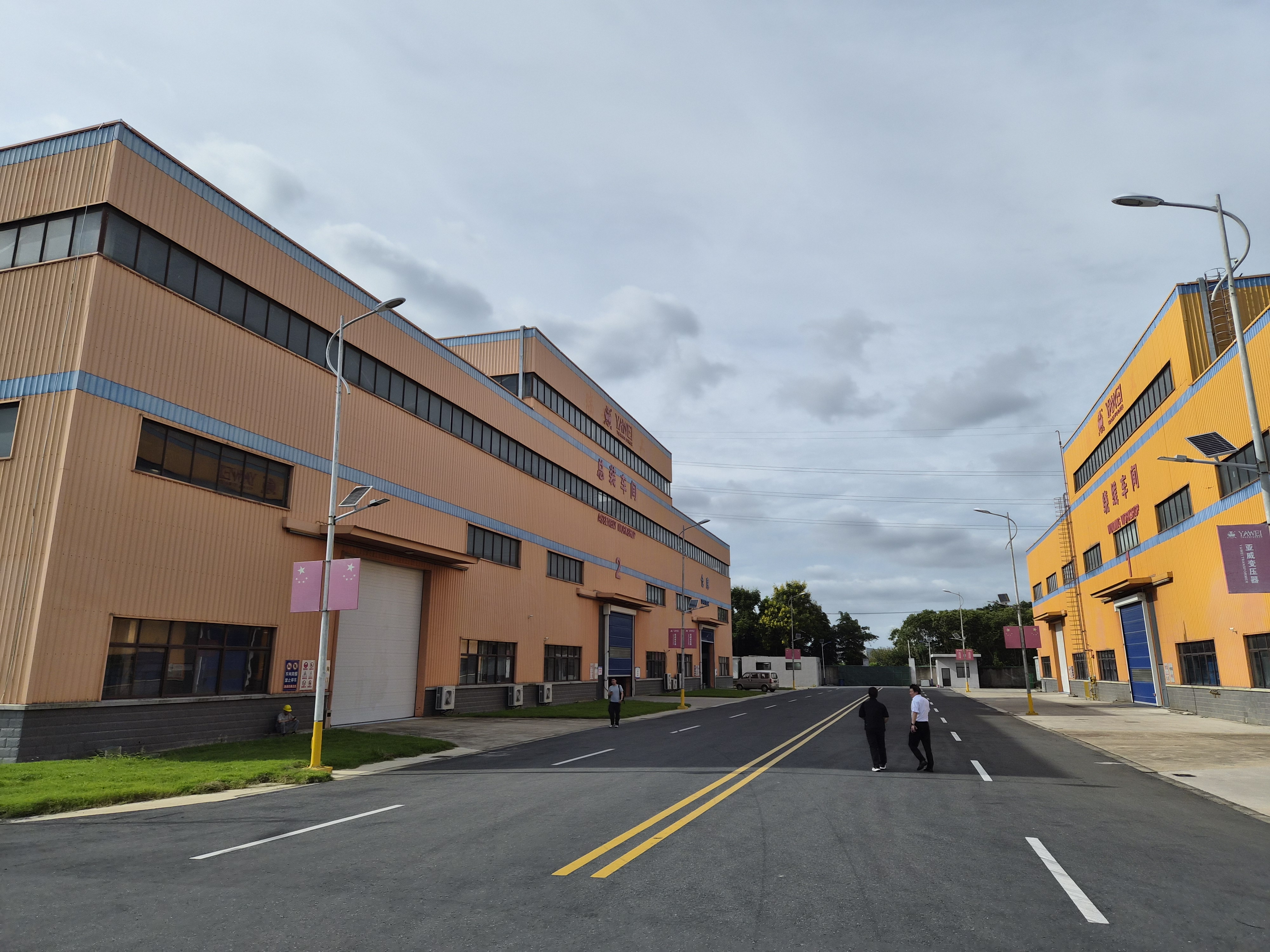
Abnormal noise, oil leakage and high oil temperature are the three field complaints most often raised against oil-immersed custom transformers, and each of them is partly settled before the unit is energised. For a buyer in the evaluation or execution stage, the practical question is not only what to check on site, but what should already be written into the purchase specification, the factory acceptance test and the maintenance agreement. This reference takes the three symptoms in that order: field check first, procurement consequence second, with the limits of the available evidence stated where they matter.
Why These Three Symptoms Are Also Commercial Terms
Each symptom has two possible families of cause: an external cause that can be corrected without opening the transformer, and an internal cause that cannot. The purpose of a field check is to separate them quickly and cheaply. The purpose of the purchase documents is to make the internal causes the supplier's responsibility before acceptance rather than the buyer's cost after energisation.
Custom transformers make that separation harder when the specification never fixed a measurable expectation. A sound level quoted without a measurement distance, load condition and cooling stage cannot be tested. A tightness requirement written only as no leakage cannot be witnessed. A temperature guarantee that ignores site ambient temperature and enclosure ventilation cannot be judged fairly by either party, whatever the unit's internal design.
Apex Power Systems (Nanjing) Co., Ltd. works inside that gap as a trading and supply-partner company rather than a manufacturer: it selects and audits factories, then coordinates design review, production, factory acceptance testing, documentation and on-site commissioning on the buyer's behalf. In that model, acceptance means a factory acceptance test (FAT) before shipment plus a joint site acceptance test (SAT) with the customer after installation, covered by a warranty period of 12 to 24 months depending on the contract.
Abnormal Noise or Vibration: Classify Before You Investigate
Abnormal noise should be classified before it is investigated, because the pattern of the noise points to its cause. Noise that varies with load points to the core, the windings or magnetostriction. Noise that stays constant regardless of load often points to loose clamping or to a resonance with the mounting structure. Intermittent noise usually points to a cooling fan, an oil pump or a loose connection. That classification decides whether the unit is opened at all, so it is the first step rather than a formality.
Check the supply before opening the transformer
Measure the harmonic content and any DC component of the supply early. Harmonic distortion and DC magnetisation from connected loads are common external causes and can be corrected without opening the transformer. This is also the cheapest test in the sequence, which is why it belongs near the beginning rather than at the end of a long investigation.
A six-step field sequence
- Identify whether the noise is continuous, intermittent or load-dependent.
- Check the cooling fans and pumps for bearing wear.
- Check the mounting bolts and investigate structural resonance.
- Measure the harmonic content and any DC component in the supply.
- Take an oil sample for dissolved gas analysis and check the core earthing connection.
- If the noise increases with load and the gas analysis is abnormal, de-energise the unit and inspect the core and clamping structure.
What the purchase specification should fix
Three items turn noise from an argument into an acceptance item. The first is a sound-level limit together with its measurement conditions: distance, load, and the cooling stage at which the limit applies. A transformer with natural and forced cooling can carry more than one rating on the same nameplate, so a noise figure that does not state its cooling stage is ambiguous. The second is design evidence. A custom design passes a senior engineer review and is verified by electromagnetic, thermal and mechanical calculation, and noise reduction is one of the customization options in scope, so the buyer can ask for the design intent to be documented rather than assumed. The third is the boundary between supply and site: foundation stiffness and structural resonance belong to the installation, and the division of responsibility should be agreed before delivery rather than after the first complaint.
Where a unit is specified for a noise-sensitive location such as a residential plot, a hospital or a commercial building, it is worth confirming that the check sequence above is reflected in the operation and maintenance documentation. A maintenance team that does not know the load-dependence pattern will usually replace a fan before anyone measures harmonics.
Oil Leakage: Find the Point Before Adding Oil
Oil leakage is a progressive fault rather than a cosmetic one. Beyond the environmental and safety exposure, a falling oil level reduces both insulation margin and cooling capability, and a leak that is not repaired will eventually cause an outage or a fire risk. The correct approach is to locate the exact leak point first rather than topping up the oil and waiting, because the position of the leak identifies the cause: a gasket, a flange, a valve, a weld or overpressure.
Typical causes
- Age-hardened or incorrectly seated gaskets.
- Loose flange bolts.
- Weld or casting defects.
- Leaking valves or gland packing.
- Corrosion of the tank or pipework.
- Overpressure caused by a blocked breather or an incorrect oil level.
What to check, in order
Clean the area and locate the exact leak point: tank, bushing turret, valve or radiator joint. Check the breather and the conservator oil level to rule out overpressure before touching any seal, because a blocked breather is a common root cause of leaks that reappear after a gasket has been replaced. For a gasket leak, retighten to the specified torque or replace the gasket. For a weld or casting defect, repair under an approved welding procedure and re-test. Replenish with the correct oil grade and re-test dielectric strength and moisture. Record the leak, its cause and the repair in the maintenance history.
The procurement lever: tightness as a documented test
Tightness is one of the few field complaints that can be substantially closed at the factory. Tanks are produced in-house as carbon-steel welded, fully sealed units, and the component quality regime includes incoming material inspection, dimensional checks, weld inspection and a tank pressure and leak test. A buyer can require those results to form part of the FAT documentation, so that the tank and its welds are covered by evidence before oil filling rather than inspected only after a stain appears on the pad.
Two further contract details reduce leak risk in service. The technical agreement should name the gasket material and the valve specification instead of leaving them to the supplier's standard practice, because age-hardening gaskets and gland packing are recurring causes. Transport protection also matters: shipment arrangements include vacuum oil filling and nitrogen protection with shock and tilt monitoring, which address the handling and pressure damage that would otherwise be discovered as a leak at first fill on site.
Abnormally High Oil Temperature: Work Outwards from the Simplest Cause
An abnormally high oil temperature is nearly always one of three things: the unit is genuinely overloaded, the cooling system is not working, or the temperature is being read incorrectly. Working outwards from the simplest cause is faster than starting with the transformer internals: record the load current and ambient temperature first, then check the cooling system, then the oil level, and only then the instrument.
Typical causes
- Sustained overload.
- Cooling-system failure, including fans or pumps not running, blocked radiators and closed valves.
- Low oil level.
- High ambient temperature or blocked ventilation in the room.
- Harmonic content from non-linear load.
- Incorrect thermometer calibration.
- An internal fault such as a shorted turn.
The check sequence
Record load current, ambient temperature and the temperature reading, and compare them with the rated temperature rise. Check the cooling system: fans, pumps, radiator valves and control circuits. Check the oil level and inspect for leaks, because the leak path and the temperature path meet at exactly this point. Verify the thermometer and the alarm contacts. If no external cause is found, take an oil sample for dissolved gas analysis. Reduce load or improve ventilation while the investigation continues. If the gas analysis indicates an internal fault, de-energise the unit and carry out an internal inspection before returning it to service.
What to specify so temperature performance is testable
Temperature performance is verified at the factory on a dedicated temperature-rise test bench, alongside no-load and load-loss, ratio, winding-resistance, insulation and lightning-impulse testing. That evidence only answers the buyer's question if the guarantee matches the site. Cooling class, ambient temperature, altitude and enclosure ventilation all change the permissible loading, which is why the cooling class code determines the rated capacity of each cooling stage and must be checked against the installation conditions. High-altitude derating and special cooling methods are both within the customization scope, so they can be designed in when the buyer states them rather than discovered afterwards.
The buyer's own inputs are equally material. Room ventilation, radiator clearances and the presence of harmonic-rich load are site conditions. A transformer that performs correctly at FAT and overheats in a closed cabin has usually been specified without them, so site ambient, altitude, enclosure type and load characteristics belong in the technical evaluation package and in the technical agreement.
Oil Testing: The Shared Evidence Base
Three oil measurements serve all three symptoms, which is why oil testing appears in both the acceptance file and the maintenance plan: dielectric strength, moisture content and dissolved gas analysis. Dielectric strength and moisture show whether the insulation system is still sound after a leak, a repair or a refill. Dissolved gas analysis is the earliest internal indicator in the noise and temperature paths, and both of those sequences end at the same decision point: if gas readings are abnormal and the symptom persists, the unit is de-energised and inspected.
Oil quality is also a routine factory test on distribution transformers, and the dielectric strength and moisture content of the processed oil are measured after vacuum treatment and oil filling. A buyer who wants the oil record to be usable in a later dispute should require those results, with their sample basis, in the FAT documentation alongside the electrical test results.
Mapping Each Symptom to Acceptance and Commercial Terms
The table converts the three field sequences into items that can be agreed before an order is placed. Read it as a drafting aid for the technical agreement rather than as a standard: the applicable limits and test conditions must still be fixed for the specific rating, site and destination market.
| Symptom | Field check that isolates the cause | Acceptance evidence to request | Contract term to fix |
|---|---|---|---|
| Abnormal noise or vibration | Load-dependence test; fan and pump bearings; mounting bolts and resonance; harmonic and DC measurement; dissolved gas analysis; core earthing | Sound-level result with its measurement conditions; senior engineer design review and calculation record; routine and type test reports | Sound limit with distance, load and cooling stage; responsibility for foundation stiffness and structural resonance |
| Oil leakage | Locate the exact point; breather and conservator level; torque check; approved weld repair procedure; oil re-test after refill | Tank pressure and leak test record; weld inspection record; oil dielectric strength and moisture after filling | Gasket material and valve specification; vacuum oil filling, nitrogen protection, shock and tilt monitoring in transit; SAT before handover |
| High oil temperature | Load current against rating; cooling system and radiator valves; oil level; room ventilation and ambient; thermometer and alarm contacts; dissolved gas analysis | Temperature-rise test result; cooling-stage ratings on the nameplate; oil test results from the factory | Cooling class and each cooling-stage rating; site ambient, altitude and enclosure data; responsibility for ventilation |
| In-service deterioration affecting all three | Trend comparison of oil results, temperatures and noise observations against the commissioning baseline | Baseline oil results at FAT and at SAT; as-built drawings and O and M manuals | Maintenance schedule; warranty period; spare parts and remote support arrangements |
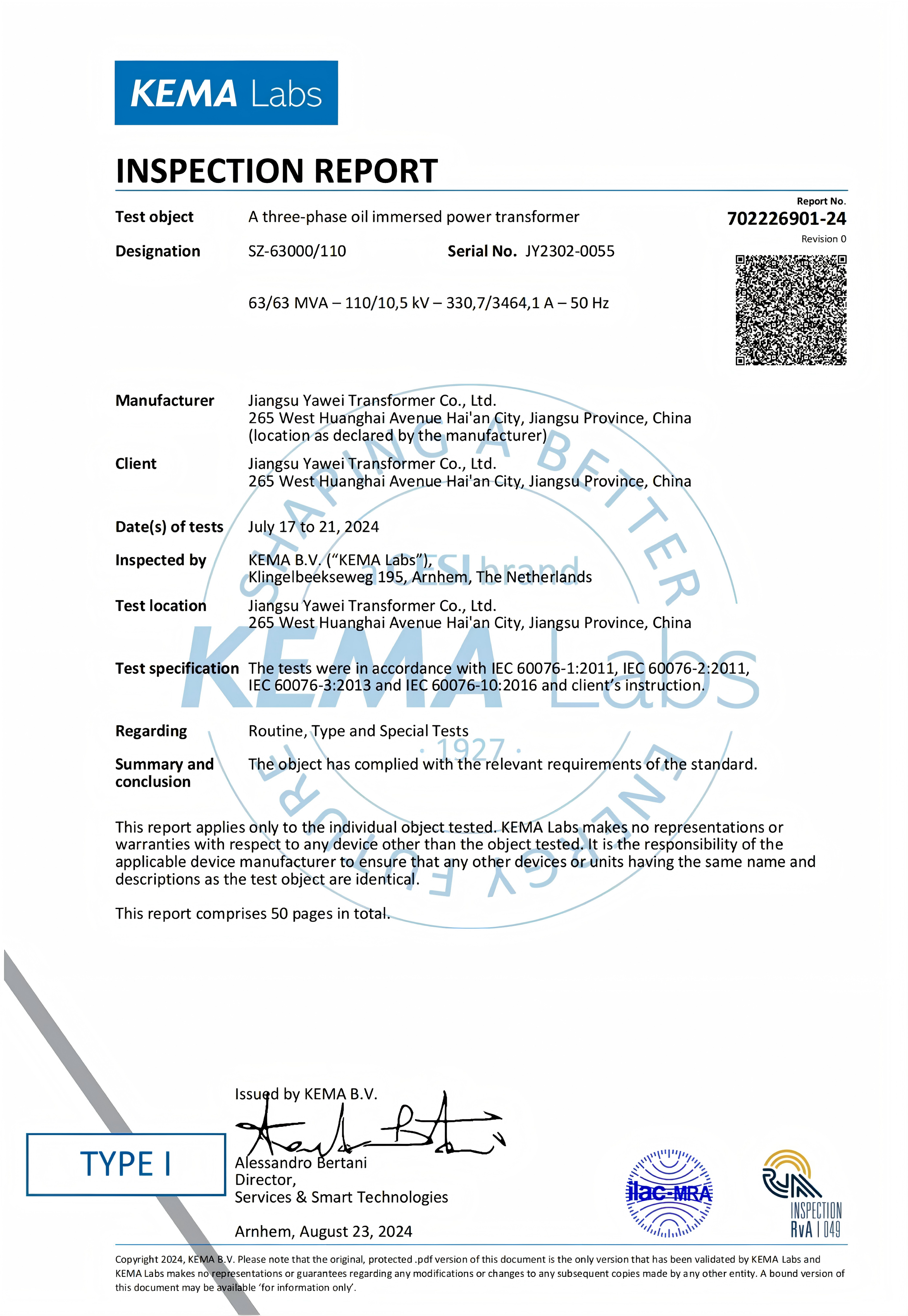
The tests that can be witnessed at factory acceptance include ratio, winding resistance, no-load and load loss, insulation, temperature rise and lightning impulse, and witnessed type testing can be arranged with a third party such as KEMA, SGS or BV. On the commercial side, the purchasing terms recorded for these projects are a minimum order quantity of one unit, standard lead times of 45 to 90 days and 90 to 150 days for large or custom power transformers, delivery terms negotiable among FOB, CIF, EXW and DDP, and payment by T/T in staged instalments or by L/C at sight. Lead time and acceptance scope interact: a witnessed temperature-rise test or a third-party inspection has to be scheduled into the production cycle, not requested after the tank is closed.
Maintenance Expectations Over the Service Life
Routine maintenance is built around the oil, because oil condition is the best single indicator of a transformer's internal health. The programme combines visual inspection, oil testing for dielectric strength, moisture and dissolved gas, breather and cooling-system checks, bushing and connection inspection, and verification of protection devices and the tap-changer counter.
The operational discipline that matters is trending. Readings should be recorded and compared with previous values rather than judged in isolation, because a sudden change in dissolved gas or moisture is the earliest warning of an internal fault, and acting on a trend is far cheaper than replacing a failed unit. A maintenance agreement that specifies only an annual inspection without defining what is sampled, recorded and compared leaves the buyer without that early warning, even where the inspection itself is carried out correctly.
Where the Evidence Stops: Fit and Boundary
The trading-partner model fits buyers who need vendor selection, independent verification and a single accountable point of contact across design, production, testing, documentation and commissioning. It does not fit a buyer who already knows and trusts a specific plant and can manage design review, witness testing, documentation and logistics in-house; direct purchase remains a legitimate route in that situation.
The boundary of the model should be stated plainly. Apex Power Systems is not a manufacturer: manufacturing, certification and test evidence belong to its audited manufacturing partners, and certificates must be checked against the issuing body for expiry date, legal entity name and the model range actually covered. Representative references include a 345 kV fully insulated power transformer for a US-Georgia transmission company, a 115 kV substation for a Puerto Rico power distribution company, a 15 MVA pad-mounted unit for a US transmission company and a 40,000 kVA energy-storage project in Bulgaria. None of those references establishes that a particular unit will meet a particular sound limit or temperature rise; each order still needs its own specification and its own acceptance results.
Outlook
No measured market forecast is offered here, and none is needed to make the practical point. What the available evidence supports is conditional: where a buyer fixes sound limits with their measurement conditions, requires tank tightness and oil results in the FAT file, and states site ambient, altitude and ventilation in the technical agreement, the three symptoms in this article become acceptance questions with documented answers. Where those items are left as verbal assurance, the same symptoms become disputes decided by whoever holds the better records.
For schedule-driven projects, the direction of travel is toward more work being completed and evidenced in the factory, which is also what prefabricated substations do by shifting assembly and testing away from the site. That does not remove the need for field diagnosis of noise, leakage and overheating; it moves the burden of proof earlier, where correction is cheaper.
Frequently Asked Questions
What causes abnormal transformer noise, and what should be checked first?
Noise follows a pattern, so it is classified first. Noise that varies with load points to the core, the windings or magnetostriction; noise that stays constant regardless of load often points to loose clamping or resonance with the mounting structure; intermittent noise usually points to a fan, pump or loose connection. After classification, check cooling fans and pumps for bearing wear, check mounting bolts, measure harmonic and DC content in the supply, and take an oil sample for dissolved gas analysis.
How can a buyer tell whether the noise comes from the transformer or from the connected load?
The load-dependence test is the discriminator: if the noise changes as load changes, the cause is inside the transformer, in the core, windings or magnetostriction. If the noise stays the same whatever the load, look at clamping and at structural resonance. Because harmonic distortion and DC magnetisation from connected loads are common external causes, the supply should be measured early, since those causes can be corrected without opening the transformer.
What should a purchase order state about oil tightness?
State the tank construction and the evidence required for it. Tanks are supplied as carbon-steel welded, fully sealed units, and the component regime already includes weld inspection and a tank pressure and leak test, so the buyer can require those records in the factory acceptance documentation. The order should also name the gasket material and valve specification, and include vacuum oil filling, nitrogen protection and shock and tilt monitoring for transport.
Which oil tests should follow a leak repair?
After refilling with the correct oil grade, dielectric strength and moisture content should be re-tested, because a falling oil level and the repair itself both affect the insulation system. Where the unit has been in service, or where overheating or overload preceded the leak, dissolved gas analysis should be added and the results compared with the previous baseline. The leak, its cause and the repair should be entered in the maintenance history.
Why does oil temperature rise when the load appears normal?
Because load is only one of several causes. The others are cooling-system failure such as fans or pumps not running, blocked radiators or closed valves, a low oil level, high ambient temperature or blocked room ventilation, harmonic content from non-linear load, incorrect thermometer calibration and, least often, an internal fault such as a shorted turn. Recording load current, ambient temperature and the reading against the rated temperature rise, then checking cooling and oil level, resolves most cases without opening the unit.
Which acceptance tests confirm cooling and temperature performance?
Temperature rise is verified on a dedicated test bench at the factory and forms part of the evidence a buyer can witness, together with ratio, winding resistance, no-load and load loss, insulation and lightning impulse testing. Witnessed type testing through an independent laboratory and third-party inspection are available where the project requires them. The result is only meaningful if the nameplate states the rating for each cooling stage and the guarantee matches site ambient, altitude and enclosure ventilation.
How often should transformer oil be tested in service?
The programme is defined by what is sampled and recorded rather than by one interval that suits every unit, so the schedule belongs in the maintenance agreement. It combines visual inspection, oil testing for dielectric strength, moisture and dissolved gas, breather silica gel and oil cup checks, bushing and connection inspection including thermographic scanning, tap-changer operation and counter checks, verification of thermometers, the Buchholz relay, pressure-relief device and alarms, and cooling-system inspection, with all readings trended against the previous results.
Further product families, certification scope and project references are published by Apex Power Systems (Nanjing) Co., Ltd. The company catalogue, covering transformers, prefabricated substations and switchgear, can be downloaded here: Apex Power Systems catalog (PDF).
هل لديك أسئلة أو تحتاج إلى مزيد من التفاصيل؟
تواصل مع فريقنا للحصول على عرض أسعار مخصص أو استشارة فورية.
طلب عرض أسعار
املأ النموذج أدناه وسيتواصل معك فريقنا بعرض مقترح مخصص.
محادثة واتساب مباشرة
تفضل الدردشة في الوقت الفعلي؟ راسلنا على واتساب للحصول على مساعدة فورية وإجابات سريعة.
- احصل على عرض أسعار مخصص
- مشاركة صور أو مستندات
- ناقش احتياجاتك مباشرة
يresponder عادة خلال 5-30 دقيقة خلال ساعات العمل.