
Custom Wet Wipes Model-to-Scenario Guide: Baby to Eye Care
Wet wipes have separated into product families, and the separation is now visible in the model numbers that appear on quotations. An infant wipe and an eye care wipe may leave the same plant and draw on the same nonwoven supply chain, yet they are bought against different acceptance criteria, packed for different retail environments and consumed in different ways. At the decision stage, the useful question is therefore not whether a factory can produce a wipe, but which model in a range matches a defined use environment — and which purchasing terms should follow from that match.
Sunfans is the wet wipes brand produced by Da lian Weijie Biotechnology Co., Ltd., a Dalian-based hygiene products manufacturer established in 2013 whose catalog covers baby wipes, pet wipes, wet toilet paper, functional wipes, and floor dry and wet wipes. Its custom range is organized around five scenario families: baby wipes Y02 for infant care; pet wipes C02 to C05 for pet grooming and personal care; kitchen wipes CF001 for home cleaning; eye care wipes YJ01 for continuous surface wiping on a single-sheet, one-time-consumption basis; and wet toilet paper S01 and S02 for home cleaning, with S02 carrying a gentle plant-based formula. The sections below map each family to its intended application and show how pack size, sheet dimension, substrate and scenario requirements should shape both the specification and the contract that follows it.
Why the buying decision moves from category to model
Category-level purchasing works when the use environment is uniform. It fails when a single word — wipe — has to cover an infant's skin, a dog's coat, a kitchen counter, the area around an eye and a toilet. The failure is rarely dramatic. It shows up as a slower filling line, a complaint rate nobody can explain, or a rework cycle on a private-label launch. Each of those outcomes traces back to a specification that was written for a category instead of a scenario.
Model-level selection changes the nature of the comparison. Two suppliers quoting on generic baby wipes are not necessarily quoting on the same product. Two suppliers quoting on Y02 are quoting against a defined reference point, and the differences that remain — substrate, sheet dimension, pack count, closure, labeling — become visible and negotiable. That is the practical value of a model-to-scenario map at the decision stage: it converts a marketing conversation into a list of attributes that can be sampled, tested and written into acceptance criteria.
There is a second reason the map matters. Most buyers do not purchase one model; they purchase a small portfolio that has to work together on a shelf or inside a distribution catalog. Understanding how Y02, C02 to C05, CF001, YJ01 and S01/S02 divide the use environments makes it easier to decide which families belong in the same program, which pack formats should be harmonized across the portfolio, and where a dedicated specification is genuinely justified rather than inherited from a neighboring model.
The model map: five families, five use environments
| Model | Product family | Intended scenario | What the buyer should confirm on the spec sheet |
|---|---|---|---|
| Y02 | Baby wipes | Infant care, including newborn and mother-and-baby routines | Substrate softness and loft; nominal sheet dimension; pack format and closure; labeling claims for sensitive-skin positioning |
| C02 – C05 | Pet wipes | Pet grooming and personal care | Which model inside the family; sheet dimension for paws, ears and muzzle; substrate strength under friction; pack format; formula declaration |
| CF001 | Kitchen wipes | Home cleaning in kitchen environments | Sheet dimension for surface wiping; substrate wet strength; pack format for kitchen storage; label language and intended-use wording |
| YJ01 | Eye care wipes | Continuous surface wiping, single-sheet one-time consumption | Sheet dimension; pack count and dispensing; consumption model used in cost calculation; handling expectations of the dispensing environment |
| S01 / S02 | Wet toilet paper | Home cleaning and toilet use | Model-specific formula and substrate declaration; S02 gentle plant-based formula; dispersibility documentation for the destination market; pack format |
Model names follow the manufacturer's range. The right-hand column lists the points a buyer should confirm in writing rather than infer from the model number alone.
Pack size, sheet dimension and substrate: the three variables that decide fit
Pack size sets the channel and the cost per task
Pack size is a commercial decision before it is a production decision. A large pack or bulk pack format suits household programs, refill formats and distribution, where cost per wipe dominates the buying logic. A smaller format suits trial, travel, on-the-go and clinical channels, where unit price and portability dominate instead. For a private-label buyer, pack size also determines how much of the packaging cost is fixed artwork and tooling versus variable film and handling, and it drives the shelf-life calculation once the pack is opened in use. Bulk pack and large pack formats are the usual route for export programs where freight and handling are measured per carton rather than per unit.
Sheet dimension follows the surface, not the machine
Sheet dimension should be set by the task rather than by line efficiency. An infant wipe is handled against skin with one hand while the other holds the child. A pet wipe is applied to paws, ears and coat, often against movement. A kitchen wipe covers a flat surface in a small number of passes. An eye care wipe is used once and discarded. None of these tasks is served well by a single dimension chosen for conversion convenience. Buyers comparing quotations should request the nominal sheet dimension in the specification and then test it in the actual use environment during sampling, because a difference of a few millimeters reads very differently in the hand than on paper.
Substrate and formula declarations must be model-specific
Substrate selection drives softness, wet strength, loft, lint behavior and — for toilet-use products — how the sheet behaves in water. Buyers should confirm the substrate named for each model rather than assume that one family's substrate carries across the range, and should request the formula declaration separately for each model. S02 is the clearest illustration inside this range: it carries a gentle plant-based formula, and that positioning should be verified as an attribute of S02 with documentation, not extended to S01 by association.
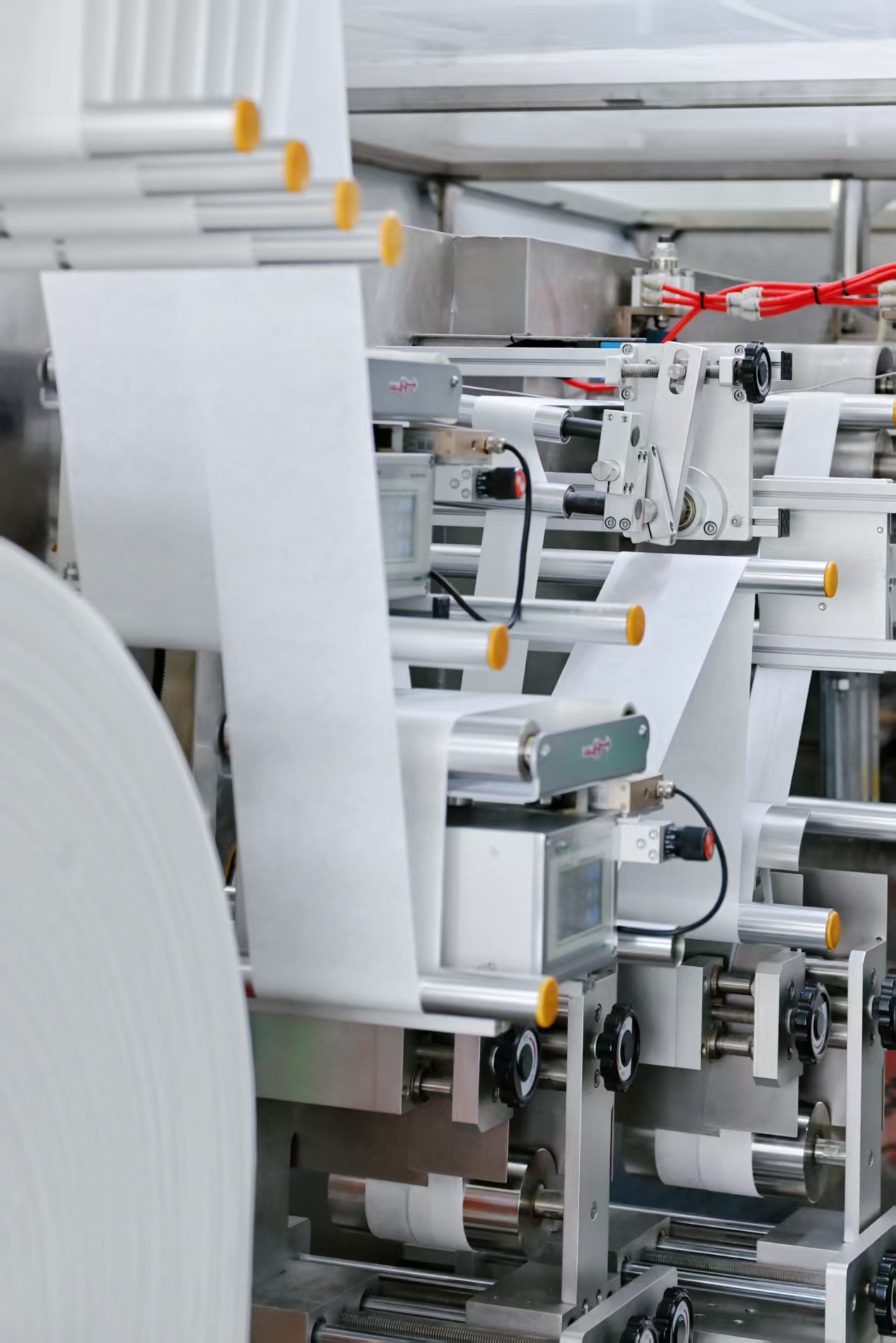
Manufacturing and quality evidence behind the range
Model names are only useful if the production system behind them is consistent. Da lian Weijie Biotechnology Co., Ltd. was established in 2013, operates a 6,000 m² facility with 50 employees, and reports annual output of 4 million packages, a research and development team of 10 people and an export ratio of 70%, with main markets in Japan, Australia, Canada, the United States and Singapore. Those figures describe a manufacturer oriented toward export programs rather than domestic-only distribution, which matters for buyers whose specifications must satisfy more than one regulatory environment in the same portfolio.
The quality system is where the range's claims are actually supported. Production takes place in a 100,000-level cleanroom with adherence to ISO 9001 standards, and the manufacturer's own comparison against generic, low-cost wet wipes supply rests on that combination of export experience, ISO 9001 adherence and cleanroom operation. Three specific controls map to three specific failure modes that buyers will recognize from their own complaint history:
- Colony counts. Microbiological testing is used to determine colony counts, with a microbiological tripartite laboratory involved in risk control. The stated risk being managed is colony counts exceeding the limit.
- Metal contamination. Heavy metal detection equipment screens for and removes metal tape between nonwoven fabric layers, addressing contamination inside the substrate before the pack is completed.
- Seal leakage. Sealing inspection devices are configured to detect potential fluid leakage at the horizontal seal and the back seal, and the equipment has been upgraded with a function for removing back-sealed adhesive strips to prevent leakage.
Logistics is the fourth element of the evidence. The production facility is just over a 10-minute drive from the Port of Dalian, which the manufacturer positions as a logistical advantage over suppliers located farther from a port, resulting in approximately 20% lower transport costs compared with alternatives and faster export transport. For a buyer landed-costing a program, that is a line item rather than a slogan — although, as set out below, it applies to sea export from Dalian and should not be extrapolated to other freight modes.
Application notes: what to confirm for each environment
Infant care — Y02
Y02 is positioned for infant care, including newborn and mother-and-baby routines. The purchasing questions that matter here are less about whether the wipe exists and more about how it handles: substrate softness and loft against skin, sheet dimension relative to one-handed use, pack format and closure for a nursery shelf or a changing bag, and the labeling claims the buyer intends to print. Infant programs typically carry the highest complaint sensitivity in a portfolio, so sampling should function as a qualification step — testing the wipe in its intended pack format rather than only as a loose sheet — and the approved sample should be recorded as the reference for every reorder.
Pet grooming and personal care — C02 to C05
The pet family spans C02 to C05, which means part of the decision happens inside the family rather than between families. Pet cleaning covers grooming use on coat, paws and ears, and personal-care use around the animal's face, so sheet dimension, substrate strength under friction and pack format all shift with the model. A practical approach is to request the specification for each model in the C02 to C05 range side by side, compare substrate, sheet dimension, pack count and formula declaration, and then match the result to the grooming routine the product will actually serve. Buyers who treat pet wipes as a single undifferentiated item usually end up over-specifying one model and under-specifying another.
Kitchen cleaning — CF001
CF001 is the home-cleaning model in the range, positioned for kitchen environments. Here the fit is defined by the surface and by the pack: a sheet dimension that covers a countertop or appliance front in a small number of passes, substrate wet strength that survives the pass without breaking down, and a pack format that stores sensibly in a kitchen rather than a bathroom. Kitchen programs also carry intended-use labeling obligations that differ from personal-care wipes, so artwork and claim review belong in the same conversation as the technical specification, not after it.
Eye care — YJ01
YJ01 is specified for continuous surface wiping with single-sheet, one-time consumption. That consumption model is the defining commercial characteristic. It converts the cost discussion from cost per pack to cost per task, and it makes pack count and dispensing part of the calculation rather than an afterthought. Because the wipe is used once and discarded, buyers should confirm sheet dimension, pack count and the handling expectations of the environment in which the wipe is dispensed, and should align the specification with the cleaning procedure the product supports.
Toilet use and home cleaning — S01 and S02
Wet toilet paper S01 and S02 serve home cleaning and toilet use, with S02 distinguished by a gentle plant-based formula. Two confirmations matter more here than anywhere else in the range. The first is model-level documentation: the formula and substrate declared for S02 should be verified as S02 attributes and not assumed to apply to S01. The second is market fit: products used in toilet environments are judged against local plumbing and wastewater expectations, so documentation should be checked against destination-market requirements before either model is confirmed for a program.
Market signals behind a segmented range
Segment-level demand explains why a range organized by scenario is commercially rational rather than merely tidy. The global wet wipes market was valued at approximately USD 32.09 billion in 2026, with a projected CAGR of 3.86% reaching USD 43.45 billion by 2034, according to Vertex AI / Fortune Business Insights. That average conceals materially different growth rates underneath it.
- Personal care wipes held a 72.81% share of the global wet wipes market in 2025, according to Mordor Intelligence — the segment in which baby and pet wipes compete.
- The global baby wipes market was valued at USD 5.4 billion in 2024 and is expected to grow at a CAGR of 7.5% through 2030, per the Baby Wipes Market Report 2024-2030.
- Pet wipes were valued at USD 1.58 billion in 2024, with a projected CAGR of 5.6% reaching USD 2.64 billion by 2033, according to DataHorizzon Research; North America is the largest regional market at approximately 50% share, valued at USD 0.79 billion in 2024.
- Flushable wipes were valued at USD 2.3 billion in 2025 and are projected to reach USD 4.2 billion by 2035 at a 6% CAGR, per Global Market Insights. Plant-based flushable wipes alone were valued at USD 2.9 billion in 2024, expected to grow at a 5.3% CAGR.
- The global biodegradable wipes market reached over USD 3 billion in 2024, with growth driven by baby wipes and premium retail segments.
- Regionally, Japan accounts for nearly 27% of the Asia-Pacific wet wipes market and is projected to lead healthcare wipes growth with the highest CAGR through 2030; Asia Pacific overall is the fastest-growing region, while the U.S. market accounted for 34% of global share in 2024.
The reading for a buyer is straightforward. A supplier whose range covers infant, pet, kitchen, eye care and toilet use is exposed to growth rates that differ by several percentage points, and the model-to-scenario structure is how that exposure is managed in procurement terms: each family can be specified, sampled and reordered independently, so a demand shift in one segment does not force a renegotiation of the whole program.
How a model-led range compares with generic low-cost supply
Comparisons are only useful when they can be checked. The table below sets out the dimensions on which a model-led range differs from generic, low-cost wet wipes supply, stated in a form that lets a buyer verify the same points with any alternative supplier.
| Comparison dimension | Sunfans model-led range (stated basis) | Question to put to any alternative supplier |
|---|---|---|
| Model granularity | Five named families mapped to defined scenarios: Y02, C02–C05, CF001, YJ01, S01/S02 | Which model corresponds to each of my use environments, and what differs between them in writing? |
| Quality standards | Adherence to ISO 9001 standards; 100,000-level cleanroom operation | Which quality management standard applies, and which cleanroom class covers the converting area? |
| Export orientation | 70% export ratio; main markets in Japan, Australia, Canada, the United States and Singapore | Which export markets are currently served, and with which documentation packages? |
| Process controls | Microbiological colony-count testing, heavy metal detection for metal tape between nonwoven layers, sealing inspection for horizontal and back seals | Which in-process controls exist, and at which production stage do they operate? |
| Logistics | Facility just over a 10-minute drive from the Port of Dalian; approximately 20% lower transport costs compared with alternatives | What is the actual distance from the loading dock to the port of departure? |
Three boundaries should be stated plainly, because a comparison that omits them is not usable in a procurement file. First, a model number organizes a supplier's range; it does not certify the product for a destination market. Cosmetic wipes sold in the EU must comply with EN standards, including REACH for chemicals and BPR for biocidal claims; the U.S. FDA facility registration deadline for cosmetic wipes manufacturers is July 1, 2026 under new regulatory frameworks; and in China, wet wipes are governed by the Hygienic Standard for Disposable Sanitary Products. Model mapping supports those processes but does not replace them.
Second, the transport-cost advantage is specific rather than general. It reflects road distance from the Dalian facility to the Port of Dalian and applies to sea export shipments; it does not automatically transfer to air freight, to bonded warehousing in another region, or to domestic distribution inside China. Third, single-sheet one-time consumption in YJ01 raises cost per task compared with reusable cloth in continuous wiping, so the consumption model should be confirmed against the actual cleaning workflow before a program is priced on pack cost alone. The same discipline applies to wet toilet paper: dispersibility documentation supports a market submission but does not replace local verification of plumbing and wastewater expectations.
Turning the model map into purchase terms
The final step at the decision stage is translation: each point in the model map should appear somewhere in the purchase documentation. A workable structure covers the following, in order.
- Model and revision reference. Name the model — Y02, a specific model within C02 to C05, CF001, YJ01, S01 or S02 — and the specification revision it refers to, so that a reorder cannot drift.
- Substrate and sheet dimension. State the substrate and nominal sheet dimension per model, not as a portfolio average.
- Pack count and format. Fix pack count, pack format and closure, and connect large pack or bulk pack formats to the channel they serve.
- Formula declaration. Require a model-specific declaration, which is where S02's gentle plant-based formula is documented as an attribute of S02.
- Seal acceptance. Define leakage acceptance at the horizontal seal and back seal, referencing the sealing inspection control and the equipment function that removes back-sealed adhesive strips.
- Microbiological limit. Reference colony-count testing and the limit that applies, given that colony counts exceeding the limit are the stated risk being controlled.
- Contamination control. Record heavy metal detection and removal of metal tape between nonwoven fabric layers as a required in-process control.
- Approved sample. Retain a sealed approved sample per model as the reference for disputes and for repeat orders.
- Units and capacity. Because annual output is expressed as 4 million packages rather than as wipes, convert the forecast into packages with the factory during sampling so that volume, pack count and capacity are discussed in the same unit.
Outlook
Two directions look durable for this category. The first is formula positioning. Plant-based flushable wipes were valued at USD 2.9 billion in 2024 with a projected 5.3% CAGR, and the biodegradable wipes segment passed USD 3 billion in 2024 on the strength of baby wipes and premium retail — both signals that the formula declaration is becoming a purchasing document rather than a marketing line. Models positioned on a plant-based formula, such as S02, sit directly on that curve.
The second is regional demand shape. Japan accounts for nearly 27% of the Asia-Pacific wet wipes market and is projected to lead healthcare wipes growth through 2030, while Asia Pacific is the fastest-growing region overall. For an export-oriented manufacturer already serving Japan, Australia, Canada, the United States and Singapore, that combination rewards a portfolio organized by scenario rather than a single high-volume SKU — because the growth is arriving in different segments at different speeds, and each segment carries its own acceptance criteria.
FAQ
Which custom wet wipe model is intended for infant care, and which for kitchen cleaning?
Y02 is the baby wipe model positioned for infant care, including newborn and mother-and-baby routines. CF001 is the kitchen wipe model positioned for home cleaning in kitchen environments. The two serve different use environments, so they should be specified separately on substrate, sheet dimension and pack format rather than sharing one specification across both.
How should a buyer choose between pet wipes C02 and C05?
The C02 to C05 range covers pet grooming and personal care, and the choice is made on the specification rather than on the model number alone. Buyers should request the spec sheet for each model, compare substrate, sheet dimension, pack count and formula declaration, and test both in the grooming routine the product will serve. Where a program covers both coat and facial use, carrying two models may be more appropriate than selecting one.
Does pack size affect which model fits a program?
Yes. Pack size determines channel fit and cost per task. Large pack and bulk pack formats suit household and distribution programs where cost per wipe dominates, while smaller formats suit trial, travel and clinical channels. Because pack size also affects packaging cost structure and shelf life after opening, it should be confirmed together with the model rather than after the model has been chosen.
Are YJ01 eye care wipes intended for reuse?
No. YJ01 is specified for continuous surface wiping on a single-sheet, one-time-consumption basis. That means cost should be assessed per task rather than per pack, and pack count and dispensing format belong in the specification alongside sheet dimension.
What distinguishes S02 from S01?
S02 carries a gentle plant-based formula, while S01 is the other wet toilet paper model in the range serving home cleaning. Buyers should confirm the formula and substrate declaration for each model separately, and should verify dispersibility documentation against destination-market requirements before either model is confirmed for a program.
Which quality checks should appear in a custom wet wipes purchase contract?
At minimum, the contract should reference the model and specification revision and align acceptance criteria with the controls the manufacturer operates: microbiological testing for colony counts, heavy metal detection to remove metal tape between nonwoven fabric layers, and sealing inspection covering the horizontal seal and back seal, including the equipment function that removes back-sealed adhesive strips. Substrate, sheet dimension, pack count and formula declaration should be stated per model, with an approved sample retained as the reference for reorders.
For buyers who need the full company and product overview alongside these model notes, the manufacturer's company profile is available as a downloadable document: Dalian Unicare Biotech company profile (PDF).
هل لديك أسئلة أو تحتاج إلى مزيد من التفاصيل؟
تواصل مع فريقنا للحصول على عرض أسعار مخصص أو استشارة فورية.
طلب عرض أسعار
املأ النموذج أدناه وسيتواصل معك فريقنا بعرض مقترح مخصص.
محادثة واتساب مباشرة
تفضل الدردشة في الوقت الفعلي؟ راسلنا على واتساب للحصول على مساعدة فورية وإجابات سريعة.
- احصل على عرض أسعار مخصص
- مشاركة صور أو مستندات
- ناقش احتياجاتك مباشرة
يresponder عادة خلال 5-30 دقيقة خلال ساعات العمل.