
Custom Window Treatments for Floor-to-Ceiling Windows: A Recommended Shortlist
Custom Window Treatments for Floor-to-Ceiling Windows: A Recommended Shortlist
Floor-to-ceiling windows give modern offices daylight, views and architectural identity, but they also turn window treatments into a functional specification decision. Glare control, privacy, thermal load, long fabric drops, operation, maintenance and cord safety all have to be resolved together. The shortlist below evaluates custom office window treatments for full-height glazing on documented product characteristics and office buyer criteria, not on claimed laboratory superiority.
This article is written for architects, office fit-out contractors, facilities teams and procurement reviewers who are comparing custom window treatments for floor-to-ceiling windows. It uses the product families and first-party facts supplied by VistaDrape, the window-treatment brand of Yunqilianyu (Shanghai) Home Furnishing Co., Ltd., and it separates what is documented from what still needs project verification. The shortlist is an editorial fit sequence, not a market-share ranking or a measured performance league table.
Why full-height glazing changes the specification
A standard office window can often be handled with a single shade type chosen mainly for appearance. A floor-to-ceiling window wall is a different procurement problem because the treatment covers a larger vertical plane and has to perform across the whole working day. The same glazed façade may need to admit daylight in the morning, cut low-angle glare in the afternoon, support screen visibility, prevent after-hours views into meeting rooms and remain easy to operate by staff who did not specify it.
For a full-height office window, the main issues are practical:
- Long drops and wide spans affect fabric stability, track or tube specification and installation tolerance.
- Direct sun can create glare on monitors even when the room is not uncomfortably warm.
- Privacy requirements change during the day, especially in street-facing meeting rooms and executive offices.
- Motorized and smart treatments need control, power and commissioning planning, not just a product selection.
- U.S. operating-cord requirements and local building rules may limit corded products or require documented compliance.
- Maintenance access, replacement parts and batch consistency matter more when treatments cover an entire floor plate.
The result is that product names alone are not enough. A buyer should compare how each treatment controls light, protects privacy, supports operation and fits the building conditions. That is the basis for this recommended shortlist of custom office window treatments for floor-to-ceiling windows.
How this shortlist was built
The shortlist uses a fit-based method. Each product family was reviewed against the same office requirements: daylight and glare management, privacy control, suitability for large glazed areas, operating method, specification complexity, maintenance and compliance planning. The order is a practical starting point for evaluation, not a claim that one product is universally better than another. No comparative laboratory testing, measured openness values, thermal-resistance data or customer outcome study was supplied, so the article does not invent those results.
The evidence base includes the supplied VistaDrape product descriptions, capability records, case records, FAQ knowledge and the U.S. regulatory evidence in the verified data. Commercial market figures are used only as background and are attributed in the text. Where the evidence is qualitative, the article keeps the claim qualitative. Where a project-specific value is missing, the article treats it as a verification item rather than filling it with an assumed number.
The recommended shortlist for custom office window treatments
For floor-to-ceiling office glazing, the five product families below cover the most common functional needs. They can be used alone or combined by elevation, with the final choice driven by the façade orientation, room use, operating preference and maintenance plan.
1. Custom Motorized Curtains / Smart Motorized Drapery System
Motorized drapery is the first shortlist option where full-height glazing is large, repeated across a floor plate or difficult to reach manually. VistaDrape describes its smart motorized curtains as automated systems with smooth track operations, mobile app controls, voice activation and custom scheduling. Those functions are relevant to offices because they allow a facilities team to standardize opening and closing routines across zones instead of relying on individual staff habits.
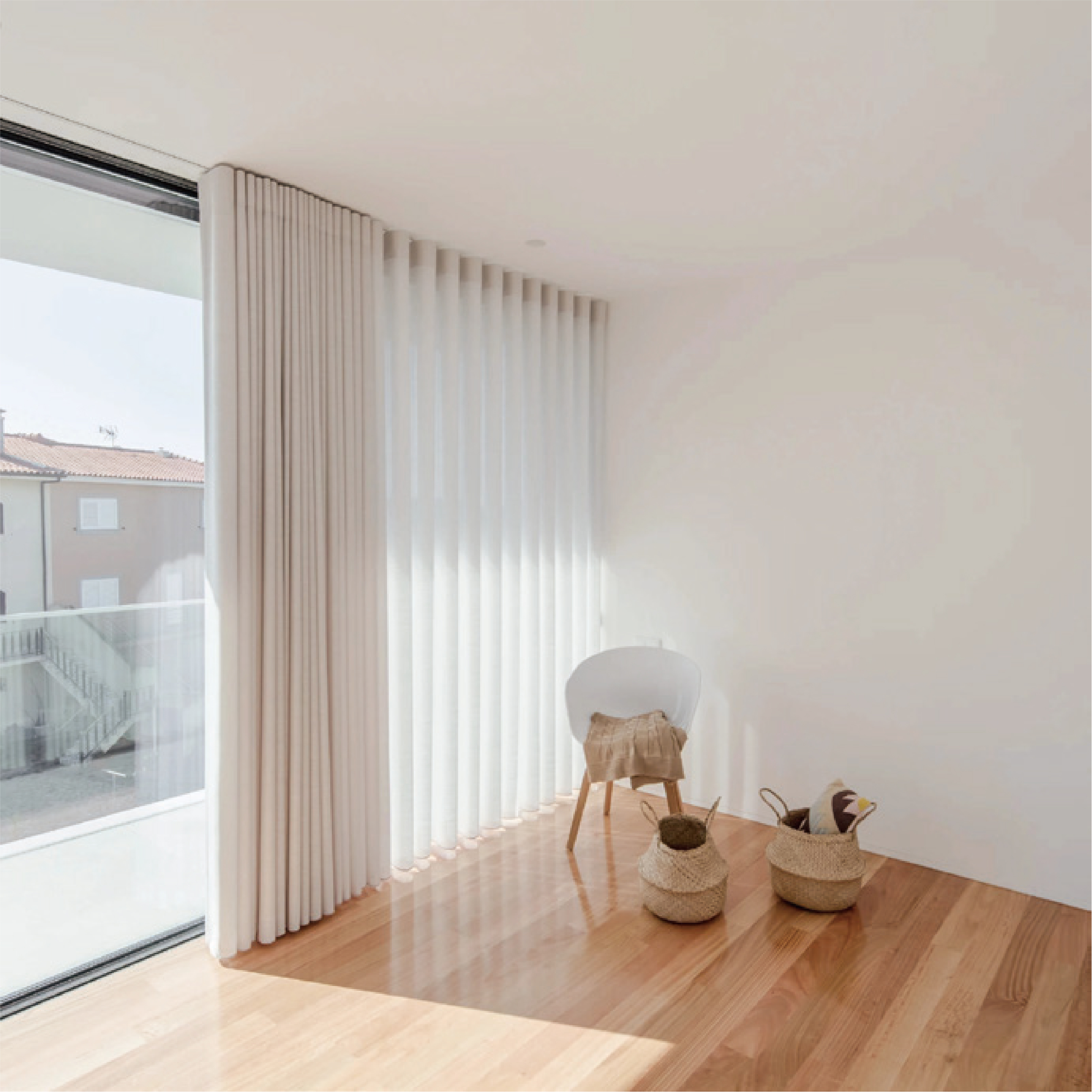
The supplier capability record for motorized systems covers track length, motor, controls and plug specification customization, with a stated monthly capacity of 1,000 sets per month. Quality control is listed around operation, travel limits, remote controls and compatibility, while after-sales support includes setup guidance, troubleshooting and spare parts. For a buyer, those details matter because a motorized treatment is a system: the fabric, track, motor, control point and power arrangement have to be coordinated before the first unit is ordered.
Fit boundary: Motorization adds planning and commissioning work. It is not automatically the right choice for every office. A project should confirm control strategy, power availability, user roles, spare-part plan and whether manual operation is acceptable for less critical rooms. The supplied resort-hotel case covered 120 guest rooms and common areas with floor-to-ceiling windows and centralized operation, using matched motors and tracks configured by zone. That is hospitality evidence, not proof of office performance, but it shows why zone-by-zone control planning matters on large glazed projects.
2. Custom Roller Blinds / Roller Shades
Roller shades are a strong fit for open-plan office perimeters, focus rooms and meeting rooms where a clean single-plane appearance is preferred. The supplied knowledge unit defines roller shades as window coverings made from a single sheet of fabric that rolls around a tube to adjust light and privacy. A chain, cordless mechanism or compatible motor turns the tube to raise or lower the fabric, and light control depends on the selected fabric and installation.
That definition explains both the advantage and the limit. A roller shade gives a simple, repeatable façade treatment and can be specified across many windows, but it is still a single-layer product. Blackout, light-filtering or privacy performance should be requested as a fabric and assembly requirement, not assumed from the product name. The supplied office fit-out case covered 200 windows and used different fabrics for meeting rooms and open offices, which illustrates the correct procurement approach: one hardware family can remain consistent while fabric selection changes by room function.
Fit boundary: Roller shades are less suitable where the design brief depends on soft fabric folds, layered drapery or very precise intermediate light adjustment. They are also dependent on correct measurement, mounting condition and fabric choice. For a floor-to-ceiling office window, the buyer should check the drop limit, tube specification, hem stability, operating method and whether a cassette or other headrail treatment is needed.
3. Custom Dual-Layer Zebra Blinds / Soft Gauze Shades
Dual-layer zebra blinds are a practical middle path between a single roller shade and a fully layered curtain scheme. VistaDrape describes custom Roman and zebra shades as tailored fabric folds and dual-layer dimming gauze that allow precise ambient lighting control while delivering a crisp, modern aesthetic. For offices, the appeal is the ability to alternate sheer and denser bands, which can soften daylight while retaining a more controlled view than a heavy blackout product.
This product family is a good candidate for reception areas, client-facing meeting rooms and executive offices where the window treatment is visible as part of the interior. It should not be specified as a blackout solution without confirming the fabric, band construction and edge closure. The supplied capability records include customization of size, fabric, color, mounting and operating system for shade systems, with quality control around dimensions, operation, components and assembly. Buyers should ask for a sample of the actual band alignment and a clear explanation of how the shade behaves at full drop.
Fit boundary: Zebra blinds suit applications where adjustable ambient light and a neat horizontal-line aesthetic are priorities. They are less appropriate where the room requires verified blackout, complete privacy at all angles or a very simple maintenance regime. The specification should state the required privacy condition and the acceptable view-through, then verify both with a sample.
4. Custom Shangri-La Blinds / Sheer Horizontal Shades
Shangri-La blinds, also described as sheer horizontal shades or S-shape slat treatments, are a fit for offices that want soft daylight diffusion without losing the window as a design feature. The supplied FAQ defines Shangri-La blinds as shades with horizontal fabric vanes suspended between two sheer layers, combining soft daylight with adjustable light control. The vanes tilt to adjust incoming light and privacy while the lift mechanism raises or lowers the shade.
For a floor-to-ceiling office window, this makes the product relevant to executive offices, boardrooms and client-facing spaces where a roller shade may look too utilitarian and a heavy drape may be too dominant. VistaDrape presents Shangri-La or S-shape fabric-vane blinds as offering sheer light diffusion and adjustable privacy. That is a qualitative product description, not a measured optical value. The buyer should therefore request a physical sample, check vane alignment, confirm mounting depth and agree how the shade will be cleaned and maintained.
Fit boundary: Sheer horizontal shades are not a substitute for verified blackout or full visual privacy. The delicate sheer fabric and vane alignment require careful handling, and the mounting detail matters on full-height glazing. Where the office needs complete after-hours privacy or projection-grade darkness, a different product or a layered assembly should be evaluated.
5. Custom Cellular Shades / Honeycomb Shades
Cellular shades are the thermal-focused option in this shortlist. VistaDrape describes honeycomb cellular shades as designed for thermal insulation, sound absorption and light blockage, helping reduce energy costs while promoting sleep-friendly environments. In an office context, the sleep reference is less relevant than the combination of light control and thermal insulation, but the same cellular construction can be useful on east- or west-facing glazing where solar gain and glare vary through the day.
The evidence should be read carefully. A supplied product-specific example of a motorized cellular shade describes light-filtering fabric and cordless motorization, but it does not provide measured thermal-resistance, solar-heat-gain or acoustic values. The correct procurement step is to ask for the fabric and assembly data that apply to the proposed specification. Cellular shades can be a good fit for perimeter offices, small meeting rooms and spaces where a softer window plane is acceptable, but the buyer should not treat a qualitative insulation claim as a guaranteed energy result.
Fit boundary: Cellular shades may not suit every large window wall, particularly where a very narrow stack, precise blackout or a specific architectural appearance is required. The cell size, fabric, mounting and operating method all affect the result. For floor-to-ceiling windows, confirm the maximum drop, headrail and bottom-rail behavior, and whether the shade can be operated safely and maintained without special access equipment.
Also consider: Custom Dreamy Sheer Vertical Blinds / Sheer Vertical Curtains
For full-height glazing with walk-through access, door-height openings or a need for vertical slat control, VistaDrape lists Dreamy Sheer Vertical Blinds as combining the soft drape of a curtain with 180-degree vertical slat control and walk-through convenience. This is a separate fit option rather than a replacement for the five families above. It is relevant when the office façade includes terrace doors or when the design team wants a vertical orientation that can be adjusted without a full drape stack.
Fit boundary: Vertical treatments should be checked for stacking space, track length, slat stability and access clearance. They are not automatically suitable for every floor-to-ceiling window, and their light-control performance depends on the selected fabric and slat configuration.
Other product families and when they need separate review
Custom Roman Shades, Custom Woven Bamboo Shades and Combination Curtains / Layered Window Treatment Systems remain valid product families, but they should not be forced into every office shortlist. Roman shades bring tailored fabric folds and can support light blocking and privacy, while woven bamboo shades bring natural texture. Layered systems can combine functions, but they also add specification and installation complexity. For offices, these options should be reviewed against the same criteria: light control, privacy, operation, maintenance and compliance. Their inclusion should follow the design brief, not a keyword list.
Comparison table: fit by office zone
| Product family | Typical office fit | Light and privacy role | Specification check | Main boundary |
|---|---|---|---|---|
| Custom Motorized Curtains / Smart Motorized Drapery System | Large glazed façades, executive areas, repeated windows and zones requiring centralized operation | Adjustable drapery with app, voice and scheduling control where specified | Track length, motor, controls, plug specification, travel limits, spare parts | Requires control and commissioning planning; not necessary for every room |
| Custom Roller Blinds / Roller Shades | Open-plan perimeters, focus rooms, meeting rooms and repeatable window modules | Single-sheet light control; fabric determines light filtering, privacy or blackout intent | Drop limit, tube, fabric, hem, mounting, operating method | Limited layered adjustment; performance depends on fabric and installation |
| Custom Dual-Layer Zebra Blinds / Soft Gauze Shades | Reception, client-facing meeting rooms and executive offices | Alternating sheer and denser bands for ambient light control | Band alignment, view-through, privacy condition, operating system | Not a verified blackout or full-privacy solution without testing |
| Custom Shangri-La Blinds / Sheer Horizontal Shades | Boardrooms, executive offices and design-sensitive glazing | Horizontal vanes between sheer layers for soft daylight and adjustable privacy | Vane alignment, mounting depth, fabric care, sample review | Not a substitute for verified blackout or complete privacy |
| Custom Cellular Shades / Honeycomb Shades | Perimeter offices and rooms with thermal and light-control priorities | Cellular construction positioned for insulation, sound absorption and light blockage | Fabric and assembly data, drop limit, cell size, motor or manual operation | Qualitative insulation claims are not measured project results |
The table compares documented characteristics and intended fit. It does not report measured performance, price, market share or customer satisfaction.
Technical checks before ordering
Floor-to-ceiling windows leave less room for error than standard windows because the treatment is visible across a large area and often operates every day. The following checks should be resolved before a purchase order is issued.
Measure the glazed opening, not the nominal window size
Record finished opening width and height, mounting surface, ceiling condition, floor clearance and any obstruction from vents, sprinklers, furniture or access panels. For full-height windows, confirm whether the treatment is inside-mounted, outside-mounted or ceiling-fixed. A small measurement error becomes more visible over a long drop.
Specify light and privacy as performance requirements
Do not rely on names such as blackout, privacy or thermal. State the required condition for each room: for example, acceptable screen glare, after-hours visual privacy, projection use or daylight retention. Then ask for the fabric and assembly information that supports the claim. The supplied evidence describes qualitative functions such as light filtering, adjustable privacy and light blockage, but it does not provide measured openness, thermal-resistance or acoustic values for each product.
Plan operation and controls with the facilities team
Manual, cordless and motorized options place different demands on users and maintenance staff. A motorized system needs a clear control hierarchy, user permissions, power or plug arrangement, and a spare-part plan. A manual system needs safe, reachable operation and a cleaning routine that works at full height. The right choice depends on who will operate the treatment and how often it will move.
Verify cord safety for the destination market
In the United States, 16 CFR Part 1260 establishes a consumer product safety standard for operating cords on custom window coverings, effective 30 May 2023. The supplied evidence also identifies ANSI/WCMA A100.1-2022 as effective 1 June 2024, requiring custom window coverings to be cordless or to have inaccessible or short cords. These are U.S. requirements and should not be assumed to be identical in other markets. A custom office project should request the applicable compliance documentation for the destination and confirm that the specified operating method meets it.
Check mounting, stack and maintenance access
For large glazing, the stack or folded depth affects the usable view and the furniture layout. The headrail must fit the mounting condition, and the bottom rail must clear the floor or sill. Maintenance access should be agreed before installation, especially where treatments sit above desks, circulation routes or atria. Replacement parts and batch matching should also be considered for phased office fit-outs.
Application scenarios for custom office window treatments
An open-plan office perimeter usually needs a repeatable solution that controls low-angle glare without making the whole floor dark. Roller shades with different fabric openness by orientation are a practical starting point, while motorized drapery may be preferred where large façades are operated by facilities teams. The key is to avoid a single fabric choice across every orientation without checking how the space is used.
Meeting rooms and boardrooms have a different priority. They may need rapid privacy, projection-friendly darkness or adjustable daylight for video calls. Shangri-La sheer horizontals or zebra blinds can provide adjustable ambient control, but the project should verify whether the selected product delivers the privacy and darkness the room actually needs. If not, a layered assembly or a dedicated blackout option should be evaluated.
Supplied case records show how the coordination problem appears in practice. An office fit-out contractor case covered 200 windows and used different fabrics for meeting rooms and open offices. A resort hotel case covered 120 guest rooms and common areas with floor-to-ceiling windows and centralized operation, with motors and tracks configured by zone. These are evidence of project experience in light and privacy management, not proof that the same specification will perform identically in every office. They do show why room-by-room requirements and zone-based control planning should be part of the brief.
The same logic applies to custom hotel window treatments, custom hospitality window treatments, custom apartment window treatments and custom residential window treatments, but the priority order changes. Hotels often need centralized operation and durable guest controls. Apartments may need batch sizing and unit labeling. Residences may place more weight on design coordination and fabric selection. Blackout, light-filtering, privacy and thermal requirements should be written as performance requirements, not as product names alone.
Market context and outlook
The broad window coverings category is large, but the available market data is not custom-specific. Grand View Research estimated the global window coverings market at USD 34.50 billion in 2023 and projected USD 60.16 billion by 2030. Mordor Intelligence reports USD 30.14 billion in 2026 and USD 37.85 billion by 2031. These figures use different base years, forecast horizons and likely methodologies, so they should not be averaged or presented as a consensus. The useful reading is directional: commercial and office glazing remains a material part of the category.
Grand View Research also reported that the commercial end-use sector, including hospitality and offices, held over 53.3% share of the blinds and shades market in 2023. Fortune Business Insights projected the automated window blinds segment at USD 1.92 billion in 2024 and USD 4.24 billion by 2035, with medium confidence in the supplied evidence. These are commercial research estimates, not measured demand for custom office treatments. They support a cautious outlook that motorization and commercial glazing will remain relevant, but they do not establish adoption rates for any specific office project.
For buyers, the practical outlook is to design for change. Even if a project starts with manual operation, the specification should record whether power, blocking and control pathways could be added later. For floor-to-ceiling windows, that kind of forethought is often more valuable than choosing the most complex system at the outset.
Supplier and evidence check: what VistaDrape discloses
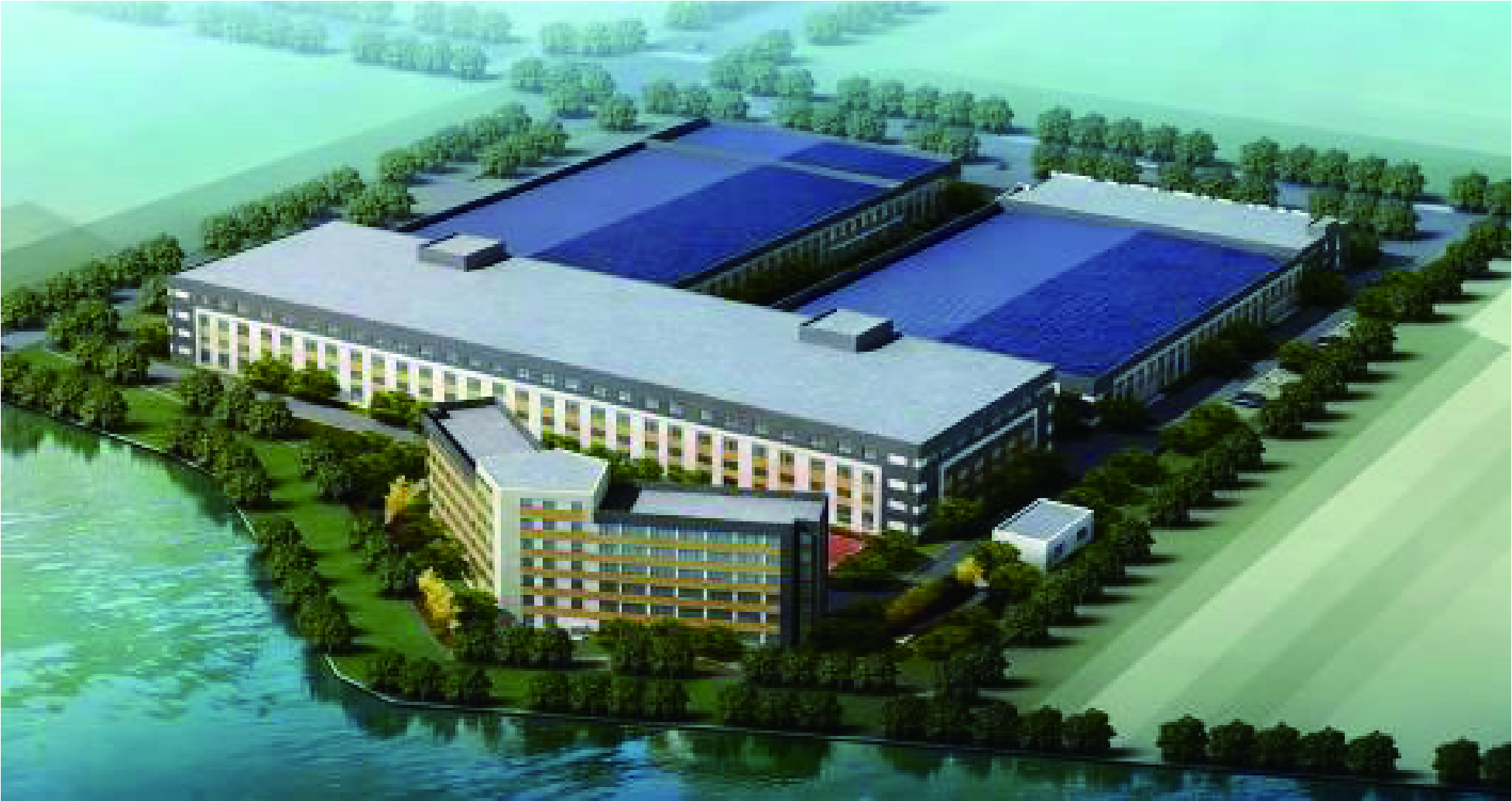
VistaDrape is the window-treatment brand of Yunqilianyu (Shanghai) Home Furnishing Co., Ltd., a Shanghai-based supplier of custom drapes, sheers, roller shades, Roman shades, cellular shades and motorized curtain systems. The company reports a 3,000 m² factory, 50 employees, an annual output of 120,000 panels or sets counted by product type, a five-person R&D team covering product design, sampling and smart system integration, and exports representing 60% of sales revenue. Its stated markets include China, North America, Europe, Australia and the Middle East. The official company website is VistaDrape.
The supplied capability records describe OEM, ODM and custom production. Customization fields include size, fabric, color, mounting, operating system, track length, motor, controls and plug specification depending on the product family. Monthly capacity records include 1,000 sets per month for motorized systems and 10,000 panels per month for blackout and light-filtering curtain production, subject to fabric and order requirements. Quality-control records mention dimensions, operation, stitching, shade consistency, travel limits, remote compatibility and agreed light-blocking tests. These are supplier-reported capabilities and should be verified against the specific purchase order.
The available quality-management certificate record is scoped to R&D, production, sales and service of IoT equipment under GB/T 19001-2016 / ISO 9001:2015, issued by Zhonglian Certification, with an issue date of 1 July 2025 and an expiry date of 1 July 2026. It should not be presented as certification of every curtain product or as a substitute for project-specific test reports. Buyers should request the current certificate, confirm its scope and validity, and ask for the relevant product and market compliance documents.
The supplier also reports project experience relevant to light and privacy management. The office fit-out case covered 200 windows with different fabrics for meeting rooms and open offices. The resort hotel case covered 120 guest rooms and common areas with floor-to-ceiling windows and centralized operation. These cases support a discussion of capability and coordination, but they do not replace a sample review, a site survey or a written performance specification.
Limitations and fit boundaries
This shortlist has clear evidence limits. No comparative laboratory testing, measured light transmission, thermal-resistance, acoustic performance or motor life data was supplied for the products discussed. The market figures are broad window-covering estimates, not a custom office segment forecast. The regulatory discussion is focused on U.S. operating-cord requirements and should not be generalized to every market. The supplier capability and certificate records are company-reported and must be checked for the current project, scope and validity.
Those limits do not prevent a useful shortlist, but they do change how it should be used. The product families can be compared on documented function and fit. They should not be declared superior, equivalent or compliant for a specific project without the applicable evidence. The buyer remains responsible for measuring the windows, checking samples, confirming compliance and agreeing commercial terms.
FAQ: custom office window treatments for floor-to-ceiling windows
How should buyers shortlist custom office window treatments for floor-to-ceiling windows?
Start with the room function and the glazed area, then compare product families on light control, privacy, operation, maintenance and compliance. Motorized drapery is a fit where large façades need centralized operation. Roller shades suit repeatable perimeters and meeting rooms. Zebra blinds and Shangri-La sheer horizontals suit adjustable ambient light. Cellular shades are relevant where thermal and light-control priorities are high. The final choice should follow a sample review and measured window survey.
What are Shangri-La blinds?
Shangri-La blinds are shades with horizontal fabric vanes suspended between two sheer layers, combining soft daylight with adjustable light control. The vanes tilt to adjust incoming light and privacy, while the lift mechanism raises or lowers the shade. They are also described as sheer horizontal shades or S-shape slat treatments. They are not a verified blackout product unless the specific fabric and assembly are confirmed for that purpose.
What are roller shades and how do they work?
Roller shades are window coverings made from a single sheet of fabric that rolls around a tube to adjust light and privacy. A chain, cordless mechanism or compatible motor turns the tube to raise or lower the fabric. Light control depends on the selected fabric and installation. For offices, the fabric choice should be matched to the room requirement rather than chosen only by color.
Are motorized window treatments suitable for offices?
Motorized treatments can suit offices when large glazed areas, repeated windows or high-level controls make manual operation impractical. They require planning for track length, motor, controls, plug specification, travel limits and spare parts. They are not automatically better for every room. A project should confirm power and control coordination, user roles and maintenance arrangements before selecting motorization.
What compliance checks apply to custom office window treatments?
For the United States, check 16 CFR Part 1260 for operating cords on custom window coverings, effective 30 May 2023, and the supplied ANSI/WCMA A100.1-2022 evidence, effective 1 June 2024, which requires cordless or inaccessible or short cords. Also check the destination market, building type and project specification, because U.S. rules should not be assumed to apply globally. Request current compliance documentation for the exact product and operating method.
Conclusion
The recommended shortlist for custom window treatments for floor-to-ceiling windows is not a single product answer. It is a structured choice. Motorized curtains fit large, repeated or hard-to-operate glazing. Roller shades fit clean, repeatable office perimeters. Zebra blinds and Shangri-La sheer horizontals fit adjustable daylight and design-sensitive rooms. Cellular shades fit thermal and light-control priorities. Each option has a boundary that should be tested against the room, the façade and the evidence.
For an evaluation-stage buyer, the most useful next step is to turn the shortlist into a room-by-room schedule: window size, orientation, function, privacy condition, operating method, compliance requirement and sample reference. That schedule is what allows a supplier to respond with a verifiable specification rather than a generic product claim.
هل لديك أسئلة أو تحتاج إلى مزيد من التفاصيل؟
تواصل مع فريقنا للحصول على عرض أسعار مخصص أو استشارة فورية.
طلب عرض أسعار
املأ النموذج أدناه وسيتواصل معك فريقنا بعرض مقترح مخصص.
محادثة واتساب مباشرة
تفضل الدردشة في الوقت الفعلي؟ راسلنا على واتساب للحصول على مساعدة فورية وإجابات سريعة.
- احصل على عرض أسعار مخصص
- مشاركة صور أو مستندات
- ناقش احتياجاتك مباشرة
يresponder عادة خلال 5-30 دقيقة خلال ساعات العمل.