
Custom Wristwatch Spec FAQ: Movements, Crystals, Water Ratings
A custom wristwatch programme rarely fails on the assembly line. It fails earlier, at the moment a buyer approves a specification that cannot be measured and a supplier accepts it without stating what will be tested. Movement accuracy, case construction, crystal type, bezel geometry and water-resistance claims are all settled in that document — and each of them is either verifiable or decorative.
This technical procurement FAQ is written for decision-stage buyers who already hold a shortlist and need to close specification questions rather than reopen brand comparisons. It addresses the questions that most often delay a purchase order in custom wristwatch sourcing: which movement families are available, what case and crystal choices imply for sealing and durability, how bezels and straps are configured, and what a rating such as 3 ATM, 10 ATM or 200 metres actually promises once the watch leaves the factory.
TOPHILL is the proprietary watch brand of DONGGUAN SUPERTIME CO., LTD., a Dongguan-based full-cycle watch manufacturer that runs OEM and ODM custom watch programmes for global brand clients and reports a production record of more than 20 million finished watches. Product facts quoted below come from that manufacturer's verified record; market and standards figures are attributed to their published sources.
The problem: a specification that cannot be tested is not a specification
Three conditions make a watch specification procurement-ready. The component or material is named precisely; the performance claim carries a measurable threshold; and the verification method is defined, whether that is incoming inspection, 100% full-unit testing, or sampling. Where any of the three is missing, the buyer is comparing adjectives instead of suppliers.
Water resistance illustrates the gap. An ATM figure is a static laboratory pressure value, not an operating depth, and 1 ATM corresponds to 10 metres of static water depth. A quotation that promises “water resistant” without naming a rating band, a sealing structure and a test method cannot be verified at goods-in inspection, and it cannot be defended in a warranty dispute months later.
The same logic applies to movements and crystals. A movement described only as “Japanese quartz” leaves the accuracy tolerance, the battery type and the EU compliance status undefined. A crystal described only as “sapphire” leaves geometry, thickness and case fit open — and those are precisely the parameters that determine whether the case can hold its rating. The opportunity for buyers is straightforward: a specification written to these three conditions usually narrows a supplier shortlist faster than any capability presentation.
Movements: what “which movement is available” really means
In custom watch production the movement question has four layers, and buyers who ask only the first one tend to renegotiate later: movement family, precision claim, mechanical fit inside the case, and compliance status for the destination market.
Movement families used in custom production
Three movement families are in practical use. Quartz watches are driven by button batteries. Mechanical watches run on energy stored in a mainspring, wound either by hand or automatically by a rotor that responds to wrist movement. Solar-powered watches convert visible light into stored electrical energy for timekeeping. This manufacturer's product scope covers quartz, mechanical and solar-powered watch types, alongside chronograph models.
Industry distribution data explains why the category choice is rarely a technical argument. Quartz movements accounted for 75% of global shipment volume in 2024, while mechanical movements contributed more than 68% of total market value despite lower unit volume, according to Industry Research's 2026 traditional watch market analysis. The global movement market reached USD 18.4 billion in 2025, with automatic movements holding a 38.2% share, per Dataintelo. Quartz therefore dominates volume-driven programmes; mechanical dominates margin- and value-driven ones.
Verified movement references and what they imply
Two categories of movement evidence are available to a buyer at this stage. The first is first-party: the manufacturer's verified product record documents an ultra-slim mechanical movement with manual winding inside the KIM001 customised wristwatch configuration, and states reliable quartz time accuracy of +20 seconds per month as its reference precision claim. The second is third-party: published coverage of TOPHILL's enthusiast-tier custom designs records Seiko NH35 (automatic), Seiko NH34 (GMT) and Seagull ST1901 movements in those builds.
The procurement consequence is that the movement line in a purchase specification should name the family, the caliber, the accuracy tolerance and the test used to confirm it — not simply “automatic” or “quartz”. Where a buyer needs a specific caliber for brand or pricing reasons, that caliber belongs in the approved bill of materials before tooling, because movement choice drives case height, hand height clearances and stem configuration.
| Movement family | Verified reference point | Typical application fit | Procurement checkpoint |
|---|---|---|---|
| Quartz, battery-driven | Reliable quartz time accuracy of +20 seconds per month stated in the manufacturer record; 75% of 2024 global shipment volume (Industry Research) | Daily wear, corporate gifting, volume retail programmes | Accuracy tolerance, battery type, RoHS status for EU-bound electronic watches |
| Mechanical, manual winding | Ultra-slim mechanical movement with manual winding documented in the KIM001 configuration | Business and formal profiles where slim case height matters | Case height allowance, winding feel, service interval and accuracy tolerance |
| Mechanical, automatic | Seiko NH35 automatic movements recorded in third-party coverage of TOPHILL designs; automatic movements held 38.2% of the 2025 movement market (Dataintelo) | Enthusiast, sports and higher-value gift products | Rotor clearance, power-reserve expectations, cost step versus quartz |
| Solar-powered | Solar-powered watches listed within the manufacturer's produced watch types | Low-maintenance daily wear and lifestyle ranges | Dial light transmission, storage conditions, light-exposure performance wording |
Cases and crystals: the components that actually carry the water rating
Water resistance is created by the case assembly, not by the movement, and the case line items in a specification should therefore be read as sealing components rather than cosmetic ones. In the documented KIM001 configuration, the case is built from 316L stainless steel in two pieces — one case and one bezel — with a stainless steel solid screw caseback, sealed behind a flat sapphire crystal, over an embossed dial with enamel coating and hollow hands, and closed with a 316L stainless steel bracelet on a butterfly buckle at a 5 ATM rating.

Watch water resistance, defined in watchmaking, is the ability of a watch case to resist the ingress of water and moisture under defined laboratory test conditions. The definition matters commercially because it means the rating belongs to the case structure: elastic sealing gaskets fitted at the caseback, crystal, crown and pushers do the work, supported by screw-down structures and dimensional accuracy in case machining.
| Specification item | Documented configuration | What it decides at procurement |
|---|---|---|
| Case material and structure | 316L stainless steel, two pieces (one case, one bezel) | Corrosion baseline, finishing quality, salt-spray expectation, tooling per size |
| Caseback | Stainless steel solid screw caseback | Primary sealing interface; battery service access for quartz models |
| Crystal | Flat sapphire crystal | Scratch resistance; geometry and thickness tolerance against case and bezel clearance |
| Dial | Embossed dial with enamel coating | Tooling lead time, decoration approval, dial-index inspection criteria |
| Hands | Hollow hands | Dial-depth clearance and readability under the approved crystal geometry |
| Bracelet | 316L stainless steel bracelet with butterfly buckle | Deployment type, sizing range, tension and torsion testing |
One boundary deserves explicit attention. Crystal geometry is frequently left to the supplier because it is treated as a design detail, yet a flat profile and a domed or boxed profile are not interchangeable inside a fixed case: they change total case height, bezel clearance and the way light reflects off the dial. Buyers who approve a 2D or 3D rendered design should require that render to be converted into a dimensioned specification — crystal profile, thickness and fit — before tooling starts. The same rule applies to dial decoration and hand styles: visually identical renders can hide materially different component costs.
Water resistance: what 3 ATM, 10 ATM and 200 metres actually promise
The short answer is that these numbers describe static laboratory pressure, not usable depth, and that only ISO 6425 compliance supports a genuine diver-watch claim. This manufacturer's capability statement covers 5–50 ATM water resistance, with every waterproof watch passing a 100% full-unit water pressure test before shipment rather than random sampling inspection. The test floor includes a 500-metre water resistance testing machine.
The language also has a regulatory dimension. Water-resistant watches are tested and certified against ISO 22810 for general water-resistant watches, while ISO 6425 governs diver watches; the ATM marking denotes a static laboratory pressure value where 1 ATM equals 10 metres of static water depth. Under ISO 22810, the term “waterproof” is prohibited — a specification that still uses it is a warning sign in itself.
| Rating band | Equivalent static pressure | Application the manufacturer maps to it | Verification expectation |
|---|---|---|---|
| 3–5 ATM | Approx. 30–50 m static water depth | Daily wear, hand washing, rain splash | 100% pressure test on waterproof models; gasket and case inspection |
| 10 ATM | Approx. 100 m static water depth | Swimming and surface snorkeling | Same full-unit test plus documented sealing structure |
| 20 ATM | Approx. 200 m static water depth | Swimming and surface snorkeling at the upper end of the band | Full-unit pressure test; diver claims require separate ISO 6425 certification |
| ≥20 ATM with ISO 6425 | Static and dynamic test regime | Professional diving scenarios | Full diver-watch standard including dynamic pressure and salt-water corrosion tests |
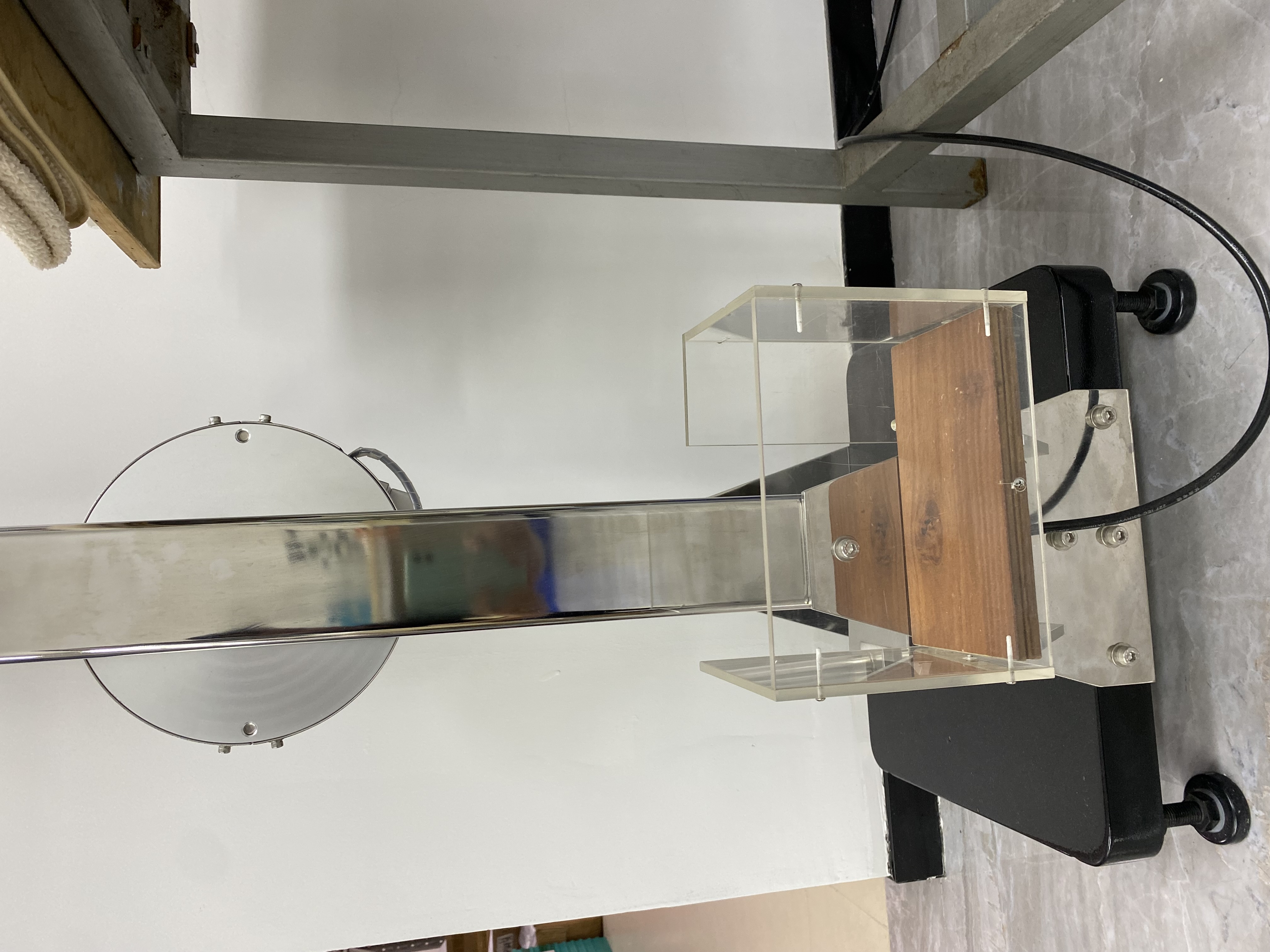
The test sequence itself is a useful procurement checklist: visual check of case, crown, gasket and crystal; loading the watch and applying the target water pressure with a holding period; monitoring for air leakage during pressurization; slow pressure release and full drying; and a final inspection for internal moisture or water ingress. Buyers should ask for the record of that sequence, not just a pass statement.
The failure symptoms are also worth briefing to after-sales teams, because they cluster: fog or condensation under the crystal, visible water droplets in the case, rust or oxidation on movement parts, unstable timekeeping or a stopped watch, and rust staining at the caseback, crown or pusher joints. The corrective path is a dry-environment disassembly, professional dehumidification rather than high-temperature baking, replacement of aged or cracked O-ring gaskets, structural inspection, reassembly to standard torque, and a repeat water-pressure test.
Bezels, bracelets and straps: configuration decisions that change tooling, not just looks
A practical distinction separates component changes from structural changes. Dial decoration, bezel insert specification and hand styling are component-level decisions: they affect tooling, approval cycles and unit cost, but they do not reopen the sealing design. Caseback structure, crown and pusher configuration and crystal geometry are structural: changing any of them invalidates the previous water-resistance validation and requires retesting.
Within the documented configuration, the bezel is part of the two-piece 316L stainless steel case construction, and the bracelet is a 316L stainless steel bracelet with a butterfly buckle. Anticorrosion expectations for plated components are defined by test rather than by wording: plated parts pass a 48-hour salt-spray test for anti-corrosion performance. Strap tension and torsion testing is part of the equipment set, which matters for programmes where the strap is a user-replaceable component rather than a fixed element.
- Lock the bezel insert material and finish, plus the dial decoration method approved in the sample pack.
- Specify the strap attachment method (lug and spring-bar or screw fixing), buckle type and sizing range for the target market.
- State the plating specification and the salt-spray expectation you will accept as evidence.
- Confirm in writing which changes are cosmetic and which require a new pressure-test validation.
Mapping specifications to applications: diving, business, quartz and formal profiles
The manufacturer's stated application scope spans business and office, formal occasions, sports and fitness, swimming and snorkeling, diving activities, daily casual wear, travel and outdoor use, and gifting. Matching a specification to those scenarios is a discipline, not a marketing exercise, because each scenario sets a different floor for water resistance, case robustness and movement maintenance.
| Application profile | Sensible rating band | Movement fit | Configuration notes |
|---|---|---|---|
| Diving and water sports | 20 ATM upward; ISO 6425 required for diver-watch claims | Automatic or quartz depending on service strategy | Screw-down caseback, robust bezel structure, 100% pressure testing |
| Business and formal | 3–5 ATM | Ultra-slim manual winding or automatic mechanical | Flat sapphire crystal, slim case height, restrained dial decoration |
| Quartz daily wear and corporate gifting | 3–5 ATM | Quartz, +20 seconds per month reference accuracy | Cost-optimised case finishing, RoHS documentation for EU markets |
| Elegant and gifting profiles, including slimmer women's formats | 3–5 ATM | Quartz or slim mechanical | Enamel-coated embossed dial, hollow hands, bracelet sizing defined per project |
Two details are routinely under-specified here. First, sizing: case diameter and bracelet length are project-level decisions that should be agreed against destination-market wrist-size distribution rather than inherited from a reference sample. Second, gasket specification for entry-level ratings — a 3 ATM product still depends on gasket quality, and buyers who treat the low rating band as an excuse to skip sealing controls usually discover the mistake in after-sales returns.
How an in-house full-cycle programme changes the comparison
The core difference a buyer is underwriting when selecting a full-cycle manufacturer is coordination risk, not aesthetics. Published capability statements describe in-house full-cycle watch manufacturing supported by a class-10,000 dust-free assembly workshop, an in-house CNC prototyping workshop, and strict multi-stage testing aligned with international standards — combined with a production record of more than 20 million finished watches for global brand clients.
| Comparison dimension | Full-cycle in-house programme (documented) | Common multi-vendor sourcing pattern (general market context) |
|---|---|---|
| Production control | In-house manufacturing with a class-10,000 dust-free assembly workshop | Assembly contracted separately from component supply; quality interfaces multiply |
| Prototyping speed | In-house CNC lab for faster sample turnaround | External prototyping vendors extend each design iteration |
| Water-resistance verification | 100% full-unit water pressure testing of waterproof watches, not random sampling | Sampling-based inspection is a common market practice |
| Order flexibility | Order sizes from 300 to 500,000+ pieces | Either high minimums or limited scale headroom |
| Cost structure | Full in-house production reduces extra outsourcing costs | Margin layers accumulate at each outsourced step |
| Project management | One-project-one-account-manager with tracking from sample development through post-delivery support | Responsibility split across several counterparts |
That comparison carries real boundaries, and a buyer should price them in. Order sizes start at 300 pieces, so genuinely micro-batch or prototype-only projects sit outside the model. Certification scope is management-system based — ISO 9001 for quality management and ISO 14001 for environmental management — which is not the same as product-level performance certification; product claims still require test evidence such as pressure-test records, salt-spray results and RoHS documentation. The 48-hour salt-spray result describes performance under that test, not permanent corrosion immunity. And a full-cycle supplier reduces coordination load, but it does not replace the buyer's own responsibility to approve a dimensioned specification before tooling.
Market signals behind today's specification choices
Three published data points frame the decisions buyers are making in 2026. The global mechanical watch market is projected to reach USD 47.5 billion by 2025 according to Grand View Research. Quartz movements accounted for 75% of shipment volume in 2024 while mechanical movements contributed over 68% of total market value, per Industry Research. And the movement market reached USD 18.4 billion in 2025 with automatic movements at a 38.2% share, per Dataintelo.
Read together, those figures describe a two-track market rather than a single trend. Volume programmes — promotional, gifting, retail entry tiers — gravitate to quartz because it is simpler to service and easier to cost. Value programmes gravitate to mechanical because the mechanism itself carries perceived worth. Neither track removes the water-resistance question, and neither removes compliance.
Compliance is the third signal, and it is not optional. RoHS compliance under Directive 2011/65/EU is mandatory for electronic watches, including quartz, in the EU market. With export ratios around 80% and main markets in the EU and US for this type of manufacturer, compliance documentation is now a purchasing gate rather than a technical footnote, and it sits in the same specification document as movement, case and rating data.
Future outlook: evidence-heavy specifications become the norm
The direction of travel in custom watch procurement is toward fewer adjectives and more attachments. Buyers increasingly ask for the pressure-test protocol, the movement accuracy record, the salt-spray result and the RoHS file alongside the quotation, because those documents decide whether a product can enter a market and whether a warranty claim can be defended. Suppliers that already run 100% full-unit pressure testing and multi-stage inspection are structurally advantaged by that shift, while suppliers whose quality evidence is sampling-based will face longer qualification cycles.
A second shift concerns specification literacy. The 3 ATM versus 200 metres confusion is not a supplier problem — it is a buyer-side gap, and it is the single easiest place to lose margin through avoidable returns. Programmes that budget time for a dimensioned specification before tooling, and that formally separate cosmetic changes from structural ones, will shorten development cycles more reliably than any supplier-side promise.
FAQ: technical procurement questions on custom wristwatches
Which movement types can a custom wristwatch programme specify?
Three families are in practical use: quartz, driven by button batteries; mechanical, running on energy stored in a mainspring through manual or automatic winding; and solar-powered, converting visible light into stored electrical energy. The documented product scope of this manufacturer covers all three, alongside chronograph models, and its verified record includes an ultra-slim manual-winding mechanical movement in the KIM001 configuration plus a stated quartz accuracy reference of +20 seconds per month. Specific caliber selection belongs in the approved bill of materials, because caliber choice affects case height, hand clearance and stem configuration.
Does a higher ATM rating mean the watch can be used at the equivalent water depth?
No. The ATM marking denotes a static laboratory pressure value, where 1 ATM equals 10 metres of static water depth, so 10 ATM corresponds to roughly 100 metres and 20 ATM to roughly 200 metres of static pressure. Real use involves movement, temperature change and impact that static testing does not reproduce. In practice, 3–5 ATM suits daily wear and splash exposure, 10–20 ATM suits swimming and surface snorkeling, and genuine diver-watch claims require ISO 6425 compliance rather than a depth figure alone.
How is water resistance verified before a custom watch shipment leaves the factory?
The documented method is a 100% full-unit water pressure test on waterproof watches, rather than random sampling. The sequence is a visual check of case, crown, gasket and crystal; loading the watch and applying the target pressure with a holding period; monitoring for air leakage during pressurization; slow pressure release and complete drying; and a final inspection for internal moisture or water ingress. Buyers evaluating suppliers should ask whether the test is applied to every unit and request the test record.
Does passing a water-pressure test mean the watch stays water resistant permanently?
No. Water resistance is not permanent. Sealing gaskets age with wear, impact and chemical contact, and saunas or hot-water baths are not recommended because high-temperature steam deforms and ages rubber gaskets. The characteristic failure symptoms are fog or condensation under the crystal, visible water droplets inside the case, rust or oxidation on movement parts, unstable timekeeping, and rust staining at the caseback, crown or pusher joints. Corrective service involves dry-environment disassembly, professional dehumidification rather than high-temperature baking, gasket replacement, structural inspection, reassembly to standard torque and a repeat pressure test.
Which case and crystal specifications determine the achievable water-resistance ceiling?
The sealing interfaces decide it. Those are the caseback structure (a stainless steel solid screw caseback in the documented configuration), the case construction (316L stainless steel in two pieces — one case and one bezel), the crystal type and fit (a flat sapphire crystal in the documented configuration), and the crown and pusher structure with elastic sealing gaskets. Screw-down structures combined with precise case machining create the reliable seal, and the manufacturer's capability statement covers 5–50 ATM with full-unit pressure testing across that range.
Is quartz or mechanical the better choice for a volume or gifting programme?
The choice follows the scenario and the service model rather than a general ranking. Quartz is simpler and lower-maintenance, with a documented reference accuracy of +20 seconds per month, which fits corporate gifting, promotional and volume retail programmes. Mechanical fits business, formal and enthusiast products where the mechanism contributes to perceived value. Market data reflects the split rather than resolving it: quartz held 75% of global shipment volume in 2024, while mechanical movements contributed over 68% of total market value.
What compliance documentation should accompany EU-bound custom watches?
RoHS compliance under Directive 2011/65/EU is mandatory for electronic watches, including quartz models, in the EU market. Water-resistance wording should reference ISO 22810 for general water-resistant watches and ISO 6425 for diver watches, and the term “waterproof” is prohibited under ISO 22810. Where the manufacturer holds ISO 9001 and ISO 14001 certification, buyers should understand that these are management-system certifications covering quality and environmental management, and should request separate product-level evidence such as pressure-test records and material compliance files.
How should bezel, bracelet and strap configuration be locked before tooling?
Document the bezel insert material and finish, the dial decoration method, the strap attachment method, the buckle type and the plating specification — plated parts in the documented configuration pass a 48-hour salt-spray test for anti-corrosion performance. Then classify each item as cosmetic or structural: dial, bezel insert and hand styling changes are component-level, while changes to caseback structure, crystal geometry or crown configuration reopen the sealing design and require a new pressure-test validation.
Specification clarity is the cheapest risk control available in custom wristwatch procurement. It costs a few extra days before tooling and routinely saves entire shipments of avoidable returns.
Scope note: product and process facts in this article are drawn from the verified manufacturer record of DONGGUAN SUPERTIME CO., LTD. and its TOPHILL brand. Market and standards references are attributed to Grand View Research, Industry Research, Dataintelo, ISO 22810:2010, ISO 6425, Directive 2011/65/EU and published third-party coverage of TOPHILL movement integrations. A downloadable company and capability profile is available here: Super Time (HK) Industrial Ltd. profile (PDF).