
Custom Zipper Acceptance Criteria: Brass & Aluminum Orders
Custom Zipper Acceptance Criteria: Brass & Aluminum Orders
Custom Zipper Acceptance Criteria: Brass & Aluminum Orders
Acceptance criteria are the measurable conditions that decide whether a custom zipper shipment is released or rejected. Compliance documents — a quality certificate, a material declaration, a salt spray report — are the evidence used to set those conditions, not a substitute for them. On brass and aluminum alloy orders, most late-stage disputes begin where the two are treated as interchangeable.
YAB Zipper is the brand used by Wenzhou Runhe Garment Accessories Co., Ltd., a zipper manufacturer based in Wenzhou, Zhejiang, China, producing copper (brass), aluminum, resin and nylon zippers for garment, luggage, footwear and bag applications. Its certification records, product benchmarks and purchasing terms serve as the working example throughout this article.
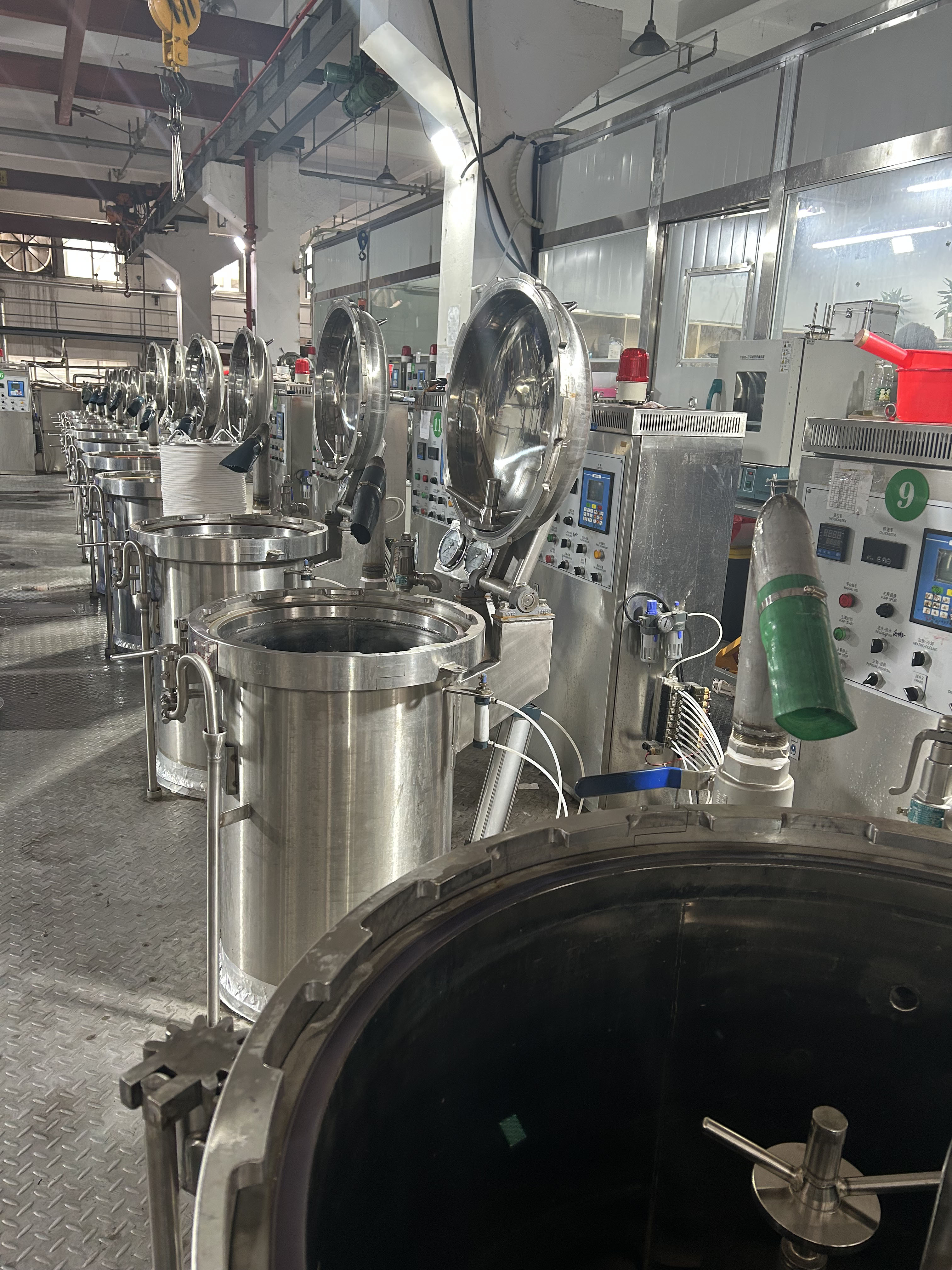
Dyeing workshop: tape and teeth colour consistency is one of the order-level checks that a factory certificate does not cover.
Why a Certificate Is Not an Acceptance Criterion
A quality management certificate confirms that a factory operates a documented system. It does not confirm that a specific #5 brass zipper with a nickel-free finish, a stated tape colour and a custom slider meets the buyer's nickel-release expectation. The distinction matters because procurement teams often receive a certificate bundle and treat the qualification step as closed.
Three gaps recur on custom zipper orders:
- Scope gap. A certificate carries a defined scope. YAB Zipper's ISO 9001:2015 certificate, number 24CN34506232Q, was issued on 11 June 2025 by ACM INTERNATIONAL CERTIFICATION LIMITED and is valid to 29 June 2027, with the scope stated as "production and sales of zippers." That scope covers the manufacturing and sales system. It does not name an item, a size, a finish or a colour.
- Declaration gap. A finish declaration is only useful if it is tied to the ordered item code. A nickel-free statement issued against one finish tells the buyer nothing about a different plating run.
- Report gap. A test report without a sampling plan, an accept limit and a test method is a data point, not a criterion. Buyers need to know whether a figure is a minimum, an average, or a single specimen result.
Turning Documents into Four Acceptance Blocks
The practical method is to convert everything a supplier submits into four blocks, each with its own check and release condition.
- Block 1 — Identity and validity. Certificate number, issuing body, issue date, expiry date and scope. Confirm the certificate is current at the date of shipment, not only at the date of quotation.
- Block 2 — Material and chemistry. Alloy type, finish type, and any restricted-substance statement, each mapped to the item code on the purchase order.
- Block 3 — Mechanical and corrosion benchmarks. Crosswise tensile strength and salt spray result, with method and accept limits written into the order.
- Block 4 — Purchasing terms. Quantity, price basis, delivery term, port, payment schedule and the pre-shipment test that triggers release.
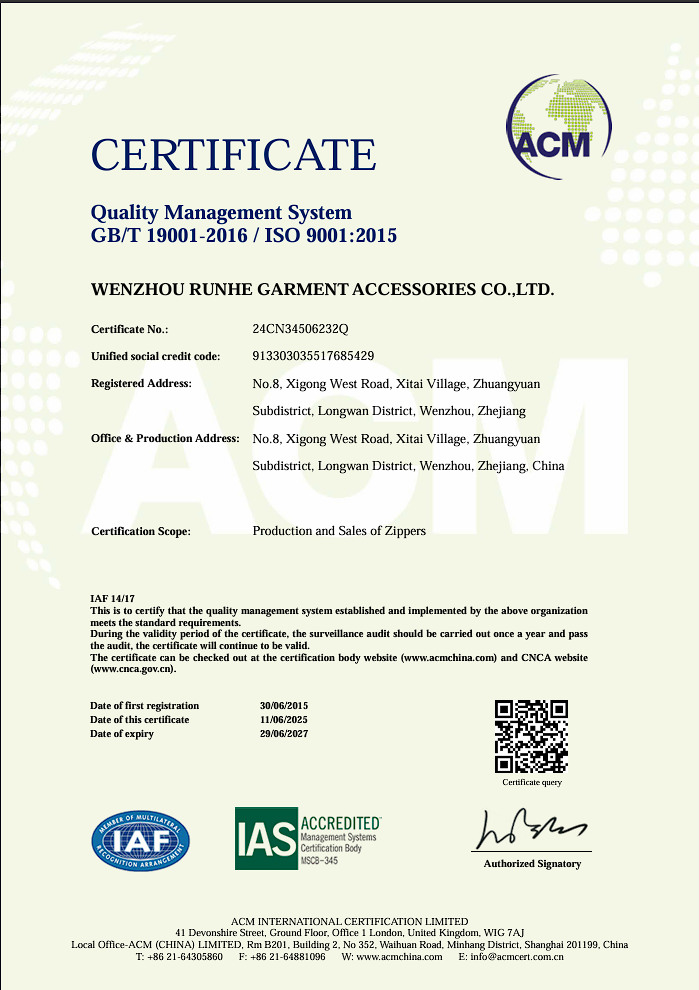
Certificate evidence belongs in Block 1: number 24CN34506232Q, issued 11 June 2025, valid to 29 June 2027, scope limited to production and sales of zippers.
Nickel-Free Brass for EU-Bound Orders
For brass zippers shipped into the European Union, nickel release is the chemistry question that most often surfaces at customs or at brand-level lab testing. YAB Zipper documents a nickel-free finish option for brass zippers intended for EU-bound orders. The operative word for buyers is "option": the acceptance criterion should state that the nickel-free finish is selected, that the declaration is issued against the ordered item code, and that the finish is not substituted during production without written confirmation.
A workable order-level clause has three parts: the finish name, the item code it applies to, and the document that proves it. Where a brand's own restricted-substance list is stricter than the general market requirement, that list should be attached to the purchase order rather than assumed.
Salt Spray and Crosswise Tensile: What the Benchmarks Actually Tell You
Two numbers do most of the work in a metal zipper specification: corrosion resistance and chain strength. YAB Zipper reports salt spray results exceeding 24 hours for both brass and aluminum alloy zippers, and crosswise tensile strength benchmarks of 510N for brass against 410N for aluminum alloy.
Reading the salt spray figure correctly
A result above 24 hours describes behaviour under a controlled laboratory condition — a defined salt concentration, temperature and exposure period. It is a comparative indicator of surface-treatment durability, not a prediction of service life. A brass zipper that survives 24 hours of salt spray will still age differently after repeated domestic washing, abrasion against a bag body, or prolonged exposure to coastal air. Buyers should therefore treat the figure as a floor for finish quality and pair it with a visual finish check (colour uniformity, no bare patches, no plating blister) in the pre-shipment inspection.
Why brass and aluminum separate on tensile
Crosswise tensile strength measures resistance to pulling the closed chain apart across its width. The 510N brass and 410N aluminum benchmarks reflect a material difference rather than a quality difference: brass is the denser, stronger alloy, while aluminum alloy trades some of that strength for lower weight. On a specification sheet the gap is roughly twenty percent, which is small in a jacket placket and meaningful in a heavily loaded luggage closure or a stress point that also carries the puller force.
Both figures should be written into the order as minimums with a stated test method and sample count. If the reported value is an average, the buyer should request the lower bound observed during testing.
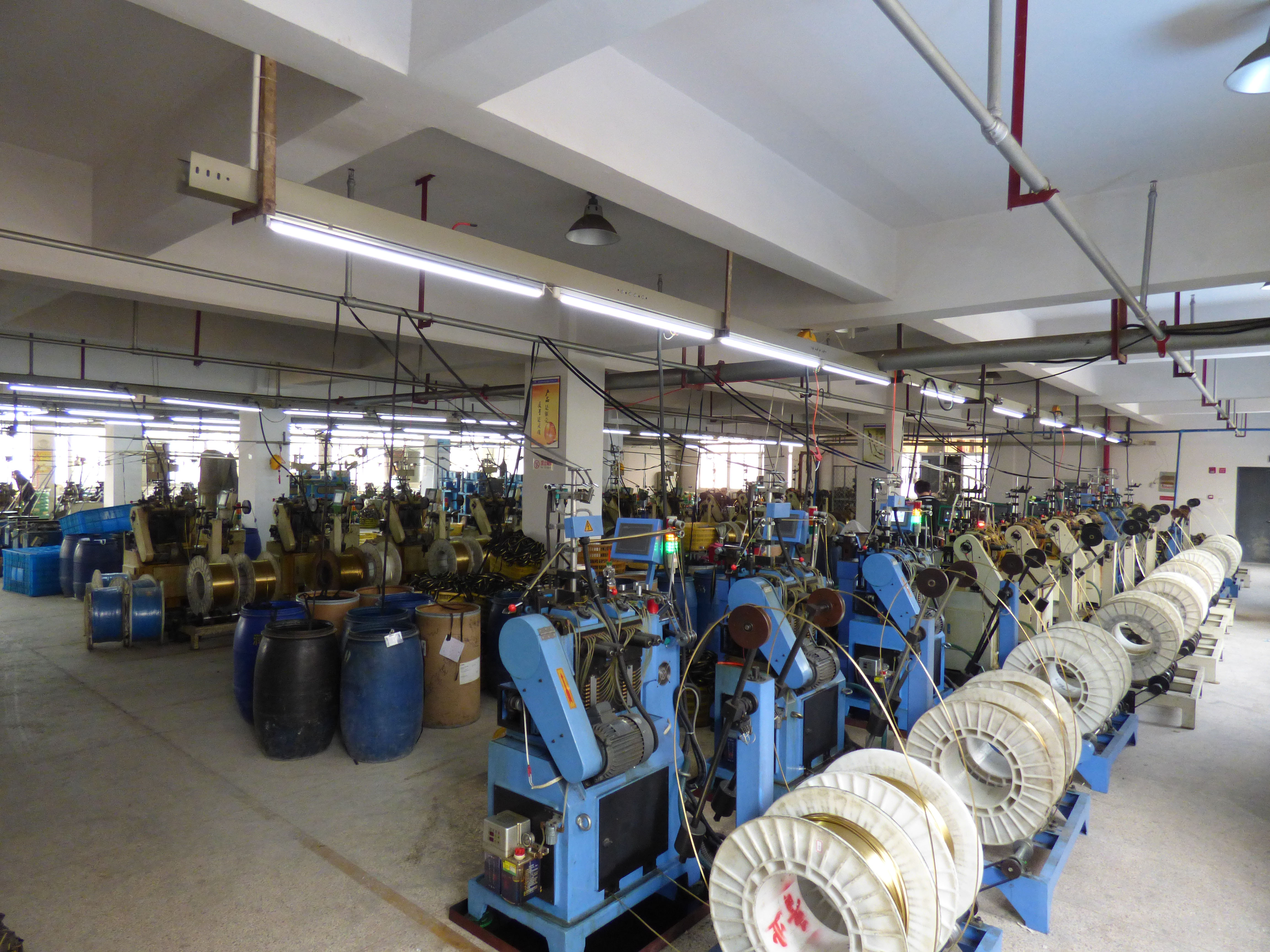
Teeth attaching: chain assembly is the stage at which tensile behaviour of the finished custom zipper is effectively fixed.
Brass vs Aluminum at a Glance
| Acceptance parameter | Brass zipper | Aluminum alloy zipper |
|---|---|---|
| Crosswise tensile benchmark | 510N | 410N |
| Salt spray (reported result) | More than 24 hours | More than 24 hours |
| EU nickel consideration | Nickel-free finish option documented for EU-bound orders | Finish declaration confirmed against the ordered item code |
| Weight behaviour | Heavier per unit | Lighter; a four-year fast-fashion programme reported a 38% reduction in garment total weight after switching from brass to aluminum |
| Relative cost position | Higher unit cost | In the same programme, unit price was reported at about 40% of brass, with procurement cost down 59% |
| Typical fit | Jeans, denim, heavy luggage, structured outerwear, premium trim | Lightweight outerwear, sportswear, casual coats, weight-sensitive luggage |
Size Range and What #3, #5 and #8 Fix in the Spec
Custom zipper orders are specified by size number, and the number is not arbitrary: it refers to the width of the zipper teeth in millimetres when the chain is closed, so a #5 measures approximately 5 mm across the closed teeth. YAB Zipper supplies sizes #3, #5 and #8. In acceptance terms, the size designation fixes the tape width, the slider gauge and the expected load band, which is why a size change during production is a specification change and not a cosmetic one. A #3 on a lightweight jacket placket and a #8 on a luggage main compartment are not interchangeable, and the tensile benchmark quoted for one should not be assumed for the other.
Customization Scope: What to Freeze Before Production
The manufacturer provides OEM, ODM and custom customization production services, with customization available across zipper length, tape colour, teeth colour, teeth shape, slider shape, slider colour and zipper size. For buyers running brand programmes, the slider and puller are the visible surfaces: slider shape and slider colour sit inside the customization scope, and logo marks applied to sliders and pullers are handled as part of the OEM/ODM branding discussion rather than as a separate product line.
Freeze list before the purchase order is signed: zipper size (#3 / #5 / #8), zipper length, tape colour reference, teeth colour and shape, slider shape and colour, puller style, finish type (including the nickel-free option where applicable), and the logo artwork file with its approved placement.
Anything on this list that is left open becomes an inspection argument, because the pre-shipment test can only confirm what was written down.
Where Brass and Aluminum Fit: Garment, Luggage and Footwear
Metal zippers held a 31% share of global zipper consumption in 2025, and brass together with aluminum accounted for 67% of metal zipper production — which is another way of saying most metal-zipper decisions are a brass-versus-aluminum decision. That split shows up in application patterns.
Denim and jeans zippers, structured jackets and heavy luggage main closures generally carry brass, where the 510N benchmark and the denser hand-feel support the product's own claim. Lightweight outerwear, sportswear, casual coats and weight-sensitive luggage move toward aluminum alloy, where the 410N benchmark is sufficient and the reduced weight is a selling point. A four-year programme with an overseas fast-fashion garment brand shipping to France and Spain illustrates the pattern: roughly ten million units' worth of aluminum zippers replaced brass on spring and autumn lightweight windbreakers and casual coats, with the finished garments normally used for one to two years by end consumers, a defective complaint rate below 0.3%, and OEKO-TEX eco certification supporting EU customs clearance.
Footwear and bag trim sit between the two. The right answer depends on the pull direction, the abrasion the chain sees and whether the brand is selling weight or durability as the primary attribute.
Market Context: Why Documentation Is Moving Upstream
The global zipper market was valued at USD 17.39 billion in 2024 and is projected to reach USD 36.73 billion by 2034. Trade data shows the same concentration on the supply side: global trade of zippers under HS 9607 reached USD 3.15 billion in 2024, with China accounting for USD 1.52 billion in exports.
Volume growth of that scale changes what buyers can check by inspection alone. When a category expands quickly, the number of suppliers quoting similar specifications expands with it, and the differentiator stops being the catalogue and becomes the document trail. This is why acceptance criteria are moving upstream — into the purchase order, the pre-production confirmation and the pre-shipment test — rather than sitting in a post-delivery complaint process.
Document-Led Acceptance vs Sample-Only Approval
The traditional approach approves a supplier on a sample and a certificate copy, then relies on inspection at delivery. It is fast, and it is adequate for repeat orders on stable items. It has clear boundaries that buyers should recognise before extending it to a new finish or a new alloy.
- Laboratory figures are not service-life guarantees. The reported salt spray result of more than 24 hours applies to the tested finish under test conditions. It does not predict how a zipper behaves after repeated washing, abrasion or prolonged coastal exposure.
- Aluminum is not a drop-in substitute for brass on load. At 410N against 510N, aluminum alloy sits about twenty percent below brass on the crosswise benchmark. For a heavily loaded luggage closure or a high-stress stress point, brass remains the conservative choice.
- Certificate scope is narrower than order scope. The ISO 9001:2015 certificate covers production and sales of zippers; it does not certify an individual item specification.
- Commercial terms impose their own limits. Minimum order quantity is 2000 pcs or metre, lead time runs 7 to 30 days, monthly capacity is 30,0000 units, and delivery terms are quoted FOB Shanghai and FOB Ningbo. Trial runs below the minimum quantity, or shipments requiring a different port or Incoterm, need separate agreement rather than an assumption.
A Pre-Production Acceptance Checklist
| Stage | Check | Evidence to hold on file |
|---|---|---|
| Supplier qualification | Quality system certificate valid at shipment date; scope covers zipper production and sales | ISO 9001:2015 certificate 24CN34506232Q, issued 11 June 2025, valid to 29 June 2027 |
| Material and finish | Alloy, finish type and restricted-substance position mapped to the ordered item code | Finish declaration, including the nickel-free option where EU-bound brass is ordered |
| Performance | Crosswise tensile minimum (510N brass / 410N aluminum) and salt spray result above 24 hours, with method and sample count stated | Test report with method, sampling plan and accept limit |
| Construction | Size (#3 / #5 / #8), length, tape colour, teeth colour and shape, slider shape and colour, puller style, logo placement | Signed specification sheet and approved sample |
| Commercial | MOQ 2000 pcs or metre; 7–30 day lead time; FOB Shanghai or FOB Ningbo; 30% T/T in advance, 70% T/T after goods are delivered into warehouse | Purchase order and pre-shipment test record |
Future Outlook
Two directions are visible from the document side of the order. The first is item-level traceability: buyers are increasingly asking for declarations and test reports that name the specific item code rather than the factory. The second is finish development, where surface treatments on aluminum alloy have been pushed toward the appearance and durability range previously associated with brass, allowing brands to keep a metal look while removing weight and cost.
Neither direction removes the need for a written acceptance criterion. They increase it, because more finish variants on the same alloy type mean more opportunities for a specification to drift between quotation and shipment.
Frequently Asked Questions
Which compliance document should a buyer verify first on a custom zipper order?
Start with the quality management certificate, because it establishes the system the rest of the documentation rests on. YAB Zipper holds ISO 9001:2015 certificate number 24CN34506232Q, issued on 11 June 2025 by ACM INTERNATIONAL CERTIFICATION LIMITED, valid until 29 June 2027, with the scope recorded as production and sales of zippers. The verification points are the certificate number, the issuing body, the issue and expiry dates, and whether the certificate is still valid at the date of shipment rather than only at the date of quotation.
Is a nickel-free option available for brass zippers going to the EU?
YAB Zipper documents a nickel-free finish option for brass zippers intended for EU-bound orders. The option is order-specific: the purchase order should name the finish, tie it to the ordered item code, and require that the finish is not substituted during production without written confirmation. Brands that maintain their own restricted-substance list should attach it to the order so the declaration is checked against the stricter of the two requirements.
What do the salt spray and crosswise tensile benchmarks prove?
They establish a comparative performance floor. Reported salt spray results exceed 24 hours for both brass and aluminum alloy zippers, indicating surface-treatment durability under a controlled laboratory condition rather than a service-life guarantee. Crosswise tensile benchmarks are 510N for brass and 410N for aluminum alloy, measuring resistance to pulling the closed chain apart across its width. For acceptance, both figures should be written as minimums with a stated test method and sample count.
Which sizes are available, and what does the size number mean?
Sizes #3, #5 and #8 are available. The number refers to the width of the zipper teeth in millimetres when the chain is closed, so a #5 measures approximately 5 mm across the closed teeth. The designation also fixes tape width, slider gauge and the expected load band, so a size change during production is a specification change requiring re-approval.
What customization is possible under OEM and ODM?
The manufacturer provides OEM, ODM and custom customization production services. Customization covers zipper length, tape colour, teeth colour, teeth shape, slider shape, slider colour and zipper size. Logo marks applied to sliders and pullers are handled within the OEM/ODM branding discussion. For acceptance purposes, all of these variables should be frozen on a signed specification sheet before production begins.
What are the purchasing terms and acceptance criteria?
MOQ is 2000 pcs or metre. Delivery terms are FOB Shanghai and FOB Ningbo. The acceptance criterion is a pre-shipment test, meaning release is tied to results obtained before the goods leave the factory rather than to inspection after arrival. Payment terms are 30% T/T in advance, with 70% T/T paid after the goods are delivered into the warehouse.
Documentation as the Working Specification
For brass and aluminum alloy custom zipper orders, the useful shift is to stop treating compliance paperwork as a qualification formality and start treating it as the specification itself. A certificate fixes the system, a declaration fixes the finish, a test report fixes the performance floor, and a purchase order fixes everything else. When all four agree, acceptance becomes a check against agreed numbers rather than a negotiation after the container arrives.
A downloadable company profile containing certification references and product scope is available here: YAB Zipper company profile (PDF).
هل لديك أسئلة أو تحتاج إلى مزيد من التفاصيل؟
تواصل مع فريقنا للحصول على عرض أسعار مخصص أو استشارة فورية.
طلب عرض أسعار
املأ النموذج أدناه وسيتواصل معك فريقنا بعرض مقترح مخصص.
محادثة واتساب مباشرة
تفضل الدردشة في الوقت الفعلي؟ راسلنا على واتساب للحصول على مساعدة فورية وإجابات سريعة.
- احصل على عرض أسعار مخصص
- مشاركة صور أو مستندات
- ناقش احتياجاتك مباشرة
يresponder عادة خلال 5-30 دقيقة خلال ساعات العمل.