
Custom Zipper Material Benchmark: Brass vs Aluminum for Apparel & Luggage
Custom Zipper Material Benchmark: Brass vs Aluminum for Apparel & Luggage
The zipper is often the most used mechanical component on a garment or bag. For manufacturers and brands, a custom zipper is not only a closing device but also a part that affects product weight, durability, aesthetics, and regulatory acceptance. With the global zipper market projected to grow from USD 17.39 billion in 2024 to USD 36.73 billion by 2034, the pressure on sourcing teams to select the right material—especially between brass and aluminum—has increased. This article provides a material benchmark for custom zippers, based on specifications, surface treatment options, compliance data, and real production evidence from YAB ZIPPER (Wenzhou Runhe Garment Accessories Co., Ltd).
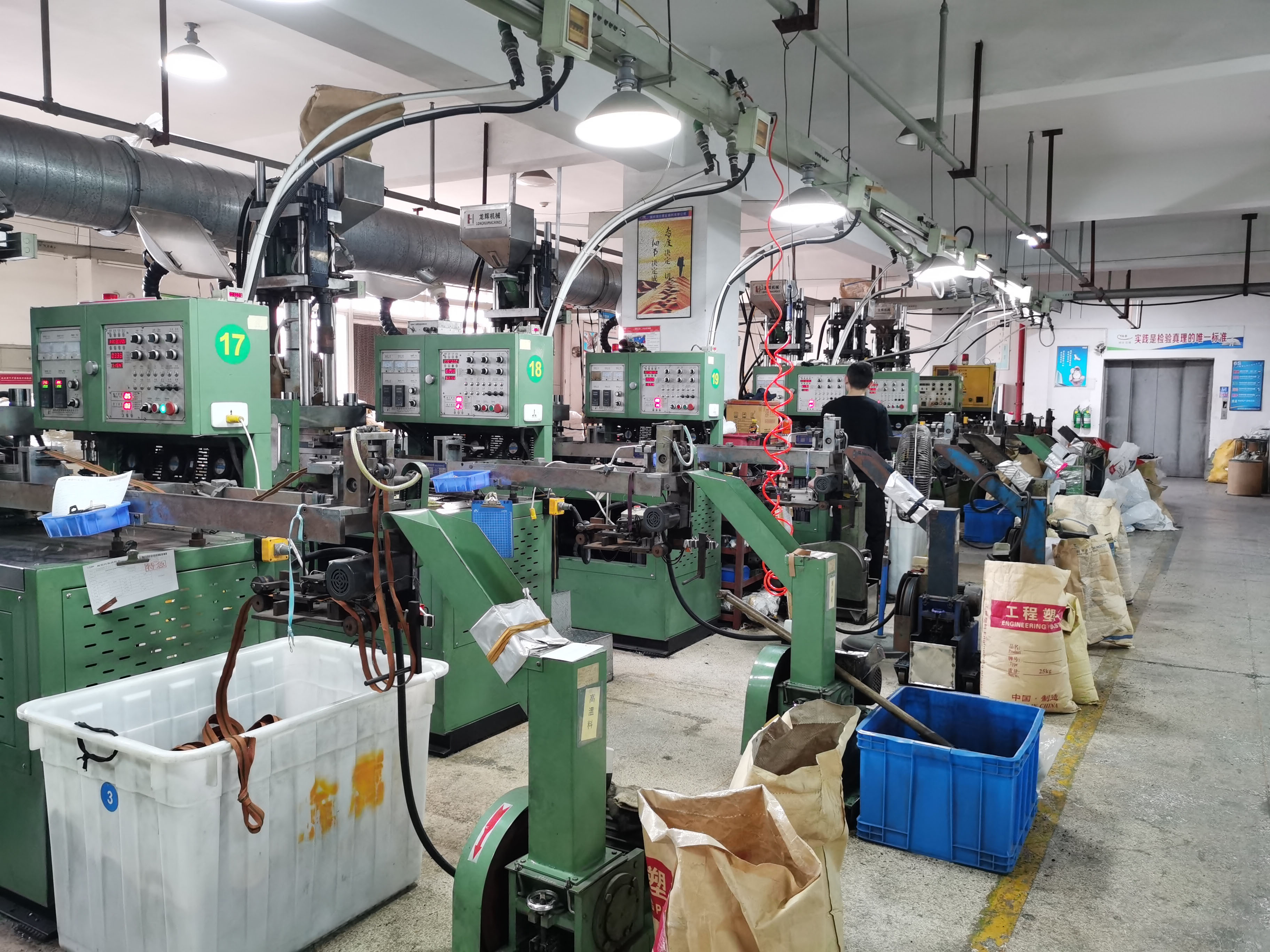
Custom zipper production: teeth attaching workshop at YAB Zipper.
The Sourcing Problem: Weight, Strength, Cost and Compliance
Every custom zipper project starts with a set of constraints. Buyers must define the required tensile strength, decide on a surface finish, estimate acceptable weight, and ensure compliance with the destination market's chemical regulations. At the same time, cost targets often force a tradeoff between a premium look and a lighter, more affordable package. Industry data shows that metal zippers account for 31% of global zipper consumption, and brass and aluminum contribute about 67% of that metal segment. This makes the comparison between these two alloys directly relevant to apparel, luggage, and footwear sourcing decisions.
The growing importance of certified suppliers adds another layer to the sourcing decision. For brands that export to the EU and North America, documentation such as ISO 9001 and OEKO-TEX certification is frequently requested during supplier qualification. Buyers are also increasingly asking for material-level compliance, such as nickel-free options under EU REACH, which directly affects the choice between brass and aluminum zippers.
YAB Zipper: A Certified Metal Zipper Manufacturer
YAB ZIPPER is the international trade brand of Wenzhou Runhe Garment Accessories Co., Ltd, a manufacturer located in Wenzhou, Zhejiang province, China. Founded in 1995, the company is the sixth president unit of the Wenzhou Zipper Chamber of Commerce. It runs a modern facility of 10,000 square meters with more than 500 zipper production machines and about 150 employees. Its core product range includes copper, aluminum, resin, and nylon zippers. The factory has an annual output of over 70 million pieces, and around 30% of production is exported to the European Union, the United States, the Middle East, and Southeast Asia.
The company provides OEM and ODM services, with customization options covering zipper length, tape color, teeth color, teeth shape, slider shape, slider color, and zipper size. It also supports quality-controlled production with 100% pre-shipment inspection and remote technical support after sale. For buyers evaluating certifications, the aluminum alloy zipper product (product code 6274) is certified to ISO 9001:2015, issued by ACM INTERNATIONAL CERTIFICATION LIMITED and valid globally. The brass zipper product (product code 6887) is covered by certification number 24CN34506232Q, also applicable globally. The company has additionally passed OEKO-TEX Standard 100 certification.
Technical Specifications: Brass vs Aluminum Alloy
The brass zipper is offered in Y teeth, euro teeth, normal teeth, and corn teeth versions, in sizes #3, #5, and #8. The tape is polyester, and the teeth are made of brass. The product specification shows a crosswise tensile strength of 510N, smooth sliding performance, and salt spray resistance of more than 24 hours. Brass provides a premium metallic texture and high resistance to deformation. Plating colors include gold, antique brass, gunmetal, and nickel silver. An important option for European buyers is a nickel-free version that complies with EU REACH. Custom logo sliders and pullers are accepted for both OEM and ODM orders.
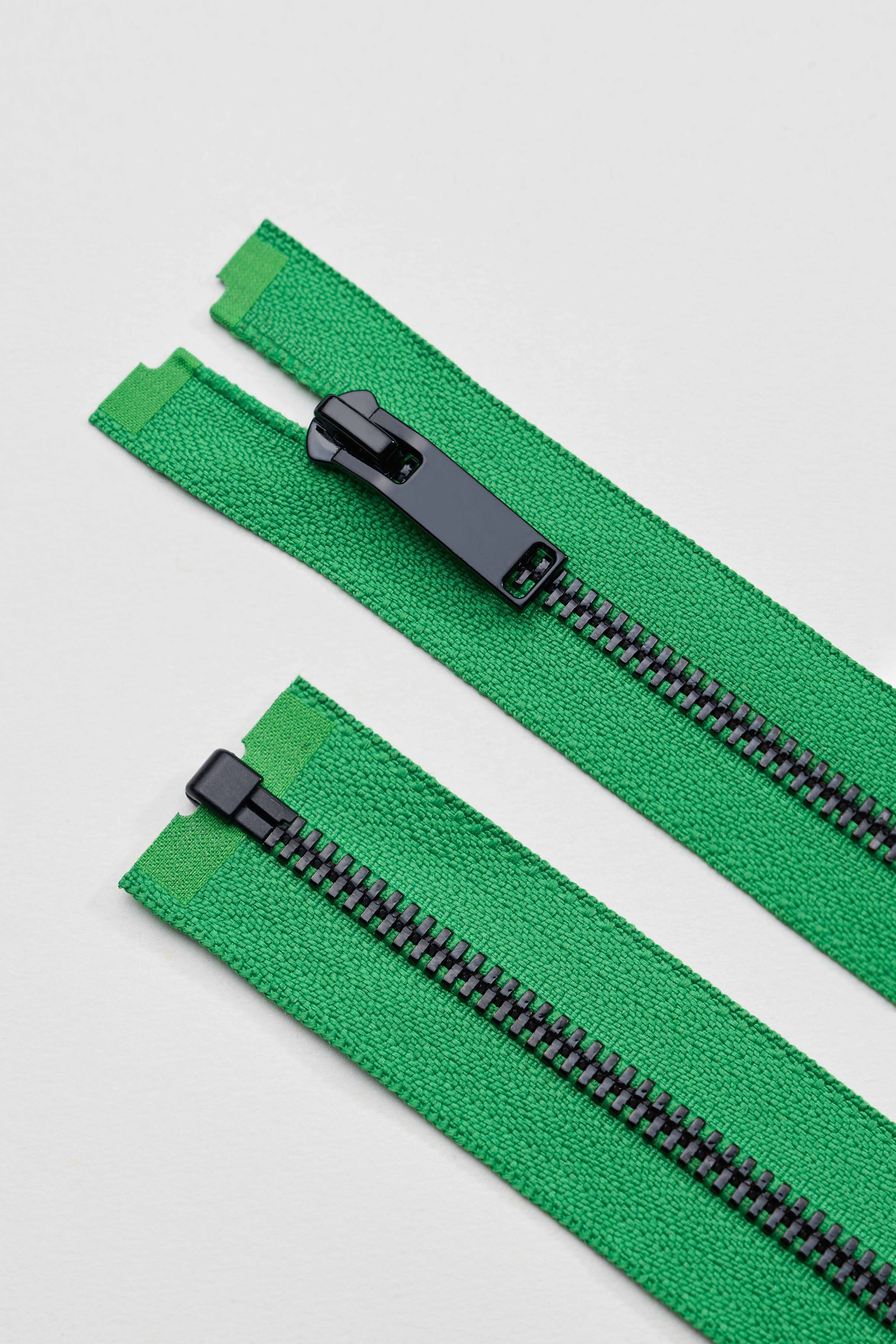
Brass zipper with corn teeth.
The aluminum alloy zipper has a similar range of tooth forms—Y teeth, corn teeth, euro teeth, and normal teeth—and is also available in sizes #3, #5, and #8. Its crosswise tensile strength is 410N. It is smooth to slide and passes a salt spray test of over 24 hours. The key differentiators are weight and cost. Aluminum is 35% to 50% lighter than brass, which can significantly reduce the total weight of finished products. In addition, it offers a competitive cost compared with brass, making it attractive for budget-sensitive programs. Aesthetic options include bright silver, matte silver, black, and champagne anodizing.
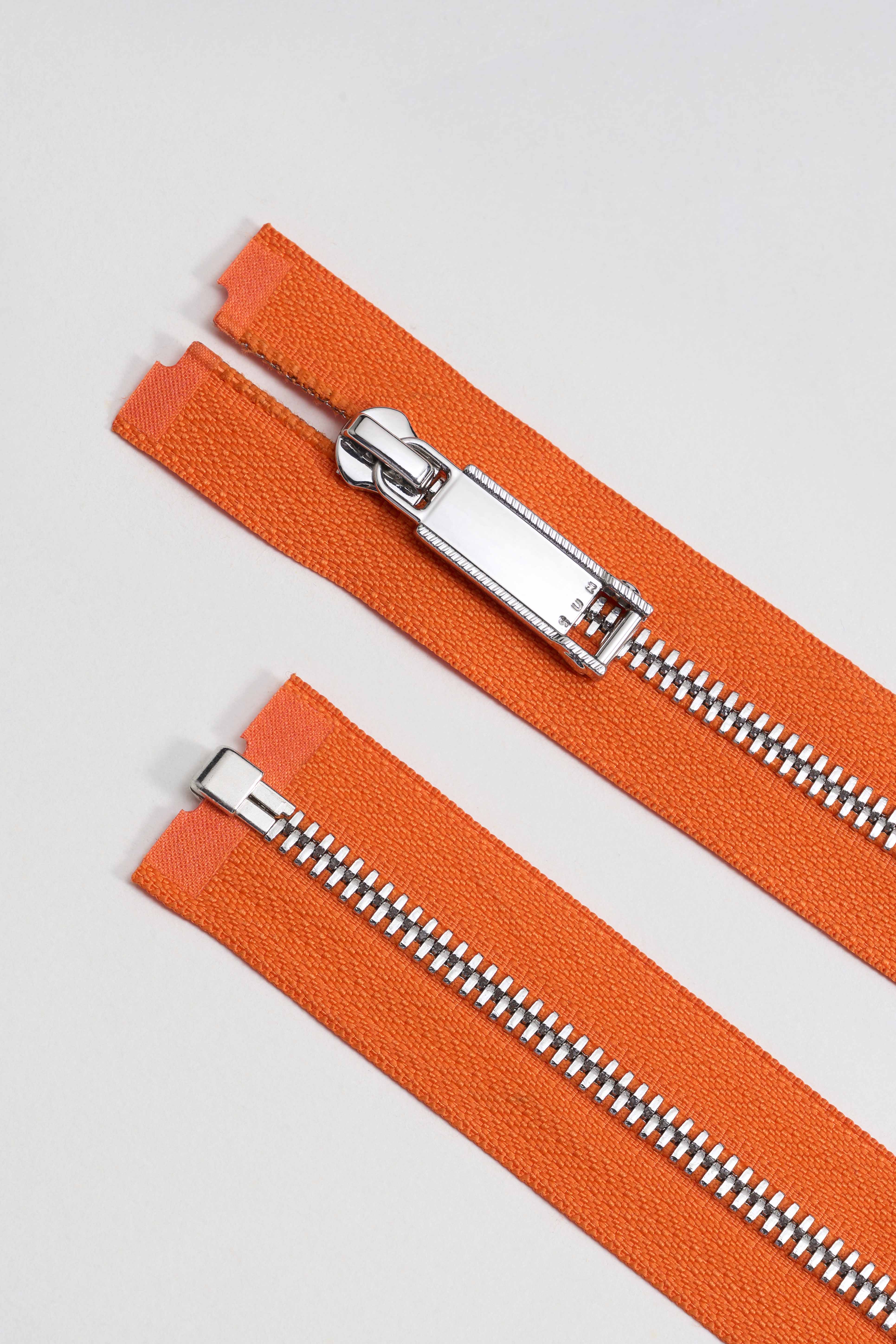
Aluminum alloy zipper with corn teeth.
| Attribute | Brass Zipper | Aluminum Alloy Zipper |
|---|---|---|
| Material | Brass, polyester tape | Aluminum |
| Tooth types | Y, Euro, Normal, Corn | Y, Corn, Euro, Normal |
| Available sizes | #3, #5, #8 | #3, #5, #8 |
| Crosswise tensile strength | 510N | 410N |
| Salt spray test | >24 hours | >24 hours |
| Surface finishes | Gold, antique brass, gunmetal, nickel silver | Bright silver, matte silver, black, champagne anodizing |
| Compliance | ISO 9001:2015; nickel-free option compliant with EU REACH | ISO 9001:2015 |
| Customization | Logo slider and puller for OEM/ODM | Logo slider and puller for OEM |
Sizing and Material Selection Logic
Understanding zipper sizing and specification nomenclature is essential when evaluating custom zipper suppliers. Sizes such as #3, #5, and #8 refer to the width of the zipper teeth in millimeters when the zipper is closed. This means a #5 zipper has teeth about 5 mm wide. The choice of size depends on the fabric weight and the mechanical load the zipper will experience. The crosswise tensile strength value—shown as 510N for brass and 410N for aluminum—is a measurable benchmark for that load capacity. The salt spray test result of more than 24 hours indicates the level of corrosion resistance of the plated or anodized surface under accelerated test conditions. For daily indoor and normal outdoor use, both materials pass this level. Buyers should compare these parameters directly when requesting quotes from suppliers.
Application and Documented Case
The application data from YAB ZIPPER positions both zipper types for luggage, garment, outdoor goods, and footwear. The aluminum alloy version is particularly suitable for lightweight apparel, backpacks, sportswear, and hard luggage, where reducing weight is a priority. One documented case with an overseas fast-fashion garment brand (with distribution in France and Spain) involved custom aluminum zippers for spring and autumn lightweight windbreakers and casual coats. The brand achieved a 38% reduction in total garment weight and a 59% reduction in material procurement cost compared with its original brass zippers. The project ran for four years of stable cooperation, with defective complaint rates below 0.3%. The zippers passed Oeko-Tex eco certification, which supported smooth EU customs clearance. The customer also benefited from flexible small-batch split delivery—an important factor for seasonal collections.
The brass zipper, in contrast, is frequently chosen for premium jeans, leather bags, outerwear, and outdoor luggage. Its higher tensile strength and rich metallic finishes make it a preferred option when the design calls for a visible metal detail. Both materials are also used in home textile products and finished shoe processing, according to the company's application guidance.
Market Trends in Custom Zipper Sourcing
Verified market data highlights several relevant trends for zipper buyers. The overall zipper market is growing steadily, with a projected CAGR of 7.8% from 2025 to 2034. Nylon zippers represent the largest material segment at 46% of global consumption, which shows how important lightweight, flexible closures have become. Metal zippers still hold 31%, and within that category brass and aluminum together make up 67% of production. This indicates that alloy zippers remain a staple for durable and aesthetic applications.
Trade data also reinforces the importance of Chinese suppliers: global zipper trade (HS 9607) reached USD 3.15 billion in 2024, with China exporting USD 1.52 billion of that total. For a buyer evaluating custom zipper suppliers in Wenzhou, this manufacturing cluster offers deep production experience and scale. Additionally, the growing emphasis on chemical compliance is pushing suppliers to offer nickel-free brass options and OEKO-TEX certified materials, which are particularly important for garments and luggage sold in Europe.
Comparison with Traditional Solutions and Limitations
The traditional default for a premium custom zipper is often brass, due to its classic look and robust mechanical properties. The aluminum alloy zipper, however, presents a modern alternative that addresses two common constraints: weight reduction and cost control. The tradeoff is clear in the tensile strength figures: aluminum provides 410N, while brass provides 510N. For high-stress applications such as heavy industrial bags, thick workwear, or long zippers under repeated strain, brass remains the more conservative choice. Additionally, both materials have boundaries. According to the application guidance, these zippers are not intended for long-term high-salt seaside environments, nor for repeated washing with strong acids or alkalis. Buyers should select materials based on the end-use environment, not just on initial appearance or cost.
Future Outlook
The future of custom zipper sourcing points towards greater material diversity and stricter compliance. The continued expansion of the global zipper market at an estimated 7.8% CAGR suggests sustained demand from garment, luggage, and outdoor sectors. As brands push for lighter products and circular economy goals, aluminum alloy zippers with anodized finishes and nickel-free brass options are likely to become more common. At the same time, certified manufacturing and transparent documentation—such as ISO 9001 and OEKO-TEX certificates—are expected to become basic requirements for suppliers that serve European and North American markets. Companies like YAB ZIPPER, which combine in-house production with flexible customization and multiple certification types, are positioned to support these evolving sourcing needs.
Frequently Asked Questions
What certifications apply to YAB ZIPPER's brass and aluminum zippers?
The aluminum alloy zipper product (product code 6274) is certified to ISO 9001:2015. This certification is issued by ACM INTERNATIONAL CERTIFICATION LIMITED and applies to the global market. The brass zipper product (product code 6887) is covered by certification number 24CN34506232Q, also applicable globally. The company has additionally passed OEKO-TEX Standard 100 certification.
Does the brass zipper comply with EU REACH?
Yes. This brass zipper is available with a nickel-free option that complies with the EU REACH standard.
What is the crosswise tensile strength of the brass and aluminum zippers?
The brass zipper has a crosswise tensile strength of 510N. The aluminum alloy zipper has a crosswise tensile strength of 410N. Both products report smooth sliding performance and salt spray resistance of more than 24 hours.
What surface finishes are available for the aluminum alloy zipper?
The aluminum alloy zipper is available in bright silver, matte silver, black, and champagne anodizing.
Can I customize the slider and puller with my logo?
Yes. The brass zipper accepts custom logo slider and puller for OEM and ODM orders. The aluminum alloy zipper also allows custom logo slider and puller for OEM orders.
What are the typical MOQ and lead time for custom zipper orders?
The minimum order quantity is 2,000 pieces. Production lead time ranges from 7 to 30 days, depending on the order specification and quantity.
Are YAB ZIPPER's brass and aluminum zippers suitable for apparel, luggage, and footwear?
Yes. Both zipper lines are applicable to luggage, garment, outdoor goods, and footwear projects, including ready-made clothes, luggage manufacturing, outdoor equipment, home textile products, and finished shoe processing.
For a detailed company profile including production capabilities and certification documents, download the YAB Zipper company profile (PDF): Click here to view.