
Customization and OEM Capability in Edible Mushroom Automation Equipment
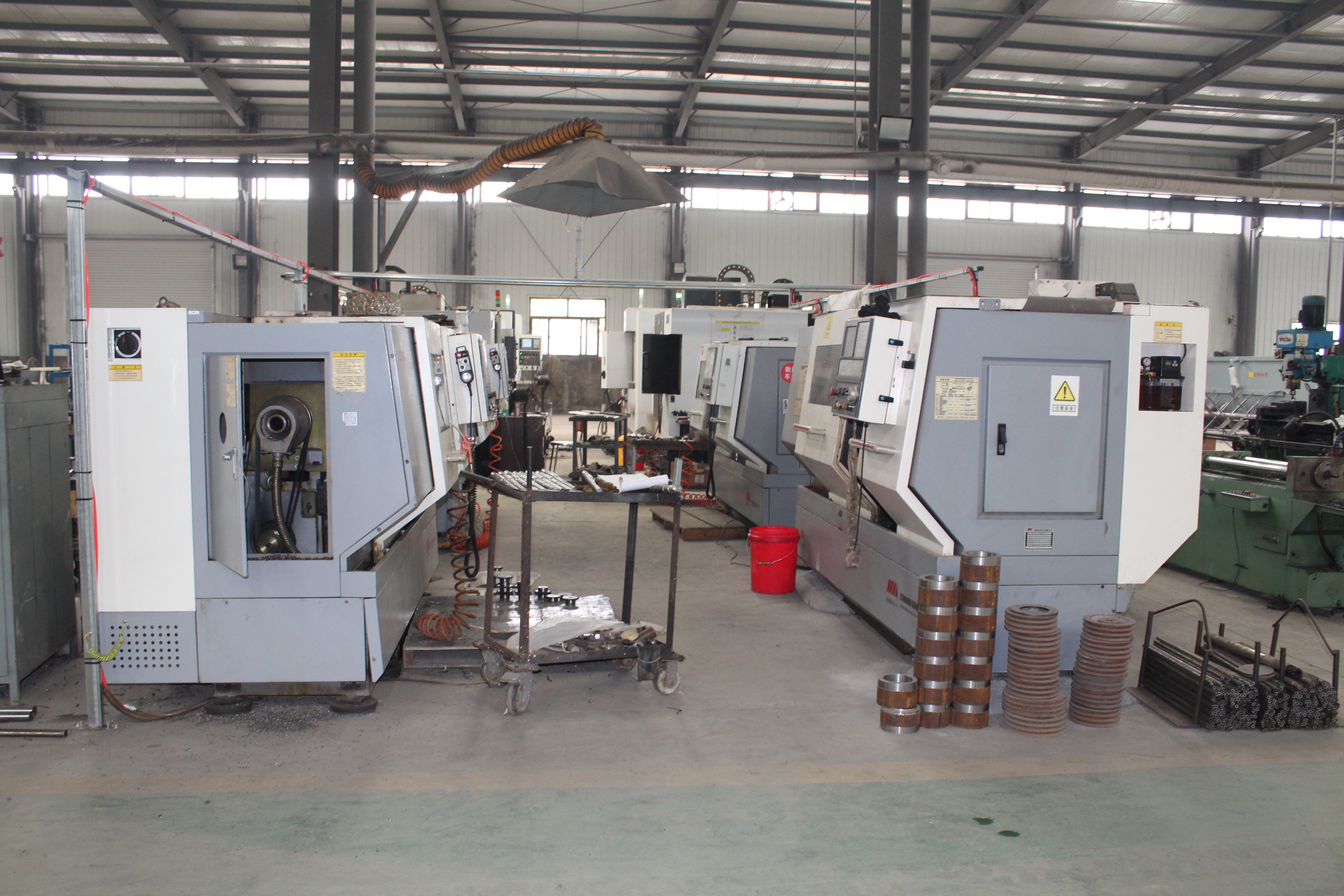
CNC machining equipment inside the production facility of Changxing Edible Mushroom Machinery.
Industrial edible mushroom cultivation is increasingly a production engineering problem. Growers moving from manual bagging to automated lines must decide not only which machine to buy, but how closely that machine can be shaped to their substrate formula, bag size, output target, and facility layout. This is especially relevant when sourcing edible mushroom automation equipment, because the difference between a standard bagging unit and a production-ready line is often filled by OEM and ODM engineering.
Neihuang County Changxing Biological Machinery Equipment Co., Ltd., known in export markets as Changxing Edible Mushroom Machinery, is a useful reference point. Established in 2009, the manufacturer operates a 20,000m² facility with 130 employees and 25 R&D engineers. Its stated annual output is 10,000 units, and about 60% of production is exported to South Korea, Malaysia, Central Asia, Europe, and Russia. The product scope includes edible mushroom automation equipment, intelligent edible mushroom equipment, industrial mushroom sterilization equipment, mushroom spawn bag making machines, mushroom bag tying machines, substrate bag filling machines, automatic baggers, processing equipment, and complete production lines.
Why Customization Has Become a Decision Factor
Standard equipment still has a place in small-scale production, but the economics of industrial mushroom farming depend on matching equipment to substrate composition and bag geometry. A line configured for shiitake roll film may not handle square bags or layered oyster mushroom inoculation without modification. In mushroom bagging, small changes in bag length, flat width, filling height, and tying method can directly affect filling density and downstream handling.
The opportunity for buyers is to treat the equipment supplier as an engineering partner rather than a catalog source. This is where OEM and ODM capability matters. The manufacturer provides ODM (Original Design Manufacturing) and R&D (Research and Development) production services. In practice, that can mean designing equipment around a specific mushroom variety, adapting machine dimensions to a workshop, or building an unmanned fully automatic mushroom production line.
Customization services for edible mushroom equipment are available, covering equipment dimensions, production efficiency, and applicable mushroom varieties. For a buyer in the Evaluation or Execution stage, the relevant question is not simply how many bags per hour a machine can produce, but which parameters can be changed before the order is locked.
Manufacturer Capability Baseline
Before reviewing specific machines, it helps to establish the manufacturing and delivery context. The table below summarizes reported company-level data that an industrial buyer would normally verify during supplier qualification.
| Capability Area | Reported Reference Data |
|---|---|
| Company | Neihuang County Changxing Biological Machinery Equipment Co., Ltd. |
| Facility | 20,000m² factory |
| Team | 130 employees, 25 R&D engineers |
| Production capacity | 10,000 units annual output; 1,000 units monthly capacity |
| Export ratio | 60% of output |
| Main export markets | South Korea, Malaysia, Central Asia, Europe, Russia |
| Customization scope | ODM/R&D; equipment dimensions, production efficiency, applicable mushroom varieties, bagging machine design, unmanned fully automatic production lines |
| Commercial terms | MOQ 1 unit; lead time 30–55 days; FOB/CIF; 30/70 payment; pre-shipment test |
| After-sales | Remote support |
These figures are useful as a starting point, but procurement decisions should also include technical validation such as pre-delivery testing, reference installations, and compliance documentation.
Representative Equipment and Customization Points
A practical way to assess capability is to examine the range of equipment and the parameters a supplier is willing to configure. The following models from Changxing illustrate how different cultivation targets are addressed.
| Equipment | Model / Type | Reported Capacity and Key Parameters |
|---|---|---|
| Edible Mushroom Machinery | 2-Station Production Line | 15,000 bags/day; bag length 14–22cm, width 28–63cm; integrated mixing, conveying, distributing, bagging, tying and output |
| Edible Mushroom Production Line | 4-Station Production Line | 25,000 bags/day; same bag size range; front loader feeding to bagging |
| Automatic Layered Inoculation & Bagging Machine for Oyster Mushroom | GZD15-24 | 800 bags/h; bag length 45–50cm, width 15–22cm; 2–4 adjustable inoculation layers; spiral inoculation optional |
| Automatic High-Speed Shiitake Mushroom Bagging Machine | CX-GJZ | 650–750 bags/h with double film, or 1000–1200 bags/h; bag length 550–600mm; fixed-length bag cutting and automatic welding |
| Dual-Station Automatic Mushroom Inoculation Machine | CX-JZJ | 2500–2800 bags/h; spawn hole Φ25–30mm; 4 or 3 holes per side; FFU 100-class laminar flow hood |
The presence of separate variant models for stamping bagging, pneumatic bagging, square bag bagging, layered inoculation, and integrated tying indicates that customization goes beyond output speed. It extends to bag geometry, inoculation pattern, and integration with downstream equipment.
How an Integrated Production Line Is Built
An automated edible mushroom substrate line typically starts with front loader feeding, then moves through mixing, conveying, distributing, bagging, and tying. The 2-station line, for example, adds bag confluence after tying, while the 4-station shiitake line follows a process flow of shovel feeding, mixing, conveying, distributing, bagging, and tying.
Buyers can also specify optional downstream equipment, including automatic ring sleeving, automatic notch inserting, integrated bagging and tying, and tray loading machines. This modular approach matters because sterilization, inoculation, and cultivation are separate stages. If the bagging line can align with the existing sterilization or inoculation process, the facility avoids unnecessary material handling.
The technical architecture uses PLC-based control on several automated machines, with touchscreen interfaces, fault alarms, and digital displays on models such as the integrated bagging and tying machine. Input voltage is typically AC380V 50Hz, and product contact parts are often specified in SS304, while frames can be carbon steel. These details are not cosmetic; they affect food safety, corrosion resistance, and long-term maintenance cost in a humid mushroom growing environment.
Deployment Evidence and Use Cases
For buyers evaluating supplier credibility, the relevant evidence is where the equipment has been deployed and by which type of buyer. The product, designed for Mushroom Substrate Processing Production Lines, has been successfully deployed in South Korea, Malaysia, Russia, and the United Kingdom, serving mushroom farms, planting bases, agricultural equipment distributors, and agricultural enterprises.
The case record for this application describes stable operation over a five-year period, with bagging speed above 1,000 bags per hour. The highlight of the case is high production efficiency and low labor cost. In addition, the project case reports more than 20 units in annual export volume across these markets.
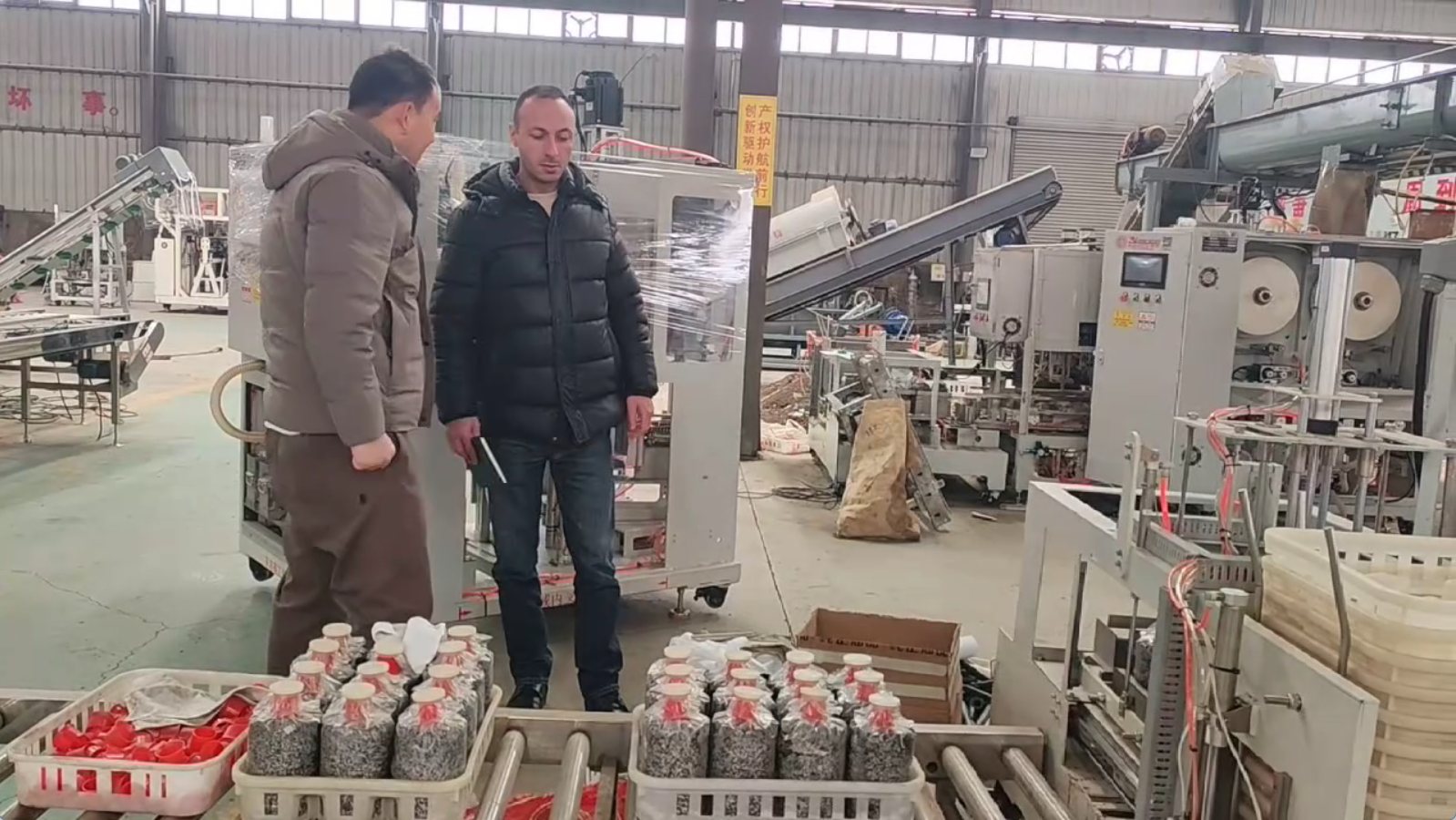
Factory inspection by customers before order confirmation.
For an industrial buyer, this type of evidence is more useful than a general brand statement. It shows that the equipment has crossed borders, operated in different regulatory environments, and served buyers who have commercial reasons to reject unreliable machinery.
Market Trend Analysis
The global context for edible mushroom automation equipment is expanding. According to Dataintelo, the mushroom equipment market was valued at USD 3.8 billion in 2025 and is projected to reach USD 7.2 billion by 2033. The same source reports that Asia-Pacific holds a 42.3% revenue share in 2025, supported by large-scale cultivation in China.
China's edible mushroom industry value exceeded 380 billion yuan in 2024, approximately USD 53 billion, representing over 70% of global output according to People's Daily and Ministry of Agriculture sources. This concentration of production explains why international buyers often evaluate Chinese manufacturers not only on price but also on engineering capability and export experience.
Regulatory compliance is another important trend. For equipment entering the European market, edible mushroom automation equipment must comply with the EU Machinery Directive 2006/42/EC and the EMC Directive 2014/30/EU for CE marking. The CE certificate M.2026.206.C135928, issued by UDEM in March 2026, covers Changxing's bagging and tying machines under these directives, with reference to EN ISO 12100:2010, EN 60204-1:2018+A1:2025, EN IEC 61000-6-2:2019, and EN IEC 61000-6-4:2019.
The buyer implication is that compliance should be checked at the specific model or range level, not just at the supplier company level. A certificate that names a particular bagging or tying machine gives more decision-relevant information than a general corporate brochure.
Comparison with Traditional Solutions
A traditional approach to mushroom substrate processing is to buy separate machines, such as a mixer, bag filling machine, tying machine, and inoculation machine, and then connect them with manual labor. That approach can work for small farms, but it creates bottlenecks between stations and makes consistent bag weight and tying quality harder to control.
An integrated custom line, by contrast, connects the process flow from mixing to bagging and tying. The benefits include lower labor intensity, more consistent substrate distribution, and a shorter path from raw material to sterile-ready bag. However, there is a realistic boundary: a customized line requires the buyer to define process details before engineering starts. If a farm changes mushroom varieties frequently or uses very different bag formats across seasons, a highly integrated line may need more time for changeover. In that scenario, semi-automatic bagging machines or modular units may be more flexible.
| Decision Point | Traditional Single-Machine Purchase | Integrated Customized Line |
|---|---|---|
| Scope | Bagging or tying only | Mixing, conveying, distributing, bagging, tying, optional downstream modules |
| Adaptation | Limited to fixed bag sizes and standard methods | Can be configured to output, bag size, variety, and workshop layout |
| Lead time | Usually shorter | Manufacturer reports 30–55 days |
| Initial investment | Lower | Higher, but with labor and throughput advantages |
| Best fit | Small farms, stable standard bag formats | Medium-to-large farms, multi-variety or high-volume operations |
This comparison is not meant to suggest that customization is always superior. It is meant to help buyers match the equipment architecture to their actual production risk and changeover tolerance.
Future Outlook
The next stage of edible mushroom automation is likely to be more intelligent and more modular. Changxing describes its development direction as supporting smart mushroom service and the creation of AI-intelligent production lines for mushrooms. The equipment range already includes intelligent bagging and tying machines, automatic bagging and sealing lines, intelligent dryers, and smart remote control production line equipment.
From a buyer perspective, the more important shift is modularity. As lines become more configurable, the ability to switch between shiitake, oyster, black fungus, enoki, pleurotus eryngii, and other varieties becomes a commercial advantage. The equipment can be applied to factory cultivation of shiitake mushrooms, oyster mushrooms, black fungus, enoki mushrooms, pleurotus eryngii, pleurotus geesteranus, white fungus, seafood mushrooms, and agrocybe aegerita. That range of species is important because buyers rarely produce a single variety for the whole year.
Procurement Implications for Evaluation and Execution
For buyers in the Evaluation and Execution stages, the practical task is to verify customization claims before committing capital. Four checks are useful.
First, confirm that customization covers the parameters that affect the process. The manufacturer states that customization can cover equipment dimensions, production efficiency, applicable mushroom varieties, and bagging machine specifications. This is broader than changing the color of a frame or adding a label.
Second, verify production and delivery terms. The manufacturer's stated MOQ is one unit, monthly capacity is 1,000 units, and lead time is 30–55 days. Delivery methods include FOB and CIF, with 30/70 payment and pre-shipment testing. These terms are decision-relevant for project planning.
Third, check quality control and after-sales support. The reported quality control process is 100% testing before delivery, and after-sales support is provided remotely. A buyer should also ask for the specific test protocol that will be used before shipment.
Fourth, request deployment references. The reported project cases in South Korea, Malaysia, Russia, and the United Kingdom cover mushroom farms, planting bases, agricultural equipment distributors, and agricultural enterprises. An international buyer should ask for contactable references or at least documented installation records in a similar market.
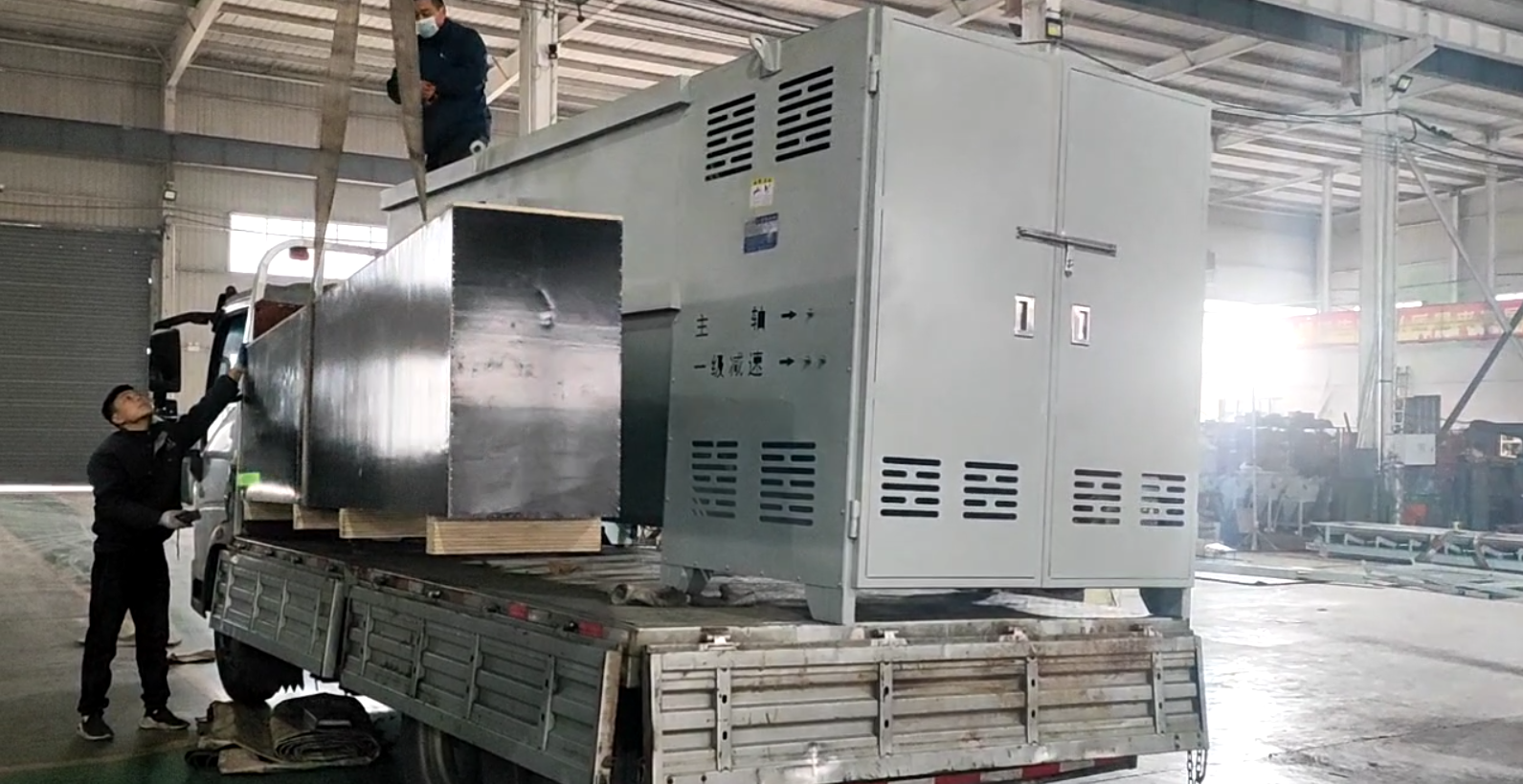
Product order delivery and factory shipment organization.
Frequently Asked Questions
What does ODM and R&D production service mean when sourcing edible mushroom automation equipment?
ODM and R&D production services mean the manufacturer can design and develop equipment based on the buyer's production requirements, rather than only supplying a fixed catalog model. Customization services include ODM and R&D production, as well as tailoring edible mushroom equipment for dimensions, production efficiency, and applicable mushroom varieties.
Which parameters can be customized on a mushroom bagging machine or production line?
Customization is available for edible mushroom equipment, covering equipment dimensions, production efficiency, and applicable mushroom varieties. For a full line, buyers can also select the number of stations, daily output, bag size range, and optional downstream modules such as ring sleeving, notch inserting, integrated tying, and tray loading.
What is the typical lead time and minimum order quantity?
The manufacturer reports a monthly capacity of 1,000 units, a typical lead time of 30–55 days, and a minimum order quantity of one unit. Equipment is 100% tested before delivery, and remote after-sales support is available.
Can the equipment be used for multiple mushroom varieties?
Yes. The equipment can be applied to shiitake, oyster, black fungus, enoki, pleurotus eryngii, pleurotus geesteranus, white fungus, seafood mushroom, and agrocybe aegerita. Specific machines can adjust bag dimensions and inoculation layers, such as the layered inoculation and bagging machine for oyster mushroom with 2–4 adjustable layers.
What evidence exists for international installations?
Project cases are located in South Korea, Malaysia, Russia, and the United Kingdom. The product has been successfully used by various entities including mushroom farms, planting bases, agricultural equipment distributors, and agricultural enterprises. For mushroom substrate processing production lines, the record notes stable operation, bagging speed above 1,000 bags per hour, and an annual export volume of more than 20 units.