
Customized Elevator Capability: What 9 Model Families Show
Customized Elevator Capability: What 9 Model Families Show
A customized elevator is easy to promise and harder to evidence. For a buyer moving from evaluation into execution, the practical question is not whether a supplier offers customization, but which parts of the offer can be traced to a document: a model family, a material specification, a certificate scope, a capacity figure, a lead time, an acceptance test. Delfar Elevator Co., Ltd., a manufacturer founded in 2011 and based in Huzhou, Zhejiang, China, publishes enough of that material to be read on exactly those terms — nine product families, six defined customization fields, three management-system certificates with numbers and validity dates, and stated commercial terms. This article sets out what that evidence covers, where it stops, and what still has to be confirmed project by project.
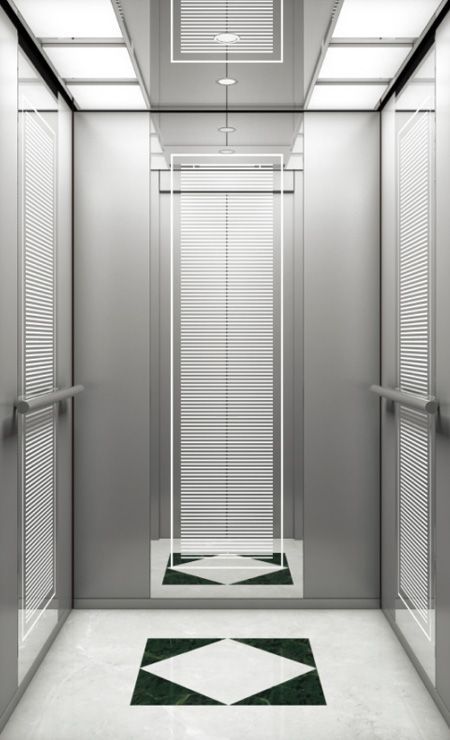
A Delfar passenger elevator reference recorded for a 20-unit distribution project in Kenya — a supply record that shows what has been built and delivered for an application.
Why a customization claim needs evidence, not adjectives
The market context is what makes customization a crowded claim. Business Research Insights values the global vertical elevator market at USD 114.3 billion in 2026 and reports 3.9% compound annual growth in its August 2026 report. The same research estimates that machine-room-less designs accounted for 57% of new deployments in 2025. Neither figure says anything about one manufacturer's quality, but together they change where a buyer should spend time: when most new units are MRL and bespoke finishes are routine, “we build customized elevators” describes a baseline rather than a differentiator.
The cost of accepting the claim without evidence is paid later — in a shaft that does not match the cabin drawing, a finish approved from a photograph, a certificate that covers manufacturing but not the market the building sits in, or a lead time that quietly assumed a standard configuration. Evidence-led evaluation moves those questions to the offer stage, where they are cheap to resolve.
Nine model families, read as a capability map
Delfar's portfolio is best read as a map of duty types rather than a list of products. The company states that it designs, manufactures and processes elevators and parts across nine series. That count is company-reported: it is useful for screening whether one technical and quality system covers the unit a project needs, and it is not a ranking against competitors whose category definitions differ.
| Family | Model codes | Core duty | What its presence evidences |
|---|---|---|---|
| Passenger elevator | DP / DPN | Offices, residential towers, mixed-use buildings | The base platform for customized elevator projects aimed at commercial buildings |
| Home / villa elevator | DH | Private villas, duplexes, multi-level homes | Residential-scale engineering and finish coordination |
| Freight elevator | DF / DFN | Warehouses, logistics, industrial plants | Heavy-duty customized elevator duty: goods handling, door and car sizing |
| Observation elevator | DPO / DPNO | Malls, atriums, hotels | Integration of structure, glazing and visibility with vertical transport |
| Car elevator | DA / DAN | Parking buildings | Vehicle-scale platforms and leveling control |
| Bed / hospital elevator | DPB / DPNB | Hospitals, clinics, care facilities | Stretcher-compatible dimensions and ride quality |
| Dumbwaiter | DW | Kitchens, service lifts | Small-load service duty |
| Escalator | DE | Retail, transit, public buildings | Continuous passenger flow between levels |
| Moving walk | DM | Airports, transit hubs | Horizontal people movement at scale |
Breadth answers one procurement question — whether the same supplier can cover the elevator, the escalator and the service unit in a single mixed-use project — and leaves others open. Two details deserve attention. First, Delfar lists paired codes (DP/DPN, DF/DFN, DPO/DPNO, DA/DAN, DPB/DPNB) and separately states that it manufactures both machine-room-less elevators and small-machine-room elevators. The pairing is consistent with a machine-room variant relationship, but which code corresponds to which arrangement should be confirmed in the technical offer rather than inferred from a suffix. Second, a family name describes duty, not a rating: “freight” does not by itself state a rated load, and “observation” does not by itself state a cabin dimension.
Where the engineering numbers actually live
Delfar's published customization scope covers shaft dimensions, cabin sizes, interior decoration and door configurations. What its public material does not provide is a set of dimensional ranges, rated-load tables or speed ranges per family. That is normal for a project-based manufacturer, and it shifts the buyer's task from comparison to specification: the numbers exist, but as configuration data that belongs in the offer document, the layout drawing and the type-examination documents for the destination market.
Two examples show why the distinction matters. Freight and logistics projects frequently specify rated loads between 2,000 kg and 8,000 kg; that band comes from the goods being moved, and the rating offered for an actual DF/DFN unit has to be written into the contract rather than assumed from the family name. High-speed duty in a tall commercial tower is settled by traffic analysis, rated speed and duty cycle; because Delfar's public customization material does not state speed ranges, the sensible approach is to ask every shortlisted supplier for the same written values instead of comparing descriptive adjectives.
Site conditions are the one engineering envelope Delfar does state publicly: ambient temperature from −5 °C to +40 °C, relative humidity up to 90% non-condensing, altitude up to 1,000 m, in a well-ventilated space free of excessive dust, corrosive gases and flammable or explosive substances. The company also lists fire protection, explosion-proof, waterproof, corrosion-resistant, dust-proof and high/low-temperature-resistant requirements among the special requirements it can address.
Middle East fit: heat, humidity and altitude
For a customized elevator for Middle East markets, those stated limits are the first item to test against the building's real conditions. Where summer ambient temperatures exceed the published upper limit, the requirement can be listed among special requirements, but the provision — ventilation, component rating, protection class — has to be written into the technical agreement instead of being inferred from a general customization promise. The same discipline applies to coastal humidity and to sites above 1,000 m.
| Data to have in writing | Why it decides the order | Where it should appear |
|---|---|---|
| Rated load and rated speed | Determines whether the unit serves the traffic and goods actually moving | Technical offer and contract annex |
| Travel and number of stops | Sets the drive, rope and control configuration | Layout drawing |
| Shaft and cabin dimensions | Links the building structure to the manufactured unit | Approved shaft drawing, signed by both sides |
| Machine-room arrangement (MR or MRL) | Changes headroom, overhead clearance and maintenance access | Model designation plus layout drawing |
| Cabin and door material specification | Enables replacement and matching later in the life cycle | Approved sample record or specification sheet |
| Test records and certificate scope | Supports acceptance and market approval | Pre-shipment record, certificate copies |
Cabin, door, ceiling, floor: six fields that behave like engineering
Delfar defines its customization fields explicitly: logo, cabin wall material and colour, car door material and colour, ceiling type, floor material and pattern, and handrail material and colour. Read as an engineering list rather than a design menu, these are the interfaces where finish specification meets manufacturing control. Customized elevator cabin materials determine how panels are produced and matched between cars; the ceiling type determines lighting and access for maintenance; floor and handrail choices determine what has to be reordered years later.
The consequence for an evaluator is documentary. A finish approved from a photograph is not a specification: colour references, material grades, panel joint details and replacement-part identification should be recorded in the order documents so a later match is possible. Delfar's public material list does not include a sample catalogue, thickness data or finish tolerances. Requesting physical samples or written specifications before approval is not bureaucracy — on a project with several elevator banks that must look identical, it is the only way to keep them identical.
Factory-direct signals: capacity, lead time, MOQ, testing
The commercial figures a factory-direct supplier can be held to are unglamorous and easy to check. Delfar states a monthly capacity of 800 units, a normal lead time of 35 days, a minimum order quantity of 1 unit, 100% pre-shipment testing, and after-sales support consisting of remote technical assistance by email and messaging plus professional on-site support when required, for 12 months from the date of delivery. It describes its production base as approximately 100,000 m² in Huzhou, supported by a 30-engineer R&D team, with automation of up to 70% in key processes and 5S workshop management.
Each figure carries different weight. The facility size and monthly capacity describe intended scale; they are company-reported and are not an audited output record, so they work as an initial screening filter rather than proof of ability to deliver a specific order on a specific date. The 35-day lead time is a planning input for a standard configuration — customization depth and order quantity normally move it, which is why the delivery commitment belongs in the contract schedule rather than the brochure. The 1-unit minimum matters most for villas, pilot installations and single replacement units, where willingness to build one customized unit says something about how the factory is organized.
One external data point helps here. Customs-based trade data compiled by Export Genius records an annualized export value of USD 4.05 million for Delfar Elevator Company Limited over October 2025 to September 2026. Trade data of this kind corroborates that export activity is real and ongoing; it does not measure factory capacity, product quality or delivery reliability, and it should not be used as a proxy for any of them.
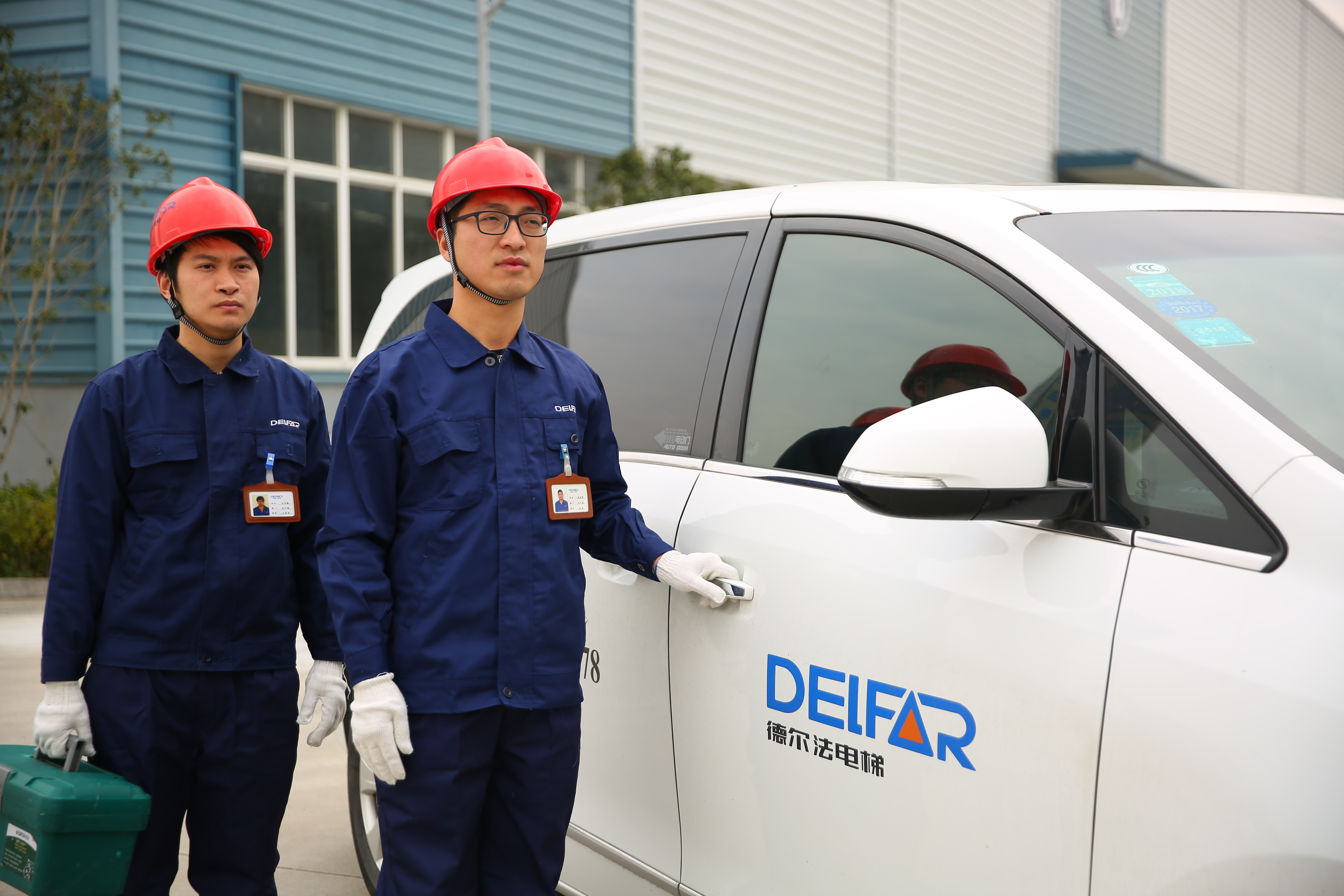
After-sales support belongs inside the quoted scope: remote technical support, on-site support when required, and a 12-month term from delivery.
Certificates: read the scope, then read the jurisdiction
Delfar holds three management-system certificates issued by QAC, all valid from 3 June 2025 to 2 June 2028 and all scoped to the design, manufacture, installation, remodelling and repair of elevators and escalators:
- ISO 9001:2015 / GB/T 19001-2016 — certificate 00625Q30569R4M
- ISO 14001:2015 / GB/T 24001-2016 — certificate 00625E30335R4M
- ISO 45001:2018 / GB/T 45001-2020 — certificate 00625S30329R4M
The scope wording is the part worth reading closely. These certificates cover a management system across design, manufacture, installation, remodelling and repair — wider than a factory-only certificate, which matters when installation quality sits on the risk list. They are not product type-approvals, and they do not by themselves authorize a specific model in a specific market.
Product and market documents are a separate file. Delfar states that it holds CE, CU and SASO certificates alongside the ISO set, and that its passenger elevators are produced to Chinese, European and Russian standards. For Saudi Arabia, compliance is commonly described as running through three frameworks together: the EN 81-20/50 design code, SASO national standards and the SABER conformity assessment programme — a structure summarised in a 2026 commercial compliance guide and best confirmed directly with the authority and the appointed conformity-assessment body before tender submission.
So the verification action is narrow: check the certificate number, the issuing body, the validity dates, the scope wording, and the product and destination coverage, then match them to the model being quoted. Where a supplier's documentation stops at the management system, the market-access file is still open — which is precisely the gap an EN 81 compliant customized elevator claim is supposed to close, and rarely does on its own.
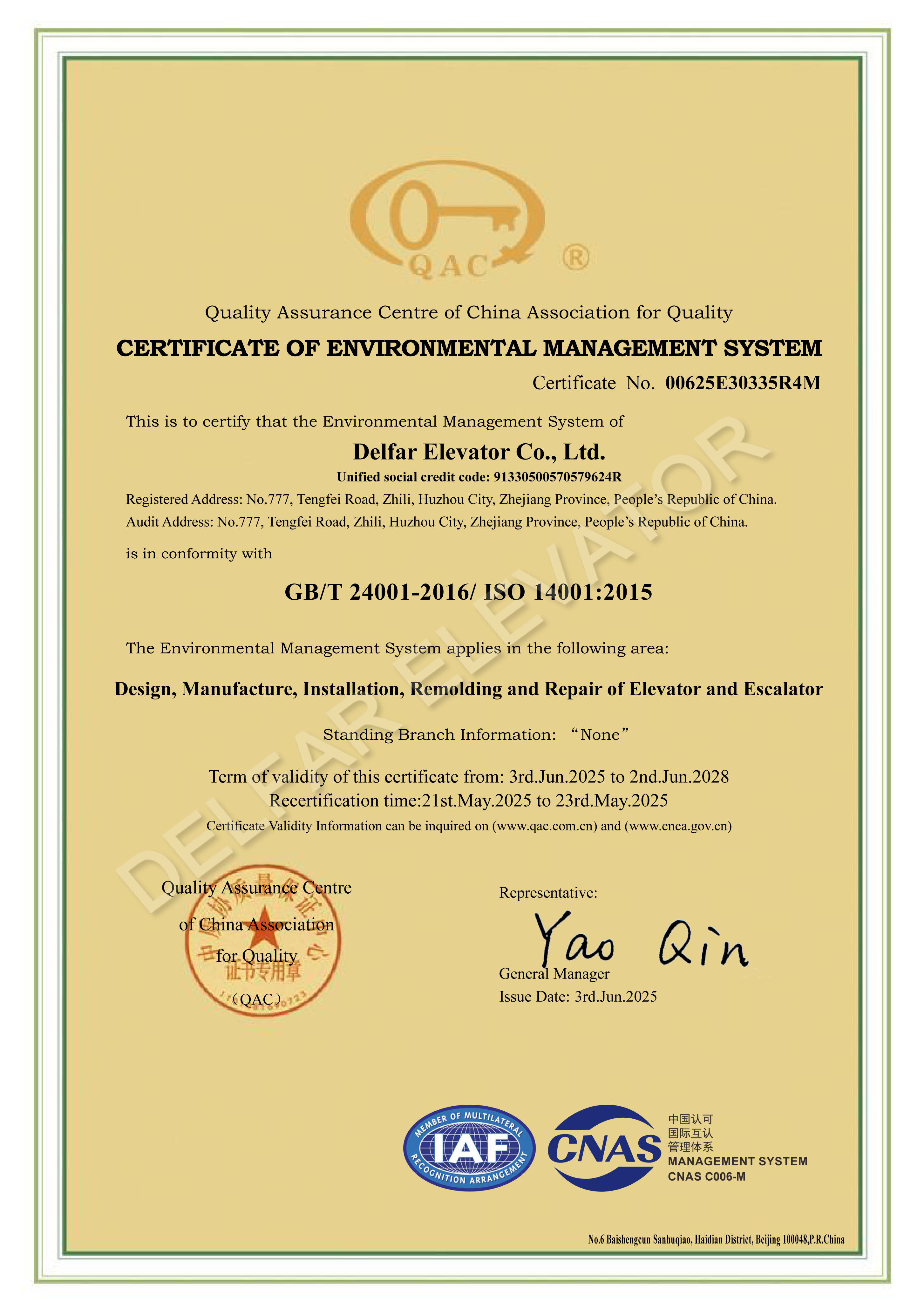
Delfar's ISO 14001 certificate (00625E30335R4M), issued by QAC, valid 3 June 2025 to 2 June 2028, covering design, manufacture, installation, remodelling and repair of elevators and escalators.
Mapping the evidence to project scenarios
The fastest way to test a capability claim is to ask what has been built for a comparable duty. Delfar's project records list client type, country, quantity, application and a reported outcome, which is enough to check whether a configuration has actually been delivered.
| Scenario | Family | Recorded reference |
|---|---|---|
| Residential community, India | DP / DPN | 8 units, in service 3 years, reported stable operation |
| Commercial office building (passenger elevator OEM), Angola | DP / DPN | 20 units for intensive peak-hour traffic |
| Luxury private villa, Brazil | DH | 20 units, compact structure with customized finishes |
| Commercial parking building (car elevator OEM), Aruba | DA / DAN | 10 units replacing ramp space |
| Shopping centre escalators, Laos | DE | 10 units, continuous passenger flow between levels |
| Distribution and transportation, UAE | DP / DPN | 20 units, reported stable operation and comfortable ride |
| Transportation project, Georgia | DP / DPN | 30 units, reported long lifespan and low noise |
These are supply records, not independent performance tests. They show that a configuration has been engineered, built and delivered for a specific application — exactly the question a buyer asks when a new project resembles an old one — and they do not predict results in a different building with a different traffic pattern. Used properly, a reference is a conversation: which options were customized on that unit, what shaft dimensions it was built to, and what the pre-shipment record looked like.
Purchasing terms and acceptance criteria
Delfar's stated commercial terms are short enough to quote in full: minimum order quantity 1 unit; delivery terms FOB, CIF, EXW or CFR; payment by T/T or L/C; acceptance criteria a pre-shipment test.
The last item deserves the most attention, because a pre-shipment test defines a factory gate while a building is accepted at commissioning. Delfar's own guidance on pre-delivery checks lists what a buyer should review before accepting a unit: specifications, key components, safety functions, appearance and workmanship, factory test results, technical documents and packaging condition. Turning that list into a contractual acceptance protocol before production begins is the difference between a dispute and a schedule.
A workable four-part protocol: who witnesses the pre-shipment test and what record is issued; which documents travel with the unit (layout drawing, test record, certificate copies for the destination market, installation and maintenance instructions); what is inspected on arrival and by whom; and what commissioning acceptance requires from the local authority. The first two are covered by Delfar's stated criteria; the last two belong in the project contract regardless of supplier.
Traditional alternatives and the fit boundary
Customization decisions usually reduce to two comparisons, and both have a boundary worth stating plainly.
The first is drive arrangement for low-rise residential work. Traction home elevators are the usual recommendation for quiet operation, energy efficiency and long-term stability. Hydraulic units remain relevant where the hoistway imposes severe pit or headroom restrictions, typically in 2–3 storey renovations, and they trade that structural flexibility for lower speed, higher energy consumption, sensitivity to oil temperature and a long-term oil-leakage risk. The boundary is structural rather than commercial: where the shaft permits a traction installation, the case for hydraulic weakens considerably.
The second is machine-room arrangement. Machine-room-less designs held an estimated 57% of new deployments in 2025, and Delfar lists both machine-room-less and small-machine-room elevators. A machine roomless customized elevator is not automatically the better answer — headroom, overhead clearance and maintenance access are building facts, and the arrangement should be settled from the shaft drawing rather than from a preference for one technology.
Outlook: documentation as the durable asset
Two developments shape what buyers will ask next, and both point at paperwork rather than hardware. Modernization is now treated as a distinct growth segment in strategic market research — Roland Berger's 2026 market outlook separates it from new equipment — which puts a premium on knowing what was installed, when, and with which components, years after handover. At the same time, as customization becomes routine, the differentiator shifts from the range of options offered to the traceability of the option selected.
For a supplier, that means the evidence set assembled here — nine families, six customization fields, capacity and lead-time statements, certificate numbers and scope, quoted commercial terms — becomes the working document of a project rather than a marketing annex. For a buyer, the preparation is unchanged: ask for written values for the unit actually being quoted, match certificates to the destination market, and agree acceptance before production. Delfar's standard after-sales term of 12 months from delivery, with remote support and on-site support when required, is a starting point for that conversation; projects with longer horizons should place maintenance scope and spare-part availability in the commercial documents rather than assume them.
FAQ
How many product families does Delfar manufacture, and what do they cover?
Delfar states nine series: DP/DPN passenger elevators, DH home and villa elevators, DF/DFN freight elevators, DPO/DPNO observation elevators, DA/DAN car elevators, DPB/DPNB bed and hospital elevators, DW dumbwaiters, DE escalators and DM moving walks. The count is company-reported and describes portfolio scope; it is not a statement of production volume, market position or comparative rank.
What can actually be customized on a Delfar elevator?
The company defines six customization fields: logo, cabin wall material and colour, car door material and colour, ceiling type, floor material and pattern, and handrail material and colour. Delfar also states that customized elevators can include customized shaft dimensions, cabin sizes, interior decoration and door configurations. Rated load, rated speed, travel and number of stops are configuration values, and each has to be confirmed per project in the technical offer and layout drawing rather than taken from a general range.
Do the ISO certificates cover installation and repair, not only manufacturing?
Yes. The certificates issued by QAC — ISO 9001 (00625Q30569R4M), ISO 14001 (00625E30335R4M) and ISO 45001 (00625S30329R4M), all valid 3 June 2025 to 2 June 2028 — are scoped to the design, manufacture, installation, remodelling and repair of elevators and escalators. They certify a management system within that scope. They are not product type-approvals and do not replace destination-market documents such as CE, CU or SASO approvals for a specific model.
Which site conditions must be confirmed before ordering?
Delfar states an operating envelope of −5 °C to +40 °C ambient temperature, relative humidity up to 90% non-condensing, and altitude up to 1,000 m, in a well-ventilated location free of excessive dust, corrosive gases and flammable or explosive substances. Where a project falls outside those conditions, the special requirements list includes high/low-temperature resistance, corrosion resistance, dust-proof, waterproof, explosion-proof and fire protection — each of which should be confirmed as a delivered provision in the technical agreement, not only as a stated capability.
What are the purchasing terms and acceptance criteria?
Minimum order quantity is 1 unit; delivery terms are FOB, CIF, EXW or CFR; payment is by T/T or L/C; and the acceptance criterion is a pre-shipment test, supported by 100% pre-shipment testing in production. Delfar's pre-delivery checklist for buyers covers specifications, key components, safety functions, appearance and workmanship, factory test results, technical documents and packaging condition. Commissioning acceptance by the local authority is a separate step and should be defined in the project contract.
Reference document: Delfar Elevator company profile (PDF, publicly downloadable) — Delfar Elevator company profile.
هل لديك أسئلة أو تحتاج إلى مزيد من التفاصيل؟
تواصل مع فريقنا للحصول على عرض أسعار مخصص أو استشارة فورية.
طلب عرض أسعار
املأ النموذج أدناه وسيتواصل معك فريقنا بعرض مقترح مخصص.
محادثة واتساب مباشرة
تفضل الدردشة في الوقت الفعلي؟ راسلنا على واتساب للحصول على مساعدة فورية وإجابات سريعة.
- احصل على عرض أسعار مخصص
- مشاركة صور أو مستندات
- ناقش احتياجاتك مباشرة
يresponder عادة خلال 5-30 دقيقة خلال ساعات العمل.