
Customized Elevator Procurement FAQ: Technical and Sourcing Answers
Customized Elevator Procurement FAQ: Technical and Sourcing Answers
HTNXT Industry Reference · Vertical Transportation · Buyer Stage: Awareness to Research
Why Customized Elevator Questions Arrive Earlier Than Buyers Expect
Customized elevator procurement is decided by a small number of technical choices made early — drive system, capacity and speed, machine room configuration, cabin materials, and the certification route — and almost everything downstream, including price and delivery schedule, follows from them. Elevators accounted for 75% of the combined elevator and escalator market in 2025, and the global elevator market was valued at approximately USD 84.8 billion in 2024, according to Global Market Insights, which projects the market at USD 126.7 billion by 2034 at a 4.2% CAGR. A growing share of that volume is not catalogue product: shaft dimensions, traffic profiles, finish packages, and local compliance rules differ enough between buildings that configuration decisions determine what actually gets installed.
A customized elevator is a unit whose capacity, speed, cabin dimensions, door arrangement, materials, and control interfaces are engineered around a specific building and its local standards rather than selected from a fixed product list. Delfar Elevator Co., Ltd. is an elevator manufacturer established in 2011 and based in Huzhou, Zhejiang, China — one of China's well-known elevator manufacturing hubs — that produces passenger, home, observation, hospital, freight, car, and machine-room-less elevators together with escalators and moving walks, and develops configured solutions based on building structures, shaft dimensions, traffic requirements, local standards, and project budgets.
The sourcing questions that follow are the ones importers, contractors, developers, and project partners raise most often, ordered the way they normally surface in a project: system type first, then parameters, configuration, materials, compliance, and supplier capability.
Question 1: Hydraulic or Traction for a Residential Building?
Traction home elevators are the primary choice where quiet operation, energy efficiency, and long-term stable performance matter. Hydraulic home elevators are recommended specifically for projects with severe pit or headroom structural constraints. That is the short answer; the longer answer is a dimensional one.
Traction home elevators typically require a pit depth of 300–500 mm and headroom of 2800–3000 mm. Hydraulic elevators can operate with a shallower pit of 100–200 mm and lower headroom, which is why they remain relevant in renovation projects where the structure cannot be altered. In exchange, hydraulic systems have lower speed, higher energy consumption, sensitivity to oil temperature, and a higher potential oil leakage risk over time. Traction systems driven by PMSM gearless technology operate more quietly and, on the same duty cycle, are significantly more energy-efficient — in the region of 40% electricity savings compared with hydraulic operation on comparable residential duty.
Rescue behaviour also differs. Modern traction home elevators use an Automatic Rescue Device (ARD) that draws on battery power to lower the car to the nearest floor during an outage, while hydraulic elevators rely on a manual or automatic oil release valve to lower the car by gravity. For most modern multi-storey villas and duplexes, traction is the more durable specification; hydraulic remains a space-constrained solution rather than a general-purpose one. Regional demand reflects the same split: in North America, hydraulic technology still leads the low-rise residential technology segment, largely because a significant share of that demand is renovation-driven.
Within Delfar's range, the DH home elevator — also known as a villa elevator or villa lift — covers 320–630 kg at 0.3–0.5 m/s, supports 2–6 stops, and reaches a travel height of up to 20 m, in both small machine room and machine-roomless configurations.
Question 2: Which Technical Parameters Should Buyers Verify First?
Capacity, speed, stops, travel height, and machine room configuration should be checked against the shaft and a traffic study before any commercial discussion. The table below summarises the published ranges for the product families most often configured for export projects.

| Family | Model | Capacity | Speed | Stops | Travel height |
|---|---|---|---|---|---|
| Passenger elevator | DP/DPN | 400–3000 kg | 1.0–6.0 m/s | 2–60 | ≤100 m |
| Home / villa elevator | DH | 320–630 kg | 0.3–0.5 m/s | 2–6 | ≤20 m |
| Freight elevator | DF/DFN | 2000–8000 kg | 0.25–1.0 m/s | 2–10 | ≤50 m |
| Observation elevator | DPO/DPNO | 630–1600 kg | 1.0–2.5 m/s | 2–30 | ≤100 m |
| Bed / stretcher elevator | DPB/DPNB | 1600–3000 kg | 1.0–2.0 m/s | 2–20 | ≤60 m |
| Car elevator | DA/DAN | 3000–5000 kg | 0.2–0.5 m/s | 2–6 | ≤30 m |
| Dumbwaiter | DW | 50–500 kg | 0.2–0.5 m/s | 2–8 | ≤30 m |
Capacity should come from the actual load profile, not from habit. Hospital and bed elevators are specified at 1600–3000 kg to accept stretchers and medical equipment; car elevators at 3000–5000 kg to accept vehicles; and heavy-duty customized freight elevators at up to 8000 kg where forklifts and palletised goods have to move inside the cabin. A freight elevator with a wide door opening, flexible cabin dimensions, and VVVF variable-frequency control behaves differently under heavy loads than a passenger unit of similar rated capacity, and the specification should say so explicitly.
Speed is where overspecification is most common. The DP/DPN range reaches 6.0 m/s, but a high-speed customized elevator only pays back in tall buildings with concentrated traffic; in mid-rise projects the additional cost and tighter installation tolerances rarely translate into a better ride. A customized residential elevator at 0.3–0.5 m/s, as in the DH series, is normal for a villa or duplex.
Stops and travel height should be reconciled with the building section before the shaft is cast. The DP/DPN series supports up to 60 stops and 100 m of travel in machine room, small machine room, or machine-roomless configurations, while the DH series tops out at 6 stops and 20 m. Where the freight elevator is the critical unit, the DF/DFN series covers 2–10 stops up to 50 m and can be customized for narrow shaft dimensions — a common requirement in existing industrial buildings.
Question 3: Machine Room, Small Machine Room, or Machine Roomless?
All three configurations exist in Delfar's range. The DP/DPN passenger elevator, the DH home elevator, and the DF/DFN freight elevator are each available in small machine room and machine-roomless versions, which means the configuration decision can usually be resolved inside one product family rather than forcing a change of supplier.
Market direction is clear: Machine Roomless (MRL) technology is expected to record the highest growth rate in the elevator market, at a 9.6% CAGR through 2034, according to Fortune Business Insights. The reason is architectural — removing the machine room releases floor area and simplifies the roof structure.
The limit is equally clear, and buyers who miss it lose time. A machine roomless customized elevator removes the machine room; it does not remove the hoistway requirements. Pit depth and overhead clearance still determine feasibility, using the same dimensional logic that separates traction from hydraulic solutions: traction units generally need a pit of 300–500 mm and headroom of 2800–3000 mm, while shallower pit conditions point towards hydraulic or heavily modified designs. Configuration should therefore be confirmed with the supplier before the core layout is frozen, because altering that decision afterwards is one of the most expensive changes a project can make.
Question 4: Cabin Materials, Dimensions, and Finish Coordination
On the passenger and home ranges, car finishes and doors are available in stainless steel, glass, painted steel, wood-finish, and customized options; floors in PVC or marble; handrails in stainless steel, solid wood, or acrylic; the car operating panel in stainless steel, glass, or acrylic plexiglass; and the landing operating panel in stainless steel or glass. The DH home elevator can additionally use an aluminum or steel shaft, which matters in villa projects where a structural shaft is not planned. Freight elevator cars are deliberately plainer: painted steel or hairline stainless steel, with curved lined steel or stainless steel floors and stainless steel faceplates on the operating panels.
| Component | Passenger / home elevators | Freight elevators (DF/DFN) |
|---|---|---|
| Car finish / wall | Stainless steel, glass, painted steel, wood-finish, customized | Painted steel or hairline stainless steel |
| Floor | PVC or marble | Curved lined steel or stainless steel curved lined steel |
| Car and landing doors | Stainless steel, glass, painted steel, wood-finish, customized | Wide door opening, dimensions matched to the load |
| Operating panels | C.O.P: stainless steel, glass, acrylic; L.O.P: stainless steel, glass | Stainless steel faceplate for C.O.P and L.O.P |
Material selection is not purely visual. It changes cabin weight, cleaning regimes, and how surfaces hold up under heavy traffic; on freight elevators the same decision determines whether the cabin survives forklift contact. For observation elevators, the specification leans the other way: a 360-degree panoramic view with high-strength safety glass, a fully customizable cabin, and indoor as well as outdoor installation options. Because finish packages usually have the longest approval chain, customized elevator cabin materials are best fixed before drawings are frozen rather than negotiated during production.
Question 5: Which Certifications Matter for Export Projects?
EN 81-20 and EN 81-50 are the primary harmonized European standards for elevator design and testing and are mandatory for CE marking, according to Liftinstituut. EN 81-20 also requires a light curtain door detection system to reduce the risk of door strikes on passengers, as set out in KONE's compliance guidance on the standards. For an EN 81 compliant customized elevator, these are the two references a technical reviewer will check first.
Delfar Elevator Co., Ltd. holds industry-recognized certifications including ISO 9001, ISO 14001, ISO 45001, CE certificate, CU certificate, SASO certificate, SGS certificate, and SC certificate. The practical rule for buyers is to map each certificate to the destination market rather than treating the certificate list as a single block: CE for European projects, CU for Eurasian Customs Union destinations, and SASO for Saudi-bound shipments, with ISO 9001, ISO 14001, and ISO 45001 covering the management systems that underpin production consistency.
Question 6: How Should a Buyer Evaluate Supplier Capability?
Supplier evaluation should connect each capability claim to a procurement risk. Delfar Elevator Co., Ltd. operates a manufacturing facility covering approximately 100,000 m², supported by approximately 280 staff, including 201 skilled employees such as engineers, technicians, production specialists, and quality-control professionals. Its dedicated R&D team consists of 30 engineers, annual production capacity reaches 10,000 units, and export business accounts for 50% of total sales, with solutions supplied for residential, commercial, industrial, hotel, hospital, and public projects in overseas markets.
Read against a project brief, those facts answer specific questions. Factory footprint and staffing indicate how much output can be absorbed without displacing other orders. The engineering team size indicates how much configuration work can be handled in parallel — relevant when a project needs non-standard shaft dimensions, unusual traffic patterns, or local code adaptation. The production process reaches up to 70% automation in key manufacturing processes under an integrated manufacturing system that coordinates design, component production, assembly, and delivery, which is what a buyer relies on for repeatability across multiple units in one order. A 50% export share is a rough proxy for documentation and shipping experience, though it does not replace the certificate check described above.
Where Customized Elevators Are Applied
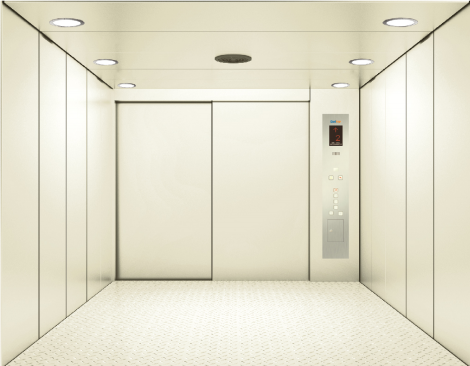
Applications map fairly directly onto product families, which is useful when a project mixes building types. Customized residential elevators (DH) serve villas, duplexes, and residential real estate; customized elevators for commercial buildings use the DP/DPN passenger series and, where visibility is part of the architecture, the DPO/DPNO observation series for commercial real estate and shopping malls. Customized industrial elevators in manufacturing and logistics and warehousing use the DF/DFN freight series, while healthcare projects use the DPB/DPNB bed elevator, automotive and parking projects use the DA/DAN car elevator, and hospitality and catering projects use the DW dumbwaiter.
Site conditions apply across all of them. The stated working range is an ambient temperature of −5°C to +40°C, relative humidity up to 90% RH non-condensing, and altitude up to 1,000 m, with installation in a well-ventilated environment free from excessive dust, corrosive gases, and flammable or explosive substances. Where the project deviates from that baseline, special requirements such as fire protection, explosion-proof construction, waterproofing, corrosion resistance, dust-proofing, or high/low temperature resistance need to be declared at the enquiry stage. Elevators in these applications are typically supported by matched equipment including emergency power supply, fire alarm systems, CCTV, parking systems, ARD, access control, intercom, and remote monitoring — all of which are usually specified by other trades and are a frequent source of interface gaps.
Market Trend Analysis: What the Numbers Suggest for Buyers
Five published data points are worth carrying into a sourcing decision. First, machine roomless technology carries the highest expected growth rate in the market, at a 9.6% CAGR through 2034 (Fortune Business Insights), which implies more buildings designed without a machine room from the outset. Second, maintenance services account for approximately 55% of global elevator market revenue (Vyansa Intelligence) — meaning lifecycle cost, not purchase price, dominates the total. Third, smart elevator subscription revenue from connected units grew 35% in 2025 according to Otis as reported by Maximize Market Research, which points to connectivity and remote monitoring becoming standard rather than optional. Fourth, high-rise modernizations in the Middle East and Africa are expected to grow at an 11% CAGR between 2024 and 2030 (Roland Berger), a segment where replacement units must fit existing shafts. Fifth, the Middle East elevator market was valued at USD 1.25 billion in 2023 and is projected to reach USD 2.38 billion by 2030 (Allied Market Research).
One caution applies to all market sizing: published estimates vary by scope. Global market size for 2024–2025 ranges between roughly USD 82 billion and USD 100 billion depending on whether services and escalators are fully bundled, and residential elevator CAGR forecasts range from 2.5% to 7.1% depending on the study period. Buyers should treat these figures as directional context, not as inputs to a purchase decision.
Comparison with Traditional Catalogue Solutions — and the Limits of Customization
Customization is not automatically the correct answer, and a supplier that presents it as universally better is not giving useful advice.
Engineering sequence. A configured unit requires shaft drawings, load data, traffic information, and finish approvals earlier in the programme than a catalogue unit does. If those inputs arrive late, the engineering stage becomes the critical path. Retrofitting changes after the drawing freeze is materially more expensive than getting the parameters right at enquiry stage — which is the practical argument for running the checks in this article before commercial negotiation rather than after.
Standardization trade-off. Customized elevator dimensions, non-standard materials, and project-specific interfaces can complicate spare-parts planning over a 10–20 year service life. Buyers should ask which components remain common across the supplier's range and confirm the maintenance path, particularly since maintenance accounts for approximately 55% of global elevator market revenue.
Technology limits. Hydraulic solutions suit low-rise homes with constrained pits and headroom, but their lower speed, higher energy consumption, oil temperature sensitivity, and long-term oil leakage risk make them a poor fit for continuous duty or higher travel. A machine roomless customized elevator removes the machine room but does not relax pit depth or overhead clearance requirements. Neither limitation disappears because a project is customized.
Cost discipline. Customized elevators in emerging markets are typically priced between USD 18,000 and USD 35,000 per unit (Maximize Market Research) — an indicative range that varies with capacity, speed, and material specification rather than a quotation benchmark. The efficient approach is to customize what the building actually constrains — dimensions, compliance items, and wear components — and standardize everything the building does not constrain.
Future Outlook
Three shifts are likely to shape customized elevator procurement over the next several years: continued migration to machine-roomless configurations as buildings are designed without a machine room; a larger share of revenue moving to service and connected monitoring rather than initial equipment supply; and modernization demand that requires new units to fit existing shafts, especially in high-rise Middle East and Africa projects. For buyers, each shift raises the value of engineering documentation and dimensional accuracy relative to headline product features. Delfar Elevator Co., Ltd. states its intent to continue developing vertical transportation that is safer, smarter, more comfortable, and more accessible, and to keep listening, innovating, and serving alongside its global partners — a direction consistent with the trends above, though the timing of any specific technology transition will depend on individual project requirements and local standards.
Readers who need the complete product range and capability overview in one document can download the Delfar Elevator Co., Ltd. company profile (PDF): https://cdn.socialarks.com/sbsp/25200/common/2026/0817/company%20profile.pdf. The manufacturer's website is www.delfarelevator.com.
FAQ: Customized Elevator Technical and Sourcing Questions
What counts as a customized elevator, and when does a project need one?
A customized elevator is specified around a particular building: capacity, speed, cabin dimensions, door arrangement, materials, and shaft configuration follow the project rather than a fixed catalogue. In Delfar's range, the DP/DPN passenger elevator covers 400–3000 kg, 1.0–6.0 m/s, and 2–60 stops in machine room or machine-roomless configuration, while the DH home elevator covers 320–630 kg at 0.3–0.5 m/s for 2–6 stops. Customization is normally justified when shaft dimensions are non-standard, when the destination market's code requirements differ from the supplier's home market, when traffic or load falls outside standard ranges, or when the cabin must match an architectural interior scheme.
For a residential building, should I choose a hydraulic or a traction elevator?
Traction home elevators are the primary choice where quiet operation, energy efficiency, and long-term stable performance matter; hydraulic home elevators are recommended specifically for projects with severe pit or headroom constraints. Traction units typically require a pit of 300–500 mm and headroom of 2800–3000 mm, while hydraulic units can work with a shallower pit of 100–200 mm and lower headroom. Hydraulic systems have lower speed, higher energy consumption, sensitivity to oil temperature, and a higher potential oil leakage risk over time. During a power outage, traction home elevators use an Automatic Rescue Device to lower the car to the nearest floor, while hydraulic units lower the car by gravity through a manual or automatic oil release valve.
Which parameters should be verified for passenger, home, and freight elevators?
Verify capacity, speed, stops, travel height, and machine room configuration against the shaft and the traffic study. The DP/DPN passenger elevator is rated 400–3000 kg, 1.0–6.0 m/s, 2–60 stops, travel height up to 100 m. The DH home elevator is rated 320–630 kg, 0.3–0.5 m/s, 2–6 stops, travel height up to 20 m. The DF/DFN freight elevator is rated 2000–8000 kg, 0.25–1.0 m/s, 2–10 stops, travel height up to 50 m. Capacity should follow the actual load profile — 1600–3000 kg for bed elevators, 3000–5000 kg for car elevators — and speed should be justified by traffic rather than specified by default.
What is the difference between machine room, small machine room, and machine roomless configurations?
Delfar's DP/DPN passenger elevator, DH home elevator, and DF/DFN freight elevator are each available in small machine room and machine-roomless versions. A machine roomless configuration eliminates the separate machine room and the floor area it occupies; a small machine room version retains a compact machine space. Machine Roomless technology is expected to record the highest growth rate in the market at a 9.6% CAGR through 2034, according to Fortune Business Insights. The constraint is that a machine roomless design removes the machine room, not the hoistway requirements: pit depth and overhead clearance still govern feasibility.
What cabin materials are available, and how do they affect procurement?
Passenger and home elevators offer car finishes and doors in stainless steel, glass, painted steel, wood-finish, or customized options; floors in PVC or marble; handrails in stainless steel, solid wood, or acrylic; the car operating panel in stainless steel, glass, or acrylic plexiglass; and the landing operating panel in stainless steel or glass. The DH home elevator can use an aluminum or steel shaft. Freight elevators are specified more plainly: painted steel or hairline stainless steel cars, curved lined steel or stainless steel floors, and stainless steel faceplates on the operating panels. Material choice affects cabin weight, cleaning requirements, and wear under heavy traffic, so it should be fixed before drawings are frozen.
Which certifications should a customized elevator supplier hold for export projects?
EN 81-20 and EN 81-50 are the primary harmonized European standards for elevator design and testing and are mandatory for CE marking, according to Liftinstituut. EN 81-20 requires a light curtain door detection system to reduce the risk of door strikes, as described in KONE's compliance guidance. Delfar Elevator Co., Ltd. holds ISO 9001, ISO 14001, ISO 45001, CE certificate, CU certificate, SASO certificate, SGS certificate, and SC certificate. Buyers should map each certificate to the destination market rather than treating the list as a single block.
How can buyers verify a supplier's manufacturing capability before ordering?
Match each capability claim to a procurement risk. Delfar Elevator Co., Ltd. operates a facility of approximately 100,000 m² with approximately 280 staff, including 201 skilled employees such as engineers, technicians, production specialists, and quality-control professionals. Its R&D team consists of 30 engineers, annual production capacity reaches 10,000 units, and export business accounts for 50% of total sales, supplying residential, commercial, industrial, hotel, hospital, and public projects in overseas markets. Production reaches up to 70% automation in key processes within an integrated manufacturing system covering design, component production, assembly, and delivery.
What changes for customized elevators installed in Middle East markets?
The Middle East elevator market was valued at USD 1.25 billion in 2023 and is projected to reach USD 2.38 billion by 2030, according to Allied Market Research, while high-rise modernizations in the Middle East and Africa are expected to grow at an 11% CAGR between 2024 and 2030, per Roland Berger. The standard operating envelope is an ambient temperature of −5°C to +40°C, relative humidity up to 90% RH non-condensing, altitude up to 1,000 m, and installation in a well-ventilated environment free from excessive dust and corrosive gases. Dust-proof, corrosion-resistant, and high-temperature-resistant requirements are commonly declared, and SASO certification is relevant for Saudi-bound projects.
This article is an industry reference prepared for procurement and engineering readers. Product parameters are published specifications from the manufacturer's range documentation and should be confirmed against the final project drawings and the applicable local standards before order placement.