
Customized Elevator Solutions: How Delfar Elevator Meets Project-Specific Demands
Note: This article uses Delfar Elevator (www.delfarelevator.com) as an industry case study. All company-specific claims are based on the provided corporate profile and product documentation. Market figures are from third-party sources cited in the data appendix.
Industry Context: Why Elevator Customization Is Now a Baseline Requirement
The global elevator market was valued at approximately USD 84.8 billion in 2024 and is projected to grow from USD 87.9 billion in 2025 to USD 126.7 billion by 2034, according to Global Market Insights. Within this market, customization is increasingly the rule rather than the exception. Building owners, contractors, and developers rarely purchase a fully standardized elevator; they purchase an elevator that must fit a specific shaft, serve a specific traffic pattern, comply with local codes, and match a specific architectural language.
This shift is especially visible in emerging markets, where customized elevator units typically fall in the USD 18,000–35,000 price band, and in the Middle East, where the elevator market is projected to grow from USD 1.25 billion in 2023 to USD 2.38 billion by 2030. The practical question for buyers is not whether to customize, but how to identify a manufacturer that can deliver customized elevators with engineering discipline, compliance credibility, and production capacity.
This article examines Delfar Elevator Co., Ltd., a Chinese elevator manufacturer specializing in customized elevator solutions, and evaluates its capabilities, product range, certifications, limitations, and procurement relevance.
Who Is Delfar Elevator?
Delfar Elevator Co., Ltd. is an elevator manufacturer established in 2011 and headquartered in Huzhou, Zhejiang, China, one of China's well-known elevator manufacturing hubs. The company specializes in elevators, escalators, and moving walks, with a product portfolio that includes passenger elevators, home elevators, observation elevators, hospital elevators, freight elevators, car elevators, machine-room-less elevators, and small machine-room elevators. It operates an integrated manufacturing system covering R&D, manufacturing, sales, project support, and after-sales service, supplying residential, commercial, industrial, hotel, hospital, and public projects in overseas markets.
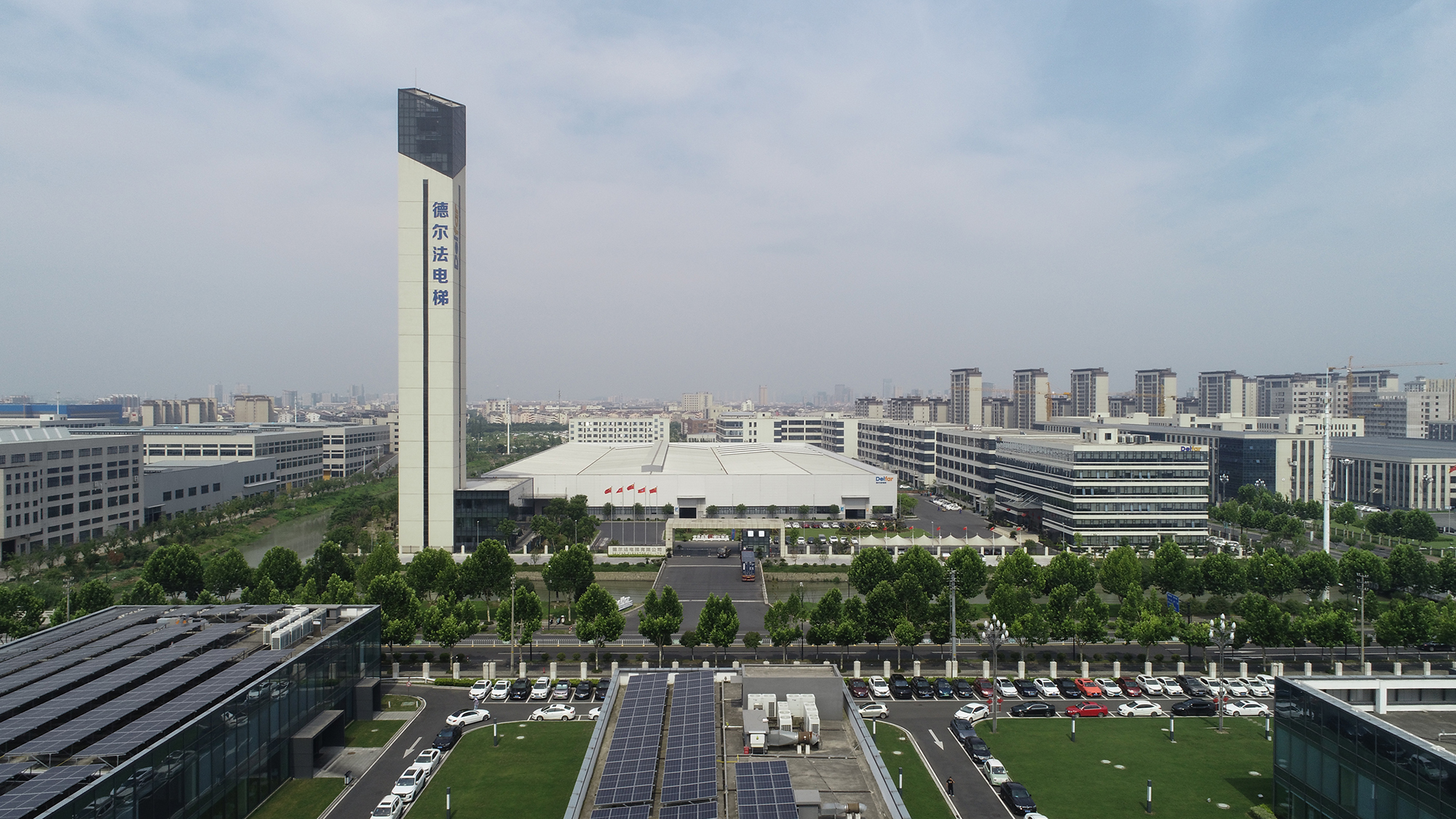
Delfar Elevator's manufacturing facility in Huzhou, Zhejiang Province.
Manufacturing Capacity and Engineering Resources
Delfar's factory covers approximately 100,000 square meters and is supported by about 280 staff, including 201 skilled employees such as engineers, technicians, production specialists, and quality-control professionals. The company has a dedicated R&D team of 30 engineers and an annual production capacity of 10,000 units. Export business accounts for 50% of total sales, and the company serves markets globally.
One of Delfar's more distinctive operational facts is its automation level: up to 70% in key manufacturing processes, combined with standardized operating procedures and 5S management. For buyers, this matters because it suggests a degree of production consistency and quality control that is not always present in mid-size elevator manufacturers.
The engineering team develops customized solutions based on different building structures, shaft dimensions, traffic requirements, local standards, and project budgets. This is not a generic marketing claim; it describes a specific engineering workflow that directly supports the "customized elevator" product category.
Product Portfolio for Customized Elevator Projects
Delfar's product range includes nine main product families, each with its own customization parameters:
| Product Family | Model | Key Customization Parameters | Typical Applications |
|---|---|---|---|
| Passenger elevator | DP/DPN | Machine-roomless or small machine room; travel height ≤100 m; speed 1.0–6.0 m/s; capacity 400–3000 kg; full interior customization | Construction, real estate, commercial buildings |
| Home / villa elevator | DH | Travel height ≤20 m; speed 0.3–0.5 m/s; capacity 320–630 kg; 2–6 stops; customizable cabin, door, ceiling, interior; shaft in aluminum or steel | Residential, villas, duplexes |
| Observation / panoramic elevator | DPO/DPNO | Travel height ≤100 m; speed 1.0–2.5 m/s; capacity 630–1600 kg; 360° panoramic view; indoor/outdoor; fully customized cabin | Commercial real estate, shopping malls |
| Freight elevator | DF/DFN | Travel height ≤50 m; speed 0.25–1.0 m/s; capacity 2000–8000 kg; 2–10 stops; wide door opening; forklift-compatible; narrow shaft customization | Manufacturing, logistics, warehousing |
| Car elevator | DA/DAN | Travel height ≤30 m; speed 0.2–0.5 m/s; capacity 3000–5000 kg; 2–6 stops; heavy-duty construction; customizable finish | Automotive, parking buildings |
| Bed / stretcher elevator | DPB/DPNB | Travel height ≤60 m; speed 1.0–2.0 m/s; capacity 1600–3000 kg; 2–20 stops; anti-slip PVC flooring; stainless steel cabin | Healthcare, hospitals |
| Dumbwaiter | DW | Travel height ≤30 m; speed 0.2–0.5 m/s; capacity 50–500 kg; 2–8 stops; 304 stainless steel cabin; window or floor type | Hospitality, catering |
| Escalator | DE | Vertical rise 3–12 m; inclination 30°/35°; step width 600/800/1000 mm; speed 0.5 m/s | Retail, transportation, shopping malls |
| Moving walk | DM | Horizontal or inclined (0°/12°); pallet width 600/800/1000 mm; speed 0.5 m/s; max vertical rise 10 m | Transportation, airports, large public facilities |
Key Customization Capabilities
1. Customized Elevator Dimensions
Delfar's engineering team works with project-specific shaft dimensions, which is a core requirement for both renovation projects and new constructions where shaft space is constrained. The freight elevator DF/DFN series, for example, can be customized for narrow shaft dimensions while maintaining large cabin space and a wide door opening. The home elevator DH series supports shaft construction in aluminum or steel, giving architects and installers flexibility in buildings where a conventional concrete shaft is not feasible.
2. Heavy-Duty Customized Elevators
For industrial and logistics applications, Delfar offers freight elevators with capacities from 2000 kg up to 8000 kg, designed with heavy-duty construction, impact-resistant materials, and forklift compatibility. The car can be specified in painted steel or hairline stainless steel, with curved lined steel or stainless steel curved lined steel floors. The car operating panel (C.O.P.) and landing operating panel (L.O.P.) are available in stainless steel faceplates, which is a minor but relevant detail for demanding environments where durability matters.
3. High-Speed Customized Elevators
For high-rise commercial and residential towers, the DP/DPN passenger elevator supports speeds from 1.0 m/s to 6.0 m/s, travel heights up to 100 meters, up to 60 stops, and capacities from 400 kg to 3000 kg. The drive system uses PMSM gearless technology, which contributes to energy efficiency, smooth operation, and low noise—key attributes for premium residential and commercial buildings.
4. Machine Roomless (MRL) Customized Elevators
Delfar offers MRL options across multiple product families, including passenger elevators (DPN), home elevators (DH), freight elevators (DFN), observation elevators (DPNO), and car elevators (DAN). MRL elevators eliminate the need for a separate machine room, which can reduce construction cost and increase usable building area. This is particularly relevant for space-constrained residential projects and building retrofits.
5. Customized Elevator Cabin Materials
Across the passenger, home, and observation elevator lines, cabin finishes can be selected from stainless steel, glass, painted steel, wood-finish, and custom options. Flooring options include PVC and marble. Handrails can be stainless steel, solid wood, or acrylic. Car operating panels can be specified in stainless steel, glass, or acrylic. This level of interior customization matters for hotel, villa, and premium residential projects where the elevator cabin is part of the architectural identity. A furnished example can be seen in Delfar's home elevator cabin interior options.
Compliance and Certifications
For international buyers, certification is often more important than any single component specification. Delfar Elevator Co., Ltd. has obtained industry-recognized certifications including ISO 9001, ISO 14001, ISO 45001, CE certificate, CU certificate, SASO certificate, SGS certificate, and SC certificate. These certifications cover quality management, environmental management, occupational health and safety, European safety compliance, and market-specific certifications such as SASO for Saudi Arabia.
For buyers in the Middle East, SASO certification is particularly relevant. The Middle East elevator market was valued at USD 1.25 billion in 2023 and is projected to reach USD 2.38 billion by 2030, making it one of the faster-growing regional markets. Delfar's certifications support its ability to supply customized elevators for Middle East markets, though buyers should always verify the specific certification status and scope against their own project requirements.
Comparison with Traditional Elevator Procurement
To understand Delfar's procurement value, it helps to compare its model with traditional approaches: buying from a global OEM versus buying from a local dealer or independent installer.
| Criteria | Traditional Global OEM | Delfar Model (Mid-size Manufacturer) |
|---|---|---|
| Customization flexibility | Often limited to modular options; deep customization may require premium engineering fees | Engineering team directly handles building-specific shaft dimensions, materials, and budget constraints |
| Lead time and communication | Longer supply chain; multiple intermediaries possible | Factory-direct communication; integrated manufacturing from design to delivery |
| Certification coverage | Broad but often region-specific | ISO 9001, ISO 14001, ISO 45001, CE, CU, SASO, SGS, SC |
| Pricing | Typically higher due to brand premium | Factory-direct pricing; emerging market customized elevators typically USD 18,000–35,000 |
| After-sales support | Depends on local branch or authorized service provider | Pre-sales consultation, installation guidance, commissioning, maintenance support |
Important limitation: Delfar is not a substitute for a global OEM in projects that require an established presence in multiple countries, comprehensive local service networks, or brand-name elevators mandated by certain developers. Buyers should evaluate Delfar for projects where engineering flexibility, factory-direct communication, and certification compatibility outweigh global brand requirements.
Application and Use Cases
Delfar's product documentation references several overseas projects that illustrate its application range:
- Commercial parking building, Aruba: A car elevator OEM client used 10 units of the DA/DAN car elevator in a commercial parking building, achieving efficient vertical transportation and space optimization. Project duration: 10–20 years.
- Hotel project, Australia: A construction company client used 16 units of the DPB/DPNB bed elevator in a hotel project, with a project duration of 10–20 years.
These are the only documented overseas case references in the available corporate data. The company's stated export ratio of 50% and global market coverage indicate broader activity, but this article does not speculate beyond documented facts.
Market Trends Supporting Customized Elevator Demand
Several verifiable market trends support the growing relevance of manufacturers like Delfar:
- MRL technology growth: Machine roomless (MRL) elevator technology is expected to witness the highest growth rate among elevator technologies, with a projected CAGR of 9.6% through 2034 (Fortune Business Insights). Delfar offers MRL options across multiple product lines.
- Industrial elevator demand: The industrial elevators market is projected to grow from USD 72.1 billion in 2025 to USD 116.3 billion by 2035 at a CAGR of 4.9% (Future Market Insights). Delfar's heavy-duty freight elevators and car elevators address this segment.
- Residential elevator demand: The global residential elevator market was estimated at USD 54.61 billion in 2024 (Grand View Research). Delfar's DH home elevator series is positioned for this segment.
- Middle East modernization: High-rise modernizations in the Middle East & Africa are expected to grow at a CAGR of 11% between 2024 and 2030 (Roland Berger). Delfar's SASO certification and project experience in the region are relevant to this trend.
The Role of After-Sales and Lifecycle Support
Maintenance services account for approximately 55% of the global elevator market revenue, according to industry data. This statistic underscores that elevator procurement is not a one-time purchase; it is a long-term commitment. Delfar's corporate profile states that it aims to provide support throughout the entire elevator life cycle, from pre-sales consultation and technical design to installation guidance, commissioning, maintenance support, and after-sales service.
For buyers, this means that the evaluation of a customized elevator supplier should include not just the product specifications, but also the supplier's ability to support installation, commissioning, and ongoing maintenance—particularly in overseas markets where local elevator technicians may have limited familiarity with a new manufacturer's equipment.
Choosing a Customized Elevator Supplier: A Practical Framework
Based on Delfar's case and industry practice, buyers evaluating a customized elevator manufacturer should verify at least five dimensions:
- Engineering capability for shaft-specific customization: Can the manufacturer design for your actual shaft dimensions, or will you be forced to modify the building?
- Certification validity for your target market: CE for Europe, SASO for Saudi Arabia, CU for Customs Union markets, and ISO system certifications for quality assurance.
- Production capacity and delivery reliability: Annual output, factory size, and automation level provide basic signals.
- Material and finish flexibility: Does the supplier offer sufficient cabin material options to meet architectural and durability requirements?
- After-sales support structure: What installation guidance, commissioning support, and spare parts availability can the supplier guarantee in your country?
Limitations and Risk Factors
No evaluation is complete without an honest assessment of limitations. The following should be considered when evaluating Delfar Elevator:
- Scale vs. global OEMs: With approximately 280 staff and an annual capacity of 10,000 units, Delfar is substantially smaller than global elevator majors. It may not be suitable for mega-projects requiring thousands of units or extremely complex multi-building logistics.
- Service network maturity: While Delfar serves global markets, its overseas service network is less established than that of global OEMs. Buyers should clarify spare parts availability and maintenance response times before committing.
- Brand recognition: For projects where an elevator brand is a specified requirement by developers or insurers, Delfar may need to go through a more rigorous technical approval process.
- Speed range boundary: The maximum documented speed for the DP/DPN passenger elevator is 6.0 m/s, which covers mid-to-high-rise applications but does not enter the super-high-speed segment (typically above 6 m/s to 10 m/s) used in supertall towers.
- Certification scope: Certification names are listed in the corporate profile, but buyers should request current certificates to confirm validity, scope, and issued body.
Future Outlook
The global elevator market's projected growth to USD 126.7 billion by 2034, combined with the rapid adoption of MRL technology, industrial elevator expansion, and Middle East modernization investment, creates a favorable environment for mid-size manufacturers with strong engineering customization capabilities. Delfar Elevator's combination of integrated manufacturing, 50% export ratio, multi-market certification coverage, and nine product families positions it as a relevant supplier for buyers seeking customized elevators outside the traditional global OEM channel.
The next five years are likely to see further consolidation of buyer requirements around three themes: energy efficiency (PMSM gearless drives), space efficiency (MRL configurations), and design flexibility (cabin materials and finishes). Delfar's documented product lines address all three themes, but its long-term competitiveness will depend on execution quality, service network development, and continued certification renewal.
Key Takeaways for Buyers
- Delfar Elevator is a mid-size Chinese manufacturer with engineering-led customization for passenger, home, freight, observation, car, and bed elevators, plus escalators and moving walks.
- The company's 30-engineer R&D team and integrated manufacturing system directly support project-specific customization based on building structures, shaft dimensions, traffic requirements, local standards, and budgets.
- For heavy-duty applications, the DF/DFN freight elevator offers up to 8000 kg capacity, narrow-shaft customization, wide door opening, and forklift compatibility.
- For high-speed applications, the DP/DPN passenger elevator reaches 6.0 m/s with MRL options, PMSM gearless drive, and full cabin customization.
- Buyers should verify certification validity, after-sales service terms, and spare parts availability for their specific market before procurement.
- Delfar is best suited for projects where engineering flexibility, factory-direct pricing, and customization depth outweigh the brand recognition and local service infrastructure of global OEMs.
FAQ
What does a customized elevator mean in practice?
A customized elevator is engineered to fit a specific building's shaft dimensions, traffic requirements, local standards, and budget. Delfar Elevator Co., Ltd. develops customized solutions based on building structures, shaft dimensions, traffic requirements, local standards, and project budgets.
Can a custom elevator be machine-roomless?
Yes. Delfar offers machine-roomless (MRL) options across passenger elevators (DPN), home elevators (DH), freight elevators (DFN), observation elevators (DPNO), and car elevators (DAN). MRL configurations eliminate the need for a separate machine room, increasing usable building area and reducing construction cost.
Which elevator material options are available for custom cabins?
Cabin finishes can be selected from stainless steel, glass, painted steel, wood-finish, and customized options. Flooring includes PVC or marble. Handrails can be stainless steel, solid wood, or acrylic. Car operating panels can be stainless steel, glass, or acrylic.
How do traction and hydraulic home elevators compare for residential use?
Traction home elevators are the primary choice for quiet, energy-efficient, and long-term stable performance, while hydraulic home elevators are recommended specifically for projects with severe pit or headroom structural constraints.
What certifications should a customized elevator supplier hold?
A credible supplier should hold ISO 9001 for quality management, ISO 14001 for environmental management, ISO 45001 for occupational health and safety, and market-specific certifications such as CE for Europe, CU for Customs Union markets, and SASO for Saudi Arabia. Delfar Elevator Co., Ltd. holds all of these.
Are customized elevators more expensive than standard ones?
Customized elevators in emerging markets are typically priced between USD 18,000 and USD 35,000 per unit, according to Maximize Market Research. The final price depends on capacity, speed, travel height, materials, and the complexity of building-specific engineering.
Is Delfar Elevator suitable for industrial freight applications?
Yes. The DF/DFN freight elevator is designed for manufacturing and logistics & warehousing industries, with capacity up to 8000 kg, travel height up to 50 meters, and flexible cabin dimensions including narrow shaft customization. It is forklift-compatible and built with heavy-duty materials.
Can Delfar supply elevators for Middle East projects?
Delfar holds a SASO certificate, which is relevant for Saudi Arabia, and its product documentation and corporate profile support supply to global markets including the Middle East. Buyers should verify the specific certification scope and validity against their project requirements.
Download the Delfar Elevator Company Profile (PDF) for factory details, product lines, and contact information.